

Japan’s cultural framework offers Australian sustainability leaders a proven roadmap for transforming environmental intentions into enduring action. When mottainai—the profound respect for resources and aversion to waste—guides organizational decisions, renewable energy adoption moves from obligation to cultural identity. This principle, embedded in daily Japanese life for centuries, demonstrates how societies can embrace resource efficiency not through regulation alone, but through genuine value shifts that make sustainable choices instinctive rather than imposed.
The principle of kaizen, or continuous incremental improvement, provides the operational backbone for lasting behavioral change in bioenergy transitions. Rather than demanding wholesale transformation overnight, this approach builds momentum through small, consistent adjustments that compound into significant impact. Australian organizations implementing biomass energy systems have discovered that staff engagement deepens when teams focus on weekly efficiency improvements rather than overwhelming annual targets, creating psychological ownership that outlasts initial enthusiasm.
Shokunin kishitsu—the artisan’s dedication to excellence and responsibility—transforms how communities approach renewable infrastructure development. This mindset elevates bioenergy projects from mere installations to crafted solutions deserving pride and meticulous maintenance. When project teams adopt this philosophy, they naturally prioritize long-term performance over short-term cost savings, leading to systems that deliver sustained value.
Understanding these principles matters because ancient wisdom meeting modern sustainability creates frameworks that resonate with human psychology rather than fighting against it. The Japanese experience proves that cultural values—when strategically integrated—generate behavioral momentum that survives leadership changes, budget fluctuations, and competing priorities. For Australian organizations navigating the renewable energy transition, these time-tested approaches offer practical pathways to embedding sustainability into organizational DNA, ensuring today’s commitments become tomorrow’s cultural norms.
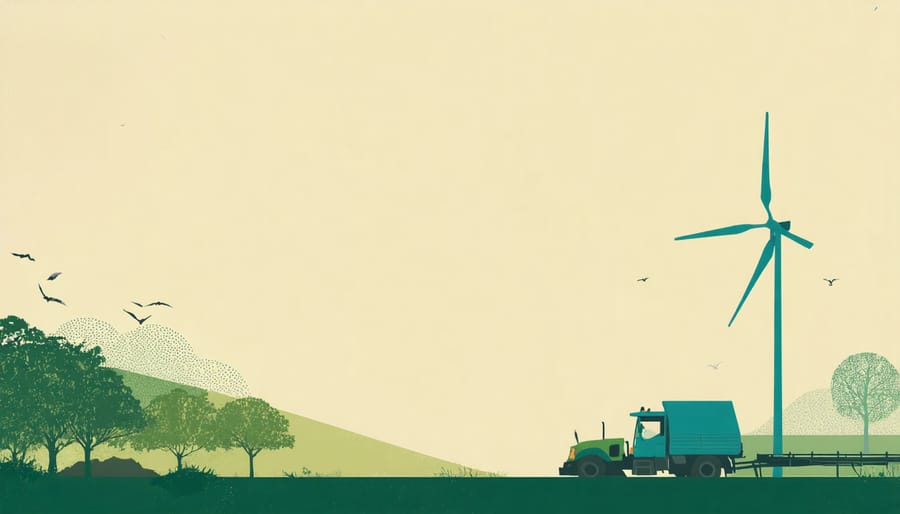
Mottainai: The Japanese Mindset That’s Reshaping How We Use Resources
From Agricultural Waste to Power: Mottainai in Action
The Japanese concept of mottainai, expressing regret over waste, is finding remarkable expression across Australian agricultural landscapes. Rather than viewing agricultural byproducts as rubbish, forward-thinking farmers and industries are transforming what was once discarded into valuable energy sources.
Take the story of a sugarcane farming cooperative in Far North Queensland. For decades, bagasse (the fibrous material left after crushing sugarcane) was either burned in open fields or left to decompose. Now, inspired by waste-reduction principles, the cooperative powers its entire processing facility using bagasse-derived bioenergy, generating enough surplus electricity to supply 5,000 nearby homes. The shift wasn’t just about technology but about changing mindset from waste disposal to resource appreciation.
In Victoria’s dairy heartland, a family-run operation has turned cattle manure into opportunity. Previously seen as a disposal problem, the farm’s organic waste now feeds an anaerobic digester that produces biogas for heating and electricity. The process also creates nutrient-rich fertiliser, completing a circular system that honours every element of production. The farmer explains it simply: “Nothing goes to waste. Everything has value if you look at it right.”
Western Australian grain growers are following suit, converting wheat stubble and chaff into compressed biomass pellets. These pellets fuel local heating systems and provide a new revenue stream during off-season months. One grower notes the cultural shift: “We used to see stubble as something to get rid of quickly. Now we see it as next season’s energy.”
These examples demonstrate that mottainai isn’t just a philosophical concept but a practical framework for transformation. By recognising the inherent value in agricultural waste, Australian enterprises are reducing environmental impact while creating economic opportunities, proving that respect for resources benefits both the planet and the bottom line.

Kaizen: Small Steps That Create Big Environmental Changes
How Australian Communities Are Using Kaizen for Energy Transitions
Across Australia, forward-thinking communities are embracing the kaizen philosophy to transform their energy habits, one manageable step at a time. This Japanese approach to continuous improvement is proving remarkably effective for households and businesses making the shift toward bioenergy solutions.
Take the story of Melbourne’s Brunswick neighbourhood, where a community housing cooperative decided to transition to biomass heating. Rather than attempting a complete system overhaul overnight, they started with a single pilot building. Residents learned to operate the new heating system, provided feedback, and helped refine the process. Six months later, buoyed by success and confidence, they expanded to three more buildings. Today, the entire cooperative runs on renewable bioenergy, and residents have become passionate advocates who barely remember their initial hesitations.
In regional New South Wales, the Riverina Olive Company adopted a similar incremental approach to managing their agricultural waste. They began by composting just 10 percent of their olive pomace, carefully monitoring the process and training staff. Each quarter, they increased the percentage, simultaneously exploring bioenergy applications for the remaining waste. Within two years, they’d achieved zero waste and now generate enough bioenergy to power their processing facility, with surplus energy sold back to the grid.
Queensland’s hospitality sector offers another compelling example. A group of Brisbane cafes formed a collective to address their organic waste. Starting with simple composting, they gradually introduced more sophisticated systems, eventually partnering with a local bioenergy facility. The key was beginning with small sustainable changes that staff could easily adopt without disrupting daily operations.
These success stories share common threads: starting small, celebrating wins, learning from setbacks, and building momentum gradually. The kaizen mindset removes the intimidation factor from major transitions, proving that sustainable energy adoption doesn’t require dramatic upheaval. Instead, it thrives on patience, persistence, and the understanding that every small improvement contributes to meaningful, lasting change.
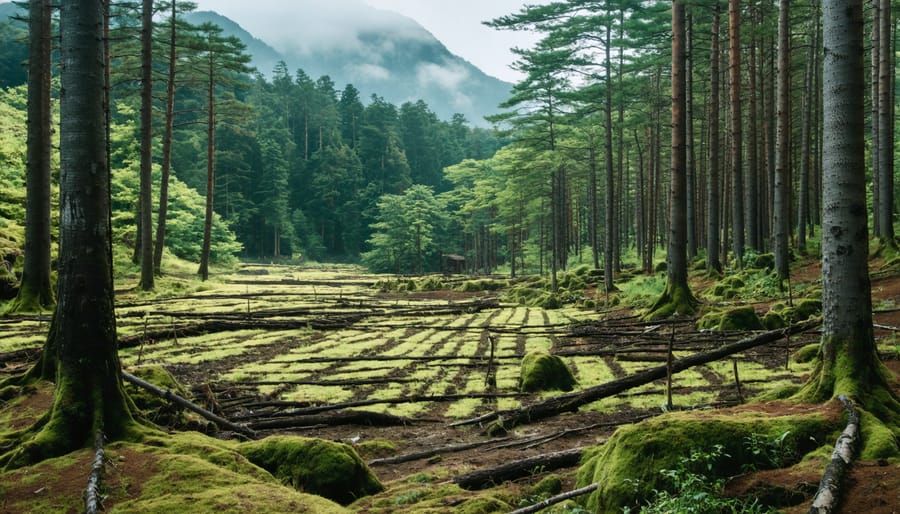
Satoyama: Living in Harmony With Natural Energy Systems
Biomass Balance: Lessons From Japan’s Managed Forests
Japan’s approach to forest management offers a masterclass in biomass balance that Australian renewable energy projects are now embracing with remarkable results. For over 700 years, Japanese forestry has operated on a principle called “satoyama” – a sustainable ecosystem where human needs and forest health exist in harmony. This isn’t just ancient wisdom; it’s a proven framework that’s helping Australia avoid the pitfalls of unsustainable biomass harvesting.
The Japanese model centers on taking only what forests can regenerate naturally within a growth cycle. In practice, this means harvesting mature trees while protecting younger growth, collecting fallen branches and thinning debris rather than clear-cutting, and ensuring biodiversity remains intact. It’s a stark contrast to the “take everything” approach that depleted forests elsewhere in the world.
Several Australian biomass energy facilities have adopted these principles with encouraging outcomes. In regional Victoria, a bioenergy plant sources exclusively from plantation thinnings and timber mill residues – materials that would otherwise rot or be burned in open piles. By following Japanese-inspired rotation schedules, they’ve maintained steady fuel supply for five years without touching native forests.
The key lesson is patience. Japanese foresters think in generations, not quarterly profits. They understand that a forest’s true value lies in its continuous productivity, not one-time extraction. This long-term thinking aligns perfectly with Australia’s growing recognition that renewable energy must truly be renewable – not just in technology, but in resource management.
When Australian bioenergy operators embrace this balanced approach, they’re not just generating clean power; they’re stewarding landscapes for future generations. The results speak clearly: healthy forests, reliable fuel sources, and communities that benefit from both conservation and economic opportunity.
Collective Responsibility: Why Japanese Group Culture Makes Sustainability Stick
Building Green Communities: Australian Success Stories Inspired by Japanese Models
Across Australia, forward-thinking communities are embracing the Japanese spirit of collective action to transform how we approach renewable energy. These success stories demonstrate that when neighbours work together, remarkable things happen.
In Adelaide’s western suburbs, the Coopers Gap Community Energy Project has drawn inspiration from Japan’s long-standing tradition of neighbourhood associations. Rather than individual households going it alone, over 200 residents formed a cooperative to negotiate bulk solar panel installations and battery storage systems. The result? A 40% reduction in energy costs and a thriving community network that extends beyond sustainability into social connection. This approach mirrors Japanese community energy initiatives where collective decision-making strengthens both environmental outcomes and social bonds.
The City of Newcastle has taken collective sustainability programs to the next level with their Renewable Energy Precinct. Inspired by Japanese eco-towns, the council partnered with local businesses and residents to create an integrated renewable energy hub incorporating solar, wind, and biomass solutions. Small manufacturers now share energy resources, reducing waste and costs whilst creating a blueprint for other Australian regions.
Meanwhile, in regional Victoria, the Yackandandah community has achieved 100% renewable energy self-sufficiency through a Japanese-style consensus-building process. Regular town halls, transparent communication, and a shared vision brought everyone along the journey, from farmers converting agricultural waste into bioenergy to retirees installing solar panels.
These Australian pioneers prove that Japanese-inspired collective action isn’t just culturally appropriate down under – it’s transformative. When communities unite around shared sustainability goals, they create lasting change that individual efforts simply cannot match. The message is clear: together, we’re unstoppable.
Mono no Aware: Finding Beauty in Sustainability
Picture autumn leaves gently falling in a Japanese garden—their fleeting beauty somehow more precious because we know they won’t last forever. This poignant awareness lies at the heart of mono no aware, a cultural principle that teaches us to find deeper beauty in life’s transient moments. Rather than ignoring impermanence, the Japanese embrace it, creating a profound emotional resonance with the natural world’s cycles.
This ancient wisdom offers Australian sustainability advocates something remarkably practical: a pathway to lasting behavioral change through emotional engagement. When we truly appreciate that resources are finite and ecosystems fragile, our relationship with consumption transforms from abstract concern into personal responsibility.
Consider how this principle applies to renewable energy adoption. A Perth solar household that monitors their daily energy generation doesn’t just see numbers—they witness the sun’s power captured and utilized, creating an intimate connection with natural cycles. This emotional connection to sustainability proves far more powerful than fear-based messaging about climate catastrophe.
Australian bioenergy projects exemplify mono no aware beautifully. Agricultural waste from sugar cane harvests in Queensland—once burned or left to decompose—now powers communities. There’s poetry in recognizing that what appears temporary or disposable contains inherent value. This appreciation mirrors the Japanese practice of celebrating cherry blossoms precisely because their bloom lasts only days.
When we emotionally grasp that today’s choices shape tomorrow’s possibilities, sustainability shifts from obligation to opportunity. Research consistently shows that people who develop emotional attachments to environmental practices maintain them longer than those motivated solely by duty or guilt.
The lesson? Stop treating sustainability as a sacrifice. Instead, cultivate awareness of nature’s precious, fleeting gifts—clean air, healthy soil, renewable resources. This emotional depth doesn’t just inspire initial action; it sustains commitment through challenges, making green habits genuinely stick.
Putting Japanese Wisdom Into Practice: Your Roadmap for Sustainable Change
Ready to bring Japanese wisdom into your sustainability journey? The good news is that incorporating these principles doesn’t require a complete cultural overhaul. Start with small, meaningful changes that create lasting impact.
For individuals, begin with your own “kaizen corner” at home. Commit to one small energy-saving improvement each month, whether that’s switching to energy-efficient appliances, reducing food waste through mindful planning, or exploring renewable energy options for your household. Track these changes in a simple journal, celebrating incremental progress rather than waiting for perfect solutions. This mirrors the Japanese approach of continuous improvement through small, consistent steps.
Organizations can adopt the concept of “mottainai” by conducting waste audits to identify where resources are being squandered. A Melbourne-based manufacturing company recently implemented this approach, discovering they could reduce energy consumption by 18% simply by optimizing their heating and cooling systems and repurposing waste materials. Create cross-functional sustainability teams that meet regularly, embodying the principle of collective responsibility where everyone contributes ideas regardless of their position.
For those ready to make bigger commitments, explore bioenergy solutions that align with circular economy principles. Agricultural businesses can transform crop residues into valuable energy resources, turning what was once waste into power. This practical application of resourcefulness creates both environmental and economic benefits.
Policymakers should consider how Japanese long-term thinking can reshape renewable energy strategies. Rather than focusing solely on election cycles, develop 20 to 30-year renewable energy roadmaps with clear milestones and community engagement frameworks. Japan’s success in large-scale sustainability transitions came from sustained commitment across multiple governments.
The beauty of Japanese wisdom is its scalability. Whether you’re switching off lights more consistently, implementing company-wide sustainability protocols, or crafting state renewable energy policies, these principles work at every level. Start where you are, with what you have. Remember, the Japanese didn’t build their sustainability culture overnight. They understood that real change happens through patience, persistence, and respect for the journey itself.
Your sustainable future begins with today’s small step. What will yours be?
The journey through Japanese cultural influences reveals something remarkable: sustainable change isn’t just about technology or policy, it’s fundamentally about people and the values they embrace. The principles of kaizen, mottainai, and shinrin-yoku aren’t simply cultural curiosities, they’re proven frameworks that have transformed entire societies by reshaping how individuals think about their relationship with resources, community, and the natural world.
For Australia, facing the twin challenges of climate change and energy transition, these cultural insights offer a roadmap that goes beyond infrastructure investments. When we combine the Japanese emphasis on continuous improvement with Australia’s innovative spirit and abundant bioenergy potential, we create the conditions for genuine, lasting transformation. The success stories we’ve explored, from community-led renewable projects to workplace sustainability initiatives, demonstrate that cultural wisdom translates into measurable environmental outcomes.
The beauty of this approach is its accessibility. You don’t need to wait for sweeping policy changes or massive infrastructure overhauls to make a difference. Start with small, consistent improvements in your home, workplace, or community. Embrace the mindset of waste reduction and resource respect. Connect with nature regularly to reinforce your commitment to protecting it.
Australia stands at a pivotal moment. By weaving Japanese cultural principles into our sustainability efforts and coupling them with cutting-edge bioenergy solutions, we can accelerate our transition to a truly sustainable future. The framework exists, the technology is ready, and the time to act is now. Together, we can build an Australia that honours both environmental wisdom and innovative progress, creating lasting change that benefits generations to come.