
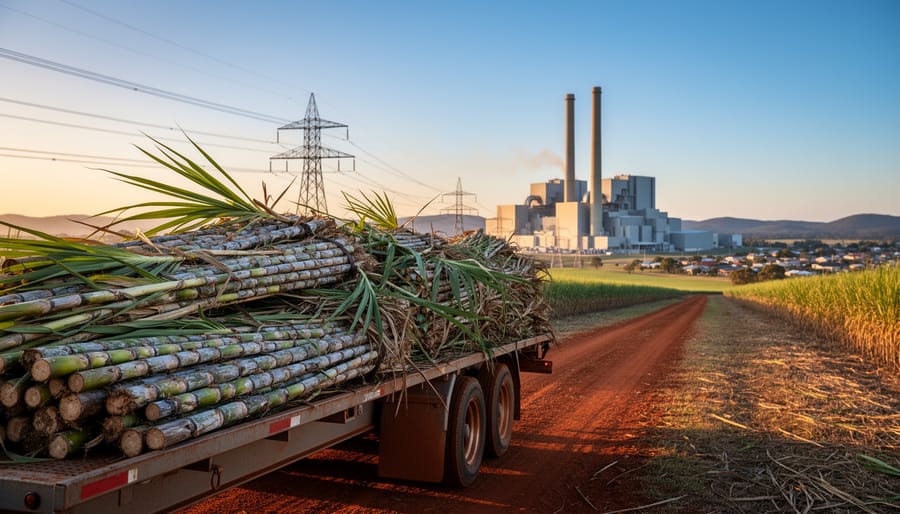
Every piece of energy tells a story—from the moment sunlight hits a sugarcane field in Queensland to the electricity powering your morning coffee. The life cycle of energy in bioenergy systems traces this remarkable journey, revealing how organic materials transform into clean, renewable power while shaping our environment at every turn.
Understanding this cycle matters now more than ever. Australia stands at a crossroads where agricultural waste, forestry residues, and organic materials can either decompose in landfills, releasing methane into the atmosphere, or become valuable energy resources that reduce our carbon footprint. The difference lies in recognizing that bioenergy isn’t just about the end product—it’s about managing every stage, from cultivation and collection through processing, conversion, and distribution to final consumption.
Consider the sugar mills dotting the NSW coast that once burned bagasse as waste but now generate enough electricity to power entire regional towns. Or the Victorian dairy farms converting manure into biogas, simultaneously solving waste management challenges and creating renewable energy. These aren’t isolated success stories; they’re examples of what happens when we understand and optimize each phase of the energy life cycle.
The environmental impact shifts dramatically depending on how we handle each stage. Growing feedstocks affects land use and water resources. Transportation determines carbon emissions. Conversion technology influences efficiency. End-use applications define overall sustainability. By examining each phase critically, we uncover opportunities to maximize benefits while minimizing negative impacts.
This comprehensive look at bioenergy’s life cycle reveals practical pathways for Australia to transition toward genuine energy independence, transforming what we once considered waste into the power source driving our sustainable future.
What Makes Bioenergy Different: The Circle of Life
The Carbon Cycle Connection
Here’s a powerful truth about bioenergy: unlike fossil fuels, it works in harmony with the Earth’s natural carbon cycle. When plants grow, they pull carbon dioxide from the atmosphere through photosynthesis. That carbon becomes part of the plant’s structure, stored temporarily in leaves, stems, and roots. When we use these materials for bioenergy, we release that same carbon back into the atmosphere, completing a cycle that happens within years or decades.
Contrast this with fossil fuels, which lock away carbon deep underground for millions of years. When we burn coal, oil, or gas, we’re releasing ancient carbon that was never meant to re-enter today’s atmosphere. This tips the climate scales dramatically.
Think of it like this: bioenergy is like withdrawing money from your everyday account and immediately depositing it back. Fossil fuels are like raiding a savings account from millions of years ago, adding funds to your current account that were never budgeted for.
In Australia, this distinction matters enormously. A sugarcane farm in Queensland demonstrates this beautifully. The cane grows for around 12 months, absorbing atmospheric carbon. After harvest, the bagasse powers local mills, releasing that same carbon. The cycle repeats annually, keeping carbon in continuous rotation rather than adding new carbon to our atmosphere. This closed loop approach offers genuine hope for reducing our carbon footprint while meeting energy needs.
Stage One: Growing the Energy (Biomass Production)
Where Australian Biomass Comes From
Australia’s diverse landscape provides abundant opportunities for biomass collection, with materials sourced from three primary streams across the country. Understanding where these resources come from reveals the practical potential of bioenergy in our local context.
Agricultural waste represents the largest portion of Australian biomass sources. The nation’s expansive farming regions, particularly throughout New South Wales, Queensland, and Victoria, generate substantial quantities of crop residues including wheat and barley stubble, sugarcane bagasse, and cotton gin trash. Rather than burning these materials in paddocks or sending them to landfill, forward-thinking farmers are now partnering with bioenergy facilities to transform agricultural byproducts into renewable energy.
Forestry operations contribute another significant stream, with sawmill residues, bark, and timber processing waste collected from Tasmania’s forestry industry and plantation forests across Western Australia and South Australia. These materials, previously considered waste products, now fuel sustainable energy production while supporting regional employment.
Municipal organic waste from Australian cities and towns provides the third major source. Food scraps, garden clippings, and other biodegradable materials collected through council programs are diverted from landfills to bioenergy facilities.
A standout success story comes from the Goulburn Valley in Victoria, where local tomato processors partnered with a bioenergy facility to convert processing waste into electricity. This collaboration now powers over 2,000 homes while reducing waste management costs for food manufacturers. The project demonstrates how regional communities can turn local waste streams into valuable energy resources, creating jobs and supporting the circular economy. Similar initiatives are emerging across rural Australia, proving that biomass collection can drive both environmental and economic benefits.
Environmental Impacts at the Growing Stage
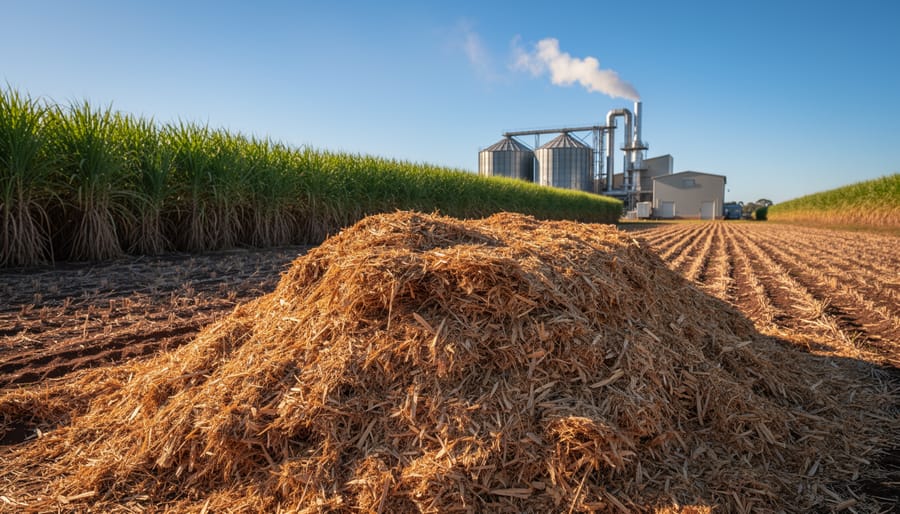
Growing biomass for bioenergy begins long before harvesting, and this stage carries significant environmental considerations that Australian producers are actively addressing. Land use stands as perhaps the most visible concern – when we convert natural habitats or food-producing areas to energy crops, we risk disrupting ecosystems and food security. However, savvy Australian farmers are increasingly turning marginal lands, degraded agricultural areas, and even waste spaces into productive bioenergy sites, ensuring valuable farmland continues feeding people rather than fuel tanks.
Water consumption presents another challenge, particularly across our sunburnt country where drought frequently tests our resilience. Different feedstocks demand vastly different water inputs – sugarcane requires substantial irrigation, while native grasses like spinifex thrive on minimal moisture. Progressive growers are selecting drought-tolerant crops and implementing precision irrigation systems that deliver water exactly where and when needed, reducing waste by up to 40 percent compared to traditional methods.
Fertilizer application also requires careful balancing. Excessive nutrients can run off into waterways, creating algal blooms and damaging aquatic ecosystems. The good news is that Australian producers are embracing sustainable practices like precision agriculture, using soil testing and targeted application to minimize environmental impacts while maintaining productivity.
Biodiversity considerations round out the picture. Rather than creating monoculture deserts, innovative projects across Queensland and New South Wales are demonstrating how strategic planting can actually enhance local wildlife corridors and support native species. This approach transforms bioenergy production from potential threat to conservation ally, proving that with thoughtful planning, we can grow energy sustainably.
Stage Two: Collecting and Moving (Harvesting and Transport)
The Transport Challenge
Getting biomass from the paddock to the processing facility presents a genuine conundrum for Australia’s bioenergy sector. With our vast distances and dispersed agricultural regions, transport can significantly impact the environmental credentials of otherwise sustainable energy sources. After all, what’s the point of creating clean energy if we’re burning excessive diesel to haul materials hundreds of kilometres?
The challenge lies in finding that sweet spot between facility size and transport distance. Larger centralised facilities might process biomass more efficiently, but they require gathering materials from wider areas. Smaller, distributed facilities reduce transport needs but may lack economies of scale.
Innovative Aussie operators are tackling this head-on with practical solutions. Some processing facilities are strategically located in agricultural heartlands, right where the biomass originates. Mobile processing units are gaining traction too, bringing the conversion technology directly to farms rather than the other way around.
In regional Queensland, one pioneering facility uses electric trucks powered by their own biogas for local collection runs, creating a closed-loop system that slashes transport emissions. Meanwhile, Victorian operators are collaborating with existing grain transport networks, hitching a ride with established infrastructure during off-peak seasons.
Smart logistics planning also plays a crucial role. By coordinating collection routes, using backloading opportunities, and timing transport to match seasonal availability, operators are dramatically reducing the kilometres travelled per tonne of biomass. These practical approaches prove that distance doesn’t have to be a deal-breaker for sustainable bioenergy.
Smart Collection Methods
Australia’s bioenergy sector is leading the way with innovative collection methods that prioritize efficiency while protecting our environment. Modern harvesting techniques focus on timing and precision to ensure biomass is collected at peak energy value with minimal waste.
Take the sugar cane industry in Queensland, where growers now use GPS-guided harvesters that reduce soil compaction and fuel consumption by up to 30 percent. These machines can precisely identify and collect only the plant material needed, leaving protective ground cover intact to prevent erosion and maintain soil health.
In forestry operations across Tasmania and Victoria, selective harvesting methods gather timber residues and mill waste that would otherwise decompose or be burned. Mobile chipping units process this material on-site, dramatically reducing transport emissions and costs. One Tasmanian operation has cut its collection-related carbon footprint by 40 percent using this approach.
Agricultural waste collection has also become smarter. Farmers in Western Australia are adopting automated systems that gather wheat stubble and other crop residues immediately after harvest, capturing material at its driest and most energy-dense state. This timing reduces the need for additional drying, saving energy throughout the bioenergy lifecycle.
These practical advances demonstrate that smart collection isn’t just good for the planet—it makes excellent business sense too.
Stage Three: Transformation (Converting Biomass to Energy)
Heat and Power: Direct Combustion
Direct combustion remains the most straightforward way to release energy from biomass, converting organic matter directly into heat and electricity. When biomass burns, it releases stored solar energy as thermal power that can warm facilities, generate steam, or drive turbines for electricity production.
Across Australia, innovative industries are turning waste into wealth through direct combustion. Sugar mills in Queensland have become brilliant examples of this approach, burning bagasse—the fibrous residue left after crushing sugarcane—to power their operations. Rather than viewing bagasse as rubbish, these mills recognise it as valuable fuel. Many sugar mills now generate enough electricity not only for their own needs but also export surplus power to the grid, creating additional revenue streams while reducing waste.
Similarly, timber mills throughout regional Australia are harnessing their wood waste, including sawdust, bark, and offcuts, for heat and power generation. These facilities use what would otherwise be disposal problems to keep their operations running efficiently. The beauty of this approach lies in its simplicity and immediate benefits: waste disappears, energy costs drop, and carbon emissions decrease compared to fossil fuel alternatives. This practical application demonstrates how Australia’s agricultural and forestry sectors are leading the charge towards sustainable energy independence.
Biofuels for Transport
Liquid biofuels are giving Australia’s transport sector a cleaner alternative to fossil fuels, with ethanol and biodiesel leading the charge. These renewable fuels are produced from organic materials right here on home soil, turning agricultural crops and waste products into energy for our vehicles.
Ethanol production in Australia primarily uses sugarcane and wheat, with Queensland’s sugar mills producing fuel-grade ethanol that’s blended with petrol at service stations across the country. Meanwhile, biodiesel gets crafted from used cooking oil, animal fats, and oilseed crops like canola. The beauty of these biofuels is that they work in existing engines with minimal modifications, making the transition straightforward for everyday Australians.
A standout success story comes from New South Wales, where the Manildra Group converts wheat starch into ethanol, producing enough to displace millions of litres of imported petroleum annually. Similarly, biodiesel producers are collecting used cooking oil from restaurants and fish-and-chip shops, transforming yesterday’s waste into tomorrow’s fuel. This circular approach not only reduces emissions by up to 70 percent compared to conventional diesel but also creates jobs in regional communities. For transport operators looking to reduce their carbon footprint, these biofuels offer a practical solution that’s available today.
Biogas: Energy from Organic Waste
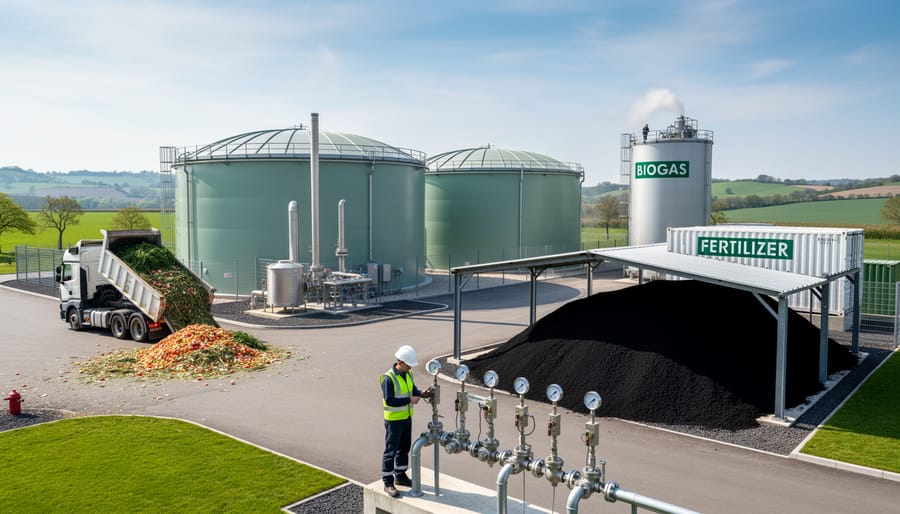
Biogas transforms yesterday’s organic scraps into tomorrow’s clean energy through anaerobic digestion, where microorganisms break down food waste, agricultural residues, and animal manure in oxygen-free environments. This natural process produces methane-rich biogas that can generate electricity, heat homes, or fuel vehicles. Australia’s leading the charge with impressive facilities like the Malabar Bioenergy Project in Sydney, which converts sewage and food waste into enough renewable gas to power 3,200 homes annually. Meanwhile, Queensland’s Monto Bioenergy Plant demonstrates rural innovation by processing crop residues and livestock waste into grid-quality electricity. These success stories showcase how organic waste conversion creates a win-win situation, diverting waste from landfills while producing valuable renewable energy and nutrient-rich fertiliser as a bonus byproduct.
Stage Four: Using the Energy (Distribution and Consumption)
Powering Australian Homes and Businesses
Across Australia, bioenergy is already making a real difference in how communities and industries power their daily operations. Take the sugar mills along Queensland’s coast, for instance. These facilities are turning bagasse—the fibrous residue left after crushing sugarcane—into electricity that not only runs the mills themselves but also feeds excess power back into the grid. The Mackay Sugar mill alone generates enough renewable energy to power approximately 27,000 homes during crushing season.
In Melbourne’s outer suburbs, food waste collected from households and businesses is finding new purpose at anaerobic digestion facilities. Rather than rotting in landfills and releasing methane into the atmosphere, this organic material is transformed into biogas that heats homes and generates electricity. One facility in the western suburbs processes around 40,000 tonnes of food waste annually, powering the equivalent of 2,500 Victorian households.
The timber industry is also leading by example. Sawmills throughout Tasmania and Victoria are using wood processing residues—bark, sawdust, and offcuts—to fuel their operations. What was once considered waste is now valuable energy, reducing reliance on fossil fuels while keeping production costs down.
Even wastewater treatment plants are getting in on the action. Sydney Water’s facilities capture biogas from sewage treatment processes, using it to generate over 70 million kilowatt-hours of electricity each year. That’s enough to power the treatment plants and significantly reduce operational costs, demonstrating how bioenergy creates a circular economy where nothing goes to waste.
Stage Five: Completing the Circle (Byproducts and Returning to Earth)
From Waste to Wealth: Valuable Byproducts
The bioenergy lifecycle doesn’t end with energy production. Some of the most exciting developments in Australian bioenergy are happening with what’s left behind after energy conversion. These byproducts are transforming waste into valuable agricultural assets, creating a truly circular system where nothing goes to waste.
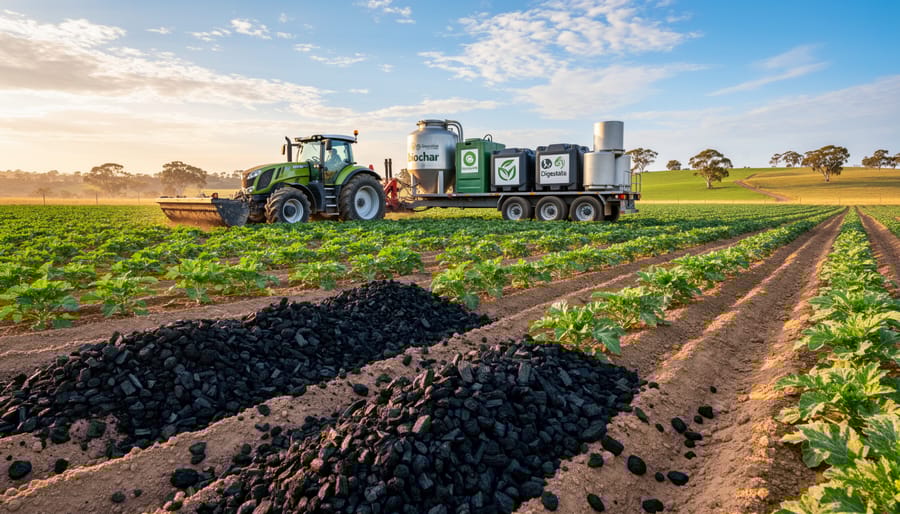
Biochar, a carbon-rich material produced during certain bioenergy processes, is proving to be a game-changer for Australian farmers. When added to soil, this charcoal-like substance acts like a sponge, retaining water and nutrients that would otherwise leach away. In drought-prone regions across Queensland and New South Wales, farmers are discovering that biochar-enriched soils require less irrigation and fertilizer while producing healthier crops. One vineyard in the Hunter Valley reported a 30 percent reduction in water usage after incorporating biochar into their soil management strategy.
Digestate, the nutrient-dense material remaining after anaerobic digestion, offers another valuable resource. Rich in nitrogen, phosphorus, and potassium, digestate serves as a natural fertilizer that closes the nutrient loop. Dairy farms in Victoria are spreading digestate from their biogas systems back onto pastures, reducing their reliance on synthetic fertilizers while simultaneously improve soil health and building organic matter.
This waste-to-wealth approach demonstrates bioenergy’s potential to deliver multiple benefits beyond clean energy, supporting sustainable agriculture while completing the energy lifecycle in the most productive way possible.
Managing Emissions Throughout the Cycle
Modern bioenergy systems have come a long way in managing emissions, transforming what was once a smoky process into a clean energy solution. Throughout the entire cycle, from feedstock collection to energy generation, advanced technologies now capture and control air quality impacts.
During combustion, contemporary bioenergy facilities use sophisticated filtration systems and emission controls that meet strict Australian environmental standards. These systems capture particulate matter and reduce harmful pollutants, often performing better than traditional fossil fuel alternatives. The Queensland sugar industry demonstrates this brilliantly, with bagasse-fired cogeneration plants producing electricity with minimal emissions while processing sugarcane.
Carbon emissions from bioenergy are part of a closed loop. The carbon released during energy generation was recently absorbed by the plants during growth, making it carbon-neutral over the cycle. This stands in stark contrast to fossil fuels, which release carbon that’s been locked underground for millions of years.
Even transportation emissions are being addressed. Australian companies are increasingly sourcing feedstock locally, reducing transport distances, while some are transitioning delivery fleets to biodiesel. Smart logistics planning and regional processing facilities further minimize the carbon footprint throughout the supply chain, proving that clean energy doesn’t require compromise.
Measuring the Full Picture: Life Cycle Assessment
How Bioenergy Stacks Up Against Other Energy Sources
When comparing energy sources, it’s helpful to think about the full picture rather than just one aspect. Bioenergy occupies a unique middle ground in Australia’s energy landscape, offering distinct advantages while facing certain challenges.
Against fossil fuels, bioenergy shines in emissions reduction. While coal and natural gas release ancient carbon stored underground for millions of years, bioenergy recycles carbon already in our current atmosphere through plant growth. Australian sugar mills demonstrate this beautifully, using bagasse to generate clean power while reducing reliance on coal. The key difference is sustainability: bioenergy can be replenished within years or decades, whereas fossil fuels take geological timescales to form.
Compared to solar and wind, bioenergy offers remarkable flexibility. Unlike these weather-dependent sources, bioenergy provides reliable, dispatchable power whenever needed. A dairy farm in Gippsland, for instance, generates consistent electricity from manure regardless of sunshine or wind conditions. This makes bioenergy an excellent complement to other renewables rather than a competitor.
The trade-offs matter too. Bioenergy typically requires more land than solar panels per kilowatt produced, and careful feedstock selection is crucial to avoid competing with food production or impacting biodiversity. However, when done properly using waste materials like crop residues, forestry offcuts, or organic waste, these concerns diminish significantly.
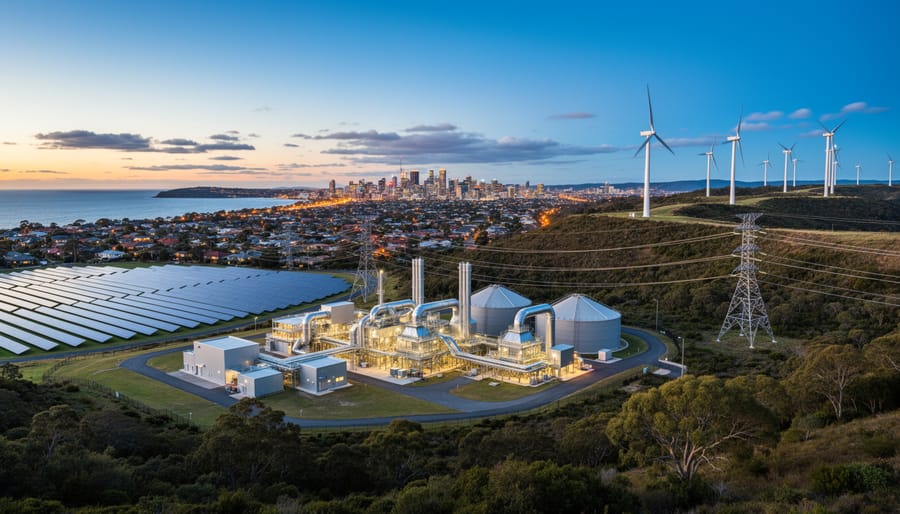
The real strength emerges when bioenergy integrates with other renewables, creating a balanced, resilient energy system that maximizes Australia’s diverse natural resources while maintaining grid stability and supporting regional communities.
And so the circle completes itself. From the organic waste in your kitchen caddy to the electricity powering your home, bioenergy traces a remarkable journey that mirrors nature’s own cycles. Unlike fossil fuels that take millions of years to form and leave permanent scars on our environment, bioenergy flows through a continuous loop—growing, converting, serving, and returning to begin again.
Throughout this journey, we’ve seen how each stage presents opportunities for improvement. Smarter farming practices reduce emissions during biomass production. Advanced conversion technologies extract more energy from less material. Efficient distribution networks minimize waste. And when properly managed, even the end-of-life stage feeds back into the beginning, creating truly circular systems.
Australia stands at a pivotal moment. With abundant agricultural resources, innovative companies pioneering new technologies, and communities embracing change, we’re uniquely positioned to lead the sustainable energy transition. Success stories from Queensland sugar mills to Victorian dairy farms prove it’s not just possible—it’s happening right now.
Understanding this life cycle empowers us all to make better choices. Whether you’re a farmer considering on-site biogas systems, a business leader evaluating renewable energy options, or simply someone wanting to support cleaner alternatives, your participation matters. Every tonne of organic waste diverted from landfill, every kilowatt-hour generated from renewable sources, and every voice advocating for sustainable policy helps strengthen this cycle.
The future of energy doesn’t have to be complicated. Sometimes, the most powerful solutions are those that work with nature, not against it. By embracing bioenergy’s circular journey, we’re not just changing how we power our lives—we’re ensuring a cleaner, more sustainable Australia for generations to come.