
Securing finance for renewable energy projects in Australia requires understanding what makes your bioenergy venture bankable from day one. Lenders and investors assess three fundamental criteria before committing capital: proven technology with operational track records, long-term offtake agreements that guarantee revenue streams, and experienced development teams capable of delivering projects on time and within budget. Successfully navigating this landscape means presenting your project as a low-risk investment opportunity backed by solid fundamentals.
The Australian renewables financing market has matured significantly, with major banks, green bonds, and international climate funds actively seeking quality projects. Bioenergy developments particularly attract interest when they demonstrate clear pathways to commercial operation, regulatory compliance, and sustainable feedstock supply chains. Understanding the specific requirements of different capital sources—whether commercial debt, equity investment, or government grants—allows developers to structure deals that align investor expectations with project realities.
Real-world success stories across Australia prove that well-structured bioenergy projects achieve financial close consistently. From agricultural waste-to-energy facilities securing multi-million dollar backing to landfill gas projects attracting institutional investors, the pattern remains clear: bankability stems from thorough preparation, transparent risk assessment, and compelling business cases that showcase both environmental impact and financial returns. This practical guide illuminates the pathway from concept to funded project, demystifying financing mechanisms while highlighting actionable strategies that turn renewable energy ambitions into operational reality.
Why Bioenergy Projects Struggle to Secure Funding in Australia
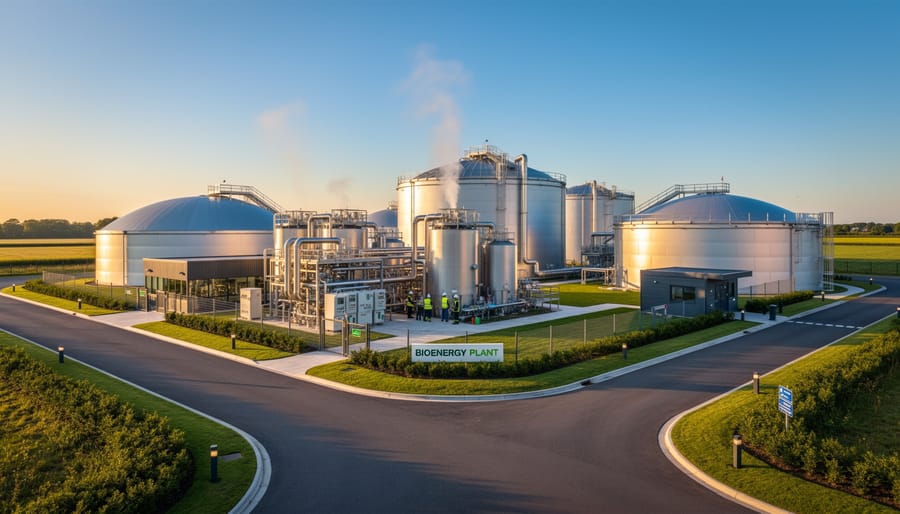
The Bankability Gap: What Makes Lenders Nervous
Despite bioenergy’s clear environmental benefits, traditional lenders often approach these projects with caution. Understanding what makes banks nervous is the first step toward building truly bankable projects in Australia.
Feedstock reliability sits at the top of most lenders’ worry lists. Banks need certainty that your project will have a consistent supply of agricultural waste, forestry residues, or organic materials for 15-20 years. A few dry seasons or changes in farming practices could disrupt supply chains, directly impacting revenue projections. Smart developers address this by securing long-term feedstock agreements with multiple suppliers, essentially creating a safety net that gives lenders peace of mind.
Technology risk presents another hurdle. While established technologies like anaerobic digestion have proven track records, newer conversion methods might lack the operational history banks require. Lenders prefer technologies with demonstrated commercial performance in similar Australian conditions. This doesn’t mean innovation is impossible, but it does mean you’ll need robust performance guarantees from equipment suppliers and perhaps third-party engineering assessments.
Operational complexity also raises eyebrows. Bioenergy projects require specialized expertise to manage feedstock handling, processing, and energy conversion simultaneously. Unlike solar farms with minimal moving parts, these facilities need skilled operators and maintenance teams. Banks want evidence you’ve assembled the right team and have realistic operational budgets.
The good news? These concerns aren’t insurmountable. Projects across Australia are successfully navigating these challenges by demonstrating thorough planning, securing strong partnerships, and learning from proven models. By addressing lender concerns head-on with solid evidence and risk mitigation strategies, you’re already halfway to securing that crucial funding.
How Bioenergy Differs from Solar and Wind Financing
Unlike solar and wind projects, which have become the “darlings” of renewable finance with streamlined lending processes, bioenergy ventures still require lenders to roll up their sleeves and dig deeper. Solar panels and wind turbines offer predictable performance data spanning decades, making bankers comfortable with standardised financing packages. They’re technology risks that the financial sector has well and truly wrapped their heads around.
Bioenergy, however, introduces what financiers call “feedstock risk”—the challenge of ensuring a consistent supply of organic materials. While solar gets guaranteed sunshine in Queensland and wind farms tap reliable coastal breezes, bioenergy projects must demonstrate secure access to agricultural waste, forestry residues, or organic municipal waste. This additional complexity means lenders typically request longer due diligence periods and more comprehensive risk assessments.
The good news? Australian success stories are changing this landscape. Projects like the Yarra Valley Water facility, which converts sewage into renewable energy, have demonstrated that with proper planning and offtake agreements, bioenergy can match the bankability of its renewable cousins. Forward-thinking lenders increasingly recognise that bioenergy’s unique advantages—dispatchable power, waste management solutions, and regional employment—justify tailored financing approaches rather than a one-size-fits-all renewable energy funding model.
The Building Blocks of Bankable Bioenergy Projects

Securing Your Feedstock Supply: The Foundation of Credibility
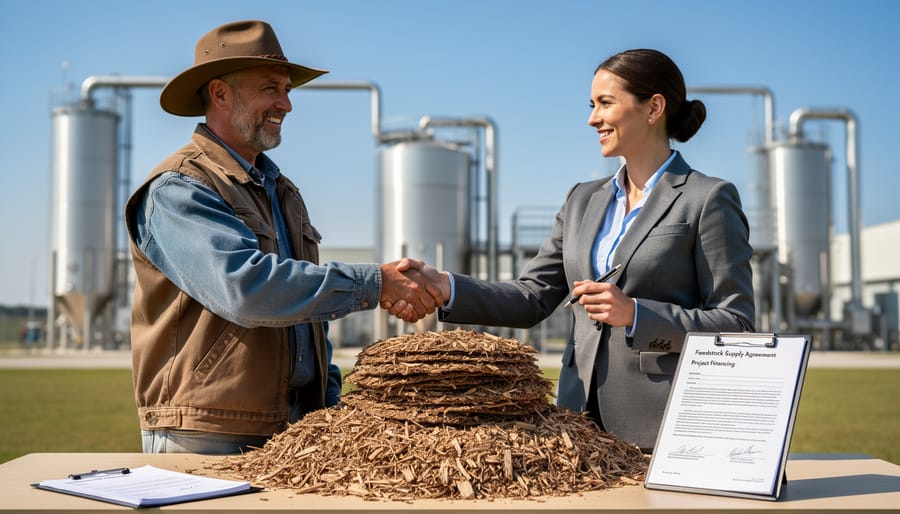
For any bioenergy project seeking financing, securing a reliable feedstock supply is absolutely fundamental—lenders won’t back projects built on shaky foundations. Long-term feedstock agreements, typically spanning 10-15 years, demonstrate to investors that you’ve got the raw materials locked in to keep operations running profitably throughout the loan period.
Think of it this way: a bioenergy facility is only as good as what you feed it. Without guaranteed supply, even the most advanced technology becomes a expensive paperweight. That’s why banks and investors scrutinise feedstock agreements as rigorously as they examine your technology and management team.
Australia’s success stories prove the value of getting this right. The Condong biorefinery in northern New South Wales transformed its bankability by securing long-term contracts with local sugarcane growers, guaranteeing a steady supply of bagasse. This agricultural waste—previously considered a disposal problem—now powers operations and generates renewable energy for the grid.
Similarly, forestry operations in Tasmania have pioneered arrangements where sawmill residues and forest thinnings are contracted to regional bioenergy facilities. These partnerships work beautifully because they solve problems for both parties: sawmills get reliable waste disposal, and agricultural waste bioenergy producers secure affordable, consistent feedstock.
The lesson here is clear: start feedstock negotiations early, involve suppliers as genuine partners, and structure agreements that create mutual benefit. When financiers see robust, long-term supply contracts with reputable agricultural or forestry partners, your project immediately shifts from speculative to bankable.
Proven Technology and Operational Track Records
Lenders and investors feel more comfortable backing projects that use proven, reliable technology rather than experimental systems. When seeking finance for your bioenergy project, partnering with established equipment suppliers and technology providers significantly strengthens your case. These companies bring documented performance data, warranties, and maintenance support that reduce technical risk.
Demonstrating operational experience is equally crucial. If your team has successfully delivered similar projects before, make this clear in your financing proposal. Case studies showing consistent output, reliable feedstock management, and steady revenue generation provide the evidence financiers need. For example, several Australian waste-to-energy facilities have secured competitive financing by showcasing years of uninterrupted operation and strong relationships with waste suppliers.
First-time developers shouldn’t feel discouraged, though. You can strengthen your position by bringing experienced operators onto your team, engaging consultants with solid track records, or structuring partnerships with established industry players. Some Australian bioenergy pioneers have successfully secured funding by demonstrating thorough due diligence, realistic projections based on comparable projects elsewhere, and commitment to best-practice operational protocols. Remember, financiers aren’t looking for perfection—they’re looking for evidence that risks are understood, manageable, and mitigated through smart planning and experienced execution.
Off-Take Agreements That Banks Love
Banks sleep soundly at night when they know project revenue is locked in. This is where off-take agreements become absolute game-changers for renewables project financing. A power purchase agreement (PPA) is essentially a long-term contract where a buyer commits to purchasing electricity or energy at predetermined rates, sometimes spanning 10 to 25 years.
For bioenergy projects across Australia, these agreements transform uncertain future cash flows into bankable certainty. When a waste management facility or agricultural processor signs a PPA with a local council or energy retailer, lenders can model repayments with confidence. It’s the difference between a risky punt and a solid investment.
The beauty is in the predictability. A Queensland sugarcane mill recently secured financing for a bagasse-to-energy project after signing a 15-year PPA with their regional energy provider. The fixed revenue stream covered debt servicing and gave investors peace of mind.
Similarly, biomass heating projects serving industrial complexes or hospital networks can use heat supply agreements to demonstrate revenue certainty. These contracts show banks that someone reliable will be paying the bills long before the first loan repayment falls due, making your project genuinely financeable rather than just theoretically viable.
Where the Money Actually Comes From
Government Grants and Incentive Programs
Australia’s government backing for renewable energy projects represents a genuine game-changer for bioenergy developers seeking to bridge the financing gap. The Australian Renewable Energy Agency (ARENA) stands at the forefront, providing grants that can cover up to 50% of eligible project costs during critical development and demonstration phases. This support dramatically reduces upfront capital requirements and demonstrates government confidence to private investors—a crucial element in achieving bankability.
The Clean Energy Finance Corporation (CEFC) takes a different but equally valuable approach, offering concessional loans, equity investments, and debt finance tailored specifically for renewable projects. With over $10 billion committed to clean energy since 2013, the CEFC bridges the gap between traditional bank financing and early-stage project needs. Their involvement often attracts co-investment from commercial lenders who view CEFC participation as validation of project viability.
State-based programs add another layer of support. Queensland’s Biofutures program, for instance, has successfully backed multiple agricultural waste-to-energy projects, while Victoria’s renewable energy targets drive regional grant opportunities. These initiatives don’t just provide capital—they reduce perceived project risk, making bioenergy ventures more attractive to mainstream financiers.
For project developers, combining these government programs creates a powerful financing stack. A typical bioenergy project might secure ARENA funding for technology validation, CEFC debt for construction, and state grants for infrastructure connections—transforming ambitious concepts into bankable reality.
Commercial Banks and Project Finance
Project finance structures offer bioenergy developers a proven pathway to secure substantial funding by treating the project itself as a distinct financial entity. Commercial banks typically structure these deals with debt-to-equity ratios ranging from 70:30 to 80:20, meaning for every dollar invested, banks might lend seventy to eighty cents while project sponsors contribute the remainder.
What do banks need to see before approving loans? First and foremost, they require robust technical and financial feasibility studies demonstrating the project can generate reliable cash flows. Banks scrutinise feedstock supply agreements—is there a guaranteed 20-year supply of agricultural waste or forestry residues? They examine offtake agreements too, ensuring the energy produced has committed buyers at predictable prices.
Security packages matter significantly. Banks often require fixed and floating charges over project assets, creating confidence through tangible collateral. Australian banks increasingly recognise that bioenergy infrastructure investment aligns with their environmental, social, and governance commitments, making approval processes smoother for well-structured proposals.
Take the Mildura bioenergy facility as an example—developers secured 75 percent debt financing by presenting comprehensive risk mitigation strategies, proven technology partnerships, and locked-in feedstock agreements with local almond processors. This demonstrates how thorough preparation transforms ambitious concepts into bankable realities, opening doors to commercial lending at competitive rates.
Impact Investors and Green Bonds
The appetite for green finance in Australia’s bioenergy sector is stronger than ever, and that’s brilliant news for project developers. Impact investors and institutions focused on environmental, social, and governance criteria are actively seeking opportunities that deliver measurable environmental benefits alongside financial returns. Bioenergy projects tick these boxes beautifully, offering carbon reduction, waste management solutions, and renewable energy generation all in one package.
Green bonds have emerged as a powerful financing tool, allowing projects to access capital markets while demonstrating their environmental credentials. These debt instruments specifically fund projects with positive climate or environmental impacts, and bioenergy facilities converting agricultural waste or organic materials qualify perfectly. Several Australian councils and private developers have successfully tapped this market, securing competitive rates because investors value the transparent reporting and verified environmental outcomes.
What makes this particularly exciting is the streamlined due diligence process. ESG-focused investors often have established frameworks for assessing renewable projects, meaning bioenergy developers who can demonstrate clear environmental metrics, strong governance, and community benefits find themselves with willing partners. The key is presenting your project’s sustainability story clearly, showing how it contributes to Australia’s emissions reduction targets while creating local employment and managing waste responsibly.
Strategic Partnerships and Corporate Offtakers
Securing a corporate offtaker can transform your bioenergy project’s bankability overnight. Major Australian companies—from food manufacturers to councils—increasingly commit to long-term renewable energy purchases to meet sustainability targets. These strategic partnerships provide guaranteed revenue streams that lenders love, while corporations lock in predictable energy costs and authentic green credentials. Take Melbourne’s organic waste-to-energy facility, which secured twenty-year agreements with three local councils before approaching financiers. The result? Full project funding within months. Similarly, agricultural processors partnering with on-site biogas plants gain energy independence while providing projects with reliable feedstock and offtake certainty. These win-win arrangements demonstrate how corporate partnerships deliver both capital confidence and revenue stability essential for project success.
Real Success Stories: Australian Projects That Got Funded
In Queensland’s Darling Downs region, a pioneering agricultural waste-to-energy facility demonstrates how smart financing can transform farm residues into reliable renewable power. The project, developed by a consortium of local farmers and a specialist bioenergy developer, converts cotton gin waste and macadamia shells into 5 megawatts of electricity—enough to power 3,500 homes while creating regional jobs.
The financing structure combined multiple sources to reduce risk and attract investors. A $12 million package included 40% equity from the farming cooperative, 35% from a green energy fund, and 25% from a regional development bank. This blended approach proved crucial for bankability, as it demonstrated strong local commitment whilst spreading financial exposure.
Key success factors included securing a 15-year power purchase agreement with a major retailer, which provided guaranteed revenue streams that banks favour. The farmers’ cooperative also negotiated long-term feedstock supply contracts, ensuring consistent raw material availability. Environmental due diligence was thorough, with independent verification of emissions reductions—approximately 28,000 tonnes of CO2 equivalent annually.
This model mirrors aspects of the Western Australia bioenergy project, proving that well-structured agricultural bioenergy ventures can achieve commercial viability while delivering genuine environmental benefits.
When a major Australian food processing company needed to tackle rising energy costs and mounting organic waste, they turned to an innovative biogas project financing solution that’s become a blueprint for industrial applications nationwide.
The facility in regional Victoria was generating 15,000 tonnes of organic waste annually while facing hefty disposal costs and unreliable grid power. Rather than viewing these as separate problems, the project team saw an opportunity. They designed a 2-megawatt biogas plant that would convert waste into clean energy, directly powering manufacturing operations.
What made this project truly innovative was the financing partnership. Instead of traditional bank loans, they structured a power purchase agreement with a green finance provider, eliminating upfront capital requirements. The company pays only for the energy generated, while the financier owns and operates the biogas system for fifteen years.
This creative approach meant immediate cost savings from day one. The business reduced energy bills by 40 percent, eliminated waste disposal fees, and achieved carbon neutrality in their operations. Meanwhile, the financier gained a reliable revenue stream backed by long-term contracts.
The success demonstrates how thinking beyond conventional financing can unlock opportunities that benefit everyone involved, from shareholders to the environment.
The Gippsland Renewable Energy Park in Victoria demonstrates how community-driven bioenergy projects can secure diverse funding while creating genuine local benefits. This initiative converts agricultural waste from regional dairy farms and forestry operations into renewable electricity and heat, with the innovative twist of securing finance through a blended model that’s become a blueprint for similar ventures across Australia.
Rather than relying solely on traditional bank loans, the project combined a regional development grant, community investment bonds, and a power purchase agreement with a local manufacturing facility. This approach reduced the financial risk that often deters mainstream lenders while keeping ownership within the region. Local farmers became both suppliers and stakeholders, receiving income from waste materials that previously cost them money to dispose of.
The project’s bankability improved dramatically because the revenue streams were diversified and the community had genuine skin in the game. The manufacturing facility’s 15-year power purchase agreement provided stable, predictable income, while the community bonds offered modest returns that attracted environmentally conscious investors who valued regional impact over maximum profit.
What sets this initiative apart is the deep community engagement from day one. Public workshops demystified the technology and financing structure, building trust and enthusiasm. Today, the facility processes over 50,000 tonnes of organic waste annually, powers 3,500 homes, and has created 20 permanent regional jobs, proving that alternative funding pathways can deliver both environmental and economic wins.
Your Roadmap: Making Your Bioenergy Project Bankable
Stage 1: Development and Risk Mitigation
Before securing a single dollar, successful bioenergy projects begin with thorough groundwork that demonstrates viability to potential investors. This crucial stage kicks off with comprehensive feasibility studies examining everything from feedstock availability to grid connection points. Australian projects like Summerland Farm’s biogas facility in Victoria showcase how rigorous early planning pays dividends, transforming what seemed like costly agricultural waste into valuable renewable energy.
Smart developers focus on de-risking their projects by securing essential agreements early. This means locking in long-term feedstock supply contracts, negotiating power purchase agreements with energy retailers, and obtaining planning permits before approaching financiers. Building a capable team is equally vital—bring together experienced engineers, financial advisors familiar with clean energy incentives, and project managers who understand the renewable energy landscape. These early investments in planning and partnerships create the solid foundation that makes banks and investors sit up and take notice, turning ambitious ideas into bankable propositions ready for the next stage.
Stage 2: Structuring and Documentation
Once you’ve demonstrated your project’s viability, the next step involves building a comprehensive documentation package that brings your vision to life on paper. Think of this stage as translating your bioenergy project’s potential into a language lenders understand and trust.
At the heart of this process sits the financial model—a detailed projection showing how your project will generate revenue, manage costs, and ultimately repay investment. For a typical agricultural waste-to-energy facility in regional Queensland, this might include tipping fees from waste collection, electricity sales, and potential carbon credit income streams. The model needs to demonstrate resilience across different scenarios, showing lenders that even if feedstock prices fluctuate or energy tariffs shift, your project remains viable.
Environmental and social impact assessments also form critical components of your documentation package. These studies verify that your project delivers genuine environmental benefits while managing any potential risks. For bioenergy projects, this often highlights positive outcomes like methane emission reductions and circular economy contributions.
Technical feasibility studies, engineering reports, and comprehensive risk assessments round out the package. This documentation demonstrates you’ve thought through every angle, from technology selection to operational contingencies. Experienced project developers often engage specialist consultants at this stage, recognizing that professional documentation significantly improves success rates with financiers.
Stage 3: Engaging Financiers and Closing the Deal
Once your project structure is solid, it’s time to engage potential financiers with confidence. Start by tailoring your pitch to each lender’s priorities—some focus on environmental returns, while others prioritize financial metrics. Present your bankability credentials upfront: strong offtake agreements, experienced operators, and robust risk management plans demonstrate you’re serious about delivering returns.
Negotiating terms requires transparency and flexibility. Be prepared to discuss interest rates, loan-to-value ratios, and repayment schedules. Australian projects often benefit from government-backed schemes or green bonds that reduce financing costs. During due diligence, maintain open communication and respond promptly to information requests—this builds trust and accelerates approvals.
Success stories from Queensland’s waste-to-energy facilities show that projects with clear financial modelling and community support close deals faster. Remember, financiers want partners who understand both the environmental mission and commercial realities. Approach negotiations as collaborative problem-solving rather than adversarial bargaining, and you’ll find willing partners ready to back Australia’s renewable energy future.
The path to financing bioenergy projects in Australia is clearer than ever before. While the journey requires thorough preparation, robust feasibility studies, and strategic partnerships, the proven pathways we’ve explored throughout this article demonstrate that success is entirely achievable. Australian project developers are already turning organic waste into valuable energy, securing competitive financing, and building profitable operations that benefit both the environment and local communities.
The opportunity ahead is genuinely exciting. With Australia’s abundant agricultural and organic waste resources, supportive government policies, and growing investor appetite for sustainable infrastructure, bioenergy stands at the forefront of our renewable energy transition. The success stories we’ve examined aren’t isolated cases—they’re blueprints that others can follow and adapt to their unique circumstances.
Whether you’re a farmer considering an on-farm biogas system, a regional council exploring waste-to-energy solutions, or an experienced developer planning a large-scale facility, the financing mechanisms and support structures exist to bring your vision to life. The key lies in understanding what lenders value, presenting your project professionally, and demonstrating clear pathways to revenue and impact.
Now is the time to take action. Australia’s sustainable energy future needs innovative thinkers and committed developers ready to transform waste into opportunity. With careful planning, the right partnerships, and determination, your bioenergy project can secure the financing it deserves while contributing to a cleaner, more resilient energy system for all Australians.