
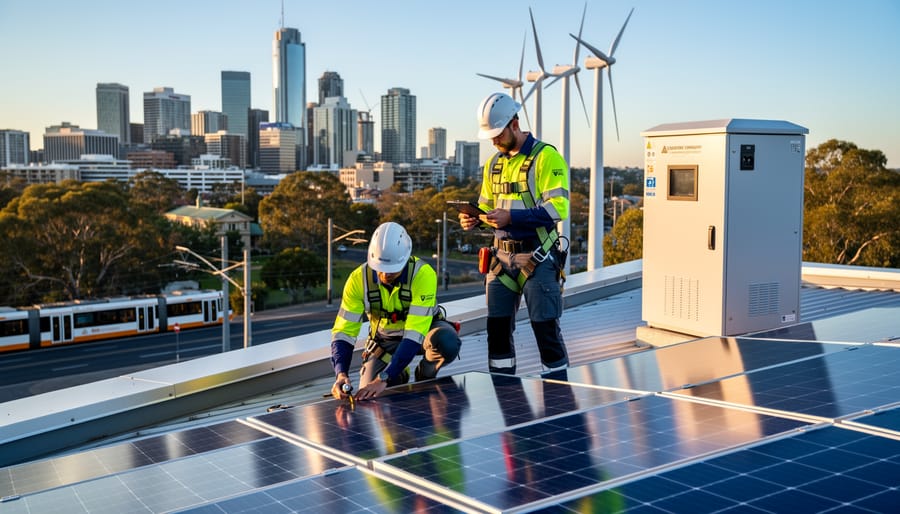
Australia’s cities stand at a transformative crossroads where innovative governance meets renewable energy ambition. From Sydney’s pioneering clean energy procurement frameworks to Melbourne’s community-powered solar cooperatives, urban centres across the continent are rewriting the rulebook on how local governments can accelerate the transition to renewables.
The urgency is clear: Australian cities consume over 75% of the nation’s energy, yet hold unprecedented power to drive decarbonisation through bold policy innovation. What distinguishes today’s successful renewable energy initiatives from earlier attempts is not just technological advancement, but rather the emergence of collaborative governance models that unite councils, businesses, community groups, and residents around shared clean energy goals.
This shift represents more than installing solar panels on civic buildings. Progressive cities are establishing dedicated renewable energy offices, creating fast-track approval pathways for clean energy projects, leveraging bulk-buying schemes that make renewables accessible to households and small businesses, and embedding renewable targets into planning codes that shape urban development for decades to come.
The Australian experience offers particularly valuable lessons for urban planners worldwide. Our cities face unique challenges, from vast geographical sprawl to extreme weather conditions, yet these constraints have sparked creative solutions. Community batteries in Western Australia, waste-to-energy facilities in Queensland, and precinct-scale renewable microgrids in South Australia demonstrate how tailored governance approaches can unlock rapid renewable deployment.
The stories emerging from Australian cities prove that ambitious renewable energy transitions are achievable when innovative policy meets determined leadership and community engagement.
Why Cities Are Leading Australia’s Renewable Energy Revolution
The Power of Local Decision-Making
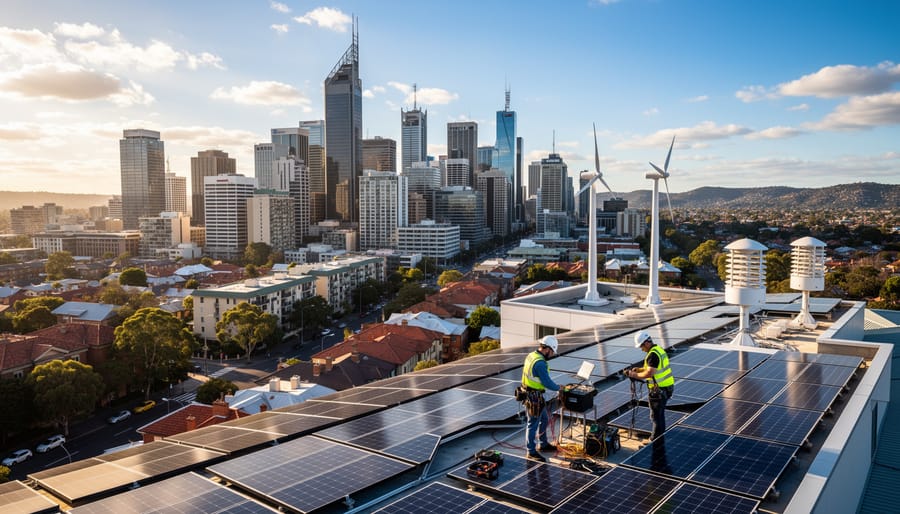
Local governments are proving to be nimble champions in Australia’s renewable energy transition, demonstrating advantages that larger bureaucracies simply can’t match. When city councils decide to act on renewable energy, they’re responding directly to their residents’ needs and concerns, creating solutions tailored to their community’s unique characteristics.
The magic lies in proximity. Local leaders know their communities intimately—they understand which neighbourhoods have the highest energy costs, where industrial waste could become valuable bioenergy feedstock, and which community groups are ready to champion change. This grassroots knowledge allows councils to implement renewable projects that genuinely fit, rather than applying one-size-fits-all approaches that often miss the mark.
Speed matters too. While state and federal policies can take years to develop and implement, councils can pilot innovative programs within months. They’re able to fast-track approvals for community solar projects, adjust planning regulations to support biomass facilities, and partner with local businesses to create circular economy solutions that turn organic waste into energy.
This responsive approach connects seamlessly with broader smart city initiatives, where local decision-makers integrate renewable energy planning with transport, waste management, and urban development. The result? Renewable energy solutions that actually work for everyday Australians, delivered by leaders who understand what their communities need most.
Urban Energy Consumption: The Numbers That Matter
Picture a typical Australian city on a scorching summer afternoon. Air conditioners hum across thousands of buildings, traffic crawls through concrete canyons, and energy demand peaks. Our cities, home to nearly 90 percent of Australians, consume roughly 75 percent of the nation’s electricity. That’s the energy equivalent of powering every household in Sydney for an entire year—every single day.
These numbers tell a powerful story about opportunity. When Melbourne reduces its energy consumption by just 10 percent, it’s like taking tens of thousands of cars off the road permanently. When Brisbane switches a portion of its waste to bioenergy, it doesn’t just power homes—it transforms rubbish into resource, closing the loop in ways that make environmental and economic sense.
The path to Australia’s 2030 emissions reduction targets runs straight through our urban centres. Every café that switches to renewable energy, every council that invests in bioenergy infrastructure, and every apartment building that installs solar contributes to a collective transformation. Cities aren’t just part of the solution—they’re where the real change happens, one smart decision at a time.
Breakthrough Governance Models Powering Urban Change
Community Energy Partnerships That Actually Work
Across Australia, communities are proving that the most powerful renewable energy projects are those built on genuine partnerships. When councils, residents, and local businesses unite around shared energy goals, remarkable things happen.
Take Hepburn Wind in Victoria, Australia’s first community-owned wind farm. Since 2011, this pioneering cooperative has demonstrated how everyday citizens can become energy producers. Over 2,000 community members invested in the project, creating a model that’s since inspired similar initiatives nationwide. The secret? Strong governance structures that give locals real decision-making power and transparent communication that builds trust from day one.
In South Australia, the Pingala Community Solar Gardens program shows how shared renewable infrastructure can overcome barriers facing apartment dwellers and renters. Participants purchase panels in a community solar farm and receive credits on their electricity bills, making clean energy accessible regardless of housing situation. This fair dinkum approach has opened renewable energy to thousands who’d otherwise miss out.
Bioenergy cooperatives are also gaining traction. In regional Queensland, agricultural communities are partnering with councils to convert organic waste into energy, creating local jobs while tackling waste management challenges. These partnerships work because they solve multiple problems simultaneously, turning environmental challenges into economic opportunities.
The common thread? Successful partnerships establish clear governance frameworks early, ensure transparent financial arrangements, and maintain regular community engagement. They recognize that renewable energy isn’t just about technology; it’s about empowering communities to shape their energy future together.

Streamlining Approvals and Cutting Red Tape
Progressive councils across Australia are transforming the renewable energy landscape by slashing bureaucratic barriers that once discouraged installations. Rather than treating solar panels, battery storage, and bioenergy systems as complex hurdles, innovative local governments are implementing fast-track approval processes that recognize the urgent need for clean energy transition.
The City of Adelaide has pioneered a streamlined approach where residential solar installations meeting standard criteria receive approval within 48 hours. This “green light guarantee” has sparked a 60% increase in rooftop solar uptake since implementation. Similarly, councils in regional Queensland have introduced simplified assessment pathways for small-scale bioenergy projects, particularly those converting agricultural waste into energy.
These reforms aren’t just about speed—they’re about accessibility. Byron Shire Council offers free pre-lodgement consultations, helping residents and businesses understand requirements before submitting applications. This proactive support has virtually eliminated rejected applications, saving time and money for everyone involved.
For businesses, several forward-thinking councils have created dedicated renewable energy liaison officers who guide larger installations through the process. One Melbourne-based waste management company successfully established a bioenergy facility within six months—a process that previously took years—thanks to this personalized support.
The message is clear: when councils remove red tape and provide genuine support, renewable energy flourishes, benefiting communities, businesses, and the environment.
Innovative Financing Mechanisms
Money shouldn’t stand in the way of a cleaner future, and Australian cities are proving it doesn’t have to. Across the country, innovative financing mechanisms are transforming renewable energy from an expensive dream into an achievable reality.
Green bonds have emerged as a game-changer, allowing councils to raise capital specifically for environmental projects. Sydney successfully issued green bonds worth $550 million, funding solar installations and bioenergy facilities that convert organic waste into electricity. Investors get competitive returns while supporting tangible climate action—a true win-win.
Public-private partnerships are opening new doors too. In Melbourne, collaboration between local government and energy companies delivered community solar projects without burdening ratepayers. Private sector expertise combines with public oversight, sharing both risks and rewards while accelerating project timelines.
Revolving loan funds represent another clever approach. Adelaide established a fund providing low-interest loans to businesses installing renewable systems. As loans are repaid, the money finances the next project, creating a self-sustaining cycle of clean energy expansion. One small business owner described it as “removing the biggest roadblock—we finally had affordable capital.”
These creative models prove that financial barriers aren’t insurmountable. By thinking beyond traditional funding, cities are democratising access to renewable energy, making sustainable solutions available to communities that might otherwise miss out. The message is clear: where there’s vision, there’s a viable financial pathway forward.
Bioenergy’s Growing Role in Urban Energy Systems
Turning Urban Waste Into Power
Cities across Australia are proving that yesterday’s rubbish can become tomorrow’s reliable power source. By converting urban waste into bioenergy, forward-thinking councils are tackling two challenges at once: reducing landfill while generating clean electricity and heat.
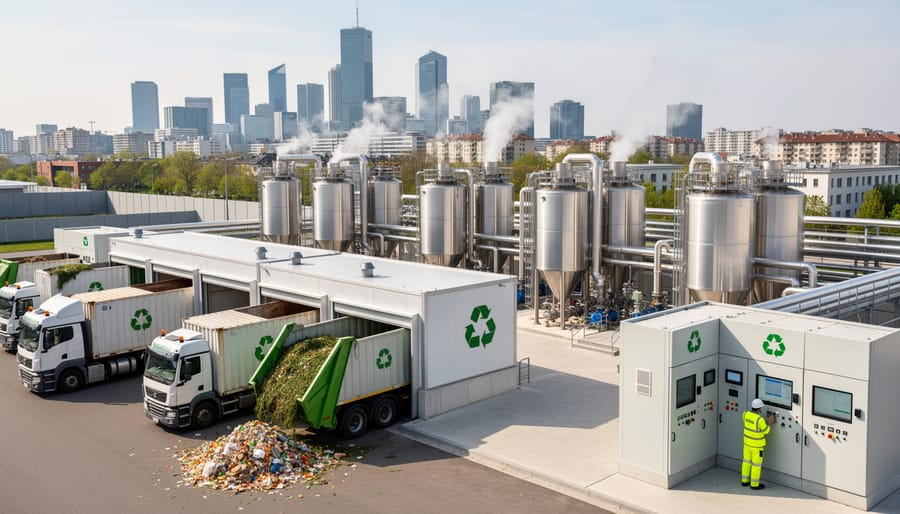
The process is remarkably straightforward. Organic waste from homes, cafes, and businesses gets collected separately, then transported to specialized facilities where microorganisms break it down in sealed tanks called anaerobic digesters. This natural decomposition produces biogas, predominantly methane, which can fire up generators to create electricity or be refined into renewable natural gas for heating and transport.
Sydney’s Eastern Suburbs provide a standout example. Their waste-to-energy plant processes over 200 tonnes of organic material daily, powering approximately 3,000 homes while diverting waste that would otherwise release harmful methane in landfills. The leftover material becomes nutrient-rich compost for local parks and gardens, completing a truly circular system.
Melbourne has taken a similar approach with its commercial food waste program, partnering with restaurants and food processors. The initiative has slashed disposal costs for businesses while generating revenue from energy sales, proving the economic case alongside environmental wins.
The benefits extend beyond clean power generation. These projects create local jobs in collection, processing, and facility management. They dramatically reduce greenhouse gas emissions, since capturing methane from controlled digestion prevents its escape into the atmosphere where it would trap heat 25 times more effectively than carbon dioxide.
For regional communities, smaller-scale facilities are demonstrating that bioenergy works everywhere, not just in capital cities, making this renewable solution genuinely accessible across the nation.
Bioenergy Precincts and Industrial Integration
Across Australia, innovative industrial precincts are discovering that bioenergy isn’t just environmentally responsible—it’s good business. These forward-thinking zones are transforming organic waste into reliable power, creating a win-win scenario for the environment and the bottom line.
The Richgro Garden Products facility in Western Australia stands as a brilliant example. This manufacturing precinct generates electricity from garden waste and biosolids, powering their entire operation while producing premium compost products. By converting materials that would otherwise head to landfill into energy, they’ve slashed electricity costs by roughly 40 percent while achieving near energy independence. It’s a model that’s captured attention nationwide.
In New South Wales, the Shoalhaven industrial area has pioneered collaborative bioenergy systems where multiple businesses share infrastructure. Local food processors, timber mills, and agricultural enterprises pool their organic waste streams, feeding a centralised biomass facility that generates power for the entire precinct. This shared approach spreads infrastructure costs across multiple users, making bioenergy viable for smaller operations that couldn’t justify standalone systems.
Queensland’s sugar industry offers another compelling story. Mills in regions like Mackay and Bundaberg have long burned bagasse—the fibrous residue left after crushing sugarcane—to generate electricity. Today, modern cogeneration plants produce far more power than mills need, feeding excess renewable energy back into the grid. During crushing season, these facilities become significant local power suppliers, strengthening regional energy security.
These precincts demonstrate a crucial insight: bioenergy works best when integrated into existing industrial ecosystems. By matching waste streams with energy needs, businesses create circular economies where one operation’s byproduct becomes another’s fuel source. The result? Reduced operational costs, enhanced energy reliability, and meaningful carbon emission reductions that benefit entire communities.
The Jobs Boom: How Energy Initiatives Are Creating Employment
Green Jobs Across the Skills Spectrum
Australia’s renewable energy transition is creating a diverse range of green job opportunities that span the entire skills spectrum, from hands-on technical roles to strategic planning positions.
Solar panel installers and wind turbine technicians are in high demand, with training programs across the country helping workers transition from traditional trades. Melbourne’s James Robertson made the switch from automotive mechanics to solar installation last year. “I was worried about job security in the car industry,” he explains. “Now I’m part of building Australia’s energy future, and the work is steady and rewarding.”
Energy advisors help households and businesses reduce consumption and transition to renewable sources, while project managers coordinate large-scale renewable developments. Brisbane-based energy consultant Sarah Chen moved from finance into sustainability consulting. “I wanted my work to have real environmental impact,” she says. “Now I help businesses cut emissions while saving money—it’s brilliant.”
Maintenance roles in bioenergy facilities, data analysts optimizing energy systems, and policy officers developing renewable frameworks all contribute to the sector’s growth. Regional areas are particularly benefiting, with biomass operations creating local employment in farming communities.
These roles don’t always require university degrees—TAFE courses and apprenticeships provide pathways for diverse backgrounds. The sector’s expansion means career opportunities will only increase, offering Australians meaningful work that addresses climate change while building secure livelihoods.
Training Programs and Pathways
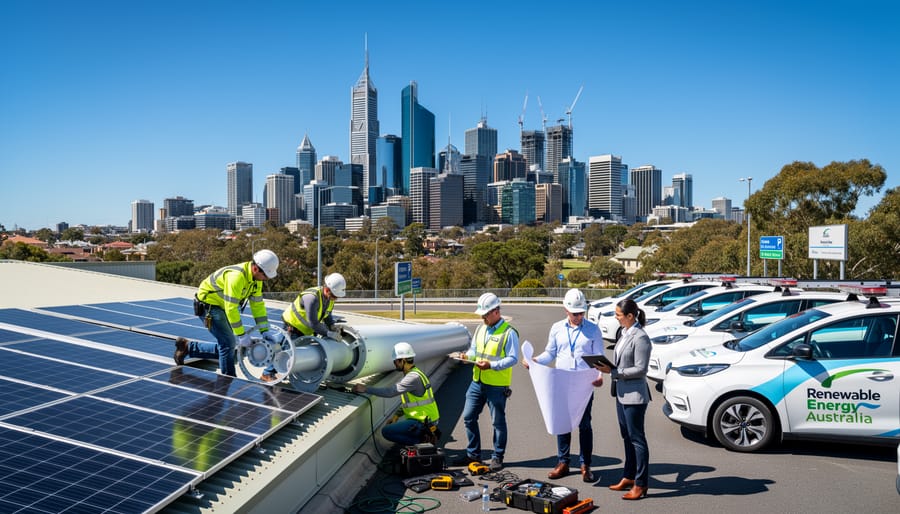
Australian cities are investing heavily in training programs that transform residents into the renewable energy workforce of tomorrow. These initiatives recognise that the transition to clean energy isn’t just about technology, it’s about people having the skills to install, maintain, and innovate within the sector.
Melbourne’s Northern TAFE has partnered with the City of Darebin and local renewable energy companies to deliver specialist training in solar installation, energy storage systems, and bioenergy facility operations. Over 300 residents have completed these courses in the past two years, with 85 percent securing employment in the renewable sector within six months of graduation. This partnership model demonstrates how councils can bridge the gap between education providers and industry needs.
In Western Australia, the City of Fremantle collaborated with South Metropolitan TAFE to establish a dedicated renewable energy training hub. The program includes hands-on experience with organic waste processing systems and bioenergy technologies, preparing workers for roles in the state’s expanding circular economy. One graduate, former retail worker Sarah Mitchell, now manages operations at a commercial composting facility that supplies feedstock to bioenergy plants. Her story illustrates how accessible training programs create genuine career pathways for people from all backgrounds.
Queensland’s Logan City Council takes a different approach, offering apprenticeships directly through their renewable energy projects. Young residents gain paid work experience while studying, removing financial barriers that might otherwise prevent participation. These programs particularly target communities that have historically faced employment challenges, ensuring the renewable transition creates opportunities for everyone.
Policy Innovations Making Real Impact
Renewable Energy Targets and Accountability
Cities across Australia are raising the bar with renewable energy targets that are both ambitious and grounded in reality. Melbourne’s commitment to reach net-zero emissions by 2040 and Sydney’s target of 50% renewable energy by 2030 demonstrate how urban centres are taking the lead on climate action. These aren’t just numbers on paper – they’re backed by transparent reporting mechanisms that keep progress visible to everyone.
What makes these targets stick is community involvement from day one. Brisbane’s renewable energy roadmap, for example, was shaped through extensive consultation with residents, businesses, and local industry. This collaborative approach ensures targets reflect community values while remaining achievable.
Regular progress reports published online allow citizens to track their city’s journey, creating a culture of shared accountability. Adelaide’s quarterly renewable energy dashboard is a ripper example, showing real-time data on solar generation, waste-to-energy contributions, and emissions reductions in plain language anyone can understand.
When communities help set the goals and can see the progress, cities find the motivation to push harder. This transparency builds trust and transforms renewable energy targets from bureaucratic tick-boxes into genuine community commitments that deliver measurable environmental benefits for all Australians.
Building Codes and Planning Requirements
Australian cities are embracing progressive building codes that weave renewable energy into the fabric of new construction, making sustainability the default rather than the exception. These forward-thinking regulations demonstrate that going green doesn’t mean breaking the bank.
Sydney’s Local Environmental Plans now require commercial buildings over certain sizes to achieve minimum renewable energy targets, while Melbourne’s planning schemes incentivise developers who exceed baseline sustainability standards. Brisbane has introduced streamlined approval processes for buildings incorporating solar arrays and battery storage, cutting red tape while boosting clean energy adoption.
The City of Adelaide’s standout approach mandates that new residential developments include provisions for renewable energy infrastructure, whether solar panels, battery connections, or preparation for future bioenergy systems. This “future-proofing” strategy ensures homes remain adaptable as technology evolves.
What’s remarkable is how these energy-efficient building standards are achieving results without pricing families out of homeownership. By integrating renewable requirements early in the design phase, developers report minimal cost increases—typically 2-5 percent—while delivering buildings with significantly lower operating costs.
These codes are quietly revolutionising urban landscapes, creating neighbourhoods where renewable energy is simply part of how buildings work, not an expensive add-on. Fair dinkum progress that makes environmental sense and economic sense.
Incentive Programs That Drive Adoption
Financial incentives have proven transformative in accelerating renewable energy adoption across Australian cities. These programs remove upfront cost barriers while demonstrating genuine commitment to clean energy transitions.
The City of Adelaide’s Sustainability Incentives Scheme stands out as a success story, offering matched funding up to $50,000 for businesses installing solar panels, battery storage, or bioenergy systems. Since 2019, this program has supported over 200 projects, reducing the city’s carbon footprint by 15% while creating local green jobs. One Adelaide café converted food waste into biogas through a small-scale digester, cutting energy costs by 40% thanks to council support.
Melbourne’s Zero Net Emissions by 2040 Fund takes a different approach, providing zero-interest loans to building owners retrofitting with renewable technologies. This clever financing model has sparked widespread uptake, particularly for commercial bioenergy heating systems that utilise agricultural residues from regional Victoria.
The Australian Renewable Energy Agency complements local efforts with competitive grants targeting innovative projects. Their recent $12 million investment in community-scale bioenergy facilities across regional towns demonstrates how federal and local programs can work together effectively.
These incentive schemes share common success factors: accessible application processes, realistic timelines, and ongoing technical support. They prove that when government removes financial roadblocks, communities embrace renewable solutions enthusiastically.
Overcoming Challenges: Lessons from the Front Lines
Grid Integration and Technical Solutions
Australian cities are pioneering collaborative frameworks between local councils, energy providers, and technology companies to seamlessly integrate renewable energy into existing grids. These partnerships are crucial for managing the intermittent nature of solar and wind power while ensuring grid stability.
Melbourne’s innovative approach demonstrates how smart microgrid solutions enable real-time energy management, allowing excess renewable generation to be stored or redistributed efficiently. The city’s collaboration with energy retailers has created virtual power plants connecting thousands of residential solar batteries, effectively turning homes into mini power stations that support the broader network during peak demand.
Brisbane has taken a different tack, establishing joint technical committees where utilities, government, and renewable energy companies work together to address integration challenges before they arise. This proactive model has accelerated the rollout of bioenergy facilities that convert organic waste into consistent baseload power, complementing variable solar output.
These success stories highlight that technical solutions work best when underpinned by genuine partnerships, shared data platforms, and clear communication channels between all stakeholders invested in Australia’s renewable energy future.
Building Community Support and Engagement
Getting communities genuinely excited about renewable energy transitions requires more than just information—it demands genuine engagement and shared ownership. Australian cities leading the charge have discovered that successful renewable energy initiatives start with listening sessions, not lectures.
Melbourne’s Sustainable Neighbourhoods program exemplifies this approach beautifully. Rather than dictating solutions, councils facilitate workshops where residents collectively explore renewable options suited to their specific needs. This grassroots method transforms potential skeptics into advocates, with participants often becoming ambassadors in their own communities.
Transparency proves equally vital. Adelaide’s real-time energy dashboards allow residents to see exactly how their neighbourhood solar installations and bioenergy facilities contribute to the grid. When people witness tangible impacts—whether reduced emissions or cost savings—abstract concepts become concrete achievements worth celebrating.
Success stories resonate powerfully too. Sharing how a local school’s solar panels funded new playground equipment, or how organic waste diverted to bioenergy plants reduced council rates, creates compelling narratives that inspire broader participation. Communities embrace change when they see neighbours benefiting first-hand.
Perth’s “Energy Champions” initiative takes this further, training local volunteers who provide peer-to-peer support. These champions speak the community’s language, addressing concerns authentically while maintaining momentum. By making renewable energy feel achievable and beneficial rather than imposed, cities build lasting enthusiasm that sustains initiatives through political cycles and challenges ahead.
Australia’s urban centres stand at an exciting crossroads, where innovation meets necessity and ambition aligns with action. The renewable energy initiatives we’ve explored throughout this article demonstrate that Australian cities aren’t just talking about change—they’re actively creating it. From Adelaide’s leadership in integrating solar infrastructure to Melbourne’s pioneering waste-to-energy systems, our urban communities are proving that sustainable transformation is both achievable and beneficial right now.
The path forward requires all of us. Whether you’re a policymaker shaping regulations, an industry professional developing clean technologies, or a concerned citizen passionate about your community’s future, you have a vital role to play. Start by learning about the renewable projects in your local area. Attend council meetings where energy policies are discussed. Support businesses committed to clean energy practices. If you’re in a position to influence decisions, champion policies that remove barriers and reward innovation.
The practical benefits of these initiatives are already emerging across Australian cities. Communities participating in renewable energy projects report reduced energy costs, new employment opportunities, and stronger local resilience. Residents enjoy cleaner air and the satisfaction of contributing to something larger than themselves. Businesses benefit from stable, locally-produced energy that reduces vulnerability to international market fluctuations.
Looking ahead, Australia’s urban renewable energy future shines brightly. The governance models and policies being tested today will shape the sustainable cities of tomorrow. Every initiative, whether large-scale or community-based, brings us closer to energy independence and environmental stewardship. The question isn’t whether Australia’s cities will embrace renewable energy—it’s how quickly we’ll all join this transformative movement. The time to act is now, and the opportunities are right on our doorstep.