
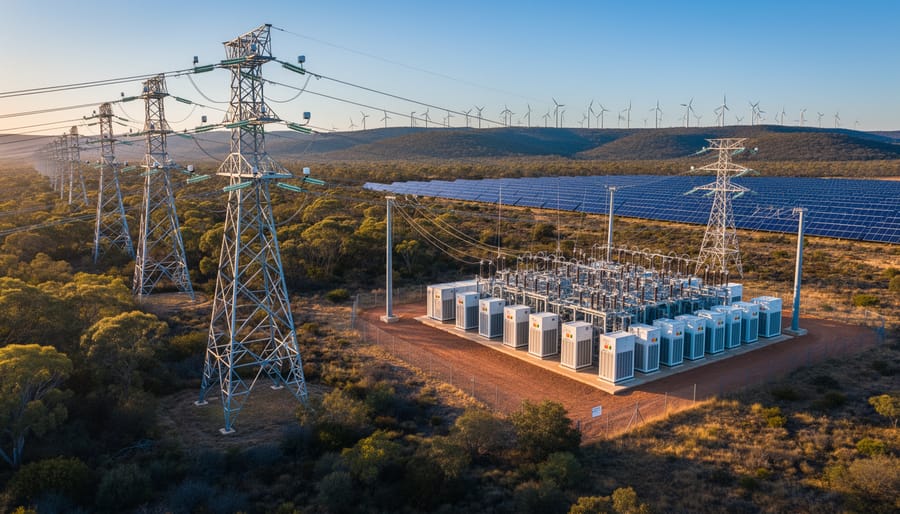
Australia’s electricity network is undergoing its most significant transformation in a century, and grid enhancing technologies are the quiet achievers making it possible. These innovative tools squeeze more capacity from existing transmission lines, prevent bottlenecks that waste renewable energy, and keep the lights on during extreme weather events—all without building a single kilometre of new infrastructure.
Picture this: wind farms in regional Victoria generating clean power that can’t reach Melbourne homes because transmission lines hit their limits. Solar farms in Queensland curtailing production on sunny days. These frustrations aren’t due to lack of renewable energy—they stem from grid constraints that grid enhancing technologies are specifically designed to solve.
Unlike traditional grid upgrades that can take a decade and billions of dollars, these technologies deliver results in months. Dynamic line rating systems monitor actual line capacity in real-time rather than relying on conservative estimates. Power flow controllers redirect electricity around congested pathways like sophisticated traffic management systems. Topology optimization reconfigures the network instantly to accommodate changing conditions.
The connection between these technologies and grid resilience is profound. They don’t just move more renewable electrons—they create flexible, responsive networks that adapt to bushfire threats, cyclones, and equipment failures with unprecedented agility.
Australian energy operators are already proving their worth. TransGrid’s deployment in New South Wales has unlocked hundreds of megawatts of renewable capacity without constructing new transmission towers. These aren’t experimental concepts—they’re proven solutions delivering measurable results today, bridging the gap between our renewable energy ambitions and grid realities while strengthening reliability for every Australian household and business.
What Grid Enhancing Technologies Actually Mean for Your Power Supply
Think of Australia’s electricity network as a motorway system built decades ago. When traffic increases beyond what the roads can handle, you’ve got two options: spend billions building new lanes, or use smart technology to move more vehicles efficiently through existing infrastructure. Grid enhancing technologies take the second approach.
GETs are innovative solutions that help squeeze more capacity from the power lines and infrastructure we already have. Rather than constructing new transmission towers and substations, which can take years and cost a fortune, these technologies use sensors, software, and smart equipment to monitor conditions in real-time and respond dynamically to changing power flows.
Consider what happened during Victoria’s extreme weather events in recent summers. Traditional grids operate with fixed capacity limits based on worst-case scenarios. But GETs, working as adaptive grid systems, constantly measure temperature, wind speed, and actual line conditions. When a cool breeze blows across transmission lines, they can safely carry more electricity than on a scorching day. These technologies detect these favourable conditions and allow more power to flow exactly when households need it most.
For everyday Australians, this translates into tangible benefits. You’re less likely to experience blackouts during heatwaves when everyone cranks their air conditioning. Your energy bills could decrease because utilities can avoid expensive infrastructure upgrades that get passed onto consumers. And here’s the real winner: GETs unlock space for renewable energy to connect faster to the grid.
A solar farm in regional Queensland or a wind project in South Australia can start generating clean power months or even years earlier than traditional grid upgrades would allow. This acceleration of renewable connections means we’re replacing fossil fuels quicker while maintaining the reliable electricity supply that keeps our homes comfortable and businesses running.
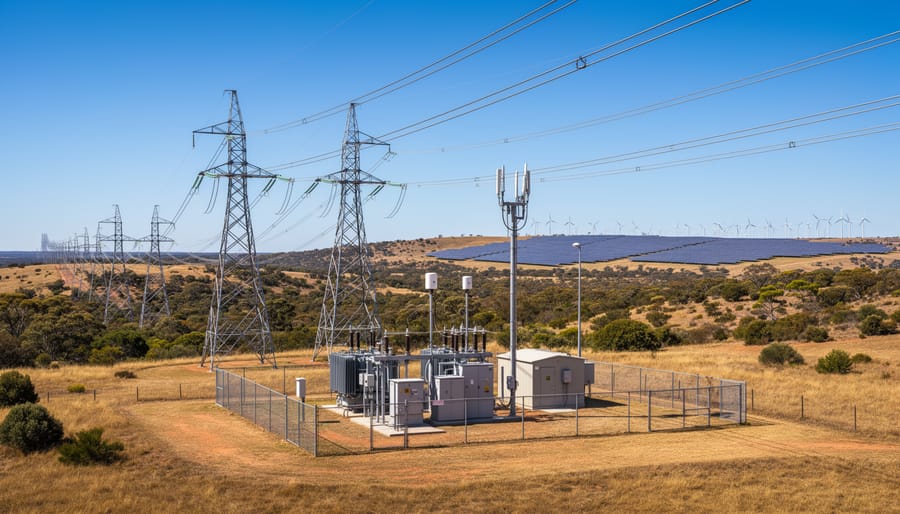
The Three Technologies Transforming Australia’s Grid Today
Dynamic Line Rating: Making Power Lines Work Harder
Imagine if your power lines could adapt to the weather, working harder on cool, breezy days and adjusting during hot, still afternoons. That’s exactly what Dynamic Line Rating (DLR) technology makes possible, and it’s transforming how we think about transmission capacity.
Traditional power lines operate under conservative assumptions, rated for worst-case scenarios like hot summer days with no wind. This means they’re often running well below their actual capacity most of the time. DLR changes this game entirely by using sensors to monitor real-time conditions including temperature, wind speed, and line sag. These sensors feed data to control systems that calculate the precise amount of power the lines can safely carry at any given moment.
The beauty of this approach is straightforward: on cooler days or when wind helps dissipate heat from the conductors, lines can carry significantly more electricity without any physical upgrades. It’s like discovering you’ve been driving your car in first gear when you could safely shift to third.
TransGrid, one of Australia’s major transmission network operators, has been putting DLR to work with impressive results. Their pilot projects across New South Wales have demonstrated capacity increases of up to 20 percent during optimal conditions. This matters enormously for renewable energy integration, as it means more solar and wind power can flow through existing infrastructure without the expense and environmental impact of building new transmission lines.
In South Australia, another DLR trial showed how the technology helps manage the state’s high renewable energy penetration. During cooler months when wind generation peaks, the increased transmission capacity proved essential for moving clean energy where it’s needed most.
The financial case is equally compelling. While new transmission infrastructure costs millions per kilometre and takes years to approve and construct, DLR systems can be installed in months for a fraction of the cost. For a grid already stretched to accommodate growing renewable generation, that’s a fair dinkum win-win situation.
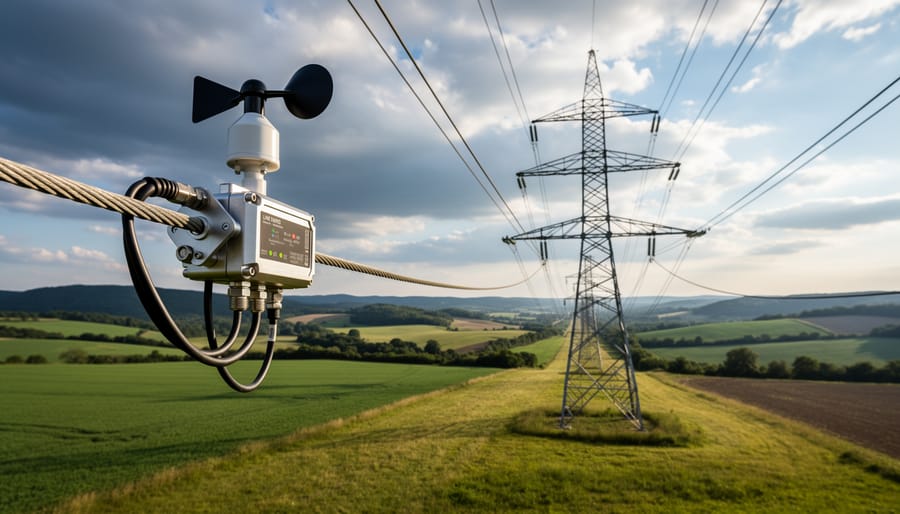
Power Flow Control: Smart Traffic Management for Electricity
Imagine Sydney’s peak hour traffic suddenly flowing smoothly because smart systems redirect vehicles through less congested routes. That’s essentially what power flow control devices do for electricity grids, and they’re revolutionising how Australia manages renewable energy.
These clever systems act like sophisticated traffic controllers for electricity, continuously monitoring the grid and redirecting power through the most efficient pathways. Just as a GPS finds the quickest route around a traffic jam, power flow controllers identify congestion points in transmission lines and reroute electricity through underutilised pathways. This means we can squeeze significantly more capacity from our existing infrastructure without the massive expense and environmental impact of building new transmission lines.
The technology works through devices like Flexible AC Transmission Systems and power flow controllers that can actively manage how electricity moves across the network. When a particular transmission line hits capacity, these systems seamlessly divert power through alternative routes, much like opening up a bus lane during peak periods.
For renewable energy integration, this capability is transformative. Solar and wind farms often generate power in locations where transmission lines weren’t originally designed to handle large flows. In regional Queensland, for instance, power flow controllers have enabled existing lines to carry substantially more renewable energy by intelligently managing congestion that previously forced wind farms to curtail generation on windy days.
The beauty of this approach lies in its efficiency. Rather than waiting years for new transmission infrastructure, power flow control can be deployed relatively quickly, unlocking grid capacity that’s already there but simply wasn’t being used optimally. It’s the difference between building an entirely new motorway and installing smart traffic lights that triple the capacity of existing roads.
Topology Optimization: The Grid’s Hidden Efficiency Switch
Think of your electricity grid like a busy road network. When traffic builds up on one route, smart drivers take alternative paths to reach their destination faster. Topology optimization works similarly, intelligently reconfiguring network connections to redirect power flow through the most efficient pathways available at any given moment.
This technology acts as the grid’s hidden efficiency switch, constantly analysing network conditions and automatically adjusting connection points to maximize capacity and reliability. Rather than allowing bottlenecks to develop, topology optimization redistributes electricity flow across multiple pathways, ensuring power reaches homes and businesses through the clearest routes possible.
The real magic happens when this technology works alongside renewable energy sources. Consider a bioenergy facility in regional Queensland generating consistent baseload power from agricultural waste. When solar farms flood the grid during peak sunshine hours, topology optimization can reconfigure network connections to balance this variable renewable generation with the steady output from the bioenergy plant. This dynamic adjustment prevents overloading while ensuring clean energy gets where it’s needed most efficiently.
In practical terms, topology optimization can increase grid capacity by 20 to 40 percent without building a single new power line. That’s like discovering hidden lanes on existing roads, creating space for more renewable energy to flow through the system. For communities transitioning to cleaner energy sources, this means faster integration of local bioenergy facilities and other renewable projects without expensive infrastructure upgrades.
The beauty of this approach lies in its flexibility. As renewable generation patterns shift throughout the day, the grid automatically adapts, finding optimal configurations that maintain reliability while maximizing the use of clean energy. It’s smart infrastructure working silently behind the scenes, making our renewable energy transition both smoother and more cost-effective.
Why This Matters More Than Building New Power Lines
When you think about upgrading Australia’s electricity grid, the traditional approach sounds simple enough: build more power lines, add bigger transformers, construct new substations. The reality? These infrastructure projects typically take between seven to fifteen years from planning to completion, cost billions of dollars, and require clearing vegetation corridors across vast distances. Meanwhile, our renewable energy capacity sits underutilized, and grid bottlenecks force coal plants to keep running longer than necessary.
Grid enhancing technologies flip this equation entirely. Instead of waiting over a decade for new transmission lines, GETs can be deployed in months. Where traditional infrastructure expansion might cost $2-5 million per kilometer of new transmission line, GETs achieve similar capacity increases at a fraction of that investment, often 10-20% of the equivalent cost. This isn’t theoretical—real Australian projects demonstrate these advantages right now.
Consider the environmental equation as well. Building new transmission infrastructure means clearing hundreds of hectares, disrupting wildlife corridors, and facing lengthy community consultations. GETs work within existing infrastructure footprints, requiring no land clearing and minimal visual impact. For environmentally conscious Australians, this matters enormously. We can achieve our clean energy goals without creating new environmental trade-offs.
The speed advantage connects directly to Australia’s renewable energy transition timeline. Our coal-fired power stations are retiring according to definite schedules, yet grid constraints currently limit how much wind, solar, and even bioenergy can flow where it’s needed. GETs provide the immediate capacity boost that matches this urgency. They’re particularly valuable for integrating decentralized power grids where bioenergy facilities generate power closer to agricultural regions and industrial users.
There’s another compelling advantage: flexibility. Traditional infrastructure represents permanent, fixed investments. If energy patterns shift or technology evolves, those concrete-and-steel structures remain largely inflexible. GETs can be upgraded, relocated, or reconfigured as grid needs change. This adaptability proves essential in a rapidly evolving energy landscape where yesterday’s bottlenecks might not be tomorrow’s constraints.
The immediate benefits create momentum. Communities see reduced curtailment of renewable generation within months rather than waiting years for traditional solutions to materialize. This tangible progress builds public confidence in Australia’s energy transition.
Real Results: Where Grid Enhancing Technologies Are Working in Australia
The proof is in the performance, and across Australia, grid enhancing technologies are already delivering impressive results that are transforming how we harness renewable energy.
In South Australia’s Mid-North region, ElectraNet’s deployment of dynamic line rating systems on the Davenport to Robertstown transmission line has become a textbook example of innovation in action. By installing sensors that monitor real-time weather conditions and conductor temperature, the network operator discovered they could safely increase the line’s capacity by up to 20 percent during cooler periods. This might sound modest, but the impact has been remarkable. The upgraded capacity has enabled an additional 200 megawatts of wind and solar energy to flow through existing infrastructure during peak generation times. That’s enough clean power for roughly 80,000 South Australian homes, all without constructing a single new transmission tower. The project cost approximately $2 million, compared to the estimated $50 million required for traditional line upgrades, proving that sometimes the smartest solutions don’t involve building bigger, but building smarter.
Over in New South Wales, the Transgrid PowerFlow Controller pilot near Wellington has demonstrated how flexible AC transmission systems can revolutionise power distribution. This sophisticated piece of kit acts like a traffic controller for electricity, dynamically directing power along the most efficient pathways through the network. Since its installation in 2021, the system has increased the effective capacity of the network by 15 percent while reducing transmission losses by 8 percent. Local renewable energy generators who previously faced curtailment during high-production periods can now export more of their clean energy to metropolitan areas. One wind farm operator reported a 12 percent increase in annual revenue after the controller came online, making renewable projects more financially viable and attractive to investors.
Perhaps most inspiring is Tasmania’s Battery of the Nation initiative, which combines pumped hydro storage with advanced grid management technologies. By integrating real-time monitoring systems and predictive analytics, operators can now respond to demand fluctuations within seconds rather than minutes. During the 2022-23 summer period, these technologies helped Tasmania reach 100 percent renewable electricity generation for extended periods while maintaining grid stability. The system successfully managed the integration of new solar installations that might have otherwise caused voltage issues on the network.
These aren’t just technical achievements; they’re tangible victories for communities, the environment, and Australia’s renewable energy future.
How These Technologies Support Bioenergy and Other Renewables
Grid enhancing technologies are proving to be game-changers for bioenergy and distributed renewable generation across Australia. These smart systems directly address one of the biggest challenges facing biomass-derived power: getting clean energy from regional production sites onto an already-stretched grid network.
For bioenergy producers, particularly those in rural and regional areas, GETs open doors that were previously closed. Traditional grid connections often meant expensive infrastructure upgrades or being told there simply wasn’t capacity available. Dynamic line rating and advanced power flow control change this equation entirely. They squeeze more capacity from existing transmission lines, allowing biomass facilities to connect without lengthy waits or prohibitive costs. This is particularly valuable for agricultural communities converting crop waste and livestock byproducts into reliable baseload power.
GETs also tackle the curtailment problem that plagues renewable generators. When grid operators worry about overloading transmission lines, they sometimes ask renewable facilities to reduce output, essentially wasting clean energy. Smart monitoring and control technologies give operators real-time visibility and precise management tools, meaning they can accept more renewable power without compromising grid stability. For bioenergy projects that have invested significantly in production infrastructure, this translates to better returns and more consistent revenue.
The distributed nature of bioenergy generation makes it especially suited to benefit from these advancements. Small-scale biomass plants processing local agricultural waste can now connect to distribution networks that previously couldn’t accommodate them. When paired with energy storage solutions, GETs create resilient microgrids that keep regional communities powered even during network disruptions.
Perhaps most importantly, GETs level the playing field. They help bioenergy compete alongside solar and wind by maximising how much renewable energy the grid can handle simultaneously, building the diverse, reliable clean energy ecosystem Australia needs for its sustainable future.
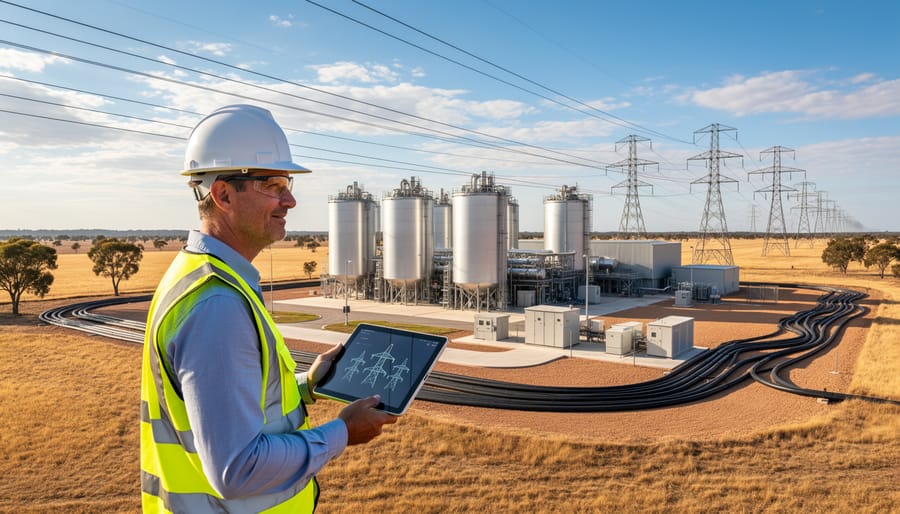
What’s Next: The Future of Smart, Resilient Power Networks
Australia stands at the threshold of a remarkable transformation in how we manage and distribute electricity. Grid enhancing technologies are rapidly moving from innovative trials to mainstream deployment, driven by a perfect storm of supportive policy, falling costs, and urgent need for reliable renewable energy integration.
The momentum is building impressively. State and federal governments are recognising that GET solutions offer faster, more cost-effective pathways to grid modernization than traditional infrastructure alone. Recent policy frameworks are streamlining approval processes for dynamic line rating systems and advanced power flow controllers, while incentive programs are making adoption increasingly attractive for network operators. This regulatory evolution means what once took years of negotiation can now happen in months.
The economic benefits extend far beyond avoided infrastructure costs. Australia’s emerging GET sector is creating significant job creation potential across engineering, data science, installation, and maintenance roles. Local manufacturing capabilities are developing, particularly in sensor technologies and software platforms tailored to Australian conditions. Universities and technical colleges are partnering with industry to develop specialized training programs, ensuring we have the skilled workforce needed for tomorrow’s smart grids.
Looking ahead, the integration of artificial intelligence and machine learning will supercharge these technologies. Predictive analytics will anticipate grid stress before it occurs, automatically adjusting power flows to prevent disruptions. Combined with distributed battery storage and vehicle-to-grid systems, GET solutions will enable truly resilient, self-healing networks that maximize renewable energy utilization while maintaining rock-solid reliability.
The beauty of this trajectory is that every megawatt of enhanced capacity moves us closer to our net-zero commitments while delivering immediate benefits. Lower electricity costs, reduced emissions, and more reliable power supply aren’t distant promises but tangible outcomes already being realized across Australian networks. As deployment accelerates, we’re not just upgrading infrastructure—we’re building the foundation for a sustainable, prosperous energy future that benefits every Australian.
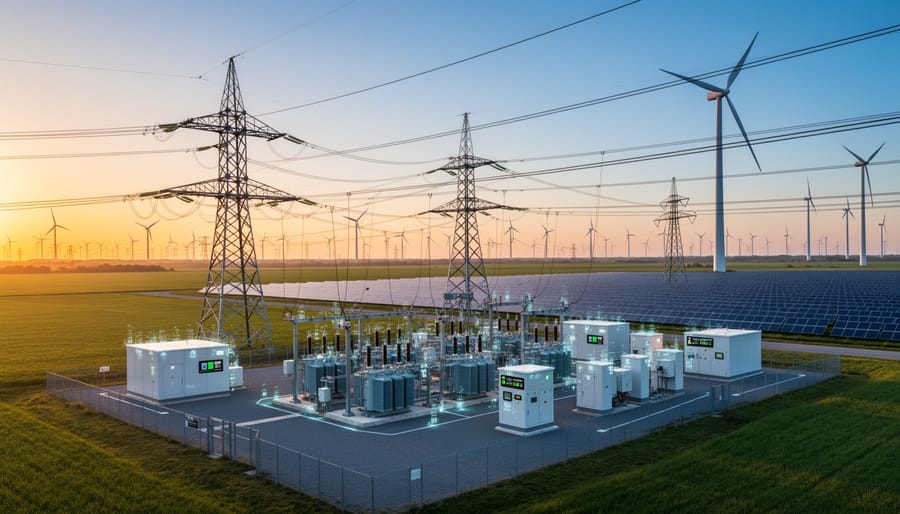
Australia stands at an exciting crossroads in its energy journey, and grid enhancing technologies represent one of the most practical solutions we can implement right now. These aren’t futuristic concepts requiring decades of development—they’re proven, ready-to-deploy innovations that can strengthen our electricity network today while we continue building the renewable energy infrastructure of tomorrow.
The beauty of grid enhancing technologies lies in their immediacy. Unlike major infrastructure projects that take years to plan and construct, solutions like dynamic line rating, advanced power flow control, and topology optimisation can be installed in months, delivering measurable benefits almost instantly. They squeeze more capacity from the wires we’ve already paid for, reduce electricity costs, and accelerate the connection of renewable energy projects that might otherwise wait years in the queue.
What makes this particularly exciting for Australia is that we’re already seeing these technologies work brilliantly across our diverse landscape—from Tasmania’s sophisticated network management to South Australia’s grid-scale battery integration and Queensland’s distributed energy coordination. These success stories prove that grid enhancing technologies aren’t just theoretically sound; they’re delivering real resilience and real savings for Australian communities and businesses.
Now is the time to champion these solutions. Whether you’re a business owner exploring ways to reduce energy costs and improve reliability, a community leader interested in accelerating local renewable energy projects, or simply someone passionate about Australia’s sustainable future, grid enhancing technologies offer tangible opportunities to make a difference. Talk to your energy provider about these options, encourage your local representatives to prioritise smart grid investments, and stay curious about how innovation can transform our energy system. Together, we can build a more resilient, affordable, and sustainable energy future—starting today.