
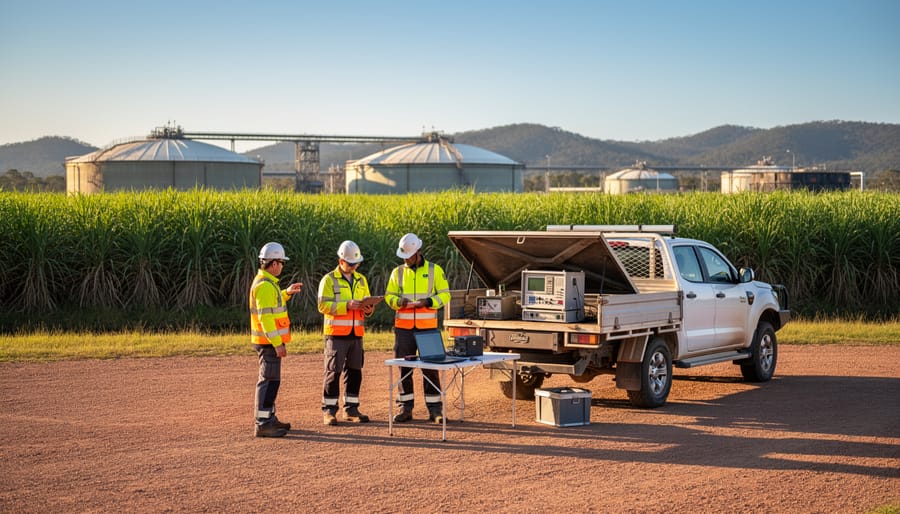
A sustainable society would emphasize the wellbeing of people alongside planetary health, recognizing that genuine progress measures success not just in economic growth but in how we nurture both communities and ecosystems for generations to come. This fundamental shift in values transforms how we approach every sector of our economy, particularly in the renewable energy workforce where the principles of sustainability must be lived, not just promoted.
Consider the interconnectedness at the heart of sustainability: environmental stewardship cannot exist without social equity, and economic viability depends on both. When we build workforce programs around these principles, we create ripple effects that extend far beyond job creation. A well-trained renewable energy worker in regional Queensland doesn’t just install solar panels or maintain bioenergy facilities; they become ambassadors for change, bringing clean energy benefits to communities that have historically relied on fossil fuels while demonstrating that the transition creates opportunities rather than displacement.
Workforce mobility programs in the bioenergy sector exemplify this holistic approach by prioritizing accessible training pathways that welcome diverse backgrounds, fostering knowledge-sharing across regions, investing in long-term career development rather than short-term solutions, and ensuring workers have agency in shaping the industry’s future. These programs recognize that sustainable transformation happens through people who are empowered, supported, and given the tools to succeed.
The Australian bioenergy sector stands at a pivotal moment where the choices we make about workforce development will determine whether our renewable energy transition truly embodies sustainability’s promise or merely replicates old patterns with new technology.
What a Sustainable Society Would Emphasize in Energy Workforce Planning
Skills That Travel: Building Expertise Across Regions
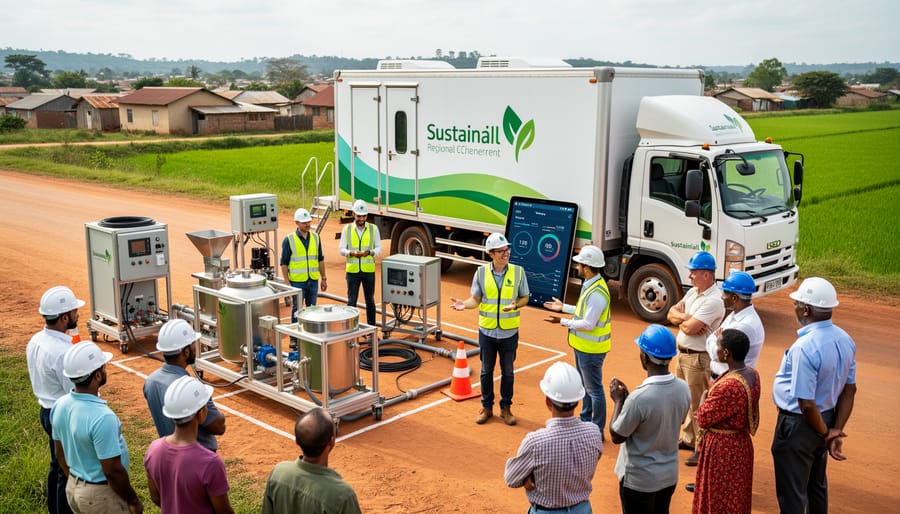
Mobile workforce programs are breaking down geographical barriers in Australia’s energy transition, ensuring that cutting-edge bioenergy expertise reaches every corner of the continent. Rather than concentrating specialized knowledge in major cities, these initiatives deploy skilled professionals to regional and remote communities, creating a ripple effect of capability and confidence.
Take the example of a bioenergy technician from Brisbane who spent six months training a team in regional Queensland. By sharing hands-on expertise in biomass processing and system maintenance, she didn’t just install equipment—she built local capacity. Today, that community operates its own bioenergy facility independently, with workers who’ve since mentored neighbouring towns.
These bioenergy training pathways are particularly valuable in agricultural regions where farmers are transforming crop residues into energy. Mobile specialists conduct workshops on-site, adapting theoretical knowledge to local conditions and available resources. A wheat farmer in Western Australia learned to convert stubble into biochar through a travelling expert program, turning waste into revenue while improving soil health.
The beauty of mobile workforce models lies in their flexibility. Short-term placements prevent brain drain from regional areas while ensuring knowledge transfer occurs where it’s most needed. Communities aren’t forced to send their brightest to cities for training; instead, expertise comes to them. This approach respects local wisdom, combining traditional land management practices with modern bioenergy techniques to create solutions that genuinely fit each community’s unique circumstances and aspirations.
Resilience Through Flexibility
Workforce mobility programs are essential for building resilient energy systems that can adapt to the natural rhythms of biomass production. Unlike fossil fuels that flow consistently year-round, agricultural and forestry residues become available seasonally, requiring flexible labour pools that can move where and when they’re needed most.
In Western Australia’s wheat belt, harvest season creates intense demand for biomass collection workers between November and January. Through coordinated mobility programs, these same workers can transition to Queensland’s sugarcane bagasse processing facilities during winter months, ensuring continuous employment while matching labour supply to regional demands.
This flexibility proved invaluable during recent bushfire recovery efforts in Victoria, where mobile bioenergy teams quickly redirected to clear debris and convert damaged timber into energy resources. Rather than leaving devastated communities with waste management challenges, the mobile workforce transformed disaster into opportunity.
The result is an energy sector that bends rather than breaks under pressure. When droughts affect one region’s biomass availability, workers can shift to areas with better yields. When unexpected projects emerge, trained professionals are ready to deploy. This dynamic approach creates stability through adaptability, ensuring Australia’s bioenergy sector remains productive regardless of seasonal variations or unforeseen challenges.
The Bioenergy Workforce Challenge Australia Faces Today
Australia’s bioenergy sector stands at a crossroads, brimming with potential yet facing a workforce puzzle that threatens to hold back progress. While regional areas overflow with agricultural waste, forestry residues, and organic materials perfect for renewable energy production, they often lack the skilled workers needed to transform these resources into clean power.
Picture the scenario: vast sugar cane farms across Queensland generate mountains of bagasse, rural Victoria produces timber processing residues, and Western Australia’s wheat belt creates abundant crop stubble. These biomass goldmines sit waiting, yet the expertise to harness them remains concentrated in capital cities like Melbourne, Sydney, and Brisbane. It’s a bit like having all the ingredients for a feast but finding the chef is three states away.
The challenge goes beyond simple geography. Regional communities need workers trained in biomass handling, conversion technologies, and facility operations, but these specialised skills aren’t widely available outside metropolitan hubs. Young people often leave country towns to pursue education and careers in cities, creating a brain drain that leaves regional industries struggling to find qualified personnel.
Meanwhile, urban centers house environmental engineers, energy analysts, and renewable technology specialists who rarely venture to where biomass resources naturally occur. This disconnect creates inefficiencies that slow project development and increase costs. A processing facility might delay operations for months while searching for someone qualified to run advanced gasification equipment or manage thermal conversion systems.
The situation is compounded by limited training opportunities in rural areas. Technical colleges and universities offering renewable energy programs typically operate in cities, making it difficult for regional Australians to gain relevant qualifications without relocating. Indigenous communities, despite possessing deep knowledge of land management and sustainable practices, face particular barriers accessing formal bioenergy training.
This workforce gap isn’t just an industry headache. It represents missed opportunities for regional economic development, delayed emission reductions, and underutilised renewable resources. The solution requires creative approaches that bridge the distance between biomass abundance and human expertise.
How Mobility Programs Transform Sustainable Bioenergy Development
Connecting Resources to Expertise
Imagine a skilled technician travelling from Queensland’s sugar cane harvest in winter to Victoria’s wheat fields in summer, following the natural rhythm of agricultural waste production. This is the essence of connecting resources to expertise – matching mobile workers with biomass availability as it ebbs and flows across Australia’s diverse regions and seasons.
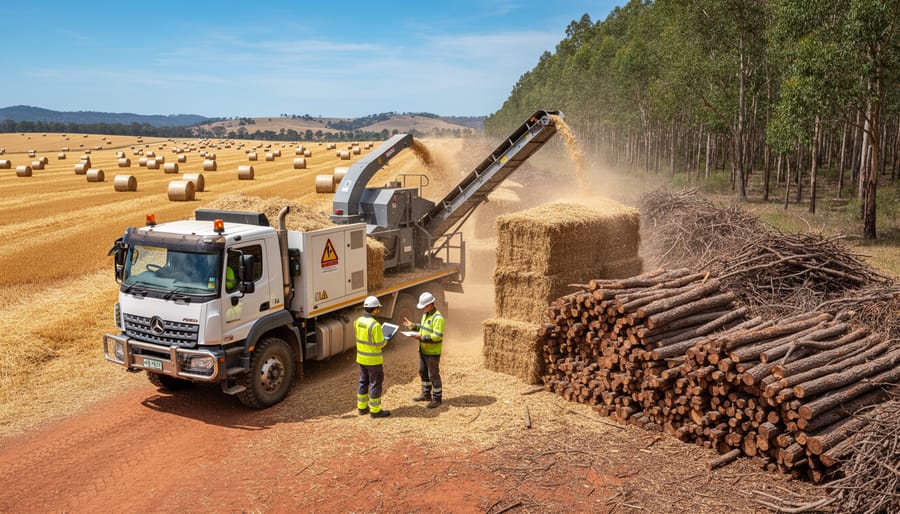
Agricultural residues and forestry waste don’t appear uniformly throughout the year. Sugar cane bagasse peaks during crushing season, wheat stubble accumulates after harvest, and forestry operations follow their own cycles. By deploying mobile bioenergy experts who can move with these resources, we optimize every tonne of organic material that might otherwise go to waste.
A cooperative in South Australia has pioneered this approach brilliantly. Their team of fifteen specialists travels a circuit through regional areas, setting up temporary processing facilities near harvest sites. They convert agricultural waste into biofuel pellets right where the biomass is most abundant, eliminating transport costs and capturing value before materials decompose. The result? A 40 percent increase in bioenergy production efficiency compared to fixed facilities.
This mobile workforce model also addresses the fair go principle – bringing quality jobs to regional communities precisely when harvest work peaks. Local workers gain training opportunities, and communities benefit from waste reduction and energy production happening in their own backyard. It’s sustainable thinking that connects environmental stewardship with economic opportunity.
Training the Next Generation on the Ground
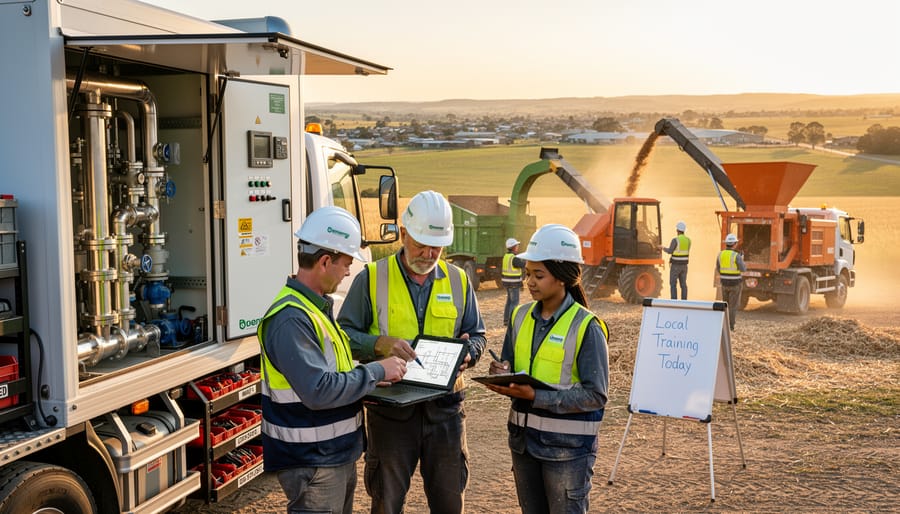
In Bundaberg, Queensland, mobile training teams are transforming how sustainable energy skills get passed on to regional workers. When a biomass facility began construction in 2023, rather than flying in specialist crews for the duration, project managers embedded local workers alongside experienced technicians from day one.
Take Jake Morrison’s experience. The 24-year-old had been doing seasonal farm work when he joined the program. Within six months of working shoulder-to-shoulder with mobile mentors, he’d gained certifications in biomass handling systems and safety protocols. “These blokes didn’t just show us the ropes—they made sure we understood the why behind every process,” Jake explains. Today, he’s training new recruits himself, creating a ripple effect of knowledge transfer.
This mentorship model exemplifies what a sustainable society truly values: building local capacity rather than creating dependency. Mobile teams spend 18 months in each community, working regular shifts alongside regional employees. The approach mirrors traditional apprenticeships but accelerates learning through intensive, hands-on collaboration.
The results speak for themselves. Bundaberg’s facility now operates with 85% local staff, generating 47 permanent jobs where few existed before. These aren’t temporary positions—workers gain transferable skills applicable across the renewable energy sector, supporting innovation in bioenergy nationwide.
Regional communities gain more than employment; they develop expertise that attracts further investment, creating self-sustaining cycles of opportunity and growth.
Faster Project Rollout, Lower Carbon Footprint
Traditional bioenergy project deployment often involves flying specialists across the country multiple times, relocating entire families, or establishing temporary accommodation—all of which generate substantial carbon emissions before a single renewable energy facility even breaks ground. A sustainable society recognizes this paradox and seeks smarter alternatives.
Mobile workforce programs flip this approach on its head. By deploying experienced teams already equipped with transportable accommodation and tools, projects can commence weeks or even months faster. These professionals arrive ready to work, eliminating the lengthy setup phases that plague conventional approaches. Consider the recent Queensland biomass facility that achieved operational status four months ahead of schedule using a mobile team—that’s four months of earlier clean energy generation and carbon displacement.
The carbon mathematics are compelling. A single project requiring five return flights per specialist over six months generates approximately 8 tonnes of CO2 equivalent. Multiply this across dozens of projects nationally, and the emissions quickly rival those of small power stations. Mobile teams dramatically reduce this footprint by minimizing air travel and maximizing local resource utilization.
Beyond the environmental ledger, faster rollouts mean communities access renewable energy sooner, creating jobs and energy security more rapidly. It’s practical sustainability that doesn’t compromise on speed or quality—proving that environmental responsibility and project efficiency aren’t competing priorities but complementary goals that drive Australia’s clean energy transition forward.
What Makes Bioenergy Workforce Mobility Different From Traditional Labor Models
Traditional workforce models in resource extraction have left a complicated legacy across regional Australia. The fly-in-fly-out mining approach, while economically efficient for companies, often creates what locals call “ghost towns” where workers arrive, extract resources, and depart without meaningful community connection. Similarly, temporary foreign worker programs can inadvertently limit knowledge transfer to local communities. Bioenergy workforce mobility takes a fundamentally different path.
The distinguishing feature is genuine community integration. Rather than isolating workers in temporary camps, sustainable bioenergy programs prioritize accommodation within existing towns, encouraging workers to shop at local businesses, join community groups, and build relationships that extend beyond their contracts. In Narrogin, Western Australia, a wheat straw bioenergy project demonstrated this approach beautifully. Workers didn’t just arrive to install equipment; they participated in local festivals, enrolled children in schools, and became part of the social fabric.
Skills transfer represents another critical difference. Where traditional models protect proprietary knowledge, bioenergy workforce mobility emphasizes capacity building. Programs actively train local residents, creating pathways for community members to transition from learners to leaders. A sugarcane bagasse project in Queensland showcased this principle by establishing mentorship pairs, ensuring every visiting specialist worked alongside local apprentices who would eventually manage operations independently.
Environmental alignment sets the philosophical foundation. Unlike extractive industries that deplete resources, bioenergy workers arrive to establish regenerative systems. They’re not here to take something away but to build something lasting. This creates a fundamentally different relationship with place and community. Workers become invested in long-term environmental outcomes because their projects depend on sustainable practices.
The result is workforce mobility that strengthens rather than depletes communities, creating resilient regional economies while advancing Australia’s renewable energy future. It’s not just about moving people; it’s about building connections that endure.
Creating the Infrastructure for Mobile Bioenergy Workers
Building the infrastructure for mobile bioenergy workers requires a coordinated approach across multiple sectors, with practical solutions that address the real-world challenges faced by workers and employers alike. A sustainable society recognises that workforce mobility isn’t just about moving people around; it’s about creating supportive systems that make mobility beneficial and sustainable for everyone involved.
Policy frameworks form the foundation of this infrastructure. Governments need to establish clear renewable energy standards and workforce mobility guidelines that protect workers’ rights while encouraging flexibility. This includes portable entitlements, recognition of interstate qualifications, and fair compensation structures that account for travel and temporary relocation. Queensland’s recent bioenergy workforce initiative demonstrates how state-level support can drive industry growth, with streamlined certification processes allowing workers to move seamlessly between projects across regional areas.
Training pathways must be accessible and standardised. Establishing national competency frameworks ensures workers trained in South Australia can immediately contribute to projects in New South Wales. Regional training hubs, partnering with TAFE institutions and industry leaders, create opportunities for skill development without requiring permanent relocation. Take the Western Australian model, where mobile training units visit remote communities, combining hands-on experience with formal qualifications.
Accommodation solutions matter enormously. Some forward-thinking bioenergy companies have invested in quality temporary housing near project sites, moving beyond basic camp facilities to provide comfortable, community-oriented spaces. These arrangements include family-friendly options, recognising that sustainable mobility means supporting workers’ personal lives.
Coordination mechanisms tie everything together. Digital platforms matching available workers with regional opportunities, transparent scheduling systems, and industry-wide communication networks prevent gaps in project delivery. The Australian Bioenergy Council’s workforce registry exemplifies this approach, connecting skilled workers with emerging opportunities nationwide.
Success requires collaboration between government, industry, training providers, and communities. When these elements align, mobile workforces become a practical reality, driving regional economic development while advancing Australia’s renewable energy transition. The infrastructure we build today determines whether workforce mobility truly serves sustainability goals or merely shuffles workers between precarious positions.
The Ripple Effects: Jobs, Communities, and Energy Independence
When regional bioenergy projects establish roots in communities, they create ripples that extend far beyond the immediate worksite. Workforce mobility programs serve as catalysts for transformation, touching multiple aspects of regional life simultaneously.
Take the experience of regional Queensland, where a coordinated bioenergy workforce initiative didn’t just create jobs—it revitalised entire towns. Local cafes saw increased patronage, hardware stores expanded their inventory, and young families who’d left for city opportunities began returning home. The economic multiplier effect meant every bioenergy position supported approximately three additional jobs in the broader community, from accommodation providers to childcare services.
Energy independence represents another powerful ripple. Communities hosting bioenergy facilities gain more than employment; they secure control over their energy destiny. Agricultural regions that once exported their resources while importing expensive electricity now process biomass locally, keeping both energy and profits within the community. This transformation strengthens resilience against external price shocks and supply disruptions.
The knowledge transfer dimension proves equally significant. Workers trained through mobility programs return to their home regions carrying expertise that seeds future projects. A technician who spent six months at a Victorian facility might establish the foundation for a similar project in New South Wales, creating a network effect that accelerates Australia’s clean energy future.
Community empowerment grows naturally from local energy production. When residents see their agricultural waste transformed into electricity powering their homes and schools, they develop genuine ownership over sustainability outcomes. This psychological shift from passive consumers to active participants in the energy transition creates lasting cultural change.
These interconnected benefits demonstrate that workforce mobility in bioenergy isn’t simply about filling positions—it’s about weaving stronger, more resilient communities capable of thriving in a sustainable future.
Workforce mobility programs represent far more than a clever solution to skill shortages—they embody the very essence of what a sustainable society would emphasize. By facilitating the sharing of expertise across regions, these initiatives demonstrate that sustainability isn’t just about renewable energy sources or emissions reduction. It’s fundamentally about how we allocate our most precious resource: people with knowledge, skills, and drive.
These programs build genuine resilience into our energy transition by creating networks of professionals who can respond quickly to emerging opportunities. When a solar farm needs skilled installers in regional Queensland, or a biomass facility requires maintenance expertise in Tasmania, mobile workers become the connective tissue holding our renewable future together. They’re not just filling positions—they’re transferring knowledge, mentoring local teams, and establishing the foundations for long-term community capability.
The success stories from across Australia prove that equitable access to opportunities needn’t remain an aspiration. Mobile workers from diverse backgrounds are finding meaningful careers while helping regional communities develop energy independence. This is sustainability in action: economic opportunity meeting environmental necessity, all while strengthening social connections between urban and rural Australia.
These workers are genuine change-makers, and they deserve our recognition and support. If you’re inspired by this vision, there’s a practical step you can take today: reach out to renewable energy companies in your area and ask about their workforce development programs. Better still, if you’re an employer, consider how your organisation might support or participate in mobile worker schemes. Every conversation, every partnership formed, brings us closer to a truly sustainable future—one where opportunity flows as freely as the clean energy we’re working together to generate.