
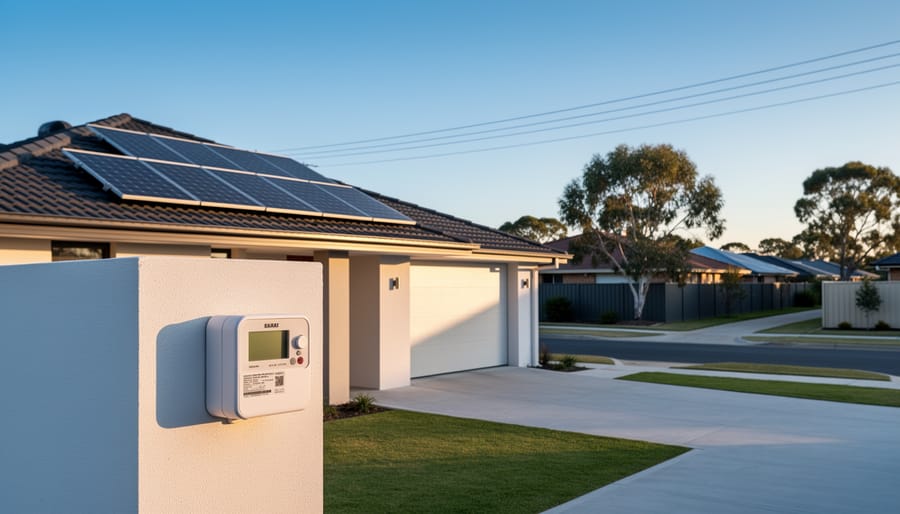
Imagine your solar panels doing double duty: powering your home during the day and sending excess energy back to the grid for credit on your electricity bill. That’s bidirectional metering in action, and it’s transforming how Australian households and businesses interact with the power grid.
Bidirectional metering, also called net metering or two-way metering, tracks electricity flowing in both directions through your meter. When your solar system generates more power than you’re using, the surplus flows back to the grid, spinning your meter backwards or banking credits on your account. When the sun sets and you draw from the grid, the meter records that consumption. The result? You only pay for your net energy use, dramatically reducing electricity costs while supporting grid stability.
This technology has become the backbone of Australia’s renewable energy transition, enabling over 3 million households with rooftop solar to maximize their investment returns. In South Australia alone, residential solar systems equipped with bidirectional meters now contribute up to 70% of the state’s electricity demand on sunny weekends, proving that distributed energy resources can reliably support modern grids.
The benefits extend beyond personal savings. Every kilowatt-hour you export reduces the grid’s reliance on fossil fuels, accelerates decarbonization, and helps stabilize energy prices for entire communities. As Australia races toward its renewable energy targets, bidirectional metering isn’t just smart technology; it’s your direct pathway to energy independence and meaningful climate action.
What Is Bidirectional Metering and Why Should You Care?
The Two-Way Street of Modern Energy
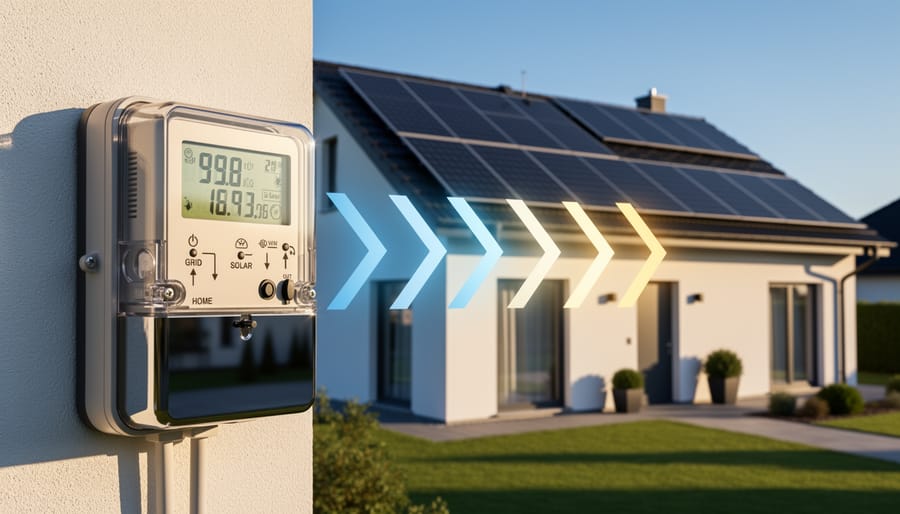
Traditional electricity meters are one-way devices, simply recording power flowing from the grid into your home. Think of them as turnstiles that only spin in one direction. But when you install solar panels or battery storage, something remarkable happens: your home becomes a mini power station, capable of sending excess energy back to the grid.
This is where bidirectional metering comes into play. These clever devices work like two-way streets, measuring electricity flowing both directions. When the sun’s shining and your solar panels are generating more power than you need, the meter records energy flowing out to your neighbours and the broader community. When you’re using more than you’re producing—say, on a cloudy afternoon or during evening peak times—it measures energy flowing back in.
Picture a revolving door that tracks people entering and leaving a building. Bidirectional meters function similarly, keeping an accurate tally of energy movement in both directions. This precise measurement ensures you receive proper credit for the clean energy you contribute, transforming you from a passive consumer into an active participant in Australia’s renewable energy revolution.
Beyond Just Counting Kilowatts
Modern smart meter technology does far more than simply tally up kilowatt-hours flowing in both directions. Today’s bidirectional meters are sophisticated digital devices that capture a rich picture of your energy relationship with the grid. They record precisely when electricity flows occur, distinguishing between peak afternoon demand and late-night surplus. This timing data proves crucial because energy generated during high-demand periods holds greater value than power produced when everyone’s asleep.
These intelligent meters also monitor power quality, tracking voltage levels and frequency to ensure your solar system contributes clean, grid-compatible electricity. In some Australian networks, they even detect reactive power and harmonics, helping maintain grid stability as more households become prosumers. This detailed information creates opportunities for time-of-use tariffs, where you’re rewarded for feeding energy back during peak periods. For example, a Melbourne household recently reduced their quarterly bills by 40 percent simply by understanding their bidirectional meter data and adjusting when they used high-energy appliances. This granular tracking transforms your relationship with energy from passive consumption to active participation.
The Real Benefits for Australian Households and Communities
Fair Pay for Your Solar Contribution
One of the most rewarding aspects of bidirectional metering is ensuring you receive fair compensation for the excess solar energy your system sends back to the grid. In Australia, this works through feed-in tariffs, which are payments from your energy retailer for every kilowatt-hour you export.
Bidirectional metering makes this possible by accurately tracking the energy flowing both ways. Traditional meters only measured consumption, but these smart systems record exactly how much clean energy you’re contributing to your community. The technology eliminates guesswork and disputes, giving you confidence that every ray of sunshine converted by your panels is properly credited.
Australian feed-in tariff rates vary by state and retailer, typically ranging from 5 to 12 cents per kilowatt-hour, though some retailers offer premium rates. For example, a Melbourne household with a 6.6kW solar system might export 15kWh daily during summer, earning around $40 monthly while simultaneously reducing their electricity bills.
Consider the story of the Thompson family in Brisbane, who installed solar panels and bidirectional metering in 2022. Within twelve months, their feed-in tariff credits covered nearly 30 percent of their total electricity costs, making their investment worthwhile while supporting grid stability during peak demand periods.
Taking Control of Your Energy Bills
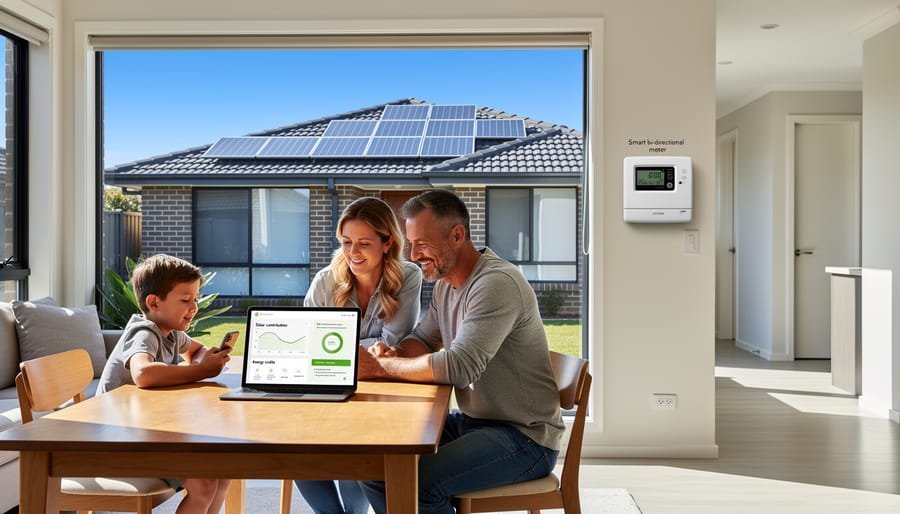
Bidirectional metering puts you firmly in the driver’s seat when it comes to managing your household energy costs. With real-time data showing exactly when you’re generating, using, and exporting electricity, you can make informed decisions that directly impact your power bills. Many Australian families are discovering they can shift energy-intensive tasks like running dishwashers or charging electric vehicles to times when their solar panels are producing surplus power, rather than drawing from the grid during expensive peak periods.
Through smart energy monitoring dashboards connected to your bidirectional meter, you’ll spot patterns you never knew existed. Perhaps your hot water system is guzzling grid power at 6am when waiting just two hours would let solar energy do the job for free. These insights transform how you interact with energy in your home.
Beyond personal savings, you’re actively supporting grid stability. When thousands of households optimize their energy patterns, it reduces strain during peak demand, helping prevent blackouts and reducing the need for expensive infrastructure upgrades. It’s a win-win scenario where conscious energy management benefits both your wallet and Australia’s transition to cleaner, more resilient power systems.
Building a Cleaner Grid Together
When households and businesses with solar panels feed their excess energy back into the grid through bidirectional metering, they’re doing more than reducing their own power bills—they’re helping build a cleaner, more resilient energy system for everyone. This community-powered approach significantly reduces our dependence on fossil fuel peaker plants, those polluting generators that typically fire up during times of high demand.
Picture a scorching summer afternoon across suburban Australia. Instead of coal-fired plants ramping up to meet the air conditioning surge, rooftop solar systems are collectively supplying clean energy to neighbours and local businesses. This shared energy model has already shown remarkable results in communities from Adelaide to Brisbane, where neighborhoods with high solar adoption rates have measurably reduced grid stress during peak periods.
The environmental mathematics is compelling: every kilowatt-hour shared through bidirectional metering displaces electricity that would otherwise come from carbon-intensive sources. In South Australia, where bidirectional systems support strong household solar uptake, the state has achieved some of the country’s lowest grid emissions. When we participate in this energy sharing network, we’re not just individual homeowners anymore—we’re collective environmental champions, proving that decentralized renewable energy can genuinely replace old, dirty infrastructure while strengthening our communities.
How Bidirectional Metering Powers Smart Energy Grids
Balancing Supply and Demand in Real-Time
Managing Australia’s power grid is like conducting an orchestra – every instrument needs to play at precisely the right moment. Bidirectional meters are revolutionising how grid operators balance supply and demand in real-time, creating a smarter, more responsive energy network.
Traditional meters only measured consumption, leaving grid operators flying blind when solar panels started feeding power back. Now, bidirectional meters provide minute-by-minute data showing exactly where energy is flowing – both into homes and back to the grid. This visibility transforms everything.
During peak sunshine hours in Brisbane or Perth, thousands of rooftop solar systems generate surplus power. Bidirectional meters instantly report this excess capacity, allowing grid operators to reduce output from fossil fuel plants, cutting emissions and waste. Conversely, when evening demand surges and solar production drops, the same meters signal the need to ramp up alternative sources or tap into battery storage.
This real-time balancing act prevents blackouts that plagued earlier renewable transitions. South Australia’s experience showcases this beautifully – the state now manages over 60 percent renewable energy penetration while maintaining grid stability, thanks largely to advanced metering infrastructure.
For households with solar panels, this means your contribution genuinely strengthens the entire network. Every kilowatt-hour you export gets counted, tracked, and strategically used to keep Australia’s lights on while reducing our carbon footprint. It’s practical climate action that works quietly in the background, making our energy future both cleaner and more reliable.
Enabling Virtual Power Plants
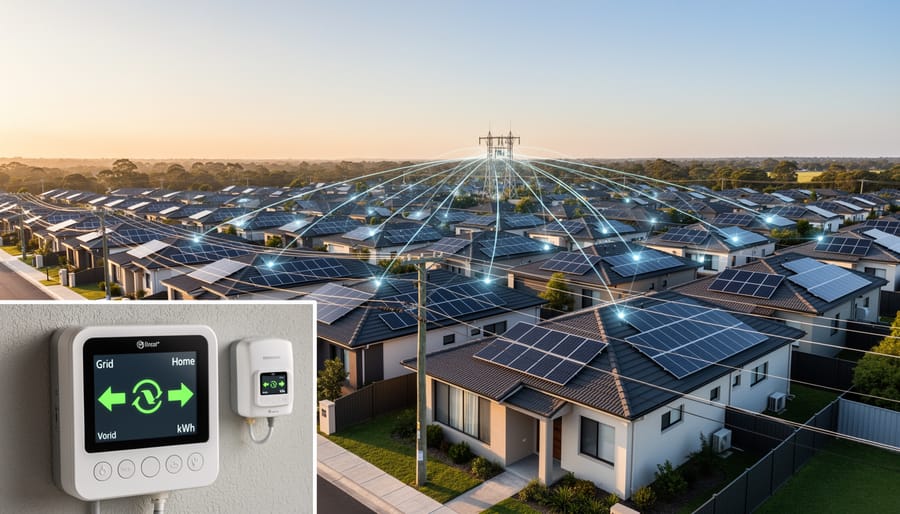
Imagine thousands of Australian homes working together as one massive, flexible battery—that’s the exciting reality of virtual power plants (VPPs) powered by bidirectional metering. Rather than operating in isolation, households with solar panels, batteries, and bidirectional meters become part of a coordinated network that can feed excess energy back to the grid precisely when it’s needed most.
South Australia has emerged as a trailblazer in this space. The state’s VPP program now connects over 4,000 homes, creating a distributed energy resource that helps stabilise the grid during peak demand periods. When temperatures soar and air conditioners run overtime, these connected homes automatically release stored solar energy, reducing strain on the network while earning credits for participants. It’s a genuine win-win that transforms everyday Australians into energy heroes.
The beauty of VPPs lies in their ability to make peer-to-peer energy trading and grid support seamless. Bidirectional meters track every kilowatt-hour flowing in both directions, ensuring fair compensation and reliable data for network operators. Participants typically see reduced electricity bills while contributing to grid resilience—all without lifting a finger once the system is installed.
As more Australian households embrace solar and battery storage, VPPs represent the future of energy management. They prove that collective action, enabled by smart technology like bidirectional metering, can deliver environmental benefits while strengthening our energy independence. The revolution is already underway, and every participating household makes the grid stronger.
Success Stories: Bidirectional Metering in Action
Australian Communities Leading the Charge
Across Australia, forward-thinking communities and energy providers are demonstrating that bidirectional metering isn’t just theory—it’s delivering real results today. In South Australia, Tesla’s virtual power plant has connected thousands of homes with solar panels and batteries, using bidirectional metering to coordinate energy flows and reduce grid strain during peak demand. Participants report lower electricity bills while contributing to a more stable energy system.
Energy retailer AGL’s Virtual Power Plant program spans multiple states, linking households with bidirectional meters to share excess solar power with the grid when it’s needed most. Meanwhile, Western Australia’s Synergy has rolled out innovative trials in Perth suburbs, rewarding households for exporting stored energy during evening peaks when solar generation drops but demand soars.
Regional communities are also getting on board. In regional Victoria, neighbourhood-scale projects use bidirectional metering to create local energy sharing networks, where excess solar from one home powers a neighbour’s air conditioner on hot days. These grassroots initiatives prove that sustainable energy solutions work brilliantly when communities collaborate.
The success stories share common threads: households save money, grid operators gain flexibility, and emissions drop. As these programs expand, they’re creating a blueprint for Australia’s renewable energy future—one smart meter at a time.
What We Can Learn from Global Leaders
Australia isn’t pioneering this technology alone—we’ve got some brilliant global examples lighting the way forward. Germany’s Energiewende, or energy transition, has seen millions of households with bidirectional meters successfully feeding solar power back into the grid since the early 2000s. Their experience taught them that clear pricing structures and streamlined connection processes were essential for widespread adoption.
Meanwhile, California has become a powerhouse of residential energy trading, with their Virtual Power Plant programs connecting thousands of homes through smart bidirectional systems. During heatwaves, these connected households work together as one massive battery, stabilizing the grid when it’s needed most. The result? Fewer blackouts and lower electricity costs for participants.
Denmark offers another compelling lesson. Their approach to community-owned renewable projects, supported by bidirectional metering infrastructure, has transformed entire neighbourhoods into energy-sharing networks. Residents aren’t just consumers anymore—they’re active participants in a cleaner energy future.
What makes these international success stories particularly relevant for Australia is their scale and climate similarities. Like us, these regions face hot summers, increasing electricity demand, and abundant sunshine. They’ve proven that with the right technology and community engagement, bidirectional metering becomes more than just smart infrastructure—it becomes the backbone of a resilient, sustainable energy system that benefits everyone.
Getting Started: What You Need to Know
Is Your Home Ready?
Getting your home ready for bidirectional metering is simpler than you might think, and many Australian households are already well on their way. The essential starting point is having solar panels installed on your roof – these capture sunshine and convert it into electricity for your home. The real magic happens when you add battery storage, which lets you store excess solar energy generated during the day for use at night or during peak periods. This stored energy can then flow back to the grid when needed, helping your community while earning you credits on your energy bill.
You’ll also need a compatible smart meter, which measures electricity flowing both ways – into your home and back out to the grid. The good news is that many newer homes already have smart meters installed, and if you don’t have one yet, your energy retailer can arrange installation. Some battery systems also require a bidirectional inverter, which manages the flow of electricity efficiently. Before taking the plunge, chat with your energy provider about their feed-in tariffs and any specific requirements they have. With these components in place, you’ll be perfectly positioned to become an active participant in Australia’s renewable energy future.
Taking the Next Step
Ready to embrace bidirectional metering? The first step is contacting your energy retailer to discuss feed-in tariff options and whether they support bidirectional metering systems. Many Australian retailers now actively encourage solar customers to explore these arrangements, so you’re likely pushing on an open door.
Before signing any agreement, ask these essential questions: What’s the feed-in tariff rate for excess energy? Are there any additional metering costs? Does the system automatically track both import and export? How often will I receive billing statements showing my energy flows? These conversations ensure you understand exactly how your renewable energy contributions will be valued and compensated.
The Clean Energy Regulator and your state’s energy ombudsman provide excellent resources for understanding your rights and entitlements. The Australian Energy Market Operator website also offers detailed information about grid modernisation initiatives.
Success stories from suburbs across Australia show that households typically recoup their bidirectional metering investment within two to three years through reduced bills and feed-in tariff income. Don’t hesitate to connect with local solar installers who can assess your property’s potential and guide you through the technical requirements. Your journey toward energy independence starts with a simple phone call—and the rewards benefit both your wallet and our shared environment.
Bidirectional metering represents more than just a technical upgrade to Australia’s electricity infrastructure—it’s a gateway to reimagining how we generate, share, and value clean energy. As solar panels become as common as Hills Hoists in Australian backyards, this technology transforms everyday households from passive consumers into active contributors to our nation’s renewable energy transition. The financial benefits are real and immediate, with households recouping installation costs faster while supporting grid stability during peak demand periods.
What makes this particularly exciting for Australia is the alignment with our abundant sunshine and growing appetite for sustainable solutions. Communities across the country are already proving that when individuals invest in solar and battery systems paired with bidirectional metering, everyone wins—from reduced electricity bills to decreased reliance on fossil fuels. These aren’t distant possibilities; they’re happening right now in suburbs and regional towns alike.
The beauty of this technology lies in its simplicity: measure what flows in, measure what flows out, and compensate fairly. It’s an honest system that rewards participation in the clean energy economy while building resilience into our grid infrastructure.
As you consider your own energy future, remember that every kilowatt-hour you generate and share contributes to a larger transformation. Whether you’re installing your first solar panel or expanding an existing system, you’re joining thousands of Australians creating a cleaner, more decentralized energy landscape. The future isn’t just renewable—it’s community-powered, locally generated, and genuinely sustainable. That future is ready for you to be part of it.