
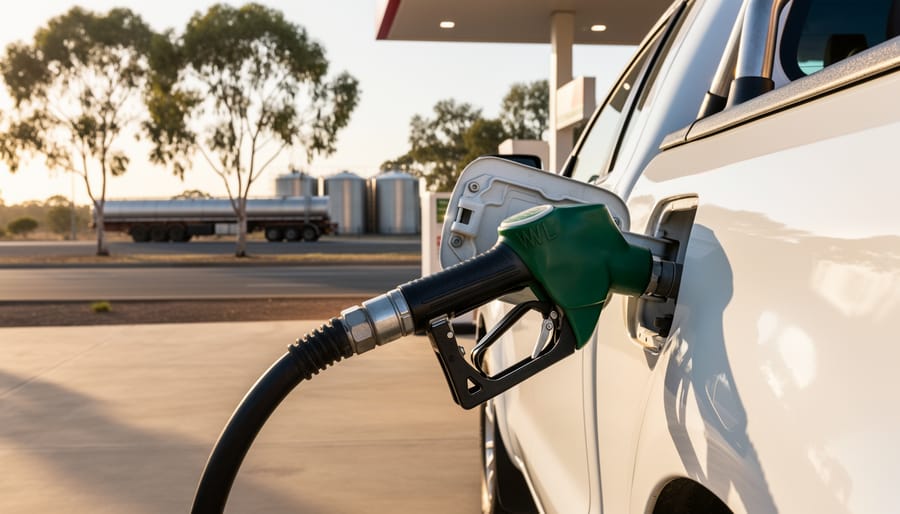
Biodiesel mandates are transforming Australia’s fuel landscape by requiring a minimum percentage of renewable biodiesel to be blended into conventional diesel sold at the bowser. These legislative requirements, already implemented in New South Wales and under consideration nationally, create guaranteed markets for locally produced biofuels while reducing transport emissions without requiring Australians to modify their vehicles or change their driving habits.
The mechanism is straightforward: fuel suppliers must ensure their diesel contains a specified percentage of biodiesel, typically between 2% and 5%, derived from renewable sources like recycled cooking oil, tallow, or purpose-grown crops. This seemingly modest blend rate translates into substantial environmental benefits across millions of litres of fuel consumed annually.
For Australian motorists and businesses, these mandates mean cleaner air in our cities, reduced dependence on imported petroleum, and support for regional agricultural communities producing feedstock. The beauty lies in the simplicity: most modern diesel engines run seamlessly on biodiesel blends without modifications, meaning the transition happens invisibly at the refinery level rather than requiring costly changes to vehicles or infrastructure.
Beyond environmental gains, biodiesel mandates create economic opportunities throughout the supply chain, from farmers growing canola to waste collectors gathering used cooking oil from restaurants. Success stories from Byron Bay to Melbourne demonstrate how these policies catalyse regional renewable energy industries while maintaining fuel performance standards motorists expect.
Understanding how biodiesel mandates function empowers consumers and businesses to appreciate their role in Australia’s energy transition and make informed decisions supporting sustainable transport solutions.
What Biodiesel Mandates Actually Mean for Australia

How State-by-State Rules Differ
Australia’s biodiesel mandates aren’t one-size-fits-all. Each state takes its own approach, creating a patchwork of requirements that reflect local priorities and industry capabilities.
New South Wales leads the charge with the most ambitious target in the country. Since 2010, the state has required fuel retailers to ensure biodiesel makes up at least 2 percent of total diesel sales. This mandate applies across metropolitan and regional areas, meaning whether you’re filling up in Sydney or in rural NSW, you’re contributing to cleaner air. For businesses operating fleet vehicles, this translates to reduced emissions without any extra effort on their part.
Queensland takes a different tack. Rather than setting fixed percentage requirements, the state focuses on ensuring biodiesel availability and quality standards. This flexible approach has encouraged innovation, with several success stories emerging from local producers who’ve developed biodiesel from waste cooking oil collected from fish and chip shops and restaurants across Brisbane and the Gold Coast.
The practical implications? If you’re a trucking company operating across state borders, you’ll notice varying biodiesel blends at different service stations. Most modern diesel engines handle B5 (5 percent biodiesel blend) without any modifications, making the transition seamless for drivers. For businesses, understanding your state’s specific requirements helps with compliance planning and can even unlock government incentives for exceeding minimum standards.
This state-by-state variation demonstrates how Australia is tailoring renewable fuel adoption to local contexts while collectively moving toward a more sustainable transport future.
The Environmental Win: Emissions Reductions You Can Measure
Real Numbers from Australian Roads
Since implementing biodiesel mandates, Australian roads have witnessed remarkable environmental progress that’s worth celebrating. In New South Wales alone, the biodiesel requirement has delivered emissions reductions equivalent to taking approximately 57,000 cars off the road each year. That’s like removing every vehicle from a city the size of Bathurst from our streets.
Across the nation, biodiesel mandates have prevented more than 700,000 tonnes of greenhouse gas emissions annually. To put this in perspective, that’s comparable to planting roughly 11 million native trees and letting them grow for a decade. These aren’t distant promises or theoretical models – they’re real, measurable outcomes happening right now on Australian roads.
The success extends beyond major cities too. Regional transport fleets using mandated biodiesel blends have reported smoother engine performance while contributing to cleaner air in country towns. Bus operators in Queensland have documented reduced particulate emissions by up to 47 percent when running on higher biodiesel blends, meaning passengers and pedestrians alike are breathing easier. These achievements demonstrate that sustainable choices create tangible benefits, proving that environmental responsibility and practical transportation needs can drive forward together.
Where Australian Biodiesel Actually Comes From

Turning Waste Into Fuel: A Brisbane Success Story
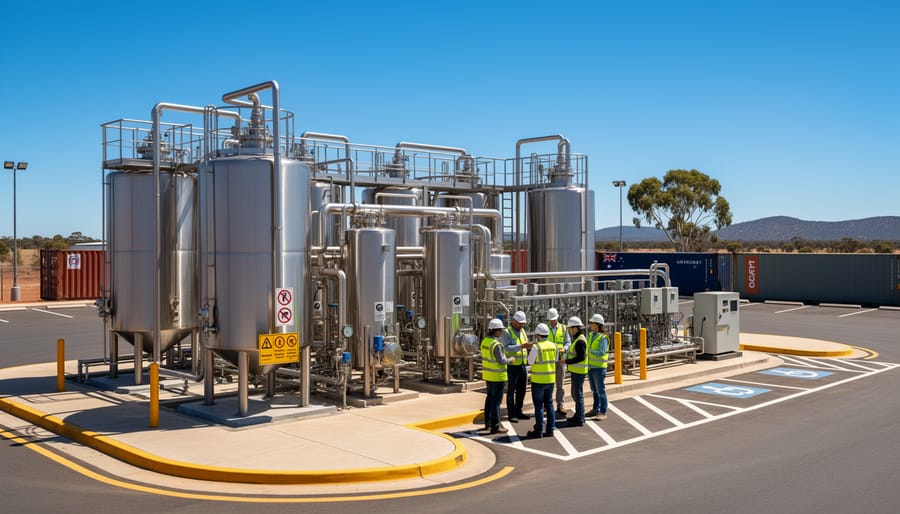
Right here in Brisbane, the story of Urban Renewable Energy Australia demonstrates how biodiesel mandates create tangible opportunities for innovation and employment. This forward-thinking company has built a thriving operation collecting waste cooking oil from over 500 restaurants, cafes, and food manufacturers across Southeast Queensland, transforming this would-be waste stream into high-quality biodiesel.
Their modern processing facility in the industrial precinct employs 28 local workers, from collection drivers to chemical engineers, proving that turning waste into fuel isn’t just environmentally smart—it creates real jobs in the community.
The operation diverts approximately 4 million litres of used cooking oil from landfill annually, converting it into biodiesel that meets strict Australian fuel quality standards. Local council fleets and logistics companies now use this Brisbane-made biodiesel, keeping their operations compliant with mandates while reducing their carbon footprint by up to 87 percent compared to conventional diesel.
What makes this success story particularly inspiring is the circular economy it creates. Restaurant owners receive free collection services, saving disposal costs, while simultaneously contributing to Queensland’s renewable energy supply. The company has even partnered with Brisbane City Council to educate hospitality businesses about proper oil collection practices.
This practical example shows how biodiesel mandates drive real-world solutions, transforming everyday waste into valuable fuel while building a stronger, more sustainable local economy.
The Jobs and Economic Boost Behind the Mandates
Biodiesel mandates aren’t just good for the environment—they’re powerful engines for economic growth and job creation across Australia. When we require a certain percentage of biodiesel to be blended into our diesel supply, we’re essentially creating guaranteed demand for locally produced renewable fuel. This translates directly into employment opportunities in rural and regional areas that need them most.
Consider the ripple effect: every biodiesel production facility needs farmers growing canola, soy, or collecting used cooking oil. It needs truck drivers transporting feedstock, technicians operating processing equipment, quality control specialists, sales teams, and logistics coordinators. Research shows that for every million litres of biodiesel produced, multiple local jobs are created throughout the supply chain—often in towns where traditional industries have declined.
Take the example of Southern Oil’s facility in Picton, New South Wales. This operation collects used cooking oil from thousands of Australian restaurants and food processors, converting waste into valuable fuel. The mandate provides the market certainty that enabled this investment, creating steady employment for collection drivers, plant operators, and administrative staff while solving a waste disposal challenge for food businesses.
For farmers, biodiesel mandates open new revenue streams. Oilseed crops destined for biodiesel production provide rotation options that improve soil health while generating income. Some farming communities have even established cooperative processing facilities, keeping more value in their regions.
Energy security represents another crucial economic benefit. Every litre of Australian-made biodiesel reduces our dependence on imported petroleum diesel, keeping fuel dollars circulating within our economy rather than flowing overseas. During global supply disruptions, this domestic production capacity becomes invaluable, buffering our economy against international price shocks and ensuring reliable fuel supplies for transport and agriculture—the backbone of our economy.
Quality Standards: Why Your Engine Is Safe
One of the most common questions Australians ask about biodiesel is whether it’s safe for their vehicles. The good news is that modern biodiesel meets exceptionally high standards, making it completely compatible with most diesel engines on Australian roads today.
In Australia, all biodiesel must comply with the stringent requirements set out in Australian Standard AS 4897. This standard ensures that biodiesel blends meet rigorous quality benchmarks for everything from viscosity and flash point to oxidation stability and cold weather performance. Before any biodiesel reaches your local service station, it undergoes extensive testing to guarantee it performs just as reliably as conventional diesel.
Most vehicles manufactured after 2008 are designed to run on biodiesel blends without any modifications whatsoever. Major car manufacturers including Toyota, Ford, and Holden have approved their diesel engines for use with B20 blends, which contain up to 20 percent biodiesel. The most common blend you’ll encounter at the bowser is B5, containing just 5 percent biodiesel, which is approved for use in virtually all diesel vehicles.
A great success story comes from Brisbane City Council’s fleet of buses, which have been running on B20 biodiesel since 2008. Over fifteen years of operation, these buses have clocked millions of kilometres with no adverse effects on engine performance or reliability. Similarly, transport companies across regional Queensland have embraced higher biodiesel blends, reporting excellent fuel economy and reduced maintenance issues.
The key is purchasing fuel from reputable suppliers who adhere to Australian standards. When you fill up at established service stations, you can drive away with complete confidence that your engine is protected while you’re doing something positive for the environment.
Current Challenges and How We’re Overcoming Them
Let’s be honest – implementing biodiesel mandates isn’t without its hurdles. But here’s the encouraging bit: for every challenge we face, innovative Aussies are already rolling up their sleeves and finding practical solutions.
Feedstock availability remains one of the biggest concerns. Australia’s biodiesel industry needs consistent supplies of oils and fats to meet mandate requirements. The good news? We’re seeing tremendous progress through diversification. Rather than relying solely on traditional crops, producers are increasingly turning to waste cooking oil from restaurants and food manufacturers, tallow from meat processing, and even native plants suited to our climate. A Melbourne-based company recently partnered with over 500 restaurants to collect used cooking oil, creating a closed-loop system that tackles waste and fuel needs simultaneously.
Infrastructure presents another challenge, particularly for storage and distribution networks designed for traditional diesel. However, significant investment is flowing into upgrades. Service stations across regional Queensland and New South Wales have successfully retrofitted their facilities to accommodate biodiesel blends, proving it’s entirely achievable. These early adopters are paving the way for broader infrastructure development.
Cost competitiveness has been a sticking point, with biodiesel sometimes more expensive to produce than conventional diesel. Yet this gap is narrowing thanks to improved production technologies and economies of scale. Government incentives and carbon pricing mechanisms are also helping level the playing field, recognizing the true environmental value biodiesel brings.
Perhaps most importantly, collaboration between government, industry, and research institutions is accelerating solutions. Universities are developing more efficient production methods, while industry associations are sharing best practices that benefit everyone. This collective approach means we’re not just overcoming challenges – we’re building a more resilient, sustainable fuel system for future generations.
What’s Next: The Future of Biodiesel in Australia
Australia stands at an exciting crossroads where biodiesel mandates represent just the beginning of something much bigger. As the nation accelerates its renewable energy transition, biodiesel is poised to play an increasingly vital role in decarbonising transport and agriculture.
State governments are already exploring expanded mandates, with discussions underway about increasing blend percentages beyond current requirements. Queensland’s success with its 3% mandate has sparked conversations in other states about following suit, creating momentum for a truly national approach. Meanwhile, emerging technologies are transforming the biodiesel landscape. Advanced production methods using algae and waste cooking oil are making biodiesel more sustainable and cost-effective than ever before.
The heavy transport sector presents enormous opportunities. With trucking companies and mining operations seeking cleaner alternatives, biodiesel offers an immediate solution that works with existing infrastructure. Several major logistics companies have already committed to increasing their biodiesel usage, demonstrating commercial viability at scale.
Regional communities particularly stand to benefit, with biodiesel production creating local jobs while supporting farmers through new revenue streams from crop waste and oil seeds. This circular economy approach strengthens rural Australia while advancing environmental goals.
The future looks bright for those ready to embrace these opportunities. Whether you’re a business owner, farmer, or concerned citizen, biodiesel mandates open doors to participate in Australia’s clean energy journey right now, not decades away.
Biodiesel mandates represent more than just legislative requirements—they’re a practical pathway toward a cleaner, more sustainable Australia. By bringing together environmental protection, economic opportunity, and real-world solutions, these policies demonstrate that we can address climate challenges while supporting local industries and communities.
The evidence speaks for itself. From reduced greenhouse gas emissions to stronger regional economies, biodiesel mandates are already making a measurable difference across the country. Success stories from Queensland’s sugarcane growers and South Australia’s used cooking oil recyclers show how Australians are turning waste into valuable resources whilst creating meaningful employment opportunities.
What makes this transition particularly exciting is that it’s already happening. You don’t need to wait for perfect technology or distant solutions—biodiesel is available now, compatible with existing vehicles, and increasingly accessible at service stations nationwide.
So what’s your role in this transformation? Whether you’re a consumer choosing biodiesel at the pump, a business owner exploring renewable fuel options, or simply someone who cares about Australia’s future, your support matters. Contact your local representatives to voice your backing for sustainable fuel policies. If you’re in business, investigate how biodiesel could power your fleet. Share success stories with your community and help spread awareness about practical alternatives to fossil fuels.
The transition to renewable energy isn’t just necessary—it’s achievable, beneficial, and already underway. By supporting biodiesel mandates and embracing sustainable fuel choices, we’re not just reducing emissions; we’re investing in innovation, strengthening regional communities, and building the resilient, prosperous Australia future generations deserve.