
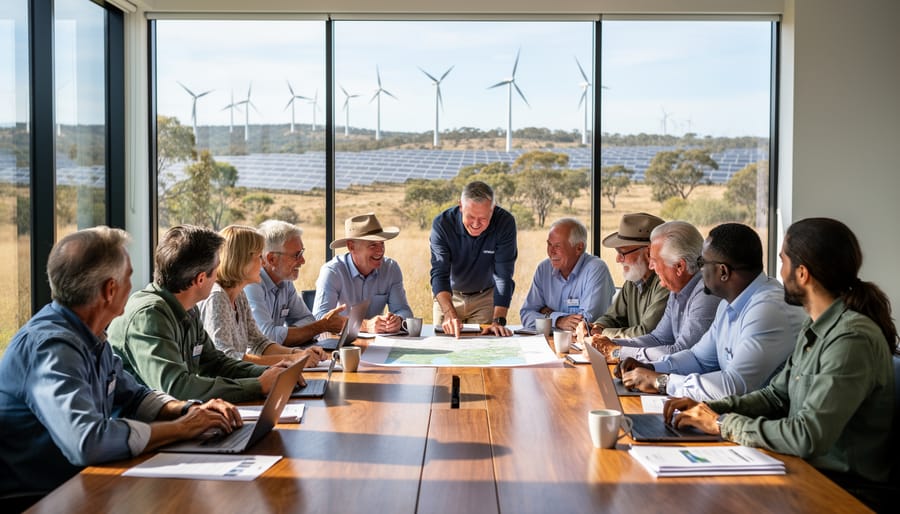
Australia stands at a crossroads where the decisions we make today will determine the energy landscape for generations to come. The green energy transition isn’t just about swapping coal for solar panels—it’s fundamentally about reimagining how governments, businesses, communities, and citizens work together to build a sustainable future.
Across the country, something remarkable is happening. Traditional top-down policy approaches are giving way to co-creation alliances where diverse stakeholders sit at the same table, combining their unique expertise and perspectives. These partnerships are delivering results that no single entity could achieve alone. From regional councils partnering with agricultural communities to transform farm waste into reliable energy sources, to industry leaders collaborating with environmental groups to accelerate renewable adoption, Australia is proving that collective action drives meaningful change.
The transition to green energy presents complex challenges—grid stability concerns, workforce transitions, investment uncertainties, and community acceptance. Yet these obstacles become solvable when approached collaboratively. Co-creation alliances don’t eliminate disagreement; they channel it productively, ensuring policies reflect real-world needs while maintaining environmental integrity.
For policymakers seeking effective implementation strategies, businesses navigating the renewable landscape, and citizens wanting to contribute meaningfully, understanding these collaborative models is essential. The success stories emerging from Australian communities demonstrate that when we combine government vision, industry innovation, scientific expertise, and grassroots insight, we don’t just transition to cleaner energy—we build resilient, prosperous communities ready for tomorrow’s challenges.
What Makes Co-Creation Alliances Different from Traditional Policy-Making
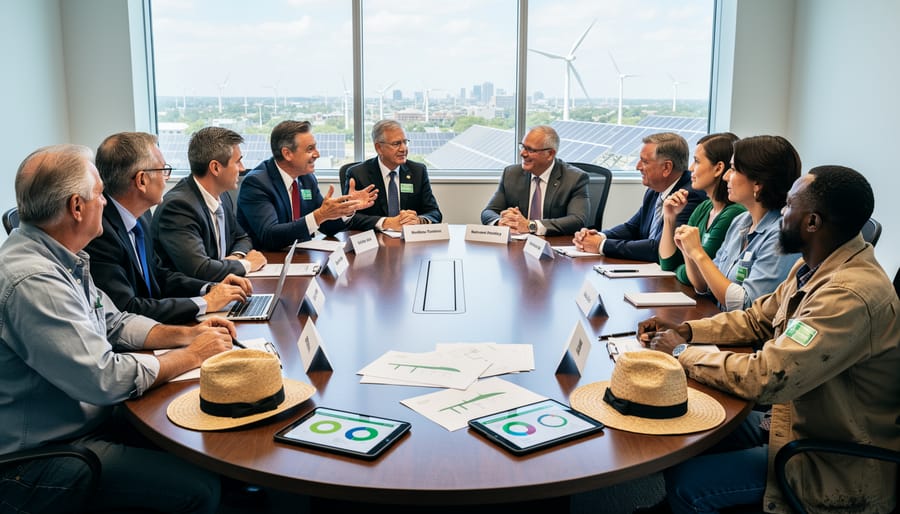
The Players Around the Table
Australia’s green energy transition thrives when diverse voices join the conversation. Successful co-creation alliances bring together renewable energy companies who provide technical expertise and innovation, farming communities who understand land management and agricultural waste potential, and Indigenous groups whose traditional knowledge offers unique perspectives on sustainable resource use.
Environmental organisations contribute scientific rigour and advocacy experience, ensuring ecological considerations remain central to decision-making. Local councils and state government bodies provide regulatory frameworks and funding pathways, while regional communities share practical insights about what works on the ground.
These community-led energy initiatives demonstrate that inclusive collaboration produces better outcomes than top-down approaches. When a sugar cane farmer sits alongside a renewable energy engineer and an environmental scientist, they create solutions that balance productivity, sustainability, and profitability.
Research institutions and universities add evidence-based analysis, whilst financial organisations assess viability and investment opportunities. Each stakeholder brings distinct expertise, creating a rich tapestry of knowledge that addresses technical, environmental, economic, and social dimensions simultaneously. This collaborative approach transforms energy transition from a distant policy goal into achievable, locally-relevant action that benefits everyone involved.
Breaking Down the Barriers
Traditional energy transitions often stumble over predictable hurdles: utilities worried about stranded assets, communities concerned about job losses, and governments balancing economic growth with environmental responsibility. Co-creation alliances are changing this dynamic by bringing these conflicting voices into the same room before policies are written.
In South Australia’s renewable energy transformation, stakeholders who once viewed each other with suspicion now collaborate on solutions. Energy companies share operational data with community groups, while local councils work alongside industry to identify practical implementation challenges. This transparency bridges the information gaps that previously fueled mistrust and delay.
The magic happens when dairy farmers, grid operators, and environmental advocates discover their interests aren’t actually opposed. A recent Victorian alliance found that agricultural waste-to-energy projects could simultaneously reduce farm costs, stabilize grid demand, and cut emissions. Nobody had to compromise their core values; they simply needed a structured space to explore shared opportunities.
These alliances work because they replace the old “winners and losers” mentality with collaborative problem-solving. When everyone contributes to designing the solution, everyone becomes invested in making it succeed.
How Australian Communities Are Leading the Way
Regional Victoria’s Bioenergy Breakthrough
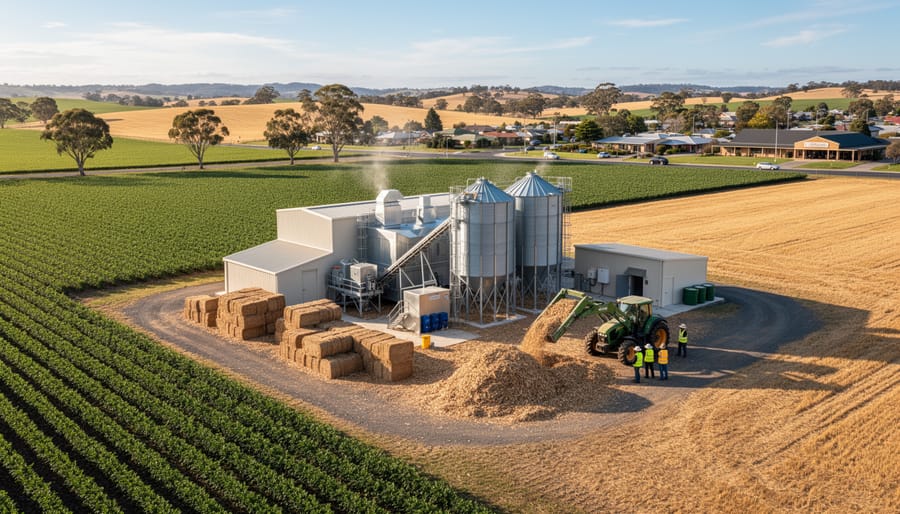
In the heart of Victoria’s Gippsland region, a collaboration between dairy farmers, local councils, and renewable energy providers is transforming agricultural waste into clean power. The Gippsland Bioenergy Alliance demonstrates what’s possible when communities work together toward shared sustainability goals.
Local dairy farmers previously faced significant costs disposing of organic waste, including manure and crop residues. Through this innovative partnership, that waste now fuels anaerobic digestion facilities that generate electricity for nearby manufacturing plants and contribute to the grid. The process produces high-quality fertiliser as a byproduct, creating additional revenue streams for participating farmers.
Murray Shire Council coordinator Janet Chen explains the mutual benefits: “Our farmers are earning income from materials they once paid to remove, while local industries access affordable, reliable renewable energy. It’s a win-win that strengthens our entire regional economy.”
The alliance brings together fifteen farming families, two food processing facilities, and the regional council, supported by technical expertise from Melbourne-based energy companies. Since operations began in 2021, the project has diverted over 45,000 tonnes of organic waste from landfill annually while generating enough electricity to power 3,200 homes.
This model proves particularly valuable for regional communities, keeping energy investment and jobs local rather than watching profits flow to distant corporations. Similar projects are now emerging across regional Victoria, with councils from Warrnambool to Wodonga exploring agricultural bioenergy opportunities that benefit their communities while advancing Australia’s renewable energy transition.
Queensland’s Multi-Stakeholder Solar Success
Queensland’s journey toward renewable energy excellence demonstrates what’s possible when governments, landowners, industry, and communities work together with a shared vision. The state has become a standout example of how collaborative policy-making can unlock massive solar potential while respecting the environment and local concerns.
Through its co-creation approach, Queensland developed frameworks that brought farmers, energy companies, conservation groups, and regional councils to the table early in the planning process. This meant addressing concerns before they became roadblocks. Landowners gained clear guidelines about lease agreements and land rehabilitation, while environmental groups helped shape protections for native vegetation and wildlife corridors. The result? Projects that actually work for everyone involved.
One standout success is the Western Downs Green Power Hub, which transformed previously marginal agricultural land into a productive solar farm generating clean energy for thousands of homes. Local landowners received long-term income from land leases, creating financial security for farming families during tough times. Meanwhile, careful planning ensured that prime agricultural land remained available for food production, and sensitive ecological areas stayed protected.
The Queensland model proves that “either-or” thinking doesn’t apply to renewable energy. You can have large-scale solar development and environmental protection. You can create energy security while supporting rural communities. The secret ingredient isn’t complicated technology or massive funding alone—it’s bringing people together, listening genuinely to different perspectives, and crafting solutions that honor everyone’s legitimate interests. That’s the blueprint for accelerating Australia’s green energy transition.
The Economic Sweet Spot: Jobs, Innovation, and Energy Security
Green Jobs That Actually Exist Today
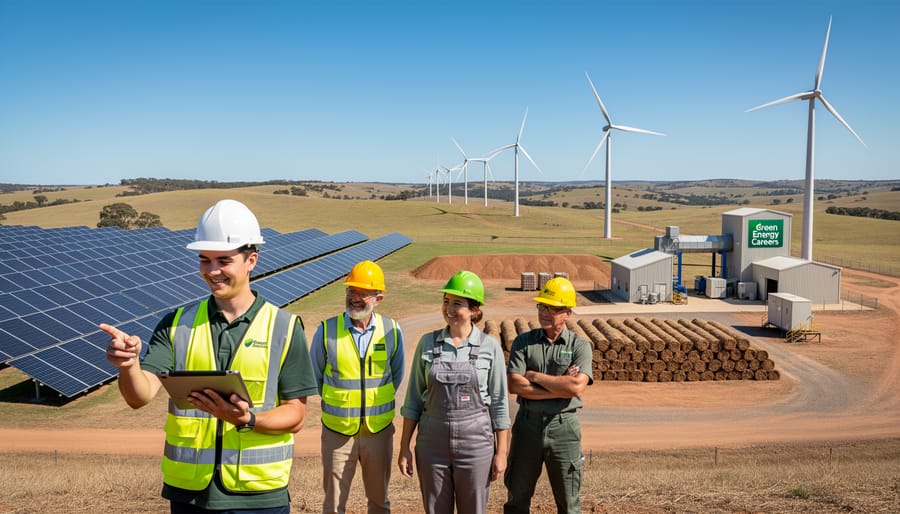
Australia’s renewable energy transformation is creating tangible employment opportunities right now, not decades down the track. Meet Sarah, a biomass processing technician in regional Queensland, who monitors feedstock quality and ensures efficient conversion of agricultural waste into clean energy. Her role didn’t exist five years ago, but collaborative policy frameworks between state government and industry have established entire career pathways in bioenergy production.
Renewable project coordinators are another booming field, connecting communities, councils, and energy providers to implement local solar and wind initiatives. These professionals facilitate stakeholder engagement and navigate regulatory requirements, skills developed through innovation hubs and industry partnerships.
Energy auditors specialising in sustainability help businesses transition to greener operations, while solar installation technicians continue experiencing strong demand across metropolitan and rural areas. For those with environmental science backgrounds, carbon accounting specialists analyse emissions reduction strategies for organisations committed to net-zero targets.
Regional centres are seeing particularly strong growth, with positions emerging in forestry waste management, renewable logistics coordination, and community energy advisory roles. These aren’t temporary positions either. Policy co-creation between unions, industry bodies, and government has established training programs and career progression pathways, ensuring long-term job security while supporting Australia’s clean energy future.
Lower Bills, Stronger Communities
When communities take the driver’s seat in energy planning, everyone’s hip pocket benefits. Across Australia, collaborative energy projects are proving that affordable renewable energy solutions emerge naturally when local voices shape the decision-making process.
Take the Yackandandah community in Victoria, where residents worked together to achieve 100% renewable energy. By pooling resources and knowledge, they’ve slashed electricity bills while creating local jobs in solar installation and maintenance. This hands-on approach meant choosing technologies that suited their actual needs rather than following a one-size-fits-all model.
Community energy cooperatives are spreading this success story. In regional Queensland, farming communities are collaborating on bioenergy projects that convert agricultural waste into power, reducing disposal costs while generating income. These partnerships between farmers, councils, and energy experts create solutions that work for local conditions and budgets.
The economic ripple effects extend beyond lower power bills. Local procurement of equipment, training programs for residents, and ongoing maintenance contracts keep dollars circulating within communities. When people have genuine input into energy decisions, they’re more likely to support projects, reducing costly delays and building long-term energy security that strengthens the entire community fabric.
Navigating the Challenges Together
When Progress Feels Slow
It’s fair to acknowledge that bringing diverse voices to the table takes more time upfront than top-down policy decisions. When community groups, industry representatives, scientists, and government officials all have a seat at the table, discussions naturally become more complex. Yet this patience pays remarkable dividends down the track.
Consider Victoria’s renewable energy roadmap, which emerged from extensive stakeholder consultation. While the initial co-creation phase added months to development, the resulting policies enjoyed broad support that eliminated years of potential legal challenges and community opposition. Projects moved from approval to operation faster because concerns had been addressed before legislation was finalized.
The beauty of collaborative processes lies in their durability. Policies crafted together resist the political winds of change because they’re anchored in shared understanding rather than partisan agendas. When regional communities help design transition plans, they become champions rather than opponents of change.
Australian experience shows that co-created energy policies accelerate implementation precisely because they’ve built trust and addressed concerns from the start. The time invested in genuine collaboration isn’t lost—it’s simply moved from the conflict stage to the planning stage, where it’s far more productive.
Making Sure Every Voice Actually Counts
True inclusion means moving beyond tick-box consultation to genuinely empowering all voices in energy transition planning. Smaller regional councils, rural farming communities, and Indigenous groups often possess invaluable local knowledge yet lack resources to participate meaningfully in policy development.
Successful collaborative approaches provide practical support: funding travel for remote participants, scheduling meetings outside business hours, and offering technical translation services to bridge knowledge gaps. In Tasmania’s renewable energy planning, First Nations groups weren’t merely consulted but became co-designers, sharing traditional land management practices that enhanced project sustainability.
Digital platforms have democratised participation too, allowing farmers from outback Queensland to contribute ideas without leaving their properties. One success story involves a small Indigenous community that partnered with energy developers to create Australia’s first culturally-led solar farm, generating income while respecting sacred sites.
The key? Recognising that diverse perspectives strengthen outcomes. When a Western Australian fishing cooperative highlighted concerns about offshore wind placement, their practical knowledge prevented environmental damage and improved project design. Fair go means everyone genuinely shares the microphone, transforming energy policy from top-down directives into community-owned solutions that work for all Australians.
Your Role in Australia’s Energy Future
How to Join the Conversation
Getting involved in your local energy transition isn’t as daunting as it might seem. Start by attending your local council meetings where energy planning and climate action strategies are discussed. Most councils welcome public input and publish meeting schedules online, making it easy to show up and have your voice heard.
Consider joining community renewable energy groups in your area. These grassroots organizations are driving real change across Australia, from solar gardens in Adelaide to bioenergy cooperatives in regional Queensland. They’re always looking for passionate members, regardless of your technical expertise.
Subscribe to your state’s renewable energy agency newsletter to stay informed about public consultation periods. When policies are being developed, your feedback genuinely matters. Written submissions might feel formal, but many agencies accept simple emails outlining your concerns and suggestions.
Connect with local environment groups already engaged in energy advocacy. They often coordinate community responses to proposed developments and can guide you through the process. Universities and TAFE institutions also run community workshops on energy transition topics.
Finally, start conversations in your own networks. Whether it’s your workplace, sporting club, or neighborhood group, sharing knowledge and enthusiasm creates ripple effects that build momentum for sustainable change.
Questions Worth Asking Your Local Representatives
Engaging with your local representatives transforms energy policy from something that happens to us into something we create together. Here are practical questions that spark meaningful dialogue about collaborative renewable energy initiatives in your region.
Start with the fundamentals: “What multi-stakeholder partnerships currently exist for energy transition planning in our community, and how can residents participate?” This reveals existing pathways for involvement. Follow with, “Which local industries or organisations have expressed interest in co-creating renewable energy solutions?” Understanding who’s already at the table helps identify gaps and opportunities.
Ask about practical implementation: “What mechanisms exist for incorporating community feedback into energy policy decisions?” and “How does our council plan to balance industrial energy needs with residential concerns during the transition?” These questions demonstrate you understand the complexity whilst seeking genuine collaboration.
Push for specificity with location-based inquiries: “Are there opportunities to develop bioenergy projects using local agricultural or forestry waste?” This connects abstract policy to tangible regional resources. Finally, ask, “What support exists for communities wanting to establish their own renewable energy cooperatives or initiatives?”
These conversations position you as an informed partner rather than simply a concerned citizen. When representatives recognise genuine interest in collaborative solutions, they’re more likely to create accessible participation pathways. Remember, policy co-creation thrives when communities actively contribute their local knowledge and unique perspectives to the renewable energy conversation.
Australia’s green energy transition isn’t a distant dream—it’s happening right now, powered by the collaborative spirit that’s already delivering remarkable results. Remember that regional community that transformed agricultural waste into renewable energy? Their success story isn’t unique anymore; it’s becoming the blueprint for communities across the continent. From boardrooms to town halls, Australians are proving that when government, industry, and citizens work together with shared purpose, the seemingly impossible becomes achievable.
The co-creation alliances we’ve explored throughout this journey demonstrate something vital: sustainable energy transformation accelerates when everyone has a seat at the table. These partnerships are dismantling old barriers, creating innovative funding models, and building the clean energy infrastructure our children will inherit. The wins keep mounting—regional job creation, reduced emissions, energy security, and thriving local economies all flowing from collaborative policy-making.
This is your invitation to be part of something transformative. Whether you’re a policymaker shaping tomorrow’s regulations, a business leader exploring renewable opportunities, or a community member passionate about environmental stewardship, there’s a role waiting for you. The frameworks exist, the momentum is building, and the outcomes are tangible. Australia’s sustainable energy future isn’t being planned in isolation—it’s being constructed through cooperation, innovation, and shared commitment. The transition is underway, and together, we’re not just imagining a cleaner tomorrow; we’re actively building it today.