
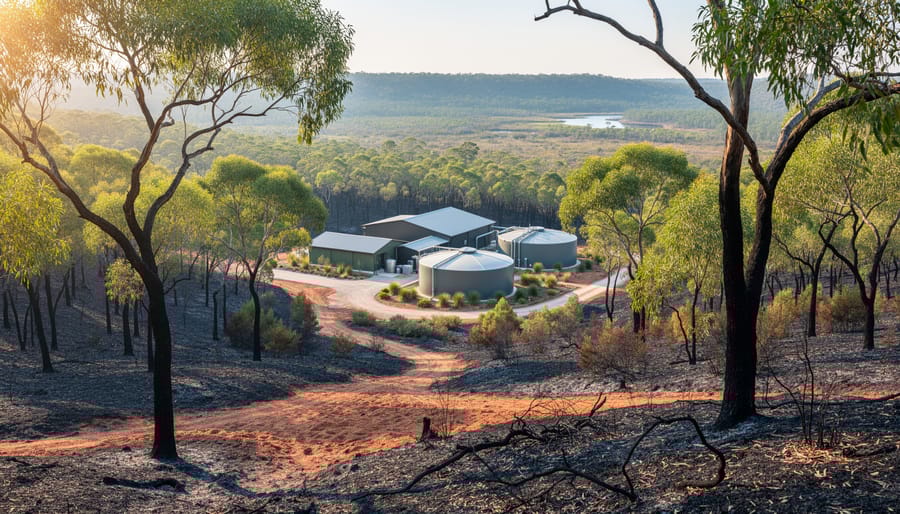
Biocultural evolution explains how human cultures and biological systems shape each other over time, creating interconnected pathways that influence everything from agricultural practices to energy choices. When Aboriginal Australians managed landscapes through controlled burning for over 65,000 years, they weren’t just adapting to their environment—they were actively transforming ecosystems while those ecosystems simultaneously shaped their cultural practices, knowledge systems, and community structures. This reciprocal relationship matters profoundly today as Australia transitions toward renewable energy, particularly when selecting sites for bioenergy facilities that sit at the intersection of cultural heritage, land management, and sustainable development.
Understanding biocultural evolution means recognizing that no energy project exists in isolation from the cultural landscapes it touches. Traditional land management practices have created the very ecosystems we now harvest for biomass. Indigenous fire knowledge has shaped eucalypt forest composition. Agricultural traditions have determined which organic wastes become available for energy conversion. When policymakers and project developers grasp this interconnectedness, they make better decisions—ones that honor cultural heritage while advancing Australia’s clean energy future.
This framework transforms how we approach bioenergy site selection. Rather than viewing cultural considerations as obstacles or compliance requirements, biocultural evolution reveals them as essential guides toward more resilient, community-supported renewable energy systems. The most successful Australian bioenergy projects emerge from this understanding, creating facilities that work with cultural landscapes rather than against them.
What Biocultural Evolution Actually Means
The Dance Between People and Place
Imagine walking through the same bushland your great-grandparents knew, where every tree, waterhole, and seasonal change tells a story passed down through generations. This deep relationship between communities and their landscapes creates what researchers call biocultural heritage – living knowledge systems that shape how we understand and interact with our environment today.
Across Australia, Indigenous communities have maintained connections to Country for over 65,000 years, developing sophisticated understanding of plant cycles, animal behaviours, and ecosystem rhythms. This isn’t just historical knowledge gathering dust in museums; it actively influences modern land management practices. When a Yolngu elder recognises the flowering of a particular eucalypt as a signal for barramundi spawning, or when a Western Desert community reads fire patterns in the landscape, they’re demonstrating biocultural evolution in action.
These multi-generational interactions create what scientists call coupled human-natural systems. Communities don’t simply live on the land – they become part of its ecological story, adapting cultural practices while simultaneously shaping the environment around them. A remarkable example comes from the Budawang ranges, where traditional burning practices maintained by local custodians created diverse habitat mosaics that continue benefiting wildlife today.
For anyone planning renewable energy projects, understanding these biocultural connections proves essential. The patterns etched into landscapes through generations of careful stewardship represent invaluable environmental knowledge that can guide sustainable development, ensuring new infrastructure respects both ecological integrity and cultural significance.
Why This Matters for Modern Energy Projects
Understanding biocultural evolution transforms how we approach bioenergy projects across Australia today. When developers recognise that communities have spent generations building relationships with their landscapes—from the mallee scrublands of Victoria to the eucalypt forests of Tasmania—they avoid costly conflicts and design better solutions from the start.
This knowledge matters because biomass doesn’t exist in isolation. That stand of trees you’re eyeing for feedstock might be integral to local cultural practices, traditional medicine harvesting, or bush tucker trails that Indigenous communities have maintained for thousands of years. Recent projects in regional New South Wales have shown that early consultation with Traditional Owners, informed by biocultural understanding, identified alternative feedstock sources that delivered better environmental outcomes whilst strengthening community partnerships.
The practical benefits are clear: projects designed with biocultural awareness secure social licence faster, face fewer regulatory hurdles, and tap into invaluable local ecological knowledge. A sugar cane waste project in Queensland succeeded precisely because developers understood the deep connection between farmers and their land management practices evolved over five generations. This isn’t just about being respectful—it’s smart project planning that creates lasting value for everyone involved.
The Hidden Layers of Australian Landscapes
Indigenous Knowledge Systems and Land
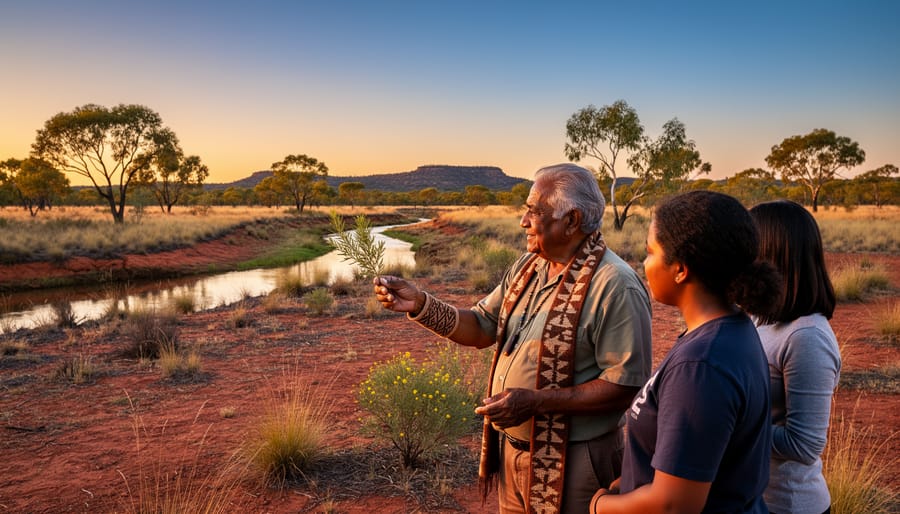
Across Australia, Indigenous peoples have shaped the continent’s landscapes through sophisticated ecological practices spanning more than 65,000 years. This remarkable story of traditional land management demonstrates biocultural evolution in action, where human knowledge systems and natural environments developed together in a continuous dance of mutual adaptation.
Take the cultural burning practices still used by Martu people in Western Australia’s Western Desert. These carefully timed fires create mosaic patterns across the landscape, promoting biodiversity while maintaining songlines and culturally significant plant species. The result is a living library of ecological knowledge encoded in the land itself.
Similarly, the fish trap systems at Brewarrina in New South Wales, believed to be over 40,000 years old, showcase how Indigenous communities engineered waterways to ensure sustainable food supplies whilst maintaining spiritual connections to Country. These aren’t mere archaeological sites but bioculturally evolved landscapes where human ingenuity and environmental stewardship merged.
In Victoria’s Budj Bim Cultural Landscape, now World Heritage-listed, the Gunditjmara people created extensive aquaculture systems using lava flows. This ingenious network of channels and ponds supported eel harvesting for millennia, demonstrating how cultural practices can enhance ecosystem productivity.
These examples reveal a crucial insight for modern bioenergy planning: landscapes carry generations of accumulated wisdom. Recognising these bioculturally significant sites isn’t just about heritage protection; it’s about learning from proven, long-term ecological management strategies that sustained both people and environment through countless generations.
Agricultural Heritage in Bioenergy Planning
Farming communities across Australia have cultivated deep connections with their land over generations, creating biocultural landscapes where agricultural practices and cultural identity intertwine. These relationships profoundly influence how rural areas approach bioenergy development. When wheat farmers in the Riverina or sugarcane growers in Queensland consider bioenergy projects, they’re not just evaluating economics—they’re weighing heritage values passed down through family lines.
Take the story of the Murray-Darling Basin, where fourth-generation farmers have adapted their practices to work with seasonal flooding patterns, developing intimate knowledge of soil health and crop resilience. This accumulated wisdom becomes crucial when selecting sites for bioenergy facilities that might process agricultural waste. Communities with strong agricultural heritage often prefer bioenergy solutions that complement rather than replace traditional farming, such as converting crop residues into energy while maintaining primary production.
Understanding these biocultural bonds helps planners recognise that a paddock isn’t just land—it’s a living library of farming knowledge, family stories, and sustainable practices refined over decades. Successful bioenergy projects acknowledge this heritage, working with farming communities to design solutions that honour their connection to country while creating new opportunities for sustainable energy generation.
Where Bioenergy and Biocultural Heritage Collide
Success Story: When It Goes Right
The Mornington Peninsula’s community bioenergy initiative stands as a shining example of what’s possible when biocultural evolution principles guide project development from day one. Located in Victoria, this project transformed agricultural waste from local wineries and farms into renewable energy while honouring the deep connection between the Boonwurrung people and their traditional lands.
From the outset, project developers engaged with the Boonwurrung Land and Sea Council, recognising that successful bioenergy development required more than environmental permits. Together, they mapped sites of cultural significance, identified native plant species crucial to traditional practices, and designed the facility to enhance rather than disrupt existing ecological relationships. This collaborative approach ensured cultural heritage considerations became a cornerstone of the project, not an afterthought.
The results speak volumes. The facility now processes 15,000 tonnes of organic waste annually, generating enough electricity to power 2,400 homes. But the benefits extend far beyond the numbers. Local Indigenous rangers gained employment in facility operations and environmental monitoring roles. Traditional burning practices informed biomass management strategies, creating a beautiful fusion of ancient wisdom and modern technology.
Community acceptance soared because residents witnessed genuine respect for cultural values. The project established educational programs where Elders share knowledge about sustainable land management with school students, ensuring traditional ecological understanding continues evolving alongside technological advancement.
This success demonstrates that biocultural evolution isn’t just an academic concept but a practical pathway to better outcomes. When projects honour the living relationship between people, culture, and environment, everyone wins. The Mornington Peninsula proves that taking time to understand and integrate cultural perspectives creates resilient, community-supported renewable energy solutions.
Lessons from Projects That Struggled
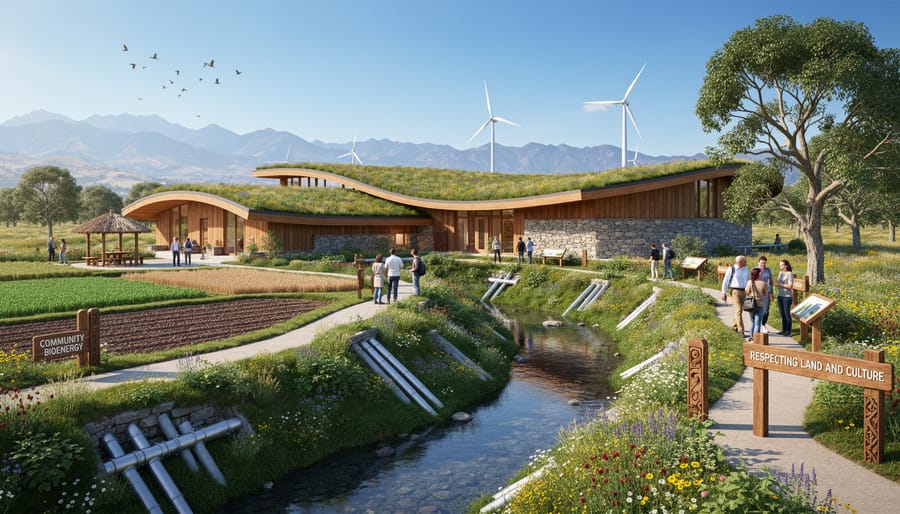
Learning from setbacks offers valuable insights for future success. Several renewable energy projects across Australia have faced unexpected delays when biocultural considerations weren’t properly integrated from the start. One coastal biomass facility encountered significant pushback when Traditional Owners raised concerns about harvesting practices near culturally significant wetlands. The project wasn’t abandoned, but it required substantial redesign and consultation, adding eighteen months to the timeline.
Similarly, a regional Queensland bioenergy initiative initially overlooked how proposed collection routes would impact songlines and ceremony grounds. What began as technical planning became a community relations challenge. The project team eventually partnered with local Indigenous groups, transforming the facility’s design to protect heritage sites while creating employment opportunities.
These experiences aren’t failures but rather stepping stones toward better practice. They demonstrate that early engagement saves time and resources in the long run. Projects flourish when developers recognize that landscapes hold layered meanings beyond their energy potential. By understanding biocultural evolution—how human culture and natural environments shape each other over time—project planners can identify potential concerns before breaking ground, building genuine partnerships that strengthen both heritage protection and renewable energy outcomes for all Australians.
Your Practical Framework for Biocultural Site Assessment
Early Engagement Changes Everything
The secret to successful bioenergy projects that honour biocultural evolution lies in getting the conversation started early, well before construction crews arrive. When project developers engage communities from day one, they’re not just ticking consultation boxes – they’re uncovering invaluable knowledge about how people and place are interconnected.
Meaningful community consultation means sitting down with locals, Indigenous elders, and landholders before finalising site plans. These conversations reveal what really matters: sacred sites that might not appear on official maps, seasonal gathering traditions, or native species that hold cultural significance. In one Queensland project, early engagement uncovered that a proposed biomass collection area overlapped with traditional medicine plant habitats, information that completely reshaped the harvest plan.
Starting these dialogues early saves money and heartache down the track. Communities share their deep environmental knowledge about soil conditions, water patterns, and ecosystem relationships developed over generations. This wisdom becomes your compass for design decisions that work with, rather than against, the living landscape and its cultural connections.
Mapping What Matters Beyond the Obvious
Traditional environmental assessments often miss the invisible threads connecting people to place. To truly identify biocultural heritage, we need tools that capture what standard surveys overlook—the stories, spiritual connections, and generations of ecological knowledge woven into landscapes.
Indigenous mapping techniques offer powerful alternatives. Country-based mapping, practiced by Aboriginal and Torres Strait Islander communities across Australia, documents Dreaming tracks, seasonal resource cycles, and sacred sites that might otherwise remain invisible to conventional surveys. These living maps reveal how human practices have shaped ecosystems over millennia, highlighting areas where bioenergy development could disrupt crucial cultural-ecological relationships.
Oral history sessions with Traditional Owners and long-term community members uncover knowledge that exists nowhere else. A grandmother’s recollection of seasonal burning practices or a fisherman’s understanding of waterway changes provides irreplaceable context for sustainable site selection.
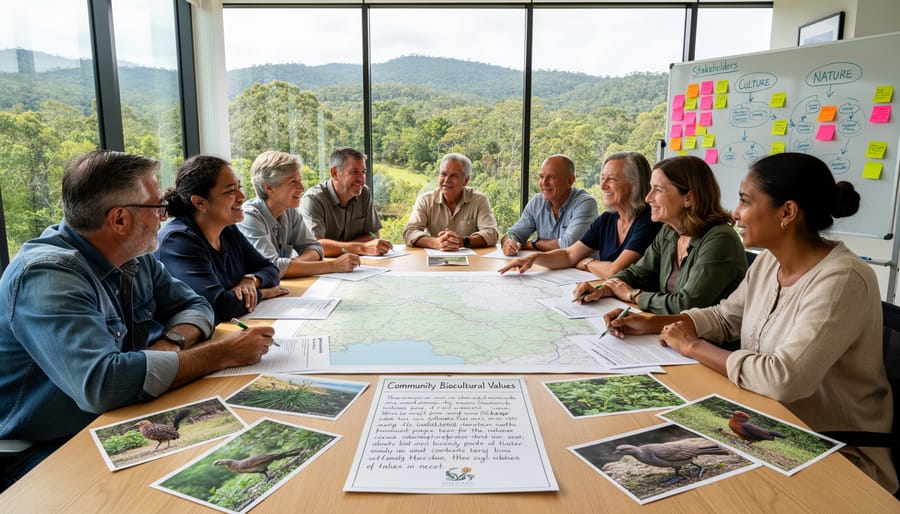
Participatory mapping workshops bring diverse community voices together, creating collaborative maps that layer environmental data with cultural significance. When a local resident marks where their great-grandfather planted windbreaks or harvested native grasses, these seemingly small details reveal biocultural hotspots deserving protection.
Walking Country with Traditional Custodians—physically traversing landscapes together—often reveals what no desktop assessment can capture. This ground-truthing approach has helped numerous Australian bioenergy projects identify culturally sensitive areas before breaking ground, turning potential conflicts into partnerships.
Turning Constraints into Opportunities
Rather than viewing biocultural considerations as roadblocks, forward-thinking organisations are discovering they’re actually pathways to stronger, more successful outcomes. When Aboriginal communities partner with bioenergy developers from the outset, projects gain local champions who understand the land intimately and can navigate cultural sensitivities that outsiders might miss entirely.
Co-designed solutions create win-win scenarios. In Queensland, a biomass facility incorporated Indigenous fire management practices into their feedstock collection methods, reducing bushfire risk while respecting traditional burning knowledge. This collaboration delivered environmental benefits alongside cultural preservation, something a purely technical approach would have overlooked.
Community support transforms project timelines too. When locals see their values reflected in development plans, opposition melts into advocacy. Projects move faster through approvals, avoid costly redesigns, and benefit from generations of ecological knowledge that conventional environmental assessments might take years to uncover.
The real opportunity lies in recognising that cultural landscapes and ecological health are inseparable. By embracing biocultural evolution as a framework, developers unlock innovative solutions that serve multiple purposes: clean energy generation, cultural heritage protection, biodiversity enhancement, and genuine reconciliation. It’s not about ticking boxes; it’s about building something better together.
The Future of Culturally Intelligent Bioenergy
Australia stands at an exciting threshold where ancient wisdom and cutting-edge renewable energy technology are beginning to truly merge. Forward-thinking initiatives across the country are demonstrating what’s possible when we genuinely embrace biocultural evolution principles in energy planning.
Several states are pioneering innovative frameworks that place Indigenous knowledge at the heart of renewable energy development. In Victoria, emerging policies now require bioenergy proponents to conduct Cultural Heritage Impact Assessments before site selection, ensuring Traditional Owners have genuine input from day one rather than as an afterthought. This represents a fundamental shift in how we approach energy infrastructure.
Queensland is taking things even further with pilot programs that establish co-management arrangements for bioenergy facilities on Country. These partnerships recognize that sustainable energy isn’t just about carbon neutrality, it’s about respecting the deep connections between people, land, and ecosystems that have existed for tens of thousands of years.
The renewable energy sector itself is evolving rapidly. Progressive companies are now employing dedicated cultural liaison officers and investing in long-term relationships with Indigenous communities. Some are incorporating traditional fire management practices into their biomass sourcing strategies, creating a beautiful synergy between ancient land care and modern energy production.
Looking ahead, there’s growing momentum for national standards that embed biocultural evolution principles into all renewable energy planning. Industry associations are developing best-practice guidelines, while research institutions are documenting successful models that others can follow.
This isn’t just good ethics, it’s smart business. Projects that honour biocultural evolution principles tend to secure faster approvals, enjoy stronger community support, and deliver more resilient, genuinely sustainable outcomes. The pathway is becoming clearer: when we work with Country rather than simply on it, everybody wins.
Understanding biocultural evolution transforms how we approach renewable energy development in Australia. It’s not simply about being respectful—it’s about building projects that genuinely work. When bioenergy initiatives honour the deep connections between communities and their landscapes, they gain crucial local knowledge, avoid costly conflicts, and create lasting partnerships that strengthen project viability.
The success stories we’ve explored, from community-led developments to Indigenous-partnered facilities, demonstrate that culturally intelligent renewable energy isn’t a nice-to-have—it’s essential infrastructure for a sustainable future. These projects show better community outcomes, stronger environmental protection, and more resilient operations precisely because they’ve woven cultural understanding into their foundations from day one.
Now it’s your turn to champion this approach. Whether you’re a policymaker shaping guidelines, a developer planning your next site, or a community member with a voice in local energy decisions, you have the power to advocate for biocultural awareness. Ask the tough questions: How does this project respect cultural heritage? Who’s been consulted? What traditional knowledge could strengthen this initiative?
By demanding culturally intelligent renewable energy in your community, you’re not just protecting heritage—you’re building the foundation for Australia’s most successful, sustainable bioenergy future. Fair dinkum, that’s worth fighting for.