
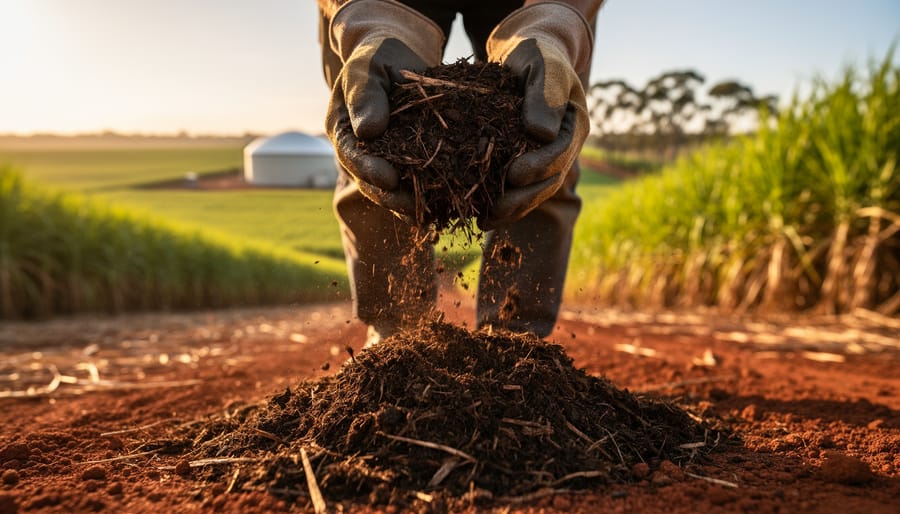
Imagine a world where nothing goes to waste—where every leaf that falls, every scrap from your kitchen, and every blade of grass feeds the next generation of life. That’s exactly how nutrient cycles work in nature, and they’re becoming the blueprint for Australia’s sustainable energy revolution.
Nutrient cycles are nature’s recycling systems, constantly moving essential elements like carbon, nitrogen, and phosphorus between soil, plants, animals, and the atmosphere. In bioenergy systems, these cycles transform what we once called “waste”—agricultural residues, food scraps, forestry byproducts—into clean energy while returning valuable nutrients to the land. It’s a complete circle where nothing is lost and everything serves a purpose.
For Australia, understanding nutrient cycles isn’t just environmental theory—it’s the foundation of practical solutions already working across the country. From Queensland sugarcane farms using bagasse to power mills while enriching soils, to Victorian dairy operations converting manure into renewable gas and premium fertilizer, these cycles are proving that sustainability and productivity go hand in hand.
The connection to a circular bioeconomy is clear: by mimicking nature’s cycles, we close the loop on resource use, reduce emissions, and build resilience into our agricultural and energy systems. This isn’t about complicated science—it’s about working with nature’s proven methods to create lasting value for Australian communities, farms, and industries.
What Are Nutrient Cycles? Nature’s Blueprint for Sustainability
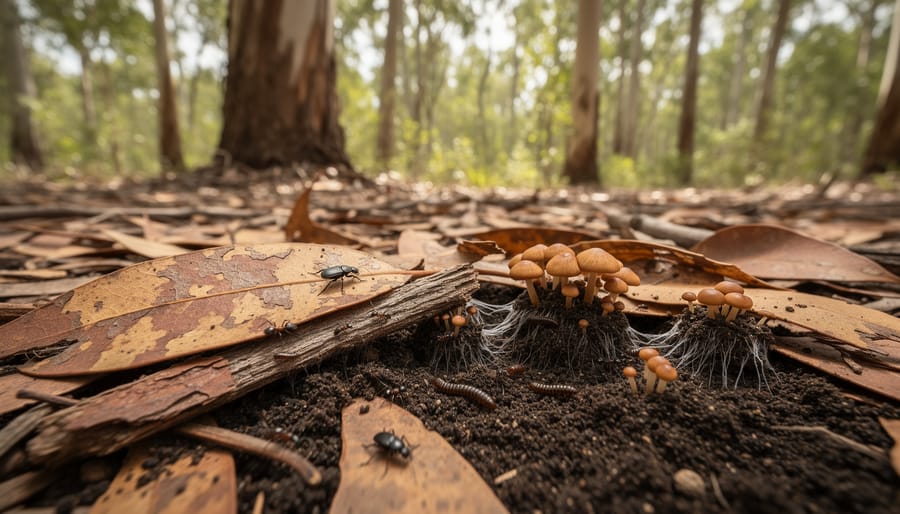
The Three Key Players in Every Nutrient Cycle
Think of nutrient cycles as nature’s original recycling system, where three essential players work together to keep materials flowing rather than going to waste. Understanding these roles helps us design better bioenergy systems that mirror nature’s efficiency.
First up are the producers, primarily plants and algae. These green champions capture sunlight and transform carbon dioxide and nutrients from soil into living matter. In bioenergy contexts, they might be energy crops like sugarcane or grasses that absorb nutrients while growing, storing solar energy in their tissues. They’re the foundation of the whole system, creating the raw materials that power everything else.
Next come the consumers, including animals, humans, and even microbes that feed on living matter. In a bioenergy facility, livestock producing manure or communities generating food waste fill this role. They take in the nutrients locked up by producers and transform them through digestion and metabolism, converting complex compounds into simpler forms while using the energy for their own needs.
Finally, the decomposers are nature’s cleanup crew, primarily bacteria and fungi that break down dead plant material, animal waste, and other organic matter. These microscopic workers are the real champions in bioenergy systems like anaerobic digesters, where they transform organic waste into biogas while releasing nutrients back into forms that producers can use again.
Together, these three players create a continuous loop where nothing goes to waste. When one group finishes with nutrients, another picks them up, keeping the cycle spinning indefinitely. This natural blueprint is what makes sustainable bioenergy possible.
Why Nutrient Cycles Matter for Clean Energy
Understanding nutrient cycles isn’t just textbook ecology—it’s the foundation for designing clean energy systems that actually work long-term. When we grasp how nutrients naturally flow through ecosystems, we can mirror these processes in bioenergy production, creating systems that regenerate rather than deplete resources.
Think of it this way: conventional energy extraction takes without giving back, gradually exhausting what it touches. Nature, however, operates differently. A healthy forest returns nutrients to the soil, which feeds new growth, which eventually returns more nutrients—a perpetual loop. By applying this wisdom to bioenergy, we’re developing solutions that produce power while simultaneously enriching the environment.
This approach has tremendous practical implications for Australia. When bioenergy facilities work with nutrient cycles rather than against them, they transform waste into valuable resources. Organic matter that might otherwise decompose in landfills becomes renewable energy, while nutrient-rich byproducts revitalise depleted soils. It’s a fair dinkum win-win scenario.
The beauty lies in the circular thinking: nothing is wasted, everything has value, and the system strengthens itself over time. For policymakers and industry professionals, this represents more than environmental responsibility—it’s smart economics. Systems designed around natural nutrient cycles require fewer inputs, create multiple revenue streams, and build resilience into our energy infrastructure. That’s the kind of forward-thinking Australia needs as we transition to cleaner energy sources.
From Linear Waste to Circular Wisdom: Nutrient Cycles in Bioenergy
The Problem with Traditional Energy Systems
Traditional energy systems operate on a one-way street. We extract coal, oil, or gas from the ground, burn it for power, and release the byproducts into our atmosphere. It’s a bit like constantly withdrawing from your savings account without ever making a deposit—eventually, you’ll run out. These conventional approaches treat our planet’s resources as infinite, when in reality they’re anything but.
Consider a typical coal-fired power station. The coal gets burned once, the energy is captured, and what remains becomes waste requiring disposal. There’s no putting those resources back into the system, no regeneration, no second chance. This linear approach stands in stark contrast to how nature operates, where everything cycles back to nourish the next generation of growth.
The beauty of understanding nutrient cycles is recognising there’s a better way forward. Nature has perfected the art of the circular economy over billions of years, and we’re finally learning to mirror these systems in our energy production. Rather than viewing this as a crisis, it’s an opportunity to redesign how we power our homes and businesses using principles that have sustained life on Earth since the beginning.
How Bioenergy Closes the Loop
Picture a perfect circle where nothing goes to waste. That’s exactly how bioenergy closes the loop in nutrient cycles, creating a system that’s both brilliant and beautifully simple.
Here’s how it works: The journey begins when organic waste, whether it’s food scraps from your kitchen, agricultural leftovers, or even sewage, enters a bioenergy facility. Through processes like anaerobic digestion or composting, this waste transforms into renewable energy such as biogas or electricity that powers homes and businesses across Australia.
But here’s where the magic really happens. The byproducts from energy generation don’t end up in landfill. Instead, nutrient-rich digestate and compost return directly to the soil. These byproducts are packed with nitrogen, phosphorus, and potassium, the very nutrients plants crave to thrive. Farmers spread this natural fertiliser across their fields, enriching the soil without relying on synthetic chemicals.
The enriched soil then nurtures new crops and biomass, which eventually circle back as organic matter when harvested. Some becomes food, some becomes agricultural waste, and the cycle begins again. It’s nature’s own recycling program, powered by human innovation.
Think of it like this: waste feeds the system, energy powers our lives, nutrients feed the soil, and healthy soil grows the next generation of biomass. Round and round it goes, with every revolution strengthening both our energy security and environmental health. This closed-loop approach means we’re not just managing waste, we’re actively regenerating the land while meeting our energy needs.
Real-World Success: Australian Farms Turning Waste Into Wealth
Across Australia, innovative farmers are proving that nutrient cycles aren’t just theoretical concepts—they’re profitable business strategies that transform waste into valuable resources. These pioneering operations demonstrate how closing the loop on nutrients creates genuine environmental and economic benefits.
Take Gippsland’s dairy region in Victoria, where several farms have embraced anaerobic digestion to revolutionise their operations. The Cooke family’s dairy farm near Timboon processes manure from 600 cows through their digester system, capturing methane that would otherwise escape into the atmosphere. The biogas now powers their entire milking operation and generates surplus electricity sold back to the grid, earning an additional $40,000 annually. Even better, the nutrient-rich digestate that remains gets returned to pastures as fertiliser, replacing costly synthetic alternatives. The farm has slashed chemical fertiliser expenses by 65 percent while cutting greenhouse gas emissions equivalent to taking 120 cars off the road.
In Queensland’s Burdekin region, sugarcane growers are writing their own success story. The Invicta Mill collaborative project involves multiple farms collecting bagasse and mill mud—traditional waste products—and converting them through composting into premium soil amendments. This closed-loop approach has returned over 15,000 tonnes of organic matter to local fields annually. Growers report healthier soils with improved water retention, reducing irrigation needs by up to 30 percent during dry spells. The nutrient-dense compost eliminates roughly 2 million dollars worth of commercial fertiliser purchases across the cooperative each year, money that stays in farmers’ pockets rather than flowing to chemical suppliers.
Western Australia’s Peel-Harvey region showcases community-scale nutrient cycling through waste-to-energy systems that connect multiple agricultural producers. The Peel Renewable Energy initiative collects organic waste from dairy farms, piggeries, and food processors throughout the catchment. Their centralised facility produces biogas for local energy needs while creating certified organic fertiliser products. This regional approach has diverted over 50,000 tonnes of organic waste from landfill since 2019, generated enough renewable energy to power 800 homes, and produced fertiliser valued at 1.2 million dollars annually.
These aren’t isolated experiments—they’re proven models demonstrating that sustainable nutrient cycling makes solid business sense. Australian farmers leading this charge are simultaneously improving their bottom lines, enriching their soils, and protecting the environment. Their success shows that closing nutrient loops transforms agriculture from a linear extractive industry into a regenerative system that benefits everyone.
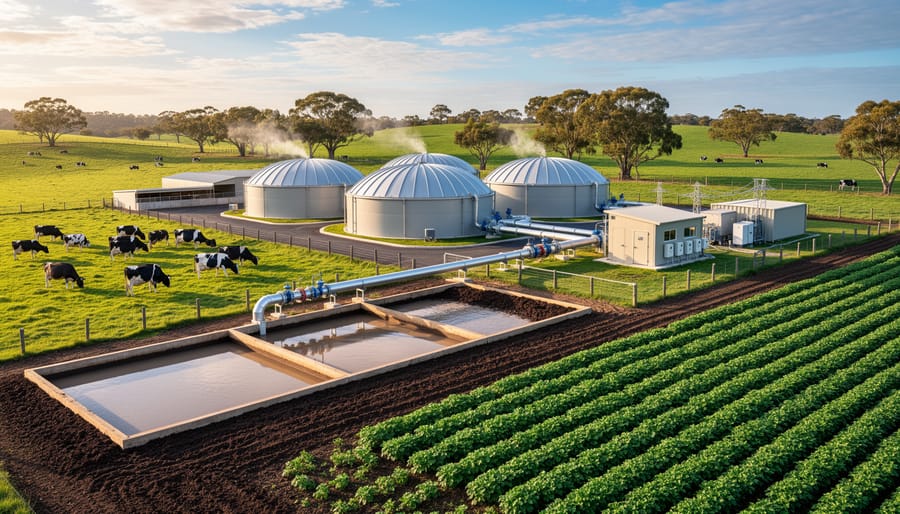
The Five Essential Elements of Nutrient Circularity
Biomass Selection and Sourcing
Selecting the right biomass is fundamental to creating effective nutrient cycles in bioenergy systems. In Australia, we’re blessed with abundant organic materials that serve dual purposes—generating clean energy while returning valuable nutrients to the soil. Agricultural residues like sugarcane bagasse, wheat straw, and cotton gin trash are excellent choices, containing nutrients that would otherwise be lost when left to decompose in fields. Forestry waste from sustainable timber operations provides another rich source, particularly in regions like Tasmania and Victoria.
The key is matching biomass type to your end goals. Livestock manure from cattle and poultry farms offers high nitrogen content, making the resulting digestate particularly valuable for crop production. Meanwhile, crop residues provide balanced carbon-to-nitrogen ratios ideal for maintaining soil health. Queensland’s sugar industry has pioneered this approach brilliantly, transforming millions of tonnes of bagasse annually into both electricity and nutrient-rich amendments. When sourcing biomass, prioritize local materials to reduce transport emissions and strengthen regional nutrient loops. This practical approach ensures nutrients stay within your community’s agricultural system, creating the circular economy that makes bioenergy truly sustainable.
Energy Conversion Processes
Transforming biomass into clean energy doesn’t mean losing valuable nutrients—quite the opposite. Modern energy conversion processes are designed to capture and preserve these essential elements for future use. Anaerobic digestion breaks down organic waste in oxygen-free environments, producing renewable biogas while creating nutrient-rich digestate that farmers can return to their fields. Think of it as nature’s recycling system on steroids. Combustion processes burn biomass for heat and electricity, leaving behind ash packed with minerals like potassium and phosphorus—brilliant for soil conditioning. Gasification converts organic materials into synthetic gas at high temperatures, with solid byproducts containing concentrated nutrients. Australian facilities are already demonstrating this circular approach beautifully, turning what was once considered waste into both renewable energy and agricultural resources. The beauty lies in the dual benefit: we generate power for our homes and businesses while ensuring nutrients complete their natural cycle back to the land, supporting future crop growth and maintaining soil health for generations to come.
Nutrient Recovery and Processing
After bioenergy production, the work isn’t finished—in fact, some of the most valuable outputs are just beginning their journey back into the system. Digestate from anaerobic digestion and ash from combustion contain concentrated nutrients like nitrogen, phosphorus, and potassium that would otherwise require energy-intensive manufacturing. Through careful resource recovery processes, these byproducts become premium soil amendments and fertilisers. Australian facilities are leading the way—processing digestate through dewatering and composting to create nutrient-rich products that reduce dependence on synthetic fertilisers. This transformation closes the loop beautifully: organic waste becomes energy, and what remains nourishes the next generation of crops. It’s practical sustainability in action, turning every stage of the cycle into an opportunity to create value while protecting our environment.
Soil Application and Regeneration
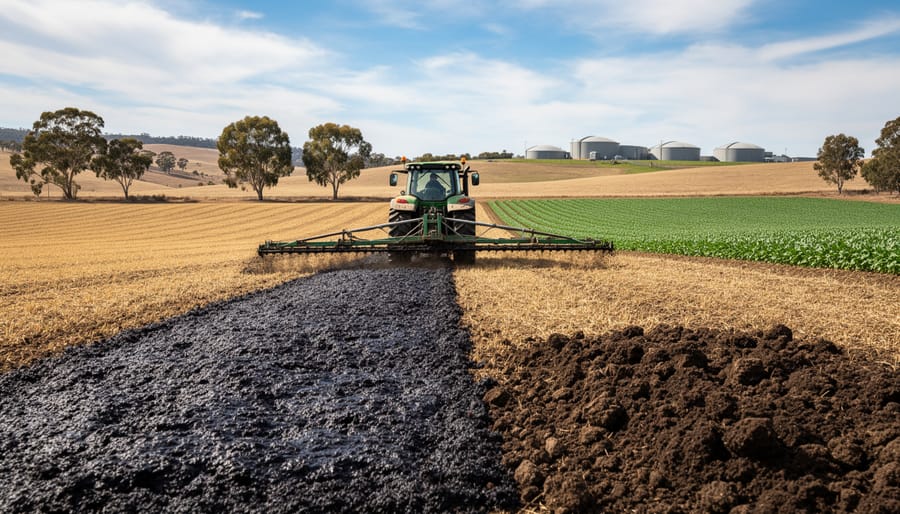
The journey comes full circle when recovered nutrients return to the soil, transforming what was once waste into agricultural gold. After anaerobic digestion extracts energy from organic materials, the remaining digestate becomes a nutrient-rich fertilizer that Australian farmers are increasingly embracing. This bio-fertilizer contains essential nitrogen, phosphorus, and potassium, along with organic matter that improves soil structure—a real bonus for our often nutrient-depleted soils.
Applying these recovered nutrients addresses a critical challenge facing Aussie agriculture: declining soil health. Unlike synthetic fertilizers that can degrade soil over time, digestate enhances microbial activity and water retention, particularly valuable during drought conditions. Commercial farms across Queensland and Victoria are reporting improved crop yields and reduced fertilizer costs by integrating bio-fertilizers into their programs. One dairy farm in Gippsland cut chemical fertilizer use by 60 percent while maintaining productivity, demonstrating that nutrient cycling isn’t just environmentally sound—it makes good business sense too. This practical application completes the loop, turning yesterday’s organic waste into tomorrow’s thriving crops.
Monitoring and Optimization
Modern bioenergy systems use smart monitoring tools to track nutrients throughout their journey, ensuring nothing goes to waste. Simple sensors measure nutrient levels in organic waste and digestate, while data-tracking software identifies exactly where nutrients are needed most. Some Australian facilities use smartphone apps that let farmers check their nutrient status in real-time, making optimization as easy as checking the weather forecast. These systems adjust processes automatically, redirecting nitrogen-rich materials to crops that need them most or flagging when phosphorus levels require attention. The beauty of this technology is its accessibility—you don’t need a science degree to see how your organic waste transforms into valuable resources, creating a transparent loop that benefits both productivity and the environment.
The Triple Win: Economic, Environmental, and Community Benefits
When nutrient cycles are properly managed in bioenergy systems, the benefits ripple outward in remarkable ways, creating wins across economic, environmental, and social fronts that strengthen communities right across Australia.
Start with the hip pocket. Farmers implementing nutrient cycling through bioenergy systems have slashed their fertilizer bills by up to 60 percent. That’s real money staying in local economies rather than flowing overseas to chemical manufacturers. A dairy operation in Gippsland reported saving over $45,000 annually on fertilizer costs alone after establishing an anaerobic digestion system that returns nutrients to their pastures. These savings compound year after year, improving farm viability and creating breathing room for agricultural businesses.
The jobs picture tells an equally compelling story. Circular nutrient systems don’t run themselves—they require technicians, operators, agronomists, and maintenance crews. Each bioenergy facility generating power while cycling nutrients creates between 15 and 40 ongoing local jobs, from skilled engineering positions to hands-on operational roles. These aren’t temporary construction gigs but permanent careers that keep families rooted in regional communities.
Environmental advantages extend beyond the obvious waste reduction. Proper nutrient cycling dramatically cuts greenhouse gas emissions—methane from decomposing organic waste drops to near zero when materials enter controlled bioenergy systems. The digestate returning to soil builds organic carbon content, contributing to carbon capture while improving soil structure and water retention. Waterways benefit too, as nutrients previously washing into rivers and estuaries now nourish productive farmland instead.
Energy independence adds another layer of value. Communities generating their own power from locally-sourced organic materials reduce reliance on distant fossil fuel supplies and volatile energy markets. This resilience proved invaluable during recent grid disruptions, when facilities with bioenergy systems maintained operations while others went dark.
Perhaps most significantly, these systems demonstrate that environmental responsibility and economic prosperity aren’t opposing forces—they’re natural partners in building stronger, more sustainable communities.
Getting Started: Practical Steps for Australian Communities
Ready to turn nutrient cycle knowledge into action? Whether you’re running a dairy farm in Gippsland, managing a food processing business, or working with your local council, there are practical pathways to get involved in circular nutrient systems.
For farmers and primary producers, start by conducting a nutrient audit of your operation. What organic materials are you currently purchasing? What waste leaves your property? Organizations like the Australian Organic Recycling Association can connect you with composting facilities or biogas plants that might partner with you. Many successful farm-scale digesters began with conversations at local agricultural shows or regional sustainability networks.
Business owners in food processing, hospitality, or manufacturing should explore waste-to-resource partnerships. Contact your state’s environmental protection authority to learn about grants and technical support programs. Companies like BioPak and others have blazed the trail, demonstrating that what you pay to dispose of can become valuable feedstock for bioenergy production. Start small – perhaps by redirecting organic waste from one facility to test the concept.
Local councils hold unique power to coordinate community-wide nutrient cycling. Consider organising stakeholder workshops bringing together farmers, waste managers, and energy developers. Several Victorian councils have successfully facilitated these connections, leading to regional biogas projects that benefit everyone.
First steps matter more than perfect plans. Join online forums, attend renewable energy expos, and don’t hesitate to visit existing facilities. Most operators are surprisingly generous with their time and knowledge. The Australian Renewable Energy Agency website offers current funding opportunities, while state-based sustainability networks provide invaluable peer support. Remember, every large-scale success story started with someone asking, “How might this work here?”
Nature has been running the most efficient energy system on Earth for billions of years, and we’re just beginning to catch up. Understanding nutrient cycles isn’t simply an academic exercise—it’s about recognising the blueprint for a truly sustainable energy future. When we apply these circular principles to bioenergy, we’re not inventing something new; we’re joining a process that’s already proven itself time and again.
Australia stands at a remarkable crossroads. With our agricultural diversity, innovative spirit, and commitment to sustainability, we’re uniquely positioned to become global leaders in circular bioenergy solutions. The success stories we’ve witnessed—from Queensland piggeries to New South Wales farms—demonstrate that this isn’t a distant dream but an achievable reality happening right now.
The question isn’t whether nutrient cycles can power our future sustainably; it’s whether we’ll seize the opportunity to make it happen. Whether you’re a farmer considering biogas systems, a policymaker shaping energy futures, or simply someone who cares about leaving a healthier planet for future generations, there’s a role for you in this transformation. The cycle is ready—it’s time to join it.