
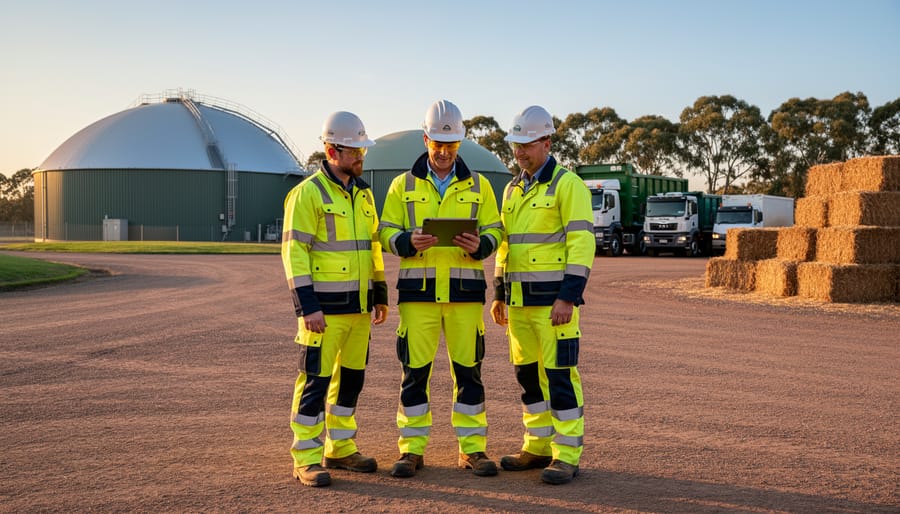
Track employee skill gaps by mapping your current workforce capabilities against emerging bioenergy roles, then create targeted training programs that transform general agricultural workers into biomass specialists or biogas technicians. Australia’s renewable energy sector desperately needs this strategic approach as Australia’s bioenergy jobs boom creates unprecedented demand for specialized talent.
Measure productivity patterns in biomass collection teams using GPS tracking and time-motion studies to identify bottlenecks, optimize routes, and reduce harvest costs by up to 30 percent while improving worker safety outcomes.
Analyze turnover data at biogas facilities to pinpoint retention challenges specific to regional locations, shift patterns, or job roles, enabling you to design compensation packages and work conditions that keep experienced operators from leaving for competing industries.
Project future staffing needs by examining industry growth forecasts alongside demographic trends in rural communities, ensuring your organization secures talent before competitors do and avoids costly production delays.
These workforce analytics strategies transform raw employment data into actionable intelligence that drives business performance. Rather than guessing about hiring needs or training investments, bioenergy operators across Australia are using concrete metrics to build resilient, skilled teams capable of scaling operations sustainably. The examples that follow demonstrate how organizations similar to yours have implemented these approaches, achieving measurable improvements in productivity, safety, and profitability while contributing to regional employment growth and energy security.
What Workforce Analytics Actually Means for Bioenergy
The Basics Without the Jargon
Workforce analytics in bioenergy might sound complicated, but it’s essentially about understanding your people power to build a stronger, more efficient operation. Think of it as your GPS for navigating staffing decisions in the renewable energy sector.
At its core, workforce analytics involves collecting and examining information about your team—who they are, what skills they bring, when you need them most, and how well they’re performing. For bioenergy operations across Australia, this means tracking everything from harvest crew availability during peak biomass collection seasons to specialist technicians needed for biogas plant maintenance.
Labor market data complements this by showing you the bigger picture: what skills are available in your region, what competing industries are paying, and where training gaps exist. A bioenergy facility in regional Queensland, for example, might discover through labor market analysis that experienced agricultural workers nearby possess transferable skills perfect for biomass handling roles.
Forecasting tools tie it all together, helping you predict future needs based on production schedules, seasonal patterns, and growth plans. Rather than scrambling to find qualified workers during crunch times, you’re planning ahead—identifying when you’ll need extra hands, what training current staff might require, and how to retain your best performers. It’s practical planning that turns workforce challenges into opportunities for building Australia’s clean energy future.
Why Bioenergy Needs Better Workforce Planning
Australia’s bioenergy sector faces distinctive workforce challenges that make strategic planning essential. Unlike traditional energy operations, biomass collection follows seasonal harvests, requiring careful coordination of temporary workers alongside permanent staff. The industry demands specialized technical skills spanning agricultural knowledge, engineering expertise, and emerging biotechnology capabilities—creating unique recruitment and training needs.
Regional employment adds another layer of complexity, as bioenergy facilities often operate in rural communities where workforce availability fluctuates significantly. Meanwhile, the sector’s rapid expansion creates urgent pressure to scale teams quickly without compromising safety or quality standards.
Consider Queensland’s sugarcane waste-to-energy operations, where analytics helped balance seasonal cane crushing periods with year-round biogas production needs. By mapping workforce requirements against biomass availability cycles, operators reduced idle time by 35% and improved worker retention through better scheduling.
These realities demonstrate why gut-feel management simply doesn’t cut it anymore. Workforce analytics transforms these challenges into opportunities, enabling bioenergy operators to anticipate needs, develop talent pipelines, and build resilient teams that grow with this vital renewable sector.
Real-World Example: Forecasting Biomass Collection Teams
How One Australian Facility Got It Right
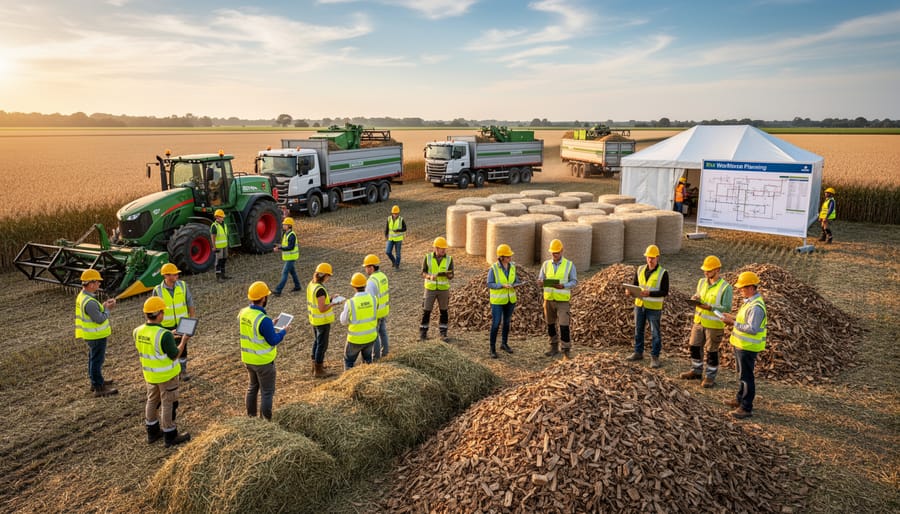
When a sugarcane-based bioenergy facility in northern Queensland faced recurring staffing shortages during harvest season, management knew they needed a smarter approach. Their solution demonstrates how workforce analytics can transform operations from reactive scrambling to proactive planning.
The facility began by collecting three years of data on crop yields, harvest schedules, and corresponding labor requirements. They mapped this information against historical weather patterns and discovered something revealing: their peak staffing needs didn’t align with actual harvest intensity. They’d been hiring too late and in the wrong numbers.
Using this insight, the operations team developed predictive models that factored in crop maturity rates, expected yields from different paddocks, and processing capacity. The analytics revealed they needed to start recruiting skilled operators six weeks earlier than their previous timeline, and casual laborers needed staggered start dates rather than all beginning simultaneously.
The results spoke for themselves. Within one season, the facility reduced overtime costs by 28 percent while increasing processing efficiency by 15 percent. Staff turnover dropped significantly because workers appreciated the reliable schedules and weren’t burned out from covering gaps. The facility now processes an additional 12,000 tonnes of feedstock annually with essentially the same core workforce.
What made this successful wasn’t fancy software or complicated algorithms. The team used relatively simple spreadsheet analysis combined with regular input from floor supervisors who understood the work’s rhythm. This practical, ground-up approach meant staff trusted the system and supervisors could spot when predictions needed adjusting based on real-world conditions.
The Tools They Used
The bioenergy operators tackled their workforce planning challenges using three complementary analytics approaches that transformed scattered information into actionable insights. They started with predictive modelling based on biomass availability, mapping out where agricultural waste, forestry residues, and organic materials would be concentrated across different seasons. This helped them anticipate staffing needs months in advance, ensuring they had enough skilled hands when harvest peaks arrived.
Regional labor market data proved equally valuable. By analyzing employment trends, skill shortages, and training provider locations across rural and regional Australia, they identified untapped talent pools in communities eager for stable, local employment opportunities. This data-driven approach revealed which areas had workers with transferable skills from agriculture, manufacturing, or logistics who could transition into bioenergy roles with targeted upskilling.
Skills mapping completed the picture, creating detailed profiles of capabilities needed at each facility and comparing them against available workforce competencies. This revealed specific gaps requiring attention through training programs or strategic recruitment. Together, these tools enabled forward-thinking workforce decisions that matched the right people with the right roles at precisely the right time, supporting both operational efficiency and sustainable growth.
Predicting Technical Skills Gaps in Biogas Operations
Mapping Current Skills to Future Technology
Smart bioenergy companies across Australia are using workforce analytics to bridge the gap between today’s skills and tomorrow’s opportunities. By systematically mapping current employee capabilities against emerging biogas technologies, organisations can pinpoint exactly where training investments will deliver the strongest returns.
Take the approach used by a Victorian biogas facility that conducted a comprehensive skills audit of their operations team. They discovered that while their technicians excelled at maintaining traditional equipment, few had experience with advanced monitoring systems or automated feedstock handling. This insight drove targeted upskilling programs that prepared the workforce for planned technology upgrades, saving thousands in external recruitment costs.
The process involves comparing your team’s existing competencies with the technical requirements of new biogas systems, from anaerobic digestion monitoring to grid injection technology. Analytics tools can reveal surprising strengths to build upon and genuine gaps requiring attention. This forward-looking approach transforms workforce planning from reactive hiring to strategic development.
Queensland operators have found particular success using competency matrices that track both current proficiency levels and learning pathways for emerging technologies. The result? Employees feel valued and invested in, turnover drops, and companies build the precise capabilities needed for sustainable growth in Australia’s expanding renewable energy sector.
Partnering With TAFEs and Universities
Forward-thinking bioenergy companies across Australia are teaming up with TAFEs and universities to build tomorrow’s workforce today. These partnerships use workforce analytics to identify skill gaps and design targeted training programs that deliver job-ready graduates.
In Queensland, a biomass energy consortium collaborated with Central Queensland University to develop a specialized Certificate IV in Renewable Energy Operations. Labor market data revealed a critical shortage of plant operators with both renewable energy knowledge and industrial safety qualifications. The program now produces 40 graduates annually, with 85% securing employment within three months.
Similarly, Western Sydney University partnered with bioenergy companies to reshape their engineering curriculum based on workforce analytics showing strong demand for process engineers familiar with anaerobic digestion technology. The university integrated practical bioenergy modules and industry placements, creating a reliable talent pipeline.
These partnerships extend to apprenticeship programs as well, where regional TAFEs work directly with employers to track hiring trends and adjust training capacity accordingly. By analyzing real-time labor market data, educational institutions can respond quickly to industry needs, ensuring students gain relevant skills while companies access qualified workers ready to contribute from day one.
Regional Labor Market Analysis for Rural Bioenergy Projects
Understanding What’s Available Locally
Before breaking ground on a new bioenergy facility, smart companies dig deep into local workforce data to ensure they’re building where the people and skills already exist. This practical approach saved one Queensland biomass plant from a costly hiring mistake when their analysis revealed that while their preferred location looked perfect on paper, most qualified technicians would face a 90-minute commute each way—a recipe for high turnover.
Regional employment statistics tell the story of who’s available right now. Companies examine local unemployment rates, the types of jobs people currently hold, and educational attainment levels across the community. In regional Victoria, a biogas developer discovered through council workforce data that their proposed site sat within a 30-kilometre radius of 47 agricultural mechanics—exactly the skill set they needed for maintaining processing equipment.
Commuting pattern analysis prevents workforce isolation. By mapping where potential employees actually live and their typical travel patterns, developers can position facilities strategically. One Western Australian bioenergy company used GPS traffic data and census information to identify a sweet spot where three regional towns overlapped, creating a talent pool three times larger than initially estimated.
Local skills inventories conducted through partnerships with TAFE institutions and industry groups reveal hidden capabilities. Sometimes the perfect workforce exists but works in adjacent industries like food processing, mining operations, or agricultural equipment maintenance—all transferable skill sets for bioenergy operations.
Success Story: Queensland Sugarcane Biomass Project
In Queensland’s Wide Bay-Burnett region, a pioneering sugarcane mill transformed how it planned for the future by implementing comprehensive workforce analytics to transition into biomass energy production. When the Maryborough Sugar Factory decided to expand beyond traditional sugar processing to generate renewable electricity from bagasse—the fibrous residue left after crushing sugarcane—management faced a critical question: could their existing workforce adapt to this new bioenergy operation?
Rather than making assumptions, the facility partnered with regional workforce development agencies to conduct detailed skills mapping of their 180 employees. The analytics revealed that 67 percent of workers already possessed transferable mechanical and processing skills applicable to bioenergy operations, while identifying specific training gaps in boiler operations and electrical systems management.
This data-driven approach enabled the company to design targeted upskilling programs, investing in 12-week training courses for 45 workers to become qualified bioenergy technicians. The analytics also identified optimal training schedules that worked around seasonal harvest periods, ensuring production continuity while building new capabilities.
The results proved transformative. Within 18 months, the facility successfully launched a 38-megawatt biomass power station, creating 22 permanent bioenergy positions while retaining all existing jobs. The workforce analytics approach became a blueprint for other regional facilities, demonstrating how data-informed planning could facilitate smooth transitions into renewable energy while transforming rural communities through sustainable employment opportunities. The project ultimately saved an estimated 430,000 dollars in recruitment costs by developing talent internally rather than seeking external specialists.
Using Analytics to Plan for Industry Growth
Projecting Job Creation Numbers That Matter
Workforce analytics transforms ambitious renewable energy targets into actionable employment roadmaps. By analysing production capacity goals against current workforce capabilities, organisations can forecast exactly how many jobs they’ll need to create—and what skills those workers require.
Consider how Queensland’s biogas facilities used workforce analytics to translate their regional production targets into specific hiring needs. Their modelling revealed they’d need 47 new technicians, 12 plant operators, and 8 agricultural specialists over three years to meet renewable natural gas quotas. This precision allowed training providers to design programs six months ahead of demand.
The bioenergy sector expansion relies heavily on these analytics to match growth projections with workforce development. Advanced modelling breaks down employment forecasts by subsector—biomass collection might require seasonal workers and equipment operators, while biorefinery operations need chemical engineers and laboratory technicians.
What makes this powerful is the granularity. Rather than saying “bioenergy will create thousands of jobs,” analytics pinpoints that a 50-megawatt biomass plant requires approximately 15 permanent operators, 8 maintenance staff, and generates 200 forestry positions in the supply chain. This specificity enables communities to prepare targeted training initiatives, ensuring local workers are job-ready when opportunities arise.
Identifying Cross-Over Skills From Other Industries
Workforce analytics in Australia’s bioenergy sector has uncovered a goldmine of transferable skills hiding in plain sight. A Queensland biogas facility analysed existing skillsets across regional industries and discovered that dairy farmers already possessed 60% of the competencies needed for feedstock management, while former coal mining equipment operators required just eight weeks of training to maintain biomass processing machinery. Similarly, analytics revealed that workers from traditional grain handling operations had near-perfect alignment with biomass pellet production requirements.
One Victorian bioenergy company used skills mapping software to identify that retired automotive manufacturing workers possessed precision engineering and quality control expertise directly applicable to bioreactor maintenance. This insight slashed their recruitment timeline by five months and training costs by 40%. The analytics showed these workers needed only safety induction and biomass-specific protocols rather than entirely new technical training.
These cross-industry talent pools are reshaping renewable energy career pathways across Australia. By identifying where existing skills overlap with bioenergy needs, companies can accelerate workforce development while providing meaningful transition opportunities for workers from declining industries, creating a win-win for regional employment and sustainable energy growth.
Getting Started: Practical Steps for Australian Bioenergy Businesses
Start With What You Already Know
You don’t need expensive software or complex systems to start understanding your workforce better. The beauty of workforce analytics is that you can begin right now with information already sitting in your filing cabinets or spreadsheets.
Start by gathering your existing employee records. How many staff members work in biomass collection versus processing? What are their skill levels? When do they typically take leave? This simple snapshot reveals patterns you might have missed. A biogas facility in regional Victoria discovered through their basic records that they had five operators all qualified in the same specialization, but none trained in emergency response, creating an unnecessary risk.
Next, look at your production schedules alongside staffing levels. Are you constantly short-handed during harvest season? Do you have idle workers during maintenance periods? One sugarcane bagasse operation in Queensland realized they were paying for three full-time maintenance staff year-round when the work actually clustered into specific months.
Don’t overlook local employment data available free from Australian Bureau of Statistics. Understanding your region’s unemployment rate, average wages, and available skill sets helps you plan realistic recruitment strategies. This grassroots approach costs nothing but delivers genuine insights, giving you confidence before investing in sophisticated analytics tools. The key is simply starting where you are.
Free and Low-Cost Resources Available
Getting started with workforce analytics doesn’t require a hefty investment. Australian bioenergy businesses can tap into excellent free resources right at their fingertips. The Australian Government’s Labour Market Information Portal offers comprehensive data on employment trends, skill shortages, and regional workforce statistics – perfect for benchmarking your team against industry standards and identifying talent gaps before they become problems.
Jobs and Skills Australia publishes detailed industry reports that help you understand workforce dynamics specific to renewable energy sectors. These reports provide context for your own data, showing you where your bioenergy operation fits within the broader landscape. For instance, one regional biogas facility used these reports to discover they were competing with solar farms for the same skilled technicians, prompting them to adjust their recruitment strategy.
The Clean Energy Council offers member resources and workforce planning guides tailored to renewable energy businesses. State governments also provide industry development tools – Victoria’s LaunchVic and Queensland’s Advance Queensland programs include workforce analytics templates designed for growing businesses.
Free online platforms like Skills IQ deliver practical workforce planning resources, while local TAFE institutes often provide complimentary consultations on skills development. By combining these accessible tools with your internal employment data, you can build a robust workforce analytics framework without breaking the bank, positioning your bioenergy business for sustainable growth.
The shift from reactive firefighting to proactive workforce planning represents nothing short of a revolution for Australia’s bioenergy sector. As we’ve explored throughout these examples, workforce analytics isn’t just about crunching numbers—it’s about building a resilient, skilled workforce ready to power our renewable energy future. From regional biomass operations anticipating seasonal demand to biogas facilities optimizing shift patterns, these real-world applications demonstrate that smart workforce planning directly translates to operational excellence and job satisfaction.
What makes this transformation particularly exciting is how it positions bioenergy as an employer of choice. When workers see their employers investing in predictive planning, skills development, and career pathways, they’re not just filling positions—they’re building careers in one of Australia’s fastest-growing sectors. This creates the sustainable, meaningful jobs our communities desperately need while advancing our renewable energy targets.
The message is clear: workforce analytics isn’t a luxury reserved for large corporations; it’s an essential tool for any bioenergy operation serious about long-term success. Whether you’re managing a small-scale biogas plant in regional Queensland or planning a major biomass facility, investing in workforce analytics today means investing in tomorrow’s stability.
So here’s the challenge: look at your current workforce planning approach. Are you reacting to problems or anticipating opportunities? The bioenergy sector’s future depends on forward-thinking leaders who recognize that our greatest renewable resource isn’t just organic waste—it’s the talented people who transform it into clean energy. The time to act is now.