
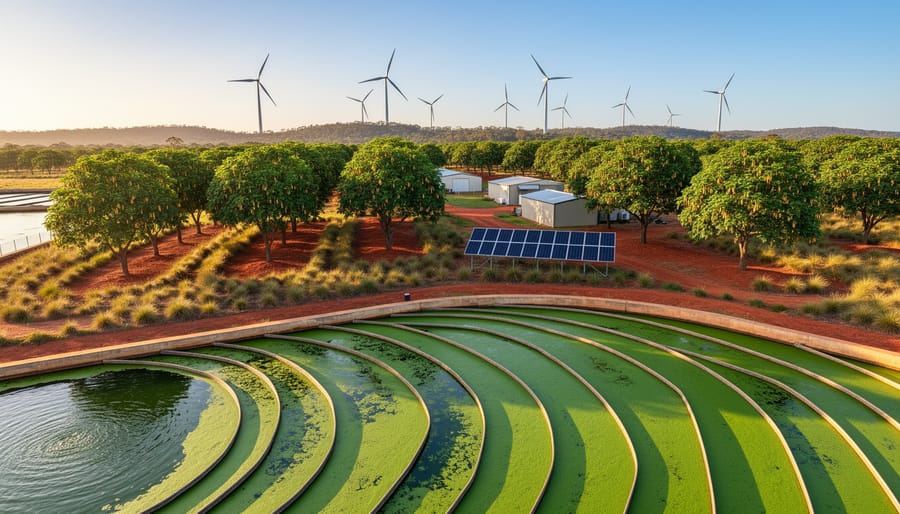
Imagine harnessing the power of entire living organisms—not just their extracted genes or enzymes—to create clean, renewable fuel. This is organismic biotechnology, and it’s revolutionising how Australia approaches bioenergy production.
Unlike genetic modification that alters DNA or enzyme extraction that isolates specific proteins, organismic biotechnology works with whole organisms in their natural form. Think of specially selected algae strains converting sunlight and CO2 into biodiesel, or robust native grasses that thrive in marginal soils while producing massive amounts of biomass for energy generation. These aren’t genetically engineered supercrops—they’re carefully cultivated natural varieties doing what they do best, just optimised for energy production.
For Australian farmers and energy producers, this approach offers a practical pathway forward. Take the success of Pongamia trees now flourishing across Queensland’s degraded farmland. These nitrogen-fixing legumes produce oil-rich seeds without demanding prime agricultural land or excessive water—a perfect fit for our climate challenges. Meanwhile, researchers at several Australian universities are cultivating microalgae species in wastewater treatment facilities, simultaneously cleaning water and generating biofuel feedstock.
The beauty of organismic biotechnology lies in its accessibility and lower regulatory hurdles compared to genetic engineering. Farmers can adopt these systems without navigating complex GMO legislation, while maintaining soil health and biodiversity. As Australia accelerates its renewable energy transition, organismic biotechnology provides a nature-aligned solution that works with our unique ecosystems rather than against them.
This isn’t futuristic thinking—it’s happening right now across Australian farms, research stations, and commercial facilities, proving that sustainable energy production can be both economically viable and environmentally regenerative.
What Is Organismic Biotechnology and Why Does It Matter?
The Difference Between Traditional Plant Breeding and Organismic Approaches
Traditional plant breeding has served agriculture well for thousands of years, relying on careful selection and crossbreeding to develop better crops. Farmers would identify plants with desirable traits—perhaps drought tolerance or higher yield—and cross-pollinate them, hoping the next generation inherited those qualities. While effective, this process takes considerable time, often requiring a decade or more to develop a new variety, with results that can be somewhat unpredictable.
Organismic biotechnology represents a modern evolution of this age-old practice. Rather than waiting multiple generations to see which traits emerge, scientists can now work with the entire living organism while using advanced tools to understand and guide the breeding process more precisely. Think of it as giving plant breeders a detailed roadmap instead of requiring them to navigate in the dark.
The real advantage for bioenergy crops becomes clear when considering speed and precision. Where traditional breeding might take fifteen years to develop a eucalyptus tree with better biomass yield, organismic approaches can achieve similar results in half that time. Scientists can identify specific genetic markers associated with desirable traits—such as higher oil content in seeds or faster growth rates—and select breeding pairs accordingly.
This accelerated improvement means Australian farmers and bioenergy producers can access superior crop varieties sooner, helping meet renewable energy targets while maintaining environmental sustainability. The beauty lies in working with nature’s existing toolkit, simply doing so with greater understanding and efficiency.
Breakthrough Crops Being Developed for Australian Conditions
Supercharged Sugarcane: More Energy, Less Water
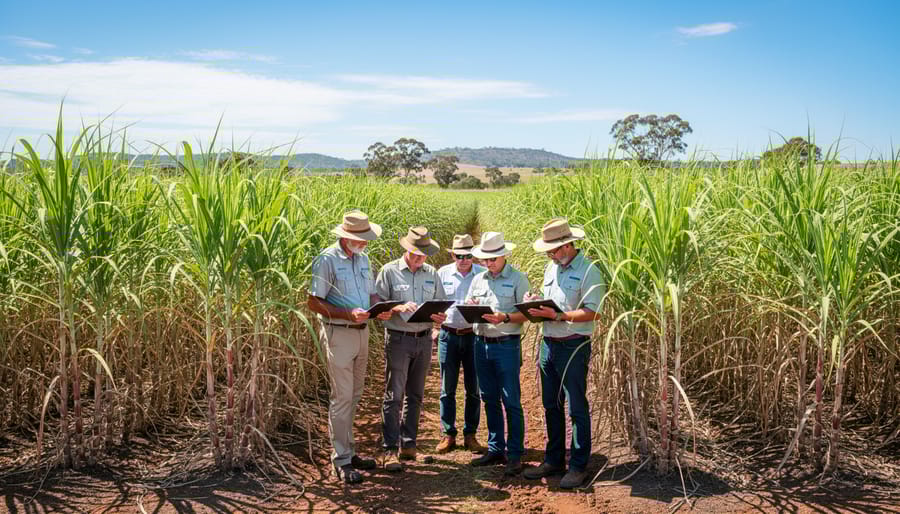
Australia’s sugarcane industry is getting a remarkable makeover through organismic biotechnology, transforming this familiar crop into a powerhouse for sustainable energy production. Researchers across Queensland are breeding enhanced sugarcane varieties specifically designed for Australian conditions, delivering impressive results that benefit both farmers and the environment.
The numbers tell a compelling story. Recent trials at Queensland’s Sugar Research Australia facilities have demonstrated new varieties achieving up to 30% higher biomass yields compared to conventional sugarcane, while simultaneously requiring 25% less water. This breakthrough matters enormously for advanced biofuel production, particularly as climate variability continues challenging traditional agricultural regions.
One standout success comes from Mackay, where growers trialling drought-tolerant varieties maintained strong yields through the 2022-23 dry season while neighbouring conventional crops struggled. These optimized plants feature deeper root systems and improved water-use efficiency, traits carefully selected through sophisticated breeding programs that identify and enhance beneficial genetic characteristics.
Beyond just growing bigger, these supercharged varieties pack more fermentable sugars per tonne, translating directly into better ethanol yields. Some new cultivars produce up to 15% more ethanol from the same harvest volume, making the entire production chain more efficient and cost-effective.
What makes this approach particularly exciting is its foundation in natural plant diversity. Rather than introducing foreign genes, scientists are identifying sugarcane’s own genetic variations that confer desirable traits, then crossing these to create superior varieties. This patient, methodical work has produced crops that thrive in everything from coastal humidity to inland heat.
For Queensland’s cane-growing communities, these innovations represent genuine hope—a pathway to maintain agricultural livelihoods while contributing meaningfully to Australia’s renewable energy future.
Native Grasses with Enhanced Energy Potential
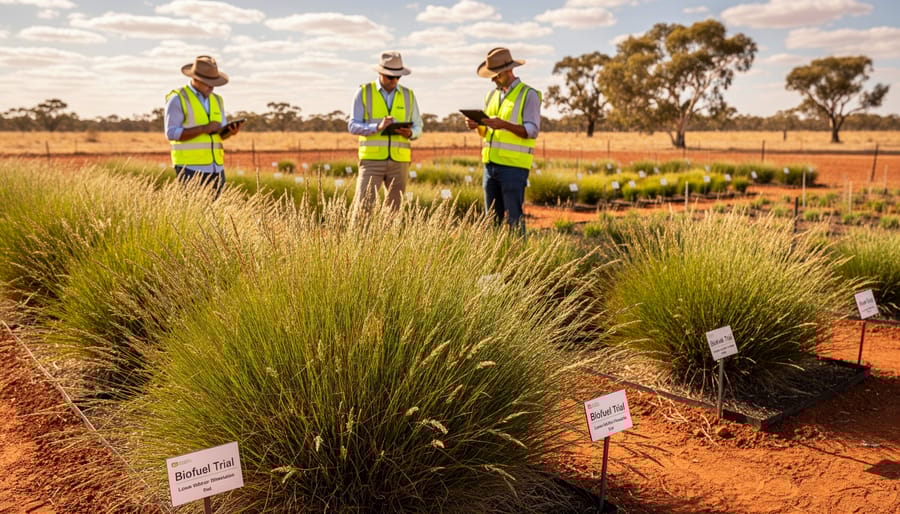
Australia’s native grasses are getting a biotechnology makeover, and the results are genuinely exciting for our clean energy future. While switchgrass originally hails from North America, Australian researchers are applying similar organismic biotechnology techniques to our own native species, creating what you might call “supercharged” grasses that could transform our biofuel industry.
The beauty of this approach lies in working with what nature already does well. Native grasses like kangaroo grass and other indigenous species have spent millennia adapting to Australian conditions, making them naturally drought-tolerant and resilient. Scientists are now enhancing these existing strengths by carefully selecting and breeding varieties with higher cellulose content and more efficient energy conversion potential. Unlike genetic modification that introduces foreign genes, this organismic approach amplifies the grasses’ own genetic toolbox.
Take the work happening at several Australian research institutions, where teams are identifying native grass varieties that naturally produce more lignin in their cell walls. By crossing these high-performing plants, researchers have developed strains that yield up to 30 percent more biofuel per hectare while still thriving on marginal land unsuitable for food crops. This means farmers can generate income from previously unproductive paddocks without competing with food production.
What makes this particularly promising is the minimal input required. These enhanced native grasses don’t demand intensive irrigation or heavy fertilisation. They’re essentially doing what they’ve always done, just better. One Queensland producer describes growing these improved varieties as “having your cake and eating it too” – generating biofuel feedstock while simultaneously preventing erosion, improving soil health, and providing habitat for native wildlife. This triple-win scenario demonstrates how smart biotechnology can align environmental stewardship with economic opportunity.
Algae: The Tiny Powerhouses Growing in Desert Sun
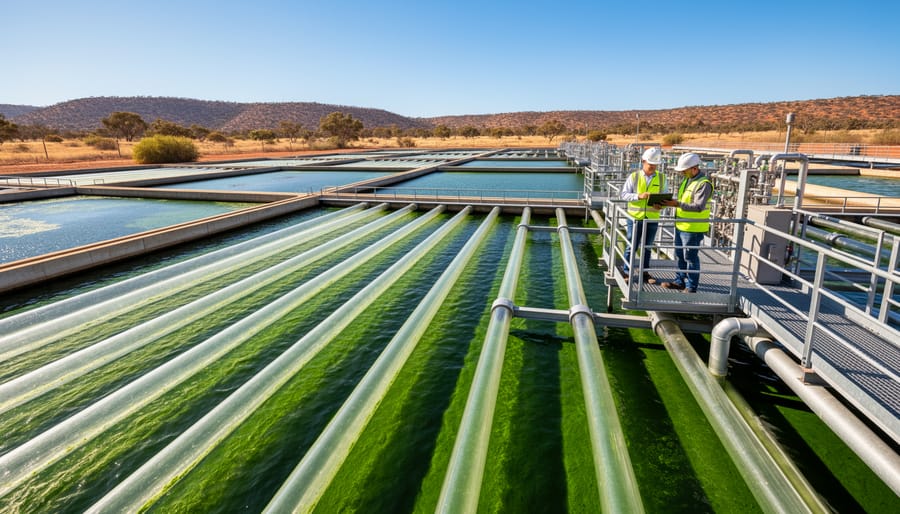
Picture vast shallow ponds shimmering under the Australian sun, each one teeming with microscopic algae working overtime to produce sustainable biofuel. It’s not science fiction—it’s happening right now across our sunburnt country, and organismic biotechnology is making these tiny organisms more productive than ever.
Algae are nature’s original solar panels, converting sunlight into energy with remarkable efficiency. What makes them particularly exciting for Australia is their ability to thrive in conditions where traditional crops struggle. They need minimal fresh water, can grow in brackish or even saline water, and they absolutely love our abundant sunshine. Some species can double their biomass in just 24 hours—imagine wheat doing that!
Through organismic biotechnology, researchers are breeding and selecting algae strains that pack even more punch. By working with whole organisms rather than inserting foreign genes, scientists identify naturally occurring varieties with exceptional oil content and growth rates, then enhance these traits through selective breeding and optimized growing conditions. The result? Algae that produce more oil per hectare than any traditional crop, with some strains reaching up to 50% oil content by dry weight.
Australian researchers have made impressive strides in this space. Projects in South Australia and Western Australia are cultivating heat-tolerant algae strains specifically adapted to our climate, turning our harsh conditions from a challenge into a competitive advantage. These innovations are transforming marginal land into productive biofuel farms, creating opportunities in regional areas while supporting our renewable energy goals.
Real Benefits: What These Innovations Mean for Everyday Australians
Farmers as Energy Producers
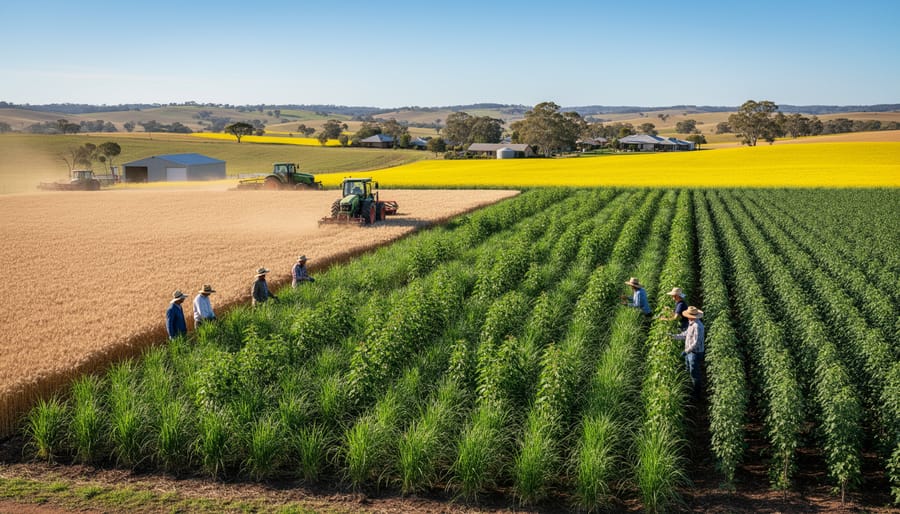
Australian farmers are discovering a powerful new income stream through bioenergy crop cultivation, transforming the traditional agricultural landscape into a dual-purpose powerhouse. By growing energy crops alongside conventional food production, farming communities can strengthen their financial position while contributing to the nation’s renewable energy goals.
Consider the opportunities presented by crops like sugarcane and sorghum. These plants don’t just produce food or biomass for energy—they offer farmers flexibility in uncertain markets. When food prices fluctuate, farmers can redirect portions of their harvest toward bioenergy production, creating a financial safety net that wasn’t available a generation ago. This diversification is particularly valuable during droughts or market downturns, when having multiple revenue streams can mean the difference between surviving and thriving.
The beauty of organismic biotechnology lies in how it enhances this dual-purpose approach. By breeding crops naturally suited to both purposes, farmers don’t need to choose between feeding people and powering communities—they can do both from the same paddock. Some progressive Australian farms are already demonstrating this model, rotating between food production and energy crop cultivation based on seasonal conditions and market demands.
This transition toward energy production also opens doors to new partnerships with renewable energy companies, creating stable, long-term contracts that provide income predictability. For regional communities, this represents more than just farm diversification—it’s about building economic resilience and securing the future of Australian agriculture in an evolving energy landscape.
Addressing the Concerns: Safety, Sustainability, and Common Questions
Like any emerging technology, organismic biotechnology naturally raises important questions about safety, sustainability, and real-world implementation. Let’s address these concerns head-on with honesty and clarity.
Environmental safety sits at the top of most people’s minds, and rightly so. The beauty of organismic biotechnology lies in its whole-organism approach, working with plants that have evolved complex, interconnected systems over millions of years. Unlike genetic modification that introduces foreign genes, organismic methods enhance existing traits through selective breeding and optimization. This means we’re essentially accelerating natural processes rather than creating entirely novel organisms. In Australia, the Office of the Gene Technology Regulator provides robust oversight, ensuring that any biotechnological developments meet stringent safety standards before reaching commercial scale.
The food-versus-fuel debate deserves honest consideration. The promising news is that organismic biotechnology often focuses on plants that thrive on marginal land unsuitable for food production. Native Australian grasses, for instance, grow brilliantly in areas where traditional food crops struggle. Additionally, researchers are developing crops that provide dual benefits, producing both food and bioenergy from different plant parts. The grain feeds people while the stalks and leaves generate power. It’s not an either-or situation when we approach it thoughtfully.
Regarding sustainability, organismic biotechnology actually strengthens agricultural resilience. By developing drought-tolerant varieties suited to Australian conditions, we’re building systems that require less water and fewer chemical inputs. These hardy plants can help restore degraded land while producing renewable energy, creating a positive environmental cycle.
Some worry about the timeline for commercial viability. Fair enough. Organismic biotechnology isn’t a quick fix, but the progress we’re seeing in Australian research facilities shows real momentum. Projects across Queensland and New South Wales are already demonstrating commercial potential, with some varieties approaching market readiness.
The regulatory framework in Australia strikes a sensible balance between innovation and caution. Standards are high, which ultimately benefits everyone by ensuring only safe, effective solutions reach the market. This rigorous approach builds public trust and positions Australia as a leader in responsible bioenergy development.
These concerns matter, and addressing them transparently helps us move forward together toward a genuinely sustainable energy future.
What’s Happening Now: Australian Projects Leading the Way
Right across Australia, organismic biotechnology is moving from theory to reality, with researchers and farmers working together to transform our bioenergy landscape.
At the University of Queensland, Dr Sarah Chen’s team is making remarkable progress with drought-tolerant sorghum varieties specifically bred for biofuel production. “We’re not inserting foreign genes,” Dr Chen explains. “Instead, we’re identifying plants with natural resilience and accelerating nature’s own selection process. The result is sorghum that thrives in Queensland’s challenging climate while producing 30% more biomass than conventional varieties.” Three farming families in the Darling Downs region are now trialling these varieties, with initial harvests exceeding expectations even during below-average rainfall seasons.
Meanwhile, the CSIRO’s Brisbane facility has partnered with New South Wales sugarcane growers to develop high-fibre cane varieties through selective breeding programs. Farmer Michael Browning from the Tweed Valley has been involved since the project’s inception three years ago. “What impressed me was how straightforward it is,” he says. “These aren’t laboratory creations requiring special handling. They’re robust plants that grow like regular cane but give us more bang for our buck when it comes to bioenergy production.”
The University of Adelaide is pioneering work with native Australian grass species, particularly spinifex, which naturally produces resins suitable for biofuel conversion. Their breeding program focuses on enhancing these existing characteristics, creating varieties that could transform marginal lands into productive bioenergy sites without competing with food crops.
Tasmania’s agricultural sector is exploring organismic approaches with energy crops suited to cooler climates. The Tasmanian Institute of Agriculture has established demonstration plots near Launceston, where farmers can see firsthand how selectively bred poplar and willow varieties perform compared to conventional options. “Seeing is believing,” notes project coordinator James Robertson. “When farmers witness these plants thriving in their own climate conditions, producing reliable biomass yields, they understand this technology is practical and achievable.”
These bioenergy research initiatives are supported by collaborative networks connecting universities, government research bodies, and farming communities. The Australian Bioenergy Crop Development Network, established in 2022, now links over 200 researchers and 150 farming operations, sharing knowledge and breeding materials across state boundaries.
What makes these projects particularly exciting is their accessibility. Farmers don’t need specialized equipment or training to work with organismically developed crops, making adoption straightforward and economically viable for operations of all sizes.
The Path Forward: How You Can Be Part of the Solution
The beauty of organismic biotechnology is that everyone has a role to play in bringing these innovations from the lab to the landscape. Whether you’re shaping policy, running a business, working the land, or simply wanting to make better choices, there are tangible ways to support this promising field.
For policymakers, the opportunity lies in creating supportive frameworks that encourage research partnerships between universities and agricultural industries. Consider following the work of organizations like the Australian Renewable Energy Agency (ARENA) and the Bioenergy Australia association, which regularly publish insights on enabling policies and funding opportunities. Supporting grant programs that specifically target crop-based bioenergy research can accelerate the development of high-yielding energy crops suited to Australian conditions.
Industry professionals can drive change by investing in pilot projects that demonstrate the commercial viability of organismic biotechnology applications. Look for collaboration opportunities with research institutions like CSIRO or state-based agricultural research centres. The Clean Energy Council offers resources and networking events that connect innovators with potential partners and investors.
Farmers are on the frontline of this transition. Consider joining field trials for energy crops or participating in information sessions run by groups like GrainGrowers or your local Landcare network. Many Australian farmers are already successfully integrating energy crops into their rotations, providing both environmental benefits and additional income streams.
For everyday Australians, staying informed makes a real difference. Support businesses committed to renewable energy, engage with community energy projects, and voice your support for bioenergy initiatives to local representatives. Organizations like the Australian Conservation Foundation and Farmers for Climate Action provide regular updates and action opportunities.
The transition to sustainable bioenergy isn’t a distant dream—it’s happening now, and your involvement, whatever form it takes, helps build momentum toward a cleaner, more resilient energy future for Australia.
Australia stands at the threshold of an extraordinary energy transformation, and organismic biotechnology in bioenergy crops is lighting the way forward. This isn’t some far-off dream reserved for future generations—it’s happening right now, in research facilities across the country and in fields where specially developed crops are already growing stronger, thriving in our unique climate, and producing more sustainable fuel with each harvest.
Picture an Australia where regional communities prosper from locally grown bioenergy crops, where farmers diversify their income through energy production, and where our transport sector runs increasingly on domestically produced, carbon-neutral biofuels. Through organismic biotechnology, we’re not just imagining this future—we’re building it. The high-yield sugarcane varieties developed right here in Queensland, the salt-tolerant crops flourishing in marginal lands, and the drought-resistant energy grasses adapting to our variable rainfall patterns all demonstrate that practical solutions are taking root in Australian soil.
The beauty of this approach lies in its harmony with nature. By working with whole plants and their natural systems, we’re creating bioenergy solutions that fit seamlessly into our agricultural landscape while respecting our environment. These innovations don’t require us to choose between economic prosperity and environmental stewardship—they deliver both.
The path forward demands action from all of us. Whether you’re a policymaker shaping energy strategy, a farmer considering new crop opportunities, an industry professional evaluating renewable options, or simply an Australian who cares about our planet’s future, now is the time to engage with and support organismic biotechnology in bioenergy. Together, we can cultivate a cleaner, greener, and more energy-independent Australia—one innovation, one crop, one community at a time.