

Recognize when frustration derails your sustainability goals, because that moment of awareness is where lasting change begins. Notice the guilt creeping in when you forget your reusable bags again, or the overwhelm when climate news feels too heavy—these emotions aren’t obstacles, they’re data points telling you exactly what needs attention in your environmental journey.
Understand that switching to renewable energy isn’t just a technical decision; it’s an emotional commitment that requires you to examine your relationship with change itself. Australian households successfully transitioning to solar don’t just calculate payback periods—they acknowledge their fears about upfront costs, their excitement about energy independence, and their concerns about making the wrong choice. This self-awareness transforms a daunting installation into an empowering step forward.
Manage the tension between your environmental values and daily conveniences by creating sustainable habits that account for real human behavior, not idealized versions of yourself. When Melbourne’s Carlton Brewhouse committed to bioenergy, they didn’t rely on willpower alone—they built systems recognizing that even motivated teams need practical structures supporting green choices when deadlines loom and old habits beckon.
Connect your personal actions to community impact, because emotional intelligence thrives in relationship. Every conversation you have about your home’s energy efficiency, every question you ask about workplace sustainability, ripples outward. The most successful renewable energy adopters in regional Queensland didn’t go it alone—they shared concerns, celebrated wins, and built networks turning individual determination into collective momentum.
Your capacity to understand and work with emotions—yours and others’—determines whether sustainability remains an aspiration or becomes your lived reality. The four aspects of emotional intelligence offer a practical framework for bridging that gap.
What Emotional Intelligence Really Means for Sustainable Living
Think of emotional intelligence as the hidden engine that drives lasting environmental change. It’s not just about knowing what’s right for the planet—it’s about understanding the feelings, motivations, and social dynamics that actually make us follow through on our green intentions.
At its core, emotional intelligence is your ability to recognize and manage your own emotions while understanding how they influence your decisions. In the sustainability space, this translates into something remarkably practical: the difference between someone who installs solar panels and sticks with the commitment, versus someone who gets overwhelmed by upfront costs and gives up.
For Australians navigating the shift toward renewable energy, emotional intelligence becomes essential. Consider the Melbourne family who tackled their resistance to composting by first acknowledging their squeamishness about food waste, then gradually building confidence through small wins. Or the Sydney business owner who recognized her anxiety about transitioning to renewable energy stemmed from fear of the unknown, not from any actual barrier to making the switch.
Research shows that sustainable behaviors fail not because people lack information—most of us know we should reduce waste or choose clean energy—but because we struggle with the emotional hurdles. The frustration when recycling rules seem confusing. The guilt when convenience wins over environmental values. The social awkwardness of being the only one bringing reusable containers to the office barbecue.
This is where emotional intelligence shines. It helps you spot these emotional roadblocks before they derail your progress. It allows you to respond to setbacks with curiosity rather than defeat. When your energy bill doesn’t drop as much as expected after installing solar, emotional intelligence means you investigate and adjust rather than feeling cheated and disengaging.
The good news? Unlike technical knowledge about kilowatts or carbon footprints, emotional intelligence is a skill anyone can develop. And when applied to environmental action, it transforms sustainability from an exhausting obligation into something genuinely achievable and even rewarding.
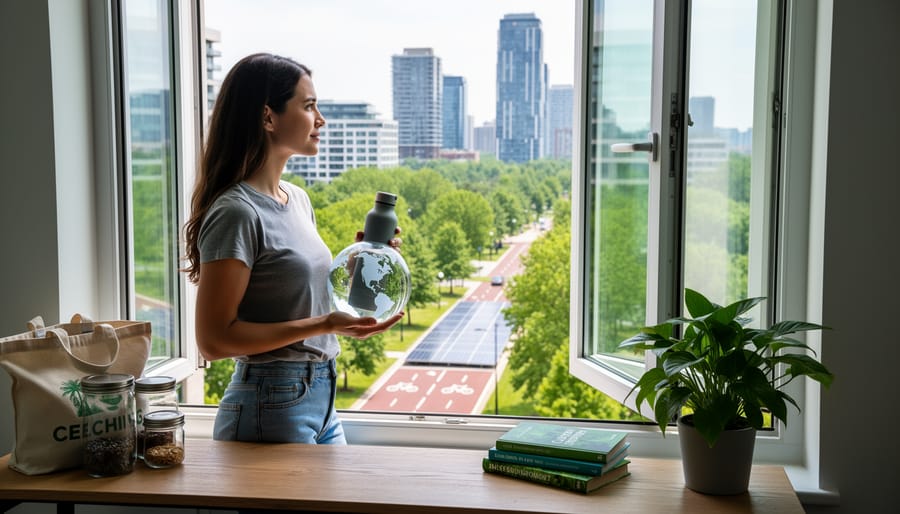
Self-Awareness: Understanding Your Environmental Motivations
Identifying What Really Drives Your Choices
Understanding your true motivations requires honest self-reflection, which is often harder than it sounds. Many Australians proudly display their solar panels or post about their eco-friendly purchases on social media, but are these choices driven by genuine environmental concern or simply by wanting to appear responsible? Neither answer is wrong, but knowing the difference transforms how effectively you’ll maintain sustainable behaviors.
Start with a simple exercise: write down your most recent environmental decision, then ask yourself “why” five times. For instance, “I installed solar panels.” Why? “To reduce my carbon footprint.” Why does that matter to you? “Because climate change worries me.” Why specifically? Keep digging until you hit something deeply personal, whether it’s concern for your children’s future, connection to the land, or even financial security. These core drivers, not surface-level motivations, determine whether you’ll stick with sustainable choices when they’re inconvenient.
The success of community solar initiatives in regional Queensland demonstrates this perfectly. When organizers stopped focusing on abstract environmental benefits and instead highlighted energy independence during bushfire seasons, participation tripled. Residents weren’t being performative; they were protecting what genuinely mattered to them, and sustainability became the natural outcome.
Integrating mindful living practices helps you observe your decision-making patterns without judgment. Notice when you feel pride, guilt, or genuine satisfaction after environmental choices. These emotional cues reveal your authentic motivations, allowing you to build sustainable habits that align with your true values rather than borrowed expectations. When your choices reflect who you actually are, maintaining them becomes effortless rather than exhausting.
Recognising the Emotional Roadblocks
Before we can embrace sustainable change, we need to acknowledge the emotional hurdles standing in our way. Three common roadblocks often derail even the most well-intentioned efforts: overwhelm, guilt, and apathy.
Overwhelm strikes when the scope of environmental challenges feels insurmountable. You’ve likely experienced that sinking feeling when confronted with climate data or the complexity of transitioning entire industries. It’s paralysing, isn’t it? This is where self-awareness becomes your greatest ally. Recognising overwhelm as a natural response, rather than a personal failing, allows you to break down monumental tasks into manageable steps.
Consider how Australian manufacturing facilities initially approached renewable energy adoption. Many felt overwhelmed by upfront costs and technical complexity. However, companies like Coca-Cola Amatil’s Richlands facility in Queensland recognised this emotional barrier and tackled it through incremental changes. They started with solar panels on warehouse roofs before expanding to comprehensive renewable systems, transforming anxiety into achievable milestones.
Guilt emerges from the gap between our values and actions. Perhaps you’ve felt it when driving to work instead of cycling, or when your business operations don’t align with environmental commitments. Rather than letting guilt become destructive, self-awareness helps reframe it as valuable feedback guiding better choices.
Apathy often masks deeper frustration or burnout. When people say “What difference can I make anyway?”, they’re experiencing emotional exhaustion. The wine industry in South Australia faced this when drought threatened vineyards. By acknowledging these feelings openly and sharing success stories of water-efficient irrigation systems, the sector transformed apathy into collaborative problem-solving. Self-awareness doesn’t eliminate these emotions; it helps you recognise them, understand their message, and move forward constructively.
Self-Management: Building Sustainable Habits That Stick

Creating Emotional Anchors for Green Habits
Creating lasting sustainable habits requires more than just understanding what’s right for the environment—it demands forging emotional connections that make green choices feel personally rewarding. When we anchor positive emotions to sustainable actions, we transform eco-friendly behaviors from burdensome chores into genuinely satisfying rituals.
The key lies in recognizing and celebrating the immediate emotional benefits of sustainable choices. Take Sarah, a Melbourne mother who switched her household to renewable energy. Rather than focusing solely on carbon reduction statistics, she created a family ritual of tracking their solar panel generation each morning over breakfast. The excitement her children showed watching the meter climb became a source of daily joy, transforming an environmental decision into a cherished family moment.
Businesses across Australia are discovering similar strategies. A Sydney café reduced waste by introducing customers to their composting system, displaying the rich soil created from last month’s coffee grounds. Customers reported feeling proud knowing their morning flat white contributed to the café’s rooftop garden, creating an emotional reward loop that kept them returning.
To build your own emotional anchors, start by pairing sustainable actions with existing positive experiences. If you enjoy your morning routine, make checking your home’s energy efficiency part of that ritual. Celebrate small wins—photograph your first harvest from a compost-fed garden, or share stories about supporting local bioenergy initiatives with friends.
The trick is making sustainability feel good in the moment, not just conceptually important for the future. When green habits spark immediate positive emotions—pride, connection, accomplishment—they become self-reinforcing behaviors that stick naturally, without constant willpower.
Bouncing Back When You Slip Up
We’ve all been there—you commit to catching public transport instead of driving, then find yourself behind the wheel three days later because you slept through your alarm. Or perhaps your workplace pledged to transition to renewable energy, only to face unexpected budget constraints that derailed the timeline. These setbacks can trigger a spiral of frustration and guilt, but here’s the truth: they’re completely normal and don’t define your sustainability journey.
Understanding why intentions fail is the first step toward bouncing back stronger. Rather than viewing a slip-up as total failure, emotionally intelligent individuals recognise it as valuable feedback. Ask yourself: what triggered this setback? Was it lack of preparation, external circumstances, or perhaps an overly ambitious goal?
Take the example of a Brisbane manufacturing company that struggled to implement energy-efficient practices. Their initial plan was too rigid, causing staff burnout and resistance. Instead of abandoning their sustainability goals, they adjusted their approach, introducing changes gradually and celebrating small wins. Within eighteen months, they’d reduced energy consumption by 30 percent.
When you stumble, practice self-compassion rather than self-criticism. Research shows that beating yourself up actually decreases motivation and makes you less likely to try again. Instead, treat yourself as you would a mate who’s having a rough go—with understanding and encouragement.
Document what you’ve learned from each setback. These insights become your roadmap for more realistic, achievable sustainability goals moving forward. Remember, progress isn’t linear, and every Australian household or business successfully running on renewable energy today faced obstacles along the way.
Social Awareness: Reading the Room on Climate Action
Empathy in Environmental Advocacy
Understanding the perspectives of diverse stakeholders transforms environmental advocacy from a top-down directive into a collaborative journey toward sustainable solutions. In rural Australia, successful bioenergy adoption hinges on recognising that farmers, industry leaders, and community members each bring unique concerns, values, and expertise to the table.
Take the case of wheat farmers in regional New South Wales who initially resisted converting agricultural waste into bioenergy. Rather than pushing technical benefits, advocates listened first. Farmers worried about soil health from removing stubble, the time investment required, and whether new systems would genuinely benefit their operations. By acknowledging these concerns and co-designing solutions that addressed nutrient cycling and offered fair compensation, the initiative gained traction. Farmers became champions rather than skeptics.
Industry leaders, meanwhile, needed assurance about supply chain reliability and return on investment. Community members wanted to understand local employment opportunities and environmental impacts. Recognising how social norms influence adoption patterns, successful advocates created opportunities for peer-to-peer learning, where early adopters shared honest experiences with their neighbours.
This empathetic approach doesn’t mean compromising environmental goals. Rather, it creates pathways where economic viability, community wellbeing, and sustainability align. When stakeholders feel genuinely heard and see their concerns reflected in project design, resistance transforms into partnership. The result? Faster adoption rates, stronger community support, and renewable energy projects that deliver lasting benefits for everyone involved. Empathy becomes the bridge between environmental vision and practical reality.
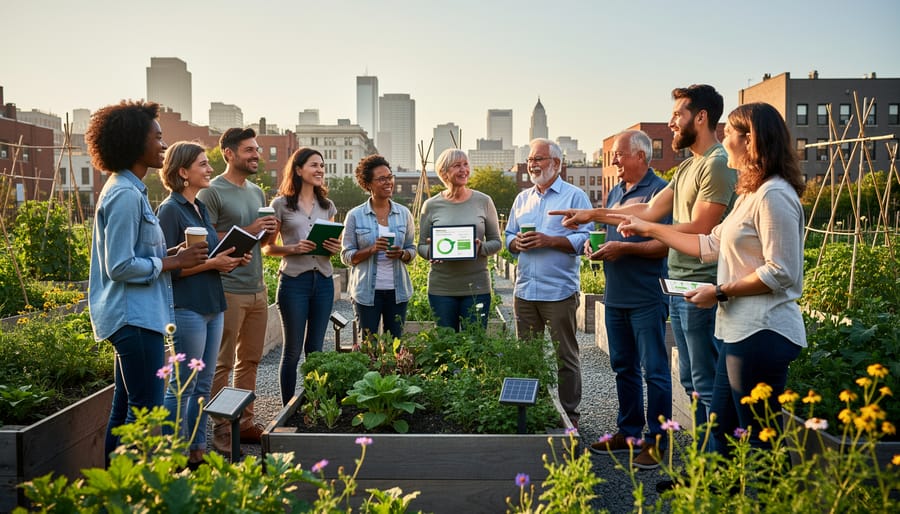
Building Bridges, Not Burning Them
Picture this: You’re at a weekend barbecue, and your mate Dave mentions he’s thinking about solar panels. You light up with enthusiasm, ready to share everything you know about renewable energy. Within minutes, Dave’s eyes glaze over, he mentions the cost, and suddenly you’re in a defensive dance nobody wanted. Sound familiar?
The key to productive conversations about sustainability lies in building bridges rather than burning them with confrontation. Start by asking questions rather than making declarations. Instead of “You really should switch to renewable energy,” try “What’s holding you back from looking into solar?” This simple shift invites dialogue rather than triggering defensiveness.
In workplace settings, frame sustainability as opportunity rather than obligation. When proposing a renewable energy transition at your office, lead with practical benefits: “This could reduce our operating costs by 30 percent” resonates more effectively than “We need to save the planet.” Both statements are true, but one opens doors while the other might slam them shut.
Listen actively to concerns without dismissing them. When someone says “Solar’s too expensive,” acknowledge their worry: “Fair point, the upfront cost is real. Have you heard about the new government rebates making it more accessible?” You’ve validated their concern while gently offering new information.
Remember, most Australians want to do the right thing environmentally. Meeting people where they are, understanding their genuine barriers, and offering solutions rather than lectures creates lasting change. It’s not about winning arguments; it’s about winning hearts and minds through empathy and practical support.
Relationship Management: Creating Collective Momentum

Inspiring Change Without Being Preachy
The most effective environmental advocates aren’t those who lecture from a soapbox, but rather those who inspire through genuine connection and lived example. When we approach conversations about sustainability with empathy rather than judgment, we create space for real transformation.
This approach shines through in community-driven projects across Australia. Take the Hepburn Wind Community Cooperative in regional Victoria, where locals didn’t convince their neighbours to support renewable energy through statistics alone. Instead, they hosted barbecues, invited conversations over coffee, and shared their personal motivations for wanting cleaner energy. By acknowledging concerns and celebrating small wins together, they built Australia’s first community-owned wind farm.
Similarly, the Lismore Solar Farm project in New South Wales succeeded because community champions focused on shared values rather than finger-pointing. They recognised that everyone cares about leaving a better world for their kids, even if they previously felt overwhelmed by where to start. By framing renewable energy as a practical solution rather than a moral imperative, they invited participation without guilt.
The secret lies in authenticity. When you genuinely believe in sustainable solutions and can articulate why they matter to you personally, others feel that sincerity. Share your own journey, including the challenges you’ve faced. Acknowledge that switching to renewable energy or adopting sustainable practices isn’t always straightforward, but emphasise how rewarding the process becomes when communities tackle it together. This honest, optimistic approach naturally motivates others to explore their own path toward sustainability.
Building Your Sustainability Support Network
No one changes the world alone, and sustaining your commitment to environmental action becomes infinitely easier when you’ve got mates alongside you. Creating a solid support network transforms sustainability from a solitary struggle into a shared journey, complete with cheerleaders, accountability partners, and fellow problem-solvers.
Start by identifying your sustainability squad. This might include colleagues interested in greening your workplace, neighbours keen on reducing street-level waste, or online communities focused on renewable energy adoption. Look to successful models like Hepburn Wind in Victoria, where local residents banded together to build Australia’s first community-owned wind farm. Their success wasn’t just about technology—it was about people committing to each other’s vision.
Accountability partnerships work brilliantly for maintaining momentum. Partner with someone who shares your sustainability goals, whether that’s transitioning to renewable energy, reducing waste, or advocating for policy change. Regular check-ins—weekly coffees or monthly video calls—create gentle pressure that keeps you both on track without judgment.
Australian grassroots movements demonstrate the power of community-driven change. Groups like the Australian City Farms and Community Gardens Network have built thriving networks where members share resources, celebrate wins, and support each other through setbacks. Industry collaborations, such as partnerships between farming cooperatives and bioenergy producers, show how professional networks can drive sustainable innovation while providing mutual support.
Remember, your network doesn’t need to be massive—just meaningful. Even two people committed to lifting each other up can create remarkable change.
Putting It All Together: Your Emotional Intelligence Action Plan
Now that you understand how self-awareness, self-management, social awareness, and relationship management work together, it’s time to create your personalised action plan for strengthening emotional intelligence on your sustainability journey.
Start with a simple weekly practice: dedicate fifteen minutes each Sunday evening to reflect on your environmental choices from the past week. What emotions arose when you made sustainability decisions? Did frustration surface when your recycling bin was full, or did satisfaction wash over you after choosing renewable energy? This self-awareness checkpoint helps you understand your emotional patterns without judgment.
For self-management, identify your biggest sustainability trigger. Perhaps it’s feeling overwhelmed by climate news or frustrated when others don’t share your commitment. Create a practical response strategy. When that trigger appears, pause for three deep breaths and ask yourself, “What small action can I take right now?” This simple technique transforms paralysing emotions into productive momentum.
Building social awareness means actively listening to others’ sustainability concerns. At your workplace or community group, spend time understanding why colleagues might resist renewable energy initiatives. Are they worried about costs? Sceptical about effectiveness? When you genuinely comprehend their perspective, you can address real concerns rather than assumed objections.
For relationship management, partner with someone on a shared sustainability goal. Maybe you’ll research solar panel options together, or commit to making small sustainable changes as accountability partners. Regular check-ins create supportive connections that sustain motivation when enthusiasm wanes.
Businesses can integrate these principles by establishing emotional intelligence training for sustainability teams. A Queensland manufacturing company recently reported that after implementing EI workshops, their renewable energy transition accelerated by six months because team members communicated more effectively and navigated resistance with greater empathy.
Track your progress with a simple monthly review. Note which EI aspect needs attention and celebrate your growth. Remember, emotional intelligence isn’t about perfection; it’s about progress. Each conversation you handle with more awareness, each moment of frustration you transform into action, and each relationship you strengthen moves your sustainability goals forward.
Your emotional intelligence grows through practice, just like any skill. Start today with one aspect, build consistency, and watch how your capacity for sustainable change expands naturally.
Here’s the truth that might surprise you: sustainable living isn’t failing because we lack information or willpower. We’ve got mountains of data about climate change and countless tips for reducing our carbon footprint. What’s actually missing is the emotional intelligence to bridge the gap between knowing and doing.
The four aspects of emotional intelligence—self-awareness, self-management, social awareness, and relationship management—aren’t just corporate buzzwords. They’re the psychological infrastructure that supports every solar panel installed, every community energy project launched, and every habit that sticks beyond the initial enthusiasm. When Melbourne’s renewable energy cooperatives succeed where government campaigns sometimes falter, it’s because they’ve tapped into something deeper than facts and figures.
The good news? You don’t need to master all four aspects overnight. Start with one. Perhaps it’s building self-awareness around what truly motivates your environmental choices, or maybe it’s strengthening social awareness by listening more deeply to your community’s sustainability concerns. Each small step in developing your emotional intelligence creates ripples that extend far beyond your immediate actions.
Remember, the renewable energy transformation happening across Australia didn’t begin with perfect knowledge or unwavering determination. It started with people who recognised their emotions, managed their frustrations, connected with others, and kept moving forward despite setbacks. Your inner transformation will power your outer impact—and that’s how we create change that actually lasts.