
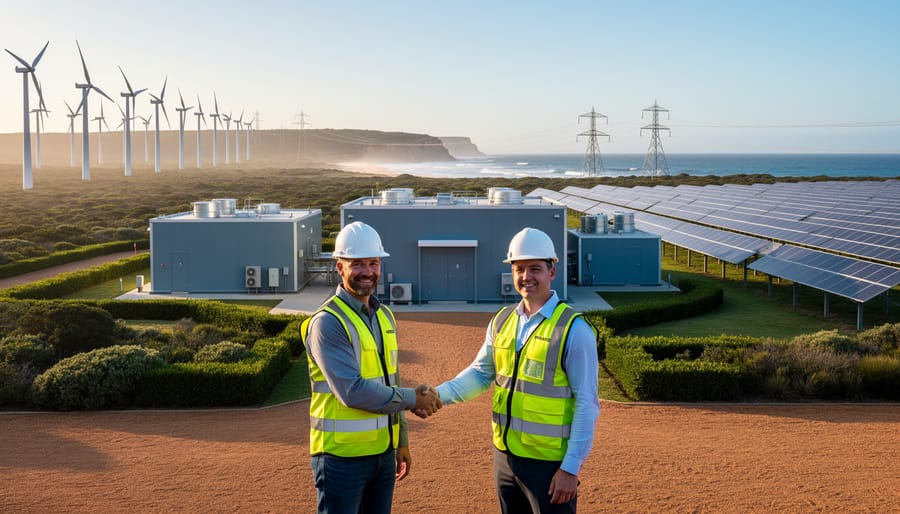
X-energy’s remarkable journey from advanced nuclear reactor concept to a multi-billion dollar funded enterprise demonstrates how breakthrough clean energy technologies can attract serious capital in today’s market. The company secured over $2 billion in commitments, including a landmark $1.2 billion loan guarantee from the U.S. Department of Energy and strategic investments from major players like Amazon and Dow Chemical, proving that innovative nuclear solutions have found their moment in the global push toward net-zero emissions.
This funding breakthrough offers vital lessons for Australia’s renewable energy sector, where sustainable energy financing remains a critical enabler for projects ranging from bioenergy facilities to solar farms. X-energy’s success came from demonstrating clear commercial viability, securing anchor customers willing to commit long-term, and aligning with government priorities around energy security and emissions reduction.
What makes this story particularly relevant for Australian energy professionals is the financing model itself. By combining government-backed loans with private equity and strategic corporate partnerships, X-energy created a blueprint that reduces risk while accelerating deployment. This approach mirrors opportunities emerging across Australia’s renewable landscape, where innovative technologies need smart capital structures to move from promising concepts to operational reality. Understanding how X-energy structured its funding rounds, convinced skeptical investors, and maintained momentum through regulatory hurdles provides a masterclass in bringing ambitious clean energy projects to life.
What Makes X-Energy Different from Traditional Energy Projects
The Technology Behind the Funding Frenzy
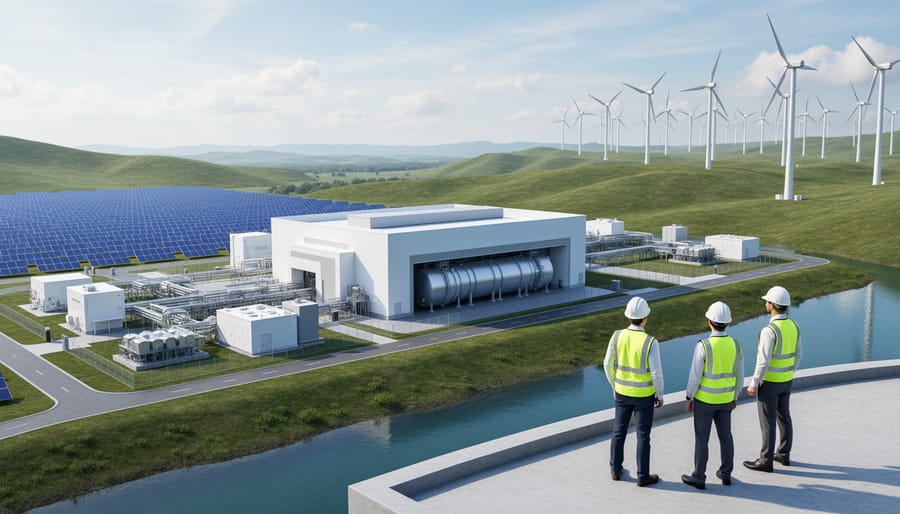
X-energy’s reactor technology isn’t your typical nuclear setup – think of it more like a next-generation upgrade that’s safer and smarter. At the heart of their funding success lies the high-temperature gas-cooled reactor, or Xe-100, which operates quite differently from conventional nuclear plants Australians might remember from decades past.
Picture a reactor where the fuel itself is engineered for safety. Instead of traditional fuel rods, these reactors use tiny fuel particles about the size of poppy seeds, each wrapped in multiple protective layers – imagine them as microscopic armoured spheres. These particles sit inside tennis ball-sized graphite spheres called pebbles, which can withstand temperatures exceeding 1,600 degrees Celsius.
Here’s where it gets interesting for Australian applications: the reactor uses helium gas as a coolant rather than water. This means no risk of meltdowns in the traditional sense. If something goes wrong, the reactor simply cools down naturally through physics, not emergency systems. It’s what engineers call “walk-away safe.”
The Xe-100 design also produces high-temperature heat that’s perfect for industrial processes beyond electricity generation – think mining operations, hydrogen production, or even desalination plants. For a sun-drenched country like Australia, this modular technology could complement solar and wind farms, providing consistent baseload power when renewables aren’t producing. The funding frenzy makes sense when investors recognize technology that addresses both safety concerns and practical energy needs in one compact package.
Why This Matters for Australia’s Energy Mix
Australia’s journey toward a clean energy future isn’t about choosing one technology over another – it’s about building a diverse, resilient energy mix that keeps the lights on while protecting our environment. X-energy’s reactor technology offers a compelling piece of this puzzle, particularly as we grapple with the challenge of providing reliable baseload power to complement our renewable assets.
Here’s where it gets interesting for Australia. Our nation is already a world leader in rooftop solar adoption, and our wind farms are spinning across vast stretches of coastline and countryside. But renewables alone face the intermittency challenge – the sun doesn’t always shine, and the wind doesn’t always blow. X-energy’s small modular reactors could provide that steady, reliable power that fills the gaps, working seamlessly alongside solar panels during cloudy weeks and wind turbines during calm periods.
The technology also pairs beautifully with emerging decentralized energy systems and bioenergy solutions. Imagine regional communities powered by a combination of local bioenergy plants processing agricultural waste, solar installations on every suitable rooftop, and potentially a small modular reactor providing consistent baseload power. This integrated approach addresses energy security while creating jobs and reducing emissions.
For policymakers and industry professionals, X-energy’s funding success demonstrates that integrated energy solutions attract serious investment. It’s not about abandoning renewables – it’s about enhancing them with complementary technologies that together create a robust, sustainable energy ecosystem for Australia’s future.
Following the Money: Who’s Investing and Why
Government Backing and Policy Support
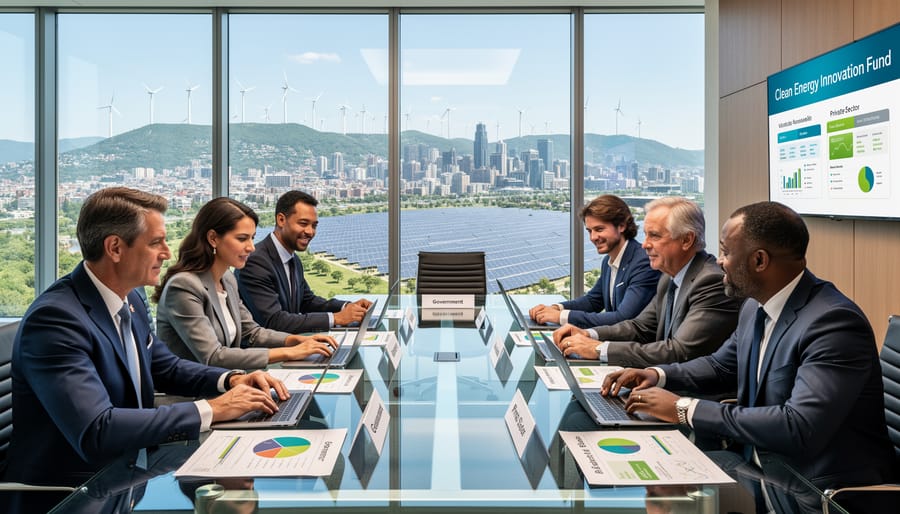
Governments worldwide are recognising that advanced nuclear technologies like X-energy’s small modular reactors represent a crucial pathway toward achieving net-zero emissions targets. In the United States, the Department of Energy’s Advanced Reactor Demonstration Program has committed substantial backing to X-energy, providing $1.2 billion in funding support. This initiative demonstrates how strategic government investment can accelerate the commercialisation of clean energy technologies that might otherwise struggle to attract traditional financing.
The policy landscape is shifting remarkably in favour of advanced nuclear. Countries including the UK, Canada, and several European nations have updated their energy frameworks to explicitly include next-generation nuclear as part of their clean energy transition. These governments understand that reliable, carbon-free baseload power is essential for complementing variable renewable sources like wind and solar.
For Australia, these developments offer valuable lessons through global energy partnerships and international collaboration. While Australia currently maintains restrictions on nuclear energy, observing how other nations structure financing mechanisms for advanced clean technologies provides insights applicable to our own sustainable energy sectors, including bioenergy and hydrogen.
The success of X-energy’s funding model highlights how government backing reduces investment risk, creating confidence among private investors. This blended finance approach, combining public support with commercial capital, represents an emerging blueprint for financing breakthrough energy technologies. Australian policymakers can adapt these mechanisms to accelerate domestic sustainable energy projects, ensuring our nation remains competitive in the global transition toward cleaner power sources.
Private Sector Champions
X-energy’s impressive funding success wouldn’t be possible without substantial private sector backing from corporations and investors who recognise the enormous potential in next-generation nuclear technology. Among the key champions are Ares Management Corporation, a global investment firm that sees small modular reactors as the missing piece in the clean energy puzzle, and Amazon, which has committed to purchasing electricity from X-energy’s reactors to power its data centres with reliable, carbon-free energy around the clock.
What’s driving these savvy investors? The business case is compelling. Unlike solar and wind, which require expensive battery storage, X-energy’s reactors provide consistent baseload power without emissions. This means predictable returns and genuine climate impact—a win-win that’s increasingly rare in today’s investment landscape.
Other backers include Southern Company, one of America’s largest energy providers, demonstrating that even traditional utilities are pivoting toward innovative clean energy solutions. For Australian businesses watching this space, the message is clear: private capital is flowing toward technologies that deliver both environmental outcomes and commercial viability. It’s proof that doing good and doing well aren’t mutually exclusive—they’re becoming the standard expectation for forward-thinking energy investments.
How X-Energy’s Funding Model Reshapes Sustainable Energy Finance
Public-Private Partnerships Done Right
X-energy’s funding structure demonstrates how public-private partnerships can accelerate clean energy innovation when done thoughtfully. The company secured substantial backing through a brilliant combination of government support via the US Department of Energy’s Advanced Reactor Demonstration Program and strategic private investment from major players including Amazon and energy companies committed to decarbonisation.
This blended approach works because it shares both risk and reward intelligently. Government funding provides the initial confidence and reduces financial barriers for breakthrough technologies that might otherwise struggle to attract early-stage capital. Meanwhile, private sector investment brings commercial discipline, market knowledge, and pathways to real-world deployment.
The success story here offers valuable lessons for Australian energy projects, particularly in emerging sectors like advanced bioenergy and waste-to-energy systems. When public institutions back innovative technologies with seed funding or loan guarantees, they signal credibility that opens doors to private capital. Private investors then contribute not just money but operational expertise and customer networks.
For Australia’s renewable energy sector, this model could be transformative. Imagine state governments partnering with private developers on regional bioenergy hubs, where public infrastructure support combines with commercial expertise to convert agricultural waste into reliable baseload power. X-energy proves that when governments and businesses align their goals around genuine sustainability outcomes rather than short-term wins, remarkable progress becomes possible. The key is creating frameworks where both parties contribute their strengths while managing risks collaboratively.
Reducing Financial Barriers for Clean Energy
One of the most exciting aspects of innovative funding approaches like those supporting X-energy is their potential to transform how we finance clean energy projects across the board. When government backing and private investment work together, they create a safety net that significantly reduces the financial risks that have traditionally scared off potential investors.
Think of it this way: renewable energy projects, particularly emerging technologies like advanced bioenergy, often face higher upfront costs compared to conventional energy sources. This “first-mover disadvantage” can be a real stumbling block. However, when funding models demonstrate that governments are willing to share the risk through loan guarantees or grants, private investors feel more confident stepping in with their dollars.
For Australia’s bioenergy sector, this approach could be a game-changer. Consider a regional Queensland project converting agricultural waste into electricity. With blended public-private funding, developers can access lower interest rates and longer repayment terms, making projects viable that might otherwise struggle to get off the ground. This means farmers can partner with energy companies without shouldering impossible financial burdens.
The ripple effects extend beyond individual projects too. When early ventures succeed with reduced financial risk, they establish proof of concept that attracts subsequent investment. We’re already seeing this play out with solar and wind farms across the country, and bioenergy projects are next in line to benefit. Lower costs mean more communities can participate in the clean energy transition, spreading the benefits far and wide while building our renewable energy independence.
Real-World Impact: Projects Already in Motion
X-energy’s recent funding injection isn’t just about numbers on a balance sheet – it’s already translating into concrete projects that are reshaping how we think about clean, reliable power generation.
The flagship Xe-100 reactor project is perhaps the most exciting development currently underway. Located in Washington State, USA, this advanced small modular reactor is progressing through its final design and licensing phases, with construction scheduled to begin in 2024. What makes this particularly relevant for Australian audiences is the scalability of the technology. These compact reactors can be deployed in regional areas, providing consistent baseload power to complement solar and wind installations – a model that could work beautifully in remote Australian communities currently reliant on diesel generators.
In Texas, X-energy has partnered with Dow Chemical to deploy a reactor at one of their Gulf Coast manufacturing facilities. This project demonstrates how advanced nuclear technology can decarbonize heavy industry, a challenge Australia faces with its mining and processing sectors. The partnership received enthusiastic backing from investors who recognized the dual benefit: reducing industrial emissions while ensuring energy security for critical operations.
Closer to home in application, X-energy’s TRISO fuel manufacturing facility is ramping up production capacity. This fuel technology is revolutionary – designed to withstand extreme temperatures without melting or releasing radioactive materials. Think of it as a safety feature built into every particle of fuel, rather than relying solely on external systems. Several international utilities have already placed advance orders, validating both the technology and the business model.
The company has also established collaborative research programs with universities and research institutions, fostering innovation in reactor design and fuel technology. These partnerships are creating skilled jobs and advancing nuclear engineering expertise – something that translates across borders as countries worldwide seek sustainable energy solutions.
These tangible projects demonstrate that X-energy’s funding is delivering real-world outcomes, not just promises. They’re building infrastructure, creating employment, and proving that advanced nuclear technology can be a practical component of our clean energy future.
What Australian Energy Leaders Can Learn from X-Energy’s Success
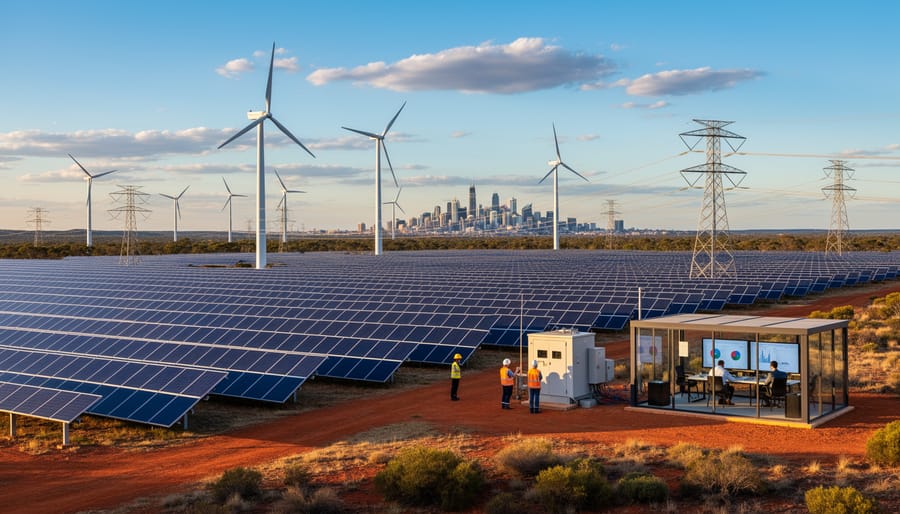
X-Energy’s remarkable funding success offers a roadmap that Australian energy leaders can follow to accelerate our own clean energy transition. The most striking lesson is the power of public-private partnerships. X-Energy didn’t rely solely on government support or private investment alone – they strategically combined both, securing USD $2 billion from the US Department of Energy alongside substantial private backing. Australian policymakers can apply this approach by creating attractive co-investment frameworks that reduce risk for private investors while advancing renewable energy goals.
For investors, X-Energy demonstrates that betting on proven technology with clear commercialization pathways generates confidence. Rather than chasing the next big thing, focus on mature innovations ready for deployment. Australian bioenergy projects, particularly those converting agricultural waste into renewable fuel, present similar bankable opportunities with established supply chains and willing industrial customers.
Industry professionals should note how X-Energy built credibility through strategic partnerships with established manufacturers and utilities. Australian bioenergy developers can replicate this by forming alliances with agricultural cooperatives, food processors, and existing energy infrastructure operators. These partnerships provide both feedstock security and market access – two critical factors that financiers scrutinize.
The takeaway for project developers is straightforward: demonstrate scalability and reliability. X-Energy secured funding because they proved their technology works and showed clear deployment plans. Australian projects must move beyond pilot programs to showcase commercial viability with transparent data about costs, timelines, and performance metrics.
Finally, advocacy matters. X-Energy benefited from supportive policy frameworks recognizing nuclear innovation as essential for decarbonization. Australian bioenergy advocates must similarly champion policy settings that acknowledge biomass as a crucial component of our renewable energy mix, ensuring regulatory frameworks support rather than hinder deployment.
X-energy’s funding success tells us something powerful: when innovative financing meets cutting-edge clean energy technology, remarkable things happen. Their ability to secure substantial backing for advanced nuclear reactors demonstrates that investors are ready to support diverse solutions to our climate challenges, not just one-size-fits-all approaches.
For Australia, this story offers genuine hope and practical lessons. Just as X-energy found creative pathways to fund their revolutionary small modular reactors, our renewable energy sector—including bioenergy, solar, and wind—can benefit from similar innovative financing models. The message is clear: breakthrough funding mechanisms can accelerate our transition to a sustainable energy future.
What does this mean for you? Whether you’re an individual passionate about the environment, a business leader exploring clean energy options, or a policymaker shaping our energy landscape, there’s a role to play. Supporting diverse renewable energy solutions isn’t just good for the planet—it’s increasingly good business. The same financial creativity that’s backing X-energy can support Australian bioenergy projects turning agricultural waste into power, or community solar initiatives bringing clean electricity to regional areas.
The path forward requires all of us. Champion innovative financing for renewable projects in your community. Encourage investment in technologies that make environmental and economic sense. Ask questions, stay informed, and advocate for policies that support clean energy innovation. Australia has everything it needs—abundant natural resources, technical expertise, and determined people—to lead the renewable energy revolution. When we combine smart financing with sustainable technology, we’re not just imagining a cleaner future; we’re funding it into reality.