
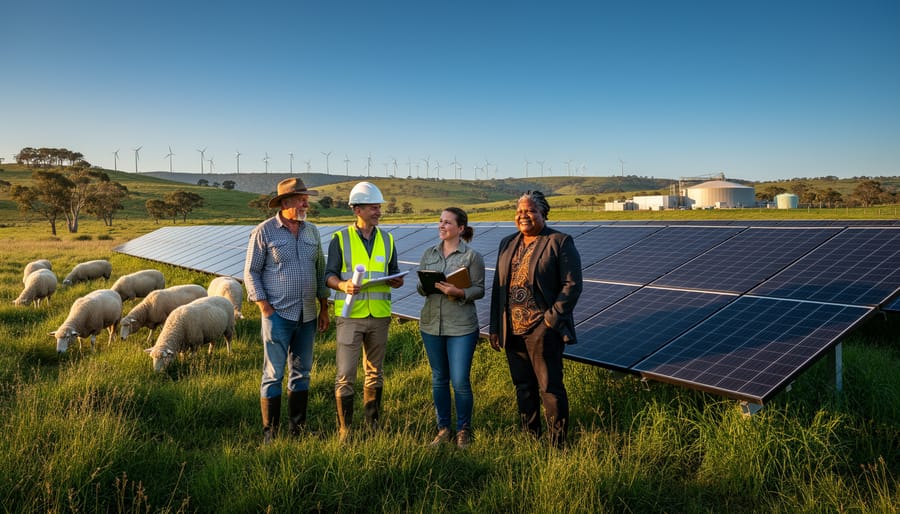
The energy systems we’ve built over the past century have taken more than they’ve given back. They’ve extracted resources, generated emissions, and left communities and ecosystems diminished. But what if our energy infrastructure could do the opposite—actually restoring the environments and communities it touches?
That’s the promise of regenerative development, an approach that’s transforming how Australia thinks about energy transition. Unlike conventional sustainability, which aims to maintain the status quo or simply do less harm, regenerative development actively improves social, environmental, and economic systems. It’s not about being “carbon neutral”—it’s about creating energy solutions that heal degraded landscapes, strengthen rural communities, and enhance biodiversity while powering our homes and industries.
This shift requires more than good intentions. It demands genuine partnerships that bring together diverse expertise: energy developers who understand technical systems, farmers and First Nations communities who hold deep knowledge of Country, ecologists who can measure environmental outcomes, and policymakers who can enable innovative approaches. When these partners work together with shared regenerative principles, remarkable transformations occur.
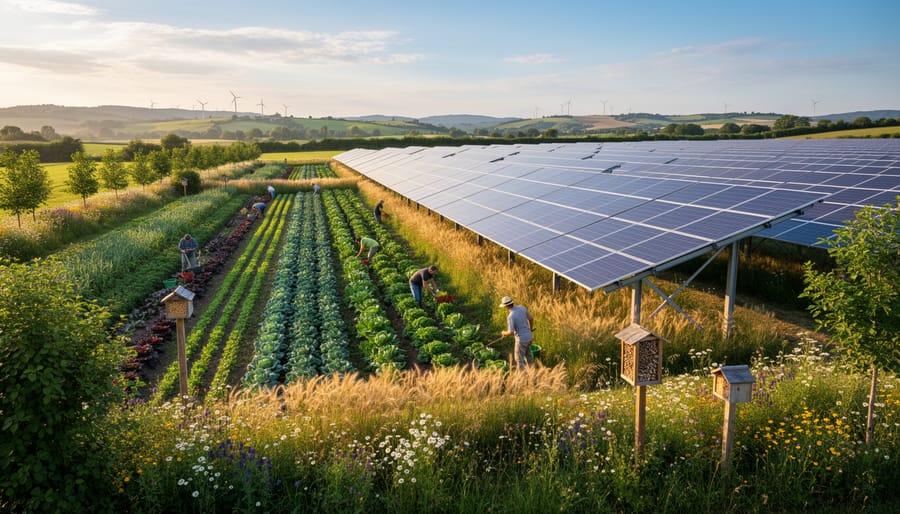
Across Australia, pioneering projects are already demonstrating what’s possible. Bioenergy facilities are converting agricultural waste into renewable power while returning nutrients to depleted soils. Solar farms are being designed to support native vegetation and provide grazing corridors for wildlife. Wind developments are funding landscape restoration programs that extend far beyond project boundaries.
These aren’t isolated success stories—they’re blueprints for a fundamentally different approach to energy development. The question isn’t whether regenerative energy partnerships can work, but how quickly we can scale them to meet Australia’s ambitious climate goals while creating tangible benefits for the communities and ecosystems that host our renewable energy future.
What Regenerative Development Really Means for Energy
The Three Pillars of Regenerative Energy Systems
Regenerative energy systems rest on three interconnected pillars that go far beyond simply reducing harm. Think of them as the foundation for energy projects that actually heal and revitalise communities.
The first pillar, environmental restoration, means energy projects that actively improve ecosystems. Take the Southern Forests Bioenergy Project in Western Australia, where local timber waste that once threatened bushfire risk now fuels community heating while allowing native vegetation to regenerate. The result? Cleaner air, restored biodiversity, and reduced carbon emissions all at once.
Community empowerment forms the second pillar, ensuring local voices shape energy transitions from day one. In regional Queensland, First Nations communities are partnering with bioenergy developers to create training programs and employment opportunities in renewable energy. Rather than having energy solutions imposed from outside, communities become active co-creators and beneficiaries, building skills that ripple through generations.
The third pillar, economic resilience, creates circular economies where waste becomes resource and profits stay local. Consider how agricultural waste from Australian sugarcane and grain farming now powers regional manufacturing hubs. These closed-loop systems strengthen rural economies, reduce reliance on volatile fossil fuel markets, and create stable income streams for farmers.
Together, these three pillars transform energy projects from simple infrastructure into catalysts for widespread positive change. When environmental health, community wellbeing, and economic strength advance together, we create systems that genuinely regenerate rather than merely sustain.
Why Partnerships Make Regenerative Energy Work
Breaking Down Silos: Who Needs to Come to the Table
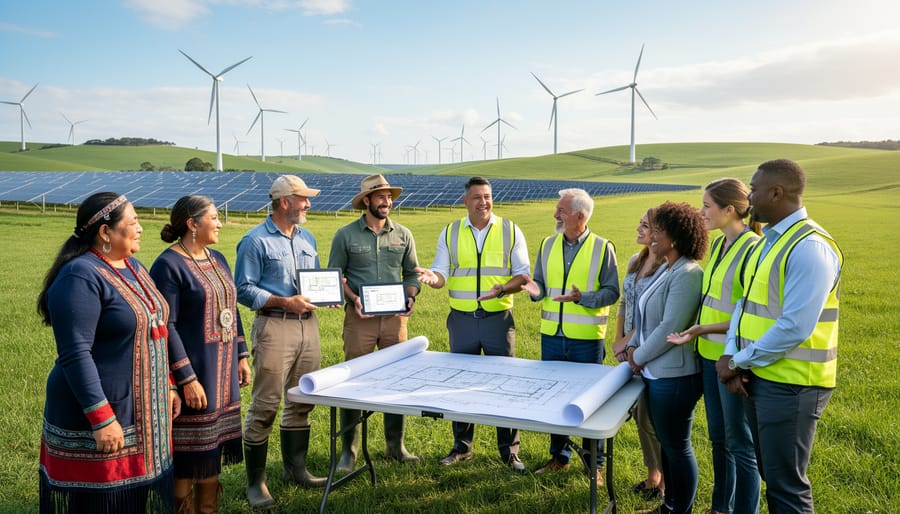
Regenerative development isn’t a solo effort—it requires bringing diverse voices and expertise together at the planning table from day one. Energy companies provide the technical know-how and infrastructure investment, while farmers and landholders offer deep knowledge of local ecosystems and agricultural waste streams that can fuel bioenergy projects. Indigenous communities contribute invaluable custodial wisdom about land management practices that have sustained Country for millennia.
Local councils serve as crucial connectors, understanding community needs and navigating regulatory pathways. Technology providers bring innovation in biomass conversion and energy systems, whilst community organizations ensure projects genuinely serve local interests. These community-led energy transitions thrive when everyone’s at the table.
The magic happens when cane growers partner with energy developers, when Traditional Owners guide site selection, and when researchers collaborate with industry—these academic-industry partnerships accelerate practical solutions.
Breaking down silos means recognizing that regenerative outcomes emerge from collective intelligence. A farmer understands seasonal biomass availability, an energy company knows grid requirements, Indigenous elders recognize sacred sites to protect, and community groups identify employment opportunities. When these players collaborate early, projects don’t just generate clean energy—they restore ecosystems, create meaningful jobs, and strengthen community resilience. That’s the regenerative difference, and it starts with genuine partnership around a shared table.
Regenerative Partnerships in Action: Australian Success Stories
Bioenergy Projects That Restore the Land
Across rural Australia, innovative partnerships are proving that agricultural waste isn’t waste at all—it’s an opportunity to generate clean energy while actively healing the land. These bioenergy projects embody regenerative development by creating closed-loop systems where nothing goes to waste and ecosystems thrive.
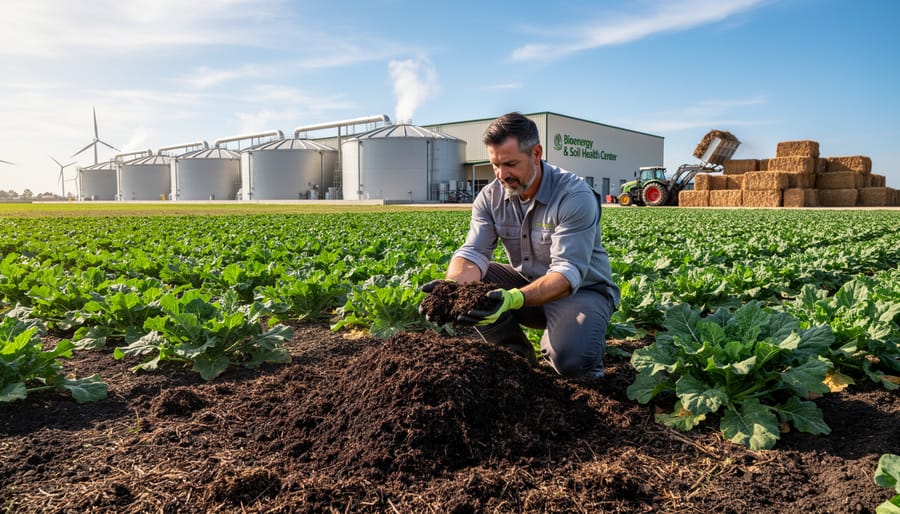
In Queensland’s Darling Downs region, a collaboration between sugarcane growers and a local energy cooperative demonstrates this beautifully. Rather than burning cane trash in fields—a common practice that releases carbon and depletes soil nutrients—farmers now collect this fibrous residue for bioenergy production. The process generates electricity for nearly 30,000 homes while producing biochar, a carbon-rich material that farmers return to their fields. Within three years, participating properties have recorded measurable improvements in soil organic matter and water retention. Native bird populations have also increased, attracted by healthier vegetation and reduced burning smoke.
Meanwhile, in Western Australia’s wheat belt, a partnership between grain producers and a renewable energy developer is turning crop stubble into power. What makes this project truly regenerative is the integrated approach: the bioenergy facility doesn’t simply extract energy and move on. Instead, partners work with agronomists to ensure stubble collection maintains ground cover for erosion control. The ash produced during energy generation returns to farms as a mineral-rich soil amendment, replenishing nutrients that conventional farming often strips away.
These partnerships share a common thread—they’re not just about producing renewable energy. They’re about creating systems where energy generation actively supports ecosystem recovery, where farmers become energy producers, and where the very process of meeting our power needs helps restore the natural systems we depend upon. That’s regenerative development in action.
Community-Led Energy Transitions
Right across Australia, a quiet revolution is gathering momentum as communities take the reins of their energy future. These energy communities are proving that when locals co-design solutions, the benefits flow far beyond kilowatt hours.
Take the town of Yackandandah in northeast Victoria, where residents partnered with regional organisations to map their energy needs and identify local biomass resources. Working with agricultural experts and energy planners, they developed a strategy that converts farming waste into reliable power whilst creating fifteen new jobs in collection, processing, and maintenance. The project didn’t just reduce emissions; it kept dollars circulating locally and gave young people reasons to stay in the region.
In South Australia’s Riverland, citrus growers collaborated with the local council and energy specialists to transform orchard prunings from a disposal headache into community benefit. The partnership established a small-scale biomass facility that now powers the district sports centre and employs six residents year-round. What started as conversations at the local pub became a blueprint for regenerative thinking, where waste becomes resource and neighbours become partners.
These partnerships work because they’re built on genuine collaboration. Communities bring deep knowledge of local resources and needs. Technical partners contribute expertise in energy systems and project management. Government and industry provide funding pathways and regulatory guidance. Together, they create solutions that wouldn’t emerge from any single stakeholder working alone.
The employment outcomes matter enormously for regional areas facing population decline. Every biomass project creates roles in collection, transport, operation, and administration. These aren’t temporary construction jobs but ongoing positions that anchor families in their communities and strengthen local resilience for the long haul.
The Practical Blueprint: Building Your Own Regenerative Energy Partnership
Starting Conversations: Finding Your Partnership Partners
Finding the right partners for regenerative development projects starts with looking beyond your usual networks. Begin by mapping out who’s already active in your local energy ecosystem—community groups passionate about renewable futures, local councils with sustainability targets, businesses keen to reduce their environmental footprint, and research institutions exploring innovative solutions. In Australia, organizations like regional Landcare groups, agricultural cooperatives, and Indigenous land management bodies often share regenerative values and bring invaluable knowledge about working with natural systems.
The most successful partnerships emerge from genuine conversations about shared goals rather than transactional relationships. Start small by attending sustainability forums, renewable energy expos, or community town halls where like-minded people gather. Strike up conversations at farmers markets or industry meetups where bioenergy topics naturally arise. When you identify potential collaborators, reach out with curiosity rather than a rigid agenda. Ask questions about their vision for a regenerative future and listen carefully to understand their priorities and constraints.
Consider organizing informal gatherings—perhaps a “sustainability yarn” over coffee—where you can explore common ground without pressure. Share success stories from other regenerative projects to inspire possibility thinking. The beauty of regenerative development is that it thrives on diverse perspectives, so welcome partners from unexpected sectors. A waste management company might connect brilliantly with an organic farm to create circular bioenergy solutions. Stay open, authentic, and focused on the mutual benefits of creating systems that restore rather than simply sustain.
Design Principles That Keep Partnerships Regenerative
Keeping partnerships regenerative requires commitment to core principles that guide decision-making from project inception through completion and beyond. Start with shared intention—all partners must genuinely embrace regenerative outcomes, not merely sustainable ones. This means moving beyond doing less harm to actively restoring and enhancing ecosystems, communities, and economic systems together.
Establish reciprocity as your foundation. Each partner brings unique value, whether that’s technical expertise, land access, community knowledge, or funding. Successful regenerative partnerships recognise these contributions equally and ensure benefits flow fairly to all involved. A Victorian farming cooperative partnering with a bioenergy company exemplifies this—farmers gained reliable income from agricultural waste, the company secured consistent feedstock, and the region benefited from reduced landfill dependence and local jobs.
Transparency keeps relationships healthy. Regular communication about challenges, budgets, and changing circumstances builds trust. Create space for collaborative policy approaches where all voices shape project direction, especially Indigenous communities and local stakeholders whose land and livelihoods connect to your work.
Adaptive management is essential. Regenerative systems evolve, so your partnership must remain flexible. Build in regular review points where partners assess ecological, social, and economic indicators together. When a Queensland biogas project discovered unexpected native habitat, partners quickly adjusted operations to protect it—demonstrating how regenerative principles can strengthen rather than hinder project success.
Finally, commit to long-term thinking. Regenerative partnerships measure success across decades, not quarters, creating enduring positive change for people and planet.
Overcoming the Common Roadblocks
Let’s be honest — forming regenerative partnerships sounds brilliant in theory, but the path isn’t always smooth. Australian projects have faced their fair share of hurdles, from securing adequate funding to aligning diverse stakeholder visions. The good news? These challenges are far from insurmountable, and clever Aussie innovators have developed practical workarounds that others can learn from.
Funding gaps often top the list of concerns. Traditional investment models favour quick returns, while regenerative projects focus on long-term ecosystem restoration alongside energy generation. The Byron Bay community energy initiative tackled this by creating a blended finance model, combining government grants with community investment and impact-focused capital. This diversified approach reduced risk for individual investors while maintaining the project’s regenerative integrity. The lesson? Think creatively about funding streams and don’t rely on a single source.
Another common roadblock involves bringing stakeholders with different priorities to the table. When a bioenergy project in regional Victoria aimed to partner with local farmers, Indigenous land managers, and urban energy distributors, initial conversations felt like everyone spoke different languages. The breakthrough came through facilitated workshops that used visual mapping tools to identify shared values. Rather than focusing on differences, they discovered common ground around land health, economic resilience, and community wellbeing.
Regulatory complexity can also slow momentum. Australian energy regulations weren’t designed with regenerative principles in mind, creating paperwork headaches for innovative projects. Successful initiatives have overcome this by engaging early with regulators, educating decision-makers about regenerative benefits, and sometimes proposing pilot programs that demonstrate value before seeking broader policy changes.
The key insight from these experiences? Roadblocks are temporary, but the relationships you build while navigating them create lasting foundations for transformative change. Every challenge overcome strengthens the partnership and proves the model works in real-world conditions.
The Ripple Effect: What Regenerative Partnerships Mean for Australia’s Energy Future
When we look across the Australian landscape, the potential of regenerative partnerships in energy becomes beautifully clear. These collaborative models are not just about building infrastructure or meeting emissions targets. They’re about weaving together environmental restoration, economic opportunity, and community empowerment in ways that multiply benefits rather than compromise them.
Consider what happens when a regional bioenergy facility partners with local farmers, Indigenous landholders, and conservation groups. Agricultural waste that once created disposal headaches becomes valuable feedstock. Degraded land finds new purpose through native energy crops that simultaneously provide habitat corridors for wildlife. Local employment opportunities emerge, keeping young people in regional communities. And the energy produced powers homes and businesses while genuinely reducing carbon emissions. This is the ripple effect in action.
The beauty of regenerative partnerships lies in their ability to address multiple challenges simultaneously. Australia’s energy transition doesn’t have to mean choosing between environmental protection and economic development. Through thoughtfully designed collaborations, we can restore soil health, improve water quality, protect biodiversity, and create resilient energy systems all at once.
These models also accelerate progress in ways traditional approaches cannot. When diverse partners bring different knowledge, resources, and perspectives to the table, innovation flourishes. A farming cooperative might share insights about biomass availability, while environmental scientists contribute expertise on ecosystem restoration, and energy companies provide technical know-how. Together, they create solutions more robust and impactful than any single entity could achieve alone.
The path toward a regenerative future is opening before us, inviting communities across Australia to participate in something genuinely transformative. The question is not whether regenerative partnerships can drive our energy transition, but how quickly we can scale these proven models across the continent.
Remember the coal mining town we met at the start, where communities watched their livelihoods fade and wondered what came next? Today, that same region tells a different story. Through regenerative design partnerships, abandoned mine sites have become thriving bioenergy hubs, wetlands filter and restore water systems, and local workers apply their skills in emerging green industries. The transformation didn’t happen overnight, and it required genuine collaboration between unlikely allies – former mining companies, First Nations groups, renewable energy innovators, and community members who refused to accept decline as destiny.
This is the promise of regenerative development: not just cleaning up our energy systems, but actively healing landscapes, strengthening communities, and building prosperity that enhances rather than depletes our natural world. The partnerships making this vision real across Australia demonstrate that regeneration isn’t a distant ideal – it’s happening right now, one project at a time.
The question isn’t whether regenerative approaches work. The evidence speaks clearly through restored ecosystems, thriving regional economies, and energy systems that give back more than they take. The real question is: what regenerative partnerships might be possible in your context? Whether you’re a council officer, business leader, community advocate, or simply someone who cares about Australia’s energy future, opportunities exist to join this movement. Start conversations. Seek out unexpected allies. Think beyond sustainability to genuine regeneration. The transformation of our energy landscape is underway, and there’s a place for everyone willing to partner toward a future that truly flourishes.