
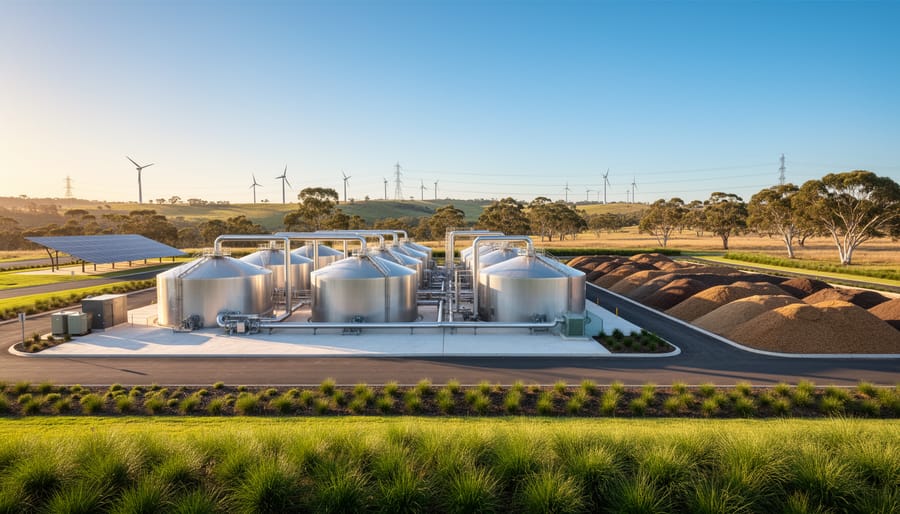
Australia’s renewable energy transformation isn’t happening by chance—it’s being driven by strategic policies that are reshaping how we power our homes, businesses, and communities. From feed-in tariffs that put money back in your pocket for excess solar power to the Renewable Energy Target that’s catalysed billions in clean energy investment, government frameworks are turning environmental ambition into tangible results.
These policies work because they create certainty for investors, incentives for early adopters, and pathways for emerging technologies like bioenergy to scale up. When South Australia committed to 100% net renewable electricity, it wasn’t just a bold declaration—it became a roadmap that attracted innovation, created jobs, and proved regional renewable energy targets could work in practice.
The real power of effective renewable energy policy lies in its ability to transform markets. The Small-scale Renewable Energy Scheme has helped over 3 million Australian households install solar systems, while state-based initiatives are now unlocking the potential of organic waste-to-energy projects that turn agricultural residues and municipal waste into reliable baseload power. These aren’t distant possibilities—they’re operational realities delivering measurable benefits today.
Understanding which policies drive genuine innovation versus those that simply tick boxes matters whether you’re a business leader planning infrastructure investments, a local council managing waste streams, or a homeowner considering your energy future. The policies that succeed share common traits: they’re technology-neutral, provide long-term stability, and reward actual emissions reductions rather than paperwork compliance.
This landscape is evolving rapidly, and knowing how to navigate it opens doors to both environmental impact and economic opportunity.
The Current State of Renewable Energy Policy in Australia
Federal Initiatives Driving Bioenergy Forward
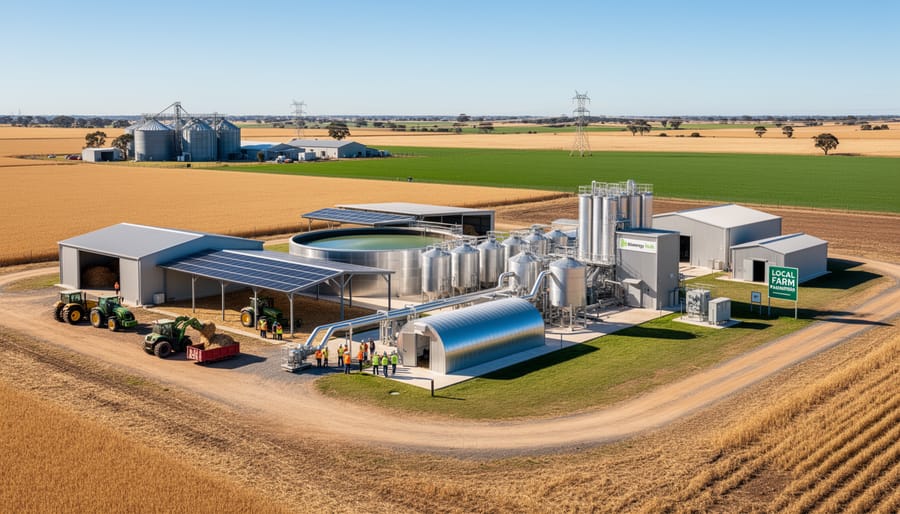
Australia’s commitment to renewable energy has created a robust framework that’s putting bioenergy projects on the fast track to success. At the heart of this transformation sits the Renewable Energy Target (RET), which mandates that 33,000 gigawatt-hours of Australia’s electricity come from renewable sources by 2020 and beyond. This policy hasn’t just set ambitious goals; it’s opened doors for innovative bioenergy ventures across the country.
The Australian Renewable Energy Agency (ARENA) has become a game-changer for bioenergy developers, investing millions into cutting-edge projects that turn organic waste into clean power. Take the Kwinana Waste to Energy Project in Western Australia, where ARENA funding helped establish a facility that processes 400,000 tonnes of waste annually while generating enough electricity for 50,000 homes. That’s transforming rubbish into reliable energy while keeping tonnes of material out of landfills.
The Clean Energy Finance Corporation (CEFC) complements these efforts by providing crucial financing for commercial-scale bioenergy projects. Their support has enabled facilities like Queensland’s Rocky Point sugar mill to install biomass cogeneration systems, demonstrating how agricultural industries can become energy self-sufficient while contributing to the grid.
These federal initiatives work hand-in-hand with energy security policies to create a thriving ecosystem for bioenergy innovation. The result? More jobs in regional communities, reduced greenhouse emissions, and practical solutions that prove sustainability and profitability can walk together down the same path.
State-Level Success Stories
Australian states are leading the charge with targeted policies that turn bioenergy potential into reality. In Queensland, the Biofutures 10-Year Roadmap has been a game-changer, supporting facilities like the Rocky Point Sugar Mill near Bundaberg. This mill now generates enough renewable electricity from bagasse (crushed sugarcane) to power 7,500 homes while processing sugar – a brilliant example of agricultural waste becoming valuable energy.
New South Wales has seen tremendous success through its Emerging Energy Program, which provided crucial funding to dairy farms in the Riverina region. These farms have installed anaerobic digesters that convert cow manure into electricity, slashing their energy bills while reducing methane emissions. One participating farm now generates 80% of its power needs on-site.
Victoria’s Organics Infrastructure Fund has transformed urban waste management, supporting facilities like the Yarra Valley Water’s Aurora Treatment Plant. This facility processes sewage and organic waste to produce biogas, powering the plant’s operations and feeding surplus electricity back to the grid. These success stories demonstrate how smart state policies create win-win outcomes: farmers and businesses save money, communities gain cleaner energy, and Australia moves closer to its renewable energy targets.
How Policy Innovation Unlocks Bioenergy Technology
Feed-in Tariffs That Actually Work
Making renewable energy pay its way has always been the million-dollar question, hasn’t it? For Australian farmers and businesses investing in bioenergy systems, feed-in tariffs and power purchase agreements have transformed what once seemed like an expensive green dream into a genuine income stream.
Here’s how it works in practice: when your bioenergy system produces more electricity than you need, you can sell that excess power back to the grid at agreed rates. These tariffs guarantee you’ll receive fair payment for every kilowatt-hour generated, creating predictable returns that make the initial investment worthwhile.
Take the Goulburn Valley dairy farm that installed an anaerobic digester to process cow manure. Not only does the system handle their waste problem, but they’re now earning approximately 15,000 dollars annually by feeding surplus electricity into Victoria’s grid. That’s money that directly offsets their energy costs and accelerates payback periods.
Power purchase agreements offer even more stability for larger operations. These long-term contracts lock in energy prices, protecting producers from market volatility while guaranteeing grid operators a reliable renewable energy source. Queensland’s sugarcane mills have particularly benefited, with several securing 10-year agreements that make bagasse-fired cogeneration systems genuinely profitable.
The beauty of these arrangements is they create a win-win scenario: farmers and businesses gain financial returns while Australia moves closer to its renewable energy targets. When the economics stack up this clearly, sustainable choices become smart business decisions.
Research Funding Creating Real-World Solutions
The Australian Renewable Energy Agency has been a real game-changer when it comes to turning bioenergy ideas into practical solutions that farmers and businesses can actually use. Through strategic research funding, ARENA has supported projects that address genuine challenges faced by Australian industries while contributing to our renewable energy targets.
Take the University of Queensland’s work on advanced biomass processing, for example. With ARENA backing, researchers developed more efficient methods to convert agricultural waste into energy-dense biofuels. What started as a laboratory concept is now being trialled on actual farms across Queensland, helping growers transform stubble and crop residues into valuable energy products rather than burning them or leaving them to decompose.
Similarly, ARENA funding has accelerated the development of biogas capture systems on dairy and piggery operations. These systems trap methane emissions from manure and convert them into electricity or pipeline-quality biomethane. One standout project in Victoria demonstrated how a medium-sized dairy farm could generate enough power to run its entire operation while significantly reducing greenhouse gas emissions. The technology worked so well that it’s now being replicated across the country.
Research grants have also enabled breakthroughs in algae cultivation for biofuel production, particularly suited to Australia’s abundant sunshine and coastal regions. These innovations aren’t just sitting in reports gathering dust – they’re creating genuine pathways for communities and industries to participate in the renewable energy transition. By investing in research that solves real problems, ARENA is proving that practical innovation thrives when policy support meets Australian ingenuity.
Bioenergy Policies Creating Jobs and Economic Growth
Regional Employment Success Stories
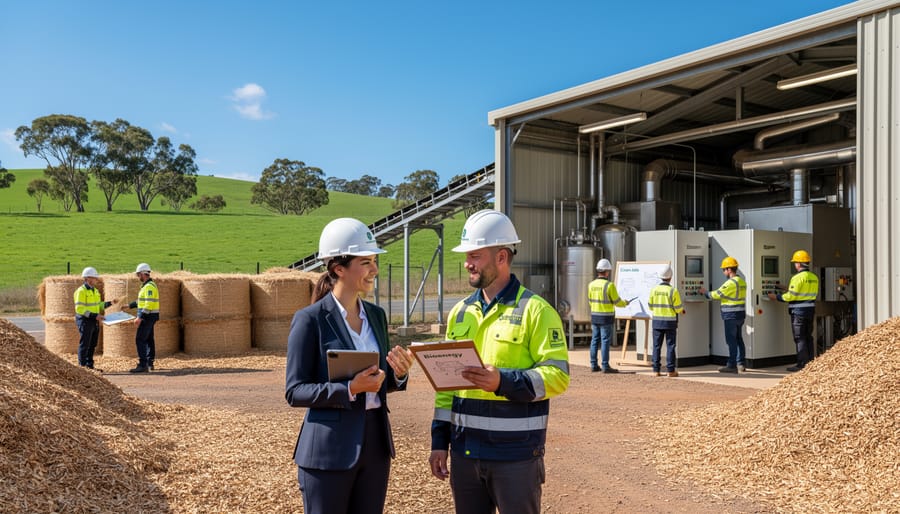
Across Australia, regional communities are experiencing remarkable transformations thanks to bioenergy initiatives. In the New England region of New South Wales, the timber industry town of Armidale has reinvented itself through biomass energy. Local sawmills now supply timber residues to a state-of-the-art bioenergy facility, creating over 80 permanent jobs in logistics, facility operations, and maintenance. What was once considered waste is now valuable fuel, and former timber workers have transitioned seamlessly into renewable energy careers.
Queensland’s sugar cane regions tell an equally inspiring story. Mackay has become a powerhouse of cogeneration, where mills process sugar cane and simultaneously generate electricity from bagasse, the fibrous residue left after crushing. This innovation has created 150 new positions across engineering, plant operations, and agricultural coordination roles.
Down in South Australia, the Murray River region has embraced agricultural waste-to-energy projects. Farmers around Renmark are partnering with bioenergy companies to convert grape marc and other organic waste into renewable gas. This collaboration has generated employment for waste collection drivers, processing technicians, and project managers, whilst solving disposal challenges and reducing carbon emissions.
These success stories demonstrate how thoughtful bioenergy policies can revitalise regional economies, providing meaningful employment whilst advancing Australia’s clean energy transition.
The Agricultural Sector’s New Revenue Streams
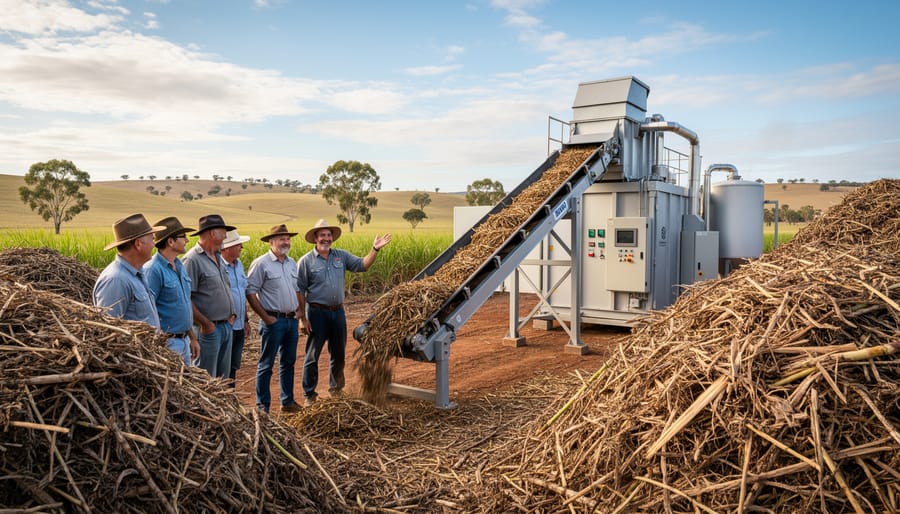
Australian farmers are discovering that what they once considered waste is now worth its weight in gold. Thanks to progressive renewable energy policies, agricultural by-products like sugarcane bagasse, wheat stubble, and livestock manure are being transformed into valuable bioenergy resources. This shift represents a genuine game-changer for the agricultural sector.
Government incentives and feed-in tariffs have made agricultural waste monetization not just environmentally sound but economically attractive. Farmers who previously spent money disposing of crop residues and animal waste are now generating additional income streams by converting these materials into biogas, biofuels, or electricity.
Take Queensland’s sugarcane growers, for instance. They’re now selling excess bagasse to bioenergy plants, creating revenue during off-seasons while simultaneously reducing methane emissions. Similarly, dairy farmers across Victoria are installing anaerobic digesters, transforming manure into renewable energy that powers their operations and feeds surplus electricity back into the grid.
This win-win scenario demonstrates how smart policy design can align environmental goals with economic prosperity, proving that sustainability and profitability aren’t competing interests but complementary objectives that strengthen rural communities.
Overcoming Policy Barriers and What’s Next
Streamlining Approvals for Bioenergy Projects
Red tape has traditionally slowed the rollout of renewable energy projects, but exciting changes are underway to fast-track bioenergy developments across Australia. Progressive state governments are recognising that streamlined approval processes can unlock significant environmental and economic benefits without compromising safety or environmental standards.
Queensland is leading the charge with its Coordinated Project framework, which has cut approval timeframes for major bioenergy facilities from years to months. This collaborative approach brings all relevant government departments together early in the process, eliminating duplication and confusion. The result? Projects like agricultural waste-to-energy plants are moving from concept to construction at record pace.
Victoria has introduced similar reforms through its Planning Scheme Amendment process, specifically designed to classify certain bioenergy projects as priority infrastructure. This designation means developers face fewer bureaucratic hurdles while maintaining rigorous environmental assessments that protect communities and ecosystems.
These streamlining efforts aren’t about cutting corners—they’re about cutting unnecessary delays. By establishing clear guidelines, setting definitive timeframes, and appointing dedicated renewable energy liaisons within government departments, states are demonstrating that environmental responsibility and efficiency can go hand in hand. As these success stories multiply, they’re providing a blueprint for other jurisdictions to follow.
Policy Improvements on the Horizon
Australia stands on the brink of a bioenergy breakthrough, with several upcoming policy reforms set to accelerate the sector’s growth. Federal and state governments are currently reviewing proposals to expand the Renewable Energy Target specifically for bioenergy projects, recognizing their unique ability to provide baseload power while managing agricultural and forestry waste.
One particularly promising development is the proposed Australian Bioenergy Roadmap, which aims to streamline approval processes for new facilities and establish clearer pathways for biomass generators to access the grid. This initiative draws inspiration from successful European models while addressing uniquely Australian challenges, from vast distances between production sites to seasonal biomass availability.
State governments are also stepping up. Queensland’s draft Bioenergy Strategy 2030 proposes targeted incentives for facilities that convert sugar cane waste into electricity, while Victoria is exploring grants for farm-based biogas systems. These regional approaches acknowledge that one size doesn’t fit all across our diverse landscape.
Perhaps most exciting is the growing recognition of bioenergy’s role in regional employment. Proposed policies include training programs to develop a skilled bioenergy workforce and preferential treatment for projects that demonstrate community benefit. With political support building across party lines, these policy improvements signal a fair dinkum commitment to making bioenergy a cornerstone of Australia’s renewable future.
What You Can Do to Support Better Bioenergy Policies
You don’t need to be a policymaker to make a real difference in shaping Australia’s renewable energy future. Every voice counts, and there are practical steps you can take today to support stronger bioenergy policies that benefit both our environment and economy.
Start by making your voice heard where it matters most. Contact your local MP or state representative to express support for bioenergy initiatives and renewable energy targets. When policy discussions happen, decision-makers need to hear from constituents who care about sustainable solutions. A simple email or phone call sharing your perspective can influence voting patterns and policy priorities. Better yet, attend community consultations or town hall meetings when renewable energy policies are being discussed.
Support businesses and organizations that champion bioenergy innovation. Choose energy providers committed to renewable sources, and when shopping, look for companies reducing their carbon footprint through sustainable energy practices. Your purchasing decisions send powerful market signals that influence both industry behaviour and government policy direction.
Stay informed and share knowledge within your community. Follow developments in renewable energy policy, understand the benefits of different bioenergy technologies, and help others see how these innovations create local jobs while addressing climate challenges. Success stories from places like Queensland’s sugar mills producing electricity from bagasse demonstrate what’s possible when communities embrace bioenergy solutions.
For industry professionals, consider joining renewable energy associations or networks that lobby for supportive policies. Collaborate with researchers and participate in pilot programs testing new bioenergy technologies. Your expertise and real-world experience provide invaluable evidence that policymakers need when crafting effective legislation.
Remember, supporting better bioenergy policies isn’t just about environmental responsibility—it’s about building a more resilient, prosperous Australia for future generations.
Australia stands at the crossroads of an extraordinary opportunity. As we’ve explored throughout this article, smart renewable energy policies don’t just create frameworks—they spark innovation, unlock investment, and transform entire industries. The success stories emerging from Queensland’s bioenergy hubs to Victoria’s agricultural waste-to-energy projects prove that when policy meets purpose, remarkable things happen.
Bioenergy represents more than just another renewable option for Australia; it’s a homegrown solution that turns our agricultural abundance into clean power while supporting regional communities. The technology is here, the resources are plentiful, and the policies are increasingly aligned to support this transition.
But here’s the exciting part—you can be part of this transformation. Whether you’re a business exploring sustainable energy options, a farmer considering waste-to-energy solutions, or simply someone who wants to support renewable innovation, every action counts. By choosing bioenergy, advocating for supportive policies, or sharing these success stories, you’re contributing to a cleaner, more resilient Australia.
The future of renewable energy isn’t just bright—it’s achievable. Together, we’re building an energy system that works for people, planet, and prosperity. That’s not optimism; that’s the Australian way of getting things done.