
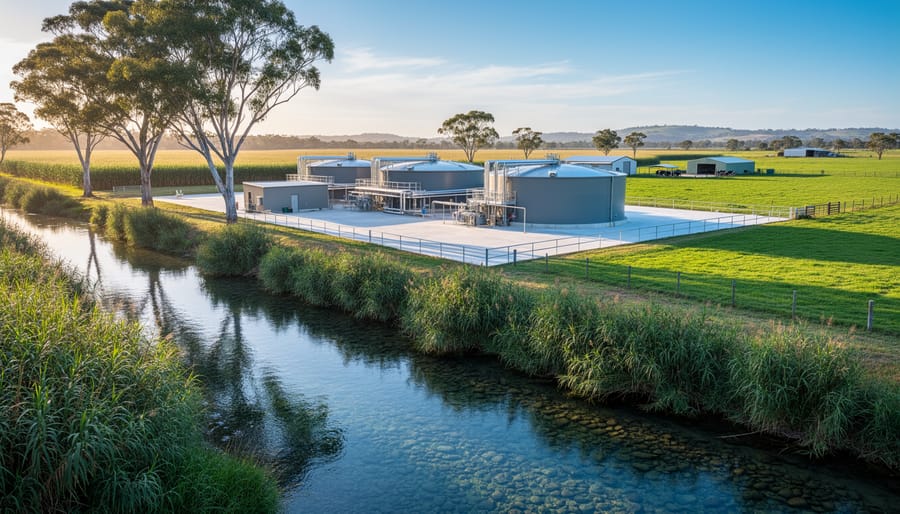
The connection between biomass energy and cleaner waterways might surprise you, but it’s transforming how Australian communities approach environmental protection. When organic waste like agricultural residues, food scraps, and forestry byproducts gets converted into energy instead of decomposing in landfills or washing into streams, we prevent harmful nutrients and pollutants from contaminating our precious water resources. This process tackles two critical challenges simultaneously: generating renewable power while safeguarding the rivers, lakes, and aquifers that sustain our ecosystems and communities.
Consider what happens when manure from livestock operations sits untreated. Rain events wash nitrogen and phosphorus into nearby waterways, triggering toxic algal blooms and devastating aquatic life. Biomass energy facilities capture these materials before they become pollutants, converting them into electricity or biofuels through anaerobic digestion or gasification. The result? Cleaner runoff, healthier water systems, and valuable energy production.
Across regional Australia, forward-thinking farmers and councils are already witnessing remarkable results. Sugar cane farmers in Queensland redirect crop residues to biomass plants rather than burning them in fields, dramatically reducing ash and sediment entering the Great Barrier Reef catchments. Dairy operations in Victoria use anaerobic digesters to process waste streams, protecting local waterways from nutrient overload while powering their facilities.
The science is compelling, but the real-world applications prove even more powerful. From reducing agricultural runoff to managing urban organic waste, biomass energy systems offer practical solutions that deliver measurable water quality improvements. Understanding these mechanisms and their implementation opens pathways for communities, industries, and policymakers to create lasting environmental benefits while advancing Australia’s renewable energy future.
The Hidden Link Between Biomass and Water Health
What Happens When Biomass Enters Our Waterways
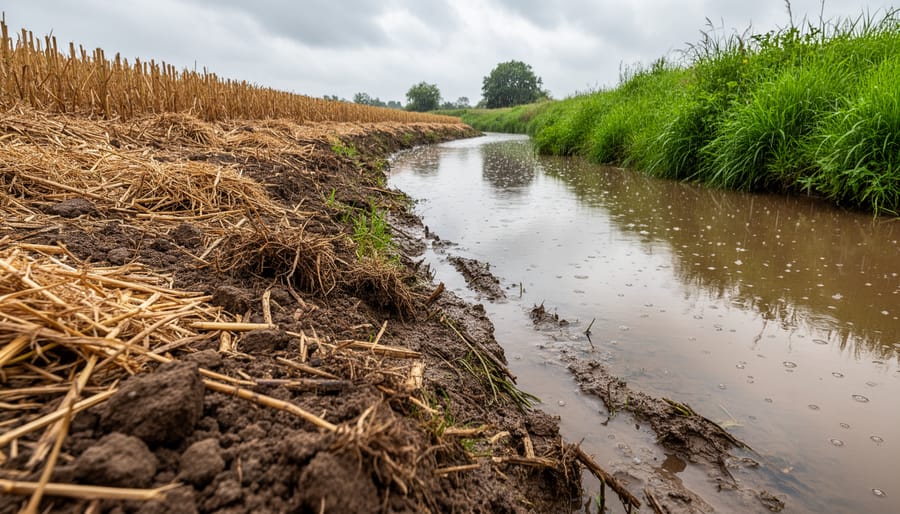
When organic matter like agricultural waste, animal manure, or excess vegetation washes into our rivers, streams, and coastal waters, it sets off a troubling chain of events that can seriously harm aquatic ecosystems. Here’s what happens: these nutrients, particularly nitrogen and phosphorus, act like fertiliser for algae and aquatic plants. The result? Explosive algal growth that transforms clear waterways into murky green soup.
This phenomenon, called eutrophication, might sound complex, but think of it like overfeeding a fish tank. The algae party doesn’t last long, though. When these organisms die and sink to the bottom, bacteria get to work decomposing them. This decomposition process guzzles oxygen from the water at an alarming rate, creating what scientists call hypoxic zones—areas where oxygen levels drop so low that fish and other marine life simply can’t survive.
The Great Barrier Reef knows this story all too well. Nutrient runoff from Queensland’s agricultural regions has contributed to algal blooms that smother coral and damage this precious ecosystem. Meanwhile, rivers across Victoria and New South Wales regularly experience similar challenges, particularly after heavy rainfall events wash accumulated organic matter from farms and urban areas into waterways. The good news? This same problematic biomass could become a valuable energy resource instead.
The Energy Solution to Water Pollution
Here’s a compelling reality: the organic matter that could pollute our waterways can instead power our homes and businesses. When agricultural residues, forestry waste, and organic materials are left to decompose naturally or are carelessly managed, they often end up in rivers, streams, and coastal waters. There, they introduce excess nutrients, deplete oxygen levels, and harm aquatic ecosystems. But by converting agricultural waste to energy, we intercept these potential pollutants before they cause damage.
This is where biomass energy becomes a genuine water quality champion. By collecting crop residues, animal waste, and forestry byproducts for energy production, we’re essentially removing materials that would otherwise contribute to waterway degradation. Think of sugarcane bagasse that might wash into Queensland’s coastal systems, or dairy farm runoff that threatens Victoria’s river health. When captured for bioenergy, these materials create electricity, heat, or biofuels instead of creating environmental headaches.
The beauty of this solution lies in its dual benefit. We’re not simply preventing pollution; we’re transforming a liability into an asset, generating clean energy while protecting our precious water resources.
Four Ways Biomass Energy Production Cleans Our Water
Stopping Agricultural Runoff at the Source
One of the most direct ways biomass energy improves water quality is by intercepting pollutants before they ever reach our waterways. When crop residues like wheat stubble, sugarcane trash, and corn stalks are left on fields, heavy rainfall can wash them into nearby streams along with their nutrient load. Similarly, animal waste from cattle, poultry, and pig farms contains high levels of nitrogen and phosphorus that contribute to harmful algal blooms when they enter water systems.
By collecting these materials for energy production instead, farmers effectively remove the pollution source from the equation. It’s a fair dinkum win-win situation: what was once a waste management headache becomes a valuable energy resource.
Australian farming operations are leading the charge on this front. In Queensland’s Darling Downs region, several grain growers now partner with bioenergy facilities to collect stubble after harvest. Rather than burning it off or letting it decompose in place, the residue powers local electricity generation. The result? Significantly reduced nutrient runoff into the Murray-Darling Basin system.
Victorian dairy farms have adopted similar approaches with manure management. Instead of storing waste in open lagoons where overflow risks contamination, progressive farmers channel it into anaerobic digesters. These systems capture methane for electricity while producing sanitized, nutrient-stabilized fertilizer that poses minimal runoff risk when properly applied.
Reducing Chemical Fertilizer Dependence
When biomass facilities transform organic waste into energy, they create valuable byproducts that dramatically reduce our reliance on chemical fertilizers—one of agriculture’s biggest threats to waterways. Biochar and digestate, the nutrient-rich materials left after biomass conversion, offer farmers a sustainable alternative that protects both soil and water.
Biochar, a charcoal-like substance produced through pyrolysis, acts like a sponge in soil, holding nutrients and preventing them from leaching into groundwater. This biochar improves soil health while significantly cutting the need for synthetic fertilizers that typically wash into our rivers and streams during heavy rainfall.
Digestate, meanwhile, comes from anaerobic digestion facilities and provides a gentle, slow-release fertilizer that plants can actually use. Unlike chemical alternatives that often oversaturate soil and run off into waterways, digestate releases nutrients gradually, matching plant uptake rates naturally.
Consider the success of Victorian potato growers who’ve replaced 40 percent of their chemical fertilizer with biochar-digestate blends. They’ve not only reduced nutrient runoff by half but have also improved crop yields by 15 percent—proving that protecting water quality doesn’t mean compromising productivity.
These biomass byproducts close the nutrient loop, turning what was once waste into wealth while giving our waterways a fair go at staying clean and healthy.
Treating Wastewater While Generating Power
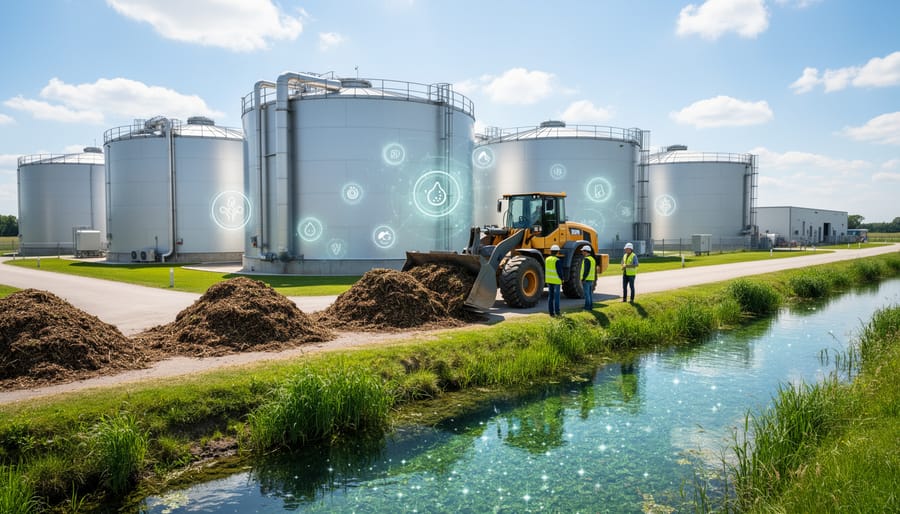
Anaerobic digestion represents one of the most promising applications where biomass energy technologies directly tackle water pollution while generating clean power. This natural process uses microorganisms to break down organic matter in wastewater without oxygen, removing harmful pollutants whilst producing valuable biogas for electricity generation.
Several Australian facilities are already demonstrating remarkable results. Sydney Water’s Malabar treatment plant processes millions of litres of sewage daily, capturing biogas that powers the entire facility and feeds surplus electricity back to the grid. Meanwhile, Brisbane’s Gibson Island facility has become a standout success story, transforming what was once a pollution problem into renewable energy that powers thousands of homes.
The benefits extend beyond municipal applications. Australian food processors and agricultural operations are increasingly adopting these systems to manage their organic waste streams. Dairy farms in Victoria and meat processing plants in Queensland are installing digesters that simultaneously clean their wastewater and reduce energy costs, proving that environmental responsibility and economic sense can go hand in hand. These systems remove up to ninety percent of organic pollutants while creating energy independence for operators.
Managing Invasive Water Plants for Energy
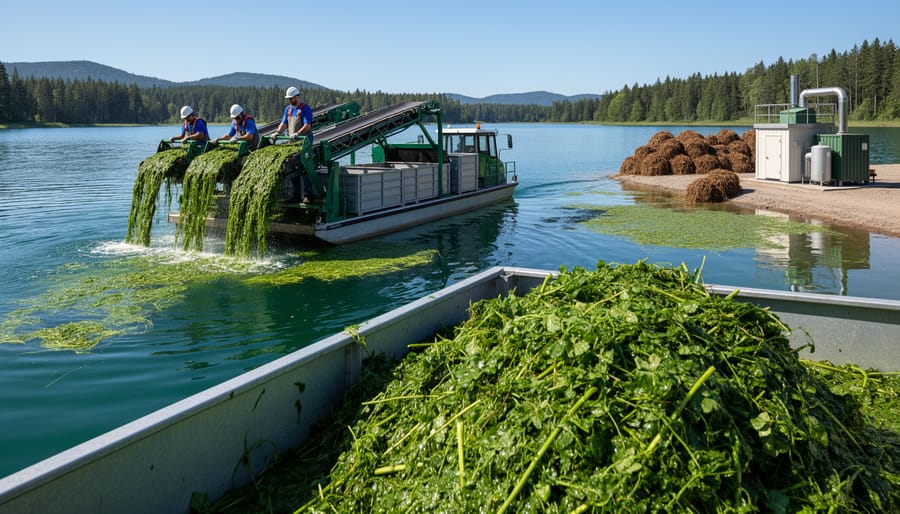
Aquatic weeds and algae might seem like nuisances clogging our waterways, but they’re actually nutrient-hungry organisms that can be transformed into valuable renewable energy. When excess nutrients from agriculture and urban runoff enter rivers and lakes, these plants thrive—sometimes too well. The good news? Harvesting them for biomass energy creates a win-win situation: cleaner water and sustainable fuel.
The process works beautifully. Invasive species like water hyacinth and salvinia absorb nitrogen and phosphorus as they grow. By harvesting these plants before they die and decompose (which would release nutrients back into the water), we permanently remove those pollutants from the ecosystem. The harvested biomass can then be converted into biogas through anaerobic digestion or processed into solid biofuels.
Australian waterway managers are increasingly recognising this opportunity. In Queensland, pilot programs have explored harvesting water hyacinth from affected waterways, turning a management headache into an energy resource. Similarly, projects in New South Wales have investigated using harvested aquatic weeds for biogas production at wastewater treatment facilities.
This approach makes practical sense—we’re already spending money removing these plants from our waterways. Why not capture their energy value while improving water quality? It’s about working smarter with nature, turning environmental problems into renewable solutions that benefit communities and ecosystems alike.
Real Results: Australian Projects Making Waves
Across Australia, innovative projects are proving that biomass energy isn’t just good theory—it’s delivering real, measurable improvements to water quality right now. These success stories demonstrate what’s possible when sustainable energy meets smart environmental management.
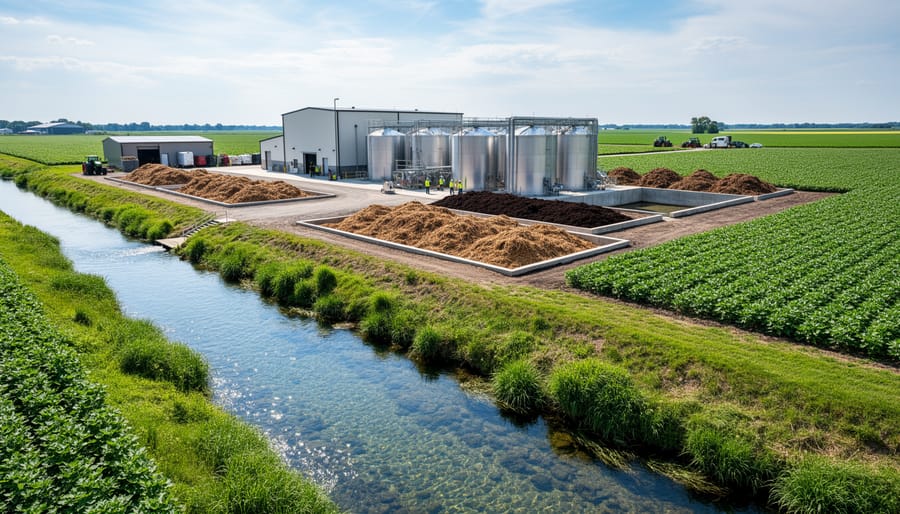
In Queensland’s Darling Downs region, a cluster of intensive piggeries transformed their waste management challenge into a water quality win. Historically, these operations struggled with nutrient-rich effluent that threatened local waterways. By installing anaerobic digesters that convert manure into biogas, they’ve reduced nitrogen runoff by 65 percent while simultaneously generating enough electricity to power their operations. The digestate—what remains after digestion—becomes a stable, nutrient-controlled fertilizer that won’t leach into groundwater like raw manure. Local creek monitoring shows nitrate levels have dropped to pre-farming benchmarks, and the farmers are saving thousands on electricity bills. It’s a proper win-win that’s caught the attention of agricultural operations nationwide.
Down in Victoria’s Gippsland, a dairy cooperative took a different approach that’s equally impressive. Rather than individual farm solutions, ten dairy producers pooled resources to build a shared biomass facility processing both dairy waste and crop residues. The system generates renewable energy while dramatically reducing the organic load entering the region’s waterways. Before implementation, the Thompson River showed concerning phosphorus levels during heavy rains when farm runoff peaked. Three years after the biomass facility came online, phosphorus concentrations during storm events have decreased by 48 percent. The cooperative members report that working together made the technology affordable and created economies of scale that wouldn’t have been possible individually.
Western Australia’s South West region offers another compelling example. A water treatment facility in Margaret River was looking to reduce its carbon footprint and operating costs. They partnered with local vineyards and forestry operations to source waste biomass—grape marc, prunings, and mill residues that would otherwise be burned or landfilled. Their biomass boiler now powers the treatment process while the controlled combustion and ash management prevent the soil acidification and nutrient leaching that occurred with open burning. Monitoring wells around participating vineyards show 40 percent lower sediment loads reaching groundwater, and the Margaret River itself has maintained its pristine water quality despite regional growth.
What makes these projects particularly encouraging is their replicability. None required cutting-edge technology or massive investment—just commitment, collaboration, and recognition that energy and water quality are deeply connected challenges deserving integrated solutions.
Making Biomass Work for Your Water
For Rural Properties and Farms
Australian farmers are leading the charge in turning agricultural waste into clean energy while protecting local waterways. The secret lies in smart management of what’s already on your property.
Start with crop residues like sugar cane trash, wheat stubble, and cotton stalks. Rather than burning these materials in the paddock—which sends nutrients and ash into nearby creeks—consider on-farm biomass systems that convert them into energy. This approach keeps valuable organic matter from washing into waterways during heavy rains.
Livestock operations benefit enormously from biogas digesters. These systems capture manure before nutrients can leach into groundwater or run off into streams. A dairy farm in Gippsland reduced its nitrogen runoff by 75 percent after installing a digester, simultaneously generating enough electricity to power the entire operation.
The beauty of these systems is their dual payoff. You’re not just preventing pollution—you’re creating renewable energy and producing nutrient-rich fertiliser that’s far less likely to contaminate water sources than raw manure.
Many farmers report that biogas digesters pay for themselves within five to seven years through energy savings and reduced fertiliser costs. State rebates and grants can sweeten the deal further, making this practical solution accessible for operations of various sizes across rural Australia.
For Communities and Local Councils
Local councils and community groups are perfectly positioned to champion biomass energy projects that deliver genuine water quality benefits. Start by identifying local organic waste streams—from council green waste collections to agricultural residues from nearby farms. These materials can fuel community-scale biomass facilities that generate renewable energy while reducing pollution from decomposing organic matter.
Consider partnering with your regional water treatment authority to explore integrated solutions. Several Australian councils have successfully combined biogas production from wastewater treatment plants with electricity generation, creating a closed-loop system that’s both cost-effective and environmentally sound. The Town of Port Hedland’s wastewater treatment facility, for example, uses biogas to power operations while protecting nearby waterways from nutrient pollution.
Look for collaboration opportunities with local industries that generate organic waste. Food processors, timber mills, and agricultural cooperatives often welcome partnerships that solve their waste disposal challenges. These arrangements can provide steady feedstock for biomass projects while strengthening regional economies.
Apply for state and federal grants specifically designed for community renewable energy initiatives. Many programs prioritize projects demonstrating environmental co-benefits like improved water quality. Document your project’s water protection outcomes—reduced runoff pollution, prevented contamination, or decreased treatment costs—to strengthen future funding applications and inspire neighboring communities to follow your lead.
Overcoming the Challenges
Let’s be fair dinkum about this: transitioning to biomass energy systems that improve water quality isn’t always smooth sailing. The journey comes with genuine hurdles, but here’s the encouraging bit—communities and businesses across Australia have already blazed the trail and shown us how to navigate these challenges successfully.
The upfront investment often gives people pause. Installing biomass facilities requires capital, particularly for smaller operations or regional councils with tight budgets. However, innovative financing models are changing the game. Several Australian projects have secured green bonds, government grants, and public-private partnerships that spread costs while accelerating implementation. The New South Wales Organics Infrastructure Program, for instance, has helped fund multiple biomass projects that simultaneously generate energy and reduce agricultural runoff into waterways.
Technical expertise represents another genuine consideration. Not every community has biomass specialists on hand, but this challenge has sparked creative solutions. Queensland’s sugar industry tackled this by establishing regional knowledge hubs where farmers and facility managers share expertise about bagasse-to-energy systems. This collaborative approach means you’re never truly starting from scratch—there’s always someone who’s walked the path before.
Navigating regulatory requirements might seem daunting initially, but frameworks are becoming more streamlined as biomass energy gains recognition. Working closely with local environmental agencies from day one prevents headaches down the track. Successful projects emphasize early stakeholder engagement, treating regulators as partners rather than obstacles.
The technical reality is that biomass systems need regular maintenance and monitoring to deliver water quality benefits effectively. Yet this creates local employment opportunities—a silver lining that strengthens community buy-in. Victorian dairy farmers converting waste to energy have found that training existing staff for system management builds valuable skills while keeping operations running smoothly.
Perhaps most importantly, patience matters. Water quality improvements take time to become measurable, but starting now means reaping benefits sooner. The communities already implementing these solutions aren’t waiting for perfect conditions—they’re proving that commitment and collaboration overcome implementation barriers, creating healthier waterways for future generations.
The Ripple Effect: Beyond Clean Water
When biomass energy and water conservation work hand-in-hand, the benefits cascade far beyond what we might initially expect. It’s like dropping a stone into a billabong—the ripples extend in every direction, touching aspects of environmental and community health we hadn’t even considered.
Take carbon emissions, for instance. By replacing fossil fuels with biomass energy, we’re not only protecting our waterways from agricultural runoff but simultaneously achieving reduced emissions that contribute to climate change mitigation. It’s a two-for-one deal that addresses multiple environmental challenges simultaneously.
The soil health improvements are equally impressive. When farmers adopt biomass practices that protect water quality—like growing energy crops on marginal lands or using precision harvesting techniques—they’re building richer, more resilient soils. These soils hold more water during droughts, reducing irrigation needs and creating a buffer against Australia’s increasingly unpredictable rainfall patterns.
Regional communities are discovering unexpected economic opportunities too. A biomass processing facility in western Victoria has created 47 ongoing jobs while simultaneously reducing nutrient loads in nearby waterways. These aren’t just numbers—they’re families with stable incomes and communities with renewed purpose.
Perhaps most critically, this integrated approach builds drought resilience. Energy crops like sorghum and native grasses require less water than traditional crops while still generating income through biomass production. During dry years, farmers maintain productivity without drawing down precious water reserves or compromising water quality through intensive irrigation.
This interconnected web of benefits demonstrates that environmental solutions needn’t be single-purpose. When we think holistically about biomass energy and water quality, we’re really investing in comprehensive regional sustainability—protecting our environment while strengthening our communities for whatever challenges lie ahead.
The journey toward cleaner water through biomass energy isn’t a distant dream—it’s unfolding right now across Australia, from sugarcane fields in Queensland to dairy farms in Victoria. What makes this approach so powerful is its dual impact: generating renewable energy while actively protecting our precious water resources. It’s a classic Australian fair dinkum solution that tackles two challenges with one smart strategy.
We’ve seen how biomass energy reduces agricultural runoff, prevents pollution from decomposing organic waste, and lessens our reliance on water-intensive fossil fuels. From the success of Victorian farms converting manure into biogas to innovative water treatment facilities harnessing biosolids, the evidence is clear. These aren’t just environmental wins—they’re economic opportunities creating jobs, reducing costs, and building resilience in our communities.
The beauty of biomass energy is its flexibility. Whether you’re a farmer with crop residues, a council managing organic waste, or a business leader seeking sustainable solutions, there’s a biomass pathway that fits your situation. The technology exists, the success stories are proven, and the benefits multiply with each new project.
Now it’s your turn. Look around your own context—what organic materials are going to waste? What water quality challenges exist in your region? The opportunities are there, waiting to be seized. Improving water quality through biomass energy isn’t just possible—it’s practical, profitable, and happening today. Join the movement transforming Australian waste into water-saving energy solutions.