
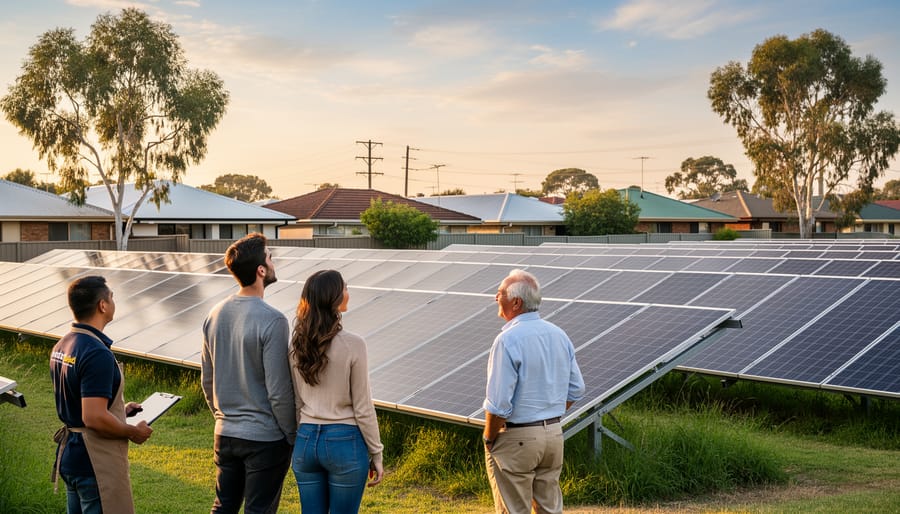
Community solar is transforming how everyday Australians access renewable energy, and the JCP&L program in the United States offers a compelling blueprint for communities ready to take charge of their energy future. This innovative model allows residents and businesses to subscribe to a shared solar facility without installing panels on their own properties, breaking down the traditional barriers of high upfront costs, unsuitable rooftops, and rental restrictions that have kept clean energy out of reach for millions.
The JCP&L community solar initiative demonstrates what becomes possible when utility companies, local governments, and citizens collaborate on energy transition planning. Subscribers receive credits on their electricity bills for their portion of the solar farm’s production, typically saving 5-10% annually while supporting renewable generation. For Australian communities watching coal-fired power stations close and electricity prices climb, this approach presents a practical pathway forward that doesn’t require waiting for top-down policy changes.
What makes community solar particularly relevant to Australia’s energy landscape is its scalability and inclusivity. Regional towns can develop local solar projects that keep energy dollars circulating within their communities, while urban apartment dwellers finally gain access to solar benefits previously available only to homeowners. The model proves that energy transition doesn’t require everyone to become individual renewable generators—instead, collective action creates shared prosperity while accelerating decarbonization. Understanding how JCP&L structured their program provides Australian communities with proven strategies to advocate for similar initiatives locally.
What Makes Community Solar Different from Rooftop Panels
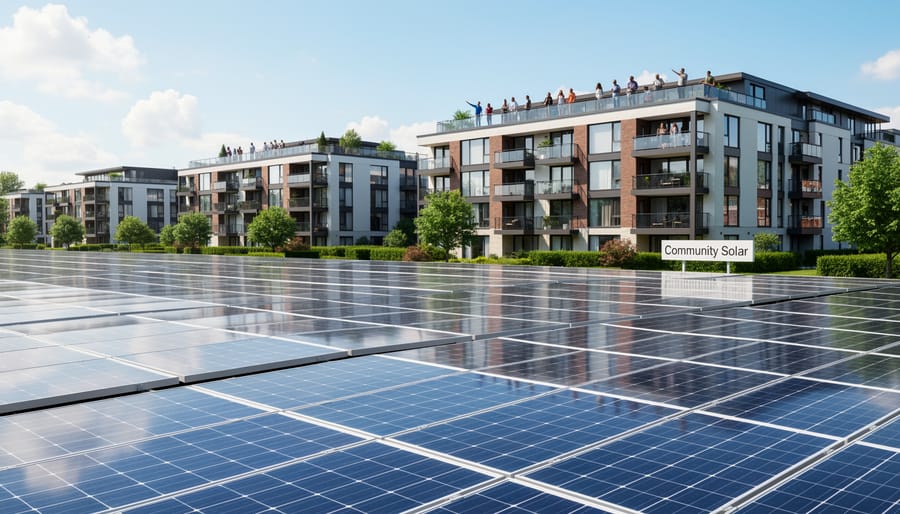
The JCP&L Model: Breaking Down Barriers to Solar Access
JCP&L, or Jersey Central Power & Light, has created a community solar model that’s breaking down traditional barriers to clean energy access across New Jersey. While this American example might seem distant from Australian shores, understanding how their program works offers valuable insights for communities here looking to establish similar community solar projects.
The beauty of the JCP&L model lies in its simplicity. Instead of installing panels on your roof, residents and businesses can subscribe to a portion of a larger solar farm’s output. Think of it like joining a renewable energy co-op without needing your own equipment. Subscribers receive credits on their electricity bills based on their share of the solar energy produced, typically saving between 5-10 percent on their monthly power costs.
Participation requirements are refreshingly straightforward. You don’t need to own your home, have a suitable roof, or make any upfront investment. Anyone within JCP&L’s service territory can sign up, making solar accessible to renters, apartment dwellers, and those with shaded properties. Subscribers simply choose how much solar capacity they want to support, from a small portion to covering their entire electricity usage.
The credit system works seamlessly with existing billing. When the solar farm generates electricity, subscribers receive virtual credits that offset their regular power consumption. If the farm produces more than you use in a month, excess credits typically roll over, ensuring nothing goes to waste.
This approach demonstrates how removing financial and physical barriers can democratize renewable energy access, creating a pathway that communities worldwide, including those in Australia, can adapt to their local contexts and energy goals.
Who Benefits Most from Shared Solar Projects
Community solar programs deliver the greatest benefits to renters, apartment dwellers, and those living in properties where traditional rooftop solar installation isn’t feasible. In Australia, where approximately thirty percent of households rent their homes, this represents a significant opportunity to democratize renewable energy access.
Low-to-moderate income households particularly benefit from community solar arrangements. These participants typically save between five to fifteen percent on their electricity bills without upfront installation costs or maintenance responsibilities. For a family spending $2,000 annually on power, that’s real money back in their pockets while supporting clean energy transition.
Small business owners and community organizations also gain substantial advantages. A local café in regional Victoria, for example, might struggle with the capital investment required for a commercial solar system. Through shared arrangements similar to community solar banks, they access renewable energy credits that reduce operating costs while demonstrating environmental commitment to customers.
Property owners with shaded roofs, heritage-listed buildings, or aging infrastructure unsuitable for solar panels find community solar removes these barriers entirely. Rather than missing out on the renewable energy revolution, they participate fully through shared projects that benefit entire neighborhoods.
Rural and regional communities especially thrive with community solar models. These projects create local employment during construction, generate ongoing maintenance jobs, and keep energy investment dollars circulating within the community rather than flowing to distant corporations. It’s about building resilient, self-sufficient communities while accelerating Australia’s clean energy future.
Community-Led Energy Transition: More Than Just Solar Panels
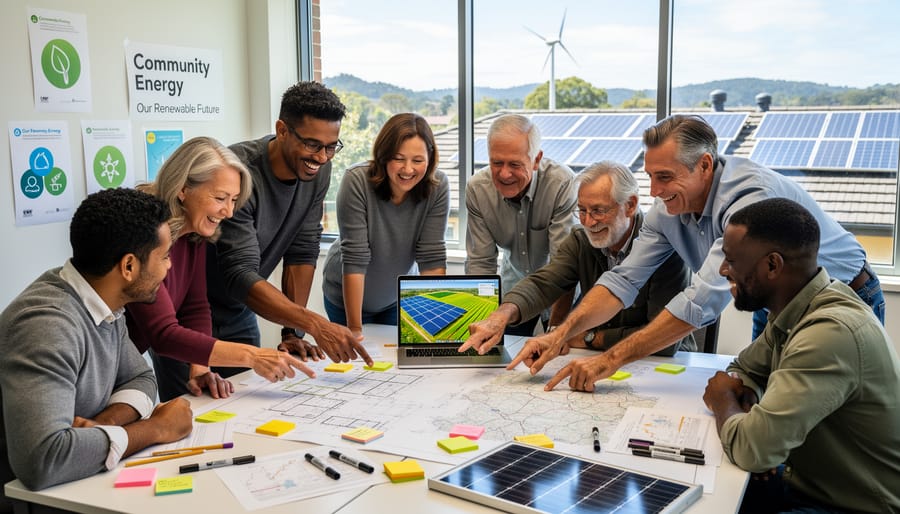
When Communities Take Control of Their Energy Future
Around the world, community-led energy initiatives are proving that local action creates powerful change. When communities take ownership of their energy future, remarkable transformations unfold.
In New Jersey, JCP&L’s community solar program demonstrates how utilities and communities can partner effectively. Through this model, residents who cannot install rooftop panels—whether due to shading, rental arrangements, or financial constraints—can subscribe to nearby solar farms and receive credits on their electricity bills. Since launching, the program has enabled thousands of households to access clean energy affordability, proving that inclusive design removes traditional barriers to solar participation.
Closer to home, Australia boasts inspiring examples of communities seizing their energy destiny. The town of Yackandandah in Victoria has set an ambitious goal of becoming 100 percent renewable, establishing community solar gardens that allow residents to buy panels collectively. This approach spreads costs while building social cohesion around shared environmental goals.
In South Australia, the Renmark Paringa Council established Australia’s first fully owned community solar farm in 2021. This 5.1-megawatt installation generates revenue for the local government while providing participating households with electricity bill savings. The project demonstrates how regional communities can leverage their assets to create local economic benefits whilst reducing emissions.
These success stories share common threads: strong local leadership, inclusive participation models, and clear communication about benefits. They show that community energy isn’t just about installing hardware—it’s about empowering people to shape their relationship with energy.
The international experience, particularly models like JCP&L, offers valuable lessons for Australian communities. Subscription-based approaches, transparent governance structures, and partnerships between utilities and communities create frameworks that work. As Australia continues its renewable energy transition, these proven models provide blueprints for action, demonstrating that when communities take control, everyone benefits through cleaner air, lower bills, and stronger local economies.
Real Benefits That Matter to Your Household Budget
Community solar programs deliver genuine financial relief where it counts most – your household budget. For the average Australian family, participating in a community solar initiative like JCP&L’s model can reduce electricity bills by 10-20% annually. That translates to savings between $200 and $500 each year, money that stays in your pocket for other essential expenses. Unlike traditional solar installations that require upfront capital investment, community solar programs typically involve no installation costs, making renewable energy accessible to renters, apartment dwellers, and homeowners without suitable roof space.
The environmental benefits extend well beyond personal savings. A typical household subscription to community solar offsets approximately 2-3 tonnes of carbon dioxide emissions annually – equivalent to planting roughly 50 native trees or taking a petrol car off the road for three months. When you multiply that across an entire participating community, the collective impact becomes truly significant. One suburban neighbourhood with 200 households engaged in community solar can prevent around 500 tonnes of emissions yearly, contributing meaningfully to Australia’s renewable energy targets.
The long-term value proposition strengthens over time. As traditional energy prices continue climbing, community solar subscribers lock in predictable energy costs, providing inflation protection that becomes increasingly valuable. Many programs offer guaranteed savings structures, ensuring participants always pay less than standard retail electricity rates. This financial certainty helps families plan budgets more effectively, particularly crucial during cost-of-living pressures.
Beyond dollars and emissions, community solar builds local resilience. Participating households support regional renewable energy infrastructure, creating local jobs and keeping energy investment within Australian communities. Success stories from similar initiatives show that community-owned renewable projects generate approximately 2.5 times more local economic benefit compared to corporate-owned facilities. When communities control their energy future, everyone benefits – financially, environmentally, and socially. These programs demonstrate that transitioning to clean energy doesn’t require sacrifice; rather, they prove sustainable choices deliver tangible advantages for household budgets and our shared environment.
Lessons from JCP&L for Australian Communities
Existing Community Energy Projects Lighting the Way in Australia
While JCP&L operates in the United States, Australia isn’t waiting on the sidelines. Communities across the country are already pioneering renewable energy initiatives that embody the same collaborative spirit as community solar programs.
Take the Hepburn Wind Project in Victoria, for instance. Back in 2011, this became Australia’s first community-owned wind farm, funded by over 2,000 local investors. The project generates enough clean electricity to power around 2,300 homes annually, proving that everyday Australians can band together to create meaningful change. The profits flow back into the community, funding further sustainability initiatives and energy efficiency programs.
Similarly, the Repower Shoalhaven initiative on the New South Wales South Coast demonstrates how communities can take control of their energy future. Through solar installations on community buildings and bulk-buy programs for residential solar, they’ve made renewable energy more accessible while strengthening local connections.
In Yackandandah, a small Victorian town, residents are working toward becoming 100 percent renewable. Their journey includes community batteries, solar farms, and energy-efficient housing retrofits. These Australian community energy projects share a common thread: local ownership, shared benefits, and a commitment to sustainability that extends beyond individual households.
These initiatives prove that community-led energy transitions aren’t just theoretical concepts. They’re happening right now in Australian backyards, town halls, and farming communities. The models might differ slightly from JCP&L’s community solar approach, but the underlying principles remain identical: democratizing energy access, building resilience, and creating prosperity while protecting our environment. These trailblazers are lighting the way forward, demonstrating that when communities unite around renewable energy, remarkable transformations become possible.
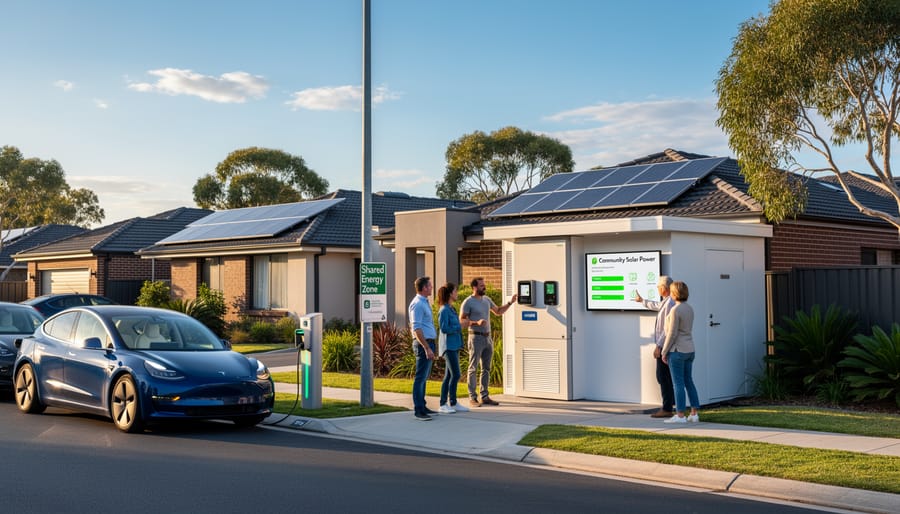
How to Bring Community Solar to Your Area
Bringing community solar to your local area is an achievable goal that starts with understanding your community’s needs and building the right connections. The JCP&L model demonstrates how utility partnerships with community members can create accessible renewable energy options, and these principles can be adapted to Australian contexts.
Begin by researching existing community solar programs and energy cooperatives operating in Australia. Organizations like the Clean Energy Council and Community Power Agency offer valuable resources and case studies that illustrate what works. Connect with your local council’s sustainability office to understand current renewable energy initiatives and identify potential collaboration opportunities. Many councils are actively seeking community-led solutions to meet emissions reduction targets.
Engage key stakeholders early in the process. Your local electricity distributor is essential, as they’ll manage grid connections and technical requirements. Approach local businesses, schools, and community centers about hosting solar installations. These partnerships can provide suitable locations while spreading the benefits across multiple community members. Consider forming a working group with neighbors who share your vision, as collective advocacy carries more weight than individual efforts.
Success stories from regional Australian communities show that persistence pays off. The Yackandandah community in Victoria transformed their town through grassroots renewable energy initiatives, proving that small communities can lead significant change. Similarly, the Repower Shoalhaven project demonstrated how community engagement drives solar adoption.
Access funding through government grants, such as those offered by the Australian Renewable Energy Agency or state-based renewable energy programs. These financial supports can kickstart feasibility studies and initial development phases. Document your progress and share updates with your community through local media and social channels. Building momentum requires keeping people informed and excited about the possibilities.
Remember, every successful community solar program began with one person taking that first step. Your advocacy today could power hundreds of homes tomorrow while strengthening community connections and environmental outcomes.
The journey toward cleaner, more sustainable energy isn’t one we need to walk alone. Programs like JCP&L’s community solar initiative demonstrate that when communities come together, renewable energy becomes accessible to everyone—not just those with perfect rooftops or deep pockets. This collective approach is transforming how we think about energy ownership and participation, proving that meaningful change happens when neighbours, businesses, and local organizations unite around shared environmental goals.
For Australian communities watching these developments unfold overseas, the message is clear: community-led energy transitions aren’t just possible, they’re happening right now. Whether through solar gardens, local renewable energy cooperatives, or shared battery storage projects, the tools for democratizing clean energy are within reach. These initiatives reduce emissions, create local jobs, and give everyday people a genuine stake in building a sustainable future.
The beauty of community energy models lies in their inclusivity. Renters, apartment dwellers, and those without suitable properties can finally participate in the solar revolution. Low-income households gain access to bill savings previously reserved for wealthier homeowners. Communities build resilience while taking practical action on climate change.
Now’s the time to explore what community energy options exist in your area. Talk to your local council about renewable energy initiatives, join conversations about shared solar projects, or connect with community energy groups already blazing the trail. The energy transition isn’t coming someday—it’s here, and there’s a place for you in it. Together, we’re building the clean energy future we all want to see.