
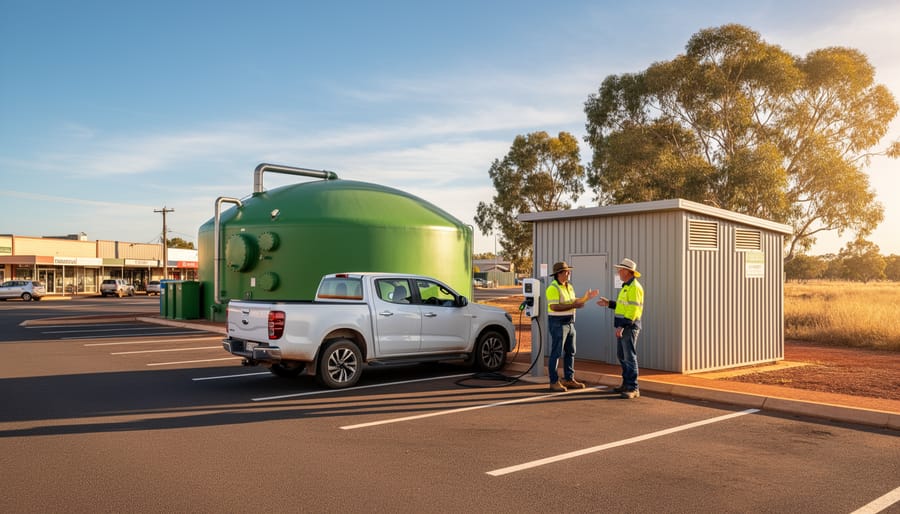
The electric vehicle revolution is stalling at community level, not because Australians lack enthusiasm, but because we’re waiting for someone else to build the infrastructure. Towns from Lismore to Launceston are discovering a powerful truth: communities that take charge of their own charging networks aren’t just solving a practical problem—they’re creating economic opportunities, strengthening energy independence, and accelerating the transition to zero-emission transport on their own terms.
Traditional approaches leave regional and suburban communities last in line, with commercial operators targeting only high-traffic urban corridors and government rollouts moving at glacial pace. Meanwhile, community-driven initiatives are proving remarkably effective. Local councils, neighbourhood associations, and business cooperatives are establishing charging stations powered by renewable energy sources they control, particularly bioenergy systems that convert local organic waste into reliable electricity.
This isn’t idealistic thinking—it’s happening right now across Australia. Communities are discovering that bioenergy-powered charging infrastructure creates a closed-loop system: organic waste from farms, food processing, and council operations generates power for EV charging, which supports local transport needs while creating jobs and keeping energy dollars circulating locally. The model works because it addresses multiple challenges simultaneously—waste management, renewable energy generation, and transport infrastructure—while building community resilience.
The path forward requires neither massive government grants nor corporate intervention. It demands community leadership, strategic partnerships, and understanding how to integrate bioenergy systems with charging infrastructure. Success stories demonstrate that even modest-sized communities can establish viable charging networks within 12-18 months, transforming from infrastructure recipients into energy innovators who control their sustainable transport future.
Why Communities Are Building Their Own Charging Networks
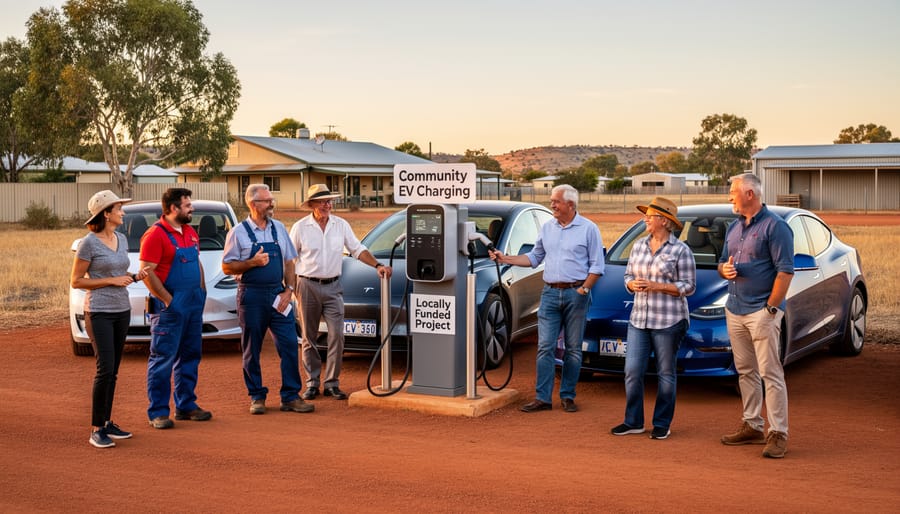
The Infrastructure Gap Nobody’s Talking About
Picture Sarah in regional Queensland, driving her electric vehicle home from work. She’s watching the battery gauge drop, knowing the nearest public charger is 80 kilometres away in the next town. This isn’t an uncommon story across Australia’s vast regional landscape.
While our major cities see steady charging station installations, there’s a glaring disparity that’s holding back e-mobility adoption. Communities beyond the capital city centres often find themselves in what locals call “charging deserts” – areas where EVs become impractical simply because the infrastructure hasn’t caught up with the technology.
Towns like Broken Hill and remote parts of Tasmania face particular challenges. A farmer considering an electric ute for their property might abandon the idea after discovering the nearest fast charger requires a two-hour round trip. Meanwhile, apartment dwellers in suburban Melbourne or Sydney often struggle with the practicalities of home charging when their building lacks the necessary electrical infrastructure.
The encouraging news? Communities aren’t waiting for someone else to solve this problem. From the Atherton Tablelands to the South Australian Riverland, local groups are taking charge – quite literally. They’re recognising that waiting for commercial providers or government rollouts means potentially years without access to the transport revolution happening elsewhere.
This gap represents both a challenge and an extraordinary opportunity for community-led innovation and local renewable energy integration.
What Happens When Communities Take Control
When local communities seize the reins of e-mobility infrastructure, remarkable things happen. Rather than waiting years for corporate rollouts or government funding, neighbourhoods are establishing charging networks at speeds that surprise even the most optimistic supporters. These community-driven energy models keep investment dollars circulating locally, creating jobs for electricians, maintenance workers, and project managers right where they’re needed most.
The beauty of community ownership lies in customisation. A coastal town might prioritise tourist routes, while suburban cooperatives focus on residential street charging. In regional Victoria, one community paired their charging stations with locally-sourced bioenergy, creating a truly circular system that powers vehicles using organic waste from nearby farms.
Beyond the practical benefits, these projects spark genuine engagement. Residents become stakeholders rather than customers, attending meetings, sharing ideas, and taking pride in infrastructure they’ve built together. Young people gain technical skills, retirees contribute experience, and diverse voices shape solutions that genuinely reflect local needs. This collaborative spirit transforms charging infrastructure from mere convenience into community asset.
Powering Charging Stations with Locally-Generated Bioenergy
From Farm Waste to Vehicle Fuel
In the heart of rural New South Wales, the small agricultural community of Cowra has transformed what was once considered waste into a powerful driver of sustainable transport. Local farmers, tired of paying hefty fees to dispose of crop residues and livestock waste, decided to take matters into their own hands and create something remarkable.
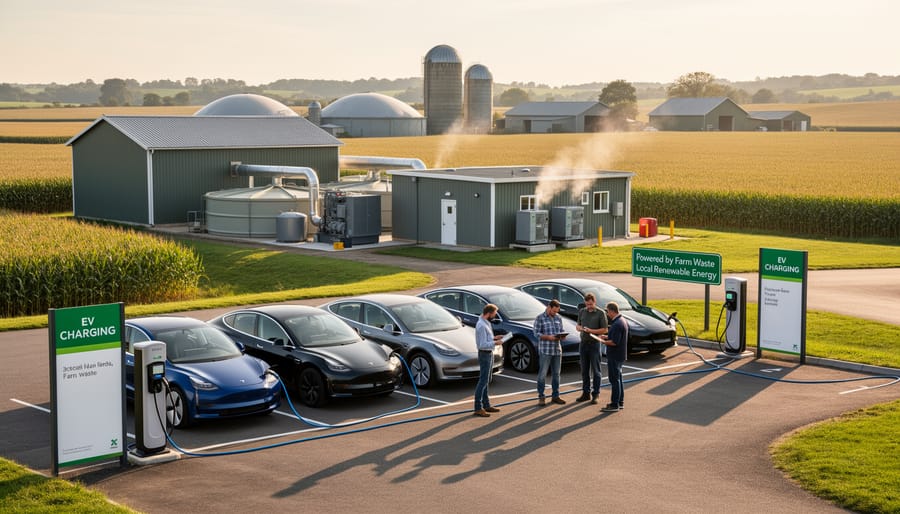
The community established a cooperative that collects agricultural biomass—everything from wheat stubble and corn stalks to dairy manure—and processes it through an anaerobic digestion system. This clever bit of technology breaks down organic matter in oxygen-free conditions, producing biogas that’s then converted into electricity. The generated power feeds directly into three strategically located EV charging stations throughout the district, with excess electricity sold back to the grid.
The process is surprisingly straightforward. Farmers deliver their waste to a central facility, where it’s sorted and fed into large digesters. Microorganisms do the heavy lifting, breaking down the material and releasing methane-rich biogas. This gas powers generators that produce clean electricity, while the leftover digestate becomes nutrient-rich fertiliser that farmers can use on their fields—creating a genuine circular economy.
The results have been nothing short of brilliant. The cooperative has slashed waste disposal costs for member farms by 60 percent, while generating enough electricity to power the equivalent of 150 homes annually. The charging stations have attracted more EV owners to the region, boosting local tourism and business. Most impressively, the project prevents approximately 800 tonnes of carbon dioxide equivalent from entering the atmosphere each year.
This success story demonstrates that communities don’t need to wait for large corporations or government mandates to embrace e-mobility. With determination, collaboration, and local resources, agricultural communities can pioneer their own sustainable transport solutions while strengthening their economic resilience.
Making Your Community Energy Self-Sufficient
Bioenergy systems offer communities a powerful pathway to powering their e-mobility infrastructure independently, reducing reliance on traditional grid connections while slashing carbon emissions. By converting locally-sourced organic waste into electricity through proven technologies like anaerobic digestion or biomass gasification, communities can generate reliable, renewable power specifically for their charging stations.
The beauty of bioenergy lies in its consistency. Unlike solar panels that stop producing after sunset or wind turbines during calm days, bioenergy plants operate around the clock, making them ideal for meeting the constant demands of vehicle charging. This reliability becomes particularly valuable in rural and regional Australian communities where grid connections can be expensive to establish or prone to disruption during extreme weather events.
For communities wanting to get started, the most practical approach involves hybrid systems that combine bioenergy with battery storage and grid connection. Your bioenergy plant handles baseline power generation, batteries manage peak demand periods, and the grid serves as backup during maintenance or unexpected surges. This three-pronged approach ensures your charging infrastructure never goes offline while maximizing the use of locally-produced renewable energy.
Many Australian communities are already demonstrating this potential. Farm cooperatives are converting agricultural waste into electricity for shared charging facilities, while regional towns are using municipal organic waste to power public transport charging depots. These real-world applications prove that energy self-sufficiency isn’t just possible; it’s achievable with existing technology and local resources, strengthening community resilience while advancing sustainability goals.
Real Communities Already Making It Happen
The Regional Town Running EVs on Agricultural Byproducts
In the heart of regional Victoria, the township of Yarrawonga has become an unexpected champion of sustainable transport, transforming agricultural waste into clean fuel for electric vehicles. With a population of just 8,000, this Murray River community faced a challenge familiar to many Australian country towns: limited EV charging infrastructure and concerns about grid capacity during peak tourism seasons.
The breakthrough came when local farmers, council representatives, and the regional waste management facility joined forces. They recognized an opportunity sitting right under their noses – thousands of tonnes of grape marc from nearby wineries, along with wheat stubble and other crop residues that previously went to waste or were burned off.
Working with a renewable energy cooperative, Yarrawonga installed three public charging stations powered by a small bioenergy plant that converts these agricultural byproducts into electricity. The system generates enough power to keep the chargers running year-round, with excess energy feeding back into the local grid.
“We were spending money to dispose of grape waste, and now it’s powering vehicles,” says vineyard owner Michelle Chen. “It’s turned a cost into an asset.”
The project delivered measurable benefits within its first eighteen months. The town now boasts six electric vehicles per hundred residents – double the regional Victorian average. Local businesses report increased visitors stopping to charge, with the average charging session translating to $40 spent in town. The bioenergy plant has also created three permanent jobs and reduced the community’s grid electricity costs by 15 percent during summer peaks.
Perhaps most importantly, Yarrawonga’s success has sparked genuine optimism about regional sustainability. Neighbouring towns are now exploring similar models, proving that innovative thinking and local resources can overcome infrastructure gaps. The key lessons? Start with what you have locally, build partnerships across sectors, and don’t wait for someone else to solve your challenges.
Suburban Cooperatives Changing the Game
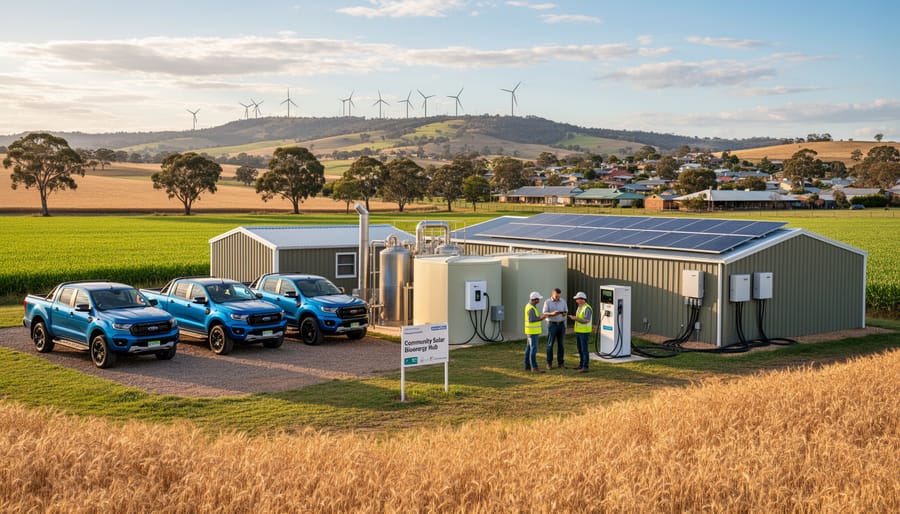
Community-driven charging solutions are thriving beyond inner-city centres, with suburban neighbourhoods proving that sustainable transport infrastructure works brilliantly in lower-density settings. In Melbourne’s outer suburbs, apartment complexes like Greenvale Gardens have installed shared charging stations powered by rooftop solar panels, allowing 150 residents to charge their vehicles at a fraction of commercial rates. The strata committee partnered with local renewable energy providers to create a system that benefits everyone, regardless of whether they currently own an electric vehicle.
Neighbourhood associations are getting creative too. In Brisbane’s western suburbs, the Brookfield Community Group established Queensland’s first community-owned charging hub, funded through a combination of member contributions and council grants. The hub features four charging points that residents can book through a simple app, with excess solar energy stored in batteries for evening charging. This model has inspired similar projects across Toowoomba and Ipswich, demonstrating that suburban communities don’t need massive government investment to get started.
The beauty of these suburban initiatives lies in their accessibility. Unlike dense urban areas where space comes at a premium, suburban settings often have existing car parks and community centres perfect for conversion. In Perth’s northern suburbs, a local shopping centre partnered with nearby residents to transform unused parking bays into a shared charging precinct, creating a win-win situation that draws customers while serving the community’s growing fleet of electric vehicles. These success stories prove that community action scales beautifully across diverse settings.
Your Community’s Roadmap to E-Mobility Independence
Getting Your Neighbors On Board
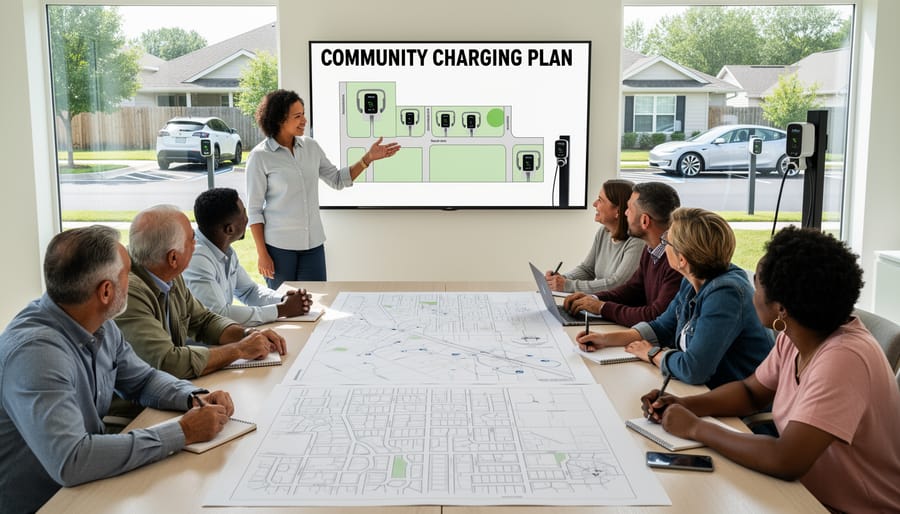
Getting your neighbours excited about e-mobility charging starts with open conversation and shared vision. Begin by identifying key stakeholders in your community—apartment building residents, local business owners, council representatives, and environmental groups who’ll champion the cause.
Host an informal community gathering, perhaps a weekend barbecue or coffee catch-up, to discuss the benefits. Share success stories from suburbs across Australia where residents have banded together to install shared charging stations, reducing costs and carbon footprints simultaneously. People respond to real examples they can relate to.
Consider forming energy cooperatives or neighbourhood action groups focused on sustainable transport. These collective models distribute costs fairly while giving everyone a voice in decision-making. In Melbourne’s inner suburbs, resident groups have successfully negotiated bulk installation discounts and ongoing maintenance agreements.
Tap into local enthusiasm for sustainability by connecting charging infrastructure to broader environmental goals—perhaps pairing EV chargers with solar panels or exploring bioenergy options for grid backup. When neighbours see tangible benefits like reduced energy bills, increased property values, and cleaner local air quality, consensus builds naturally. Remember, community projects thrive on momentum, so celebrate small wins along the way.
Finding Funding Without Waiting for Grants
You don’t need to wait years for government grants to get started with EV charging infrastructure. Communities across Australia are discovering creative ways to fund their charging networks right now, tapping into resources closer to home than many realize.
Community investment models are gaining real traction. Local residents can pool modest contributions—sometimes as little as a few hundred dollars each—to install shared charging stations. The Byron Bay Community Energy Hub demonstrated this beautifully, with 150 locals collectively funding their first three charging points. Participants receive small returns when people charge their vehicles, creating a self-sustaining cycle.
Local business partnerships offer another practical pathway. Cafes, shopping centers, and community halls often welcome charging infrastructure that draws customers who’ll grab a coffee or do their shopping while their vehicle charges. These win-win arrangements can split installation costs while sharing ongoing revenue.
Cooperative ownership models let communities retain control while spreading financial responsibility. Members buy affordable shares in the charging infrastructure, making decisions collectively about locations and pricing. This approach builds genuine community ownership rather than dependency on external providers.
Australia offers various support mechanisms worth exploring, including community energy incentives and local government support programs. These can complement your community’s efforts without creating dependency. Some councils provide low-interest loans or co-funding arrangements specifically designed to kickstart grassroots renewable projects.
The key is starting small and building momentum. Your first charger funded through community effort often attracts additional support and resources naturally.
Choosing Technology That Actually Works
Selecting the right charging technology for your community project doesn’t require an engineering degree, but it does need careful consideration of what’ll actually serve your needs long-term. Think of it like choosing a reliable ute for your community rather than a flashy sports car that’ll spend half its life in the workshop.
Start with Level 2 AC chargers for most community applications. These workhorses deliver 7-22 kW, fully charging most electric vehicles in 2-6 hours, making them perfect for community centres, local businesses, or shared spaces where cars sit for a while. They’re affordable, easier to maintain than faster alternatives, and sufficient for daily charging needs. Save the rapid DC chargers for specific high-traffic locations where quick top-ups matter.
When connecting charging stations to bioenergy systems, prioritise equipment with smart charging capabilities. These systems automatically adjust charging speeds based on available renewable power, maximising your use of locally generated energy while preventing grid strain during peak times.
Reliability trumps fancy features every time. Look for charging units with proven track records, strong warranties, and importantly, local service support. A charging station that breaks down regularly creates frustration and undermines community confidence in the project.
Consider weather-resistant models suitable for Australian conditions, especially if installation is outdoors. Dust, heat, and occasional downpours shouldn’t phase your equipment. Check for compatibility with multiple vehicle types and future-proof standards to avoid obsolescence.
Finally, factor in realistic maintenance plans from day one. Successful community projects budget for regular servicing, software updates, and occasional repairs, ensuring their charging infrastructure remains dependable for years ahead.
The Ripple Effects Beyond Just Charging Cars
When communities embrace e-mobility charging infrastructure, they’re not simply installing a few charging stations – they’re planting seeds for transformation that extend far beyond the car park.
The economic ripple starts with job creation. Local electricians, project managers, and maintenance workers find new opportunities as charging networks expand. In regional Queensland, one community-led initiative created twelve ongoing positions, with workers gaining specialised skills in renewable energy systems. These aren’t just jobs; they’re pathways to future-proof careers in the clean energy sector.
Energy resilience becomes another significant benefit. Communities that pair charging infrastructure with local renewable sources – whether solar, wind, or bioenergy – gain greater control over their energy destiny. They’re less vulnerable to grid failures and price fluctuations. A farming community in Victoria discovered this firsthand when their bioenergy-powered charging network kept vehicles running during a major blackout, enabling essential services to continue.
The emissions reductions speak for themselves. Every electric vehicle charged by renewable energy represents tonnes of carbon dioxide kept out of our atmosphere. But the real beauty lies in how visible these stations are. They serve as daily reminders that clean transport is possible, practical, and already here.
Community cohesion strengthens in unexpected ways. Charging stations become informal gathering spots where neighbours connect while waiting. Local pride grows as communities demonstrate leadership in sustainability, often inspiring neighbouring towns to follow suit.
Perhaps most powerfully, these projects spark broader sustainability thinking. Community education programs frequently emerge alongside charging infrastructure, teaching residents about renewable energy, waste reduction, and sustainable living. One charging station becomes a catalyst for solar panel installations, community gardens, and waste-to-energy projects.
This is the multiplier effect in action – where investing in one piece of infrastructure creates waves of positive change that touch every aspect of community life, building the sustainable future we all want to see.
The journey toward sustainable transport doesn’t begin in Canberra or Melbourne’s corporate towers. It starts right where you are, in conversations between neighbours, at community meetings, and in local businesses willing to take that first step. Australia’s e-mobility future won’t be handed down from above. It will be built from the ground up, powered by communities that refuse to wait for permission to create change.
Every charging station installed through community initiative sends ripples far beyond its immediate reach. When a regional town successfully integrates bioenergy with EV infrastructure, it becomes a beacon for dozens of others facing similar challenges. When local councils partner with residents to map charging needs, they’re not just planning infrastructure – they’re building the foundation for a genuinely sustainable transport network that reflects community values rather than commercial convenience alone.
The evidence is clear: communities that take ownership of their e-mobility infrastructure create solutions that work better, last longer, and generate genuine local benefits. From reduced emissions to energy independence, from new employment opportunities to strengthened community bonds, the rewards extend well beyond simply charging vehicles.
So here’s your challenge: start the conversation. Gather interested neighbours, approach your local council, connect with environmental groups in your area. Share success stories from communities similar to yours. Australia’s charging infrastructure gaps represent opportunities waiting for passionate locals to fill them.
The sustainable transport future we need won’t arrive through patience alone. It requires action, collaboration, and the collective determination of communities across Australia willing to lead by example. The tools exist, the technology is proven, and the time is now. Your community’s e-mobility story is waiting to be written – and it begins with you taking that first step forward.