
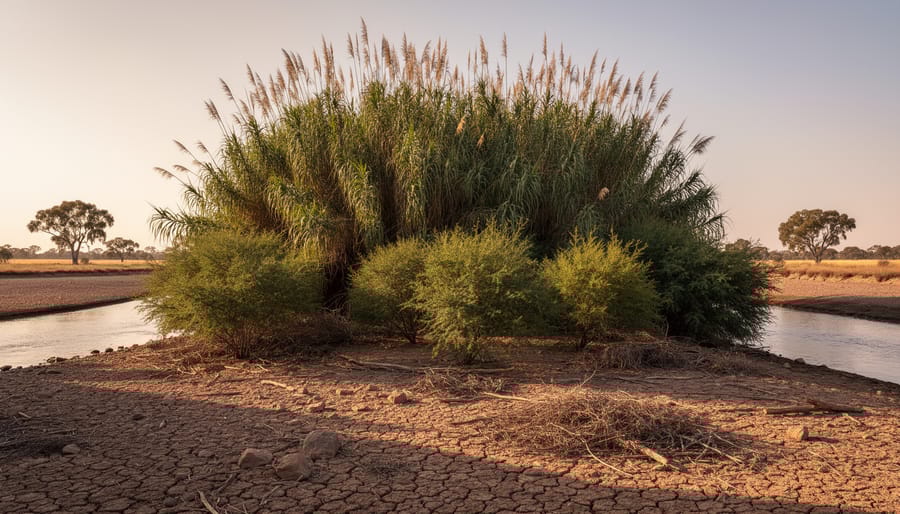
Australia’s renewable energy ambitions face an unexpected challenge: some of the most productive bioenergy crops can transform from climate solutions into ecological nightmares. Giant reed, prickly acacia, and athel pine promise impressive biomass yields and carbon sequestration potential, yet each species has already demonstrated devastating invasive capacity across Australian ecosystems, outcompeting native flora, depleting water resources, and fundamentally altering landscapes where they escape cultivation.
Recognize that selecting the wrong bioenergy species creates long-term environmental debts that can outweigh short-term energy gains. These three invasive crops share attractive characteristics—rapid growth, drought tolerance, and high biomass production—but their aggressive spread mechanisms pose serious threats to biodiversity, agricultural land, and water availability. Understanding their invasion patterns enables smarter decision-making when developing bioenergy projects that genuinely serve sustainability goals.
Balancing bioenergy with wildlife requires acknowledging uncomfortable truths about crop selection while maintaining optimism about alternatives. The good news? Australia has demonstrated success in containing some invasive species through coordinated management, and numerous native alternatives offer comparable bioenergy potential without ecological risks. By examining these three cautionary examples, we can chart a course toward renewable energy development that strengthens rather than compromises Australia’s unique environment, proving that economic growth and ecological stewardship aren’t mutually exclusive when we make informed choices from the outset.
Why Bioenergy Crops Can Become Environmental Villains
The very qualities that make certain plants brilliant for bioenergy production can transform them into environmental nightmares when they escape cultivation. It’s a classic case of “too much of a good thing” – and Australia knows this story all too well.
Think about what makes an ideal bioenergy crop: it needs to grow fast, produce abundant biomass, thrive in challenging conditions, and require minimal maintenance. Sounds perfect, right? But flip those characteristics around, and you’ve got the recipe for an invasive species that can wreak havoc on our unique landscapes.
These energy crops grow at remarkable rates, often producing several meters of growth in a single season. They’re tough as nails, adapting to everything from drought conditions to waterlogged soils. They produce thousands upon thousands of seeds that spread through wind, water, and wildlife. And here’s the kicker – when introduced to Australian ecosystems, they typically arrive without the natural predators, diseases, or competitors that kept them in check back home.
Australia’s track record with introduced species tells a cautionary tale. From cane toads to rabbits, prickly pear to blackberries, we’ve learned the hard way that what seems beneficial initially can spiral into an ecological crisis. These invaders cost our economy billions annually and create serious impact on native ecosystems.
The challenge we face is real but not insurmountable. Understanding which bioenergy crops pose the greatest risks allows us to make smarter choices. We can harness renewable energy without repeating historical mistakes. The key lies in selecting the right species, implementing proper containment measures, and staying vigilant about monitoring their spread. By learning from our past and applying that knowledge to our renewable energy future, we’re better equipped to protect the extraordinary biodiversity that makes Australia special while still advancing toward our clean energy goals.
Giant Reed (Arundo donax): The Fast-Growing Water Thief
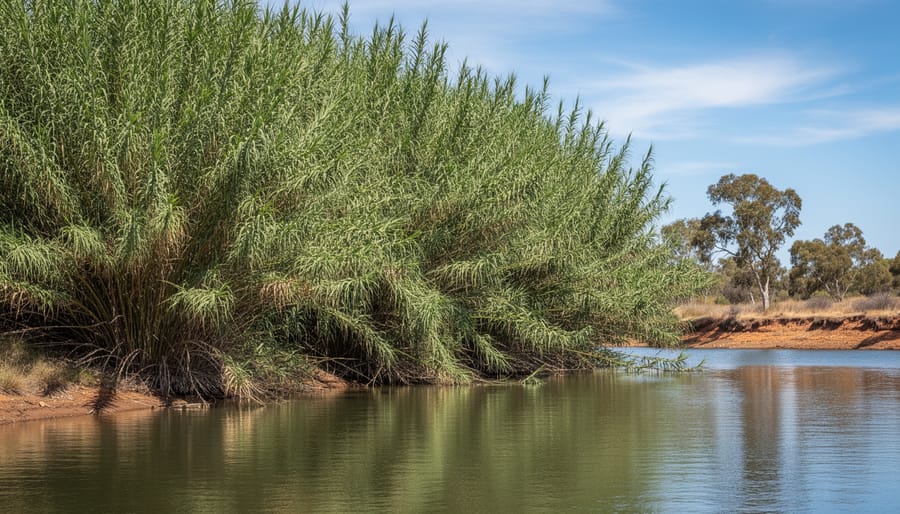
Why It’s So Attractive for Bioenergy
Giant Reed’s appeal for bioenergy production lies in its remarkable productivity. This fast-growing perennial grass can shoot up to 10 metres high in a single growing season, producing extraordinary biomass yields of 40 to 60 tonnes per hectare annually. That’s roughly three times more than traditional crops like sugarcane, making it incredibly efficient for energy production.
The plant’s energy content is equally impressive. Giant Reed contains high levels of cellulose and low moisture content when harvested, which translates to excellent combustion properties and substantial energy output. Each tonne can generate approximately 17 gigajoules of energy, making it a powerhouse in the renewable energy space.
What really captured attention across Europe and parts of Asia was Giant Reed’s ability to thrive with minimal inputs. It grows vigorously in poor soils, tolerates drought conditions once established, and requires little fertiliser or pest management. For bioenergy developers, this seemed like the perfect solution: a low-maintenance, high-yield crop that could transform marginal land into productive energy farms.
However, these very characteristics that make Giant Reed so attractive for bioenergy also make it environmentally problematic, particularly in Australian conditions where it can escape cultivation and wreak havoc on native ecosystems.
The Environmental Cost in Australian Landscapes
The environmental footprint of invasive bioenergy crops across Australian landscapes tells a story we cannot ignore, though it’s one with solutions within reach. When we examine the real-world impacts, the stakes become crystal clear.
Take willows, for instance. Along Victoria’s Goulburn River system, dense willow stands have fundamentally altered waterways that once supported thriving platypus populations. These thickets block sunlight, cooling water temperatures and reducing aquatic plant diversity by up to 80 percent in some stretches. The impact ripples through the ecosystem—native fish species struggle, bird habitats disappear, and water management in bioenergy becomes increasingly complex. In Queensland’s Condamine River catchment, willow removal projects have shown promising results, with native vegetation returning within just two growing seasons.
The story intensifies with giant reed invasions. Throughout New South Wales coastal regions, this aggressive spreader has colonized wetlands that serve as crucial breeding grounds for endangered green and golden bell frogs. The reed’s dense root systems also increase flood risk by reducing channel capacity—a serious concern for communities already grappling with climate-related weather events.
Perhaps most alarming is the fire risk dimension. Pampas grass infestations in South Australia’s Adelaide Hills create what fire ecologists call “fuel ladders,” connecting ground-level vegetation to tree canopies. During the devastating 2019-20 fire season, these connections intensified several blazes that threatened rural communities.
Yet here’s the encouraging part: communities across Australia are actively addressing these challenges. The Hawkesbury-Nepean catchment has demonstrated that coordinated removal efforts, coupled with native species restoration, can reverse damage within five to seven years. Success stories like these prove that with commitment and proper planning, we can pursue bioenergy goals while protecting the landscapes we cherish.
Prickly Acacia (Vachellia nilotica): The Outback Invader
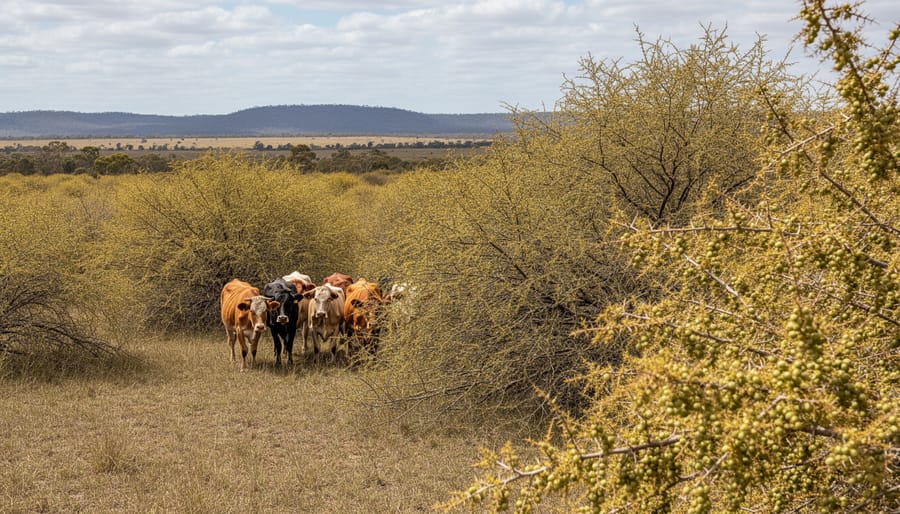
From Bioenergy Promise to Pastoral Nightmare
Giant rat’s tail grass seemed like a fair dinkum winner back in the early 2000s. Researchers were excited about its potential as a bioenergy feedstock – it grows rapidly, thrives in challenging conditions, and produces substantial biomass. On paper, it ticked all the boxes for sustainable fuel production in Australia’s variable climate.
However, what looked promising in controlled trials became a cautionary tale in the real world. This African native began its silent invasion across Queensland and northern New South Wales pastoral lands, spreading from initial plantings and accidental introductions. Today, it blankets over 3.5 million hectares of grazing country, with its territory expanding by roughly 150,000 hectares annually.
The grass produces massive seed heads – up to 100,000 seeds per plant – that cattle inadvertently spread through their digestive systems and on their coats. These seeds contaminate wool, reduce pasture quality, and create dense stands that choke out native vegetation. Graziers now face significant economic losses, with some properties becoming nearly unmanageable.
This transformation reminds us that bioenergy development must prioritize rigorous risk assessment alongside innovation. The good news? We’re learning valuable lessons that are shaping smarter, more responsible approaches to future renewable energy crops.
What It’s Doing to Queensland’s Ecosystems
Queensland’s unique ecosystems face mounting pressure from invasive bioenergy species, with impacts rippling through waterways, native habitats, and productive farmland. Understanding these challenges helps us chart a course toward truly sustainable energy solutions.
Giant reed has transformed sections of Queensland’s waterways, particularly along the Brisbane and Mary Rivers. This aggressive invader forms dense stands that crowd out native vegetation, reducing habitat for platypus, turtles, and native fish species. The Queensland Government’s Biosecurity Act now lists giant reed as a restricted matter, and community groups along the Sunshine Coast have achieved remarkable success through coordinated removal programs, clearing over 15 kilometres of riverbank in the past three years.
Prickly acacia presents a different challenge across Queensland’s rangelands, where it has invaded more than 7 million hectares. Graziers report that infested paddocks lose up to 80 percent of their productive capacity, as the thorny invader outcompetes native grasses that cattle depend on. However, there’s genuine hope in integrated management approaches. The Longreach Pastoral Company has demonstrated that combining strategic herbicide application with biological control agents can restore grazing lands while maintaining sustainable biomass harvest for local energy projects.
Water resources face particular strain from thirsty invaders like giant reed, which consumes significantly more water than native vegetation. Research from James Cook University shows that replacing just one hectare of giant reed with native species can save approximately 2.5 million litres of water annually – a crucial consideration during Queensland’s recurring droughts.
The encouraging news is that Queensland communities are proving that responsible bioenergy development and ecosystem protection can work hand in hand. By learning from these experiences and supporting locally-appropriate species, we’re building a bioenergy sector that genuinely serves both people and planet.
Rubber Vine (Cryptostegia grandiflora): The Silent Strangler
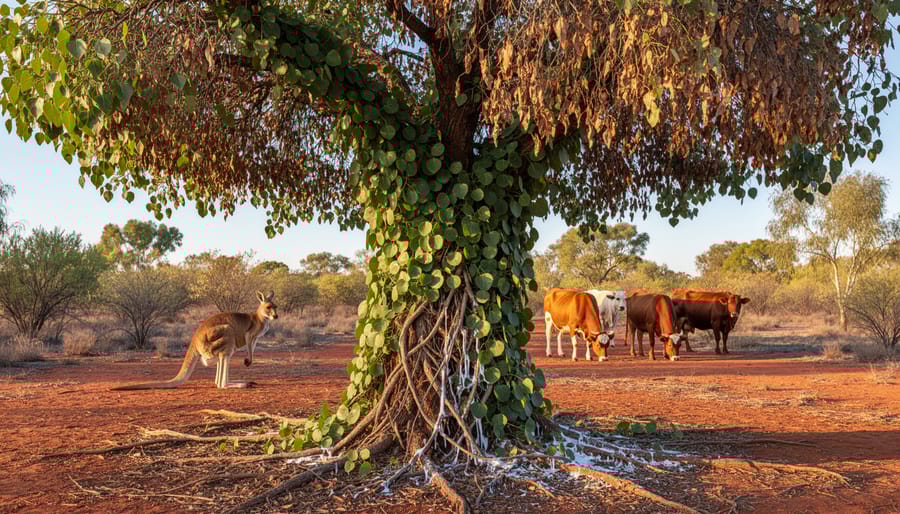
The Latex That Looked Like Liquid Gold
When Rubber Vine first caught the attention of agricultural researchers, it seemed like nature’s gift to industry. This vigorous climbing plant, native to Madagascar, produces latex in abundance – a milky white substance that flows from its stems like liquid treasure. In the early 20th century, during wartime rubber shortages, this characteristic sparked enormous interest in its commercial potential.
The plant’s appeal extended far beyond its latex. Rubber Vine grows with remarkable speed and resilience, thriving in harsh conditions where other crops struggle. This biomass productivity made it an attractive prospect for bioenergy production, particularly in tropical and subtropical regions. A single plant could produce substantial quantities of renewable material year after year, requiring minimal maintenance once established.
Early proponents envisioned Rubber Vine transforming marginal lands into productive bioenergy sites across northern Australia. The plant’s drought tolerance and rapid growth rate suggested it could generate reliable feedstock for emerging renewable energy industries without competing for prime agricultural land.
However, this seemingly golden opportunity came with hidden costs that wouldn’t become apparent until decades later, when Rubber Vine had already escaped cultivation and begun its relentless march across Queensland’s precious ecosystems.
Choking Out Native Australian Forests
Madeira vine, sometimes called mignonette vine, arrived in Australia as an ornamental garden plant, admired for its heart-shaped leaves and fragrant white flowers. Today, it’s become one of our most aggressive environmental weeds, particularly threatening the precious bushland corridors along Australia’s eastern seaboard from Queensland down through New South Wales and into Victoria.
This vigorous climber spreads through an ingenious survival strategy that makes it remarkably difficult to control. The vine produces aerial tubers—small potato-like growths along its stems—that drop to the ground and sprout new plants. These tubers can remain dormant in soil for years, waiting patiently for the right conditions to germinate. A single fragment left behind after removal can regenerate an entire infestation, making eradication efforts particularly challenging.
The ecological damage extends far beyond simple competition for space. Madeira vine forms dense blankets over forest canopies, blocking up to 95 percent of sunlight from reaching the understory. This light starvation causes native species impacts that cascade through entire ecosystems—ground-dwelling plants die, native insects lose food sources, and bird populations decline as their habitat disappears beneath the green curtain.
However, there’s genuine reason for optimism. Community groups across affected regions have pioneered innovative control methods combining careful hand-removal with targeted herbicide application. The Cumberland Land Conservancy in Sydney’s west has successfully reclaimed several hectares of bushland through persistent volunteer efforts, demonstrating that dedication and proper technique can turn the tide. Their success story shows that while Madeira vine presents serious challenges, coordinated action combining community engagement with sound ecological management can restore our native forests to health.
Balancing Bioenergy Goals with Biosecurity
Australia’s bioenergy future doesn’t require choosing between clean energy and environmental protection. With the right approach, we can have both. The key lies in implementing smart frameworks that prevent invasive species from taking root while still advancing our renewable energy goals.
Risk assessment forms the foundation of responsible bioenergy development. Before introducing any potential energy crop, thorough evaluation must examine the species’ reproductive behaviour, dispersal methods, and climate suitability across different Australian regions. This means looking beyond yield potential to understand how a plant might behave if it escapes cultivation. The Western Australian government has demonstrated this approach brilliantly by establishing strict pre-border assessments that have prevented several high-risk species from entering the state.
Containment strategies provide another critical layer of protection. These include physical barriers like buffer zones between plantations and natural areas, sterile hybrid varieties that can’t reproduce, and mandatory monitoring requirements for growers. In Queensland, several algae-based bioenergy facilities have successfully operated for years using closed-system cultivation that eliminates escape risk entirely.
Perhaps the most promising solution involves embracing native bioenergy alternatives. Species like mallee eucalyptus, native grasses, and spinifex offer excellent energy potential while posing zero invasion risk. These plants are already adapted to Australian conditions, require minimal water and fertiliser, and actually support local biodiversity. A mallee plantation in South Australia now produces substantial biomass while providing habitat for native birds and insects, proving that bioenergy can enhance rather than harm ecosystems.
Effective regulatory frameworks tie these elements together. The Australian Weeds Strategy provides a national approach, while state-level biosecurity acts enable rapid response when problems arise. Victoria’s strict permitting system for energy crops has successfully prevented invasions while supporting a growing bioenergy sector.
Real-time monitoring systems using satellite technology and community reporting networks ensure early detection of any escapes. Tasmania’s biosecurity app allows farmers and citizens to report suspicious plant growth instantly, enabling quick containment before species establish.
These practical solutions demonstrate that Australia can be a global leader in responsible bioenergy development, protecting our unique environment while building energy independence.
The good news? Australia doesn’t need to compromise its extraordinary ecosystems to embrace bioenergy’s potential. The experiences with Prickly Acacia, Giant Reed, and Buffel Grass serve as valuable teachers rather than reasons for despair. By learning from these past introductions, we’re now better equipped to make smarter choices that protect our unique biodiversity while advancing renewable energy goals.
The key lies in proper planning, ongoing management, and most importantly, looking right here at home. Australia is blessed with numerous native species that show genuine bioenergy promise without the invasive baggage. Eucalyptus species, for instance, grow rapidly, produce substantial biomass, and already belong in our landscapes. Native grasses like Spinifex are being researched for their fuel potential, perfectly adapted to Australian conditions without threatening to spread uncontrollably.
Success stories are emerging across the country where renewable energy meets environmental responsibility. Projects that prioritize native species or carefully contained non-natives demonstrate that we can have both clean energy and healthy ecosystems. With rigorous risk assessments, continuous monitoring, and swift action when needed, Australia is positioning itself as a global leader in responsible bioenergy development.
The path forward isn’t about abandoning bioenergy ambitions but about pursuing them wisely. By choosing the right species and committing to proper management, we’re building a sustainable energy future that our unique environment can genuinely support.