
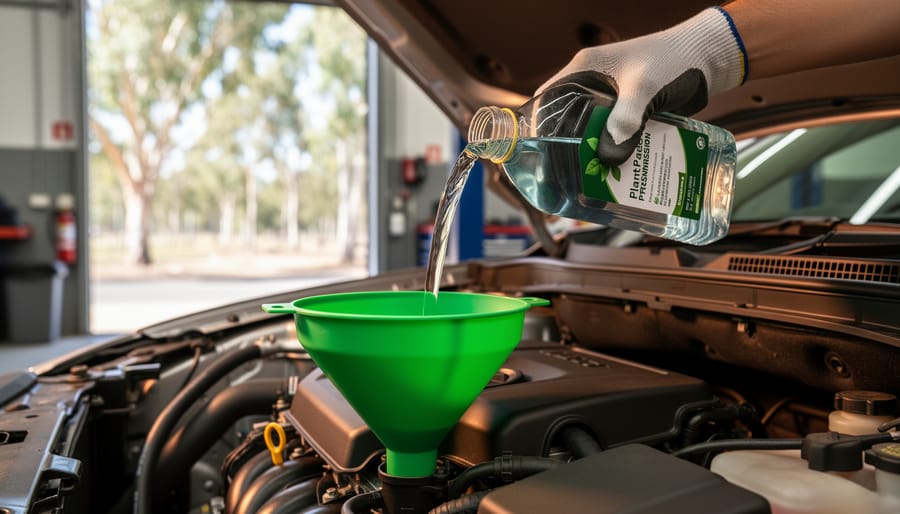
Your automatic transmission doesn’t have to come with a heavy environmental footprint. Bio-based automatic transmission fluids represent a remarkable shift in automotive care—plant-derived alternatives that match conventional petroleum fluids in performance while dramatically reducing carbon emissions and environmental harm.
These innovative fluids use renewable sources like canola, soybean, and other vegetable oils, engineered to meet the same rigorous standards as traditional ATF. Australian workshops are increasingly offering bio-based options that deliver identical gear protection, heat resistance, and smooth shifting, proving sustainability doesn’t mean compromise.
The transformation happening under your bonnet matters more than you might think. Conventional ATF contributes significantly to soil and waterway contamination when spilled or improperly disposed of, and its production relies entirely on finite petroleum reserves. Bio-based alternatives biodegrade up to 90% faster, significantly reduce toxic aquatic impacts, and come from crops that absorb carbon dioxide as they grow—creating a regenerative cycle rather than simply extracting resources.
For Australian motorists and fleet managers, the choice has become straightforward. Bio-based ATF costs comparably to premium conventional fluids, performs reliably across our diverse climate conditions from tropical Queensland to temperate Victoria, and aligns with growing corporate sustainability commitments. Major transmission manufacturers now approve bio-based formulations for warranty coverage, removing the final barrier to adoption.
The question isn’t whether bio-based transmission fluid works—it’s whether you’re ready to make your next service appointment count for something bigger than routine maintenance.
What Makes Bio-Based Transmission Fluid Different
From Field to Gearbox: The Bio-Based Journey
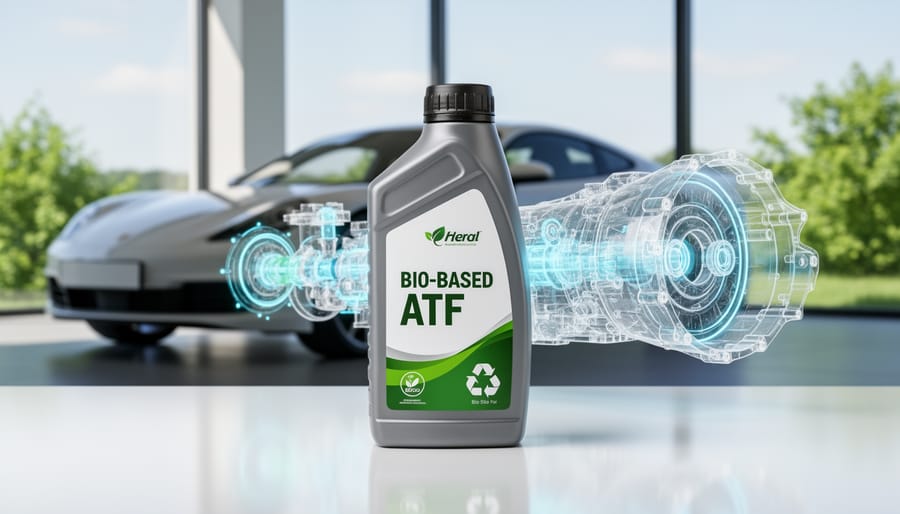
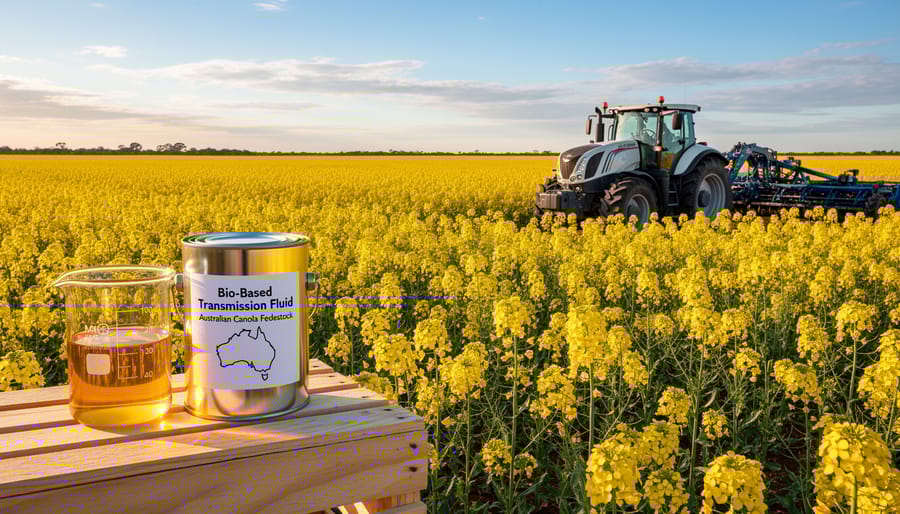
The journey from Australian paddock to your vehicle’s gearbox is remarkably innovative. Bio-based automatic transmission fluid begins with locally grown crops like canola, soybeans, and even agricultural waste materials that farmers across regional Australia are already producing. These bio-based renewable feedstocks are processed through advanced refinement techniques that extract high-performance base oils with exceptional lubricating properties.
What makes this process particularly exciting is its connection to Australia’s agricultural communities. Farmers who previously only supplied food crops now have additional revenue streams, strengthening regional economies while contributing to cleaner transport solutions. The production facilities often source materials from nearby farms, reducing transport emissions and keeping value within local communities.
The manufacturing process transforms plant oils through careful chemical modification, creating fluids that meet or exceed conventional petroleum standards. This isn’t about compromising performance for sustainability – it’s about achieving both. The circular economy benefits extend beyond production, too. When these fluids eventually need changing, they’re far more biodegradable than conventional options, reducing environmental impact if accidental spills occur.
For Australian motorists, this means every transmission service using bio-based fluid directly supports local farmers, reduces carbon emissions, and demonstrates practical climate action. It’s sustainability you can literally drive, connecting everyday vehicle maintenance to broader environmental goals while keeping your transmission running smoothly for years to come.
Why Your Transmission Actually Needs This Change
Real Performance in Australian Conditions
Australia’s extreme climate puts transmission fluids to the ultimate test, and bio-based ATF is proving it can handle the challenge. From the scorching 45-degree heat of the Pilbara to the humid coastal conditions of Far North Queensland, early adopters are reporting impressive results.
Take the experience of regional transport operator Collins Fleet Services in Dubbo, which converted 30 delivery vehicles to bio-based ATF during routine automatic transmission repair and servicing. Fleet manager Sarah Mitchell says the results exceeded expectations. “We were naturally cautious about switching, but after 18 months and over 400,000 combined kilometres, our transmission performance has been outstanding. Even during last summer’s heatwave, we had zero heat-related transmission issues.”
Mining operations in Western Australia present particularly harsh conditions. BioTech Resources, a mid-sized contractor, transitioned their light vehicle fleet to bio-based fluids two years ago. Maintenance supervisor James Chen reports that performance matches conventional fluids across the board. “Temperature stability is excellent, and we’re actually seeing smoother gear changes in our older utes,” he notes.
Coastal operators appreciate the fluid’s resistance to moisture contamination. Brisbane-based courier company EcoDelivery found bio-based ATF performed reliably through humid summers and coastal salt exposure. The key, according to industry specialists, is following manufacturer service intervals and ensuring compatibility with your specific transmission system. Real-world Australian testing confirms that bio-based alternatives deliver dependable performance while significantly reducing environmental impact.
The Environmental Win That Keeps on Giving
Beyond Carbon: The Biodegradability Advantage
While reducing carbon emissions matters enormously, bio-based automatic transmission fluids offer another crucial environmental advantage: they’re inherently biodegradable. When conventional petroleum-based ATF leaks from a vehicle or spills during servicing, it can contaminate soil and waterways for years, creating toxic hotspots that harm ecosystems. Bio-based fluids, by contrast, break down naturally through microbial action.
Consider a real scenario from a Queensland fleet operator who switched to bio-based ATF across their delivery vehicles. When a minor transmission leak occurred in their depot, standard environmental testing showed the spilled fluid had degraded by over 70 percent within just four weeks, compared to petroleum fluids that would persist for months or even years. This meant less soil remediation, lower cleanup costs, and dramatically reduced environmental impact.
For Australian workshops near sensitive areas like the Great Barrier Reef catchment or coastal waterways, this biodegradability provides genuine peace of mind. Accidental spills during servicing become manageable incidents rather than environmental disasters. The fluid’s plant-based origins mean it returns to nature rather than accumulating as persistent pollution, protecting the landscapes and wildlife we cherish while maintaining the performance your vehicle demands.
Making the Switch: What Your Next Service Looks Like
Finding Bio-Based Options in Australia
While bio-based transmission fluids remain a developing market segment in Australia, accessibility is gradually improving as environmental awareness grows. Currently, specialist lubricant suppliers like Penrite and Castrol are beginning to explore plant-based formulations, though dedicated bio-based automatic transmission fluids aren’t yet widely stocked at every service centre.
Your best starting point is contacting progressive automotive workshops that emphasize environmental practices. Some independent mechanics in metro areas, particularly around Melbourne and Sydney, have begun sourcing bio-based alternatives upon request. It’s worth ringing ahead to discuss options before booking your service.
Major agricultural machinery suppliers often stock bio-based hydraulic fluids that share similar chemistry with ATF, and they can point you toward compatible products or emerging suppliers. Online retailers specializing in eco-friendly automotive products are also expanding their ranges, making direct purchase increasingly feasible.
The situation mirrors Australia’s early adoption of biodiesel—initially limited but growing steadily through consumer demand. As one Melbourne workshop owner recently shared, customer inquiries about sustainable fluids have tripled over two years, prompting him to establish supplier relationships for bio-based options.
While selection remains limited compared to conventional fluids, persistence pays off. The growing interest signals that bio-based transmission fluids will become more mainstream across Australian service centres in coming years.
Cost Reality Check
Let’s be upfront: bio-based automatic transmission fluid typically costs 15-30% more than conventional petroleum-based options at the service counter. For a standard transmission service, that might translate to an additional $30-$50, which understandably gives some drivers pause.
However, forward-thinking fleet operators across Australia are discovering the numbers tell a different story over time. Brisbane-based logistics company GreenFleet reported that despite higher upfront costs, their bio-based ATF delivered extended drain intervals and reduced wear on transmission components, offsetting the initial premium. Their maintenance manager noted they’re actually saving money while meeting sustainability targets—a win-win that’s hard to ignore.
The real value proposition emerges when you factor in superior thermal stability and reduced oxidation rates, which can extend transmission life by thousands of kilometres. Some manufacturers offer warranties that recognise these benefits, providing additional peace of mind.
For individual vehicle owners, the decision often comes down to values alignment. You’re investing in cleaner waterways, reduced carbon emissions, and supporting Australian renewable industries. Many drivers find that paying slightly more during their regular service feels like a practical, meaningful step toward environmental responsibility—without sacrificing the performance their vehicle demands. The premium isn’t just for fluid; it’s for progress.
Success Stories: Aussie Fleets Leading the Way
Several forward-thinking Australian fleet operators are already reaping the rewards of switching to bio-based transmission fluids, proving that sustainability and performance can go hand in hand.
Brisbane-based logistics company GreenHaul Transport made the transition across their entire fleet of 47 delivery vehicles in 2022. Within twelve months, they documented a 15% reduction in transmission-related maintenance costs and extended their service intervals by nearly 20%. “We were initially cautious, but the results speak for themselves,” says fleet manager David Chen. “Our transmissions are running smoother, we’re spending less on servicing, and we’ve significantly reduced our environmental footprint.”
Meanwhile, the New South Wales Rural Fire Service has been trialling bio-based ATF in their emergency response vehicles since 2021. The biodegradable properties proved particularly valuable for bushfire-prone regions where fluid leaks could contaminate sensitive ecosystems. Their trial demonstrated that bio-based fluids maintained optimal performance even under extreme conditions, with no compromise to vehicle reliability during critical operations.
Melbourne’s Metro Transport Authority has committed to transitioning 200 buses to bio-based transmission fluids by 2025. Early results from their pilot program show comparable performance to conventional fluids while reducing petroleum dependence by thousands of litres annually.
These pioneering organizations demonstrate that bio-based ATF isn’t just an environmental talking point; it’s a practical, proven solution delivering measurable benefits for Australian fleets of all sizes.
The beauty of bio-based automatic transmission fluid is that it’s not a futuristic promise—it’s a practical solution available right now. While Australia continues building renewable energy infrastructure and transitioning toward cleaner systems, you don’t need to wait on the sidelines. Every service appointment presents an opportunity to make a tangible difference, and choosing bio-based ATF is one of those straightforward decisions that adds up across thousands of vehicles.
This isn’t about perfection; it’s about progress. When you ask your mechanic about bio-based options at your next transmission service, you’re doing more than maintaining your vehicle—you’re casting a vote for the kind of future you want to see. You’re supporting Australian innovators who’ve developed these sustainable alternatives, reducing reliance on petroleum imports, and demonstrating market demand that encourages wider adoption.
The shift toward Australia’s sustainable future happens through countless individual choices, and this is one of the easiest you’ll make. So next time you’re booking that service, simply ask: “Do you stock bio-based transmission fluid?” That simple question starts conversations, creates awareness, and drives real change—one service bay at a time.