
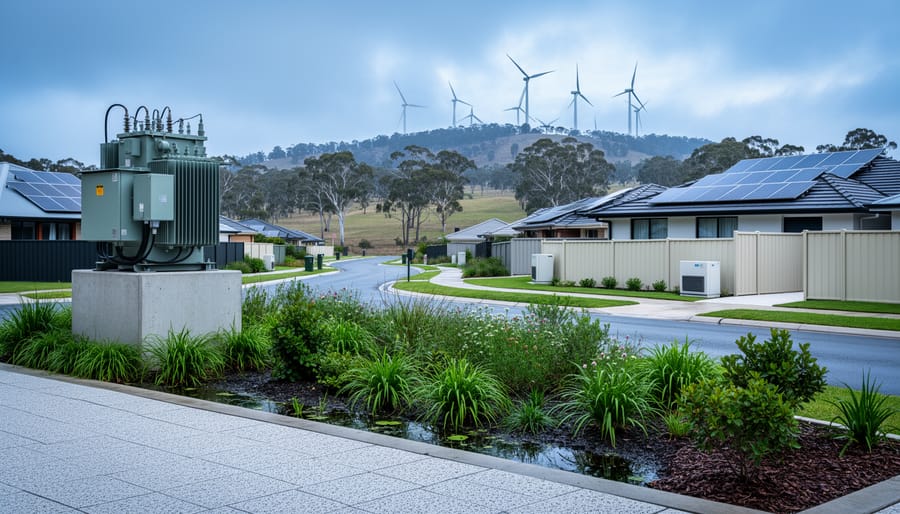
Australia’s summer of 2019-20 burned through 18.6 million hectares, destroyed thousands of homes, and exposed a harsh reality: our infrastructure wasn’t built for the climate we’re living in now, let alone the one we’re heading toward. Climate resilience infrastructure represents the essential shift from simply reacting to disasters to designing systems that anticipate, withstand, and rapidly recover from extreme weather events.
Think of it as future-proofing the backbone of our communities. Rather than rebuilding the same vulnerable roads, power grids, and water systems after each flood or bushfire, climate resilience infrastructure integrates adaptive design from the ground up. This means elevated substations in flood-prone areas, fire-resistant building materials in bushfire zones, and distributed energy systems that keep power flowing when centralized grids fail.
For Australians, this transformation isn’t hypothetical. Cities like Melbourne are installing permeable pavements that reduce flooding while recharging groundwater. Remote communities are deploying microgrids powered by renewable sources, ensuring energy access during cyclones that would otherwise leave them isolated for weeks. These aren’t luxury upgrades but essential adaptations to protect lives, livelihoods, and the estimated $200 billion in infrastructure assets at risk from climate change by 2050.
The encouraging news? Australia possesses both the innovation capacity and natural resources to lead this transition. By embedding resilience into every infrastructure decision today, we’re not just defending against tomorrow’s challenges but creating opportunities for sustainable growth and genuine energy security across the continent.
What Climate Resilience Infrastructure Actually Means for Australia
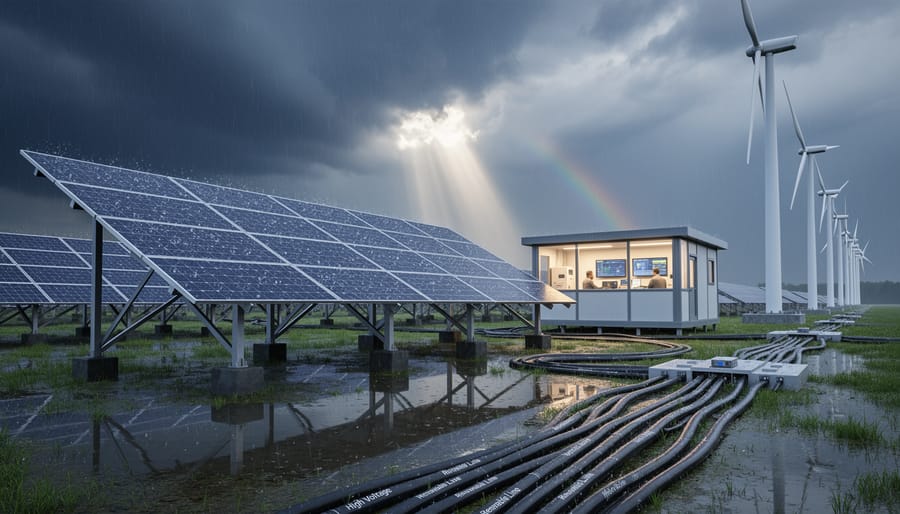
The Three Pillars of Resilient Infrastructure
Building climate-resilient infrastructure isn’t about creating one-size-fits-all solutions. Instead, think of it as constructing a sturdy three-legged stool, where each leg plays a vital role in keeping communities stable through increasingly unpredictable weather patterns.
The first pillar, resistance, focuses on infrastructure that can cop a beating and bounce back. Picture the reinforced flood barriers in Brisbane that withstood the 2022 floods, or cyclone-rated buildings in Far North Queensland designed to endure Category 5 winds. Resistance means engineering structures tough enough to weather the storm, literally. It’s about using robust materials, strategic placement, and smart design that considers Australia’s unique climate challenges—from scorching heatwaves to devastating bushfires.
Adaptation, the second pillar, acknowledges that flexibility beats rigidity when conditions keep shifting. This means creating infrastructure with built-in wiggle room. Melbourne’s water-sensitive urban design demonstrates this beautifully, with rain gardens and permeable pavements that adapt to both drought and deluge. Adaptive systems can adjust operations, modify functions, or scale up and down based on immediate needs, much like how circular economy principles enable resources to flow differently depending on demand.
The third pillar, transformation, takes resilience beyond defense mode. Instead of merely protecting against climate impacts, transformational infrastructure actively reduces them. Renewable energy systems exemplify this approach—solar farms and bioenergy facilities don’t just resist climate change; they help solve it. By replacing fossil fuel infrastructure with clean alternatives, we’re not just building defenses; we’re addressing the root cause. When these three pillars work together, they create infrastructure that’s genuinely prepared for Australia’s climate future.
Why Traditional Infrastructure Can’t Handle Tomorrow’s Climate
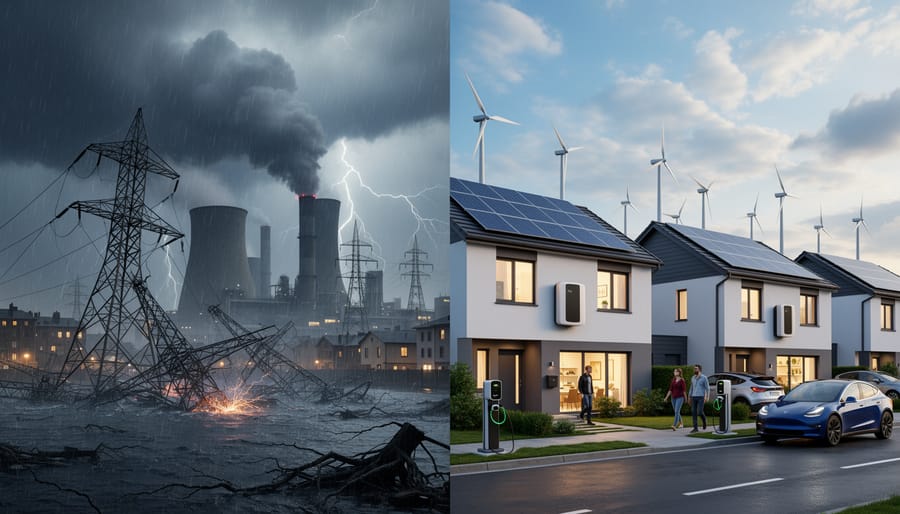
The Real Cost of Doing Nothing
Recent years have painted a sobering picture of what inaction costs Australia. The 2022 floods that devastated communities across Queensland and New South Wales caused over $5 billion in damages, disrupting thousands of lives and shutting down essential services for weeks. Meanwhile, the 2019-20 bushfire season destroyed more than 3,000 homes and cost the economy an estimated $100 billion when accounting for health impacts, lost productivity, and environmental damage.
These weren’t just numbers on a balance sheet. They represented families unable to return home, businesses forced to close permanently, and communities left to rebuild from scratch. The Lismore floods showcased how outdated drainage systems and flood management infrastructure simply couldn’t cope with extreme weather events, leaving entire neighbourhoods underwater.
The pattern repeats itself: crisis strikes, emergency response kicks in, rebuild begins, and then we wait for the next disaster. This reactive approach costs us more in every measurable way. Beyond the immediate economic toll, there’s the hidden price of lost opportunities, decreased investor confidence, and the mental health burden on affected communities.
The good news? We’re learning that every dollar invested in climate resilience infrastructure saves approximately six dollars in future disaster costs. Communities that have proactively upgraded their infrastructure, diversified their energy systems, and built adaptive capacity aren’t just surviving climate challenges—they’re thriving despite them. The question isn’t whether we can afford to invest in resilience, but whether we can afford not to.
Bioenergy’s Role in Building Climate-Ready Infrastructure
Decentralized Energy Systems That Keep Running
When cyclones knock out power lines or bushfires threaten transmission infrastructure, communities with decentralized energy systems keep their lights on while their neighbours wait in the dark. Bioenergy solutions offer a powerful answer to this vulnerability by generating electricity right where it’s needed, using locally sourced organic materials.
Unlike centralized power grids that rely on long-distance transmission lines vulnerable to extreme weather, bioenergy facilities create independent microgrids that can operate autonomously. When severe weather strikes, these localized systems continue converting agricultural waste, forestry residues, or organic municipal waste into reliable electricity and heat, providing a crucial safety net for essential services like hospitals, emergency centres, and water treatment plants.
The town of Cowra in New South Wales demonstrates this resilience in action. Their bioenergy facility processes regional agricultural waste to generate power for local businesses and homes. During the 2020 bushfire season, when surrounding areas experienced significant grid disruptions, Cowra’s bioenergy system maintained stable power supply, proving its worth as climate insurance. The facility doesn’t just provide energy security; it creates local jobs, reduces waste going to landfill, and cuts transport emissions by using materials sourced within the region.
This distributed approach to energy generation makes particularly good sense across regional Australia, where communities often sit at the end of lengthy transmission networks. By transforming what was once considered waste into valuable energy resources, these systems strengthen community resilience while contributing to emissions reduction targets. They represent practical, proven infrastructure that keeps communities functioning when centralized systems fail, turning vulnerability into self-reliance.
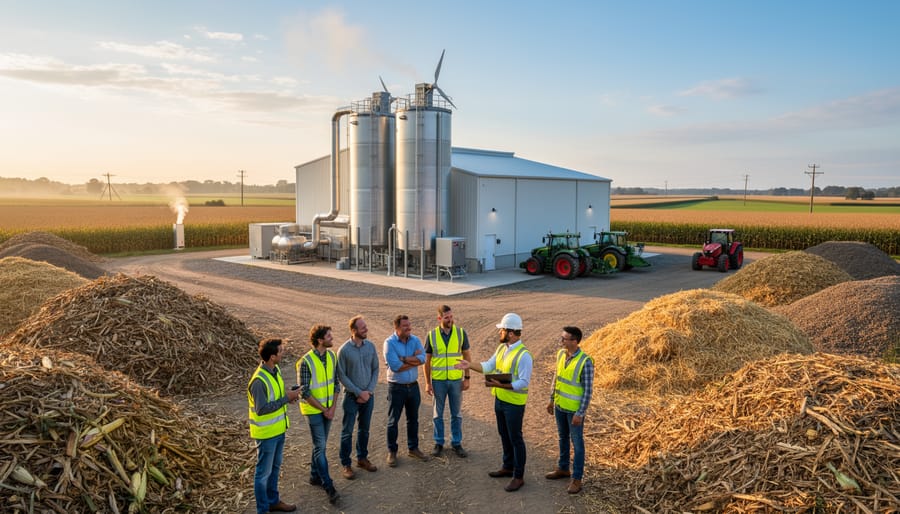
Turning Agricultural Waste Into Climate Solutions
Australian farmers are discovering a powerful truth: yesterday’s agricultural waste is today’s climate solution. From sugar cane bagasse in Queensland to wheat stubble across the grain belt, agricultural residues that once went up in smoke or decomposed in paddocks are now being transformed into reliable renewable energy, creating a win-win for both farm operations and climate resilience.
This transformation addresses two critical challenges simultaneously. Rural communities reduce waste management costs while generating clean energy that powers local infrastructure, making regions less dependent on centralised power grids vulnerable to extreme weather events. When cyclones knock out transmission lines or bushfires threaten electricity supply, farms with biomass energy systems maintain essential operations, from irrigation pumps to cold storage facilities.
The practical benefits extend beyond emergency preparedness. Converting agricultural residues into bioenergy creates additional income streams for farmers, strengthening the economic resilience of rural communities. A dairy farm in Gippsland, for instance, now processes manure through anaerobic digestion, producing enough electricity to run the entire operation while selling excess power back to the grid. Meanwhile, cotton growers in the Darling Downs are exploring how gin trash can fuel local energy networks.
These innovations align perfectly with sustainable agriculture practices, proving that climate resilience infrastructure doesn’t require abandoning traditional industries. Instead, it means reimagining existing resources through a climate-smart lens, turning environmental challenges into opportunities that strengthen communities from the ground up.
Five Australian Projects Proving Resilience Works
Across Australia, innovative projects are demonstrating that climate resilience isn’t just a concept on paper—it’s happening right now, delivering real results for communities and ecosystems. These five standout examples show how smart infrastructure design can tackle our toughest climate challenges while creating lasting benefits.
The Western Sydney Parkland City project represents a bold reimagining of urban development. This ambitious initiative integrates green corridors, water-sensitive urban design, and renewable energy integration across 10,000 hectares. The project captures stormwater runoff that would typically overwhelm drainage systems, redirecting it through constructed wetlands that filter pollutants and provide habitat for native species. Solar installations throughout the precinct power public facilities while reducing pressure on the grid during heatwaves. The key lesson? Planning resilience from the ground up costs less than retrofitting later.
Up north, the Townsville Ocean Terminal demonstrates how coastal infrastructure can withstand extreme weather. Following devastating flooding in 2019, designers elevated critical systems, installed wave-dampening structures, and incorporated permeable surfaces that reduce flooding risk. The terminal now operates through weather events that would have previously forced closures, protecting jobs and maintaining vital supply chains. This project proves that resilience investments pay for themselves through avoided disruptions.
In South Australia, the Roseworthy Agricultural Campus showcases resilient farming practices. Researchers have developed drought-resistant crop varieties while testing precision irrigation systems that reduce water use by 40 percent. On-site biogas generators convert agricultural waste into electricity, creating a closed-loop system that strengthens food security while slashing emissions. Farmers visiting the campus leave with practical strategies they can implement immediately.
Melbourne’s Fishermans Bend precinct takes a holistic approach to climate adaptation. The redevelopment incorporates climate-responsive building design, district-scale renewable energy systems, and blue-green infrastructure that cools urban spaces naturally. Residents enjoy lower energy bills while the broader community benefits from reduced urban heat island effects. The project demonstrates that resilience and liveability go hand in hand.
Finally, the Pilbara Renewable Hydrogen Project illustrates how remote regions can lead the transition. This initiative combines solar and wind power to produce green hydrogen, creating resilient energy systems independent of vulnerable long-distance transmission lines. The project supports mining operations while building capacity for future export industries, showing how resilience thinking creates economic opportunities.
These projects share common threads: they plan for uncertainty, integrate multiple benefits, and engage communities throughout development. They prove that climate resilience infrastructure isn’t about defensive measures alone—it’s about building better, smarter, and creating communities that thrive regardless of what climate challenges emerge.
Building Resilience Into Your Community or Business
Start Small, Think Big: Entry-Level Resilience Investments
Building climate resilience doesn’t require a massive upfront investment. Many Australian households and communities are discovering that starting small creates momentum for bigger changes down the track.
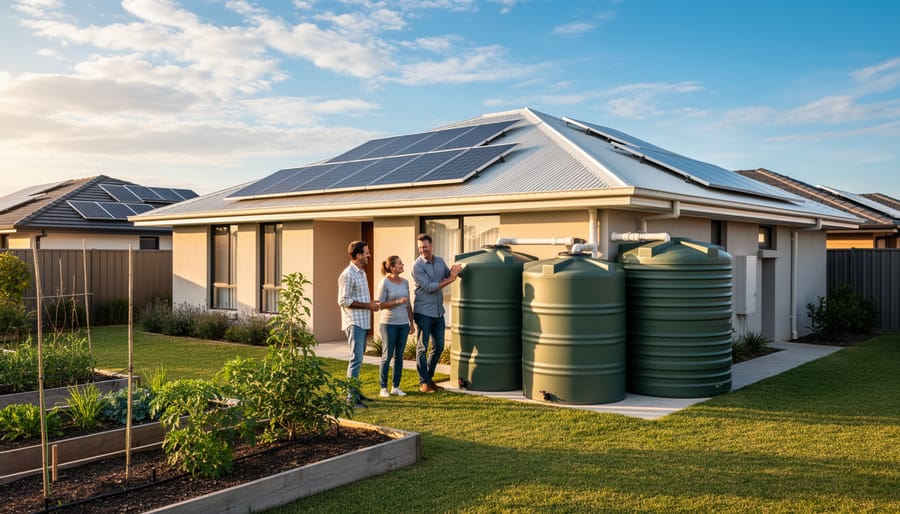
Installing rooftop solar panels remains one of the most accessible entry points. With energy prices continuing to rise, a modest solar system can reduce bills while cutting emissions. Government rebates across most states make this investment even more attractive, often paying for itself within five to seven years.
Water harvesting systems represent another practical step. A simple rainwater tank connected to your garden irrigation or toilet flushing can significantly reduce mains water dependence. During droughts, this proves invaluable, and it’s surprisingly affordable to set up.
Community gardens and local food production build neighbourhood resilience while reducing food miles. Many councils now support these initiatives, recognizing their role in both climate adaptation and social connection.
Supporting local bioenergy projects makes a genuine difference too. Whether it’s purchasing green power from providers using agricultural waste or advocating for organic waste collection programs in your area, these actions signal market demand for sustainable solutions.
Battery storage systems, while still pricey, are becoming more accessible. Even a small battery can provide backup power during extreme weather events and maximize your solar investment.
The beauty of these entry-level investments is their compound effect. Each action reduces your vulnerability to climate impacts while demonstrating that resilience isn’t just for governments or corporations—it’s something every Australian can build, one practical step at a time. Start where you are, with what you have, and watch your contribution grow.
What Policy Support Looks Like
Australia’s commitment to climate resilience has gained impressive momentum, with government support creating real opportunities for communities and businesses ready to build a more sustainable future. The Australian Renewable Energy Agency (ARENA) leads the charge, providing grants and funding for innovative projects that strengthen our infrastructure against climate impacts while advancing clean energy solutions. Their programs specifically target renewable energy integration, helping communities transition to systems that can weather extreme conditions while reducing emissions.
The Clean Energy Finance Corporation (CEFC) offers another powerful avenue for support, facilitating financing for projects that combine climate adaptation with renewable energy outcomes. From grid-scale batteries that ensure power during disasters to bioenergy facilities that turn agricultural waste into reliable energy, these programs recognise that resilience and sustainability go hand in hand.
State governments have joined the effort too. Victoria’s Renewable Energy Zones initiative and Queensland’s Renewable Energy and Hydrogen Jobs Fund demonstrate how sustainable investments can create climate-proof infrastructure while generating local employment.
The Emergency Response Fund supports communities in building infrastructure that withstands floods, bushfires, and cyclones, with increasing emphasis on incorporating renewable energy systems that maintain operation during grid failures. These programs aren’t just about surviving climate challenges—they’re about thriving through them, creating opportunities for innovation while protecting what matters most. The message from government is clear: Australia is backing those ready to build resilient, renewable-powered communities.
Climate resilience infrastructure represents more than just a defensive strategy against environmental challenges—it’s a genuine opportunity to reimagine how we build and sustain our communities. Across Australia, from coastal towns fortifying against rising seas to inland regions managing extended droughts, we’re witnessing a transformation in how we think about infrastructure. Rather than simply reacting to climate impacts, we’re proactively creating systems that turn challenges into catalysts for innovation.
Bioenergy stands at the heart of this transformation, demonstrating that renewable solutions can simultaneously address waste management, energy security, and emissions reduction. The success stories from Queensland to Victoria prove that when communities embrace these integrated approaches, they don’t just survive—they thrive. These projects create local jobs, strengthen regional economies, and build the kind of energy independence that truly protects against future uncertainties.
The path forward is clear and achievable. Whether you’re a council member exploring options for your community, a business owner seeking sustainable operations, or simply an Australian concerned about our shared future, now is the time to engage with these solutions. Climate resilience infrastructure isn’t some distant concept—it’s being built right now, in towns and cities across our continent.
Take the next step. Investigate how bioenergy and other renewable technologies can strengthen your community. Connect with local projects, support forward-thinking policies, and be part of Australia’s resilient future. Together, we’re not just preparing for tomorrow—we’re actively creating it.