
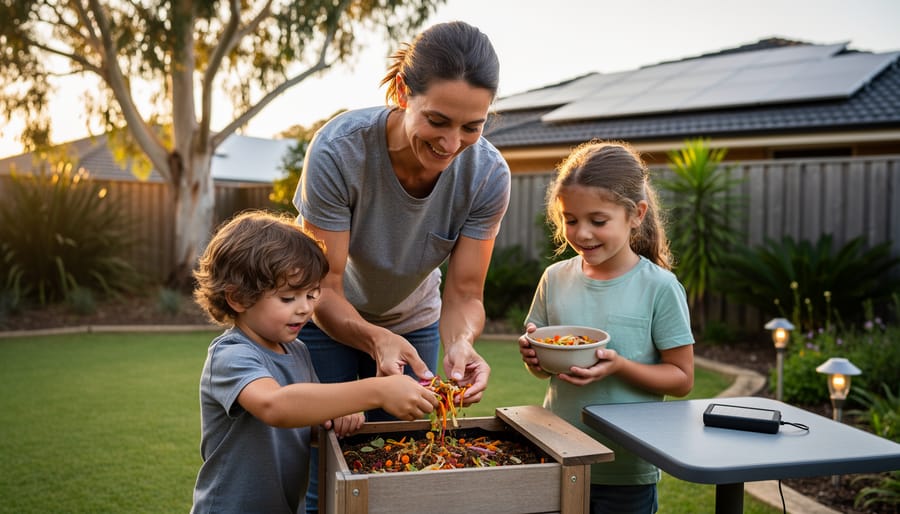
Transform mealtime into an environmental classroom by explaining where food comes from while composing your kitchen scraps into a simple worm farm or compost bin, showing children how organic waste becomes nutrient-rich soil rather than landfill material. This single daily habit teaches cycles, responsibility, and renewable thinking without requiring extra time.
Replace abstract conversations about climate change with hands-on energy exploration. Install a small solar phone charger or garden light, letting kids track how sunshine powers their devices throughout the week. When they see direct cause and effect—sun creates electricity creates light—renewable energy shifts from concept to reality they can touch and understand.
Create a family “energy detective” routine where everyone spends ten minutes weekly identifying phantom power drains, unnecessary lights, or running taps. Give children clipboards and let them audit rooms, then implement their discoveries together. This builds observation skills while demonstrating that environmental action starts with awareness, not perfection.
The gap between caring about sustainability and actually teaching it often feels overwhelming for Australian families. You want to raise environmentally conscious kids, but between work, school runs, and daily chaos, adding “climate education” to your mental load seems impossible. Yet the most powerful environmental lessons don’t require curriculum guides or extra hours—they emerge naturally when you weave renewable thinking into routines you’re already doing. Your kitchen, backyard, and energy bills become textbooks. Your family’s daily choices become the lesson plan. And the transformation happens not through lectures, but through consistent, practical experiences that show children their actions genuinely matter.
Why Your Family Is the Perfect Starting Point for Sustainability Education
The Ripple Effect: When Kids Become Sustainability Champions
When children grasp sustainability concepts at home, something remarkable happens – they become passionate advocates who spread their knowledge far beyond the family kitchen table. Australian parents consistently report that their kids transform into enthusiastic environmental champions, challenging wasteful practices at school canteens, questioning why neighbours don’t compost, and proudly sharing their family’s renewable energy choices with anyone who’ll listen.
This ripple effect proves particularly powerful in school settings. Children who’ve participated in engaging family learning activities often initiate sustainability programs at their schools, from establishing worm farms to advocating for solar panels. Teachers note these students ask thoughtful questions about energy sources and waste management, elevating classroom discussions and inspiring peers to adopt eco-friendly habits.
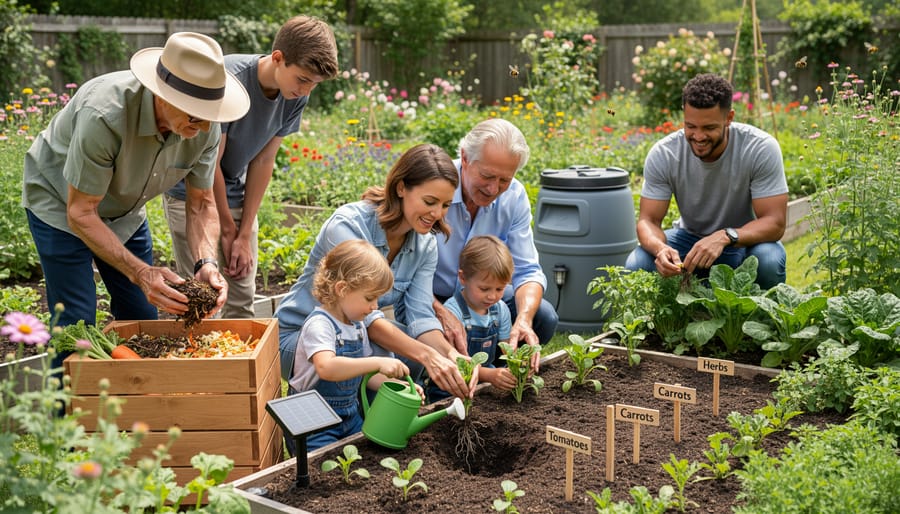
Extended family networks feel the impact too. Grandparents find themselves learning about biomass energy from enthusiastic grandchildren, while family gatherings become opportunities for young advocates to explain composting systems or demonstrate proper recycling techniques. This intergenerational exchange creates lasting change, as older family members often adopt practices they might have dismissed if suggested by adults.
The phenomenon extends into friendship circles, where sustainability-minded kids influence birthday party choices, encourage reusable lunch containers, and normalise conversations about renewable energy. What begins as one family’s commitment to environmental education multiplies exponentially, creating community-wide shifts in awareness and behaviour that benefit everyone.
Building Lifelong Habits Through Everyday Moments
The beautiful thing about family education around sustainability is that it doesn’t require grand gestures or perfect execution. When your kids help sort the recycling week after week, when they automatically switch off lights as they leave a room, when they question whether packaging is truly necessary at the shops, you’re witnessing lifelong habits taking root in real time.
Australian families who’ve embraced consistent environmental practices find these behaviors become second nature across generations. A Melbourne father shared how his teenage daughter now challenges wasteful practices at her school, drawing directly from the composting and energy-saving routines she grew up with at home. These aren’t forced lessons from textbooks but lived experiences that shape how young people understand their relationship with resources.
The magic happens in the repetition. When children participate regularly in checking your home’s energy use, discussing where your electricity comes from, or choosing products with less waste, they’re building neural pathways that link daily choices with environmental impact. Research shows that habits formed during childhood are remarkably persistent, often lasting well into adulthood and influencing the next generation.
What makes family-based environmental education so powerful is its practical nature. Kids aren’t just learning concepts; they’re developing the muscle memory of sustainable living. They’re experiencing firsthand that renewable energy solutions, waste reduction, and thoughtful consumption aren’t sacrifices but simply how responsible households operate. This experiential learning creates adults who instinctively consider environmental impact in their decisions, from choosing their first home to raising their own children.
Practical Ways to Bring Sustainability Into Your Home Education
Understanding Energy in Your Home: From Bills to Bioenergy
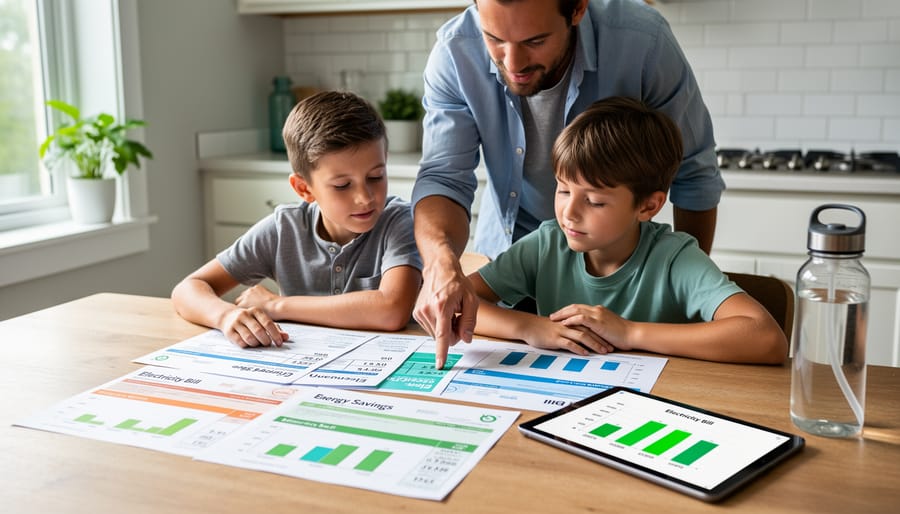
Understanding energy doesn’t have to be complicated, and your electricity bill is actually a brilliant starting point for family conversations. Gather the kids around the kitchen table with your latest bill and turn it into a detective game. Where did all those kilowatt-hours go? This simple activity helps children see energy as something real rather than invisible.
For younger children aged 5-8, create an energy treasure hunt around your home. Give them clipboards and ask them to draw every device that uses power. You’ll be surprised what they discover, from the obvious fridge to the sneaky standby lights on the television. Follow up by explaining that energy comes from different sources, just like food comes from farms, shops, or gardens. In Australia, we’re increasingly growing our own energy through sunshine, wind, and even organic waste that becomes bioenergy.
Older children aged 9-12 can handle a weekly energy tracking challenge. Download one of the free energy monitoring apps or simply read your metre together every Saturday morning. Create a chart showing your household’s consumption patterns. When usage drops, celebrate together. When it spikes, investigate why. This hands-on approach teaches responsibility and numeracy skills simultaneously.
The bioenergy connection makes the lesson particularly engaging. Explain how organic waste from households, farms, and food businesses can be transformed into electricity and gas, turning rubbish into resources. Many Australian communities now have bioenergy facilities that accept food scraps, creating a circular economy right in your neighbourhood.
Make it practical by starting a compost bin together, explaining that while your compost feeds the garden, larger-scale bioenergy facilities do something similar but create power for homes. This tangible connection between waste and energy helps children understand renewable resources as practical solutions, not just abstract concepts.
Creating a Family Composting System That Actually Works
Starting a family composting system is simpler than most Aussie families think, and it’s a brilliant way to teach kids how waste becomes a valuable resource. Begin by selecting the right system for your climate. In humid coastal areas, open bin composting works beautifully, while drier inland regions might benefit from enclosed tumblers that retain moisture. For apartments or smaller spaces, worm farms are absolute champions.
Gather your family and designate a kitchen caddy for food scraps. Make it a game for younger children to identify what goes in: vegetable peels, fruit scraps, coffee grounds, and crushed eggshells get a thumbs up, while meat, dairy, and oils stay out. This simple sorting activity teaches the fundamentals of organic waste management that underpins larger bioenergy systems.
Set up your compost bin in a shaded spot during scorching summer months to prevent it drying out too quickly. Layer green materials like grass clippings and food scraps with brown materials such as dry leaves, shredded newspaper, or cardboard. Teach older kids the “lasagne method” of alternating layers, explaining how microorganisms break down organic matter, releasing energy and creating nutrient-rich soil.
The Melbourne family who started composting together discovered their weekly rubbish dropped by nearly half. Their seven-year-old became the household “compost captain,” monitoring moisture levels and temperature. Within three months, they’d created beautiful soil for their veggie garden, completing the resource cycle from kitchen to garden to table. This hands-on experience demonstrates how small-scale waste transformation connects directly to renewable energy principles, showing kids that sustainability starts right at home.
Growing Your Own: Kitchen Gardens as Living Classrooms
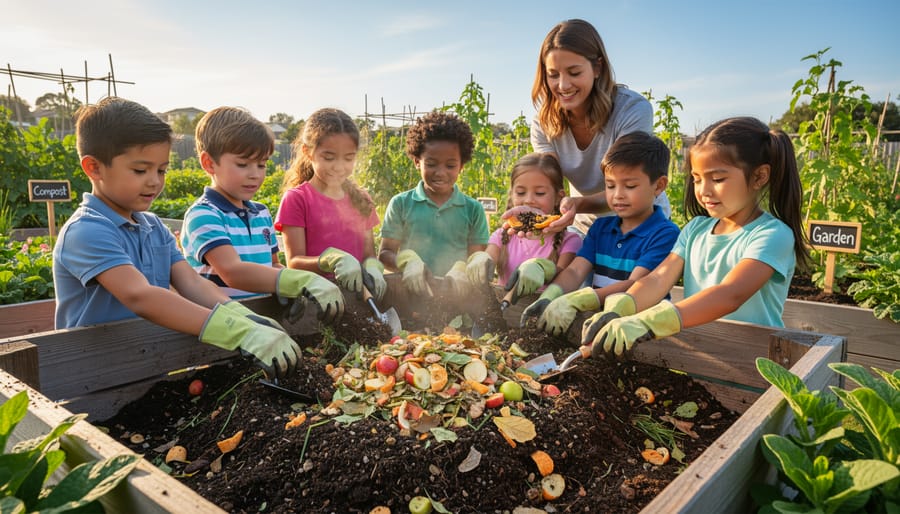
A kitchen garden transforms your backyard into a living laboratory where children witness the complete cycle of organic matter firsthand. When you compost kitchen scraps and watch them become rich soil that feeds tomato plants, you’re demonstrating biomass conversion in action—the same principle behind modern bioenergy systems, just on a smaller scale.
Start with quick-win plants suited to Australian conditions. Cherry tomatoes and snow peas thrive in most regions and produce results within weeks, keeping young learners engaged. Basil, rocket, and spring onions grow rapidly and can be harvested multiple times, teaching concepts of renewable resources and sustainable yields. These aren’t just gardening lessons—they’re introductions to how biological systems capture and transform energy.
The soil itself becomes a teacher. Mix compost into garden beds and discuss how organic waste becomes nutrient-rich material, mirroring how agricultural residues can power homes and communities. Children learn that nothing goes to waste in nature’s economy, and every banana peel represents stored solar energy waiting for transformation.
Make observation part of the routine. Ask kids to measure plant growth weekly, notice which plants need more water or sunlight, and record when fruits appear. These practices build scientific thinking while demonstrating resource efficiency. A family garden produces food, reduces supermarket packaging waste, and creates organic matter that can be composted again, completing the cycle. You’re not just growing vegetables—you’re cultivating future environmental problem-solvers who understand that waste is simply a resource in the wrong place.
Making Bioenergy and Renewables Accessible to Young Minds
Stories That Stick: Using Real Australian Success Stories
Nothing brings bioenergy to life quite like real stories from families and communities right here in Australia. These success stories transform abstract concepts into tangible inspiration your children can connect with.
Start by exploring local examples in your area. Many Australian farms have embraced bioenergy solutions, converting agricultural waste into renewable energy. The Daintree region in Far North Queensland, for instance, has dairy farms using biogas digesters that turn cow manure into electricity. These practical applications demonstrate how everyday waste becomes valuable resources.
Effective storytelling approaches help children understand the real-world impact of sustainable choices. Share stories about schools running on solar power combined with biomass heating systems, or community gardens composting organic waste. When kids see their neighbours making a difference, sustainability becomes achievable rather than overwhelming.
Consider organising field trips to local renewable energy facilities or farms with bioenergy systems. Many operators welcome educational visits and love sharing their journey. If travel isn’t feasible, virtual tours offer excellent alternatives. Several Australian biomass facilities now provide online experiences where families can explore operations from home.
Connect with sustainability education programs that showcase Australian innovators. These programs often feature video interviews with farmers, engineers, and community leaders who’ve successfully implemented bioenergy solutions.
Encourage your children to document local sustainability champions through photos or interviews. Creating their own collection of success stories empowers them to see possibilities everywhere and recognise that ordinary Australians are building our renewable future every day.
Hands-On Projects That Demonstrate Renewable Energy Principles
Getting hands-on with energy projects transforms abstract concepts into memorable family experiences that spark genuine excitement about sustainability. These simple experiments bring renewable energy principles to life right in your own backyard.
Start with a homemade solar oven using a pizza box, aluminum foil, and plastic wrap. Line the box with foil to reflect sunlight, create a flap to direct rays inward, and seal it with plastic. On a sunny Australian afternoon, you’ll have melted cheese on crackers in about 30 minutes, perfectly demonstrating solar energy conversion while enjoying a tasty snack together.
Create a miniature composting experiment to showcase biomass energy potential. Use clear containers to compare vegetable scraps, paper, and yard waste decomposition over several weeks. Kids can observe how organic matter breaks down and generates heat, the same principle behind large-scale bioenergy facilities across Australia. Measure temperature changes daily and discuss how this natural process creates usable energy.
Build a simple wind turbine from recycled materials like plastic bottles and wooden skewers. Attach it to a small LED light or generator kit from your local electronics store. Watch your children’s faces light up when their creation actually produces electricity, making the connection between wind movement and power generation tangible and real.
The beauty of these projects lies in their accessibility. You don’t need expensive equipment or scientific backgrounds, just curiosity and willingness to explore together. These hands-on experiences create lasting memories while building environmental awareness that children carry into adulthood, fostering the next generation of sustainability champions.
Overcoming Common Challenges in Family Sustainability Education
When Family Members Aren’t on the Same Page
Not every family member will jump on board with the same enthusiasm when it comes to sustainability education, and that’s perfectly normal. The key is finding common ground that sparks curiosity across different ages and interests.
Start by listening to what genuinely excites each person. Your teenager might be passionate about climate activism, while your younger child loves hands-on experiments. Perhaps your partner is motivated by cost savings rather than environmental impact. All these angles are valid pathways into renewable energy education.
Consider the success of the Williams family from Newcastle, who transformed their Sunday routines by letting each family member choose one sustainability activity per month. Their eldest designed a solar oven experiment, while the youngest picked a beach clean-up. This shared ownership created buy-in without forcing participation.
For reluctant participants, make it fun rather than preachy. Frame a visit to a local bioenergy facility as an adventure rather than a lesson. Use storytelling to bring concepts alive – discuss how composting food scraps creates energy that powers homes, turning everyday actions into exciting possibilities.
Remember, progress beats perfection. If one family member only engages occasionally, celebrate that involvement rather than pushing for total commitment. Small steps create momentum, and enthusiasm often becomes contagious once people see tangible results from renewable energy projects at home.
Keeping Sustainability Education Fresh and Engaging
Keeping sustainability education fresh requires creativity and flexibility as families grow and interests evolve. The key is mixing up your approach regularly so environmental learning never feels like a chore.
Rotate between different types of activities throughout the month. One week might focus on hands-on projects like building a worm farm, while the next explores virtual tours of renewable energy facilities. Alternate between indoor and outdoor experiences, combining nature walks with kitchen experiments or documentary nights. This variety prevents the dreaded “not this again” response from kids.
Celebrating small wins keeps motivation high for everyone. Create a family sustainability scrapbook documenting achievements, from reducing waste to completing energy-saving challenges. Mark milestones with special outings to eco-friendly venues or by trying new plant-based recipes together. These celebrations reinforce that sustainable living is rewarding, not restrictive.
Connecting your family’s efforts to community sustainability initiatives adds purpose and excitement. Participate in local clean-up days, visit farmers markets together, or join neighbourhood composting programs. When children see their actions contributing to something bigger, engagement naturally increases.
Consider following a sustainability theme each season. Summer might focus on solar energy and water conservation, while autumn explores composting and seasonal eating. This structured yet flexible approach provides clear focus without becoming repetitive.
Remember, it’s perfectly normal for enthusiasm to ebb and flow. During quieter periods, scale back to simple daily habits rather than abandoning efforts entirely. Sustainability is a marathon, not a sprint, and maintaining a relaxed, positive atmosphere ensures long-term family commitment.
Connecting Your Family’s Efforts to Australia’s Sustainable Future
When your family makes sustainability choices at home, you’re contributing to something much bigger than your household power bill. Australia has committed to achieving net zero emissions by 2050, and every family conversation about renewable energy, every composting lesson, and every home project exploring bioenergy helps build the foundation for reaching that goal.
The decisions your children witness and participate in today directly shape tomorrow’s workforce and voting public. Kids who understand how biomass converts organic waste into energy grow into adults who can make informed choices about infrastructure investment, energy policy, and business practices. They become the engineers designing better bioenergy systems, the farmers implementing sustainable agricultural practices, and the community leaders championing local renewable projects.
Consider this practical connection: Australia currently diverts millions of tonnes of organic waste to landfill each year, where it produces methane, a potent greenhouse gas. When families understand biomass principles, they become advocates for better waste management in their communities. They support council initiatives for green waste collection, they champion commercial composting facilities, and they recognise opportunities for regional bioenergy plants that could transform agricultural residues into electricity.
Your home education efforts also strengthen the emerging culture of youth-led environmental action that’s gaining momentum across Australia. Young people with solid knowledge about renewable energy alternatives ask better questions, demand accountability from decision-makers, and bring fresh perspectives to solving our energy challenges.
By teaching your children about sustainable energy at home, you’re not just raising environmentally aware individuals—you’re actively contributing to Australia’s transition towards a cleaner, more resilient energy future. Every informed family becomes a catalyst for broader community change.
Teaching your kids about sustainability isn’t just about saving the planet for tomorrow—it’s about creating healthier, more mindful families today. When you involve your children in composting kitchen scraps, choosing renewable energy options, or simply turning off lights, you’re building habits that immediately reduce your household’s environmental footprint while equipping the next generation with essential life skills. These small moments around the dinner table, in the garden, or during weekend projects become the foundation of Australia’s environmental future.
The beauty of family-based sustainability education is that it doesn’t require perfection. Whether you’re in Melbourne or Mount Isa, every conversation about where our energy comes from, every choice to reduce waste, and every hands-on experiment with natural resources adds up. When thousands of Australian families make these small shifts, the collective impact becomes extraordinary—reduced emissions, less landfill, and a generation that instinctively thinks about environmental consequences.
So here’s your challenge: choose one simple sustainability change to introduce with your family this week. Perhaps it’s starting a worm farm, researching your household’s energy sources together, or committing to waste-free lunches. Start small, stay consistent, and watch how quickly these practices become second nature. Your family’s journey matters more than you think.