
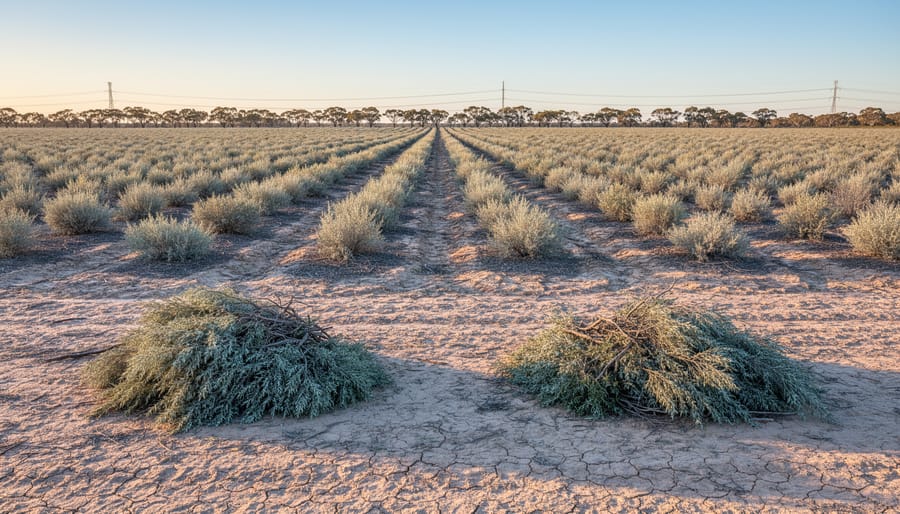
Across Australia’s vast landscape, millions of hectares sit underutilised—too dry, too salty, too degraded, or too remote for conventional farming. This is marginal land, and it represents one of the nation’s most overlooked opportunities for sustainable energy production. Rather than viewing these challenging parcels as agricultural dead zones, forward-thinking landowners and researchers are transforming them into productive bioenergy hubs through carefully selected crops that thrive where traditional agriculture struggles.
Marginal land typically refers to areas with limited agricultural potential due to poor soil quality, water scarcity, salinity, slope constraints, or environmental degradation. In Australia, this encompasses approximately 40-50 million hectares—a staggering expanse that could revolutionise our renewable energy landscape without competing with food production. The beauty of agricultural bioenergy on these lands lies in its dual benefit: generating clean energy while simultaneously rehabilitating degraded landscapes.
Unlike prime agricultural land that faces the food-versus-fuel debate, marginal land offers a guilt-free pathway to bioenergy development. Native Australian species like eucalyptus, acacia, and saltbush have evolved to survive harsh conditions, making them ideal candidates for biomass production on these challenging sites. When established thoughtfully, these crops can restore soil health, sequester carbon, provide wildlife habitat, and create new income streams for regional communities—all while producing sustainable feedstock for electricity, heat, and biofuels.
The potential is extraordinary, yet many landowners remain unaware of their options. Understanding which crops suit specific marginal land types, how to establish them successfully, and what economic returns to expect can unlock opportunities that transform liabilities into assets across rural Australia.
What Actually Counts as Marginal Land in Australia?
The Scale of Opportunity Across the Country
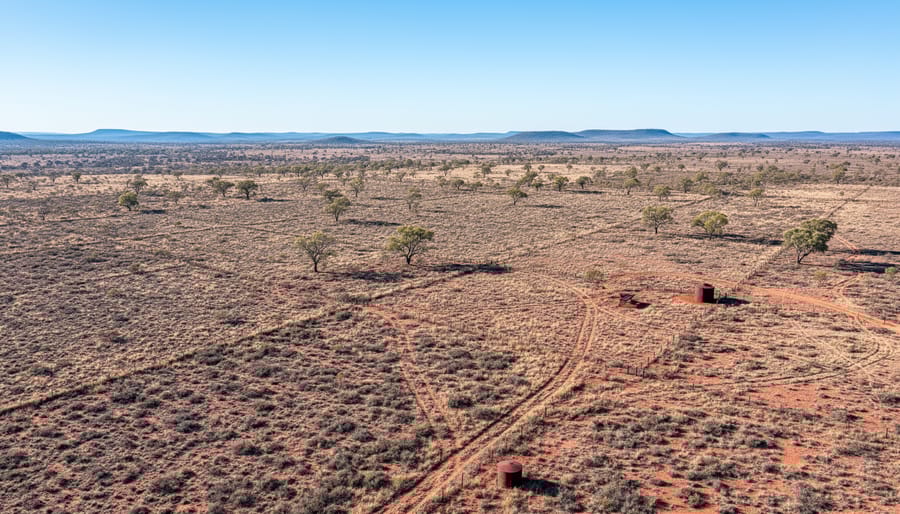
Australia has an extraordinary opportunity sitting right beneath our feet. Conservative estimates suggest we have approximately 45 million hectares of marginal land across the country – that’s an area roughly the size of Spain, or if you prefer a local comparison, larger than the entire state of Victoria and Tasmania combined.
The distribution is remarkable. Queensland alone accounts for nearly 18 million hectares, much of it in regions where traditional cropping struggles but hardy bioenergy crops could flourish. New South Wales and Western Australia each contribute around 10 million hectares, while South Australia holds approximately 5 million hectares of underutilised land with genuine potential.
What makes these figures particularly exciting is that we’re talking about land that’s already cleared but currently generating minimal economic or environmental value. These aren’t pristine forests or productive farmland we’re considering – they’re degraded pastures, salt-affected areas, and properties where conventional agriculture simply doesn’t stack up financially.
To put this in perspective, if we converted just 10 percent of Australia’s marginal land to bioenergy crops, we’d be cultivating an area equivalent to Denmark’s entire landmass. That scale represents not just theoretical potential but a genuine pathway toward energy independence, regional employment, and landscape restoration.
The beauty of this opportunity is that it’s distributed across the nation, meaning regional communities from the wheat belt to the rangelands could benefit from this emerging industry.
Why Marginal Land Is Perfect for Bioenergy Crops
Crops That Thrive Where Others Fail
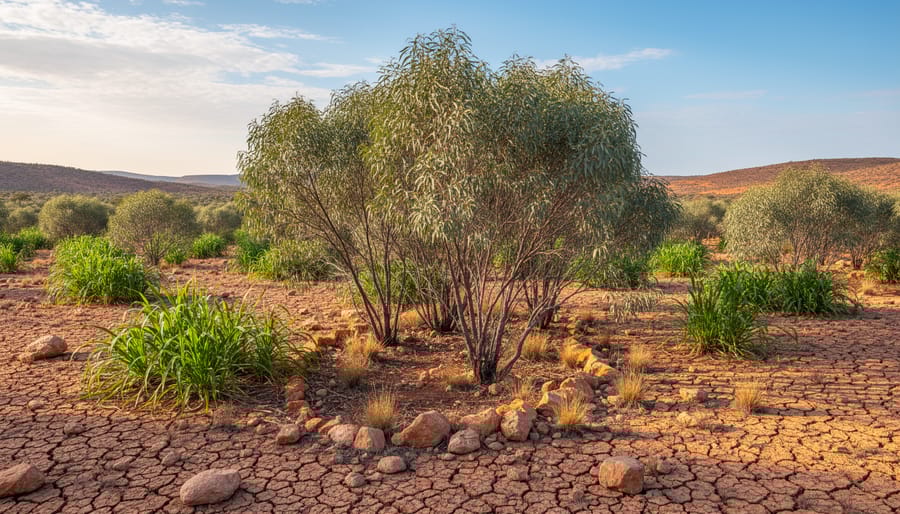
Australia’s marginal lands might seem like unlikely heroes in the renewable energy story, yet they’re perfectly suited to host a remarkable cast of resilient bioenergy crops that flourish where conventional agriculture struggles. These tough, adaptable plants are transforming overlooked landscapes into productive renewable energy sources.
Native grasses, particularly species like Rhodes grass and Queensland bluegrass, represent some of Australia’s most promising options for marginal land. These hardy perennials have evolved over millennia to handle Australia’s harsh conditions—scorching summers, unpredictable rainfall, and nutrient-poor soils. They require minimal inputs, establish deep root systems that prevent erosion, and can be harvested multiple times annually for biomass production. Better still, they’re already adapted to local ecosystems, reducing the environmental risks associated with introduced species.
Mallee eucalyptus stands out as a true Australian success story. These multi-stemmed trees thrive in low-rainfall zones across southern Australia, growing rapidly even in saline or degraded soils. The genius of mallee lies in its coppicing ability—after harvesting above-ground biomass, the root system regenerates new stems without replanting. This creates a perpetual harvest cycle while simultaneously drawing down carbon and providing wildlife habitat. The oil-rich biomass produces excellent energy yields, making mallee economically viable even on land previously considered worthless.
Saltbush varieties, including old man saltbush, offer solutions for some of Australia’s most challenging landscapes. These remarkable shrubs actually help remediate salt-affected soils while producing biomass, essentially cleaning up degraded land as they grow. Their high salt tolerance means they prosper where almost nothing else survives, turning environmental liabilities into assets.
Specialised sugarcane varieties are making headway in Queensland’s marginal tropical lands. These resilient cultivars tolerate poorer soils and require less irrigation than food-grade varieties, yet still produce substantial biomass for bioenergy. They’re particularly valuable because existing sugarcane infrastructure can often be adapted for processing.
Each of these crops shares common strengths—drought tolerance, low input requirements, and the ability to improve rather than degrade the land they occupy. They’re proving that Australia’s marginal lands aren’t limitations but opportunities, waiting for the right plants to unlock their renewable energy potential.
Real Success Stories from Australian Farms
Across Australia, forward-thinking farmers are proving that marginal land isn’t a liability—it’s an opportunity. These real-world success stories demonstrate how bioenergy crops are transforming underutilised properties into productive, profitable ventures while contributing to a cleaner energy future.
In the New South Wales Riverina region, the Thompson family faced a challenge familiar to many Australian farmers: saline patches on their wheat property that had been unproductive for decades. After attending a regional sustainability workshop, they decided to trial saltbush on 80 hectares of their most affected land. Within three years, they’d established a thriving crop that not only stabilised the soil but became a valuable feedstock for a nearby bioenergy facility. “We’d written off that section of the farm,” says David Thompson. “Now it’s generating income we never thought possible, and we’re actually helping fix the salinity problem rather than just watching it spread.” The family now plans to expand their saltbush cultivation, with the added benefit of using some areas for sheep grazing during drier months.
Further north in Queensland, the Mackay region has seen remarkable results with sugarcane bagasse utilisation on marginal cane-growing land. The Rossi family converted lower-yielding paddocks affected by periodic flooding into dedicated energy cane varieties specifically bred for biomass production rather than sugar content. These hardier plants thrive in conditions where traditional sugar cane struggled, producing substantially more biomass per hectare. The bagasse now powers a regional co-generation facility, with the Rossis receiving consistent payments regardless of sugar price fluctuations. “It’s given us financial stability we didn’t have before,” explains Maria Rossi. “And knowing we’re helping power local homes with renewable energy—that’s something you can feel good about.”
Perhaps most impressive is the Western Australia bioenergy project involving multiple farming operations around Narrogin. Here, farmers collaborated to plant mallee eucalyptus on degraded farmland affected by wind erosion and declining productivity. The deep-rooted trees combat erosion while producing harvestable biomass every few years through coppicing—a technique where trees regrow from stumps after harvesting. This partnership approach allowed smaller landholders to participate in bioenergy production without shouldering infrastructure costs alone. The project has regenerated over 500 hectares of struggling farmland while creating local employment in harvesting and processing.
These stories share common threads: farmers who saw potential where others saw problems, communities supporting innovation, and tangible benefits flowing to both the land and the people who care for it.
The Triple Win: Economics, Environment, and Energy
Creating New Income for Rural Communities
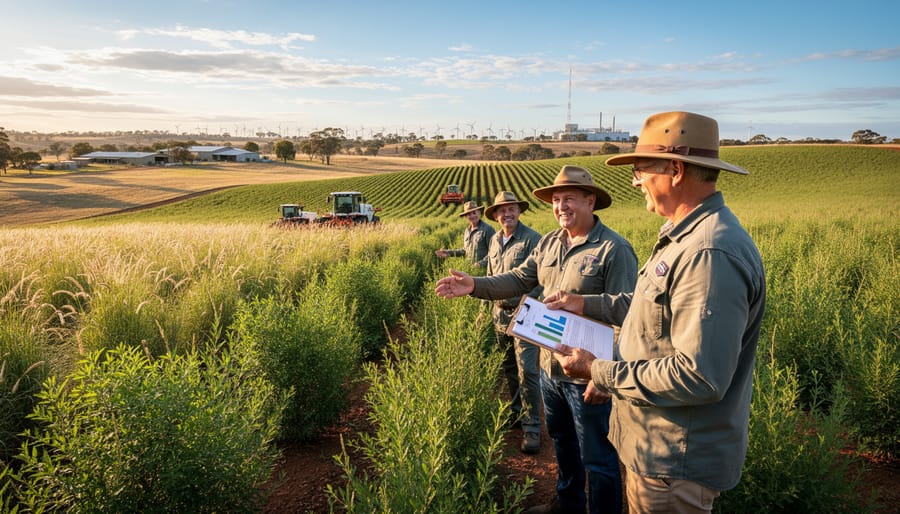
For farmers struggling with unproductive paddocks, bioenergy crops offer a genuine lifeline. Rather than leaving marginal land sitting idle or pouring money into unsuccessful traditional farming attempts, landowners can transform these underperforming areas into revenue-generating assets.
Growing energy crops like woody perennials or native grasses doesn’t require massive upfront investment or dramatic farm restructuring. Most bioenergy crops thrive with minimal inputs, naturally suited to challenging conditions where conventional crops simply can’t compete. This means farmers can diversify their income streams without abandoning their core operations or investing in expensive new equipment.
The ripple effects extend well beyond individual farms. Regional processing facilities for bioenergy feedstock create local jobs in harvesting, transport, and processing. In rural communities where employment opportunities can be scarce, these positions provide valuable economic stability. Towns across regional Australia have witnessed how renewable energy on farms can reinvigorate entire districts.
Importantly, bioenergy contracts often provide predictable, long-term income compared to the price volatility of commodity markets. This financial reliability helps farming families weather difficult seasons and plan for the future with greater confidence, turning what was once considered worthless land into a cornerstone of farm resilience.
Healing the Land While Powering Our Future
Here’s where the story gets truly exciting—growing bioenergy crops on marginal land doesn’t just produce renewable energy; it actively heals the landscape. These hardy plants work like environmental repair crews, tackling multiple challenges simultaneously.
Take carbon sequestration, for instance. Deep-rooted perennial crops like native grasses and certain tree species lock away atmospheric carbon in soil and biomass, transforming underperforming land into a carbon sink. On degraded pastoral land in Queensland, trials with perennial grasses have shown soil carbon increases of up to 30 percent over five years.
Erosion control becomes a natural benefit too. Those same extensive root systems bind soil together, preventing precious topsoil from washing away during storms or blowing away in dry spells. In Western Australia, saltbush plantations have stabilised previously eroding hillsides while producing valuable biomass.
For salt-affected areas, certain bioenergy crops actually help manage salinity by lowering water tables and reducing salt movement through the soil profile. Meanwhile, diverse plantings create habitat corridors, welcoming native wildlife back to landscapes they’d long abandoned.
The beauty of this approach? We’re not choosing between energy production and environmental restoration—we’re achieving both at once, turning yesterday’s liability into tomorrow’s renewable resource.
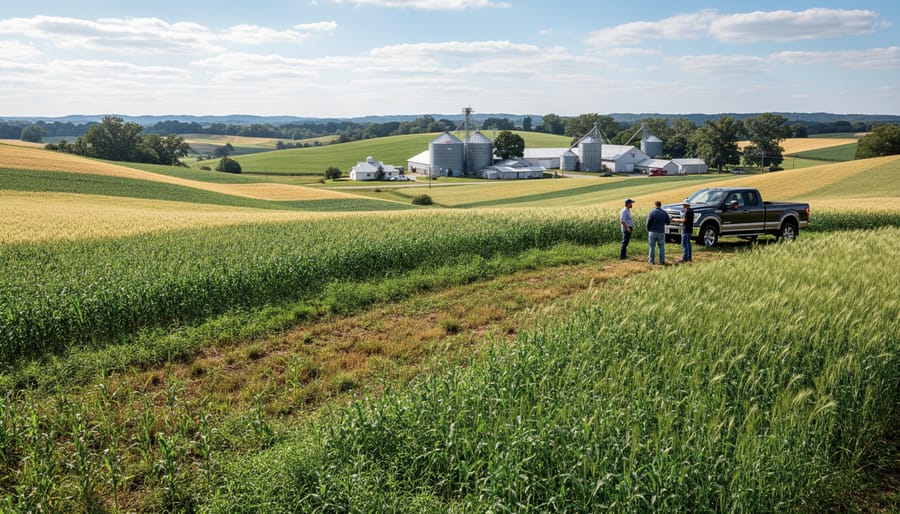
Strengthening Australia’s Energy Independence
Australia’s journey toward energy independence gets a powerful boost from bioenergy produced on marginal lands. By transforming previously unproductive areas into renewable energy hubs, we’re building a homegrown fuel supply that keeps more dollars in local communities rather than flowing overseas. This approach directly supports Australia’s commitment to achieve 82% renewable energy by 2030, creating a diverse energy portfolio that isn’t dependent on imported fossil fuels.
The beauty of marginal land bioenergy lies in its distributed nature. Rather than relying solely on massive centralised power stations, regional communities can produce their own energy from locally grown crops. A cattle station in Queensland might grow energy sorghum on degraded paddocks, producing biodiesel for farm machinery while maintaining its livestock operations. A timber mill in Victoria could cultivate woody crops on poor-quality land, generating both wood products and bioenergy for processing facilities.
These practical applications extend across multiple sectors. Transport fleets are increasingly running on biodiesel from crops like pongamia, while industrial facilities use biomass for heat and power generation. Remote communities, often facing high energy costs, benefit enormously from local bioenergy production that reduces dependence on expensive diesel shipments. This decentralised energy model strengthens Australia’s resilience against global fuel price fluctuations while creating jobs and economic opportunities right where they’re needed most.
Making It Work: Practical Considerations for Landowners
If you’re a landowner wondering whether marginal land bioenergy could work for your property, the good news is there’s a practical pathway forward that doesn’t require massive upfront investment or complete farm transformation.
Start with a straightforward land assessment. Walk your property and identify areas that consistently underperform—paddocks with poor soil quality, steep slopes prone to erosion, or sections that flood seasonally. These are your potential candidates. Local Landcare groups and agricultural extension officers can provide free or low-cost assessments to help you understand your soil chemistry, drainage patterns, and what crops might actually thrive there. Many councils across regional Australia now offer sustainability grants specifically for landowners exploring renewable energy options on unproductive land.
Before diving in, consider starting small with trial plots. This approach lets you test different bioenergy crops like native grasses or fast-growing eucalyptus species without committing your entire marginal acreage. You’ll gain valuable insights into what grows well in your specific conditions and what maintenance is realistically required throughout the seasons.
Financial viability varies significantly depending on your location and chosen crop, so connect with local farming cooperatives already exploring bioenergy. In Western Australia, the Future Farm Industries CRC provides technical support and research partnerships. Queensland’s Department of Agriculture and Fisheries runs programs connecting landowners with bioenergy buyers, creating clearer market pathways than existed even five years ago.
Set realistic expectations from the outset. Bioenergy crops on marginal land won’t deliver the same immediate returns as prime agricultural land, but that’s not the point. You’re transforming land that’s costing you money into productive space that generates income, improves biodiversity, and potentially qualifies for carbon credits. Many farmers report it takes three to five years to see meaningful returns, but the environmental benefits start immediately with improved soil health and reduced erosion.
The Agricultural Sustainability Institute offers workshops throughout rural Australia helping landowners navigate everything from crop selection to supply chain connections. These practical resources mean you’re not figuring it out alone. With the right support and measured expectations, marginal land can shift from being your property’s problem area to its most innovative asset.
The story of marginal land and bioenergy in Australia isn’t about making do with second-best. It’s about recognising opportunity where others see obstacles. Across the country, from Western Australia’s wheat belt to Queensland’s grazing lands, marginal country holds enormous potential to power our renewable energy transition without competing with food production or threatening precious ecosystems.
Australia has everything it needs to make this vision reality. We’ve got millions of hectares of marginal land sitting idle or underutilised. We’ve proven that hardy crops like Indian mustard, pongamia, and native grasses can thrive where traditional agriculture struggles. Our farmers and researchers have demonstrated the know-how, turning challenging conditions into productive bioenergy operations that generate income while improving soil health and supporting local communities.
What’s missing isn’t capability—it’s commitment. We need investment in processing infrastructure, supportive policy settings that recognise the unique value of marginal land bioenergy, and collaborative partnerships between landowners, industry, and government. The groundwork has been laid through pioneering projects and innovative thinking. Now it’s time to scale up.
The beauty of this approach is that it works with Australia’s landscape rather than against it. By embracing marginal land for what it can uniquely provide, we’re not just creating renewable energy—we’re building resilient rural economies, capturing carbon, and proving that sustainability and productivity can go hand in hand. The renewable energy future we’re chasing? It’s growing right beneath our feet, waiting for us to cultivate it.