
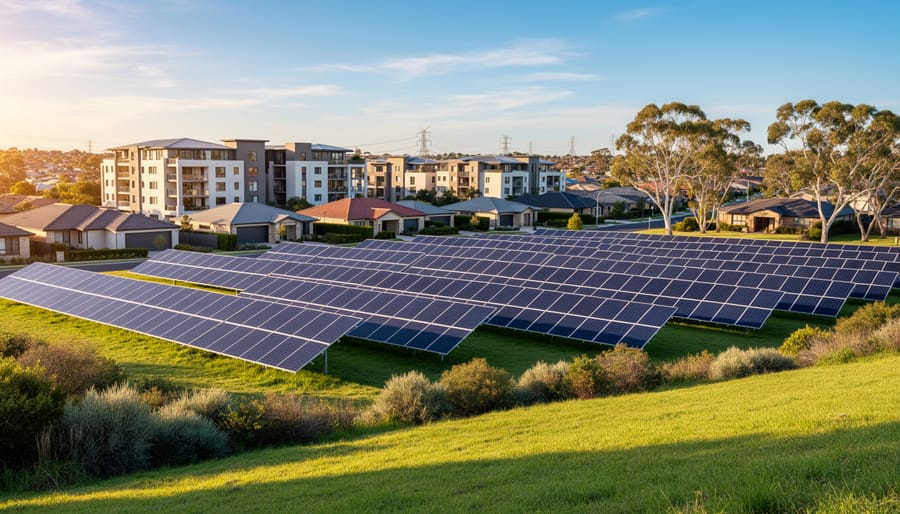
Imagine slashing your electricity bills while supporting clean energy—without installing a single solar panel on your roof. That’s the promise of Xcel Energy’s Community Solar program, a game-changing initiative that’s making renewable power accessible to everyone, regardless of whether you own your home, have a shaded property, or live in an apartment.
Community solar works brilliantly simply: Xcel builds large-scale solar farms, and you subscribe to a portion of the energy they produce. The solar credits generated from your subscription appear directly on your monthly electricity bill, typically saving subscribers 5-10% on their energy costs. No installation hassles, no maintenance worries, and no upfront investment required—just straightforward savings paired with environmental impact.
For Australians exploring similar renewable energy options, Xcel’s model offers valuable insights into how community-based solar programs democratize clean energy access. While Xcel operates primarily in the United States, the program’s success demonstrates how shared solar gardens overcome traditional barriers that prevent many households from going solar.
This article unpacks everything you need to know about Xcel’s Community Solar program—from eligibility requirements and subscription processes to real subscriber experiences and cost-benefit analyses. Whether you’re curious about joining or simply exploring how community solar models work globally, you’ll discover practical insights that help you make informed decisions about your energy future.
What Makes Community Solar Different From Rooftop Solar
The Shared Solar Farm Model
Think of community solar farms like a shared vegetable garden for your neighbourhood. Instead of everyone needing their own backyard plot, participants collectively benefit from a larger, professionally managed space. That’s precisely how Xcel’s community solar model operates.
These solar farms are strategically positioned on suitable land across Xcel’s service territory, often on unused agricultural areas, brownfield sites, or commercial rooftops. Each farm contains hundreds of solar panels working together to generate clean electricity that feeds directly into the local grid. The beauty of this arrangement is that you don’t need a suitable roof or upfront investment in equipment.
Here’s where it gets brilliant: as your portion of the solar farm generates electricity, you receive credits on your monthly energy bill. It’s similar to having a renewable energy piggy bank that accumulates value throughout sunny days. The credits offset your traditional electricity costs, delivering savings whilst supporting clean energy generation.
Most participants see reductions of 5-15% on their energy bills, though actual savings depend on your subscription size and local electricity rates. The process is entirely automatic—no special meters or equipment required at your home.
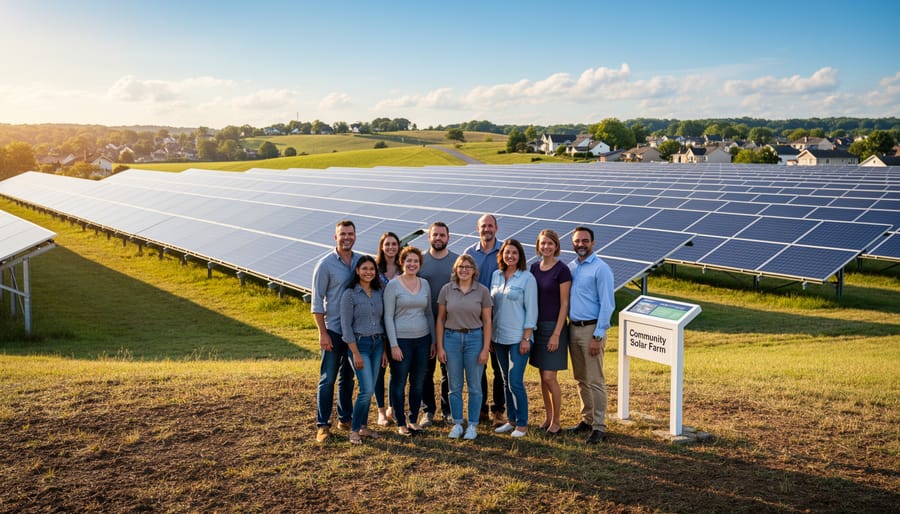
Who Can Actually Benefit
Community solar opens doors for Australians who’ve been locked out of the rooftop solar revolution. Renters across Sydney and Melbourne can finally access clean energy without negotiating with landlords or worrying about moving costs. Apartment dwellers in high-rise buildings no longer miss out on solar savings simply because their body corporate hasn’t approved panels.
Homeowners facing challenges are equally well-suited. If your Brisbane home sits beneath towering gum trees or your heritage-listed terrace in Adelaide can’t accommodate rooftop installations, community solar provides the perfect workaround. Small businesses operating from leased shopfronts or shared office spaces can demonstrate environmental commitment without major capital investment.
Even those pursuing sustainable home design benefit during construction phases or when roof orientations aren’t ideal. The beauty lies in flexibility – you’re supporting renewable energy generation without the traditional barriers of ownership, maintenance, or property modifications. It’s particularly brilliant for young families renting while saving for their first home, or retirees in retirement villages wanting to reduce their environmental footprint without installation hassles.
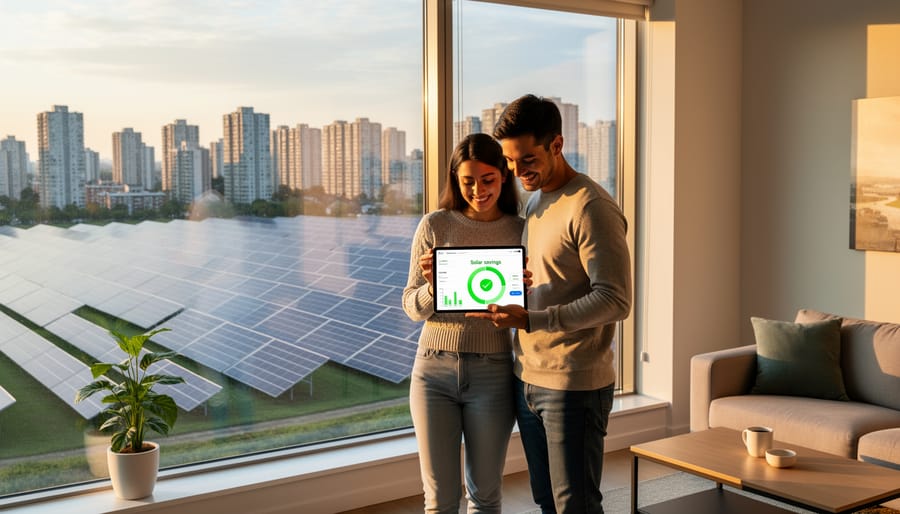
Inside Xcel’s Community Solar Program
How Subscription and Billing Work
Getting started with community solar is refreshingly straightforward. Once you’ve confirmed your eligibility, you’ll subscribe to a portion of a local solar garden’s capacity, typically measured in kilowatt-hours. Your subscription size usually matches a percentage of your household’s average electricity consumption—many participants opt for coverage between 50% and 100% of their usage.
Here’s where the real magic happens on your electricity bill. Each month, your community solar provider generates credits based on your share of the solar garden’s production. These credits then appear as line items on your regular utility statement, directly reducing what you owe. Let’s look at a practical example: imagine your typical monthly electricity bill is $120. If you’ve subscribed to cover 75% of your usage and the solar garden produces as expected, you might receive around $90 in solar credits.
The subscription fee varies by provider but generally runs slightly below the credit value you receive—perhaps $85 in this scenario—creating immediate savings of roughly $5 monthly, plus you’ve offset a significant portion of your carbon footprint. Some programs offer fixed rates that protect you against future electricity price increases, which can amplify savings over time.
Most providers handle billing separately from your utility company, so you’ll receive two statements: your traditional power bill (now reduced by solar credits) and your community solar subscription invoice. The beauty of this arrangement means you’re supporting renewable energy generation while keeping money in your pocket—a genuine win-win situation that’s attracting thousands of households seeking practical climate action.
Contract Terms and Flexibility
One of the most appealing aspects of the Xcel Community Solar program is its flexible approach to subscriber commitments. While community solar requires some level of agreement to ensure stable returns for solar farm investors, Xcel has designed contracts that respect subscribers’ changing circumstances without locking them into rigid arrangements.
Typical subscription agreements run between 12 to 24 months, though terms can vary depending on the specific solar garden you join. This timeframe provides enough stability for the solar project whilst avoiding the lengthy commitments that often accompany rooftop solar installations. Think of it like signing up for a renewable energy subscription rather than purchasing equipment outright.
The real beauty emerges when life throws you a curveball. Moving house doesn’t mean abandoning your commitment to clean energy or facing hefty penalties. If you relocate within Xcel’s service territory, your subscription simply transfers to your new address, continuing to offset your electricity usage seamlessly. Should you move outside the service area, most programs allow you to cancel without significant financial consequences, though it’s worth reviewing specific terms with your chosen solar garden operator.
Cancellation policies generally require 30 to 90 days’ notice, giving operators time to find replacement subscribers. Some programs even allow you to transfer your subscription to another household, making it easier than passing on a gym membership. This flexibility removes the fear of being trapped in unsuitable arrangements whilst still supporting renewable energy development that benefits your broader community and environment.
Real Impact: Environmental and Community Benefits
Your Carbon Footprint Reduction
When you participate in a community solar program, you’re making a tangible difference that extends far beyond your electricity bill. For an average Australian household, joining a community solar initiative typically offsets approximately 4 to 6 tonnes of carbon dioxide emissions annually. To put this in perspective, that’s equivalent to planting between 180 and 270 native trees each year or removing a petrol-powered car from the road for twelve months.
Think about it another way: your participation prevents the same amount of greenhouse gases that would be absorbed by roughly half a football field of mature forest. Over a decade, that single decision multiplies into removing an entire car’s lifetime emissions from the atmosphere. These aren’t abstract numbers—they represent cleaner air for your community and a healthier planet for future generations.
Beyond reducing your carbon footprint, you’re contributing to a collective movement. When neighbourhoods embrace community solar together, the cumulative impact becomes extraordinary. One solar farm serving 500 households can offset emissions equivalent to taking 500 cars off Australian roads annually—a powerful demonstration of how individual choices create community-wide transformation toward a sustainable energy future.
Supporting Local Renewable Infrastructure
Community solar programs create ripple effects that extend far beyond clean electricity generation. When communities invest in shared solar infrastructure, they’re simultaneously building local renewable capacity while creating meaningful employment opportunities. These projects require skilled workers for installation, maintenance, and ongoing management—from electricians and solar technicians to project coordinators and customer service representatives. In regional Australian communities, this translates to jobs that can’t be outsourced, keeping energy dollars circulating locally rather than flowing to distant corporations.
The benefits strengthen community resilience in tangible ways. Take the example of a regional Queensland town where a community solar garden now powers 200 households. When grid disruptions occur, having distributed local generation provides a buffer that centralised fossil fuel plants simply can’t match. The program also sparked a training partnership with the local TAFE, equipping young people with renewable energy skills that position them for Australia’s clean energy future.
By choosing community solar, you’re not just accessing renewable electricity—you’re actively participating in building a more resilient, self-sufficient energy future for your neighbourhood. It’s an investment that pays dividends economically, environmentally, and socially, creating a legacy that benefits generations to come.
Success Stories: Australians Already Benefiting
Community solar programs are already transforming how everyday Australians access clean energy, and the results speak for themselves. These real-world experiences demonstrate the tangible benefits that participants are enjoying right now.
Take Sarah Mitchell, a renter in Melbourne’s inner suburbs, who felt frustrated watching her neighbours install rooftop panels while she remained stuck with rising electricity bills. “As someone who cares deeply about climate action, I felt powerless,” Sarah explains. “My landlord wasn’t interested in solar, and I couldn’t justify the investment when I might move in a year or two.” After joining a community solar initiative in 2023, Sarah now saves approximately $280 annually on her power bills whilst supporting renewable energy generation. “It’s brilliant knowing that I’m part of the solution without needing my own roof. The sign-up process took less than fifteen minutes, and the savings started flowing through straight away.”
For small business owner James Chen, who runs a café in regional New South Wales, community solar offered a practical pathway to sustainability without the upfront capital expense. “Installing panels on our café would’ve cost over $8,000, which simply wasn’t feasible during our growth phase,” James shares. By subscribing to a local community solar farm instead, his business receives credits that offset roughly 30 percent of their monthly electricity costs, saving around $1,200 yearly. “Our customers love that we’re supporting clean energy, and it’s become part of our brand story. We’ve even put a small sign near the counter explaining our participation.”
Retiree couple Margaret and Tom Reynolds from Brisbane found community solar the perfect solution for their unit in a strata complex where installing panels proved impossible due to building restrictions. “We’ve always been conscious about our environmental footprint, but felt our hands were tied,” Margaret notes. After twelve months in their community solar program, they’ve saved $340 whilst knowing their subscription supports a Queensland solar farm generating enough clean energy to power hundreds of homes. “The satisfaction comes from both the financial benefit and knowing we’re contributing to Australia’s renewable energy future. It genuinely feels good every time we receive our electricity bill and see those credits.”
Is Community Solar Right for Your Situation?
Cost-Benefit Analysis for Typical Households
Understanding the financial picture helps you make an informed decision about community solar participation. Let’s break down what different households might expect when comparing their options.
For a typical suburban household using 8,000 kilowatt-hours annually, community solar subscriptions through Xcel typically offer 5-15% savings on electricity bills compared to conventional grid power. That translates to roughly $60-180 annually, depending on your location and subscription level. Unlike rooftop solar, there’s no upfront investment required – you simply start receiving credits on your monthly bill immediately.
Consider Sarah, a renter in Minneapolis who pays $120 monthly for electricity. By subscribing to community solar, she reduced her annual costs by $150 without spending a cent upfront. Meanwhile, rooftop solar for a comparable home would require $15,000-25,000 initially, though it offers greater long-term savings with a 7-10 year break-even timeline.
The beauty of community solar lies in its accessibility. Homeowners avoiding the capital commitment of rooftop panels reach savings from day one, while renters and apartment dwellers gain access to solar benefits previously unavailable to them. Even businesses can participate, with larger commercial subscribers often seeing percentage savings at the higher end of the spectrum.
The break-even timeline for community solar is essentially immediate since there’s no initial investment. Your subscription remains flexible too – if circumstances change, you’re not locked into a 20-year rooftop installation. This makes community solar particularly attractive for households testing renewable energy waters before committing to larger investments, or those who simply want straightforward savings without the complexity.
When Rooftop Solar Might Be Better
While community solar offers brilliant flexibility, rooftop solar systems remain the better choice in certain situations. If you own your home, have suitable roof space with excellent sun exposure, and plan to stay put for at least seven years, rooftop panels typically deliver greater long-term savings and property value increases. Homeowners who’ve already invested in battery storage systems also benefit more from their own panels. Additionally, those seeking complete energy independence or wanting to maximize their renewable energy production without subscription caps will find rooftop solar more suitable. It’s worth noting that you can always install rooftop solar now and supplement with community solar later if your energy needs grow beyond your system’s capacity.
How to Get Started With Xcel Community Solar
Getting started with Xcel Community Solar is refreshingly straightforward, making clean energy accessible to more households than ever before. Whether you’re renting, living in a shaded area, or simply can’t install rooftop panels, this program opens the door to renewable energy participation.
First, check your eligibility. You’ll need to be an Xcel Energy electricity customer within their service territory. The beauty of community solar is that homeowners, renters, and business owners alike can participate—no roof required. Your credit standing may be reviewed, but requirements are generally less stringent than traditional solar financing options.
Next, visit Xcel’s online portal or contact their community solar team directly. You’ll browse available solar gardens in your area, each with specific capacity and subscription sizes. Think of it like choosing a community garden plot that matches your energy needs. Most subscribers opt to offset between 50% to 100% of their electricity usage, though you can start smaller if you prefer.
The application process typically takes just minutes online. You’ll provide basic account information, select your desired subscription level, and review the terms. Some popular solar gardens maintain waitlists due to high demand, so joining early positions you favourably. Don’t let a waitlist discourage you—it’s a testament to the program’s success and growing renewable energy momentum.
During your first few months, expect to see solar credits appearing on your monthly electricity bill. These credits reflect your share of the solar garden’s production. You’ll notice two line items: your regular electricity charges and the community solar subscription fee, which is typically designed to provide immediate savings. Monitor your bills closely to understand the rhythm of solar production across seasons, and celebrate knowing every credit represents clean energy displacing fossil fuels.
Community solar programs represent a genuine turning point in how everyday Australians can contribute to our renewable energy future. The beauty of this model lies in its inclusivity—whether you’re renting in Sydney, living in an apartment in Melbourne, or simply dealing with a shaded or aging roof, you’re no longer left on the sidelines of the solar revolution.
The power of community solar extends beyond individual benefits. When you join a program, you’re voting with your energy choices, sending a clear signal that Australians are ready for cleaner alternatives. Each subscriber helps build momentum for more renewable projects, creating a ripple effect that strengthens our entire energy grid.
Now’s the time to explore whether you’re eligible for a community solar program in your area. Check with your energy retailer, ask questions, and compare the options available. Remember, transitioning to sustainable energy doesn’t require perfect conditions anymore—it just requires your willingness to participate.
Together, through these collective solar gardens, we’re proving that the renewable energy transition isn’t reserved for a privileged few. It’s a practical pathway open to millions of Australians, and every subscription brings us one step closer to a cleaner, more sustainable future for everyone.