
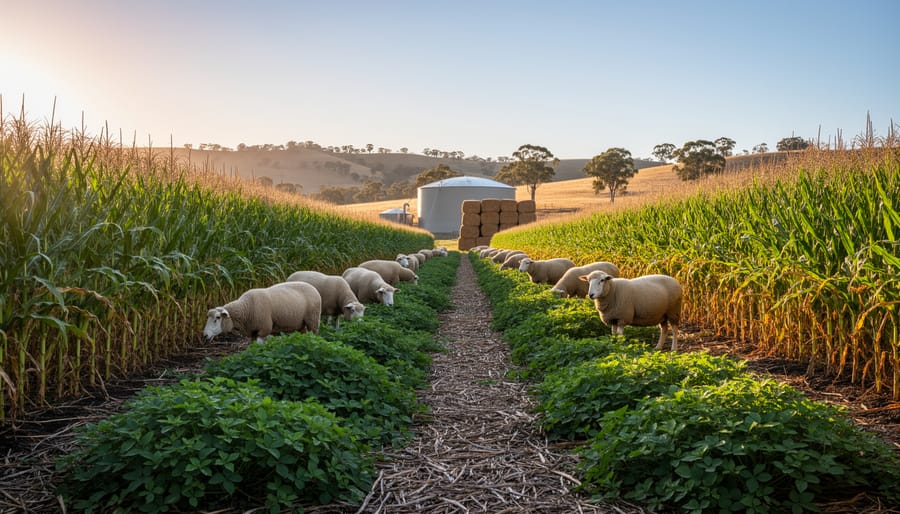
Australian farmers and bioenergy producers stand at the threshold of a agricultural revolution that promises to heal degraded soils, sequester carbon, and generate sustainable biomass yields simultaneously. Regenerative agriculture isn’t just another farming buzzword—it’s a practical framework transforming how we grow energy crops while reversing decades of environmental damage.
The five core principles of regenerative agriculture create a blueprint for bioenergy production that works with nature rather than against it. These methods minimize soil disturbance, maintain living roots year-round, protect soil with organic cover, integrate diverse plant species, and bring livestock into cropping systems strategically. When applied to biomass cultivation, these principles unlock remarkable synergies: perennial energy grasses like switchgrass build soil carbon while producing reliable feedstock, cover crops between annual biomass harvests prevent erosion while fixing nitrogen, and integrated grazing systems turn waste into fertility.
Consider the experience of mixed farmers in regional New South Wales who’ve adopted these practices for growing biomass sorghum. By keeping their paddocks covered and incorporating livestock grazing between harvest cycles, they’ve increased organic matter by 2.3% in just four years while maintaining consistent biomass yields. Their soil now holds more water during droughts and processes nutrients more efficiently, reducing input costs by nearly 40%.
This intersection between regenerative principles and bioenergy production forms the foundation of Australia’s emerging circular bioeconomy. Unlike extractive energy systems that deplete resources, regenerative biomass production actively improves the land while generating renewable energy. The following principles demonstrate how this transformation happens on the ground, offering actionable strategies for anyone involved in sustainable biomass production.
What Makes Regenerative Agriculture Different in Bioenergy Production
Regenerative agriculture represents a fundamental shift in how we approach bioenergy production. Rather than simply maintaining current soil health or minimizing harm—the typical goal of sustainable farming—regenerative practices actively improve the land while producing feedstock for renewable energy. It’s about leaving the soil, water systems, and biodiversity in better condition than you found them.
In conventional biomass farming, crops like corn or sugarcane are often grown using intensive methods that deplete soil nutrients, require heavy chemical inputs, and can degrade local ecosystems over time. The focus remains purely on maximizing yield. Regenerative agriculture flips this approach entirely. It recognizes that healthy, living soil with robust microbial activity actually produces more resilient crops while simultaneously sequestering carbon, improving water retention, and supporting native wildlife.
Consider a practical example from Queensland, where some sugarcane growers are transitioning to regenerative methods. Instead of burning cane trash after harvest—a common practice that releases carbon and strips organic matter—they’re leaving crop residue on fields as protective mulch. They’re also integrating cover crops between growing seasons and reducing tillage. The result? Healthier soil that holds more water during droughts, reduced fertilizer costs, and cane that’s just as productive for bioenergy processing. These farmers aren’t just growing biomass—they’re rebuilding entire agricultural ecosystems while contributing to Australia’s renewable energy future. That’s the regenerative difference.
Principle 1: Minimise Soil Disturbance While Harvesting Energy Crops
The foundation of regenerative agriculture begins beneath our feet, where healthy soil ecosystems drive sustainable biomass production. For Australian growers cultivating energy crops like sugarcane, woody perennials, and native grasses, minimising soil disturbance isn’t just good environmental practice—it’s smart business that delivers long-term productivity gains.
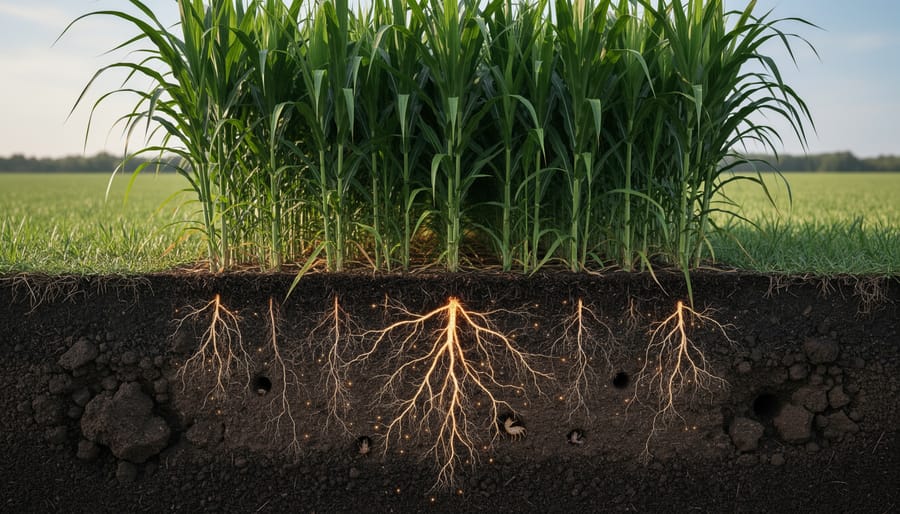
Traditional tillage breaks apart soil structure, releasing stored carbon into the atmosphere and disrupting the intricate web of microbial life that keeps plants thriving. In contrast, no-till and reduced-tillage approaches preserve these underground ecosystems while still allowing efficient harvest of bioenergy feedstocks.
When soil remains undisturbed, something remarkable happens. The complex network of fungal threads and bacterial colonies stays intact, creating natural channels that improve water infiltration by up to 50 percent compared to conventionally tilled fields. This becomes particularly valuable during Australia’s increasingly unpredictable weather patterns, helping crops withstand both droughts and heavy rainfall events.
Perennial energy crops like switchgrass and miscanthus are natural champions of minimal disturbance. Once established, these grasses require harvesting only once or twice yearly without replanting, allowing root systems to develop extensively over many years. These deep roots enhance carbon sequestration, pulling atmospheric carbon dioxide underground where it enriches soil organic matter.
A compelling success story comes from a sugarcane operation in northern New South Wales that transitioned to controlled traffic farming—a system where machinery travels only on permanent tramlines. After five years, soil compaction decreased by 40 percent, water holding capacity improved significantly, and cane yields increased despite reduced inputs. The farm now supplies consistent, high-quality biomass to a regional bioenergy facility while building soil health season after season.
Even woody biomass harvesting can embrace minimal disturbance principles. Strategic thinning operations that remove specific trees while protecting forest floor integrity maintain ecosystem function. Leaving harvest residues in place provides organic matter that feeds soil organisms and prevents erosion.
The practical takeaway for biomass producers is clear: protecting soil structure during cultivation and harvest creates a virtuous cycle. Healthier soils grow more productive crops, sequester more carbon, and become increasingly resilient over time—delivering both environmental wins and economic returns that strengthen Australia’s renewable energy future.
Principle 2: Keep Living Roots in the Ground Year-Round
Nature doesn’t leave the ground bare, and neither should sustainable bioenergy systems. This principle recognizes that living plant roots should be active in the soil throughout the entire year—not just during the main growing season. It’s about mimicking natural ecosystems where something is always growing, always feeding the underground world that makes healthy crops possible.
The magic happens beneath the surface. Living roots continuously exude sugars and carbon compounds that feed millions of microorganisms in the soil. These microbes, in turn, create the soil structure, cycle nutrients, and build organic matter that stores carbon. When fields sit bare between harvests, this biological engine essentially shuts down. The soil life goes dormant or dies off, and all that potential for carbon sequestration and soil improvement is lost.
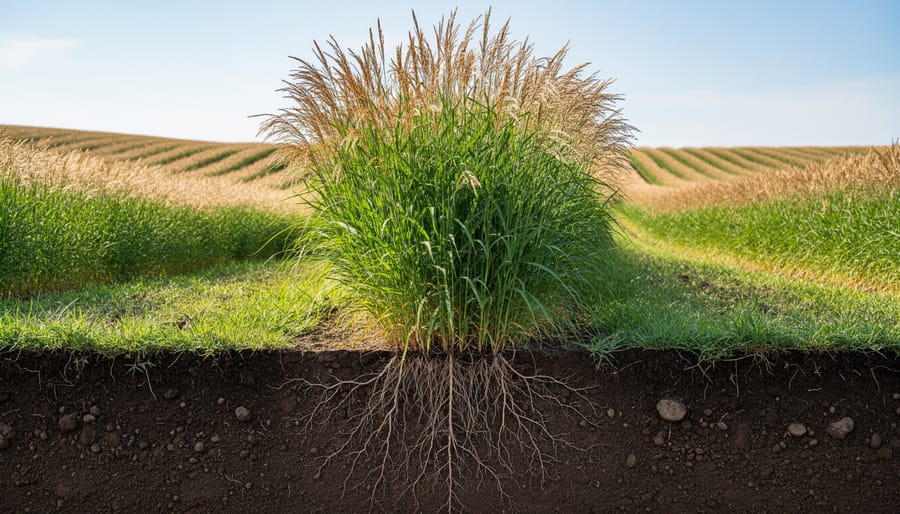
For Australian bioenergy producers, perennial grasses offer a brilliant solution. Species like Rhodes grass, bambatsi panic, and native kangaroo grass keep roots active year-round while producing excellent biomass yields. These perennials don’t need replanting every season, which slashes fuel use and soil disturbance. Their deep root systems—some extending several metres down—access water and nutrients that annual crops can’t reach, making them particularly resilient during our notorious dry spells.
Even when growing annual energy crops like sweet sorghum or mallee eucalyptus, smart producers are embracing cover cropping strategies. Planting fast-growing legumes or grasses between harvest cycles keeps the soil covered and biologically active. A sugarcane farm near Bundaberg has pioneered this approach, inter-cropping their cane with nitrogen-fixing cowpeas. The result? Healthier soil, reduced fertilizer costs, and bonus biomass from the cover crops themselves.
The erosion prevention benefits can’t be overstated either. With living roots binding the soil year-round, those summer storms and winter winds carry away far less precious topsoil. One biomass producer in regional Victoria reported virtually eliminating erosion on previously vulnerable slopes simply by switching to perennial native grasses for their feedstock production.
This principle proves that bioenergy production doesn’t have to compromise soil health—it can actively enhance it while generating renewable fuel. That’s the kind of win-win outcome that makes regenerative agriculture so compelling.
Principle 3: Maximise Crop Diversity in Bioenergy Systems
Nature doesn’t do monocultures—and neither should bioenergy systems. The third principle of regenerative agriculture challenges us to think beyond single-crop plantations and embrace the resilience that comes from diversity.
In conventional bioenergy production, vast fields of a single energy crop might seem efficient, but they’re actually vulnerable ecosystems waiting for disaster. When you maximise crop diversity, you’re creating a biological insurance policy that protects your land, your income, and the environment simultaneously.
Take the polyculture approach pioneered by several Queensland farmers who’ve combined native grasses with mallee eucalypts for biomass production. Rather than planting row after row of identical trees, they’ve created layered systems where different species occupy different niches—some providing quick-growing biomass, others improving soil nitrogen, and native grasses protecting against erosion. The result? These farms produce biomass year-round while supporting local wildlife and requiring fewer chemical inputs.
Crop rotation is another game-changer for sustainable biomass production. A Victorian operation rotates sorghum with legumes and brassicas, breaking pest cycles that would otherwise devastate a monoculture. Each crop contributes different residues to the soil, creating diverse organic matter that feeds varied microbial communities. This isn’t just good environmental practice—it’s smart business, reducing the need for expensive pesticides and fertilisers.
The real magic happens when farmers integrate multiple biomass sources. Consider the Western Australian case where farmers grow lupins for food and use the residual stems for biomass, while simultaneously harvesting timber from strategically planted windbreaks. These aren’t separate enterprises competing for space—they’re complementary systems that multiply revenue opportunities.
Diversity also hedges against market fluctuations. If woody biomass prices drop, agricultural residues might be strong. If drought affects one crop, others adapted to drier conditions continue producing. This financial resilience makes bioenergy farming genuinely sustainable for farming families.
The pest pressure reduction alone justifies diversity. Monocultures are like setting out an all-you-can-eat buffet for specialist pests. Diverse plantings confuse pests, support beneficial insects, and create natural pest management systems that would make any chemical company nervous—in the best possible way.
For Australian farmers entering bioenergy production, diversity isn’t just a principle—it’s the pathway to building operations that thrive across seasons, market conditions, and environmental challenges.
Principle 4: Integrate Livestock into Bioenergy Landscapes
When most people picture bioenergy farming, they imagine vast fields of crops growing in isolation. But Australia’s most innovative producers are discovering something remarkable: livestock and bioenergy crops make brilliant neighbours. By thoughtfully integrating managed grazing into bioenergy landscapes, farmers are creating systems that work harder, produce more, and regenerate the land in the process.
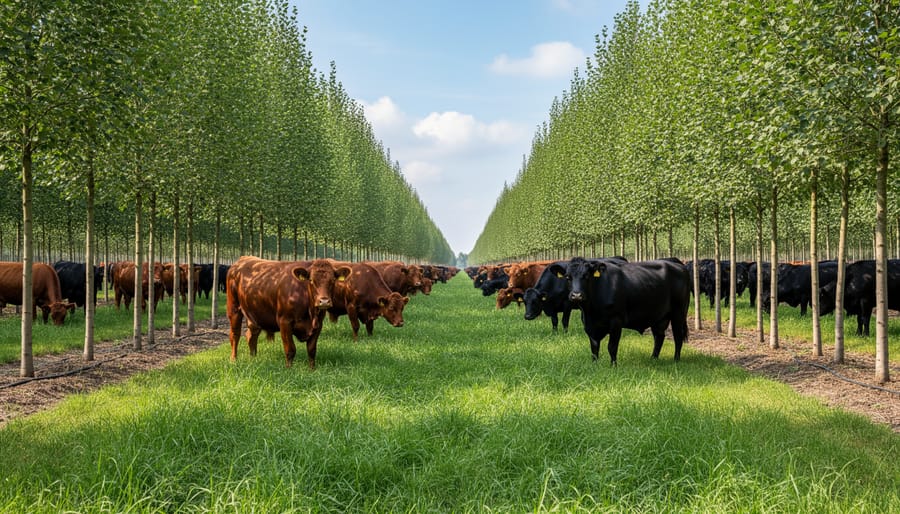
Silvopasture systems represent one of the most exciting frontations in this space. Picture rows of fast-growing eucalyptus or other biomass trees with productive pasture growing between them, supporting sheep or cattle that graze contentedly in the dappled shade. This isn’t just aesthetically pleasing; it’s economically transformative. The livestock provide natural weed control, reducing herbicide costs and labour. Their manure returns nutrients directly to the soil, boosting tree growth and eliminating the need for synthetic fertilisers. Meanwhile, farmers enjoy diversified income streams from both biomass harvests and livestock sales, buffering them against market fluctuations.
A property in central Queensland has pioneered this approach with leucaena trees and cattle. The cattle thrive on the protein-rich leucaena leaves while the trees provide shade that reduces heat stress. When the trees are coppiced for biomass, the cattle shift to adjacent paddocks in a carefully planned rotation. The farm has seen a 40 percent reduction in supplementary feed costs while producing consistent biomass yields.
Rotational grazing takes this principle further. By moving livestock through bioenergy crop areas during fallow periods or before establishment, farmers harness nature’s original land management tool. The animals naturally break down previous crop residue, incorporate organic matter into the soil, and stimulate fresh growth through their grazing pressure. Their hooves create beneficial soil disturbance that helps water infiltration.
The beauty of livestock integration lies in its flexibility. Whether you’re growing perennial grasses for biomass, establishing tree plantations, or managing native vegetation for biochar production, there’s likely a livestock strategy that fits. Small-scale producers have started with just a handful of sheep to manage understory in young tree plantations, while larger operations run sophisticated rotational systems across hundreds of hectares.
This principle proves that regenerative bioenergy farming isn’t about choosing between different agricultural enterprises. It’s about creating symbiotic relationships where each element strengthens the others, building resilience and productivity simultaneously.
Principle 5: Keep Soil Covered and Protected
Think of soil as your operation’s most valuable asset – when it’s exposed and vulnerable, you’re literally watching your investment blow away in the wind or wash down the gully. For bioenergy operations across Australia, keeping soil covered isn’t just good practice; it’s essential for maintaining long-term productivity whilst meeting harvest targets.
The challenge in bioenergy production is unique. Unlike traditional agriculture where residue management is straightforward, bioenergy operations face a delicate balancing act: you need to harvest biomass for fuel, yet leave enough organic material behind to protect and nourish the soil. Getting this balance right makes all the difference between sustainable operations and degraded land.
Ground cover works overtime on your behalf. It shields soil from the punishing Australian sun, preventing surface temperatures from spiking and creating hostile conditions for beneficial microorganisms. When heavy rains arrive – whether gentle soakers or intense downpours – that protective blanket absorbs impact, dramatically reducing erosion and allowing water to infiltrate rather than run off. During dry spells, cover acts like a mulch blanket, reducing evaporation and keeping precious moisture in the root zone where it belongs.
The golden rule for bioenergy operations is to maintain at least 30-50 percent soil coverage after harvest. This might mean leaving crop residues from previous rotations, establishing cover crops between main harvests, or implementing staged harvesting that never leaves large areas completely bare. A sugarcane operation in northern Queensland found success by retaining trash blankets after harvest, reducing soil loss by 85 percent whilst still processing ample biomass for energy production.
Strategic mulching techniques also deserve attention. Some innovative farmers use stripped harvesting patterns, taking biomass from alternating rows and leaving standing material to protect vulnerable soil. Others have integrated fast-growing cover crops like lablab or cowpea between energy crop cycles, providing ground protection whilst adding nitrogen back into the system.
The organic matter that accumulates under this protective cover gradually decomposes, building soil carbon reserves and creating the foundation for thriving microbial communities. This isn’t a trade-off between biomass production and soil health – it’s an investment that pays dividends through improved water retention, nutrient cycling, and resilient crops that can weather Australia’s challenging climate conditions.
The Real-World Impact: Regenerative Bioenergy in Action
Down in Victoria’s Western District, the Callignee II biomass facility tells a story that brings regenerative agriculture principles to life in remarkable fashion. This 30-megawatt power station runs entirely on plantation timber waste and agricultural residues, sourced from farms practicing regenerative methods within a 150-kilometre radius.
Local farmer Sarah Mitchell transformed her 500-hectare property by integrating these five principles alongside her cattle operation. Instead of burning stubble and woody waste, she now supplies residues to Callignee II while maintaining ground cover and building soil organic matter. The results speak for themselves: soil carbon levels increased by 18 percent over four years, water infiltration improved by 40 percent, and she’s generated an additional income stream worth $35,000 annually.
The facility itself diverts 400,000 tonnes of biomass from landfill each year, preventing methane emissions whilst generating enough electricity to power 45,000 homes. But the real magic happens on the farms supplying the feedstock. By keeping living roots in the ground year-round and integrating diverse plantings along waterways, participating farmers have collectively sequestered an estimated 12,000 tonnes of carbon annually across 8,000 hectares.
These aren’t just impressive numbers on paper—they represent measurable environmental outcomes that strengthen rural communities. Fifteen local contractors now manage biomass collection, and soil testing reveals microbial activity has increased by 25 percent on participating properties.
What makes this success story particularly compelling is its replicability. The farmers involved aren’t agricultural scientists or early adopters with unlimited capital—they’re everyday landholders who recognized that regenerative practices paired with bioenergy markets create a genuine win-win. They’re producing cleaner energy, building resilient landscapes, and improving their bottom lines simultaneously. That’s regenerative agriculture delivering on its promise.
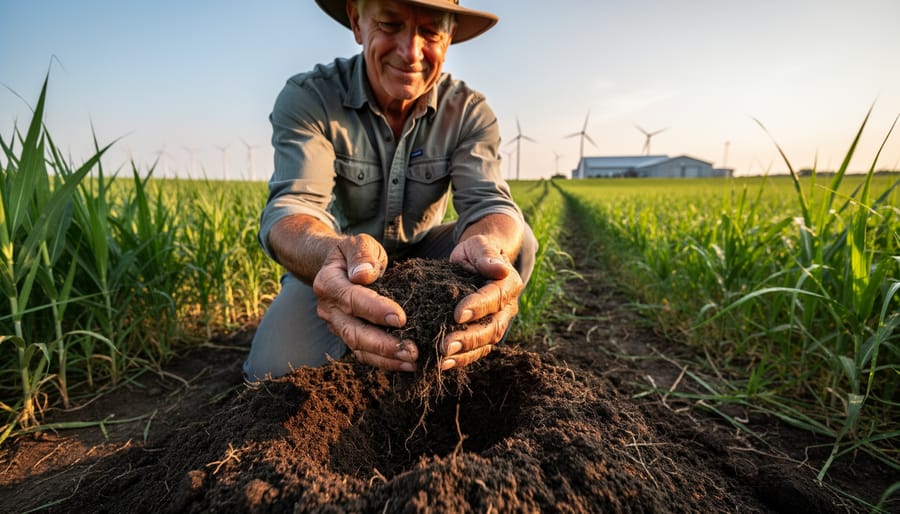
These five principles aren’t just farming techniques—they’re the foundation that transforms Australia’s bioenergy sector from a well-intentioned alternative into a powerful climate solution. When biomass production embraces soil health, minimizes disturbance, keeps living roots in the ground, maintains biodiversity, and integrates livestock thoughtfully, something remarkable happens. We don’t have to choose between renewable energy and environmental restoration. We get both.
The beauty of regenerative biofuel production lies in this dual benefit. While conventional energy systems extract resources and leave degradation in their wake, regenerative approaches build as they produce. Every tonne of sustainable biomass comes with healthier soils, cleaner waterways, and thriving ecosystems. Australian farmers practicing these methods are proving that profitability and environmental stewardship aren’t competing priorities—they’re complementary goals.
For farmers considering bioenergy crops, these principles offer a roadmap to long-term viability. You’re not just growing feedstock; you’re investing in your land’s future productivity. Industry professionals have an opportunity to lead the renewable energy sector toward genuinely sustainable supply chains that differentiate Australian bioenergy in global markets. Policymakers can support this transformation through incentives that recognize the ecosystem services these practices deliver alongside clean energy.
The transition won’t happen overnight, but every hectare managed regeneratively strengthens our collective climate response. Australia has the expertise, the landscape, and increasingly, the market demand to make regenerative bioenergy the standard rather than the exception. The question isn’t whether we can afford to embrace these principles—it’s whether we can afford not to. The future of bioenergy is regenerative, and that future starts with the choices we make today.