
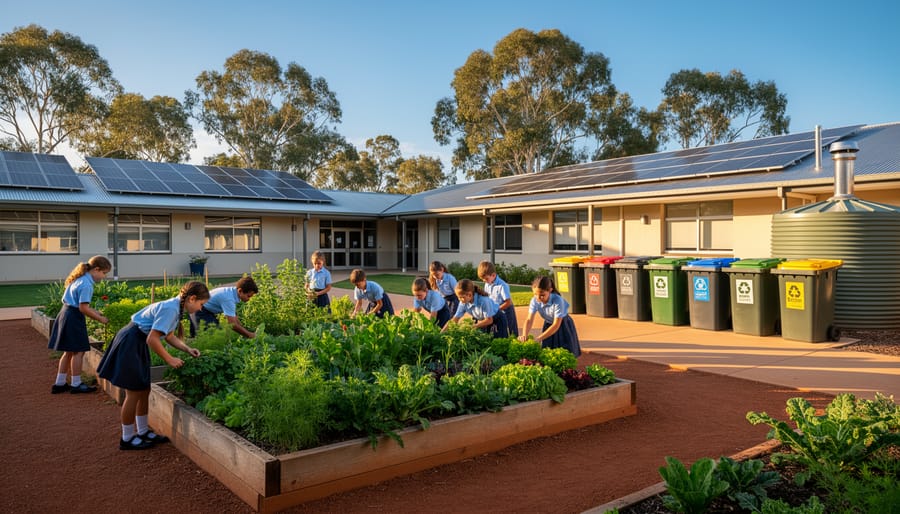
Transform schoolyards into living laboratories by establishing vegetable gardens that supply canteens while teaching students about food miles, composting, and seasonal growing cycles. Partner with local community groups to secure seedlings and expertise, then integrate harvest data into maths and science curricula for measurable learning outcomes.
Install student-monitored solar panels with real-time energy displays in high-traffic areas, allowing classes to track power generation against consumption throughout the school day. This visible commitment to renewable energy typically reduces electricity costs by 30-50% while providing tangible STEM learning opportunities that connect classroom theory to real-world applications.
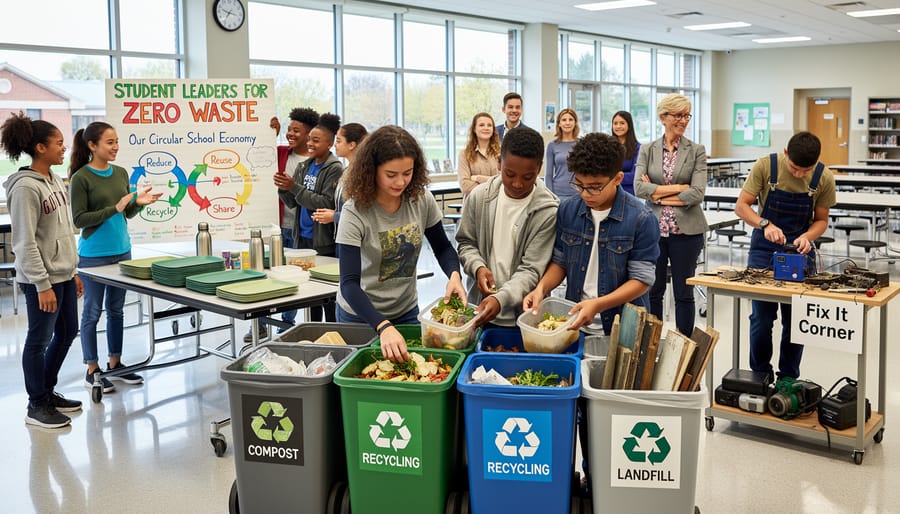
Implement comprehensive waste sorting stations across campus with clear signaling—compost for organic matter, recycling for containers, and minimal landfill bins. Assign rotating classroom responsibilities for waste audits, turning bin management into authentic data collection projects that reveal consumption patterns and drive behavioral change.
Establish rainwater harvesting systems that capture roof runoff for toilet flushing and irrigation, addressing Australia’s water scarcity challenges while demonstrating resource efficiency. Connect storage tanks to geography lessons exploring local rainfall patterns and calculate annual water savings to demonstrate environmental and financial benefits.
Create green procurement policies prioritizing suppliers with sustainable practices, from recycled paper to eco-friendly cleaning products. Student environment committees can research options and present findings to school leadership, developing research skills while influencing real purchasing decisions worth thousands annually.
The momentum behind Australian schools leading sustainability demonstrates that environmental initiatives need not strain budgets or overwhelm staff. Schools from Cairns to Hobart are proving that strategic green programs deliver triple benefits: reduced operational costs, enhanced student engagement, and measurable environmental impact. These initiatives work because they transform sustainability from abstract concept to daily practice, embedding environmental stewardship into the fabric of school culture while preparing students for a world demanding climate-conscious citizens and professionals.
Why Green Initiatives Matter More Than Ever for Australian Schools
Australian schools stand at a critical juncture where environmental responsibility meets educational opportunity. With climate-related challenges intensifying across the continent—from prolonged droughts to devastating bushfires and unprecedented heatwaves—the need for sustainability education has never been more pressing. Today’s students will inherit the responsibility of managing these environmental pressures, making it essential they understand practical solutions from an early age.
The financial case for green initiatives is equally compelling. Australian schools face mounting energy costs that strain already tight budgets, with electricity prices having risen significantly over the past decade. By implementing proven sustainability programs, schools can reduce operational expenses while creating hands-on learning laboratories that bring science, technology, and environmental studies to life.
Australia’s unique position in the global energy landscape presents both challenges and opportunities. Despite abundant sunshine and natural resources, many schools continue relying on traditional energy sources. This disconnect creates a powerful teaching moment—demonstrating how communities can transition toward renewable solutions while achieving measurable benefits.
Beyond cost savings, green initiatives prepare students for emerging career pathways in renewable energy, environmental management, and sustainable design. These aren’t distant future jobs; they’re growing sectors actively seeking skilled workers right now. Schools that embrace sustainability provide students with competitive advantages in an evolving job market.
The ripple effect extends beyond school gates. When students engage with composting programs, solar panels, or native gardens, they become sustainability ambassadors within their families and communities. This multiplier effect transforms individual school initiatives into broader cultural shifts, fostering environmental stewardship that extends across generations.
For school administrators and educators, the message is clear: implementing green initiatives isn’t just about being environmentally responsible—it’s about creating financially sustainable institutions that deliver relevant, engaging education preparing students for real-world challenges while demonstrating that positive environmental action yields tangible, immediate benefits.
Turning Your School Into a Solar-Powered Learning Hub
Real Savings, Real Learning
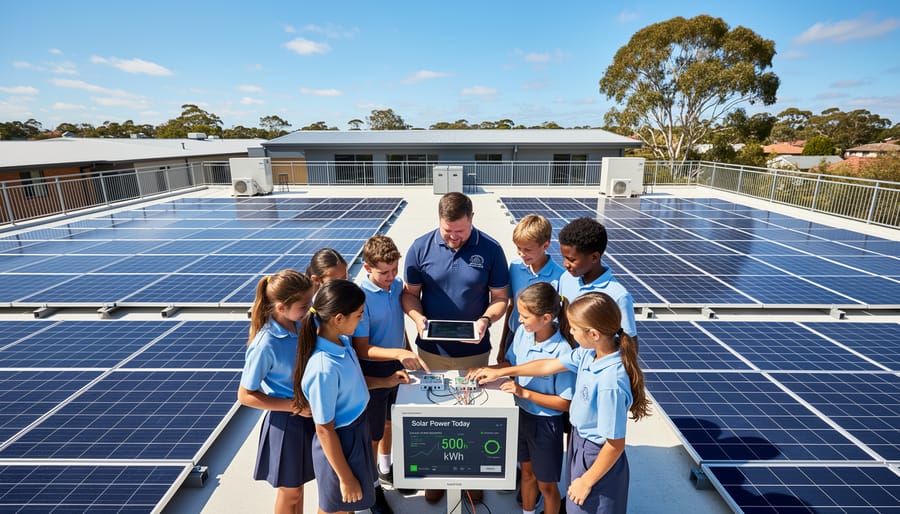
Across Australia, forward-thinking schools are discovering that solar panels deliver benefits far beyond the electricity bill. Take Blackwood Primary School in South Australia, which installed a 30-kilowatt solar system in 2019. Within the first year alone, they saved nearly $8,000 on energy costs—money that went straight back into classroom resources and student programs. The panels now generate roughly 70% of the school’s daytime electricity needs, demonstrating to students that sustainable choices create tangible results.
What makes these installations particularly valuable is their dual purpose as living classrooms. At Brighton Secondary College in Victoria, teachers incorporate their solar array into science lessons, with students monitoring real-time energy production data and calculating carbon offset figures. Maths classes use the system to explore concepts like angles and efficiency, while geography students examine how weather patterns affect renewable energy generation.
Melbourne’s Carlton Gardens Primary has taken things a step further by installing display screens in their main corridor showing live solar production stats. Students can see exactly how many kilowatt-hours they’re generating at any moment, turning abstract environmental concepts into something concrete and exciting. The school reports that this visibility has sparked genuine enthusiasm, with kids proudly sharing energy production figures with their families.
These success stories prove that solar installations aren’t just environmentally responsible decisions—they’re smart investments that pay dividends in both financial savings and educational opportunities, creating learning experiences that no textbook alone could provide.
Getting Students Involved in Energy Monitoring
Empowering students to monitor renewable energy systems transforms abstract environmental concepts into tangible, exciting learning experiences. When schools install solar panels, creating student-led monitoring teams turns this infrastructure into a living classroom. Students can track daily solar generation through user-friendly online dashboards, comparing output on sunny versus cloudy days and analysing seasonal patterns. This hands-on approach to integrating energy education builds critical STEM skills while fostering environmental stewardship.
At Melbourne’s Williamstown High School, Year 9 students developed a project comparing their school’s solar generation against energy consumption data, identifying peak usage times and proposing practical reduction strategies that saved the school $3,200 annually. Similar initiatives work brilliantly across Australian schools of all sizes.
Students can create visual displays for hallways showing real-time energy production, design apps to gamify energy saving between classrooms, or conduct investigations into how weather patterns affect renewable generation. These projects develop data literacy, environmental awareness, and problem-solving skills while demonstrating that young Australians can drive meaningful change. When students see their monitoring efforts translate into reduced emissions and cost savings, sustainability becomes personally relevant and inspiring.
Bioenergy Projects That Bring Science to Life
Starting a School Composting Program
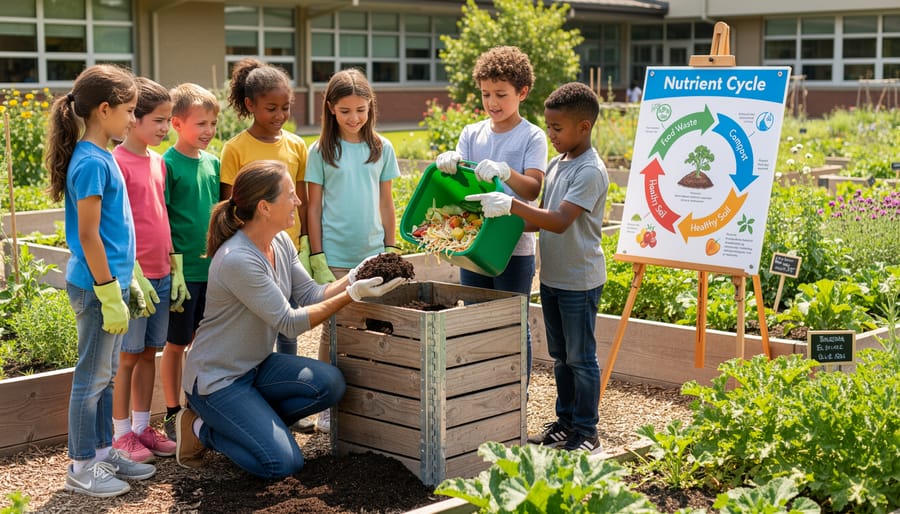
Getting a composting program started at your school is easier than you might think, and the rewards extend far beyond waste reduction. Begin by identifying a suitable location—preferably a sunny spot near the canteen or garden that’s accessible but not disruptive. Start small with two or three compost bins, which you can purchase affordably or build from recycled materials.
The next step involves engaging students as champions of the program. Form a composting committee with enthusiastic students who can monitor bins, educate peers, and track the program’s progress. Clear signage explaining what can and cannot be composted is essential—think fruit and vegetable scraps, coffee grounds, and paper towels, while avoiding meat, dairy, and oils.
Melbourne’s Brunswick Secondary College turned their composting initiative into a brilliant learning opportunity across multiple subjects. Science students study decomposition rates and microbial activity, maths classes calculate waste diversion percentages, and their environmental club manages the entire operation. Within the first year, they diverted over 800 kilograms of organic waste from landfill while producing nutrient-rich soil for their vegetable garden.
Similarly, St Joseph’s Primary in Perth integrated composting into their sustainability curriculum, creating a closed-loop system where canteen scraps feed their compost, which then nourishes their productive garden that supplies fresh herbs back to the canteen.
The beauty of school composting lies in its tangible demonstration of the biomass cycle—students witness firsthand how yesterday’s apple cores become tomorrow’s garden gold, making environmental science real and meaningful while building lifelong sustainable habits.
Connecting with Local Bioenergy Facilities
Partnering with local bioenergy facilities transforms abstract environmental concepts into tangible learning experiences that students can see, touch, and understand. Across Australia, progressive schools are discovering that nearby farms and bioenergy plants make exceptional outdoor classrooms, eager to share their sustainability stories with the next generation.
Reaching out to local facilities is often simpler than you’d expect. Many agricultural operations and bioenergy plants actively welcome school visits, recognising the value of community education. Start by identifying facilities within reasonable travel distance—whether it’s a dairy farm capturing methane from cow manure, a sugar mill converting bagasse into electricity, or a dedicated bioenergy plant processing organic waste. A quick phone call or email expressing interest in educational partnerships typically opens doors.
These partnerships offer multiple engagement opportunities beyond one-off excursions. Invite facility managers as guest speakers to explain how they’ve turned waste challenges into energy solutions. Students love hearing real-world success stories from people making environmental careers happen right in their communities. Consider arranging regular site visits where students can track the bioenergy process from waste collection through to energy generation, making the circular economy beautifully visible.
Some schools have established ongoing relationships where students conduct research projects using real facility data, or even contribute to community composting programs that feed into local bioenergy systems. These authentic experiences inspire students far more effectively than textbooks alone, showing them that renewable energy isn’t just future thinking—it’s happening now, creating jobs and protecting the environment in communities just like theirs.
Creating Green Spaces That Teach and Inspire
The School Garden as a Living Classroom
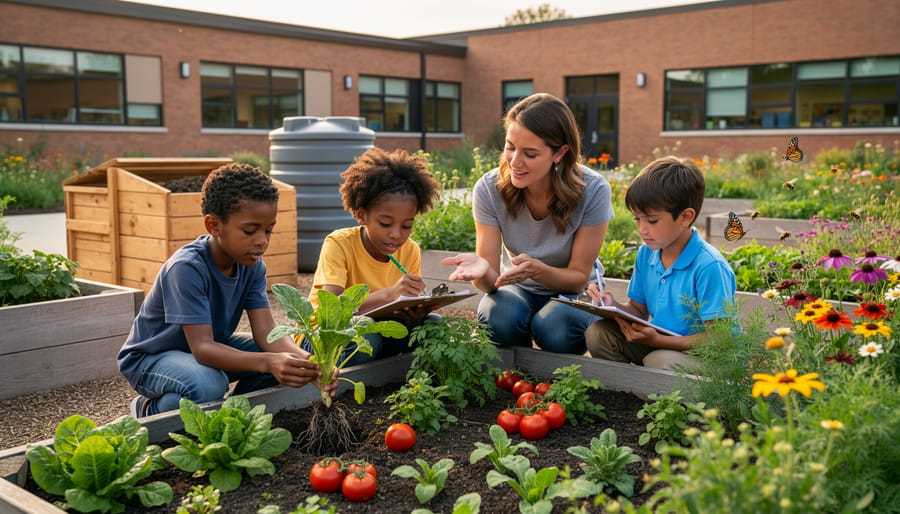
School gardens transform outdoor spaces into powerful learning environments where students get their hands dirty while discovering fundamental environmental principles. These living classrooms offer something textbooks simply can’t replicate—direct connection to the food production cycle and natural ecosystems that sustain us.
At Melbourne’s Westside Primary, their vegetable garden produces over 150 kilograms of fresh produce annually, supplying the school canteen while teaching students about seasonal planting, composting, and water-wise gardening techniques. Students learn firsthand why native Australian plants like warrigal greens and muntries require less water than exotic varieties, making them ideal choices for our climate. These practical lessons in water conservation become especially meaningful during drought periods when students witness how mulching and drip irrigation systems protect their crops.
Native garden sections create habitat corridors for local birds, insects, and beneficial pollinators, turning biodiversity from an abstract concept into observable reality. Students monitor which native flowering plants attract the most honeyeaters and learn how companion planting reduces pest problems without chemicals.
The carbon footprint benefits extend beyond fresh, zero-food-miles produce. Gardens sequester carbon in soil, reduce the need for packaged foods, and inspire families to grow their own vegetables at home. When Brisbane’s Greenhill Secondary calculated their garden’s impact, they discovered it offset approximately two tonnes of carbon annually while reducing canteen costs by fifteen percent.
These outdoor classrooms nurture environmental stewards who understand that sustainability isn’t just theory—it’s something you can grow, harvest, and share with your community.
Water-Smart Landscaping for Australian Conditions
Australian schools face unique water challenges, but they’re also perfectly positioned to demonstrate brilliant solutions. By creating water-smart landscapes, students don’t just learn about conservation—they become part of it.
Start with native and drought-tolerant plants that thrive in your local climate without constant watering. Schools across Queensland have transformed thirsty lawns into vibrant gardens featuring kangaroo paw, grevillea, and bottlebrush, slashing water bills while creating habitat for native birds and insects. These living classrooms teach students which plants belong in Australian conditions and why they’re champions at surviving our dry spells.
Rainwater harvesting systems turn rooftops into water collection zones. A typical school roof can capture thousands of litres annually, perfect for garden irrigation and toilet flushing. Mount Barker Primary School in South Australia saved over 40% on water costs after installing tanks, proving that good environmental sense makes good financial sense too.
Greywater systems from handbasins can safely water gardens, showing students how every drop counts. When kids see their hand-washing water nourishing the veggie patch, water conservation becomes tangible and meaningful.
These systems create ongoing learning opportunities across science, maths, and environmental studies, while delivering real savings that free up budget for other green initiatives. That’s water wisdom in action.
Waste Warriors: Programs That Make Reducing Cool
Australian schools are discovering that waste reduction doesn’t have to be a chore – when done right, it becomes the coolest thing on campus. The secret? Making students the heroes of the story.
Take Melbourne’s Fairfield Primary School, where Year 6 students run the “Bin Busters” program. Armed with clipboards and high-vis vests, these waste auditors inspect bins across the school, awarding “Golden Wheelie” trophies to classes with the best sorting. What started as a simple recycling initiative evolved into a school-wide movement that reduced landfill waste by 73% in just one year. The students even convinced the canteen to switch to compostable packaging, proving that young voices can drive real change.
Zero-waste challenges are transforming school culture across the country. Brisbane’s Northside Christian College runs monthly “Nude Food” days where students bring package-free lunches. The competition element makes it engaging – each class tracks their waste-free participation rate on a giant scoreboard in the playground. Winners receive recognition at assembly and choose the next sustainability initiative. This friendly rivalry has slashed single-use plastic in lunchboxes by 85%.
The circular economy comes alive through programs like “Repair Cafés” where students learn to fix broken items instead of tossing them. Sydney’s Northern Beaches Secondary College partnered with local tradies who teach kids basic repair skills during lunch breaks. Students have mended everything from torn backpacks to wobbly chairs, keeping hundreds of items out of landfill while learning valuable life skills.
Student leadership programs amplify these efforts by creating dedicated “Sustainability Squads” that coordinate initiatives, run awareness campaigns, and mentor younger students. These environmental champions design posters, host assemblies, and share progress updates, making waste reduction visible and valued throughout the school community. When students lead, their peers follow – turning environmental responsibility into the new normal.
Building Energy Efficiency Into School Operations
Transforming school buildings into energy-efficient environments creates a powerful teaching opportunity while delivering real cost savings that can be redirected back into education. Australian schools are discovering that simple upgrades and smart behavioral changes can slash energy bills by 30-40% within the first year.
Start with the low-hanging fruit: LED lighting retrofits. Melbourne’s Parkview Primary School reduced their lighting costs by 60% after switching to LED bulbs throughout their campus, with the investment paying for itself in just eighteen months. The savings funded new playground equipment, showing students the direct connection between environmental action and tangible benefits.
Smart sensors take efficiency further by ensuring lights and air conditioning only operate when spaces are occupied. Motion-sensor lighting in hallways, toilets, and storage areas prevents energy waste during weekends and holidays. Temperature sensors paired with programmable thermostats maintain comfortable learning environments without overcooling or overheating empty classrooms.
Student energy audits turn building efficiency into hands-on learning. Give older students clipboards and assign them to identify energy waste across campus—lights left on in empty rooms, dripping taps, or poorly sealed windows. This practical detective work develops environmental awareness while generating actionable improvement lists. Schools in Brisbane have successfully implemented student-led “energy monitor” programs where designated students ensure their classrooms follow energy-saving protocols.
Green building design principles matter for new construction or renovations. North-facing windows maximize natural light and warmth in southern states, reducing both lighting and heating needs. Proper insulation, solar-reflective roofing, and strategic shade trees create naturally comfortable buildings requiring less mechanical climate control.
Window treatments make surprising differences too. Installing blinds or awnings on west-facing windows blocks harsh afternoon sun, reducing cooling demands during warm months without expensive renovations.
The beauty of building efficiency initiatives lies in their visibility. When students see solar panels on rooftops, watch real-time energy dashboards in hallways, or participate in switching off unused equipment, sustainability becomes tangible rather than abstract. These everyday interactions build environmental consciousness that students carry home, multiplying the impact beyond school gates.
Funding Your School’s Green Dreams
Turning your school’s sustainability vision into reality doesn’t have to break the budget. Australian schools have access to diverse funding opportunities that can transform green dreams into tangible outcomes.
Government grants offer a brilliant starting point. The NSW Environmental Trust’s Waste Less, Recycle More initiative has helped dozens of schools implement composting programs and recycling stations. Similarly, the Victorian Government’s ResourceSmart Schools program provides funding and educator support and training for comprehensive sustainability projects. Don’t overlook local council grants either – many offer smaller amounts perfect for pilot programs or specific equipment purchases.
Corporate partnerships present another valuable avenue. Energy companies, waste management firms, and local businesses often seek community engagement opportunities. Mount Barker Primary School in South Australia secured solar panel installation through a corporate sponsor who valued the educational impact and community goodwill. The key is demonstrating how your project aligns with their sustainability goals.
Community fundraising campaigns work wonders when you tell a compelling story. Parents and local supporters rally behind projects they can see and touch – vegetable gardens, water-saving systems, or native habitat restoration. Consider crowd-funding platforms specifically designed for school projects, where you can share updates and celebrate milestones with donors.
Don’t forget to combine funding sources strategically. Use a small council grant to start a project, then leverage that success story to attract larger corporate sponsorships. Bundle sustainability initiatives with educational outcomes to appeal to grants focused on STEM education or outdoor learning.
The secret ingredient? Start small, document your wins, and build momentum. Success stories become powerful tools for unlocking bigger opportunities down the track.
Measuring Impact: How to Track Your School’s Green Success
Tracking your school’s environmental achievements transforms abstract efforts into tangible wins that inspire the entire community. Start by establishing baseline measurements across key areas: monthly electricity and water bills, waste bin volumes, and student participation numbers. Simple spreadsheets work brilliantly for most schools, though free apps like Energy Made Easy can help Australian schools benchmark their progress.
Energy savings tell compelling stories. When Melbourne’s Greenwood Primary reduced electricity use by 23% through LED upgrades and solar panels, they translated kilowatt-hours into real-world impact: enough energy saved to power the school canteen for an entire year. This storytelling approach makes data meaningful to students, parents, and staff.
Waste diversion rates offer another powerful metric. Weigh bins before and after implementing composting or recycling programs, then calculate percentages. A Brisbane school celebrated diverting 800 kilograms from landfill in one term by displaying a visual chart showing how that equated to four small cars worth of waste.
Student engagement metrics matter just as much as environmental data. Track participation in green teams, attendance at sustainability workshops, or entries in eco-challenge competitions. These numbers demonstrate cultural change alongside environmental progress.
Share achievements through newsletters, assemblies, and social media. Create visual dashboards in hallways displaying monthly comparisons. Recognition motivates continued effort and attracts community support. Remember, celebrating small wins builds momentum toward bigger goals. When students see their actions creating measurable change, they become lifelong environmental champions who understand that sustainability isn’t just possible—it’s already happening in their own schoolyard.
The beauty of green initiatives in schools lies in their remarkable ability to deliver benefits across every dimension. They’re genuine win-win situations that simultaneously slash operating costs, create engaging learning opportunities, and equip young Australians with practical sustainability knowledge they’ll carry throughout their lives. When a school installs solar panels or establishes a composting program, the advantages ripple outward far beyond the school gates, influencing families, neighborhoods, and entire communities as students become passionate advocates for environmental action at home.
These initiatives needn’t be overwhelming or require massive budgets to get started. The key is beginning somewhere, anywhere, that makes sense for your school community. Perhaps it’s as simple as establishing a paper recycling station, starting a native plant garden, or challenging students to reduce lunchbox waste. Small wins build confidence, demonstrate tangible results, and create momentum for larger projects. One regional Victorian school started with a single worm farm and, within three years, had transformed their entire campus into a sustainability showcase that inspired neighboring schools to follow suit.
The ripple effect cannot be overstated. When students learn to conduct energy audits, they return home and start switching off lights. When they understand composting, family food waste habits shift. These young environmental champions become catalysts for change that extends well beyond curriculum requirements. So take that first step today, no matter how modest it might seem. Your school has the power to shape not just individual futures, but the sustainable mindset of an entire generation. That’s a legacy worth pursuing.