
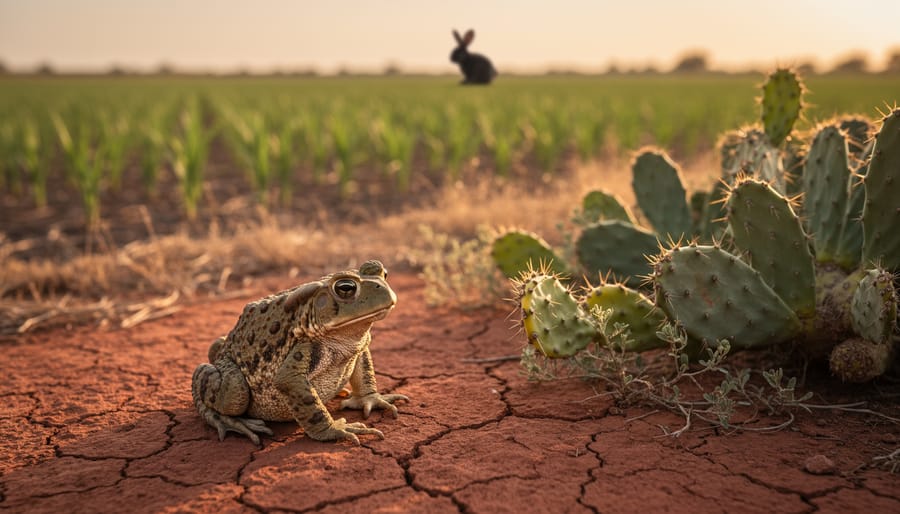
Australia’s landscape tells a cautionary tale written in prickly pear cacti, rabbit warrens, and cane toad choruses. From the 1840s onwards, well-intentioned introductions of foreign species spiraled into ecological disasters that still shape our continent today. Rabbits, brought for sport and meat, multiplied to plague proportions within decades, devastating native vegetation and causing widespread erosion. Prickly pear cacti, imported as ornamental hedging, consumed 30 million hectares of prime grazing land by the 1920s. Cane toads, released to control beetles in Queensland’s sugarcane fields, now number over 200 million and continue their toxic march westward, poisoning native predators at every turn.
These historical invasions weren’t malicious acts—they were miscalculations born from incomplete understanding of Australia’s unique ecosystems. Yet they offer invaluable lessons as we stand at another crossroads: choosing biomass crops for renewable energy. The same forces that turned rabbits into pests—rapid reproduction, lack of natural predators, and adaptation to harsh conditions—could transform certain bioenergy plants into tomorrow’s ecological headaches.
Understanding what went wrong in the past empowers us to make smarter choices today. By examining these infamous invasions alongside modern safeguards and native alternatives, we can harness bioenergy’s potential without repeating yesterday’s mistakes. Australia’s renewable energy future depends on learning from our prickly, hopping, and croaking history.
The Cautionary Chronicles: When Good Intentions Went Wrong
Prickly Pear: The Pasture Plant That Consumed Queensland
In the late 1830s, Australian settlers welcomed prickly pear cactus with open arms. Originally brought from the Americas as natural fencing and drought-resistant stock fodder, this hardy plant seemed like the perfect solution for Queensland’s harsh farming conditions. What followed became one of Australia’s most spectacular environmental disasters.
By the 1920s, prickly pear had spread across 24 million hectares of prime agricultural land—an area roughly the size of Victoria. The invasion rendered vast stretches of Queensland and New South Wales virtually unusable for farming or grazing. Dense thickets of spiny cactus stood two metres high, swallowing entire homesteads and forcing desperate families to abandon their properties. Manual removal proved impossible; cutting the plants only encouraged new growth from every fragment.
The turning point came through a brilliant biological control strategy. After testing numerous natural predators, scientists introduced the Cactoblastis moth from Argentina in 1926. The results were nothing short of miraculous. Within a decade, the moth’s larvae had devoured approximately three billion tonnes of prickly pear, transforming impenetrable thickets back into productive pastureland.
This remarkable success story demonstrates both the dangers of introducing non-native species and the power of thoughtful, science-based solutions. The Cactoblastis program remains a shining example of biological control done right—a lesson particularly relevant today as Australia explores renewable energy crops. Understanding this history helps ensure we don’t repeat such costly mistakes whilst developing sustainable agricultural practices for our energy future.
Cane Toads: The Pest Control That Became the Pest
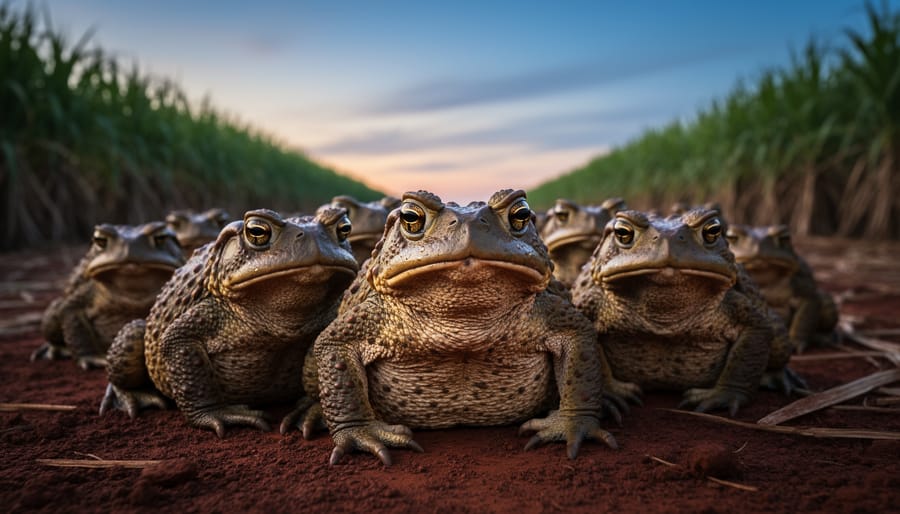
In 1935, Queensland sugar farmers faced a crisis. Beetles were destroying their crops, and someone had what seemed like a brilliant solution: bring in cane toads from Hawaii to eat the pests. It was meant to be nature’s perfect pest control, a biological fix that would save the industry without chemicals.
Instead, it became one of Australia’s greatest environmental disasters.
The 102 original toads multiplied at an alarming rate, spreading across northern Australia like a toxic tide. The problem? Cane toads are poisonous at every life stage, from eggs to adults. Native predators that tried eating them—quolls, goannas, freshwater crocodiles—died in droves. The toads also competed with native species for food and habitat, disrupting ecosystems that had evolved over millions of years.
Today, billions of cane toads occupy over 1.2 million square kilometres of Australian territory, and they’re still advancing. Rangers and community groups work tirelessly to control populations, turning a cautionary tale into ongoing action.
This experience taught us invaluable lessons about thoroughly assessing risks before introducing any new species, including bioenergy crops. Modern scientists now conduct extensive testing, examining how potential energy crops might interact with Australian ecosystems. The good news? We’re applying these hard-won lessons to develop truly sustainable bioenergy solutions that won’t repeat history’s mistakes.
Water Hyacinth: Beauty That Choked Waterways
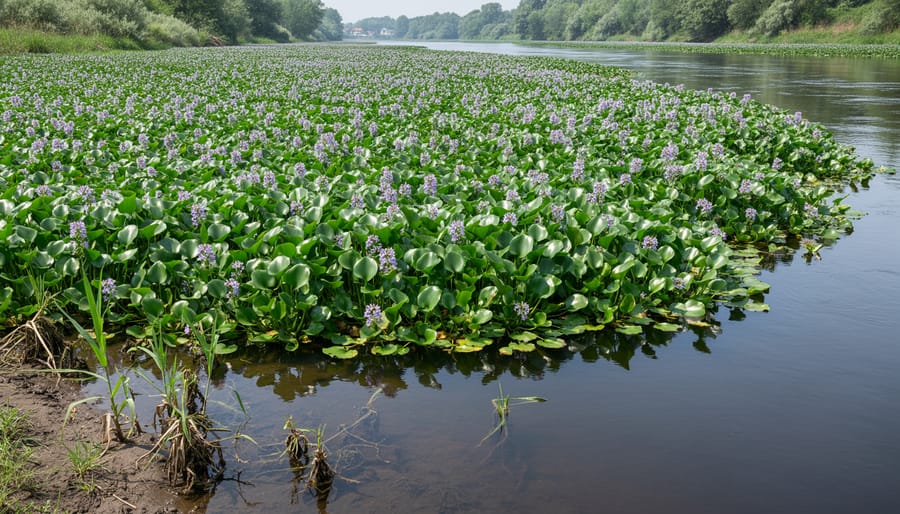
Introduced to Australian waterways in the late 1800s as an attractive ornamental plant for garden ponds, water hyacinth quickly became one of the nation’s most problematic aquatic weeds. This South American native doubles its population in just two weeks under ideal conditions, creating dense floating mats that blanket entire water surfaces.
The transformation from garden feature to environmental menace happened rapidly. Water hyacinth blocks sunlight from reaching underwater plants, depletes oxygen levels, and prevents native fish from feeding and breeding. It clogs irrigation channels, impacts recreational activities, and costs Australian agriculture millions annually in control measures. The plant’s devastating impact on native ecosystems serves as a crucial reminder for today’s bioenergy sector.
However, there’s an optimistic twist to this story. Australian researchers are now exploring water hyacinth as a potential biomass feedstock, transforming this invasive pest into renewable energy. By harvesting excess growth for biogas production, we’re turning an environmental problem into a sustainable solution. This approach demonstrates how understanding past mistakes helps us develop smarter, more beneficial applications for fast-growing aquatic plants in Australia’s renewable energy future.
The Bioenergy Dilemma: Promise Meets Precaution
Giant Reed and Other Fast-Growing Threats
Among the most concerning fast-growing plants that escaped cultivation in Australia, giant reed (Arundo donax) stands as a cautionary tale with direct relevance to modern bioenergy planning. Originally introduced as an ornamental and windbreak plant, this Mediterranean native can grow up to four metres in a single season, forming dense stands along waterways throughout Queensland, New South Wales, and Victoria.
Giant reed’s explosive growth rate – the very characteristic that makes it attractive for biomass production – enables it to outcompete native vegetation and completely transform riparian ecosystems. The plant spreads through underground rhizomes and stem fragments, making control efforts notoriously difficult. A single stem fragment can float downstream and establish a new colony, meaning waterway infestations spread rapidly during floods.
Despite these challenges, there’s hope in emerging management strategies. Several councils have successfully combined mechanical removal with strategic revegetation programs, demonstrating that even well-established invasions can be reversed with sustained effort. These lessons directly inform current discussions about bioenergy crops threatening ecosystems.
Other fast-growing species like silverleaf nightshade and mother-of-millions present similar concerns. Their high productivity comes bundled with aggressive spreading mechanisms and environmental resilience. The key takeaway for Australia’s bioenergy future is clear: growth rate alone shouldn’t determine crop selection. Modern approaches now prioritise containable, sterile varieties and rigorous risk assessments before introducing any high-yield species, ensuring we harness nature’s productivity without repeating past mistakes.
Miscanthus and Switchgrass: Walking the Tightrope
Australia is taking a measured approach to bioenergy crops, learning from its ecological history. Miscanthus and switchgrass, both high-yielding perennial grasses with tremendous energy potential, are currently under careful evaluation. These crops could transform renewable energy production here, but scientists are leaving nothing to chance.
The good news? Researchers are walking the tightrope with precision. Unlike the hasty introductions of the past, modern trials involve rigorous containment protocols and sterile varieties that can’t reproduce in the wild. The CSIRO and various universities are conducting controlled studies across different climate zones, monitoring these plants as closely as a sheepdog watches its mob.
Switchgrass, native to North America, shows particular promise because it thrives on marginal land unsuitable for food crops, potentially producing biomass without competing for prime agricultural space. Miscanthus offers even higher yields per hectare. Both could significantly boost Australia’s renewable energy capacity while creating rural jobs.
The ongoing debate centres on finding that sweet spot between energy security and ecological safety. Some experts advocate for native alternatives like spinifex, while others argue that properly managed introduced species pose minimal risk when grown under strict conditions. What’s clear is that Australia won’t rush this decision. The stakes are understood, the history respected, and the potential rewards worth getting right.
Learning from the Past: Australia’s New Approach to Bioenergy Species
The Weed Risk Assessment System That’s Changing the Game
Australia learned its lessons the hard way, but here’s the good news: those painful experiences with prickly pear, rabbits, and cane toads sparked the creation of one of the world’s most sophisticated early warning systems. The Australian Weed Risk Assessment (WRA) system, developed in the 1990s, now stands as the gold standard that countries worldwide are copying.
This clever system works like a comprehensive background check for plants before they’re allowed into the country. Scientists evaluate potential new species using a detailed questionnaire covering over 49 questions about the plant’s behaviour, growth patterns, and invasive history elsewhere. Each answer generates a score, and if a plant hits certain red flags, it’s rejected before it can cause trouble.
What makes this particularly relevant for bioenergy is that every proposed crop undergoes this rigorous vetting process. When researchers consider introducing new plants for renewable energy production, the WRA assesses whether they’re likely to escape cultivation, survive in Australian conditions, and potentially become the next environmental disaster.
The system’s track record speaks for itself. Since implementation, it’s prevented countless potential invasions while still allowing beneficial species through. It’s not about saying no to everything; it’s about making informed, evidence-based decisions. This proactive approach means Australia can confidently pursue bioenergy opportunities without repeating past mistakes, turning historical failures into future-focused wisdom that protects our unique ecosystems.
Native Alternatives: The Smart Money Solution
Australia’s own backyard holds the answer to avoiding invasive species disasters while meeting our renewable energy needs. Rather than gambling with introduced plants, smart farmers and communities across the country are already tapping into native species that deliver impressive bioenergy results without the environmental risks.
Mallee eucalyptus stands out as a champion of sustainable bioenergy development. These hardy natives, already thriving in Western Australia’s wheatbelt, provide farmers with a dual income stream. The trees grow back after harvesting, producing biomass for energy while simultaneously drawing up salt from degraded soils. One farming family near Narrogin transformed 200 hectares of salt-affected land into productive mallee plantations, now harvesting biomass every few years while watching native birds return to their property.
Native grasses tell an equally encouraging story. Species like kangaroo grass and wallaby grass require minimal water and fertilizer, making them perfectly suited to our climate. Research stations in Victoria have demonstrated these grasses can produce substantial biomass yields while providing habitat for native insects and small animals.
Spinifex, that quintessentially Australian grass dotting our arid regions, also shows promise for biofuel production in areas where traditional crops struggle. These native solutions prove we don’t need to risk another prickly pear scenario. Our landscape already offers everything needed for clean energy production, evolved over millions of years to thrive here without causing havoc.
Making Bioenergy Work Without the Risk
Australia’s learned from past mistakes, and the future of bioenergy looks promising thanks to smart safeguards that protect our unique environment while delivering clean energy. The good news? We can absolutely harness bioenergy without repeating history’s ecological disasters.
Leading the charge are containment strategies that keep energy crops exactly where they belong. Research facilities across Australia now use physical barriers, buffer zones, and controlled growing environments to prevent any accidental escapes into the wild. Think of it as a biosecurity fence for plants—simple but effective.
Even more exciting are sterile varieties of bioenergy crops. Scientists have developed plants that simply can’t reproduce in the environment, eliminating invasion risks entirely. These genetically modified varieties produce excellent biomass for energy production but lack viable seeds or spreading mechanisms. It’s brilliant innovation that addresses environmental concerns head-on.
Queensland’s sugarcane research stations showcase this approach beautifully. They’re trialling sterile hybrid varieties that deliver outstanding ethanol yields without any chance of becoming the next cane toad saga. These trials demonstrate that we can be ambitious with renewable energy while remaining responsible environmental stewards.
Real-time monitoring systems add another layer of protection. Satellite technology, drones, and ground sensors now track bioenergy crops continuously, detecting any unexpected spread before it becomes problematic. Early warning systems mean rapid response, stopping potential issues in their tracks.
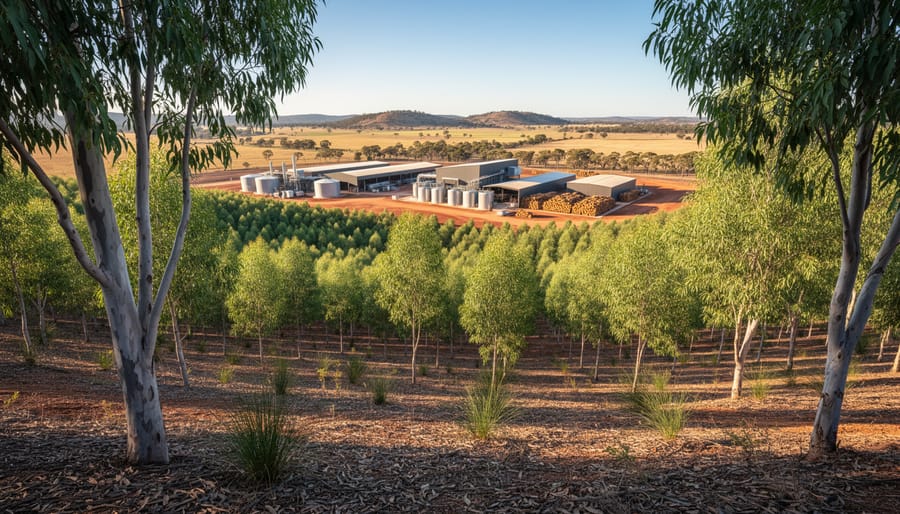
The Southern Oil Mallee Project exemplifies best practice. This Western Australian initiative uses native eucalyptus species specifically adapted to local conditions, dramatically reducing invasion risk while supporting biodiversity. The project creates wildlife corridors, prevents salinity, and produces renewable oil—proving environmental protection and energy production work hand-in-hand.
These practical solutions mean Australia’s bioenergy industry can grow confidently, backed by science, monitored rigorously, and designed with nature in mind. We’re not just avoiding past mistakes—we’re creating a genuinely sustainable energy future.
Australia’s journey with invasive species—from the prickly pear that swallowed millions of hectares to the cane toads still hopping across the continent—has taught us some hard but invaluable lessons. These weren’t just environmental mishaps; they were wake-up calls that fundamentally changed how we approach introducing any non-native organism to our unique ecosystems. The pain of these past mistakes, however, is now paving the way for something remarkable: a bioenergy revolution built on wisdom rather than wishful thinking.
Today’s approach to bioenergy couldn’t be more different from the cavalier introductions of yesteryear. Rigorous risk assessments, native species prioritization, and containment strategies are now standard practice. We’re harnessing the energy potential of Australian natives like eucalyptus and acacia, species that belong here and support rather than threaten our biodiversity. Success stories are emerging across the country, where agricultural waste transforms into renewable energy without introducing a single risky organism.
Australia’s clean energy future is being built on the foundation of our hard-won ecological knowledge. By embracing native alternatives and applying strict biosecurity measures, we’re proving that sustainable energy and environmental protection aren’t competing goals—they’re partners in progress.
The path forward is clear: support research into native bioenergy crops, demand rigorous environmental assessments, and champion projects that learn from history rather than repeat it. Together, we can power Australia sustainably while protecting the irreplaceable ecosystems that make this country extraordinary.