
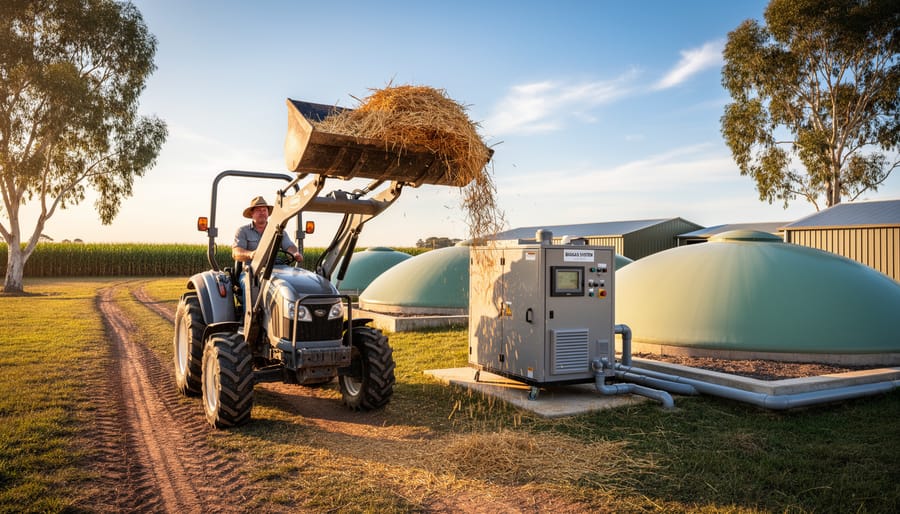
Australia’s agricultural heartland holds an extraordinary opportunity hiding in plain sight: the crop residues, animal waste, and purpose-grown plants that typically decompose in fields can power our vehicles, heat our homes, and drive our industries. Feedstock biofuel transforms these organic materials into renewable energy, creating a circular economy where nothing goes to waste and every harvest yields double value.
Across the continent, farmers are already turning wheat straw, sugarcane bagasse, and canola stubble into liquid fuels and biogas, generating additional income streams while reducing carbon emissions. The process begins with collecting agricultural biomass, processing it through various conversion technologies like fermentation or pyrolysis, and refining it into usable fuel. What makes this particularly relevant for Australian producers is the sheer scale of available material: millions of tonnes of agricultural residue currently left in paddocks could fuel the nation’s transition to renewable energy.
The logistics might seem daunting at first glance. How do you efficiently gather scattered crop waste? Where do you store seasonal biomass year-round? How do you transport bulky materials cost-effectively? Yet innovative Australian operations have cracked these challenges, developing mobile processing units, establishing regional collection hubs, and creating partnerships between neighboring properties to share infrastructure costs.
This isn’t tomorrow’s technology. It’s happening now, creating jobs in regional communities, strengthening farm resilience, and proving that environmental responsibility and economic prosperity can flourish together on Australian soil.
What Is Feedstock Biofuel?
Feedstock biofuel represents one of Australia’s most promising pathways toward energy independence and environmental sustainability. At its core, feedstock biofuel is renewable energy produced from organic materials—specifically, the biological matter we call feedstock. Think of it as capturing the sun’s energy stored in plants and organic waste, then converting it into usable fuel for transportation, heating, and electricity generation.
What sets feedstock biofuel apart from other renewables like solar panels or wind turbines is its incredible versatility. Rather than relying on weather conditions, feedstock biofuel transforms agricultural residues, forestry waste, sugarcane bagasse, and even food scraps into liquid fuels, biogas, or solid pellets. This means a wheat farmer in the Riverina can turn leftover crop stubble into energy, while a Queensland sugar mill can power its operations using crushed cane waste.
The magic happens through bioconversion technology, which breaks down organic materials through processes like fermentation, anaerobic digestion, or thermal conversion. Unlike fossil fuels formed over millions of years, feedstock biofuel creates a closed carbon loop—the carbon dioxide released when burning biofuel was recently absorbed by the plants during growth, making it significantly more climate-friendly.
For Australians, feedstock biofuel offers a particularly compelling opportunity. Our vast agricultural sector generates millions of tonnes of organic waste annually that traditionally gets burned or left to decompose. By viewing this material as valuable feedstock rather than waste, we’re transforming a disposal challenge into an energy solution that supports regional communities, reduces emissions, and strengthens our energy security.
From Paddock to Pump: The Journey of Australian Agricultural Feedstocks
Crop Residues: Making the Most of What’s Left Behind
After harvest season, Australian farms are left with mountains of what many consider waste, but these crop residues are actually treasure troves of bioenergy potential. Rather than burning wheat stubble or letting sugarcane bagasse pile up, forward-thinking farmers and processors are transforming these leftovers into valuable biofuel feedstock.
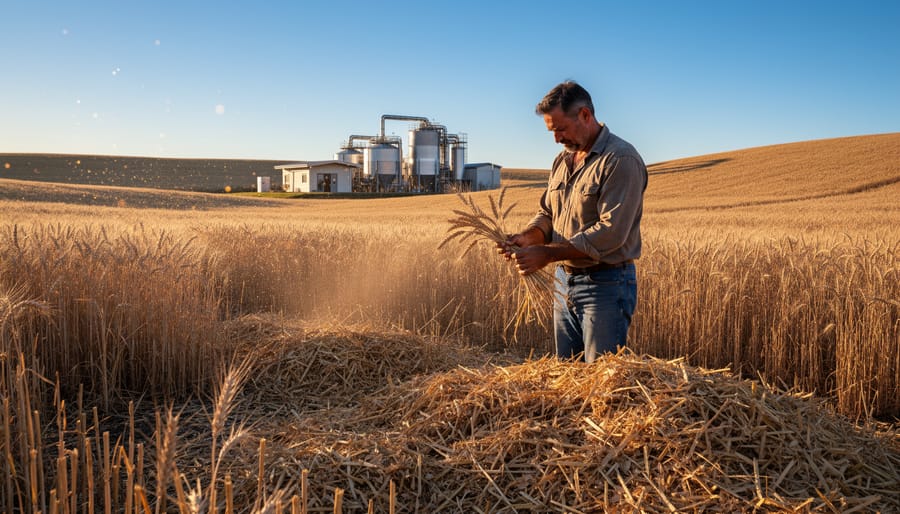
Wheat stubble, the stalks and chaff remaining after grain harvest, covers millions of hectares across Australia’s grain belt. Instead of the traditional burn-off that releases carbon into the atmosphere, this material can be collected and converted into biofuels or used to generate electricity. Some Western Australian grain growers are already partnering with bioenergy companies to bale and transport stubble to processing facilities, creating an additional income stream while reducing fire risks.
Sugarcane bagasse represents one of Australia’s most successful crop residue stories. After juice extraction, sugar mills in Queensland are using the fibrous bagasse to power their own operations, with some facilities generating enough electricity to feed surplus energy back into the grid. The Mackay region’s sugar industry has become largely energy self-sufficient through this approach, demonstrating the practical viability of residue-to-energy systems.
Cotton gin trash, corn stover, and rice hulls round out Australia’s crop residue portfolio. The beauty of these materials lies in their abundance and availability right where agriculture already happens, eliminating the need for dedicated energy crop production. By viewing crop residues as resources rather than waste, Australian agriculture is closing the loop on sustainability.
Purpose-Grown Energy Crops: Australia’s Biofuel Potential
Australia’s vast landscapes and diverse climate zones present remarkable opportunities for cultivating bioenergy crops specifically designed for fuel production. Unlike traditional food crops diverted to energy use, these purpose-grown plants maximize biomass yield while thriving in conditions often unsuitable for conventional agriculture.
Native grasses like Rhodes grass and panic grass have already demonstrated their potential across northern regions, converting marginal land into productive energy sources without competing with food production. These resilient species require minimal water and fertilizer, making them economically viable even during dry spells.
In temperate zones, canola and safflower are showing promise as oil-rich crops perfect for biodiesel production. Meanwhile, innovative trials with fast-growing eucalyptus varieties in Queensland are generating excitement among farmers seeking sustainable income streams from previously underutilized properties.
The real advantage lies in matching the right crop to each region’s unique conditions. A cattle station in Western Australia successfully integrated saltbush cultivation, producing biofuel feedstock while improving soil quality. These practical examples prove that purpose-grown energy crops can transform Australian agriculture, creating new opportunities while supporting our renewable energy goals.
Organic Waste: Turning Problems Into Power
What was once considered a disposal headache is now proving its worth as valuable biofuel feedstock. Across Australia, organic waste—from animal manure to food scraps—is being transformed into clean, renewable energy. Smart farmers and innovative businesses are discovering that these materials, previously seen as environmental challenges, can power homes, vehicles, and entire operations. Agricultural operations are leading the charge, converting livestock waste into energy through anaerobic digestion and other proven technologies. Food processing facilities are following suit, redirecting thousands of tonnes from landfill to biogas production. The beauty of organic waste feedstock lies in its abundance and local availability—turning environmental problems into power solutions while creating new revenue streams for Australian producers.
The Logistics Challenge: Getting Feedstock From Farm to Facility
Collection and Harvesting Methods That Work
Australian farmers and producers have developed smart, practical approaches to collecting and harvesting biofuel feedstock that make economic and environmental sense. Many grain growers are now baling crop stubble that would previously be burnt, turning waste into valuable income. This method works particularly well after wheat and barley harvests, where specialised balers collect and compress the leftover straw into transportable bales.
For sugarcane producers, the collection of bagasse has become second nature. After crushing, this fibrous residue is stored on-site and fed directly into cogeneration facilities, creating a closed-loop system that powers the mill itself. Some forward-thinking operations are even selling excess electricity back to the grid.
Livestock farmers are successfully capturing methane from manure through covered lagoon systems and anaerobic digesters. These systems work around the clock, converting what was once a disposal problem into clean energy. The beauty of this approach is that it manages waste whilst generating power and producing nutrient-rich fertiliser as a bonus.
Forestry operations have refined their collection of timber offcuts, bark, and sawdust, using mobile chippers and efficient transport logistics to deliver consistent feedstock supplies to biomass plants. The key to success across all these methods is coordination between producers and energy facilities, ensuring reliable supply chains that benefit everyone involved.
Storage Solutions for the Australian Climate
Australia’s diverse climate zones demand smart storage strategies to protect feedstock quality before conversion to biofuel. In the tropical north, where humidity can exceed 80 percent during the wet season, proper moisture management becomes critical. Agricultural residues like sugarcane bagasse and cotton gin trash must be stored in covered facilities with adequate ventilation to prevent mould growth and degradation, which can reduce their energy content by up to 30 percent.
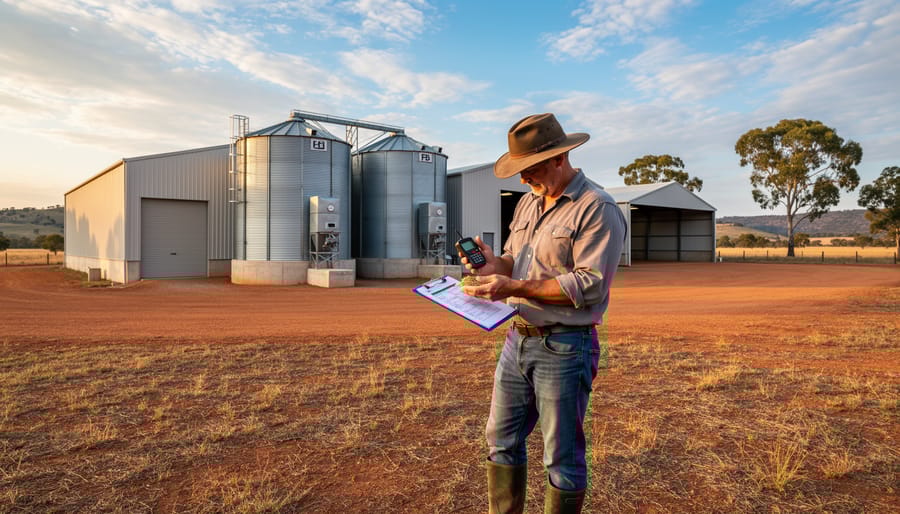
Down south in temperate regions, farmers have found success with simple yet effective solutions. Wheat and barley straw, common feedstocks in Victoria and South Australia, store well in tightly packed bales covered with breathable tarps that shed rain while allowing moisture to escape. Some innovative producers are using sealed silos with monitoring systems that track temperature and humidity in real-time, giving them peace of mind and preserving feedstock quality year-round.
In the arid interior, UV protection matters most. Direct sunlight can break down lignin and cellulose in stored biomass, so shaded storage areas extend feedstock viability. Regional cooperatives are increasingly sharing storage infrastructure, making proper facilities accessible to smaller producers and strengthening local biofuel supply chains across the continent.
Transport Economics: Making the Numbers Stack Up
Getting feedstock from farm to facility needs smart thinking and solid economics. Transport costs can make or break a biofuel project, which is why successful Australian operations are embracing regional hub models that slash kilometres and boost efficiency.
Think of it like a milk collection run – rather than every farm sending individual loads, feedstock travels to local aggregation points where it’s processed or consolidated before heading to major biofuel facilities. This approach has worked brilliantly in Queensland’s sugar cane regions, where bagasse from multiple mills feeds into centralised bioenergy plants.
The numbers stack up when you consider that transport typically represents 20-30% of feedstock costs. By establishing hubs within 50-100 kilometre radiuses, operators dramatically reduce diesel consumption while supporting local jobs. Some clever operations even backload empty trucks with biofertiliser or biochar, creating circular economies that benefit everyone.
Mobile processing units are another game-changer, bringing the technology to the feedstock rather than vice versa. It’s fair dinkum innovation that makes remote Australian operations viable while keeping costs competitive with traditional fuels.
Success Stories: Australian Farmers and Communities Leading the Way
Across Australia, innovative farmers and regional communities are proving that feedstock biofuel isn’t just a theoretical solution—it’s a practical reality delivering real benefits today.
In Queensland’s Darling Downs, the Millmerran Power Station has pioneered the use of agricultural waste as biofuel feedstock. The facility collects crop residues from surrounding grain farms, converting wheat straw and sorghum stubble that would otherwise be burned or left to decompose into valuable energy. Local farmers now have an additional revenue stream, earning income from material that was once considered waste. One participating farmer, Sarah Mitchell, explains: “We’re getting paid for stubble that used to just sit in our paddocks. It’s turned a problem into an opportunity, and we’re helping generate clean energy for the region.”
In Western Australia, the Narrogin community has embraced canola-based biodiesel production. A cooperative of local farmers grows canola specifically for biofuel processing, with the resulting biodiesel powering farm machinery, local transport, and even emergency service vehicles. The closed-loop system keeps economic benefits within the community while reducing diesel imports. Council member Tom Bradley notes the project has created six permanent jobs and reduced the town’s carbon emissions by 15 percent since 2019.
Victoria’s Gippsland region showcases how forestry residues can fuel progress. Timber mills that once struggled with waste disposal now supply woodchips to bioenergy facilities. This has transformed disposal costs into profit while generating enough electricity to power 5,000 homes. The initiative demonstrates how renewable energy on farms and in forestry operations can work hand-in-hand with traditional industries.
In New South Wales, sugarcane farmers around Broadwater have partnered with a bioethanol plant that processes bagasse—the fibrous residue after crushing. The facility produces transport-grade ethanol while generating electricity for the local grid. Farmer James Peterson says: “We’re getting better prices for our cane, and the mill’s using every bit of the plant. Nothing goes to waste anymore.”
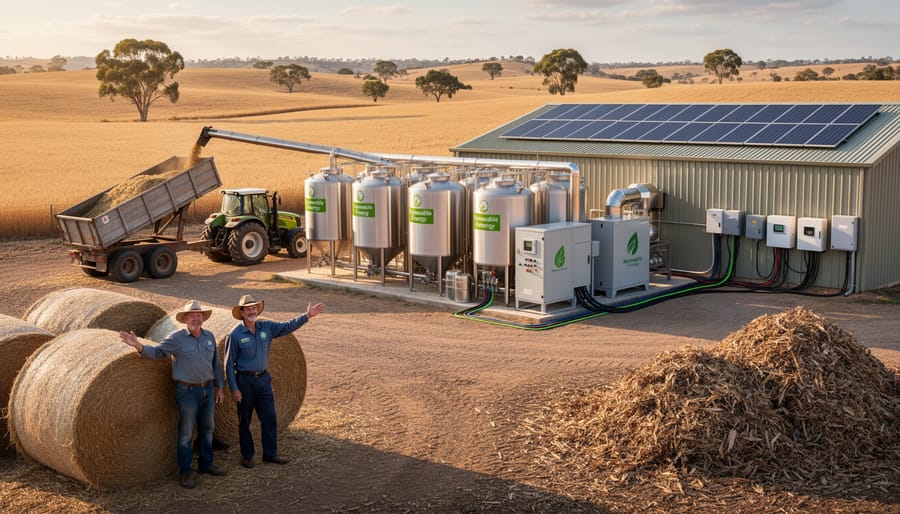
These success stories share common threads: collaboration between farmers and processors, practical solutions addressing local challenges, and tangible economic and environmental benefits. They prove that Australian ingenuity, combined with our abundant agricultural resources, positions the nation as a leader in sustainable biofuel production. These projects aren’t just reducing emissions—they’re strengthening rural economies and building energy independence from the ground up.
The Triple Win: Environmental, Economic, and Social Benefits
Cutting Carbon While Creating Value
Feedstock biofuels deliver impressive environmental wins that translate into tangible benefits for our planet. When agricultural waste like sugarcane bagasse or wheat stubble becomes fuel instead of releasing methane as it decomposes in fields, we’re talking serious carbon emissions reduction. To put it in perspective, converting just one tonne of crop residue into biofuel can prevent emissions equivalent to taking a car off Australian roads for three months.
Take the Logan City Council in Queensland, for example. Their fleet now runs partially on biofuel made from local waste cooking oil and agricultural by-products, cutting their transport emissions by 30 percent annually. That’s like planting 10,000 trees every year without breaking new ground.
Beyond emissions, this approach creates genuine value. Farmers receive payment for materials previously considered rubbish, communities gain cleaner air, and businesses demonstrate environmental leadership. One Victorian grain grower recently shared how selling his wheat straw for biofuel production now covers his annual water costs, proving sustainability and profitability can absolutely go hand in hand.
New Income Streams for Rural Australia
The feedstock biofuel industry is breathing new life into rural communities across Australia, creating opportunities that extend well beyond the farm gate. For primary producers, agricultural residues that once went to waste can now generate meaningful additional income. A wheat farmer in the Riverina, for instance, can now sell their stubble and straw for biofuel production, transforming what was once burned or ploughed back into soil into a valuable commodity.
This emerging sector is creating diverse employment opportunities in regional areas where job prospects have traditionally been limited. Beyond farming, there’s demand for logistics coordinators, plant operators, maintenance technicians, and quality control specialists. A single biofuel processing facility can employ dozens of people directly, with hundreds more jobs created indirectly through the supply chain.
Regional towns are particularly well-positioned to benefit from this shift. When a biofuel plant establishes operations in a rural community, it creates a ripple effect throughout the local economy. Service providers, cafes, accommodation venues, and retail businesses all see increased activity. In Queensland’s Darling Downs, communities near biofuel facilities have reported noticeable economic uplift, with young families choosing to stay rather than migrate to cities for work.
The beauty of this model is its sustainability. Unlike mining operations that eventually exhaust resources, agricultural feedstock production is renewable year after year, providing long-term economic stability for regional Australia while supporting our transition to cleaner energy.
Getting Started: What This Means for You
Whether you’re a farmer eyeing new income streams, an industry professional exploring green opportunities, or simply an everyday Australian wanting to support the renewable energy transition, feedstock biofuel offers tangible pathways forward.
For farmers and agricultural producers, feedstock biofuel represents a genuine opportunity to transform what was once considered waste into valuable revenue. Start by assessing what’s already growing on your land. Got sugar cane bagasse piling up after harvest? Wheat stubble left in the paddock? Even algae in farm dams can become feedstock. The first step is connecting with regional biofuel processors or agricultural cooperatives already facilitating feedstock collection. Many producers are partnering with aggregators who handle the logistics, making entry surprisingly straightforward. Consider starting small with a portion of your agricultural residues while maintaining your core operations.
Industry professionals and investors should look to Australia’s expanding biofuel infrastructure. The sector needs expertise in supply chain management, agricultural logistics, and processing technology. Opportunities exist across the value chain, from feedstock collection and transport to refining and distribution. Regional processing hubs are emerging across Queensland, New South Wales, and Western Australia, creating jobs and economic activity in agricultural communities.
For everyday Australians, supporting this transition means making informed choices. When available, choose biofuels at service stations. Support policies that encourage agricultural diversification and renewable energy development. Even conversations with friends and family about sustainable alternatives help shift the national mindset. The beauty of feedstock biofuel is that it grows from the ground up, quite literally, with benefits flowing back to the communities producing it. Every choice toward renewable options strengthens Australia’s energy independence while supporting our agricultural heartland.
Remember Sarah from regional Queensland, who transformed her farm’s waste into something extraordinary? Her story isn’t just about one successful operation—it represents the dawn of a genuine movement reshaping Australia’s energy landscape. From the wheat fields of Western Australia to the sugarcane plantations of the tropical north, farmers and businesses are discovering that yesterday’s agricultural waste can power tomorrow’s sustainable future.
Australia’s biofuel potential isn’t pie-in-the-sky dreaming. It’s happening right now, in communities across the country. We’ve got the feedstock, the ingenuity, and the determination to make it work. The logistics challenges that once seemed insurmountable are being solved through collaboration, innovation, and good old-fashioned Aussie resourcefulness. Every collection point established, every local partnership formed, and every processing facility brought online strengthens the entire network.
The beauty of feedstock biofuel is that it invites everyone to participate. Whether you’re a farmer looking to add value to your agricultural residues, a business seeking renewable fuel alternatives, or simply someone passionate about reducing carbon emissions, there’s a place for you in this growing industry. Start small—talk to local bioenergy initiatives, explore what feedstock resources exist in your region, or investigate how your organization might integrate renewable fuels.
Australia’s energy transition is built on stories like Sarah’s, multiplied across thousands of properties and communities. Your story could be next.