
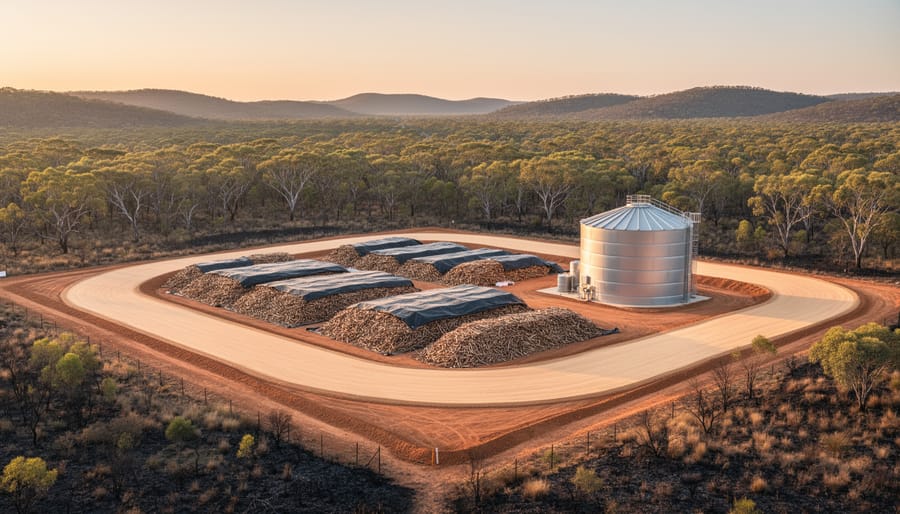
Australia’s landscape tells a story of fire—from ancient Aboriginal burning practices to devastating modern bushfires that reshape communities and ecosystems. For anyone developing bioenergy projects across this sunburnt country, understanding high fire risk areas isn’t just regulatory box-ticking; it’s fundamental to creating resilient, community-supported renewable energy solutions that work with our environment rather than against it.
High fire risk areas encompass regions where vegetation types, climate patterns, and landscape features combine to create elevated bushfire danger. In Australia, this includes much of our southeast forests, Western Australian woodlands, and northern grasslands—precisely where abundant biomass makes bioenergy projects most viable. The intersection creates both challenge and opportunity.
Yet here’s the encouraging reality: dozens of Australian bioenergy operations are successfully managing fire risk while generating clean energy from agricultural residues, forestry waste, and purpose-grown crops. These pioneers demonstrate that understanding your site’s fire risk classification, implementing science-based fuel management strategies, and engaging local fire services transforms potential vulnerability into operational strength.
This guide walks through what qualifies as high fire risk areas in Australian contexts, how these classifications directly impact bioenergy project planning and permits, and most importantly, the proven strategies that turn fire risk from a project-killer into a manageable aspect of sustainable operations. Whether you’re a landowner exploring biomass opportunities, an operator navigating compliance, or a policymaker shaping frameworks, practical solutions already exist—and they’re working across the country right now.
What Makes an Area ‘High Fire Risk’ in Australia?
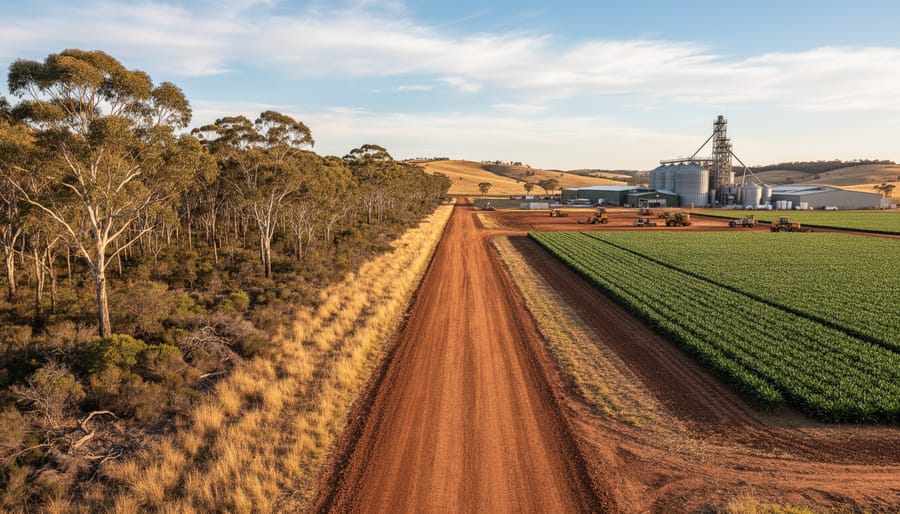
The Australian Fire Danger Rating System
Australia’s fire danger rating system provides a clear framework for understanding and responding to bushfire risk across different regions. The Australian Fire Danger Rating System classifies areas from Moderate through to Extreme and Catastrophic, helping communities and businesses prepare accordingly. For bioenergy operators, these ratings are essential planning tools that directly influence site selection, operational procedures, and emergency response protocols.
The system considers factors like temperature, humidity, wind speed, and fuel load to determine daily fire danger levels. When ratings reach Very High or above, bioenergy facilities in these zones must implement heightened safety measures. This might include adjusting processing schedules, increasing water supplies, or temporarily halting certain operations. Understanding your local fire danger rating isn’t about limiting opportunities; it’s about smart planning that keeps people safe while maintaining productive operations.
Many successful bioenergy projects across Australia have thrived by incorporating fire danger ratings into their operational planning from day one. These forward-thinking operators demonstrate that with proper preparation and respect for local conditions, bioenergy can operate safely even in bushfire-prone regions, turning potential challenges into well-managed considerations.
Why Bioenergy Landscapes Face Unique Fire Challenges
Bioenergy landscapes occupy a fascinating middle ground in Australia’s fire risk equation. When managed thoughtfully, these areas can actually reduce fire hazards, but poor practices can transform them into potential tinderboxes.
Think of biomass cultivation zones as active participants in fire prevention. Well-maintained bioenergy crops like fast-growing eucalyptus or perennial grasses create managed green zones that act as firebreaks when properly spaced and irrigated. These cultivated areas replace highly flammable, unmanaged vegetation with controlled fuel sources that are harvested regularly, reducing overall fuel loads across the landscape.
However, the flip side presents genuine challenges. Collection sites for forestry residues and agricultural waste can become fire hazards if material isn’t processed quickly. Dried biomass stockpiles during hot Australian summers essentially become concentrated fuel sources. The very quality that makes biomass valuable for energy production—its combustible nature—creates risk when storage isn’t carefully managed.
The good news is that Australian bioenergy operators are pioneering smart solutions. Strategic placement of biomass storage away from bushland interfaces, moisture monitoring systems, and rapid processing schedules minimise risk windows. Some facilities have embraced the “just-in-time” approach, coordinating collection and processing to keep stockpiles minimal during high-risk periods.
The key lies in recognising that bioenergy landscapes aren’t inherently risky or safe—they’re what we make them through deliberate management choices. With proper planning, these sites become part of the fire risk solution rather than contributors to the problem.
Where High Fire Risk and Bioenergy Intersect in Australia
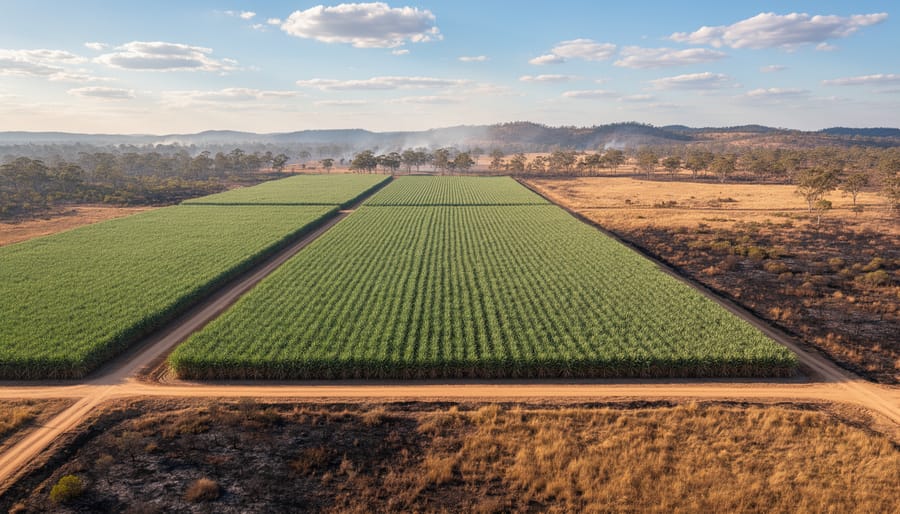
Regional Hotspots: From Queensland Cane Fields to Victorian Forests
Australia’s bioenergy landscape tells a story of diversity and challenge, with operations spanning some of our most fire-prone regions. In Queensland’s sugarcane heartland, stretching from Bundaberg to the far north, agricultural bioenergy operations transform cane waste into power whilst navigating the state’s severe fire season. These coastal regions, classified as high or extreme fire danger areas, have pioneered practical approaches to seasonal biomass management, proving that renewable energy and fire safety can work hand-in-hand.
Victoria’s timber country presents another success story. In the high country and Gippsland forests, forestry residue projects operate within some of Australia’s most bushfire-vulnerable landscapes. After the devastating 2009 Black Saturday fires, these operations have become exemplars of responsible fuel management, turning potential fire hazards into clean energy while actively reducing fire risk for surrounding communities.
South Australia’s grain belt around the Adelaide Hills and Barossa Valley demonstrates how bioenergy can strengthen rural resilience. Here, wheat stubble and vineyard prunings that once posed seasonal fire risks now fuel local energy generation, with operators implementing year-round safety protocols.
Even Western Australia’s southwest forests, home to unique karri and jarrah ecosystems, host bioenergy projects that prioritize both environmental stewardship and bushfire mitigation. These real-world examples prove that with proper planning and commitment, Australian bioenergy can thrive safely in high-risk areas.
The Silver Lining: How Bioenergy Can Actually Reduce Fire Risk
Here’s the encouraging news: sustainable biomass harvesting can actually make communities safer by removing the very material that fuels catastrophic bushfires. In Tasmania’s northeast, strategic biomass collection from plantation forests has reduced fuel loads by up to 70 percent, creating natural firebreaks while generating clean energy. Victorian communities are following suit, with local councils partnering with bioenergy facilities to clear undergrowth and forest thinnings that would otherwise become dangerous fire fuel. This approach delivers a double win: protecting homes and infrastructure while creating valuable renewable energy resources. These real-world examples prove that bioenergy isn’t just about power generation; it’s a practical fire management tool that strengthens community resilience. By turning fire risk into opportunity, Australia is pioneering a smarter approach to forest management that benefits both people and planet.
Practical Fire Risk Management Strategies for Bioenergy Operations
Strategic Biomass Storage and Handling
Safe biomass storage in high fire risk areas requires careful planning and disciplined practices. Implementing proper biomass storage practices can dramatically reduce fire hazards while maintaining operational efficiency.
Start by maintaining adequate clearance zones. Store biomass piles at least 20 metres from buildings, property boundaries, and other fuel sources. This distance provides critical buffer space for firefighting access and limits fire spread potential. In extreme fire danger areas, consider increasing this distance to 30 metres or more.
Moisture management is your best defence against spontaneous combustion. Keep biomass moisture content between 15-20 percent for wood chips and similar materials. Material that’s too dry increases ignition risk, while overly wet biomass can heat internally through microbial activity. Regular moisture testing with simple probes helps maintain safe levels.
Pile sizing matters significantly. Limit stockpiles to 500 cubic metres maximum, with heights not exceeding 5 metres. Smaller piles reduce internal heat buildup and allow better airflow. Create separation gaps of at least 10 metres between individual piles to prevent fire jumping.
Victorian operator Gippsland Bioenergy successfully implemented these strategies across their facilities, achieving five years without storage-related incidents while maintaining year-round operations. Their systematic approach proves that safety and productivity go hand in hand.
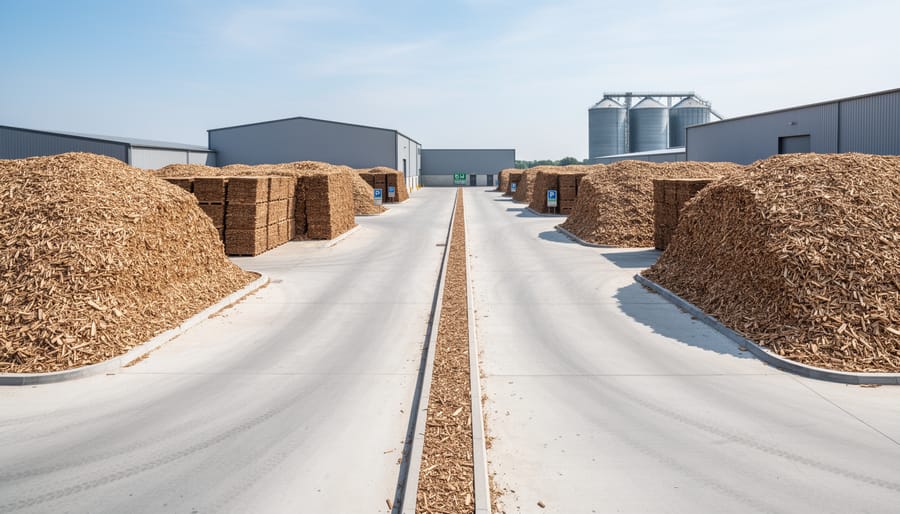
Creating Effective Fire Breaks in Bioenergy Landscapes
Effective fire breaks are your first line of defence in protecting bioenergy operations from bushfire threat. In Australian bioenergy landscapes, fire breaks should be at least 10-20 metres wide around biomass storage facilities and cultivation areas, though this varies depending on your local fire authority requirements and the specific vegetation you’re managing.
When designing fire breaks around bioenergy crops like switchgrass or miscanthus, remove all flammable vegetation down to mineral soil or maintain low-growing, high-moisture ground covers. Native succulent species work particularly well in Australian conditions, as they retain moisture and resist ignition. Regular maintenance is crucial – conduct inspections before each fire season and keep breaks clear of fallen leaves, dead plant matter, and accumulated biomass.
Consider the unique characteristics of your bioenergy crops when planning breaks. Some biomass species cure differently than native bush, potentially creating different fire behaviour patterns. A Victorian bioenergy farm successfully implemented a dual-break system: an inner break of irrigated kikuyu grass and an outer mineral earth break, creating redundancy in their fire protection.
Strategic placement matters too. Position breaks to account for prevailing winds and natural fire corridors, and ensure they connect to existing rural fire service access roads. This integrated approach transforms fire breaks from simple barriers into part of a comprehensive safety network that protects both your investment and the surrounding community.
Timing Your Operations Around Fire Season
Smart planning around fire seasons can be the difference between a profitable bioenergy operation and costly shutdowns. In Australia, most regions experience peak fire danger between November and March, though northern areas may see earlier conditions. The key is building flexibility into your operation while maintaining year-round productivity.
Consider scheduling major harvesting activities for the cooler months from April to September when fire danger ratings are typically lower. This approach worked brilliantly for a Victorian woody biomass operation that shifted 70 percent of their collection activities to autumn and winter, significantly reducing their exposure to Total Fire Ban days.
For processing and transport, establish clear trigger points based on Fire Danger Ratings. Many successful operators implement a tiered response system: normal operations on Low-Moderate days, modified schedules on High days, and cessation of high-risk activities when Very High or above is forecast.
During the hotter months, focus on lower-risk activities like maintenance, equipment upgrades, and stockpile management at well-protected sites. Creating strategic stockpiles during cooler months ensures you can continue supplying customers even when harvesting becomes impractical. This forward-thinking approach keeps revenue flowing while prioritising safety and community responsibility throughout the year.
Emergency Response Planning for Bioenergy Sites
Every bioenergy facility in high fire risk areas needs a robust emergency response plan that could save lives and infrastructure. Start by establishing clear communication protocols that ensure all staff members know their roles during a fire emergency. This means creating phone trees, designating assembly points, and ensuring everyone can access emergency contacts even when mobile networks are down.
Coordination with your local rural fire services is crucial, and this relationship shouldn’t begin when flames appear on the horizon. Schedule regular meetings with fire authorities to walk through your site, discuss potential hazards, and align your response procedures with their protocols. Many successful bioenergy operators in bushfire-prone regions have formed brilliant partnerships with local brigades, even providing access to water storage tanks for firefighting purposes.
Your emergency plan should include detailed site maps showing access roads, fuel storage locations, and water sources. Keep firefighting equipment maintained and accessible, train staff in its use, and conduct regular fire drills. Document evacuation procedures and ensure backup power systems can operate safety controls during emergencies. This practical preparation transforms fire risk from a frightening prospect into a manageable challenge.
Success Story: How One Queensland Sugarcane Operation Turned Fire Risk into Opportunity
When the Mackay Sugar region approached Wilmar Sugar Australia about converting their cane trash into energy, many observers thought it was a risky proposition. Located in one of Queensland’s most bushfire-prone regions, the idea of stockpiling agricultural waste seemed counterintuitive at best, dangerous at worst. But today, their cogeneration facility stands as a shining example of how proper fire risk management and bioenergy can work hand in hand.
The operation processes approximately 150,000 tonnes of sugarcane bagasse annually, producing enough renewable electricity to power 20,000 homes while significantly reducing the region’s fire risk. Rather than burning cane fields before harvest—a traditional practice that released massive amounts of carbon and created unpredictable fire conditions—the facility now uses controlled processes to convert this material into clean energy.
The secret to their success lies in a comprehensive fire management strategy developed in partnership with Queensland Fire and Emergency Services. They implemented multiple layers of protection: dedicated firebreaks surrounding storage areas, continuous moisture monitoring of biomass stockpiles, automated sprinkler systems that activate at the first sign of heat, and strict protocols for material handling during extreme fire danger days.
Perhaps most impressively, the facility has operated for over five years without a single fire incident, despite being classified in a very high bushfire risk area. Local fire brigades report a 40 percent reduction in callouts to agricultural fires in the surrounding region since the facility began operations.
The economic benefits have been equally remarkable. The operation has created 35 permanent jobs and provides guaranteed income for local cane growers who now sell their crop residue instead of burning it. Energy generated feeds directly into the grid, helping Queensland meet its renewable energy targets while demonstrating that high fire risk areas can become hubs for sustainable energy production when approached with proper planning and respect for the unique challenges these environments present.
Regulations and Resources for Managing Fire Risk in Bioenergy Projects
Working With Your Local Rural Fire Service
Your local Rural Fire Service isn’t just a resource for emergencies—they’re valuable partners in building fire-resilient bioenergy operations. Reach out early, ideally before finalising site plans, to understand their specific concerns and recommendations for your area. Most RFS districts offer free property assessments where experienced volunteers can identify vulnerabilities and suggest practical improvements tailored to your operation.
These partnerships work both ways. Many successful bioenergy operators invite their local RFS brigade for site familiarisation visits, showing them access routes, water points, and fuel storage locations. This means firefighters already know your layout if they ever need to respond, making everyone safer. Some facilities have even become community fire refuges or water refill stations during bushfire season—a practical contribution that strengthens community ties.
Regular communication matters too. Share your fire management plans, attend local fire management committee meetings, and consider sponsoring equipment or training. The Wimmera bioenergy facility’s collaboration with their local brigade demonstrates how cooperative relationships create win-win outcomes: operators gain expert guidance while communities benefit from well-prepared, fire-conscious neighbours who genuinely contribute to regional safety.
The Future: Technology and Innovation in Fire-Safe Bioenergy
The horizon looks remarkably bright for bioenergy operations in high fire risk areas, with Australian innovators leading the charge in developing game-changing technologies and practices.
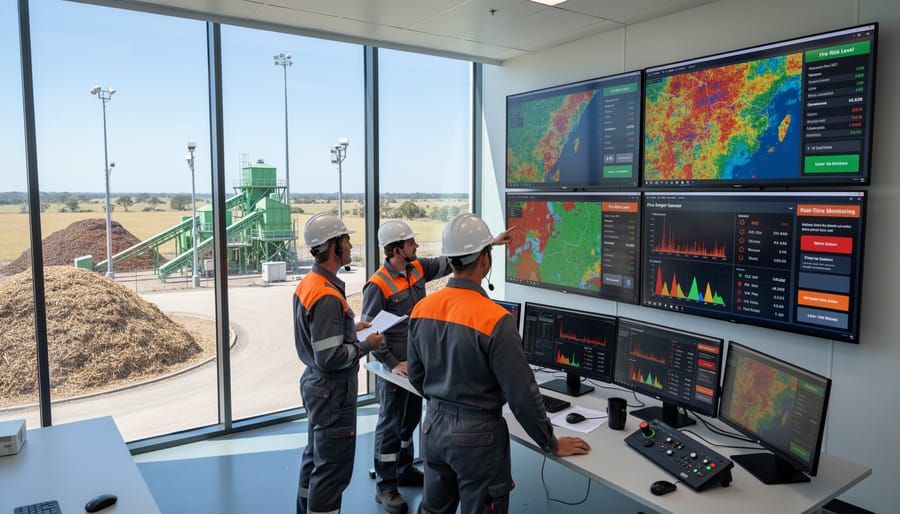
Satellite-based monitoring systems are revolutionising how operators track fire risk in real-time. These sophisticated platforms combine weather data, fuel moisture readings, and historical fire patterns to provide early warnings days in advance. Several Queensland bioenergy facilities already use these systems, allowing them to adjust operations before danger emerges rather than reacting when it’s too late.
Artificial intelligence is proving a powerful ally as well. Machine learning algorithms can now predict fire behaviour with remarkable accuracy by analysing countless variables simultaneously. One Victorian biomass facility recently implemented an AI system that reduced their false alarm rate by 80 per cent whilst improving genuine threat detection, making their response more efficient and cost-effective.
Drone technology offers another breakthrough. Modern drones equipped with thermal imaging cameras can inspect large sites in minutes, identifying hot spots or equipment anomalies that might spark fires. They’re becoming standard equipment at forward-thinking facilities, particularly during extreme fire weather.
Innovation extends to the bioenergy resources themselves. Researchers are developing new processing methods that reduce fuel moisture content faster and more safely, whilst improved storage designs incorporate advanced ventilation systems that prevent spontaneous combustion.
Perhaps most exciting are integrated safety platforms that connect all these technologies into one dashboard. Operators can monitor everything from weather forecasts to equipment temperatures, receiving automated alerts and recommended actions.
These advances aren’t just theoretical. They’re being deployed across Australia today, proving that with the right technology and commitment to innovation, bioenergy and fire safety can work together seamlessly. The future of fire-safe bioenergy isn’t coming; it’s already here.
The story of bioenergy in high fire risk areas isn’t about choosing between safety and sustainability—it’s about achieving both. Across Australia, we’re already seeing proof that with thoughtful planning and proper management, bioenergy projects can thrive even in the most fire-prone landscapes. The key lies in viewing fire risk management not as a barrier, but as an essential component of responsible operations.
Smart fire risk management does more than protect infrastructure and communities. It strengthens the entire bioenergy sector by building community trust, demonstrating environmental responsibility, and creating more resilient operations. When you clear defensible spaces, manage fuel loads, and implement robust monitoring systems, you’re not just ticking boxes—you’re creating a sustainable operation that benefits everyone.
The success stories we’ve explored show what’s possible when commitment meets practical action. From Victorian farms integrating bioenergy with fire-smart practices to Queensland operations maintaining exemplary safety records, these pioneers are proving the model works.
Now it’s your turn. Whether you’re operating an existing facility or planning a new project, start by honestly assessing your current fire risk management. Engage with local fire authorities, invest in proper equipment and training, and learn from those who’ve successfully navigated these challenges. The path forward is clear, and the resources are available. With the right approach, your bioenergy operation can contribute to Australia’s renewable energy future while keeping communities safe—that’s a fair dinkum win-win worth pursuing.