
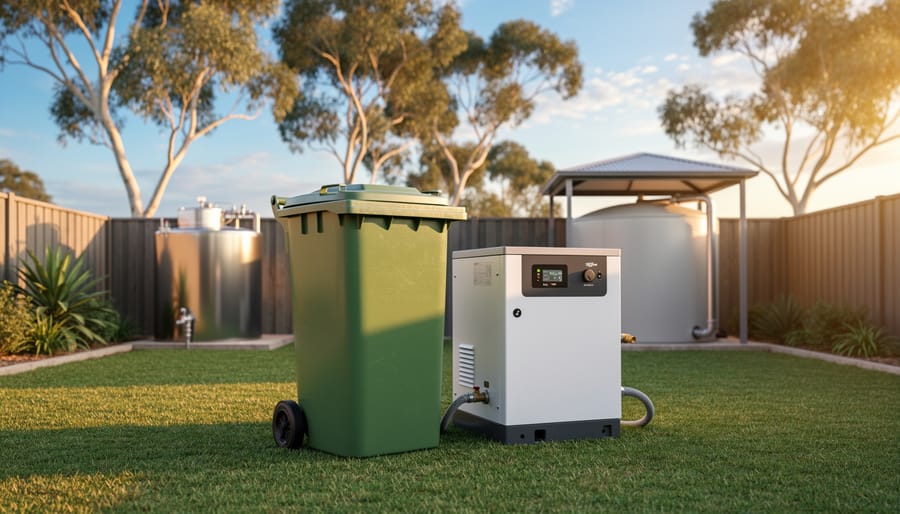
Every day, Australian households and businesses send roughly 67 million tonnes of waste to landfill, where it releases methane—a greenhouse gas 25 times more potent than carbon dioxide—while simultaneously contaminating precious groundwater reserves through toxic leachate. Yet this same waste holds the key to generating clean energy while protecting our water resources.
Garbage biomass energy transforms organic waste—food scraps, agricultural residues, garden clippings, and paper products—into renewable electricity, heat, and transport fuels through proven technologies like anaerobic digestion and gasification. The process captures methane that would otherwise escape into the atmosphere, converts it into usable energy, and produces nutrient-rich digestate that returns to soil without synthetic fertilizers that typically runoff into waterways.
The water-energy connection runs deeper than most Australians realise. Traditional coal and gas power stations consume enormous volumes of water for cooling, with some plants using up to 2.5 litres per kilowatt-hour generated. Biomass energy facilities, particularly those using dry gasification processes, require substantially less water while simultaneously preventing landfill leachate—that toxic cocktail of decomposed waste and rainwater—from seeping into aquifers and river systems that supply our drinking water.
From the Richgro facility in Western Australia converting green waste into compost and energy, to Sydney’s Woodlawn Bioreactor producing enough electricity to power 6,000 homes annually, Australian communities are already proving this approach works. The technology exists, the waste streams are abundant, and the environmental benefits multiply with each tonne diverted from landfill. The question isn’t whether garbage biomass energy can protect our water while powering our future—it’s how quickly we’ll embrace the opportunity sitting in our bins.
What Is Garbage Biomass Energy? (And Why It Matters for Australia)
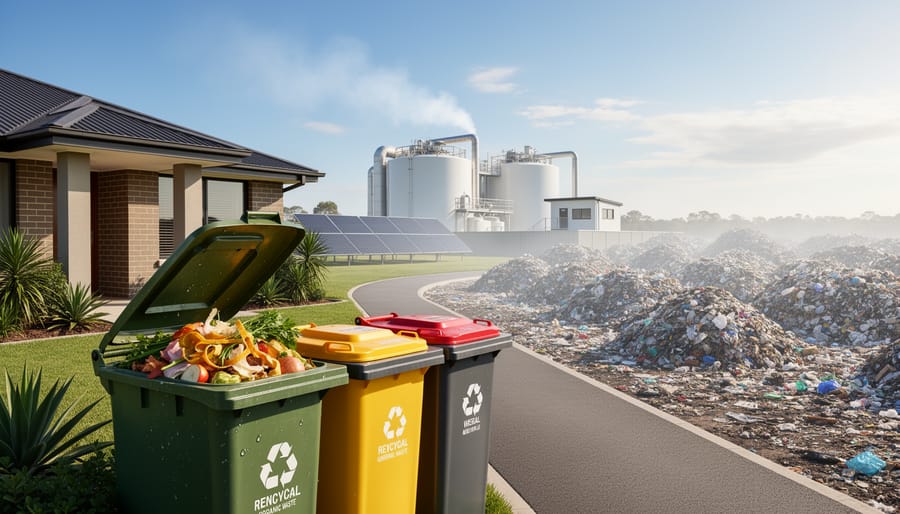
From Landfill to Power Station
Picture this: yesterday’s banana peels and last week’s lawn clippings embarking on a journey from your wheelie bin to powering homes across your community. It’s not science fiction—it’s happening right now at facilities across Australia.
The transformation begins when organic waste arrives at specialized treatment centers. Rather than decomposing uselessly in landfills, this rubbish enters one of two proven pathways. The first, anaerobic digestion, works like a giant stomach. Organic materials break down in sealed tanks without oxygen, producing biogas—a methane-rich fuel that can generate electricity or heat. Think of it as nature’s own gas production, just accelerated and captured for our benefit.
The second pathway, thermal conversion, uses controlled high temperatures to transform waste into energy. These biomass technologies essentially superheat the rubbish, breaking it down into syngas—a clean-burning fuel that drives turbines to create electricity.
Both processes represent efficient waste to energy conversion, turning environmental problems into practical solutions. What’s brilliant is the bonus: the solid material left behind often becomes nutrient-rich fertilizer, completing nature’s cycle.
Instead of methane escaping into the atmosphere from landfills and contributing to climate change, we’re capturing that energy potential. Your food scraps become electricity. Your garden waste powers streetlights. That’s the beauty of garbage biomass energy—transforming what we throw away into what we genuinely need.
The Australian Waste Opportunity
Australia generates over 7.3 million tonnes of organic waste annually – enough to fill the Melbourne Cricket Ground 12 times over. Yet most of this valuable resource ends up in landfills, where it produces methane and leaches harmful contaminants into groundwater supplies that many communities depend on.
Here’s the good news: forward-thinking Aussie operations are already turning this challenge into opportunity. The Richgro Garden Products facility in Western Australia transforms 80,000 tonnes of food and garden waste each year into compost and energy, demonstrating that what was once considered rubbish can power homes and enrich soils. Similarly, the Sydney Markets facility diverts thousands of tonnes of unsold produce from landfill, converting it into renewable energy and quality compost products.
These success snapshots reveal an enormous untapped potential. If we captured just half of Australia’s organic waste for bioenergy production, we could generate enough electricity to power 140,000 homes while simultaneously reducing landfill pressure and protecting precious water resources. The technology exists, the waste stream is consistent, and pioneering Australian facilities have proven the model works. The opportunity is sitting right in our bins, waiting to be seized.
The Hidden Water Crisis That Garbage Energy Solves
How Much Water Does Your Power Really Use?
When you flick on a light switch, you’re not just using electricity—you’re also using water. This hidden connection between energy and water is crucial for Australia’s sustainable future, and the differences between energy sources might surprise you.
Traditional coal-fired power stations are incredibly thirsty operations. For every megawatt-hour of electricity generated, coal plants can consume between 1,900 and 2,700 litres of water for cooling and steam production. To put that in perspective, that’s roughly equivalent to filling your bathtub 20 times over for just one hour’s worth of power to an average home. Natural gas plants do better but still gulp down around 750 litres per megawatt-hour.
Now here’s where things get interesting. Solar and wind energy use virtually no water during operation—they’re the true water-saving champions. But what about biomass energy from organic waste?
Biomass facilities typically use between 1,100 and 1,500 litres per megawatt-hour, which sits between gas and coal. However, there’s a game-changing difference: many modern waste-to-energy facilities in Australia are pioneering closed-loop water systems that recycle their water, dramatically reducing consumption. Better yet, biomass energy does double duty—it tackles waste management whilst generating power.
Consider this: if a regional Australian town of 50,000 people switches from coal to biomass using local organic waste, they could save roughly 20 Olympic swimming pools worth of water annually whilst diverting 30,000 tonnes of waste from landfill. That’s the kind of practical win-win our communities need.
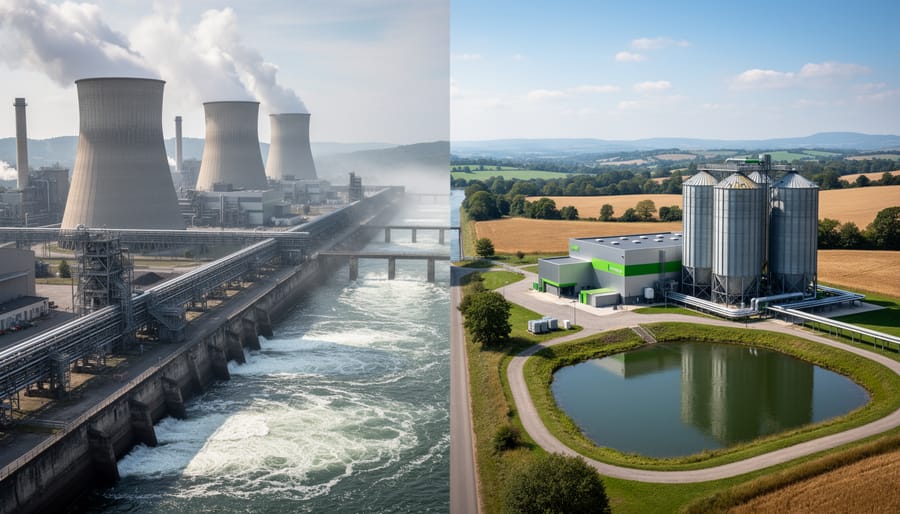
The Biomass Advantage: Energy Without the Thirst
While traditional power generation gulps water by the gigalitre, garbage biomass energy facilities operate on an entirely different principle. These innovative plants demonstrate that generating electricity from waste doesn’t mean draining precious water resources – a game-changer for water-scarce Australia.
The secret lies in closed-loop systems that recycle water throughout the energy production process. Unlike coal-fired power stations requiring constant cooling water intake, modern biomass facilities capture steam, condense it, and reuse it repeatedly. Think of it like a giant kettle that never needs refilling – the same water circulates through the system, cooling equipment and generating steam with minimal loss.
Take the Eastern Creek facility in Sydney’s west. This waste-to-energy plant processes household rubbish whilst using approximately 90 percent less water than comparable fossil fuel plants. The facility treats and recycles its process water on-site, with only tiny amounts lost to evaporation. What water it does use often comes from recycled sources, further reducing demand on drinking water supplies.
The biomass conversion process itself requires far less water than you’d imagine. Combustion and gasification technologies transform organic waste directly into energy without the massive cooling towers that characterise traditional power stations. Some advanced facilities even capture moisture from the waste itself, using it within their operations.
For drought-prone regions across Australia, this efficiency matters enormously. Communities can generate local power from their own waste streams without competing with agriculture, households, or industry for precious water allocations. It’s renewable energy that respects our driest inhabited continent’s greatest limitation – and turns our biggest waste challenge into an elegant solution that protects both energy security and water resources simultaneously.
Real Success Stories: Garbage Energy Working in Australia Today
Sydney’s Food Waste Revolution
Sydney’s success with turning waste into energy demonstrates how cities can tackle multiple environmental challenges at once. The Eastern Creek facility, one of Australia’s largest organic waste processing plants, diverts over 200,000 tonnes of food and garden waste from landfill each year, transforming it into renewable energy and valuable soil products.
The results speak for themselves. This facility generates enough electricity to power approximately 6,000 homes annually while producing nutrient-rich compost that helps local farms and gardens thrive. But here’s the real game-changer: by keeping organic waste out of landfill, the program saves an estimated 70 million litres of water each year that would otherwise be needed for traditional landfill management and leachate treatment.
Local councils across Sydney have embraced the program, distributing purple-lid bins specifically for food organics and garden organics. Residents have responded brilliantly, with participation rates exceeding 80 percent in some areas. The facility captures methane that would have otherwise escaped into the atmosphere and converts it into clean energy, reducing greenhouse gas emissions equivalent to taking 50,000 cars off the road.
What makes this initiative particularly effective is its closed-loop approach. The compost produced returns to local agriculture, reducing the need for water-intensive chemical fertilizers while improving soil moisture retention. This demonstrates how innovative waste management creates ripple effects throughout our environmental systems.
Regional Communities Leading the Charge
Right across regional Australia, innovative communities are proving that biomass energy isn’t just an environmental solution—it’s a catalyst for local prosperity. These facilities are transforming what was once considered rubbish into reliable power while creating meaningful employment opportunities in areas that need them most.
Take the Goulburn Valley in Victoria, where a biomass facility processes fruit cannery waste alongside agricultural residues. What makes this project particularly compelling is its integrated approach: the facility generates electricity for 2,000 homes while dramatically reducing water usage in waste management. Previously, disposing of fruit processing waste required massive amounts of water for treatment. Now, that same waste produces energy, and the water savings fund local drought-resilience programs. The facility employs 35 locals full-time, with expertise ranging from plant operations to agricultural logistics.
In South Australia’s Riverland region, another success story unfolds. Here, citrus peel and grape marc from winemaking operations fuel a combined heat and power system. The clever bit? The facility’s waste heat supports greenhouse operations year-round, creating a circular economy that’s generated 50 jobs and reduced regional water consumption by an estimated 120 million litres annually. That’s water that stays in the Murray-Darling system rather than being used for traditional waste disposal.
Queensland’s sugar-growing regions offer another inspiring model. Mills that once burned bagasse wastefully now operate sophisticated cogeneration plants, supplying surplus electricity back to the grid while employing locals as technicians and sustainability coordinators. These facilities have cut water requirements for waste management by 40 percent compared to conventional methods.
What ties these stories together is their demonstration that waste biomass energy creates triple wins: cleaner communities, sustainable jobs, and precious water conservation. These aren’t experimental projects anymore—they’re proven models showing regional Australia how to turn yesterday’s problems into tomorrow’s solutions.
Beyond Power: The Bonus Benefits of Garbage Biomass
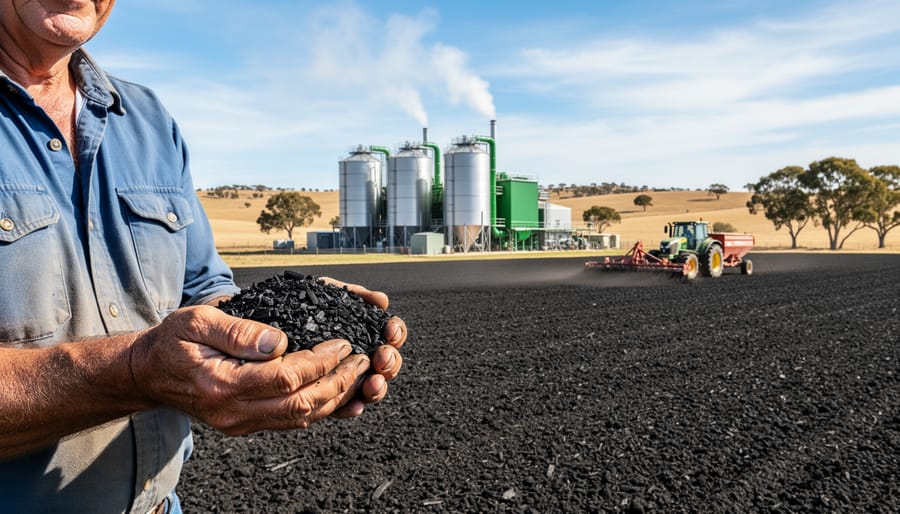
Liquid Gold: Nutrient-Rich Water for Agriculture
The magic of biomass facilities extends beyond electricity generation. The nutrient-rich byproducts created during the breakdown of organic waste become valuable resources for Australian farmers and growers, turning what could be waste into liquid gold.
When organic matter is processed in biomass digesters, it produces digestate, a nutrient-dense material packed with nitrogen, phosphorus, and potassium. This natural fertilizer rivals chemical alternatives while being far gentler on the environment. Mixed with processed water from the facility, it creates an ideal irrigation solution that simultaneously nourishes crops and conserves precious water resources.
At the Richgro facility in Western Australia, this circular approach shines. The processed water and nutrients from their biomass operations irrigate nearby agricultural land, reducing farmers’ dependence on synthetic fertilizers by up to 60 percent. The results speak for themselves: healthier soil, stronger crop yields, and significantly reduced water consumption compared to traditional farming methods.
This closed-loop system exemplifies the circular economy at its finest. Organic waste becomes energy, energy production creates nutrient-rich water, and that water grows food that eventually returns to the cycle. Queensland sugarcane growers have embraced this approach, using digestate from cane waste processing to fertilize their fields, reducing chemical inputs while boosting productivity.
For Australian agriculture facing water scarcity and rising fertilizer costs, these nutrient-rich waters offer a practical, sustainable solution that benefits both the environment and the bottom line.
Methane Capture and Carbon Cuts
When organic waste like food scraps and garden clippings ends up in landfill, it breaks down without oxygen, creating methane—a greenhouse gas 25 times more potent than carbon dioxide. By diverting this waste to biomass energy facilities instead, we prevent these harmful emissions from ever forming. The organic material gets processed in controlled conditions where it generates renewable energy while leaving behind nutrient-rich compost rather than atmospheric pollutants.
This shift represents a powerful win for Australia’s climate commitments. Every tonne of food waste diverted from landfill prevents roughly one tonne of carbon dioxide equivalent from entering our atmosphere. With Australian households generating over 7 million tonnes of organic waste annually, the potential impact is substantial. Several forward-thinking councils across Queensland and Victoria have already embraced this approach, collecting food and garden organics separately and channelling them into bioenergy facilities that power local communities while dramatically reducing their carbon footprint.
Jobs and Local Economies
Transforming rubbish into renewable energy isn’t just good for the environment—it’s brilliant for local job creation. Across Australia, waste biomass facilities are generating meaningful employment opportunities, from plant operators and technicians to logistics coordinators and environmental specialists. These aren’t temporary positions either; they’re long-term careers supporting families and strengthening regional communities.
Take regional New South Wales, where a waste-to-energy facility employs over 50 locals while processing organic waste from surrounding farms and food processors. The economic ripple effect extends beyond direct employment, supporting local transport businesses, maintenance contractors, and professional services. Communities investing in garbage biomass energy typically see increased economic resilience, reduced waste management costs, and new revenue streams from renewable energy sales. For rural and remote areas especially, these facilities offer a practical path to economic diversification while addressing waste challenges head-on, proving that sustainable solutions and prosperity go hand in hand.
Making It Happen: What Needs to Change
For Households and Communities
Every Australian household can play a meaningful role in the garbage biomass energy revolution, starting right in the kitchen. Simple actions like separating organic waste from general rubbish create the foundation for successful energy recovery. When food scraps, garden clippings, and paper products are kept separate, they become valuable feedstock rather than landfill waste.
Get vocal with your local council about expanding organic waste collection services. Many councils are exploring or already running local biomass programs, and community support strengthens these initiatives. Consider joining or forming a neighbourhood composting group that could partner with larger energy projects.
Support businesses and facilities investing in biomass technology by choosing their services and spreading the word. Share success stories on social media to inspire others. Small actions compound quickly when communities unite around a shared vision.
Remember, transitioning to sustainable energy isn’t about perfection but progress. Each separated bin, every conversation with neighbours, and all advocacy efforts contribute to building a cleaner, more resilient Australia. Your participation today shapes the energy landscape for generations to come.
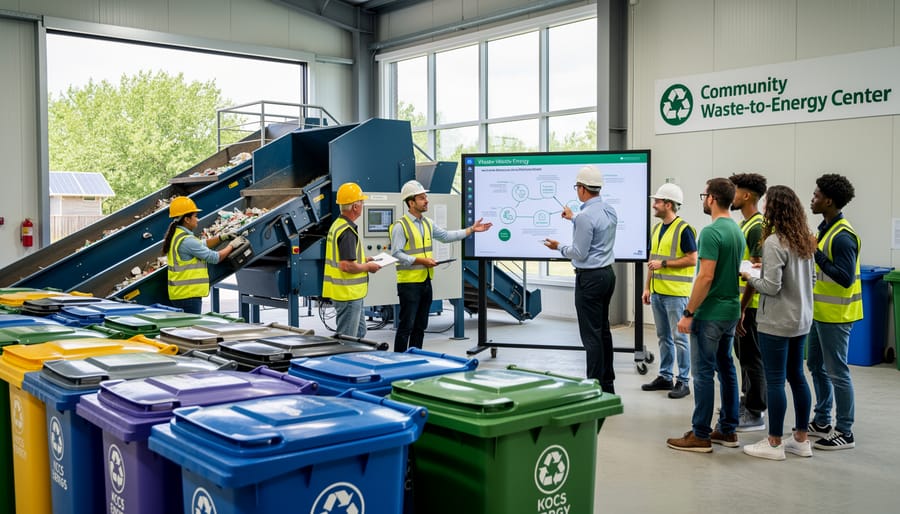
For Industry and Policymakers
Australia stands at the threshold of a remarkable opportunity to lead the way in garbage biomass energy, and the pathway forward is clearer than many realise. The infrastructure needs aren’t insurmountable barriers but rather investment opportunities that promise substantial returns, both environmental and economic.
Forward-thinking councils and waste management facilities across the country are already demonstrating what’s possible. Take Wollongong’s success with converting landfill gas to electricity, which now powers thousands of homes while dramatically reducing methane emissions. This project didn’t require revolutionary technology, just commitment and smart partnerships between local government and private enterprise.
The policy framework is evolving to support this transition. State and federal incentives for renewable energy projects now explicitly include biomass facilities, with grants and tax benefits making the initial capital investment increasingly attractive. For businesses and councils looking to modernise their waste management systems, there’s never been a better time to act.
The beauty of garbage biomass energy lies in its scalability. Whether you’re managing a small regional facility or overseeing metropolitan waste operations, solutions exist at every level. Investment in anaerobic digesters, gasification plants, or combined heat and power systems can transform waste from a liability into an asset.
Industry professionals exploring sustainable solutions will find that garbage biomass energy offers proven technology, growing government support, and genuine environmental impact. The water savings alone, eliminating millions of litres previously used in traditional energy generation, make this a compelling proposition for Australia’s future.
Remember that household composting bin sitting in your backyard? It’s part of something much bigger happening right across Australia. From suburban streets to industrial facilities, we’re witnessing a quiet revolution where yesterday’s rubbish becomes tomorrow’s renewable energy and water savings.
Garbage biomass energy isn’t just another environmental buzzword – it’s practical climate action happening right now. Facilities like Urban Resource Recovery in Victoria and Richgro’s operations in Western Australia prove that this technology works brilliantly on Australian soil. Every tonne of organic waste diverted from landfill means less methane pollution, cleaner waterways, and energy powering real communities.
The beauty of this solution lies in its dual impact. We’re not choosing between energy security and water conservation – we’re achieving both simultaneously. While biomass facilities generate electricity for thousands of homes, they’re also protecting our precious water resources from contamination and reducing the massive amounts needed for conventional energy production.
This shift requires all of us. Whether you’re separating your food scraps for council collection, a business investigating on-site anaerobic digestion, or simply spreading the word about what’s possible, you’re contributing to Australia’s renewable future.
The transformation is underway. What once filled our tips and threatened our environment now powers our cities and protects our water. That’s not just smart resource management – that’s the kind of practical optimism that builds a sustainable Australia. Our waste has always had value; we’re finally recognizing it.