

Corporate carbon offsetting has reached a crossroads. Australian businesses spent over $180 million on carbon credits in 2023, yet many of these investments delivered little more than greenwashed press releases and questionable environmental impact. The difference between genuine climate leadership and performative sustainability lies not in whether companies offset their emissions, but in how deeply they engage with the solutions they fund.
True corporate engagement in carbon offset strategies means moving beyond transactional credit purchases to building meaningful partnerships with projects that deliver measurable, lasting change. It’s the difference between a mining company simply buying credits from overseas forestry projects and BHP partnering with Australian farmers to implement regenerative agriculture practices that sequester carbon whilst improving soil health and rural livelihoods. The former ticks a compliance box; the latter transforms entire industries.
This shift matters now more than ever. As Australia races toward its 2030 emissions reduction targets, businesses face increasing pressure from investors, customers, and regulators to demonstrate authentic climate action. Carbon offsetting remains a valuable tool in the transition toolkit, particularly for hard-to-abate sectors, but only when companies commit to genuine engagement with offset providers, understand the science behind different methodologies, and invest in solutions that create co-benefits for Australian communities and ecosystems.
The most effective corporate strategies integrate carbon offsetting with broader sustainability initiatives, focusing on projects that align with core business operations and values. Forward-thinking Australian companies are discovering that deep engagement with offset projects—particularly those involving renewable energy and waste-to-resource solutions—opens doors to innovation, strengthens supply chain resilience, and builds authentic sustainability credentials that resonate with stakeholders. This approach transforms carbon offsetting from a grudge purchase into a strategic investment that drives competitive advantage whilst genuinely contributing to climate solutions.
What Corporate Engagement in Carbon Offsets Actually Means
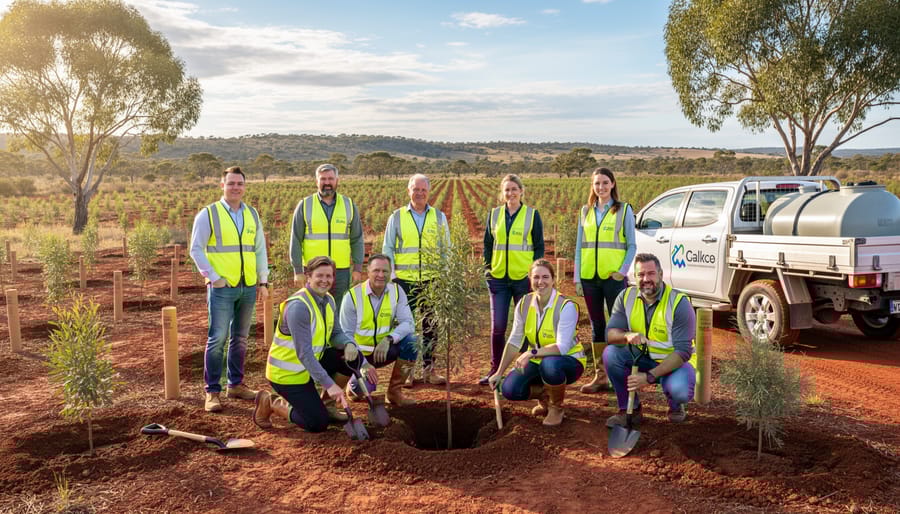
Beyond Buying Credits: The Engagement Difference
The difference between buying carbon credits and genuine corporate engagement is like the difference between donating to a charity and rolling up your sleeves to volunteer. While purchasing offsets can reduce your carbon footprint on paper, truly engaged companies become active partners in the projects they support.
Consider how Melbourne-based packaging company Visy approaches their offset strategy. Rather than simply purchasing credits from a marketplace, they’ve partnered directly with regional biomass energy facilities, visiting sites quarterly to monitor progress and understand challenges firsthand. This hands-on approach means they can troubleshoot issues early, share operational insights, and ensure their investment creates lasting impact.
Engaged companies typically participate in three key ways. First, they’re involved in project selection, conducting due diligence beyond basic certification checks. They assess whether projects align with their values and deliver genuine community benefits. Second, they maintain ongoing communication with project operators, receiving regular updates and sometimes sitting on advisory boards. Third, they look for improvement opportunities, whether that’s helping secure additional funding, connecting projects with technical expertise, or identifying expansion possibilities.
Take Queensland’s Bundaberg Brewed Drinks, which didn’t just buy agricultural waste offset credits. They worked with local sugarcane farms to develop better collection systems for bagasse, turning what was previously burned in fields into valuable bioenergy feedstock. This collaborative approach created multiple wins: reduced emissions, cleaner air for farming communities, and reliable renewable energy supply.
This deeper involvement transforms carbon offsetting from a compliance exercise into a strategic partnership that drives innovation and builds resilience across entire supply chains.
The Australian Corporate Landscape
Australian businesses are increasingly recognising that carbon offsets aren’t just about compliance—they’re about genuine climate leadership. The landscape here is shaped by both regulatory requirements and a growing wave of voluntary action that’s truly exciting to witness.
Under the Safeguard Mechanism, Australia’s largest emitters must keep emissions below set baselines or purchase Australian Carbon Credit Units to cover the difference. This policy framework creates a strong foundation, but many forward-thinking companies are going well beyond what’s legally required. They’re seeing carbon offset engagement as a strategic opportunity rather than simply a cost of doing business.
What’s particularly encouraging is how Australian corporations are embracing homegrown solutions. Rather than purchasing cheap international offsets of questionable quality, leading companies are investing in local projects—from regenerative agriculture initiatives across rural properties to innovative bioenergy facilities that convert waste into renewable power. This approach keeps investment dollars circulating within Australian communities while ensuring greater transparency and measurable impact.
The voluntary market is thriving too, with businesses setting ambitious net-zero targets and actively seeking high-integrity offset projects. Success stories are emerging across sectors—from retailers offsetting supply chain emissions to manufacturers partnering with regional communities on carbon farming projects. This shift demonstrates that Australian companies understand authentic engagement means supporting projects that deliver real environmental and social benefits, not just ticking compliance boxes.
Why Smart Companies Are Getting Hands-On With Their Offsets
Building Trust and Avoiding Greenwashing
In today’s climate-conscious marketplace, consumers and stakeholders have become remarkably savvy at spotting empty promises. Active corporate engagement in carbon offset strategies offers the antidote to greenwashing by demonstrating genuine commitment through measurable action and transparent reporting.
The key difference between greenwashing and authentic engagement lies in verifiability. When companies actively participate in offset projects rather than simply purchasing credits, they create traceable connections to real environmental outcomes. Take Melbourne-based packaging company BioPak, which doesn’t just claim carbon neutrality but actively engages with Australian composting facilities and renewable energy projects, sharing detailed progress reports that anyone can scrutinize.
Transparency becomes your strongest ally in building credibility. Companies that openly discuss both successes and challenges in their carbon reduction journey tend to earn greater trust than those presenting a perfect facade. When brewing giant Lion shared their renewable energy transition story, including the technical hurdles they faced implementing bioenergy solutions at their facilities, it resonated far more powerfully than generic sustainability claims.
Regular stakeholder engagement amplifies this trust-building effect. Hosting site visits, publishing third-party verified reports, and maintaining open dialogue with environmental groups transforms carbon strategies from marketing spin into collaborative climate action. Australian financial services provider QBE demonstrates this approach by inviting customers and community members to participate in their reforestation initiatives, creating accountability through shared experience.
Remember, genuine engagement means accepting scrutiny and continuously improving. Companies that embrace this openness don’t just avoid greenwashing accusations—they become inspiring examples of corporate climate leadership that others want to follow.
Creating Shared Value Beyond Carbon
When companies genuinely engage with carbon offset strategies, they unlock a treasure trove of benefits that extend far beyond reducing emissions on a spreadsheet. This is where the real magic happens – creating shared value that transforms landscapes, communities, and livelihoods across regional Australia.
Consider biodiversity restoration. When businesses partner with native revegetation projects or bioenergy initiatives that protect existing forests, they’re not just capturing carbon – they’re bringing back habitat for endangered species, reconnecting wildlife corridors, and restoring ecosystem health. A single well-designed offset project can provide refuge for native birds, mammals, and insects while simultaneously addressing climate goals.
The economic ripple effects are equally compelling. Offset projects create meaningful employment in regional areas that desperately need economic diversification. From project managers and field technicians to equipment operators and environmental monitors, these initiatives generate jobs that keep families in their communities. One Queensland bioenergy facility, for instance, employs dozens of locals while processing agricultural waste, demonstrating how climate action and regional development go hand-in-hand.
Community development flourishes too. Indigenous land management programs that incorporate carbon farming restore cultural connections to country while providing sustainable income streams. Local schools benefit from educational programs, and regional businesses gain new opportunities through supply chains that support renewable energy infrastructure.
This is the future of corporate climate responsibility – not just ticking compliance boxes, but actively investing in projects that heal the environment, strengthen communities, and build resilient regional economies. When done right, carbon offsetting becomes a catalyst for positive change that resonates across generations.
Success Stories: Australian Companies Leading the Way
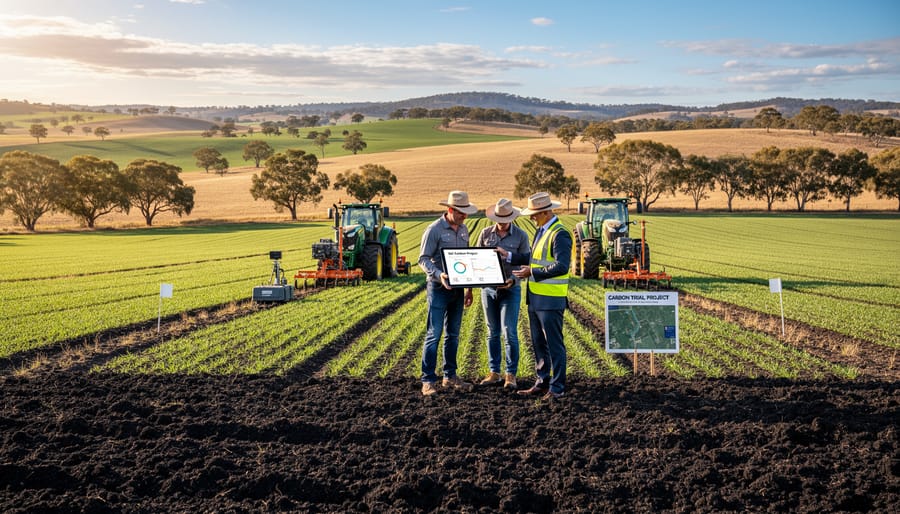
Agricultural Sector Innovations
When Elders Limited, one of Australia’s largest agribusiness companies, decided to deepen its climate commitment, they didn’t just purchase carbon credits on the open market. Instead, they launched a direct partnership program with regional farming communities across Queensland and New South Wales, co-investing in soil carbon projects that delivered genuine environmental and economic outcomes.
The initiative began in 2021 with 47 farming families who agreed to transition portions of their grazing land to regenerative practices. Elders provided upfront capital for infrastructure changes, connected farmers with agronomists specializing in carbon sequestration, and guaranteed fair pricing for carbon credits generated over a 15-year period. The arrangement gave farmers financial certainty while ensuring Elders could authentically offset emissions from their supply chain operations.
Within two years, participating properties demonstrated measurable results. Soil organic carbon levels increased by an average of 18 percent across monitored sites, while pasture productivity actually improved rather than declined. One participating grazier near Dubbo reported healthier livestock and reduced feed costs alongside the carbon payments, describing it as a genuine win-win arrangement.
The partnership model revealed important lessons for other corporations. Direct engagement required significant upfront investment in relationship building and technical support, far beyond simply purchasing credits. However, this deeper involvement created verifiable outcomes, valuable long-term partnerships, and compelling stories that resonated with customers and stakeholders.
Most significantly, Elders discovered that their agricultural expertise became an asset in carbon project management. By combining agronomic knowledge with climate action, they created a competitive advantage while supporting the communities central to their business success, demonstrating how industry-specific knowledge can transform carbon offsetting from a transaction into genuine corporate engagement.
Energy Industry Partnerships
When Australia’s third-largest energy retailer committed to carbon neutrality by 2025, they didn’t just purchase generic offsets. Instead, they formed a ten-year partnership with regional biomass suppliers across New South Wales and Queensland, transforming agricultural waste into renewable energy while creating genuine environmental and social value.
This partnership demonstrates what meaningful corporate engagement looks like in practice. The energy company invested $45 million in developing three biomass processing facilities that convert sugarcane bagasse, wheat stubble, and forestry residues into electricity and biofuels. Rather than treating carbon offsets as a box-ticking exercise, they’ve embedded themselves in the supply chain, working directly with over 200 farming families who previously burned crop residues or sent them to landfill.
The results speak volumes. Over the partnership’s first five years, the initiative has reduced emissions by 180,000 tonnes annually while generating enough renewable energy to power 35,000 homes. But the impact extends far beyond carbon accounting. The project created 340 permanent jobs in regional communities, with local unemployment dropping by 12 percent in participating areas. Farmers now earn additional income from materials they once considered waste, strengthening rural economies.
What sets this partnership apart is the long-term commitment and genuine collaboration. The energy company provides technical support, connects farmers with biomass collection infrastructure, and guarantees fair pricing over the contract period. They’ve also established educational programs, training local workers in bioenergy operations and sustainable land management.
This approach transforms carbon offsetting from a transactional afterthought into strategic engagement that delivers measurable environmental outcomes, strengthens communities, and builds resilient supply chains. It’s proof that when companies invest deeply rather than broadly, everyone benefits.
Practical Steps for Meaningful Corporate Engagement
Choosing Projects That Align With Your Values
Not all offset projects deliver equal value. The most effective carbon offsetting strategies go beyond simply reducing emissions—they create meaningful co-benefits that align with your organisation’s values and strengthen your community impact.
Start by identifying what matters most to your business. Are you passionate about supporting Indigenous communities? Consider projects involving cultural burning practices that restore Country while sequestering carbon. Does biodiversity protection resonate with your stakeholders? Look for reforestation initiatives that create wildlife corridors across degraded landscapes.
Verification standards matter immensely. Prioritise projects certified under the Australian Carbon Credit Unit scheme or internationally recognised standards like Gold Standard and Verra. These frameworks ensure rigorous measurement, prevent double-counting, and guarantee additionality—meaning the carbon reduction wouldn’t have happened without your investment.
Australian businesses have fantastic local options. Biomass energy projects convert agricultural waste into renewable power while reducing methane emissions from decomposing organic matter. Savanna fire management in Northern Australia combines ancient Indigenous knowledge with modern carbon science. Native revegetation projects restore ecosystems while providing employment in regional communities.
Strategic alignment transforms offsetting from a compliance exercise into a powerful storytelling opportunity. A food manufacturer partnering with agricultural waste-to-energy projects demonstrates circular economy thinking. A tourism operator supporting reef restoration connects directly with their business environment. When your offset choices reflect your corporate identity, they become authentic expressions of your commitment rather than generic green credentials, resonating more deeply with customers, employees, and investors who share those values.
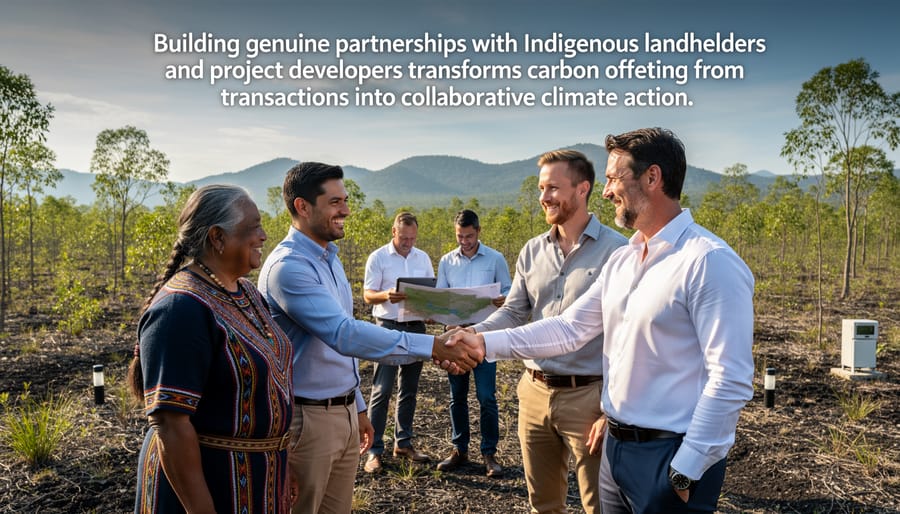
Building Partnerships With Offset Providers
Building genuine partnerships with offset providers transforms carbon strategies from mere box-ticking exercises into meaningful climate action. The secret lies in approaching these relationships as long-term collaborations rather than one-off purchases.
Start by identifying project developers whose values align with your company’s sustainability vision. Look for providers who prioritize transparency and community benefit. Schedule face-to-face meetings when possible—whether that’s visiting a revegetation project in regional Victoria or connecting with Indigenous landholders managing savanna burning projects in the Northern Territory. These personal connections build trust and understanding that spreadsheets simply cannot capture.
Consider multi-year agreements that provide financial certainty for project developers while securing your offset supply. Melbourne-based Yerrabingin has demonstrated this approach brilliantly, partnering with Aboriginal communities to restore degraded landscapes while creating employment opportunities. Their corporate partners receive regular project updates, participate in planting days, and share success stories with stakeholders.
Farmers implementing agricultural bioenergy projects particularly benefit from collaborative partnerships. Rather than simply purchasing credits, forward-thinking companies provide technical support, share knowledge, and even co-invest in infrastructure like biomass processing facilities. This creates shared value beyond carbon reduction.
Remember, genuine engagement means listening to project partners about their challenges and aspirations. When offset providers feel valued as collaborators rather than vendors, they’ll deliver higher quality outcomes and innovative solutions that amplify your climate impact. These relationships become powerful stories that demonstrate your company’s authentic commitment to environmental stewardship.
Measuring and Communicating Your Impact
Tracking your engagement outcomes doesn’t require complex systems—start with clear, measurable goals from day one. Monitor metrics that matter: tonnes of emissions reduced, renewable energy generated, or hectares of land restored. Keep records simple but thorough, documenting both quantitative results and qualitative stories from communities you’ve supported.
When sharing your impact, authenticity trumps perfection every time. Australian companies like Wholegrain Milling have demonstrated this beautifully by openly discussing both successes and challenges in their bioenergy journey. Share regular updates through multiple channels—annual reports, social media, and stakeholder meetings—using real photos and genuine testimonials rather than polished marketing speak.
Be honest about what you’ve achieved without overclaiming. If your offset project reduced 500 tonnes of carbon, say precisely that—don’t round up or use vague terms like “significant impact.” Provide context by explaining what this means practically: perhaps it’s equivalent to taking 100 cars off the road for a year.
Engage independent verification when possible, giving stakeholders confidence in your claims. Remember, telling your story well isn’t about boasting—it’s about inspiring others to take similar action. When businesses see tangible results from genuine engagement, they’re more likely to follow suit, creating the ripple effect our climate needs.
The Role of Bioenergy in Corporate Offset Strategies
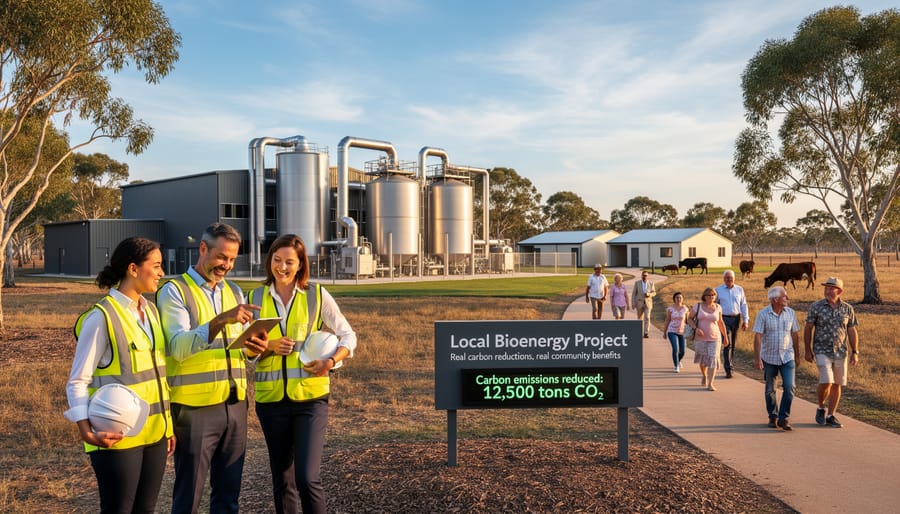
Why Bioenergy Projects Offer Unique Engagement Opportunities
Unlike many carbon offset approaches that feel abstract or geographically distant, bioenergy offsets deliver tangible benefits that resonate with employees, customers, and communities. This visibility makes them powerful tools for authentic corporate engagement.
When a business invests in bioenergy projects, they’re not just purchasing carbon credits on a spreadsheet. They’re supporting facilities that convert agricultural waste into clean electricity, creating jobs in regional areas where employment opportunities matter most. Take the example of a Victorian manufacturing company that partnered with a local bioenergy plant processing wheat stubble. Their workforce could literally see the trucks delivering biomass, tour the facility during team days, and understand exactly how their company’s investment translated into renewable power for nearby towns.
These projects also address energy security concerns that keep Australian business leaders awake at night. By supporting domestic bioenergy production, companies reduce reliance on imported fuels while stabilizing local energy supplies. This dual benefit of emissions reduction and energy independence creates compelling narratives for stakeholder communication.
The agricultural co-benefits add another layer of engagement value. Bioenergy projects often help farmers manage waste, reduce fire risks, and generate additional income streams. When corporations can tell stories about supporting farming communities while tackling climate change, they build authentic connections that superficial offset purchases simply cannot match. This multidimensional impact transforms carbon offsetting from a compliance exercise into a genuine engagement opportunity.
Australian Bioenergy Offset Examples
Australian companies have brilliant opportunities to engage with bioenergy offset projects that deliver genuine environmental outcomes while supporting local communities. One standout example is the Queensland Sugar Mills initiative, where several corporations partner with sugar producers to capture emissions from bagasse—the fibrous residue left after crushing sugarcane. Rather than simply purchasing credits, companies like these invest in facility upgrades and technology improvements, creating shared value and deeper relationships with agricultural communities.
In Victoria, dairy farmers are transforming farm waste into renewable energy through anaerobic digestion systems, with corporate partners supporting infrastructure development in exchange for verified carbon credits. This hands-on approach means businesses aren’t just ticking a box—they’re actively helping farmers reduce emissions while generating clean electricity for local grids.
Forestry waste projects in Tasmania offer another compelling pathway. Companies can sponsor mobile bioenergy units that convert logging residues into biochar and energy, preventing methane emissions from decomposition while improving soil health on degraded land.
Getting involved goes beyond transactions. Forward-thinking businesses are embedding themselves in these projects through technical support, long-term offtake agreements, and collaborative research partnerships. Some companies second their sustainability teams to work alongside project operators, building expertise while ensuring projects deliver lasting benefits. This genuine engagement transforms offset strategies from accounting exercises into meaningful climate action that strengthens communities and ecosystems across Australia.
Overcoming Common Challenges
Navigating Verification and Standards
Understanding carbon credit quality doesn’t need to feel like navigating a maze. In Australia, the primary framework is the Australian Carbon Credit Unit (ACCU) scheme, administered by the Clean Energy Regulator. ACCUs represent genuine emissions reductions verified through rigorous auditing processes, giving businesses confidence their investments create real impact.
Think of verification standards as quality stamps ensuring your carbon credits deliver what they promise. Projects must demonstrate additionality—meaning the emissions reduction wouldn’t happen without carbon credit funding—and permanence, particularly crucial for nature-based solutions.
Internationally, look for credits certified under Gold Standard or Verified Carbon Standard (Verra), which apply strict methodologies similar to Australia’s approach. When engaging with bioenergy projects, seek those registered under these frameworks, as they’ve undergone independent verification and continuous monitoring.
A practical tip: request project documentation showing baseline measurements, reduction methodologies, and third-party audit reports. Quality providers welcome transparency. Melbourne-based carbon advisory firm RepuTex successfully guides corporations through this verification landscape, proving that with the right guidance, businesses can confidently invest in legitimate, high-impact carbon solutions that align with their sustainability goals while supporting Australia’s renewable energy transition.
Managing Costs and Resources
Let’s be upfront: genuine corporate engagement requires more investment than simply purchasing carbon offsets. While passive offsetting might cost your organization a few dollars per tonne of CO2, active engagement through bioenergy projects or direct partnerships demands significantly more time, expertise, and financial commitment. However, the returns justify the investment.
For resource-constrained organizations, start small but start smart. Consider collaborative approaches where multiple businesses pool resources to support a regional bioenergy initiative. Melbourne’s Inner North Community Enterprise successfully demonstrated this model, with five local businesses jointly funding a waste-to-energy project that now powers their collective operations.
Another practical strategy involves phased implementation. Begin with thorough audits to identify your highest-impact opportunities, then dedicate resources incrementally. Australian food manufacturer SunRice took this approach, initially partnering with rice hull energy projects before expanding into broader agricultural waste initiatives.
Remember that staff time represents a valuable resource too. Assign dedicated sustainability champions who can build expertise and maintain momentum. These internal advocates often uncover cost-saving synergies that offset initial investments.
The key is viewing engagement as a strategic investment rather than a compliance cost. Organizations consistently report that meaningful engagement enhances brand reputation, attracts talent, and opens new market opportunities—benefits that passive offsetting simply cannot deliver.
The opportunity for Australian businesses to lead the charge in climate action has never been more compelling or achievable. As we’ve explored throughout this discussion, corporate engagement in carbon offset strategies isn’t reserved for multinational giants with unlimited resources—it’s within reach for organizations of every size, from family-owned enterprises to established corporations.
What sets successful climate action apart isn’t the scale of investment, but the authenticity of engagement. By moving beyond box-ticking compliance and embracing strategies that align with your core business values, you’re not just offsetting emissions—you’re building resilience, strengthening stakeholder relationships, and positioning your organization at the forefront of Australia’s sustainable future. The businesses we’ve highlighted demonstrate that meaningful engagement starts with asking the right questions: Where can we make the most significant impact? How do our offset choices reflect our commitment to local communities? What legacy are we creating for future generations?
The path forward is clear. Start small if you need to, but start with intention. Partner with providers who share your vision for transparency and genuine impact. Engage your team in the journey, because cultural transformation amplifies every climate initiative you undertake. And remember, every tonne of carbon offset through thoughtful, engaged strategies represents real progress toward the Australia we all want to inhabit.
The climate challenge is substantial, but so is our collective capacity for innovation and action. Australian businesses have always been known for rolling up their sleeves and getting on with the job. Now’s the time to channel that pragmatic spirit into climate leadership that doesn’t just offset emissions—it transforms industries, strengthens communities, and proves that profitability and planetary health can thrive together. Your journey toward meaningful climate engagement starts today.