
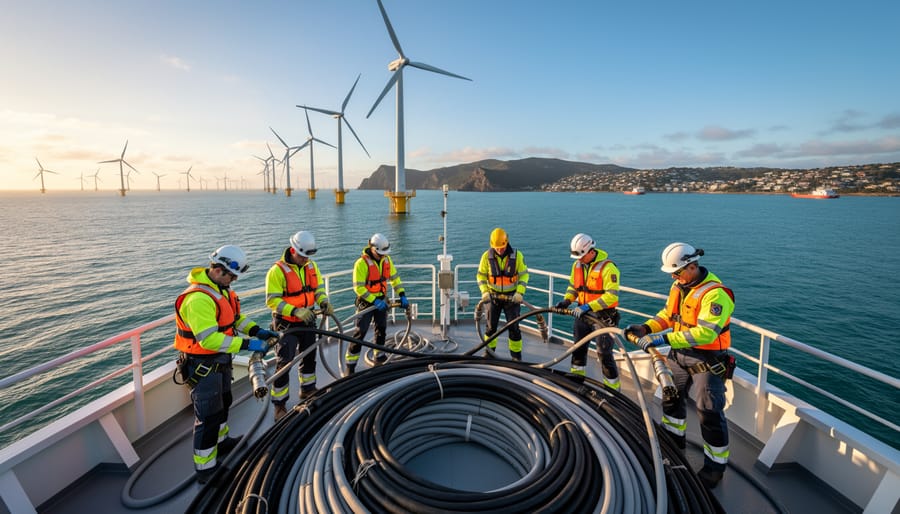
Australia’s ocean waters hold extraordinary promise for powering our future, and right now, skilled professionals are needed to transform this potential into reality. The marine renewable energy sector—spanning wave power, tidal energy, offshore wind, and ocean thermal systems—is creating thousands of career opportunities across engineering, environmental science, project management, marine operations, and technical trades.
Consider this: offshore wind projects alone are projected to generate over 8,000 jobs in Australian waters by 2030, with roles ranging from underwater welders and marine biologists to electrical engineers and vessel operators. Unlike traditional energy sectors, marine renewable positions combine cutting-edge technology with environmental stewardship, offering meaningful work that directly addresses climate challenges whilst building stable, well-compensated careers.
This emerging industry doesn’t just need marine engineers and environmental scientists. Project coordinators manage complex installations, GIS specialists map optimal turbine locations, health and safety officers ensure worker wellbeing on offshore platforms, and community liaison officers connect projects with coastal communities. Technicians maintain sophisticated equipment, data analysts optimize energy output, and logistics coordinators orchestrate the movement of massive components across challenging marine environments.
Whether you’re a recent graduate exploring possibilities, a tradesperson seeking new horizons, or an experienced professional ready for career transition, marine renewable energy offers pathways that weren’t imaginable a decade ago. The sector values diverse backgrounds, provides comprehensive training, and rewards innovation—making it an ideal time to dive into this transformative field that’s reshaping Australia’s energy landscape and coastal economies.
What Marine Renewable Energy Really Means for Australian Workers
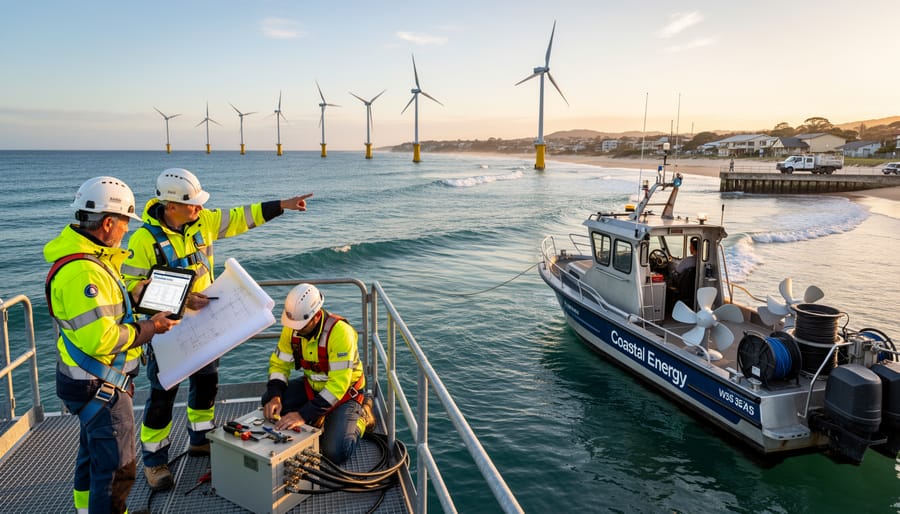
The Technologies Powering Our Oceans
Australia’s coastal position makes it perfectly suited to harness the power of our oceans, and understanding these ocean power technologies is essential for anyone considering a career in this exciting field.
Wave energy converters capture the up-and-down motion of ocean swells, transforming that constant movement into electricity. Think of them as floating power stations that bob with the waves, using hydraulic pumps or mechanical systems to generate clean energy. Off the Victorian coast, trials are already demonstrating how reliable this technology can be.
Tidal turbines work much like underwater wind farms, with blades spinning as tidal currents flow past them. Because tides are predictable, these systems offer remarkably consistent power generation. Australia’s northern coastline, with its strong tidal movements, presents tremendous opportunities for this technology.
Ocean thermal energy conversion takes advantage of temperature differences between warm surface water and cold deep water. This process uses the temperature gap to drive turbines, creating electricity around the clock. Queensland’s tropical waters are particularly well-suited for this emerging technology.
Each of these innovations requires skilled workers to design, install, maintain, and improve systems, creating diverse employment opportunities across engineering, marine science, project management, and technical trades throughout coastal Australia.
Why Australia’s Coastline Is Perfect for Marine Energy
Australia’s coastline stretches over 34,000 kilometres, making it one of the longest in the world and creating exceptional opportunities for marine renewable energy development. Our southern waters experience some of the planet’s most powerful and consistent ocean currents, whilst the Bass Strait region boasts wave energy potential that rivals Europe’s best sites. Tasmania’s strong tidal movements and Western Australia’s reliable swells provide diverse conditions perfect for testing and deploying various technologies. This geographic blessing means Australia can harness energy from waves, tides, and ocean currents across multiple climates and conditions. Real-world proof already exists at sites like Carnegie Clean Energy’s wave project in Western Australia, demonstrating our coastline’s commercial viability. For job seekers, this natural advantage translates into sustained demand for skilled workers as projects multiply around our shores, positioning Australia as a future global leader in marine energy innovation and employment opportunities.
The Jobs Emerging from Australia’s Ocean Energy Revolution
Engineering and Technical Positions Leading the Charge
The technical heart of Australia’s marine renewable energy sector beats with diverse engineering roles that blend innovation with ocean expertise. Marine engineers design and optimise wave energy converters and tidal turbines, ensuring these systems withstand harsh saltwater conditions while generating maximum power. Take Sarah Chen, who transitioned from offshore oil and gas to lead the engineering team at a Tasmanian wave energy project—she’s now pioneering corrosion-resistant materials that extend equipment lifespan by years.
Renewable energy technicians perform the hands-on work that keeps ocean power flowing. These specialists install monitoring equipment, troubleshoot electrical systems aboard floating platforms, and conduct regular performance checks. It’s physically demanding work that combines electrical know-how with maritime skills.
Underwater maintenance specialists represent one of the sector’s most unique roles. These qualified commercial divers inspect submerged turbines, repair underwater cabling, and clear marine growth from equipment—often working in challenging conditions off Victoria’s coast or in Bass Strait’s strong currents.
Design engineers round out the picture, using advanced computer modelling to simulate ocean conditions and perfect device efficiency before construction begins. This collaborative field rewards problem-solvers who aren’t afraid to get their boots wet while building Australia’s clean energy future.
Manufacturing and Construction Opportunities
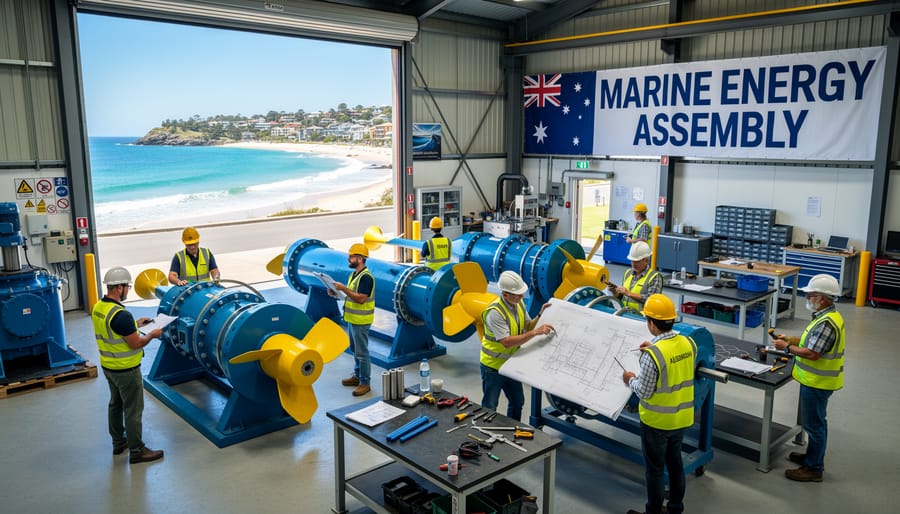
Australia’s coastline is becoming a hub for marine energy manufacturing, creating exciting opportunities for skilled workers across traditional and emerging trades. Local manufacturers are establishing facilities to build wave energy converters, tidal turbines, and floating platforms, bringing jobs to regional coastal communities that have historically relied on fishing and shipping industries.
Welders, fabricators, and machinists are finding their expertise highly valued in constructing the robust components needed to withstand harsh ocean conditions. In Tasmania and South Australia, workshops are producing specialised equipment including mooring systems, underwater cables, and corrosion-resistant turbine housings. These facilities are often partnering with local TAFEs to train the next generation of marine engineers and composite material specialists.
Offshore installation presents another growing sector, requiring marine construction crews, crane operators, divers, and project managers. Companies are recruiting experienced personnel from the offshore oil and gas sector while also training newcomers in marine construction techniques. The beauty of this work is its diversity—one month you might be coordinating vessel operations, the next overseeing the installation of a demonstration project off the Victorian coast. With pilot projects expanding along Australia’s southern and western shores, these hands-on manufacturing and construction roles are providing stable, well-paid careers whilst contributing to our clean energy future.
Research, Environmental, and Support Roles
Beyond the hands-on technical roles, marine renewable energy relies heavily on research scientists who investigate ocean conditions, study marine life interactions, and develop new technologies to improve efficiency. Environmental monitors play a crucial part in ensuring these projects protect Australia’s precious marine ecosystems, conducting assessments before, during, and after installation to track impacts on wildlife and habitats.
Project managers coordinate the complex moving parts of marine energy developments, from initial site surveys through to grid connection, requiring strong organisational skills and technical understanding. Their work ensures projects stay on schedule and within budget whilst meeting environmental standards.
Support roles include policy advisors who help shape regulations, community liaison officers who engage with coastal communities, and data analysts who interpret the vast amounts of information these systems generate. Administrative positions handle everything from permit applications to stakeholder communications.
These positions suit those passionate about ocean conservation who want to contribute without necessarily working offshore. Many research roles are based at universities and government agencies, whilst project management and administrative positions often operate from coastal offices, creating diverse pathways into this growing sector that combines environmental stewardship with career stability.
Real Stories: Australians Building Careers in Marine Energy
From Fishing to Energy: Coastal Communities Adapting
Along Australia’s rugged coastline, traditional maritime workers are discovering that their decades of ocean experience translates remarkably well to the burgeoning marine renewable energy sector. Take James Brennan, a third-generation commercial fisherman from Tasmania, who recently completed training to become an offshore wind turbine technician. “I’ve spent my entire life reading the seas, working in challenging conditions, and maintaining complex equipment on boats,” James explains. “Those skills are exactly what’s needed in marine energy.”
The transition isn’t just about individual success stories. Entire coastal communities are embracing this shift as fishing quotas tighten and climate change impacts traditional maritime industries. Former boat mechanics are maintaining wave energy converters, experienced divers are inspecting underwater tidal turbines, and vessel operators are transporting technicians to offshore installations. The seamanship, technical knowledge, and comfort with harsh marine environments that these workers possess are invaluable assets in the renewable energy sector.
Progressive training programs across Australia are facilitating these career transitions by recognizing existing maritime qualifications and building upon them with specialized renewable energy modules. This approach respects the expertise these workers bring while equipping them for new opportunities. The result is a workforce that understands both the ocean’s power and the technology harnessing it, creating safer, more effective marine renewable energy operations while revitalizing coastal economies and preserving communities’ deep connection to the sea.
Young Australians Choosing Ocean Careers
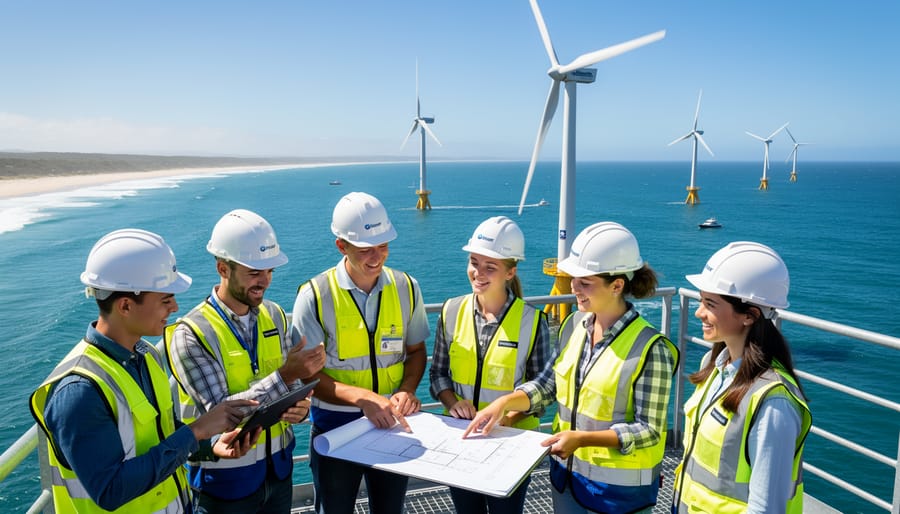
Australia’s marine renewable energy sector is attracting a new generation of passionate young professionals who see ocean careers as the perfect blend of environmental impact and long-term job security. Meet Sophie Chen, a 26-year-old marine energy engineer who traded a traditional mining job for a role with a wave energy company off the Victorian coast. “I wanted my work to contribute to solutions, not problems,” Sophie explains. “Every day, I’m helping develop technology that’ll power coastal communities without emissions.”
Training pathways are expanding rapidly to meet industry demand. TAFE NSW now offers specialised certificates in offshore renewable energy operations, while universities including the University of Tasmania and Flinders University have launched marine renewable energy programs combining ocean science, engineering, and project management. These courses often include practical placements with industry partners, giving students hands-on experience before graduation.
The appeal is clear for young Australians: meaningful work tackling climate change, competitive salaries matching traditional energy sectors, and the excitement of working in a cutting-edge field. Jack Morrison, 23, recently completed an apprenticeship as an offshore wind technician in Gippsland. “My mates thought I was mad leaving a secure trade, but this industry’s going nowhere but up,” he says. “Plus, how many people get to say their office has ocean views?”
Industry partnerships with educational institutions are creating clear career pipelines, ensuring young people can transition smoothly from study to employment in this booming sector.
How Marine Energy Jobs Compare to Other Renewable Sectors
Marine energy careers sit at an exciting intersection within Australia’s renewable energy landscape, offering unique opportunities that complement rather than compete with established sectors. While the solar energy sector currently leads in job creation with thousands of positions nationwide, and bioenergy opportunities are flourishing in regional communities, marine energy brings something distinctly different to the table.
What sets marine energy jobs apart is their pioneering nature. Workers in this field aren’t just building another solar farm or wind turbine—they’re developing entirely new technologies for Australia’s vast coastline. This means professionals often gain broader skill sets, working across research, engineering, environmental science, and project management simultaneously. A marine energy engineer might spend mornings analysing wave patterns, afternoons liaising with coastal communities, and evenings optimising turbine designs—variety that’s hard to match in more mature sectors.
The integration opportunities are equally compelling. Marine energy projects frequently collaborate with energy storage solutions, creating career pathways that bridge multiple technologies. Consider Tasmania’s BlueWave Project, where professionals gained experience in both tidal energy and battery storage systems, making them invaluable assets across the renewable sector.
While marine energy currently offers fewer total positions than wind or solar, those who enter now become genuine trailblazers. They’re building the foundation for an industry that could eventually rival established renewables, particularly given Australia’s extraordinary ocean resources. For career-minded individuals seeking adventure alongside impact, marine energy provides a rare chance to shape an industry from its earliest days—something that’s increasingly rare in Australia’s maturing renewable landscape.
Preparing for a Career in Marine Renewable Energy
Education and Training Pathways
Australia’s education sector is responding brilliantly to the growing demand for marine renewable energy expertise. Several universities now offer specialized programs that’ll set you up for success in this dynamic field. The University of Tasmania leads the charge with marine engineering courses focusing on offshore renewable technologies, while the Australian Maritime College provides hands-on training with wave and tidal energy systems.
TAFE institutions across coastal regions have developed practical certificate and diploma programs in marine technology and offshore operations. These courses combine classroom learning with real-world experience, perfect for those who learn by doing. Western Australia’s TAFE colleges, for instance, partner directly with wave energy companies to give students genuine industry exposure.
For professionals looking to transition into marine renewables, short courses and micro-credentials are game-changers. The University of Queensland and Curtin University offer online programs covering marine resource assessment, environmental monitoring, and project management specific to ocean energy projects.
Success story: Sarah from Newcastle completed a marine engineering diploma through TAFE and now works as a technician on wave energy trials off the Victorian coast. She credits the practical training and industry connections made during her studies as the key to landing her dream role. These pathways are opening doors to exciting careers whilst helping Australia transition to clean energy.
Skills That Transfer from Other Industries
The beauty of marine renewable energy is that it draws heavily on expertise already thriving in Australia’s established industries. If you’ve worked in traditional maritime sectors, offshore oil and gas, construction, or engineering, you’re already equipped with valuable skills that translate directly into this growing field.
Maritime professionals bring deep knowledge of vessel operations, navigation, and ocean safety protocols—all essential for installing and maintaining offshore energy systems. Deckhands, marine engineers, and harbour masters find their expertise in high demand when deploying wave and tidal devices.
The offshore oil and gas sector provides particularly relevant experience. Project managers familiar with harsh marine environments, subsea engineers who understand underwater structures, and health and safety specialists with offshore certifications can pivot seamlessly into marine energy roles. These industries share similar challenges: working in remote ocean locations, managing complex logistics, and ensuring crew safety.
Construction workers skilled in large-scale infrastructure projects contribute expertise in foundation installation, heavy lifting operations, and site management. Even electrical engineers from land-based renewable projects discover their knowledge of grid connection and power systems applies perfectly to ocean-based generation.
The good news? Many employers actively seek professionals with transferable skills, offering targeted training to bridge any knowledge gaps. This means your years of experience aren’t starting from scratch—they’re your springboard into an exciting, sustainable future.
The Future Outlook: What’s Coming for Marine Energy Employment
The marine renewable energy sector stands at an exciting threshold, with Australia perfectly positioned to ride the wave of global expansion. Industry forecasters predict remarkable growth over the next decade, with employment opportunities expected to multiply as projects transition from pilot programs to commercial-scale operations. The Australian government has signaled strong commitment through funding initiatives and policy frameworks designed to accelerate marine energy development, creating a solid foundation for long-term career security.
What makes this particularly promising is the sector’s integration with other renewable energy sectors, opening doors for professionals to develop diverse skill sets and move between complementary industries. As wave and tidal technologies mature, we’re seeing established energy companies, innovative startups, and international investors increasingly focusing on Australian waters, bringing capital and expertise that will fuel job creation across coastal communities.
Take the example of Tasmania’s emerging marine energy hub, where local authorities are already planning workforce development programs to ensure residents can access future opportunities. Similar initiatives are sprouting along the Victorian and Western Australian coastlines, demonstrating how regional areas stand to benefit significantly from this blue revolution.
The beauty of marine energy careers lies in their resilience. Unlike boom-and-bust industries, renewable energy offers sustained employment as the world commits to decarbonization. Engineers, technicians, environmental scientists, and project managers entering the field now are essentially future-proofing their careers. With Australia’s vast coastline and world-leading marine resources, professionals who establish themselves in this sector today will likely find themselves at the forefront of a thriving industry tomorrow.
For those considering the leap, the message is clear: marine renewable energy isn’t just a job opportunity, it’s a chance to build a meaningful career while contributing to Australia’s clean energy future. The tide is turning, and the timing couldn’t be better to dive in.
Australia stands at the threshold of an extraordinary opportunity. As waves roll onto our vast coastline and tides shift with unwavering reliability, they carry more than water—they bring the promise of a cleaner, more prosperous future. The marine renewable energy sector isn’t just about generating power; it’s about generating meaningful careers that align with our environmental values while strengthening communities across the nation.
From engineers designing innovative turbine systems to marine biologists monitoring ocean health, from technicians maintaining offshore installations to project managers coordinating complex deployments, these roles represent the kind of work that matters. They’re jobs where you can genuinely say you’re making a difference, contributing to Australia’s transition away from fossil fuels while protecting the marine environments we cherish.
The journey has already begun. Australians are training, upskilling, and stepping into these roles right now, becoming pioneers in an industry that will only grow stronger. Whether you’re a school leaver contemplating your future, a professional seeking more purposeful work, or someone fascinated by the intersection of technology and nature, marine energy offers a pathway worth exploring.
This isn’t simply about individual careers—it’s about collective action toward a sustainable future. Every person who enters this field strengthens Australia’s renewable energy capacity and brings us closer to our climate goals. The ocean has always shaped our nation’s identity. Now it’s inviting us to shape its role in our energy future. The question is: will you answer the call?