
The carbon credit industry faces a trust problem. Without reliable verification, carbon credits become nothing more than greenwashing certificates – and everyone knows it. That’s precisely why Measurement, Reporting, and Verification (MRV) has become the backbone of credible carbon markets, transforming promises into provable climate action.
MRV is the systematic process that tracks carbon reduction projects from start to finish, ensuring every tonne of CO2 claimed actually represents real environmental benefit. Think of it as the quality control system for carbon credits – measuring emissions reductions, reporting data transparently, and verifying results through independent audits. For bioenergy projects across Australia, from biomass power stations in regional Queensland to agricultural waste-to-energy facilities in Victoria, MRV determines whether carbon credits hold genuine value or collapse under scrutiny.
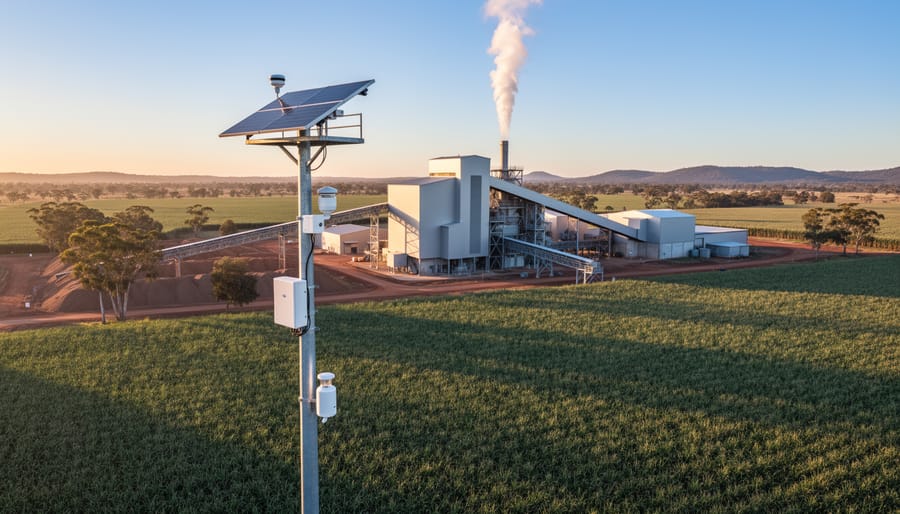
Digital MRV technology has revolutionized this landscape. Where traditional verification relied on periodic site visits and paper trails – expensive, slow, and prone to human error – modern platforms deploy satellite monitoring, IoT sensors, and blockchain records to track bioenergy operations continuously. A sugarcane mill converting bagasse to electricity can now demonstrate emissions reductions in real-time, with automated data collection replacing clipboards and guesswork.
This transformation matters enormously for Australia’s renewable energy transition. Digital MRV slashes verification costs by up to 60%, accelerates credit issuance from months to weeks, and builds investor confidence through transparent, tamper-proof records. For project developers, it means accessing carbon finance faster. For buyers, it guarantees credit integrity. For our climate goals, it means scaling bioenergy solutions without compromising environmental credibility.
The question isn’t whether MRV technology works – it’s how quickly Australian bioenergy projects can harness it to unlock their full carbon market potential.
What is MRV and Why Should You Care?
The Trust Problem in Carbon Markets
Imagine purchasing a product online only to discover it’s nothing like what was advertised. That same sinking feeling applies to carbon markets when verification falls short. For carbon offset projects to genuinely combat climate change, buyers need absolute confidence that the emissions reductions they’re paying for actually exist.
Here’s the challenge: unlike buying a tangible good, carbon credits represent something invisible. When a bioenergy facility claims it’s captured a certain amount of carbon or prevented specific emissions, how can purchasers verify those claims? Without robust verification systems, the market becomes vulnerable to exaggerated claims, double-counting, or projects that simply don’t deliver promised results.
This trust gap has real consequences. Companies investing in carbon credits to meet sustainability goals risk accusations of greenwashing if their purchases prove unreliable. Australian businesses, increasingly committed to net-zero targets, need certainty that their investments create genuine environmental impact rather than just appearing good on paper.
Consider a wheat farm converting agricultural waste into bioenergy. Without proper monitoring, reporting, and verification processes, estimating the actual carbon reduction becomes guesswork. How much biomass was processed? What emissions were avoided compared to fossil fuel alternatives? These questions demand precise, verifiable answers.
That’s where modern MRV systems transform the landscape, bringing transparency and credibility that traditional methods simply couldn’t achieve. The right verification approach turns promises into provable action, building the foundation for a trustworthy carbon market.
Traditional MRV: Slow, Expensive, and Error-Prone
For decades, carbon credit verification has relied on traditional methods that, while thorough, present genuine hurdles for projects trying to scale their environmental impact. Picture this: field technicians travelling to remote bioenergy facilities with clipboards and cameras, manually recording data about biomass sources, energy production, and emissions. It’s a bit like counting every tree in a forest by hand when satellite imagery exists.
These conventional approaches typically involve quarterly or annual site visits, mountains of paperwork, and weeks of manual data compilation before verification bodies can assess a project’s carbon credit eligibility. For Australian bioenergy operators spread across vast regional areas, this means significant travel costs and time delays. A sugar mill in North Queensland converting bagasse to energy might wait months between data collection and credit approval, affecting cash flow and project planning.
The human element, whilst bringing valuable expertise, also introduces opportunities for inconsistency. Different auditors might interpret measurement protocols slightly differently, and manual data entry creates gaps where information can be misrecorded or lost. It’s not about pointing fingers – these dedicated professionals are working within system limitations that simply weren’t designed for today’s pace of climate action.
What’s particularly challenging is the resource burden. Smaller bioenergy projects, like farm-based waste-to-energy initiatives, often find traditional verification costs disproportionate to their scale, creating barriers to participation in carbon markets. The good news? Technology is transforming this landscape, making verification more accessible for projects of all sizes.
Digital MRV: The Smart Evolution
How Digital Tools Monitor Bioenergy Emissions in Real-Time
Modern bioenergy facilities are harnessing cutting-edge digital technology to track emissions with unprecedented accuracy, transforming how carbon credits are verified and earned. Gone are the days of quarterly manual inspections and paperwork mountains—today’s biomass operations can monitor their environmental performance minute by minute.
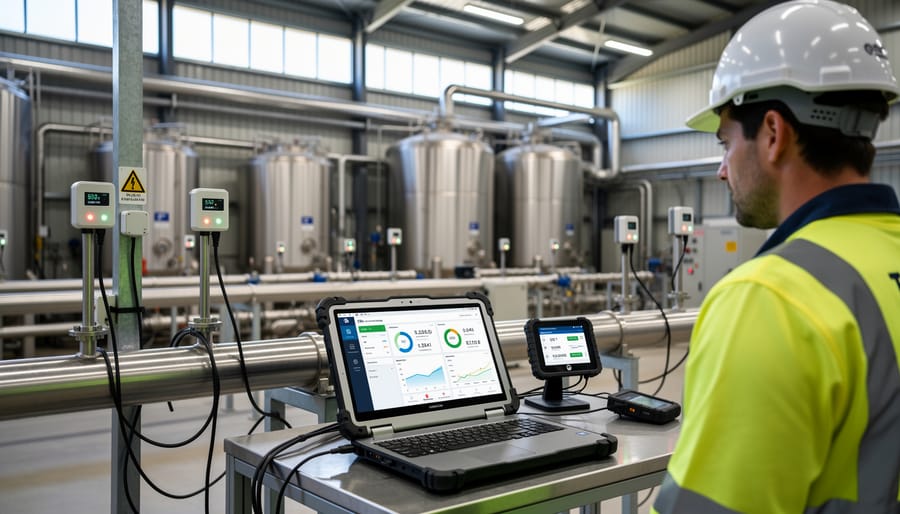
IoT sensors are the unsung heroes of this revolution. These smart devices, installed throughout biomass facilities, continuously measure everything from combustion temperatures to particulate emissions and carbon dioxide levels. At facilities processing agricultural waste across regional Victoria and Queensland, networks of interconnected sensors feed real-time data to central platforms, creating a comprehensive picture of operations that would have been impossible just a decade ago. When something shifts—perhaps a slight change in fuel moisture content—operators know immediately and can adjust processes to maintain optimal efficiency and minimal emissions.
Satellite monitoring adds another powerful layer to this digital ecosystem. High-resolution imagery tracks forest biomass sources, ensuring sustainable harvesting practices and verifying that feedstock comes from approved locations. This bird’s-eye view provides independent confirmation that biomass facilities are sourcing responsibly, a crucial factor for carbon credit verification.
Automated data collection systems tie everything together, gathering information from sensors and satellites while eliminating human error from the equation. These platforms create tamper-proof digital records that auditors and carbon market participants can trust implicitly.
Australian companies like Southern Green Gas have already demonstrated how this technology transforms operations. Their biomass-to-energy projects utilise automated monitoring systems that report emissions data directly to verification bodies, dramatically reducing certification timelines from months to weeks. This efficiency doesn’t just streamline paperwork—it accelerates revenue from carbon credits while ensuring environmental integrity remains rock-solid.
From Data to Carbon Credits: The Verification Journey
The journey from raw emissions data to verified carbon credits might sound complex, but digital MRV systems have transformed it into a streamlined, transparent process that’s reshaping how Australia approaches bioenergy projects.
Think of it like tracking a parcel delivery, but instead of monitoring a package, you’re following the life cycle of emissions reductions. It all begins with sensors and monitoring equipment installed at bioenergy facilities across Australia. These devices continuously collect data on fuel inputs, energy outputs, and emissions avoided. Rather than relying on manual readings taken monthly or quarterly, digital systems capture information in real-time, creating an unbroken chain of evidence.
This data flows automatically into secure cloud-based platforms where sophisticated algorithms get to work. They cross-reference the raw information against established methodologies and baseline scenarios, calculating exactly how much greenhouse gas has been reduced or avoided. For bioenergy projects working towards carbon neutrality, this precision matters enormously.
Next comes the verification stage, where independent auditors review the digital records. Here’s where digital MRV truly shines. Instead of sifting through filing cabinets of paper records, auditors access comprehensive, timestamped data trails that are nearly impossible to manipulate. They can drill down into any period, cross-check multiple data points, and verify calculations with confidence.
Once verified, these emissions reductions become certified carbon credits, ready to enter the market. A sugar mill in Queensland recently completed this journey in just eight weeks using digital MRV, compared to the traditional six-month process. The facility now generates credits quarterly, creating a steady revenue stream while demonstrating genuine environmental impact to stakeholders and the broader community.
Real Benefits for Australian Bioenergy Projects
Cutting Costs and Saving Time
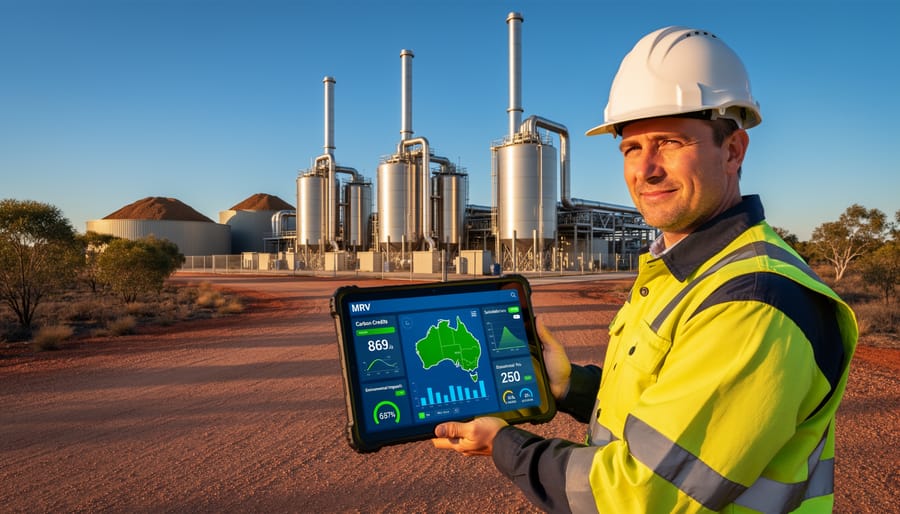
Digital MRV technology is revolutionising the economics of carbon credit verification, making it accessible for projects of all sizes. Traditional manual verification processes could cost anywhere from $15,000 to $50,000 per project annually, with verification cycles stretching over several months. Automation slashes these expenses by up to 70 percent, while reducing processing time from months to mere weeks.
Consider a biomass energy facility in regional Queensland that previously spent eight weeks gathering data, compiling reports, and coordinating with auditors. After implementing digital MRV sensors and automated reporting systems, they now generate verification-ready reports in just ten days. The facility saves approximately $30,000 annually in verification costs alone, resources they’ve redirected toward expanding their renewable energy capacity.
Smart meters, satellite monitoring, and blockchain-based tracking systems work around the clock, capturing emissions data with precision that humans simply cannot match at the same speed. For smaller bioenergy operations across Australia, these cost reductions mean the difference between participating in carbon markets or missing out entirely, democratising access to carbon credit revenue streams whilst maintaining rigorous environmental standards.
Building Trust with Transparent Data
Digital MRV technology is revolutionising how we verify carbon credits by creating an unshakeable foundation of trust. Think of it as a digital ledger that records every measurement, every verification step, and every emission reduction in real-time – permanently and transparently. This transparency matters because it transforms carbon credits from something you simply trust to something you can prove.
For bioenergy projects across Australia, this means attracting premium buyers who demand accountability. When a Melbourne-based waste-to-energy facility can show potential buyers exactly how much biomass was processed, the precise emissions avoided, and independent verification of these claims – all accessible through blockchain or similar technology – those credits command higher prices. It’s straightforward economics: verified quality earns greater value.
The beauty of digital MRV lies in its tamper-proof nature. Once data enters the system, it cannot be altered or manipulated, giving buyers confidence that their investment genuinely offsets emissions. Australian projects using these systems report faster sales and stronger relationships with international buyers who appreciate the rigorous documentation. This isn’t just good practice; it’s becoming the new standard that separates serious carbon projects from questionable ones, helping genuine environmental action flourish.
Opening Doors for Smaller Players
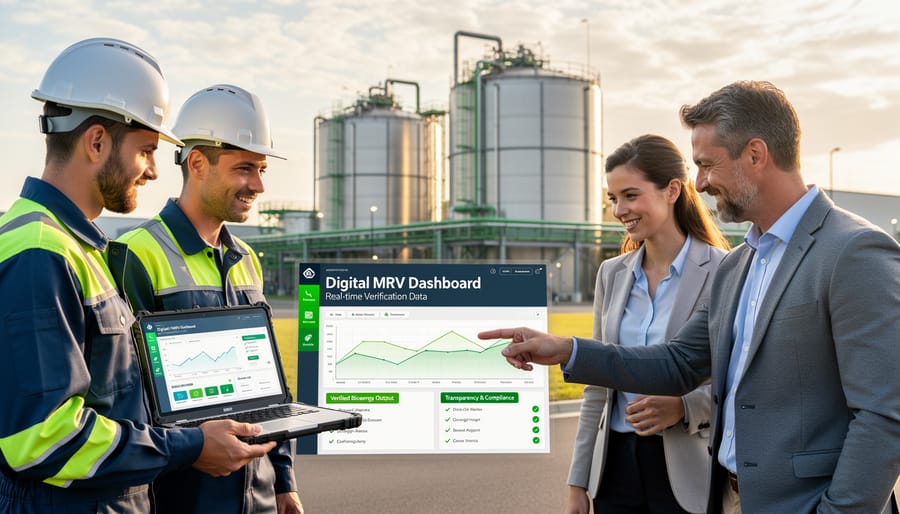
Traditional carbon markets have often felt like an exclusive club, with high costs and complex verification requirements putting them out of reach for many worthy projects. Digital MRV technology is changing that landscape completely. By automating data collection and verification processes, these systems dramatically reduce the costs and administrative burden that previously made carbon credit generation impractical for smaller bioenergy projects.
Rural communities across Australia are now finding their voice in carbon markets. A farming cooperative in regional Queensland recently entered the carbon credit space using digital MRV to verify emissions reductions from their community-scale biomass plant. What would have required expensive consultants and months of paperwork now happens through sensors and automated reporting systems that cost a fraction of the traditional approach.
This democratization means local initiatives get recognition and financial rewards for their environmental contributions. Digital platforms provide smaller operators with the same credibility as large-scale projects, opening doors to funding opportunities and helping rural communities build sustainable income streams while fighting climate change.
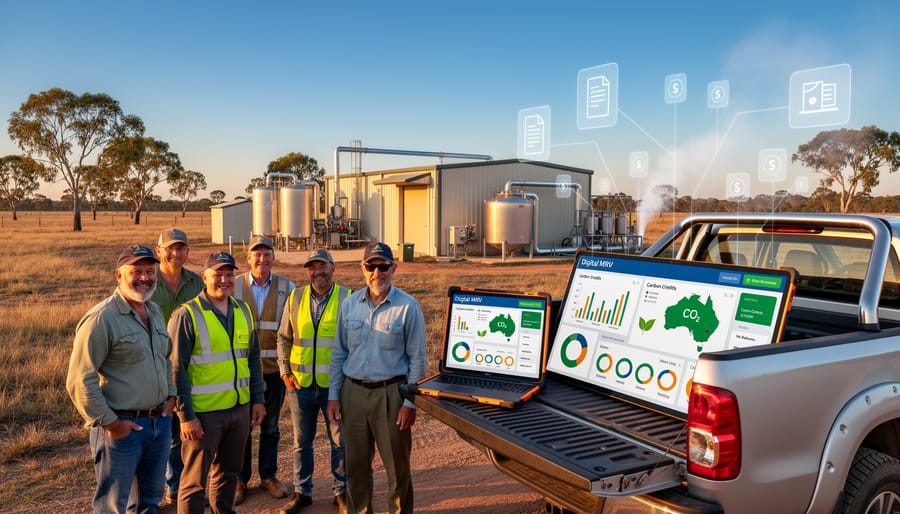
Success Story: Digital MRV in Action Down Under
When Riverina BioEnergy Solutions embarked on their mission to convert agricultural waste into renewable energy across regional New South Wales, they knew carbon credits would be essential to making their project financially viable. What they didn’t anticipate was how transformative digital MRV technology would become for their entire operation.
The 15-megawatt facility processes wheat stubble and orchard prunings from local farms, preventing nearly 80,000 tonnes of CO2 equivalent annually. Initially, the team considered traditional MRV approaches, but the prospect of manual data collection across dozens of farm sites, coupled with quarterly verification visits, seemed overwhelming and expensive.
Their breakthrough came when they partnered with a digital MRV platform that integrated satellite monitoring, IoT sensors, and blockchain verification. Smart sensors installed at collection points automatically tracked biomass quantities and moisture content, whilst GPS-enabled collection vehicles recorded transport emissions in real-time. The facility’s energy meters fed directly into the platform, creating an unbroken chain of verified data from paddock to power generation.
The results exceeded expectations. Within the first year, Riverina BioEnergy reduced verification costs by 60 percent compared to traditional methods. More importantly, the transparent, real-time data gave investors confidence, helping secure additional funding for expansion. The automated system caught a calibration error in one biomass weighing station that could have cost them thousands in invalid credits, proving the technology paid for itself multiple times over.
Project manager Sarah Chen recalls the initial scepticism from some farming partners. “A few of our suppliers thought the digital tracking was too complicated,” she explains. “But once they saw how simple it was – just business as usual with a few extra sensors – everyone came on board. Now they appreciate the transparency because it protects them too.”
The biggest lesson learned? Start digital from day one. Retrofitting systems later creates headaches with historical data verification. Riverina’s success demonstrates that digital MRV isn’t just about meeting compliance requirements; it’s about building trust, reducing costs, and creating a foundation for growth. Today, the facility is expanding to three additional sites, each incorporating the digital MRV framework that transformed their first plant from a promising idea into a certified, credit-generating success story that’s genuinely fair dinkum.
Getting Started with Digital MRV for Your Bioenergy Project
Assessing Your Project’s Readiness
Before diving into digital MRV systems, it’s worth taking stock of whether your operation is ready for this technology. Start by asking yourself a few straightforward questions. Does your bioenergy project generate measurable emissions reductions or removals? Can you access basic monitoring equipment or data collection systems? Do you have staff who can manage digital reporting tools, or are you willing to bring in expertise?
Consider the scale of your operation too. While digital MRV works brilliantly for large biomass facilities and agricultural projects, even smaller community initiatives across regional Australia have successfully implemented streamlined versions. The Adelaide Hills Biomass Cooperative, for instance, started with simple digital sensors before scaling up their monitoring capabilities.
Think about your timeline as well. If you’re planning to enter carbon markets within the next 12 months, establishing digital MRV early creates a solid foundation. Projects already generating environmental benefits but lacking proper verification systems can retrofit digital solutions relatively quickly.
Finally, assess your commitment to transparency. Digital MRV thrives when organisations embrace open data sharing and continuous improvement. If you’re ready to demonstrate genuine environmental impact with verifiable evidence, you’re likely ready for digital MRV technology.
Finding the Right Digital MRV Solution
Choosing the right digital MRV solution can feel overwhelming with so many platforms emerging in the carbon credit space, but focusing on a few key criteria will help you make an informed decision. Think of it as finding the right partner for your bioenergy project’s success story.
Start by assessing transparency and data integrity. The best platforms use blockchain or similarly secure technologies to create tamper-proof records of your emissions reductions. This matters because buyers and regulators increasingly demand ironclad verification. Look for solutions that offer real-time monitoring rather than periodic checks, as continuous data collection provides more accurate results and builds greater trust.
Consider interoperability and compatibility with existing systems. Your chosen platform should integrate smoothly with your current monitoring equipment and data management systems. Many Australian bioenergy operators have found success with solutions that connect easily to IoT sensors and agricultural monitoring tools already in place.
User experience matters tremendously. A brilliant platform that’s too complex to navigate won’t serve your team well. Seek out providers offering comprehensive training and responsive support, particularly those familiar with Australian regulatory requirements and market conditions.
Don’t overlook scalability. As your bioenergy operation grows, your MRV solution should grow with you. The right platform accommodates expansion without requiring a complete system overhaul.
Finally, investigate the provider’s track record. Request case studies, speak with current users, and verify their experience with bioenergy projects specifically. The carbon credit landscape evolves rapidly, so partnering with established, adaptive providers positions you for long-term success.
Digital MRV represents a game-changing opportunity for Australia’s bioenergy sector, transforming how we measure, verify, and celebrate our progress toward a cleaner energy future. By embracing transparent, real-time monitoring technologies, we’re not just ticking compliance boxes – we’re building trust, unlocking investment, and accelerating our transition to sustainable energy systems. The success stories across Australian farms, forestry operations, and waste-to-energy facilities demonstrate that this isn’t pie-in-the-sky thinking; it’s happening right now, creating jobs and reducing emissions simultaneously.
Whether you’re managing a bioenergy project, shaping policy, or simply passionate about climate solutions, now’s the time to explore how digital MRV can support your vision. Consider implementing smart bioenergy solutions in your operations, or advocate for policies that make verification technology more accessible. Every project monitored, every carbon credit verified with integrity, brings us one step closer to the sustainable Australia we’re all working toward. The tools are ready – let’s put them to work.