
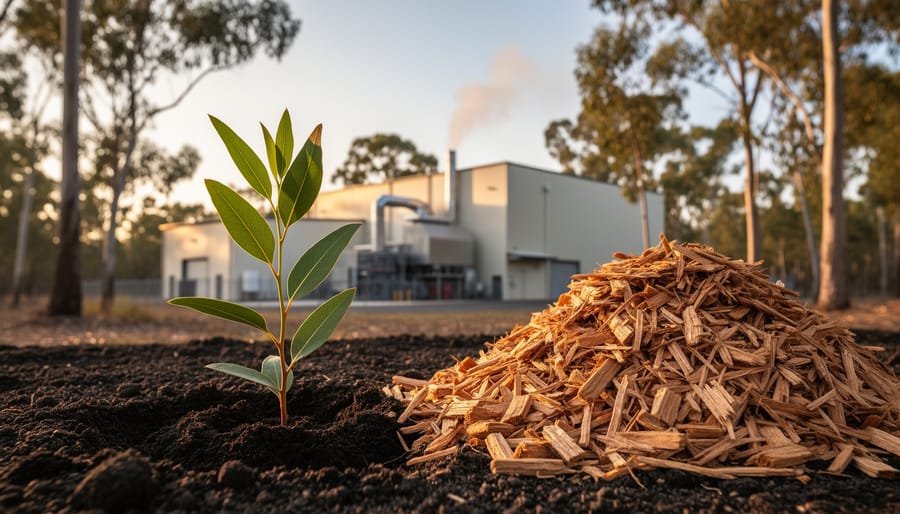
Carbon forms the backbone of every living thing on Earth, from the gum trees lining Sydney’s streets to the microorganisms powering waste treatment facilities across Melbourne. This single element connects all biological systems through an elegant cycle: plants capture carbon dioxide from the atmosphere through photosynthesis, animals consume those plants for energy, and decomposition returns carbon to the soil and air. Understanding this fundamental cycle reveals why bioenergy stands apart from fossil fuels in the renewable energy landscape.
When we burn coal or natural gas, we’re releasing carbon that’s been locked underground for millions of years, adding new carbon to the atmosphere. Bioenergy operates differently. The carbon released when burning wood chips, agricultural waste, or biogas was recently captured from the atmosphere by living plants. Growing new biomass recaptures that carbon, creating a closed loop that maintains atmospheric balance when managed sustainably.
This distinction matters enormously for Australian communities pursuing carbon-neutral development. A council in regional Queensland using locally-sourced timber waste for district heating isn’t just reducing landfill, they’re participating in the natural carbon cycle that’s sustained life for billions of years. The carbon released this year will be reabsorbed by next season’s crop growth, fundamentally different from unleashing ancient carbon stores.
Grasping carbon’s biological role transforms how we evaluate energy systems, revealing bioenergy’s unique position as the renewable resource that works with nature’s existing processes rather than against them.
Carbon: The Building Block of Every Living Thing
Why Carbon Bonds Make Life Tick
Think of carbon as nature’s ultimate building block – like LEGO pieces that can connect in virtually endless combinations. While other elements might join together in simple chains or pairs, carbon is the champion connector, capable of bonding with up to four other atoms simultaneously. This remarkable ability makes carbon the foundation of every living thing on Earth, from the smallest bacteria to the tallest eucalyptus tree.
What makes carbon so special? Imagine you’re at a networking event where most people can only shake hands with one or two others at a time, but carbon can connect with four different people simultaneously while maintaining strong, stable relationships with each. This flexibility allows carbon to create everything from simple sugars that fuel our morning cuppa to the complex proteins that build our muscles.
Carbon atoms link together like train carriages, forming long chains, branching structures, or even rings. They’re stable enough to hold together under everyday conditions but flexible enough to break apart and recombine when needed – perfect for the constant building and rebuilding that happens in living systems. When you eat a sandwich, your body breaks down the carbon-based molecules, rearranges them, and rebuilds them into energy or new tissue.
This versatility explains why bioenergy works so brilliantly as a renewable resource. Plants capture carbon from the atmosphere and, through photosynthesis, transform it into sugars and other organic compounds – essentially storing solar energy in carbon bonds. When we use these plant materials for energy, we’re simply releasing that stored sunshine. The carbon then returns to the atmosphere, ready for plants to capture again, creating a continuous cycle rather than a one-way trip like fossil fuels provide.
From Gum Trees to Gut Bacteria: Carbon Everywhere You Look
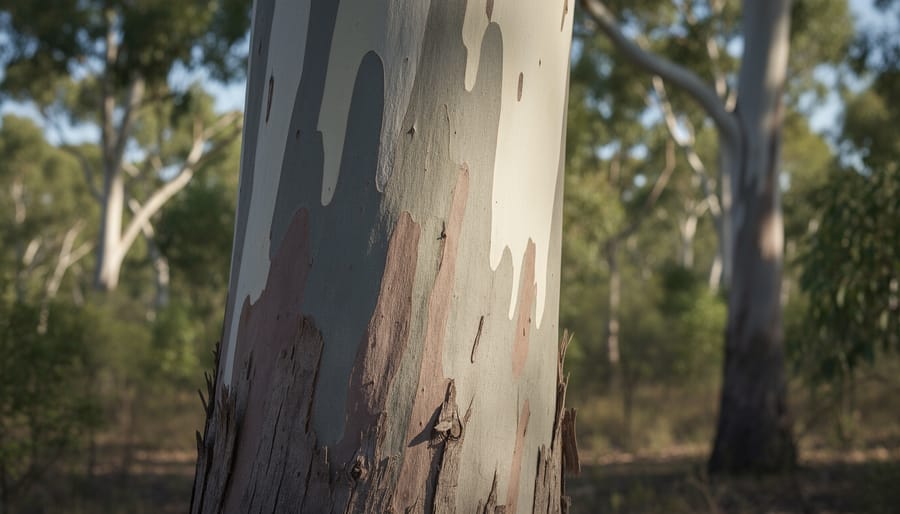
Take a walk through any Australian eucalyptus forest and you’re surrounded by carbon in action. Those towering gum trees, with their distinctive peeling bark and aromatic leaves, are essentially carbon-capturing machines. Through photosynthesis, they pull carbon dioxide from the air and transform it into the cellulose that builds their trunks, branches, and those iconic leaves that koalas munch on. A single mature eucalypt can store hundreds of kilograms of carbon throughout its lifetime.
But carbon’s biological story doesn’t stop at our native forests. Head to the agricultural heartland and you’ll find carbon hard at work in wheat fields across the Murray-Darling Basin, in Queensland’s sugarcane plantations, and in Western Australia’s canola crops. Every grain of wheat, every stalk of cane, every vegetable in your local farmer’s market is built from carbon atoms that were recently floating in the atmosphere.
Perhaps most remarkably, you’re a carbon-based life form yourself. About 18 percent of your body weight is carbon. It forms the backbone of proteins building your muscles, the DNA carrying your genetic code, and the fats cushioning your organs. Even the trillions of bacteria living in your gut—those microscopic helpers breaking down your food—are constructed primarily from carbon.
This ubiquity matters because it reveals something crucial: carbon isn’t just an element on the periodic table or an abstract concept in climate discussions. It’s the fundamental building block connecting every living thing on our continent, from the smallest soil microbe to the tallest mountain ash. Understanding this connection is the first step toward appreciating how we can harness biological carbon cycles for sustainable energy solutions.
Nature’s Carbon Cycle: A Perfectly Balanced System
Photosynthesis: Nature’s Original Carbon Capture Technology
Every day, Australian plants are quietly performing one of Earth’s most remarkable feats of engineering. Through photosynthesis, a single eucalyptus tree can capture roughly 25 kilograms of carbon dioxide each year, transforming what could be atmospheric pollution into solid wood, leaves, and energy for growth.
Here’s how this natural carbon capture technology works: Plants absorb CO2 through tiny pores in their leaves called stomata. Using sunlight as their power source, they split these carbon dioxide molecules apart, keeping the carbon to build their bodies while releasing oxygen back into the air we breathe. It’s a beautifully elegant exchange that’s been powering life on Earth for billions of years.
Think of plants as living carbon vaults. That carbon becomes everything from tree trunks and root systems to fruits and flowers. When you walk through a forest or urban park, you’re surrounded by stored atmospheric carbon, safely locked away in living tissue.
This process isn’t just fascinating science; it’s the foundation that makes bioenergy truly renewable. Unlike fossil fuels, which release ancient carbon that’s been buried for millions of years, bioenergy works within this natural cycle. The carbon released when we burn sustainably harvested biomass is the same carbon those plants recently captured from the atmosphere, creating a balanced loop rather than a one-way ticket to climate change.
The Return Journey: When Organisms Break Down
What goes up must come down, and in nature’s economy, what grows must eventually return. Just as carbon builds living organisms through photosynthesis, it makes its way back to the atmosphere through two fundamental processes: respiration and decomposition.
Think of respiration as the immediate return pathway. Every breath you take, every movement you make, releases carbon dioxide as your cells break down glucose for energy. Plants do this too, particularly at night when photosynthesis pauses. It’s a constant exchange, with organisms borrowing carbon from the atmosphere to build their bodies, then repaying it as they live and breathe.
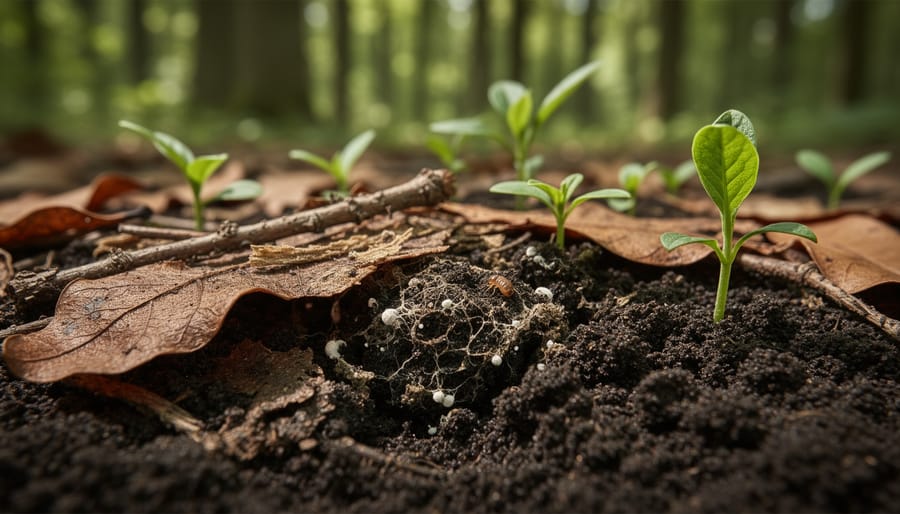
Decomposition handles the longer-term returns. When plants shed leaves, when animals pass away, when that banana peel hits your compost bin, decomposers like bacteria and fungi get to work. They’re nature’s recyclers, breaking down organic matter and releasing stored carbon back into the air. In Australian bushland, this cycle plays out spectacularly after autumn leaf fall, with forest floors transforming fallen matter back into atmospheric carbon within months or years.
Here’s the crucial distinction that makes bioenergy truly renewable: this biological carbon has been recently captured from today’s atmosphere. When we burn sustainably sourced biomass for energy, we’re simply accelerating a return journey that would happen anyway through natural decomposition. The carbon released was pulled from the air just years or decades ago, creating a short, continuous loop.
Fossil fuels tell a different story entirely. That coal, oil, and gas represent carbon locked away for millions of years, removed from the active carbon cycle. Burning them adds ancient carbon to our current atmosphere, fundamentally disrupting the balance. Understanding this difference isn’t just academic knowledge; it’s the foundation for building genuinely sustainable energy systems in our communities.
Biomass: Living Carbon Storage Banks in Our Backyard
Agricultural Waste: Carbon Gold We Used to Burn or Bury
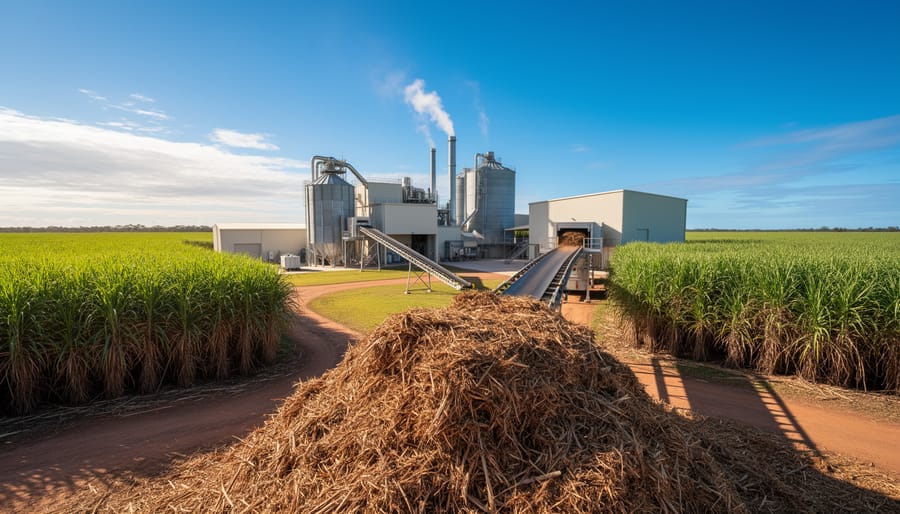
Every year, Australian farms generate millions of tonnes of agricultural residues that represent an extraordinary opportunity. What many once viewed as waste—sugarcane bagasse from Queensland mills, wheat stubble across the grain belt, and forestry offcuts from our timber industries—is actually stored biological carbon, captured from the atmosphere through photosynthesis and primed for productive use.
Rather than burning stubble in paddocks or letting biomass decompose and release methane, forward-thinking operations are transforming these materials into renewable energy and valuable products. In northern New South Wales, sugar mills now power themselves using bagasse, the fibrous material left after crushing cane. What was once an inconvenience is now an energy asset, reducing grid demand during crushing season.
Queensland’s forestry sector tells a similar success story. Sawmill residues that previously filled landfills now fuel biomass generators, creating electricity while keeping carbon in productive circulation rather than releasing it wastefully. Wheat growers are increasingly baling stubble for bioenergy facilities instead of burning it, improving air quality whilst creating regional income streams.
The beauty of this approach lies in the carbon cycle itself. These materials captured atmospheric CO2 during growth. Using them for energy releases that same carbon—but unlike fossil fuels, next season’s crops will capture it again, maintaining balance. We’re essentially harvesting sunshine stored in plant matter, turning yesterday’s agricultural output into today’s clean energy.
Urban Organic Waste: Your Food Scraps Are Energy Waiting to Happen
Australian cities produce over 7.6 million tonnes of food and garden waste annually, and most of it still ends up in landfills where it becomes a serious climate problem. When organic waste breaks down without oxygen in landfill conditions, it releases methane, a greenhouse gas 25 times more potent than carbon dioxide. But here’s the exciting bit: that same waste represents a treasure trove of carbon-rich energy just waiting to be unlocked.
Every banana peel, leftover sandwich, and grass clipping contains carbon that once powered plant growth through photosynthesis. Cities like Sydney and Melbourne are now recognizing that their organic waste streams are essentially distributed energy resources hiding in plain sight. Through anaerobic digestion, this carbon-rich material can be transformed into renewable biogas while simultaneously producing nutrient-rich fertiliser for agriculture.
The City of Sydney’s successful food waste recycling program demonstrates how practical this approach can be. Residents separate their food scraps into special bins, which are then processed into biogas that powers council vehicles and generates electricity. Rather than releasing methane into the atmosphere, we’re capturing that carbon energy and putting it to work.
The beauty of urban organic waste recovery is its circular nature. The carbon cycle completes itself: plants absorb atmospheric carbon, we consume those plants, our food scraps become energy and fertiliser, and new plants grow. It’s nature’s own renewable energy system, operating right in our backyards.
Why Bioenergy Closes the Carbon Loop (And Fossil Fuels Don’t)
The Time Factor: Yesterday’s Carbon vs. Millions of Years Ago
Here’s where the magic of timing makes all the difference in our carbon story. Think of it like this: when we burn bioenergy, we’re releasing carbon that plants pulled from the atmosphere just months or years ago—it’s part of a rapid cycle that keeps atmospheric carbon levels stable. It’s a bit like borrowing a mate’s ute and returning it the same arvo—no harm done.
Fossil fuels, however, tell a completely different tale. That lump of coal or barrel of oil contains carbon that was locked away deep underground for millions of years. When we burn it, we’re essentially breaking into an ancient carbon vault and flooding today’s atmosphere with greenhouse gases that were safely stored away since the dinosaurs roamed. This adds new carbon to the atmospheric total, tipping the balance that’s kept our climate stable.
In Australian cities from Melbourne to Darwin, this distinction matters enormously. A council-operated bioenergy facility processing green waste releases carbon that local trees and plants will reabsorb next growing season—maintaining equilibrium. Meanwhile, a coal power station unleashes prehistoric carbon that accumulates year after year, driving climate change.
The time factor isn’t just scientific nitpicking—it’s the fundamental difference between recycling carbon in real-time and dumping ancient carbon into an atmosphere that’s already struggling. Understanding this helps explain why transitioning to bioenergy represents such a powerful climate solution for Australian communities committed to carbon-neutral development.
The Circle of Life (Literally): Regrowth Recaptures What Bioenergy Releases
Here’s the beautiful thing about bioenergy: it’s nature’s own recycling program in action. When we burn biomass for energy, we release carbon dioxide back into the atmosphere – that’s undeniable. But here’s where the magic happens. Unlike fossil fuels that unleash ancient carbon locked away for millions of years, bioenergy works on a much faster timeline.
Think of it as a merry-go-round rather than a one-way street. The CO2 released from today’s bioenergy was only recently captured by growing plants through photosynthesis. When we harvest biomass sustainably – meaning we replant and regrow – those new plants immediately start pulling that same carbon back out of the air. It’s a closed loop that can cycle every few years or decades, depending on what you’re growing.
Across Australia, we’re seeing this circle in action. Sugarcane bagasse powers mills in Queensland, while new cane grows in the fields, recapturing yesterday’s emissions. Plantation forestry in Tasmania follows the same principle – harvest, replant, regrow. The key word is sustainable: we only take what nature can replace, ensuring the circle stays unbroken and carbon neutral over time.
Bringing Biology to the City: Carbon-Smart Urban Development
Converting City Waste Streams into Carbon-Neutral Power
Australian cities are turning organic waste into valuable energy resources, proving that yesterday’s rubbish can power tomorrow’s communities. These innovative projects demonstrate how biological carbon cycles can be harnessed at scale, creating genuine environmental and economic benefits.
Sydney’s Coffs Harbour facility showcases this transformation brilliantly. The city’s food organics and garden organics program diverts over 13,000 tonnes of waste annually from landfill, converting it into electricity that powers local homes while producing nutrient-rich compost. By capturing methane that would otherwise escape into the atmosphere, the facility prevents greenhouse gas emissions equivalent to taking 3,000 cars off the road each year.
In South Australia, Adelaide’s wastewater treatment plants have become energy powerhouses. SA Water’s Glenelg facility processes sewage through anaerobic digestion, generating biogas that meets approximately 40 percent of the plant’s electricity needs. This project demonstrates how waste management infrastructure can evolve into renewable energy assets, reducing operational costs while cutting carbon emissions.
Melbourne’s organics processing facilities are equally impressive, handling 120,000 tonnes of food and garden waste yearly. The biogas produced generates enough electricity to power 3,000 homes, exemplifying how metropolitan areas can close their carbon loops locally rather than shipping waste elsewhere.
Queensland’s Urban Utilities operates biogas-powered generators across Brisbane, producing renewable electricity from sewage treatment. This approach to carbon-neutral cities creates a circular system where organic materials fuel community infrastructure.
These success stories share common threads: they capture carbon already cycling through biological systems, prevent methane emissions, generate reliable baseload power, and create local employment. By recognizing organic waste as untapped energy potential rather than disposal problems, Australian cities are pioneering practical solutions that other communities worldwide can replicate.
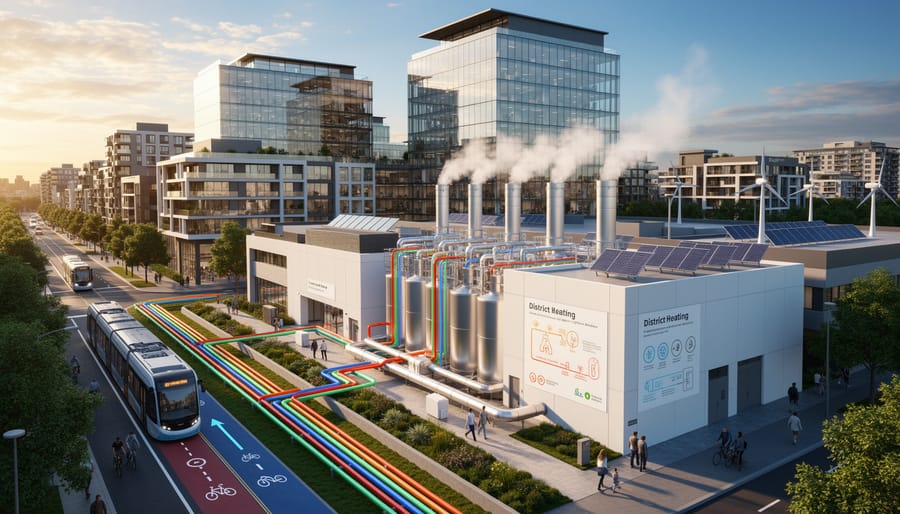
District Heating from Biomass: Lessons from Adelaide and Beyond
When urban precincts across Australia embrace biomass heating systems, they’re tapping into nature’s own carbon management strategy. The beauty of district heating from biomass lies in how perfectly it mirrors biological carbon cycling, creating what’s genuinely sustainable rather than just greenwashing.
Adelaide has been exploring biomass district heating for various urban developments, demonstrating how this technology can work brilliantly in Australian conditions. Unlike burning fossil fuels, which releases carbon that’s been locked underground for millions of years, biomass heating returns to the atmosphere only the carbon that trees and plants recently absorbed during growth. It’s the same carbon that would eventually return through natural decomposition anyway, but we’re capturing its energy first.
Here’s how the biological carbon cycle makes this work: growing forests pull CO2 from the atmosphere through photosynthesis, storing that carbon in wood and plant matter. When managed sustainably, harvesting wood for biomass heating creates space for new growth, which immediately starts absorbing fresh carbon. This continuous cycle means the system remains carbon neutral, provided forests are replanted and well-managed.
The practical benefits for urban developments are remarkable. District heating systems pipe warmth from a central biomass facility to multiple buildings, delivering efficient heating without individual boilers or emissions at each building. Communities in colder Australian regions, particularly in Tasmania and the Victorian highlands, are finding this approach both economical and environmentally sound.
What makes this genuinely sustainable is the closed-loop nature matching biological reality. We’re not introducing ancient carbon into today’s atmosphere; we’re working within current biological cycles. When sourced from sustainable forestry operations or agricultural waste, biomass heating transforms what might otherwise decompose into valuable thermal energy, all while respecting the natural carbon rhythms that have sustained life for millennia.
The Jobs and Innovation Growing from Carbon-Smart Thinking
Understanding how carbon cycles through living systems isn’t just fascinating science – it’s creating genuine career pathways and business opportunities right here in Australia. When we apply nature’s carbon-smart principles to our cities, we’re not just solving environmental challenges; we’re building entire industries from the ground up.
Take the story of Green Industries SA, where understanding biological carbon cycles has sparked a waste-to-energy sector now employing hundreds of South Australians. By mimicking how microorganisms break down organic matter in nature, facilities are converting food scraps and agricultural waste into renewable energy. These aren’t just theoretical jobs either – they’re hands-on roles for engineers, microbiologists, plant operators, and technicians who understand the living chemistry of carbon transformation.
In Queensland, several agricultural communities have become unexpected hubs of innovation. Farmers who once burned sugarcane waste now partner with energy companies to capture that carbon-rich biomass. It’s created employment for agronomists specialising in sustainable harvest methods, logistics coordinators managing feedstock supply chains, and energy specialists optimising conversion processes. These regional towns are buzzing with opportunity because someone recognised that carbon in crop residues behaves exactly like carbon in natural ecosystems – it’s energy waiting to be unlocked responsibly.
Melbourne’s waste management sector has particularly embraced this biological thinking. Companies are hiring “carbon cycle consultants” – professionals who understand how organic materials decompose and can design systems that capture value at every stage. University courses are adapting too, with new programs combining biology, chemistry, and engineering specifically for the bioenergy sector.
The beauty of this approach is its accessibility. Unlike some renewable technologies requiring rare materials or massive infrastructure, bioenergy systems work with organic waste we’re already producing. Every council implementing organic waste collection creates local jobs. Every facility processing that waste needs skilled workers. Every innovation in capturing carbon’s biological potential opens doors for Australian entrepreneurs and researchers to lead globally. This is carbon-smart thinking generating real prosperity.
Carbon’s story is one of beautiful contradiction. This remarkable element breathes life into every organism on Earth, yet its mismanagement threatens the very ecosystems it creates. But here’s the inspiring truth: the same biological processes that built civilizations can now power them sustainably.
Australian cities are already proving this vision isn’t just a dream. Melbourne’s waste-to-energy facilities are turning organic rubbish into electricity, mimicking nature’s own carbon cycling. Brisbane’s urban farms demonstrate how communities can grow food while capturing carbon. These aren’t isolated experiments—they’re blueprints for a carbon-neutral future that harnesses biology’s wisdom.
The path forward requires action at every level. Individuals can compost organic waste, support local bioenergy initiatives, and choose products from companies committed to carbon neutrality. Businesses have opportunities to transform waste streams into energy assets, reducing landfill dependence while powering operations sustainably. Communities can advocate for urban planning that integrates green waste processing, rooftop gardens, and bioenergy infrastructure.
For policymakers, the message is clear: investing in biological carbon solutions isn’t just environmentally responsible—it’s economically smart. These systems create jobs, reduce emissions, and build resilience into our energy supply.
Carbon gave us life. Now it’s offering us a second chance. By working with nature’s proven systems rather than against them, we can create cities where the carbon cycle becomes a circle of sustainability rather than a spiral of crisis. The technology exists. The knowledge is available. What’s needed now is the collective will to act. Your contribution, whatever its scale, moves us closer to this achievable future.