
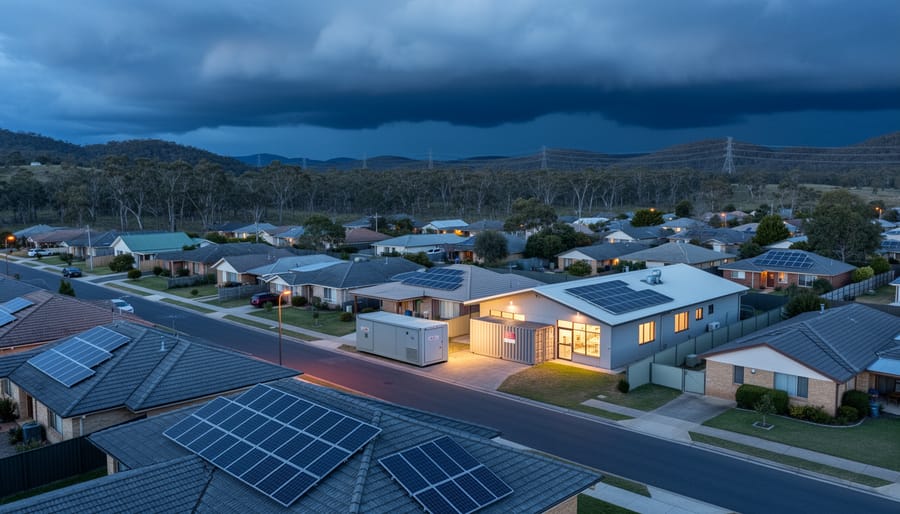
When the next major storm hits or grid infrastructure fails, communities with eco-innovative microgrids keep their lights on, their hospitals running, and their residents safe—all while slashing carbon emissions and energy costs. This is not a distant future scenario. Right now, across Australia and around the world, forward-thinking communities are breaking free from vulnerable, centralized power systems by building localized energy networks that generate, store, and distribute clean electricity independently.
Eco-innovative microgrids represent the convergence of renewable energy technology, intelligent software, and community resilience planning. These systems integrate solar panels, battery storage, and sometimes bioenergy generators into a coordinated network that can operate autonomously when the main grid goes down. Unlike traditional backup generators that burn fossil fuels and serve single buildings, microgrids power entire neighborhoods, business districts, or remote communities with renewable sources while maintaining grid connection during normal operations.
The transformation happening in these pioneering communities offers a blueprint for energy independence that addresses multiple challenges simultaneously. Climate change is intensifying extreme weather events that threaten power reliability, aging grid infrastructure struggles to meet modern demands, and electricity costs continue climbing—yet communities implementing microgrids are finding solutions to all three problems at once. They are creating local jobs, reducing greenhouse gas emissions by up to 80 percent, and ensuring critical services remain operational during emergencies that would otherwise leave them in the dark.
Whether you are a community leader evaluating options for your town, a sustainability advocate pushing for change, or a concerned citizen wondering how to protect your neighborhood from the next blackout, understanding eco-innovative microgrids is essential. The technology is proven, the benefits are measurable, and the time to act is now.
What Makes a Microgrid ‘Eco-Innovative’?
Beyond Solar Panels: The Bioenergy Advantage
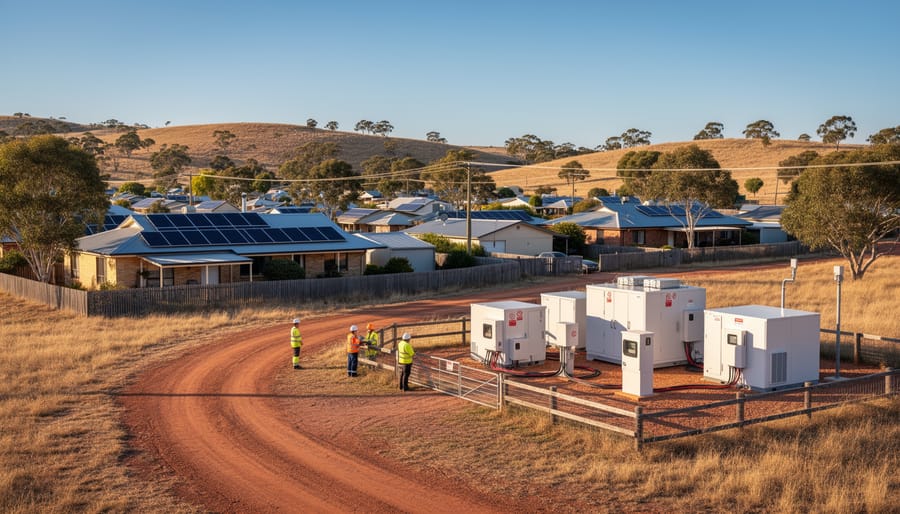
Solar panels get the spotlight, but there’s a quiet achiever working alongside them in Australia’s smartest microgrids: bioenergy. While solar and wind are brilliant when the sun’s shining or the breeze is blowing, communities need power around the clock. That’s where bioenergy steps up, converting agricultural waste, food scraps, and organic materials into reliable, dispatchable electricity.
Think of it as nature’s battery. When dairy farms in Gippsland turn cow manure into methane-powered generators, they’re creating electricity that flows regardless of weather conditions. Similarly, sugarcane mills in Queensland have transformed bagasse – the fibrous residue left after crushing – into a dependable power source that complements their solar arrays perfectly.
The beauty of carbon-neutral bioenergy solutions lies in their flexibility. Unlike conventional batteries that discharge and need recharging, bioenergy systems can run continuously during peak demand or when renewables dip. This baseload capability makes microgrids genuinely resilient.
Australian wineries in the Barossa Valley are leading by example, using grape marc and other organic waste to generate consistent power for their operations. These systems don’t just prevent waste from decomposing in landfills – they actively solve the intermittency puzzle that’s held back renewable adoption.
When communities combine solar’s daytime abundance with bioenergy’s steady reliability, they create microgrids that truly deliver energy security. It’s not about choosing one technology over another; it’s about creating partnerships where each renewable source covers the other’s limitations, ensuring the lights stay on 24/7.
Why Your Community Needs Energy Resilience Now
Australians have long enjoyed reliable electricity, but that era of certainty is rapidly changing. Our traditional grid system, built decades ago for a different climate reality, now faces unprecedented pressure from multiple directions simultaneously.
The summer of 2019-20 brought devastating bushfires that destroyed power infrastructure across vast stretches of the country, leaving communities isolated without electricity for days or even weeks. These weren’t isolated incidents. Extreme weather events have become the new normal, with cyclones battering northern regions, severe storms causing widespread blackouts in our cities, and heatwaves pushing demand beyond what the grid can safely handle.
Meanwhile, much of Australia’s electricity infrastructure is reaching the end of its designed lifespan. Poles, wires, and transformers installed in the 1960s and 70s were never meant to cope with today’s climate extremes or our increased energy demands. The Australian Energy Market Operator has warned that without significant upgrades and diversification, grid stability will continue to deteriorate.
The human cost of power outages extends far beyond inconvenience. Medical equipment fails. Food spoils. Businesses lose income. Communication networks go dark precisely when communities need them most during emergencies. For remote and regional communities, a single point of failure in transmission infrastructure can mean complete isolation.
Climate change isn’t slowing down, and our vulnerability is only increasing. Traditional responses of simply building bigger poles and wires across longer distances create more potential failure points and higher costs, all while doing nothing to reduce emissions.
The good news? Communities across Australia are discovering that energy resilience doesn’t mean accepting vulnerability as inevitable. By rethinking how we generate and distribute power at the local level, we can build systems that work with our environment rather than against it. The technology exists today to create resilient, clean energy systems that keep communities powered through whatever challenges lie ahead, while simultaneously addressing the climate crisis that’s driving these extreme events in the first place.
Real Australian Communities Already Thriving With Microgrids
How One Rural Town Cut Energy Costs by 40% and Stayed Online
When the township of Yackandandah in northeast Victoria faced increasingly frequent blackouts during bushfire season, the community knew they needed a fair dinkum solution. What started as a conversation at the local pub transformed into one of Australia’s most successful community microgrid projects, delivering results that exceeded even the optimists’ expectations.
The journey began in 2017 when community leaders partnered with local energy cooperatives to design a system that could keep essential services running during grid failures. They combined rooftop solar installations across 45 homes and businesses with a 1-megawatt battery storage system and a biomass generator fueled by local agricultural waste. The real genius was connecting it all through smart technology that allowed the town to operate independently when needed.
The challenges were significant. Initial funding required creative thinking, with the community securing state grants, forming an energy cooperative where residents could invest directly, and partnering with regional universities for technical expertise. Convincing every household to participate took patience and numerous community meetings, but transparency about costs and benefits eventually won people over.
Three years after switching on, the results speak volumes. Energy costs have dropped 40 percent across participating households and businesses. During the devastating 2020 bushfire season, while neighbouring towns lost power for days, Yackandandah maintained electricity to its medical centre, supermarket, and communication systems. The biomass component processes 200 tonnes of agricultural waste annually that would otherwise be burned off, reducing local emissions while generating reliable baseload power.
Perhaps most remarkably, the project has sparked economic renewal. Two new businesses have opened specifically because of the reliable power supply, and the town has become a destination for communities worldwide seeking to replicate their success.
When Disaster Strikes: Communities That Kept the Lights On
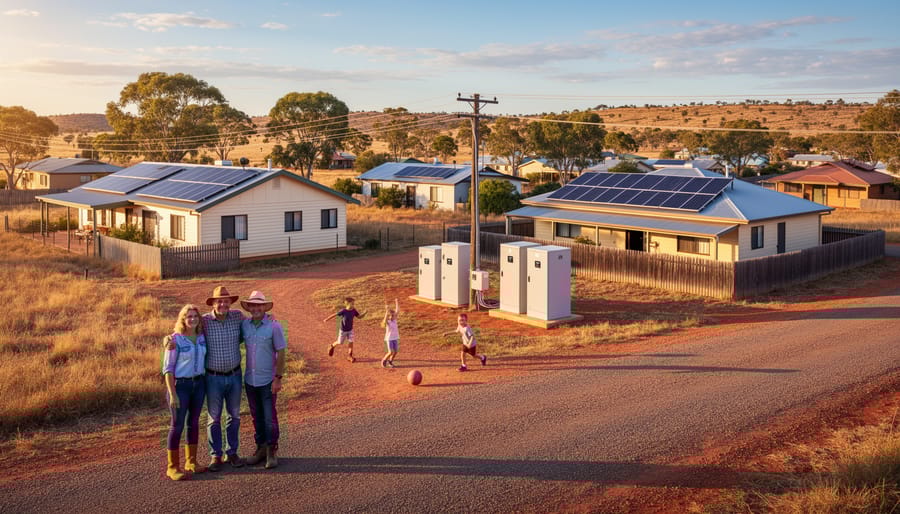
When Cyclone Yasi tore through North Queensland in 2011, communities went dark for weeks. Fast forward to today, and several Australian communities have written a different story during extreme weather events.
Take Heron Island Research Station on the Great Barrier Reef. When wild storms knocked out the mainland connection in 2022, their solar-powered microgrid kept the lights burning bright. Researchers continued their critical coral monitoring work without missing a beat, whilst nearby islands relying on diesel generators struggled with fuel shortages and outages.
Closer to the mainland, Tyalgum in northern New South Wales rode out the devastating 2022 floods thanks to their community microgrid. Whilst surrounding towns lost power for days, this tight-knit community maintained electricity for essential services, refrigeration, and communication systems. Local resident Sarah Chen recalls checking on elderly neighbours by phone, something impossible in nearby areas where mobile towers went dark.
Perhaps most inspiring is Coober Pedy’s experience during the intense heatwave of January 2023. Their hybrid wind-solar microgrid, supplemented by bioenergy from local organic waste, kept air conditioning running when grid-connected towns faced rolling blackouts. The system automatically balanced power loads, ensuring vulnerable residents stayed safe during the scorching 48-degree days.
These aren’t just feel-good tales. They’re proof that smart, locally controlled energy systems turn climate challenges into opportunities for community resilience. When disaster strikes, these communities don’t just survive—they thrive, demonstrating what’s possible when innovation meets determination.
The Building Blocks of Community Energy Independence
Smart Controllers: The Brain Behind the Grid
At the heart of every resilient microgrid sits a sophisticated control system that acts like the conductor of an orchestra, coordinating multiple energy sources to keep the power flowing smoothly. These intelligent controllers use smart grid technology to monitor energy production from solar panels, wind turbines, and bioenergy systems while simultaneously tracking consumption patterns across the community.
When clouds roll in or wind drops, the system automatically adjusts by drawing power from battery storage or activating backup bioenergy generators. During a grid failure, these controllers seamlessly transition the microgrid into island mode within milliseconds, keeping lights on and essential services running while the main grid goes dark.
In practice, communities across Australia have discovered that these smart systems do more than just prevent blackouts. They optimize energy use by charging batteries during off-peak times, selling excess renewable energy back to the main grid during peak demand, and even predicting maintenance needs before equipment fails. It’s this intelligent orchestration that transforms a collection of renewable energy assets into a truly resilient, responsive power network that works harder and smarter for everyone involved.
Energy Storage That Works When You Need It Most
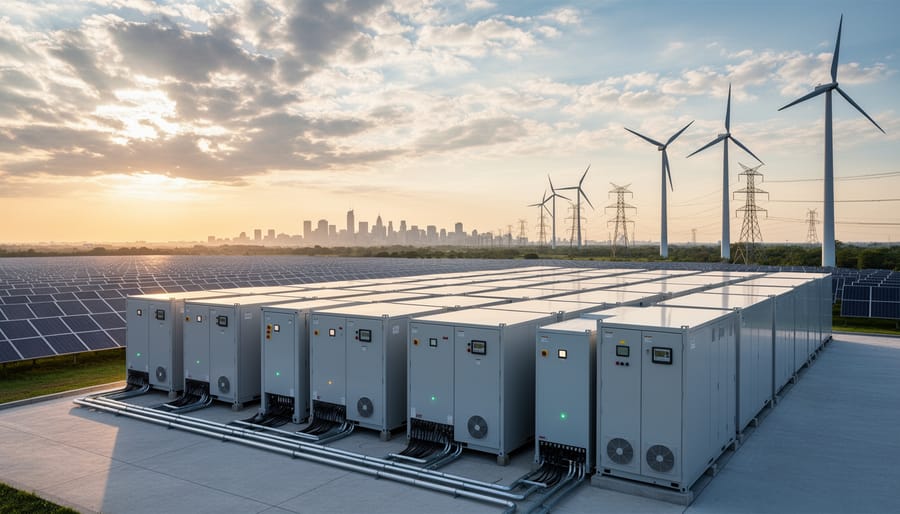
When the sun sets or the wind stops blowing, your community still needs power. That’s where advanced energy storage systems become the unsung heroes of energy resilience. Modern battery technology, particularly lithium-ion and emerging flow batteries, can store excess energy generated during peak production times and release it precisely when demand spikes or renewable sources take a breather.
Here’s where bioenergy becomes your microgrid’s insurance policy. While batteries handle short-term fluctuations beautifully, bioenergy systems provide that reliable baseload power that keeps communities humming during extended cloudy periods or equipment maintenance. A community in regional Victoria demonstrated this perfectly last winter, when their biogas generator seamlessly supported battery storage through three days of heavy cloud cover, ensuring local hospitals and emergency services never lost power.
This hybrid approach means communities aren’t gambling on weather conditions. The storage systems smooth out the bumps while bioenergy fills the gaps, creating a dependable power supply that works around the clock, regardless of what nature throws your way.
Turning Local Waste Into Community Power
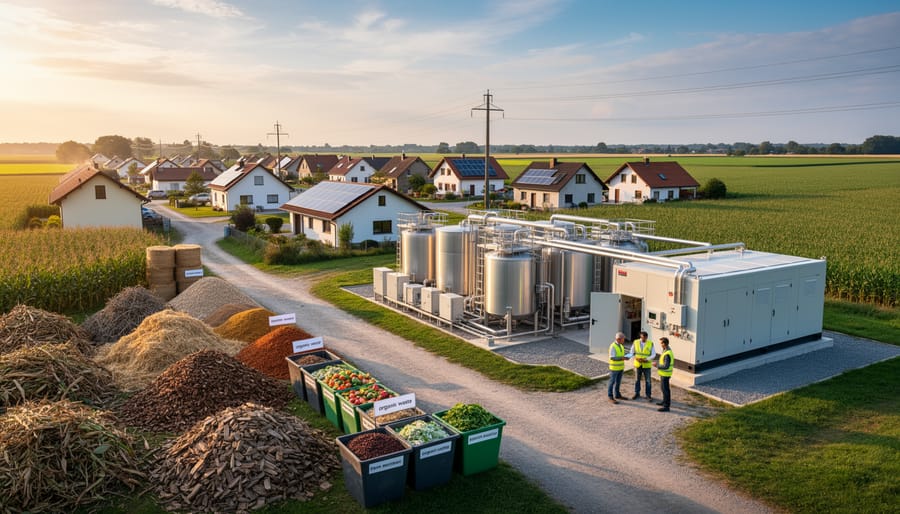
What if your community’s grass clippings, crop stubble, and food scraps could power your neighbourhood? That’s the beauty of bioenergy integration in microgrids. Across Australia, forward-thinking communities are transforming what was once considered rubbish into reliable, renewable electricity. Agricultural waste from farms, forestry residues, and organic materials get processed through anaerobic digesters or gasification systems, producing consistent power that works around the clock—even when the sun isn’t shining or the wind isn’t blowing. This creates a genuine circular economy where nothing goes to waste. Take regional farming communities that now convert grain husks and animal waste into electricity, reducing landfill costs whilst generating income. Local timber mills are using sawdust and bark as fuel sources, closing the loop on their operations. This isn’t just about clean energy; it’s about keeping resources and money circulating within communities, creating local jobs, and building energy independence that makes sense economically and environmentally.
What It Takes to Get Your Community Started
Starting your community’s journey toward an eco-innovative microgrid might feel like a big leap, but breaking it down into manageable steps makes the process much more achievable. Communities across Australia have already proven it can be done, and yours could be next.
The first step is conducting an honest assessment of your community’s energy needs and resources. Gather a small group of interested residents, local business owners, and perhaps a representative from your council to map out current energy consumption patterns, identify vulnerable areas during power outages, and catalogue potential renewable resources. Does your region have reliable sunshine for solar? Strong winds? Agricultural waste that could fuel bioenergy systems? This initial scoping helps determine what’s actually possible for your specific location.
Next comes the crucial work of engaging your broader community. Host information sessions at the local community centre or pub to gauge interest and address concerns. Share success stories from places like Hepburn Wind or the Yackandandah microgrid project to show what’s achievable. People need to see themselves in these stories to believe it’s possible. Be transparent about the commitment required and realistic about timelines, typically two to five years from concept to operation.
Securing funding often feels like the biggest hurdle, but multiple pathways exist. The Australian Renewable Energy Agency offers grants for innovative projects, while the Clean Energy Finance Corporation provides loans for larger installations. Many communities successfully combine these with local investment schemes where residents can buy shares in the project, creating genuine community ownership. Some councils have allocated funds from their sustainability budgets, recognising the long-term cost savings and resilience benefits.
Technical planning requires expertise, so this is when you’ll need to bring in professional help. Energy consultants, electrical engineers, and microgrid specialists can design a system tailored to your community’s needs. They’ll conduct detailed feasibility studies, create technical specifications, and navigate the regulatory requirements. While this costs money upfront, it prevents expensive mistakes down the track.
Implementation typically happens in phases. Many communities start with a pilot project, perhaps installing solar panels on community buildings with battery storage, before expanding to residential connections. This staged approach builds confidence, demonstrates success to skeptics, and allows for learning and adjustment along the way.
Throughout this journey, maintain momentum by celebrating small wins. When the first solar array goes live or the first battery is installed, make it an event. These milestones keep enthusiasm high and remind everyone why you started. The path to energy resilience and environmental sustainability isn’t always smooth, but with persistence and community spirit, it’s absolutely within reach for Australian communities ready to take charge of their energy future.
The Benefits That Keep On Giving
When communities embrace eco-innovative microgrids, they’re not just flicking a switch on renewable power—they’re unlocking a treasure trove of advantages that ripple through every corner of local life.
Let’s start with the hip pocket. Once a microgrid is established, communities typically see energy costs drop by 20-40% compared to traditional grid dependence. Take the small Victorian town of Yackandandah, which has been steadily working toward 100% renewable energy. Local businesses report significantly lower power bills, money that’s reinvested into shop improvements and staff wages rather than disappearing into utility company coffers. For households, especially those on fixed incomes, these savings mean choosing between groceries and heating becomes a problem of the past.
Beyond individual savings, microgrids create genuine employment opportunities right where they’re needed most. Installation requires local tradespeople—electricians, engineers, project managers. Ongoing maintenance means steady work for technicians. In regional Queensland, communities implementing renewable microgrids have seen the creation of 15-30 full-time equivalent positions per project. These aren’t fly-in-fly-out roles either; they’re positions filled by locals who spend their earnings at the corner bakery and the hardware store down the street.
The environmental wins speak for themselves. A typical community microgrid powered by bioenergy and solar can reduce carbon emissions by hundreds of tonnes annually—equivalent to taking dozens of cars off the road permanently. Communities often report cleaner air quality and a renewed sense of pride in their environmental stewardship.
Perhaps surprisingly, property values receive a healthy boost too. Homes and businesses in microgrid-connected areas become more attractive to buyers seeking energy security and lower running costs. Real estate agents across South Australia have noted premium prices for properties in renewable-ready communities, sometimes 5-10% above comparable areas.
For agricultural communities, the synergies multiply. Farm waste becomes fuel for bioenergy systems, solving disposal challenges while generating power. Greenhouses benefit from waste heat, extending growing seasons and improving yields. One New South Wales farming cooperative transformed their grape marc and prunings—previously burned or landfilled—into reliable electricity that now powers their processing facilities.
Most importantly, microgrids restore something precious: community agency. Rather than feeling powerless during blackouts or price hikes, residents gain control over their energy destiny. Town meetings buzz with genuine engagement as neighbours collectively shape their sustainable future. That sense of empowerment? You can’t put a price tag on it, but its value echoes through generations.
Overcoming the Hurdles (And They’re Smaller Than You Think)
Let’s be honest—when communities first explore microgrids, a few concerns typically pop up. The good news? These hurdles are genuinely manageable, and thousands of communities worldwide have already cleared them successfully.
The most common worry is upfront investment. Yes, microgrid systems require initial capital, but here’s what changes the equation: government grants are increasingly available across Australia, with programs like ARENA funding specifically targeting community energy projects. Many communities also tap into bulk purchasing arrangements or cooperatives that dramatically reduce costs. The City of Fremantle, for instance, secured partial funding through state government initiatives, making their project financially viable from day one. When you factor in long-term energy savings and reduced grid dependence, the payback period often surprises people—typically seven to twelve years, with systems lasting 25 years or more.
Regulatory requirements can feel daunting, but Australian frameworks have evolved considerably. Most states now have streamlined processes for community energy projects, and local councils increasingly have sustainability officers who understand these systems inside-out. You’re not navigating this alone—industry associations and energy cooperatives regularly guide communities through compliance requirements.
Technical expertise sounds intimidating until you realize the support ecosystem available. Companies specializing in community microgrids handle the complex engineering, while maintenance requirements are increasingly straightforward thanks to smart monitoring systems. Training programs exist specifically for local operators, creating employment opportunities right within your community.
Community coordination—getting everyone on board—actually becomes easier when people understand the benefits. Start with information sessions showcasing Australian success stories. People respond when they see neighbors in similar communities already benefiting from reliable, clean energy. Create working groups where different stakeholders contribute their strengths, whether that’s technical knowledge, community organizing, or grant writing.
Remember, every thriving microgrid started with someone asking, “Could this work here?” The answer, more often than not, is yes—with the right support and planning.
Remember that community meeting where the lights flickered and stayed on? That’s the future within reach for communities across Australia. Eco-innovative microgrids aren’t just theoretical solutions, they’re practical pathways to energy independence, environmental stewardship, and genuine resilience when it matters most.
The transformative potential is clear. From rural townships protecting themselves against bushfire-season blackouts to suburban neighbourhoods slashing their carbon footprints while keeping the power flowing, these systems prove that sustainability and security go hand in hand. The technology exists, the success stories are multiplying, and the benefits extend far beyond just keeping the lights on. They’re about creating jobs, strengthening local economies, and building the kind of communities we want for future generations.
So what’s stopping your community from being next? Whether you’re a concerned citizen, a local councillor, or a business leader, the time to explore this opportunity is now. Start the conversation at your next community gathering. Reach out to your local government about feasibility studies. Connect with organizations already making microgrids work. Every successful project began with someone asking, “Could this work here?”
Australia’s renewable energy future is bright, and it’s being built one innovative community at a time. The transformation is happening. The question isn’t if microgrids will reshape our energy landscape, it’s whether your community will be part of leading the charge.