
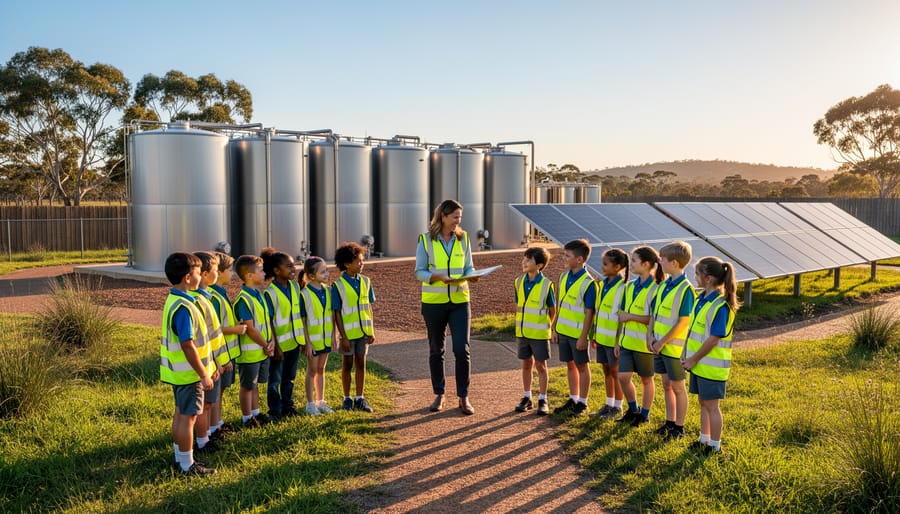
Educational partnerships between schools and environmental organizations create transformative learning experiences that equip the next generation with practical knowledge about renewable energy and sustainability. When a Victorian primary school partnered with a local bioenergy facility in 2022, students didn’t just learn about waste-to-energy conversion from textbooks—they witnessed firsthand how agricultural waste transforms into clean electricity, sparking genuine enthusiasm for environmental solutions.
These collaborations work because they bridge the gap between classroom theory and real-world application. Environmental organizations gain passionate advocates while educators access expert knowledge, cutting-edge resources, and authentic learning opportunities that inspire students far beyond traditional lessons. The most successful partnerships in Australia have shown measurable increases in student engagement and environmental literacy, particularly when focusing on tangible solutions like bioenergy that students can observe in their own communities.
Establishing effective educational partnerships requires identifying aligned missions, creating structured programs with clear learning outcomes, and building relationships that benefit all stakeholders. Whether you’re an educator seeking to enrich your curriculum with hands-on sustainability projects, an environmental organization wanting to expand community impact, or a policymaker exploring ways to advance renewable energy awareness, understanding the mechanics of successful collaborations opens doors to meaningful change. The stories emerging from Australian schools partnering with bioenergy initiatives demonstrate how these relationships cultivate environmental stewardship while addressing practical energy challenges facing our communities today.
Why Educational Partnerships Matter for Environmental Progress
Bridging the Knowledge Gap
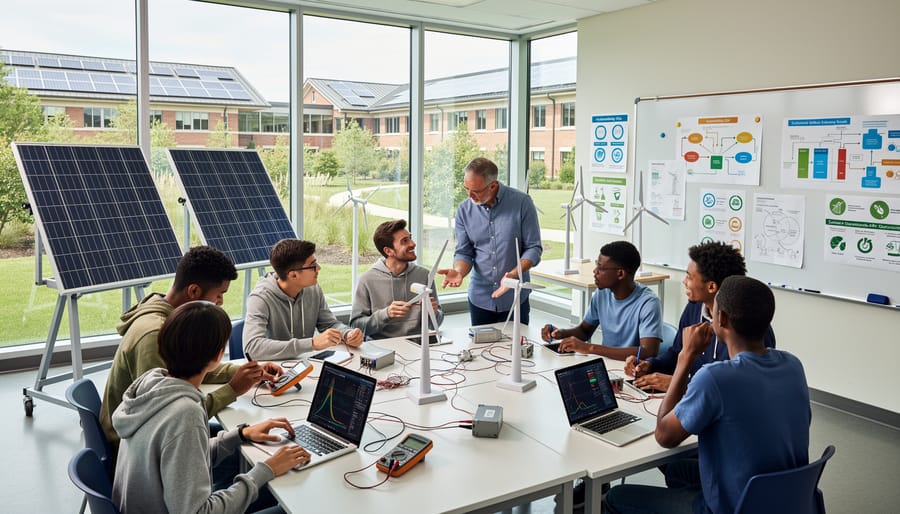
Environmental organizations serve as vital connectors between classroom theory and real-world sustainability action. When these groups partner with schools and universities, they transform abstract concepts into hands-on learning experiences that students can see, touch, and measure.
Take the example of a Melbourne secondary school that partnered with a local environmental group to install a small-scale bioenergy demonstration unit on campus. Students didn’t just read about organic waste conversion – they collected food scraps from the canteen, monitored the digestion process, and calculated the energy generated. This practical approach turned complex scientific principles into something tangible, sparking genuine curiosity and career interest in renewable energy fields.
Environmental organizations bring seasoned professionals who’ve tackled sustainability challenges firsthand. These experts share real stories from the field – the successes, the setbacks, and the innovative solutions they’ve discovered along the way. For educators who might feel uncertain about teaching emerging topics like bioenergy systems or circular economy principles, these partnerships provide invaluable support and confidence.
The beauty of these collaborations lies in their authenticity. Students engage with people who are actively creating Australia’s sustainable future, making environmental careers feel achievable rather than distant. Teachers gain access to current industry knowledge and resources that keep their curriculum relevant and inspiring, while environmental organizations cultivate the next generation of sustainability champions.
Creating Tomorrow’s Sustainability Champions
When young Australians get their hands dirty building solar panels, visiting bioenergy facilities, or measuring carbon sequestration in local ecosystems, something remarkable happens. They don’t just learn about renewable energy—they become passionate advocates for it.
Educational partnerships between schools and environmental organisations are creating a generation of sustainability champions who understand that bioenergy isn’t just theory from a textbook. Through sustainability education programs, students in Queensland and New South Wales are witnessing firsthand how agricultural waste transforms into clean energy, while Victorian students monitor native vegetation regrowth on biomass plantations.
These experiences stick. Research shows students involved in hands-on environmental partnerships are three times more likely to pursue STEM careers in renewable energy. They’re also taking sustainability messages home, influencing family purchasing decisions and community attitudes toward green technology.
The ripple effect extends beyond career choices. Young people educated through these partnerships become informed voters, conscious consumers, and community leaders who’ll champion bioenergy projects for decades to come. They understand the connection between local actions and global outcomes, making them invaluable allies in Australia’s transition to renewable energy. By investing in educational partnerships today, we’re not just teaching students—we’re building the workforce and community support network that’ll power Australia’s sustainable future.
Success Stories: Partnerships That Are Making a Difference

Schools Going Carbon-Neutral Through Collaborative Projects
When Greenview Secondary College in regional Victoria partnered with the Clean Energy Alliance in 2022, they set an ambitious goal: become carbon-neutral within three years while turning their students into renewable energy champions. The partnership kicked off with installing a biomass heating system that converts green waste from the school grounds and nearby farms into clean energy for heating classrooms and the school pool.
What makes this collaboration particularly inspiring is how it transformed the curriculum. Science students now monitor emissions data and calculate energy savings, maths classes use real figures from the biomass system for practical problem-solving, and design technology students built the composting stations that feed organic waste into the energy cycle. The environmental organisation provided expert workshops, teaching resources, and ongoing mentorship, while students gained hands-on experience with technology they’ll encounter in tomorrow’s workforce.
The results speak for themselves: the school has slashed its carbon emissions by 60 percent in just eighteen months, saving over thirty thousand dollars annually on energy costs. Those savings are being reinvested into solar panels and battery storage. Following the success stories of Australian schools leading sustainability, Greenview’s model is now being replicated across the state.
Perhaps most importantly, students have become environmental ambassadors in their communities, sharing knowledge about bioenergy solutions with local businesses and inspiring neighbouring schools to launch similar partnerships. This ripple effect demonstrates how collaborative projects create lasting change beyond school gates.
University Research Driving Industry Innovation
Australian universities are increasingly becoming innovation hubs where groundbreaking bioenergy research transforms into real-world solutions. Through strategic university-community partnerships with environmental organisations, tertiary institutions are bridging the gap between academic theory and practical application.
Take the University of Queensland’s collaboration with local agricultural groups, where researchers developed an efficient method for converting sugarcane waste into bioethanol. This partnership didn’t just stay in the lab. The technology now helps regional Queensland farms generate their own renewable energy while creating an additional income stream from agricultural residues that were previously burned or discarded.
Similarly, RMIT University has partnered with environmental organisations in Victoria to establish bioenergy demonstration sites at community centres. These living laboratories allow locals to see firsthand how organic waste from households and businesses can be transformed into usable energy. The project has sparked a ripple effect, with several regional councils now exploring similar systems for their communities.
These partnerships work because they combine university expertise in research and development with environmental organisations’ deep understanding of community needs and local conditions. Students gain invaluable hands-on experience, environmental groups access cutting-edge research, and communities benefit from practical, tailored solutions. The result is bioenergy technology that’s not just theoretically sound but genuinely useful for Australian conditions and communities, creating a genuine win-win-win scenario that drives our renewable energy transition forward.
Community Education Programs That Spark Change
When environmental organizations join forces with TAFE colleges and universities, magic happens in communities across Australia. These partnerships bring sustainability education beyond campus walls, transforming local halls, libraries, and community centers into hubs of environmental learning.
Take Melbourne’s collaboration between Sustainability Victoria and several community colleges, which launched weekend workshops teaching residents how to convert household organic waste into compost and understand residential bioenergy systems. Within twelve months, over 2,000 participants had adopted new sustainable practices at home, creating a ripple effect throughout their neighborhoods.
In regional Queensland, the Great Barrier Reef Marine Park Authority partnered with local education providers to deliver free evening courses on sustainable living. These sessions covered everything from reducing household energy consumption to understanding how agricultural waste can power local communities through bioenergy. The initiative proved so popular that waiting lists formed months in advance.
The beauty of these programs lies in their accessibility. They meet people where they are, both literally and figuratively, using plain language and practical demonstrations rather than complex theory. Participants leave with actionable knowledge they can implement immediately, whether it’s setting up a worm farm or advocating for bioenergy initiatives in their local council. These educational partnerships prove that environmental change starts with informed, empowered communities.
What Makes These Partnerships Work
Shared Goals and Clear Communication
The foundation of any successful educational partnership rests on shared goals and open communication from day one. When schools and environmental organisations come together, they need a common vision that excites everyone involved. Perhaps it’s teaching students about renewable energy through hands-on bioenergy projects, or creating community awareness about sustainable waste management. Whatever the aim, it must resonate with both partners’ core missions.
Transparent dialogue transforms good intentions into tangible outcomes. Regular check-ins, honest conversations about challenges, and celebrating small wins together build trust and momentum. A Queensland primary school and local sustainability group recently demonstrated this beautifully by establishing monthly meetings where teachers, coordinators, and even students contributed ideas for their composting-to-energy program. This approach ensured everyone felt heard and invested in the partnership’s success.
Clear communication also means setting realistic expectations upfront. Discuss available resources, time commitments, and desired outcomes honestly. When partners understand each other’s constraints and strengths, they can design programs that work brilliantly for everyone while genuinely engaging students with real-world environmental solutions.
Practical, Hands-On Learning Opportunities
The real magic of educational partnerships happens when students move beyond textbooks and into genuine experiences. Field trips to bioenergy facilities transform abstract concepts into tangible understanding—imagine students witnessing firsthand how agricultural waste becomes clean energy at a working plant in regional New South Wales. These moments stick.
Hands-on projects take learning even further. When Melbourne secondary students partnered with a local environmental organisation to design small-scale biogas systems for community gardens, they weren’t just learning about renewable energy—they were creating it. The students measured methane production, calculated energy outputs, and presented findings to council members. That’s education that matters.
Real-world applications bridge the gap between classroom theory and career pathways. Queensland students working alongside environmental professionals on biomass assessments gained practical skills while contributing to actual sustainability projects. They learned to identify suitable feedstocks, conduct site evaluations, and understand regulatory frameworks—knowledge that directly translates to future employment opportunities in Australia’s growing renewable energy sector.
These experiential approaches create environmental champions who understand not just the why, but the how of sustainable solutions.
Sustained Commitment and Funding
The most successful educational partnerships don’t fizzle out after the initial excitement—they’re built on solid financial foundations and genuine long-term commitment from all involved parties. Smart collaborations secure diverse funding streams early on, combining government grants, corporate sponsorships, and philanthropic support to weather inevitable budget fluctuations.
Take the partnership between Melbourne’s sustainability educators and local environmental groups working on bioenergy projects. They’ve maintained momentum for over five years by establishing annual funding agreements, creating endowment funds, and demonstrating measurable community impact that keeps supporters engaged. They’ve shown that when schools and environmental organisations genuinely share goals and resources, partnerships become embedded in organisational culture rather than treated as add-ons.
Regular communication keeps everyone invested beyond the honeymoon phase. Quarterly reviews, shared success metrics, and celebrating small wins together build trust and accountability. Partners who schedule annual planning retreats and maintain open dialogue about challenges create resilient relationships that adapt to changing circumstances. This sustained engagement transforms one-off projects into lasting movements that genuinely shift how young Australians understand and champion renewable energy solutions in their communities.
How Bioenergy Fits Into Educational Partnerships
Teaching Bioenergy Through Real Campus Applications
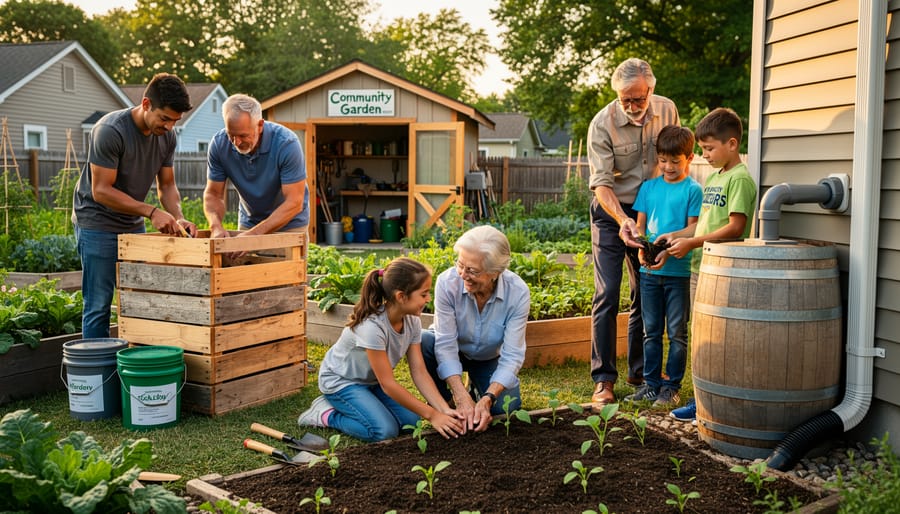
Campus bioenergy systems transform educational institutions into hands-on learning environments where students witness sustainability in action every day. When schools and universities partner with environmental organizations, they gain expert guidance to maximize these living laboratories’ educational potential.
Consider how a Victorian secondary college worked with local environmental groups to convert their cafeteria’s organic waste into biogas for cooking facilities. Students from various year levels participated in monitoring the system, collecting data, and presenting findings to the school community. This practical approach to integrating energy curricula helped students understand renewable energy concepts far better than textbooks alone could achieve.
Universities can establish even more sophisticated arrangements. The University of Queensland partnered with environmental consultants to design biomass heating systems that serve as research platforms. Engineering students analyze efficiency data, environmental science students assess carbon reduction impacts, and business students evaluate economic viability. Environmental organization mentors guide these projects, ensuring rigorous methodology while connecting classroom theory to real-world applications.
These partnerships prove particularly valuable when systems face challenges, turning troubleshooting moments into powerful teaching opportunities. Students learn that sustainable solutions require ongoing refinement and adaptation, preparing them for careers in Australia’s growing renewable energy sector while demonstrating bioenergy’s practical benefits to the broader community.
From Classroom to Community Impact
When students transform their bioenergy learning into community action, the ripple effects can be remarkable. Across Australia, school-based projects are demonstrating how educational partnerships create real-world benefits that extend far beyond the classroom walls.
Take the students at a Queensland secondary school who, with guidance from local environmental partners, established a community composting hub that processes organic waste from nearby households and cafes. What began as a Year 10 science project now diverts over two tonnes of waste monthly from landfill while generating compost for community gardens. The students manage collection schedules, monitor the composting process, and even host weekend workshops teaching residents about waste reduction. Parents and local businesses have become enthusiastic supporters, creating a genuine community movement around sustainable resource management.
In regional Victoria, another partnership saw students develop a small-scale biogas system that processes agricultural waste from surrounding farms. The energy produced powers the school’s greenhouse, while farmers gain valuable insights into potential on-farm applications. This collaboration has sparked conversations about renewable energy across the entire district, with farmers now exploring commercial biogas opportunities.
These projects reveal something powerful: when environmental organisations provide expertise and schools offer enthusiasm and innovation, students become ambassadors for change. They bring sustainability conversations home to their families, inspiring household-level action that multiplies the impact exponentially. The knowledge flows both ways too, with community members sharing practical wisdom that enriches student learning in ways textbooks never could.
Getting Started: Building Your Own Educational Partnership
Finding the Right Partner Organization
Finding the right partner organisation starts with identifying groups whose values and goals align with your educational mission. Look for environmental organisations actively working in bioenergy, waste management, or community sustainability projects across Australia. Many groups, from neighbourhood Landcare networks to larger conservation bodies, are eager to share their expertise with students and communities.
Start by researching organisations in your local area through council websites, environmental directories, and community noticeboards. Attend their public events or volunteer days to get a feel for their approach and culture. The best partnerships often begin with genuine relationships rather than formal proposals.
When reaching out, be clear about what you hope to achieve together. Share your vision for student learning or community education, and ask about their current projects where collaboration might benefit both parties. Consider practical factors like proximity, available resources, and scheduling flexibility.
A great example comes from a Melbourne primary school that partnered with a local organic waste facility. After a simple email introduction and site visit, they developed a program where students learned about converting food scraps into renewable energy, bringing real-world sustainability concepts to life. The key is starting the conversation with enthusiasm and openness to creative possibilities.
Designing Programs That Deliver Results
Creating effective educational partnerships requires thoughtful planning that balances learning objectives with tangible environmental outcomes. Start by identifying shared goals between schools and environmental organisations—whether that’s reducing carbon footprints, understanding renewable energy systems, or developing circular economy skills. The most successful initiatives align with curriculum requirements while providing hands-on experiences that make sustainability concepts come alive for students.
Design programs with measurable milestones that demonstrate impact. For instance, a partnership might track energy savings from a school’s biomass heating system while students monitor efficiency and learn about renewable energy conversion. Include practical components where students participate in real projects, from composting organic waste to analysing local bioenergy potential. These proven sustainability programs work because they connect classroom theory with community action.
Build flexibility into your framework to accommodate different school sizes, locations, and resources. Regional schools might focus on agricultural biomass opportunities, while urban institutions could explore waste-to-energy solutions. Regular feedback loops between educators and environmental partners ensure programs remain relevant and effective, creating lasting change that extends beyond the classroom into students’ homes and communities.
Measuring Success and Sharing Your Story
Tracking your partnership’s impact keeps everyone motivated and provides valuable evidence for future collaborations. Start by establishing clear metrics from day one—whether that’s the number of students engaged, kilograms of waste diverted from landfill, or carbon emissions reduced through bioenergy projects. Document your journey through photos, student testimonials, and data that tells a compelling story.
Share your achievements widely to inspire others. Create case studies for your school newsletter, present at local council meetings, or post updates on social media. When Melbourne’s Sustainability Schools Network shared how their composting partnership generated renewable energy while teaching students about circular economies, it sparked similar initiatives across Victoria. Your success story might be the catalyst someone else needs.
Remember, even small wins matter. Celebrate the Year 3 class that designed their first biogas experiment or the community day that attracted 200 visitors. These moments demonstrate tangible change and build momentum for environmental education. By openly sharing both your triumphs and lessons learned, you’re not just measuring success—you’re multiplying it across communities, creating a ripple effect that strengthens Australia’s sustainable future.
The journey toward a sustainable Australia powered by renewable energy isn’t one we can walk alone. Educational partnerships with environmental organizations represent more than collaborative arrangements—they’re catalysts for genuine transformation. When schools partner with environmental groups to explore bioenergy solutions, when universities work alongside industry to develop innovative technologies, and when communities unite to implement practical sustainable practices, we’re not just sharing knowledge. We’re building the foundation for a cleaner, more resilient future.
The success stories we’ve witnessed across the country prove that this approach works. From student-led bioenergy projects transforming school waste into power, to community programs educating thousands about renewable alternatives, these partnerships are already making a real difference. They’re creating a generation of Australians who understand that sustainability isn’t just an aspiration—it’s an achievable reality.
Whether you’re an educator looking to bring environmental learning into your classroom, a community member passionate about renewable energy, or a professional in the sustainability sector, there’s a role for you in this movement. Start by reaching out to local environmental organizations, attend community workshops, or advocate for bioenergy education in your sphere of influence. Every conversation, every partnership, and every action contributes to accelerating Australia’s renewable energy transition. Together, through collaboration and commitment to innovation, we can power the future we want to see—one partnership at a time.