
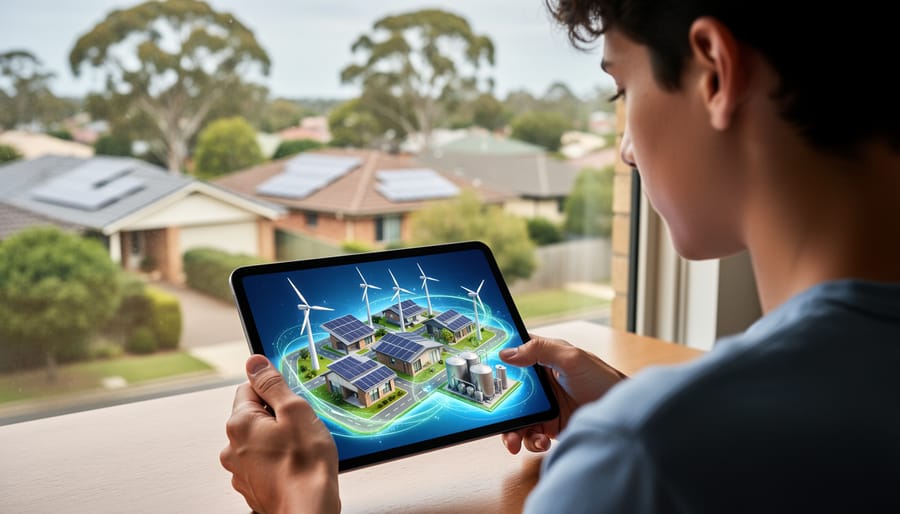
Transform complex sustainability concepts into memorable learning experiences by embedding environmental data within interactive narratives where learners make choices that reveal real-world consequences. A Melbourne primary school increased student engagement in renewable energy topics by 73% after implementing story-based modules where children navigated decisions about community energy systems, watching their virtual town thrive or struggle based on their choices.
Layer educational content through character-driven scenarios that mirror actual sustainability challenges facing Australian communities. When the City of Adelaide wanted residents to understand bioenergy’s potential, they created an interactive platform where users followed a farmer’s journey converting agricultural waste into energy, experiencing the economic and environmental benefits firsthand rather than reading statistics on a page.
Design decision points that require learners to weigh competing priorities—economic growth versus environmental protection, short-term convenience versus long-term sustainability—mirroring the genuine complexities policymakers and industry leaders navigate daily. This approach builds critical thinking skills while fostering empathy for stakeholders across the sustainability spectrum.
Incorporate immediate feedback loops showing how individual choices ripple through interconnected systems. When a user in your story chooses solar over coal, don’t just tell them it’s better—show them reduced emissions, improved air quality metrics, and community health outcomes unfolding through subsequent story chapters. This cause-and-effect visualization makes abstract sustainability principles tangible and urgent.
Interactive storytelling websites represent a powerful shift from passive information consumption to active learning experiences. They meet today’s digitally-native audiences where they are, transforming sustainability education from something people should care about into something they emotionally invest in through compelling narratives and meaningful choices.
Why Traditional Sustainability Education Leaves Us Cold
We’ve all sat through them—the PowerPoint presentations crammed with graphs showing rising CO2 levels, the documentaries that leave us feeling hopeless about our planet’s future, the lengthy reports filled with statistics that blur together by page three. traditional sustainability education methods often miss the mark, not because the information isn’t important, but because they fail to connect with us on a human level.
The problem with conventional environmental education is that it treats sustainability as a purely intellectual exercise. We’re presented with facts and figures, expected to absorb them, and somehow transform into eco-warriors overnight. But here’s the thing: humans aren’t wired that way. We don’t make lasting changes based on spreadsheets alone.
Think about the last time you sat through a lecture about carbon emissions. Did you rush home inspired to transform your lifestyle? Or did you feel overwhelmed, maybe even a bit guilty, before returning to your regular routine the next day? Most environmental messaging follows a predictable pattern—highlight the crisis, show alarming data, and hope people will act. This doom-and-gloom approach might grab attention temporarily, but it rarely sparks genuine, sustained behaviour change.
The issue deepens with one-way information delivery. Whether it’s a textbook, a poster campaign, or a classroom lecture, these methods position learners as passive recipients rather than active participants. There’s no dialogue, no exploration, no opportunity to see yourself as part of the solution. And when we can’t imagine ourselves in the story, we struggle to write our own chapter.
Australian communities deserve better. We need education that inspires rather than intimidates, that invites participation rather than lectures from a distance, and that shows us practical pathways forward rather than just painting pictures of what we’re losing.
What Makes Interactive Storytelling Different
Your Choices Shape the Story (And Your Understanding)
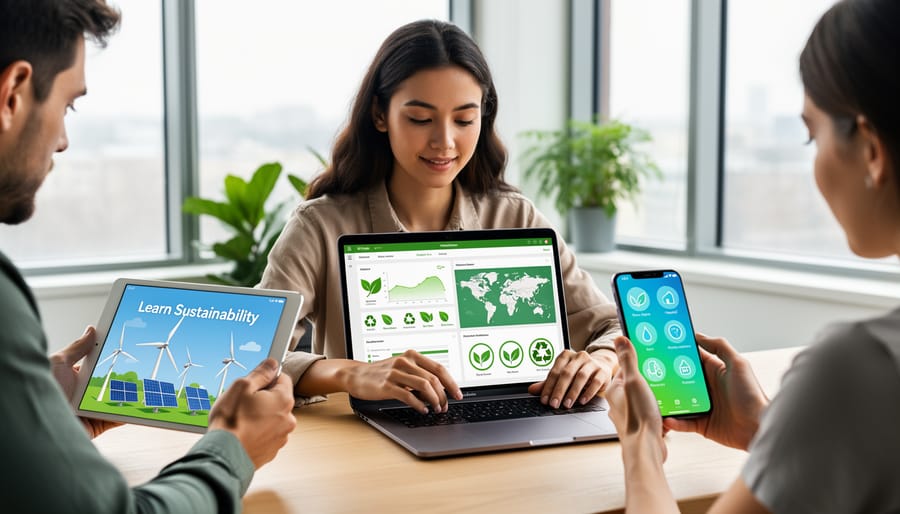
When you click through a branching narrative about renewable energy choices, something remarkable happens in your brain. You’re not just passively absorbing information—you’re actively wrestling with decisions, weighing consequences, and experiencing the ripple effects of your choices firsthand. This is where interactive storytelling becomes a powerful tool for sustainability education.
Consider a scenario where learners navigate a story about a rural Australian community deciding between energy sources. One path might explore establishing a bioenergy facility using agricultural waste, another investigates solar arrays, while a third maintains fossil fuel dependence. As users make decisions, they witness how each choice affects the community’s economy, environment, and social fabric. The immediate feedback creates emotional connections that statistics alone simply can’t achieve.
This decision-making process mirrors real-world complexity beautifully. Just as policymakers must balance competing priorities, learners confront trade-offs between cost, sustainability, and practicality. They might discover that combining bioenergy with other renewables creates resilience, or that community consultation determines success as much as technology does.
The beauty of this approach lies in its “safe playground” for exploration. Users can test bold strategies, make mistakes, and try again—all without real-world consequences. A farmer might virtually experiment with converting crop residue into energy before investing actual resources. An environmental advocate could explore various community engagement approaches to find what resonates.
Research consistently shows that people retain information better when they’ve actively participated in learning outcomes rather than simply hearing about them. Interactive narratives transform abstract concepts like carbon reduction into tangible experiences, creating advocates who genuinely understand the why behind sustainable choices.
Walking in Someone Else’s Shoes
Interactive storytelling websites harness the power of storytelling by placing users directly into the experiences of others, fostering genuine empathy and understanding. When you follow the journey of a third-generation grain farmer in regional Queensland who transitions to growing energy crops for bioenergy production, you’re not just reading statistics about agricultural diversification. You’re experiencing their concerns about drought resilience, their excitement about new income streams, and their pride in contributing to renewable energy.
These character-driven narratives make sustainability tangible and relatable. Following a small coastal community in New South Wales as they embrace renewable solutions transforms abstract concepts into lived experiences. You encounter real challenges, celebrate practical wins, and understand the interconnected benefits of sustainable choices. This immersive approach breaks down the barriers between information and action, helping diverse audiences see themselves as part of the solution. Whether you’re a policymaker, educator, or community member, walking in someone else’s shoes creates the emotional connection that drives meaningful change.

Interactive Storytelling Platforms Leading the Charge
Choose-Your-Own-Adventure Style Platforms
Choose-your-own-adventure platforms bring a refreshingly straightforward approach to sustainability education, letting users navigate complex environmental decisions through simple branching narratives. These digital tools transform abstract concepts into tangible choices—imagine deciding whether a farm should invest in biogas digesters or solar panels, then immediately seeing the consequences unfold through engaging storylines.
These platforms excel at demonstrating cause-and-effect relationships in environmental management. A user might guide a regional council through renewable energy transitions, weighing costs, community impact, and carbon reduction targets at each crossroad. The beauty lies in their accessibility—no technical expertise required, just curiosity and a willingness to explore different pathways.
Australian organisations have embraced these tools for community engagement around bioenergy projects. One Victorian farming cooperative developed a branching narrative exploring agricultural waste management options, allowing farmers to experiment virtually with anaerobic digestion systems before committing to real-world investments. Participants reported feeling more confident discussing bioenergy solutions after experiencing the interactive format.
The real strength of these platforms is their ability to show that environmental decisions aren’t black-and-white. Users discover how different farming practices, energy choices, and policy decisions interconnect, building genuine understanding through exploration rather than instruction. It’s sustainability education that feels more like an adventure than a lecture.
Interactive Data Visualizations That Tell Stories
Modern interactive storytelling platforms are transforming how we understand bioenergy’s potential by combining compelling narratives with real-time data visualisations. These tools allow users to actively explore different renewable energy scenarios and witness firsthand how various bioenergy choices affect emissions reductions, job creation, and regional communities across Australia.
Imagine adjusting sliders to see how increasing biomass production in regional Queensland could create employment opportunities whilst simultaneously reducing carbon emissions. These platforms make abstract concepts tangible, showing users the direct connection between policy decisions and real-world outcomes. Unlike static reports filled with tables and charts, interactive visualisations respond to user input, creating personalised learning pathways that resonate with different audiences.
For example, some platforms let policymakers model different bioenergy adoption rates and instantly see projected impacts on local economies and environmental targets. Community groups can explore how converting agricultural waste into renewable energy might benefit their specific region. These immersive learning experiences bridge the gap between complex data and human understanding, making sustainability education both accessible and actionable. The result is informed decision-making grounded in evidence rather than assumption, empowering Australians to champion bioenergy solutions with confidence.
Game-Based Learning Environments
Game-based learning environments transform complex sustainability concepts into engaging, hands-on experiences where players learn by doing rather than just reading. These serious games and simulations place users in realistic scenarios where they manage resources, build sustainable communities, or guide industries through the transition to renewable energy.
In Australia, several platforms allow participants to experiment with bioenergy projects without real-world risks. Players might manage a farming community deciding between traditional crops and energy crops, balancing economic returns with environmental benefits. Others simulate regional energy transitions, where users must integrate biomass power stations with solar and wind to create reliable, renewable energy networks.
These platforms prove particularly effective because they reveal the interconnected nature of sustainability decisions. When a player chooses to establish a biogas facility using agricultural waste, they witness immediate impacts on waste reduction, energy production, and community employment. The trial-and-error nature encourages creative problem-solving and builds confidence in renewable solutions.
Success stories from Queensland schools show students who engage with these simulations develop stronger understanding of circular economy principles and demonstrate increased enthusiasm for careers in renewable energy sectors.
Real Stories That Changed Real Minds
The Queensland Farm That Became a Bioenergy Hub
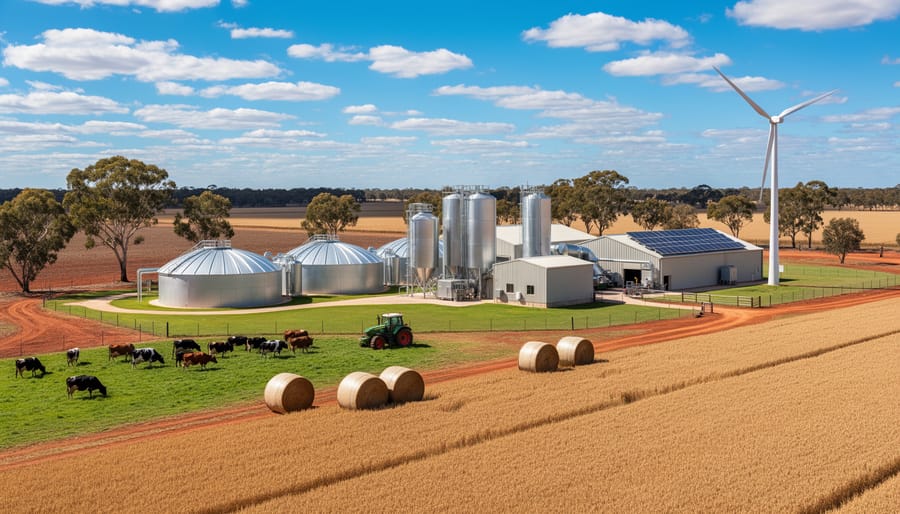
In the Darling Downs region, the Mitchell family’s 800-hectare grain and cattle operation was grappling with a common challenge: what to do with mountains of agricultural waste. Crop stubble, cattle manure, and processing leftovers were costing money to manage while their energy bills kept climbing.
Their interactive journey toward becoming a bioenergy hub began in 2019 when they partnered with a regional sustainability initiative. Through an immersive online platform, visitors can now click through the farm’s transformation, exploring each stage of their transition. The story unfolds through video interviews with family members, 360-degree virtual tours of their biogas digester, and interactive graphs showing their progress.
Users can explore how the Mitchells converted their waste challenge into opportunity. Their anaerobic digestion system now processes 50 tonnes of organic waste weekly, generating enough electricity to power the entire farm operation plus 120 nearby homes. The digestate byproduct enriches their soil, reducing fertilizer costs by 40 percent.
The interactive case study includes a financial calculator where visitors input their own farm data to estimate potential savings. For the Mitchells, the results speak volumes: annual energy costs dropped from $85,000 to virtually zero, while selling excess power back to the grid generates $120,000 yearly revenue.
Perhaps most compelling are the environmental metrics displayed through engaging infographics. The farm now prevents 850 tonnes of carbon dioxide equivalent emissions annually, demonstrating how agricultural operations can become climate solutions rather than contributors to the problem.
When a School Changed Its Community’s Perspective
At Greenfield Primary in regional New South Wales, something remarkable happened when teachers introduced an interactive storytelling platform to teach Year 5 students about renewable energy. The digital experience let students make choices about their town’s energy future, watching animations showing how solar panels, wind turbines, and bioenergy facilities transformed their community over time.
What began as a classroom activity quickly spread beyond the school gates. Students excitedly shared what they’d learned at home, prompting parents to ask questions about their own energy choices. One father, inspired by his daughter’s enthusiasm, started a community renewable energy working group that now has over fifty members.
The ripple effect didn’t stop there. When the school showcased student projects at a local council meeting, demonstrating their understanding of clean energy through interactive presentations they’d created themselves, councillors took notice. Within months, the council committed to exploring bioenergy options for processing agricultural waste from nearby farms.
This educational institution using interactive storytelling proved that when young people engage with sustainability concepts through immersive experiences, they become powerful advocates for change in their communities.
The Industry Professional Who Found Practical Solutions
When Marcus Chen, a project manager at a regional energy utility in New South Wales, first encountered an interactive storytelling platform about bioenergy implementation, he was skeptical that anything online could address his practical concerns. His team faced real-world challenges: how to justify the cost of bioenergy infrastructure, engage rural communities with agricultural waste streams, and navigate regulatory requirements.
The interactive platform allowed Marcus to explore case studies through decision trees, clicking through scenarios that mirrored his own situation. He could adjust variables like feedstock availability, community size, and existing infrastructure to see projected outcomes. One scenario featured a dairy farming cooperative near Gippsland that successfully implemented a biogas system, complete with financial models and community engagement strategies.
What struck Marcus most was the ability to learn from failures alongside successes. The platform didn’t shy away from challenges but presented them as learning opportunities with alternative solutions. Within three months, Marcus used insights from the interactive content to develop a proposal that secured funding for a pilot bioenergy project, partnering with local agricultural producers. The interactive approach transformed abstract concepts into actionable strategies, proving that digital storytelling could bridge the gap between theory and real-world implementation.
Building Your Own Interactive Sustainability Story
Start With Real People and Real Consequences
The most compelling interactive stories begin with people your audience can recognise—everyday Australians facing real challenges. Instead of abstract concepts about renewable energy, introduce characters like Sarah, a dairy farmer in Gippsland who converted her farm waste into bioenergy, cutting her power bills by 40% while reducing methane emissions. Or follow Marcus, a council waste manager in regional Queensland, navigating community concerns about a new bioenergy facility.
These relatable protagonists help your audience emotionally invest in the story’s outcome. When developing your narrative, consider authentic scenarios: a farming family deciding whether to invest in a biodigester, a small business owner exploring ways to become carbon neutral, or a school community learning about composting and energy generation.
The consequences matter too. Show how characters’ choices ripple outward—how Sarah’s decision inspired neighbouring farms to investigate bioenergy, or how Marcus’s transparent community consultation transformed initial resistance into support. By grounding your interactive story in genuine Australian experiences and demonstrating tangible outcomes, you create meaningful connections that inspire action. Your audience won’t just learn about bioenergy applications; they’ll understand their real-world impact through stories that resonate with their own lives and communities.
Tools You Can Use Today
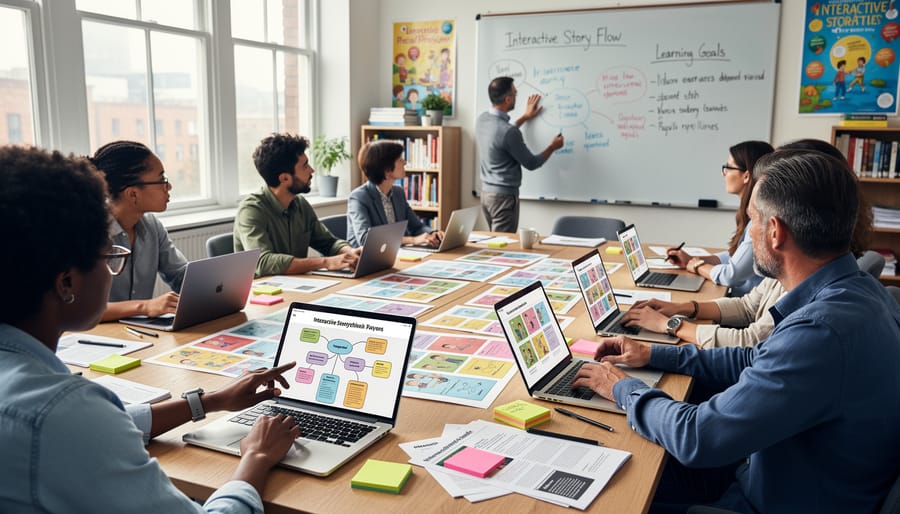
Creating engaging interactive stories about sustainability doesn’t require a computer science degree. Several accessible platforms make it remarkably simple to bring environmental narratives to life. Twine stands out as a free, open-source tool that lets you craft branching stories through a visual interface—perfect for educators developing climate scenarios where choices matter. For those wanting something even simpler, Google Forms combined with conditional logic can create surprisingly effective choose-your-own-adventure experiences about renewable energy decisions.
StoryMapJS offers brilliant opportunities to weave geographical elements into your sustainability tales, ideal for tracking Australia’s bioenergy projects across different regions. Meanwhile, platforms like Articulate Storyline and Adobe Captivate provide more sophisticated options for organizations ready to invest in polished, professional content.
Community environmental groups have found success using Instagram Stories’ interactive features—polls and question stickers—to engage younger audiences with bite-sized sustainability challenges. These tools democratize storytelling, letting anyone transform dry facts about renewable energy into compelling narratives that inspire action. The beauty is you can start simple today and gradually expand your capabilities as confidence grows, making sustainable futures feel achievable rather than overwhelming.
Measuring What Actually Matters
The true measure of success goes beyond page views or click-through rates. When creating interactive storytelling about renewable energy, you need to track the meaningful shifts in understanding and behaviour that matter most.
Start by monitoring comprehension changes through simple pre-and-post experience surveys. Ask visitors what they knew about bioenergy before the story and what surprised them afterward. One Australian community energy project discovered that 78% of participants could explain the circular economy benefits of organic waste-to-energy systems after engaging with their interactive story—compared to just 12% beforehand.
Track action indicators that show real-world impact. Are people signing up for renewable energy programs? Sharing the story with their networks? Requesting information about implementing similar solutions in their communities? These concrete steps reveal whether your story is genuinely inspiring change.
Pay attention to perspective shifts through qualitative feedback. Comments like “I never realised agricultural waste could power homes” or “This made me rethink what’s possible in rural Australia” indicate you’re successfully challenging assumptions. Set up simple feedback mechanisms asking visitors what they’ll do differently after experiencing your story. These insights show whether you’re creating genuine understanding or just entertaining your audience—and help you refine your storytelling to drive even greater impact for a sustainable future.
Interactive storytelling isn’t just about clever technology or engaging content—it’s about transformation. When Australians can see themselves reflected in the narrative of our renewable energy future, something remarkable happens: they shift from passive observers to active participants. These digital platforms invite us to step inside the story of bioenergy facilities powering regional communities, solar farms stretching across outback landscapes, and coastal towns harnessing wind energy. By experiencing these futures through interactive choices and personalised journeys, we don’t just learn about sustainable solutions—we begin to believe we can help create them.
The beauty of interactive storytelling lies in its power to turn complex environmental challenges into relatable human experiences. Every click, every choice, and every scenario explored brings us closer to understanding our role in Australia’s energy transition. So whether you’re an educator looking to inspire students, a business leader seeking to engage stakeholders, or simply someone passionate about our environmental future, now is the time to explore these innovative platforms. Better yet, consider creating your own interactive story. After all, Australia’s renewable energy future isn’t just a story to be told—it’s a story we’re all writing together.