
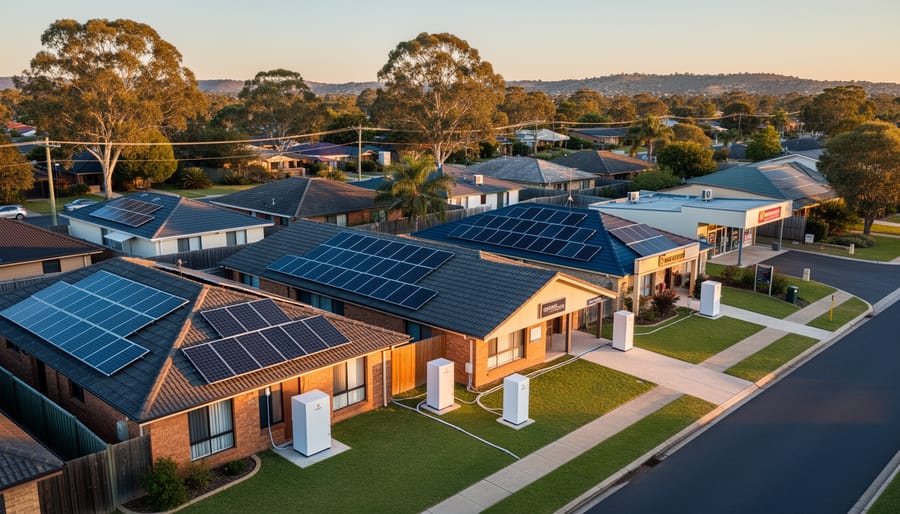
Imagine a future where Australian households and businesses store their excess solar energy not in bulky batteries at home, but across a shared network of storage units distributed throughout their community—earning income while helping stabilize the grid. This is the promise of decentralized storage networks, and it’s already transforming how we think about energy resilience across the country.
Unlike traditional centralized power systems where massive battery installations sit at single locations controlled by utility companies, decentralized storage networks distribute energy storage capacity across multiple sites—homes, businesses, community hubs, and regional centers. Think of it as the difference between keeping all your savings in one bank vault versus spreading your wealth across multiple secure locations. When one point fails, the system continues functioning seamlessly.
Australia stands uniquely positioned to lead this energy revolution. We already boast the world’s highest rooftop solar uptake per capita, with nearly one in three households generating their own power. Yet we’re still grappling with grid instability during peak demand periods and wasting renewable energy when production exceeds consumption. Decentralized storage networks solve both challenges simultaneously while creating new revenue streams for participants.
From suburban Perth neighborhoods sharing battery capacity to regional Queensland communities combining solar farms with distributed storage, real-world projects are proving this technology isn’t some far-off dream—it’s happening now. These networks reduce infrastructure costs, enhance energy security during extreme weather events, and accelerate our transition away from fossil fuels without requiring massive government expenditure on centralized facilities.
The question isn’t whether decentralized storage will reshape Australia’s energy landscape, but how quickly we can scale these solutions to unlock their full potential for communities nationwide.
What Is a Decentralized Energy Storage Network?
The Building Blocks: Batteries, Solar, and Smart Technology
Think of a decentralized storage network as a community of energy neighbours, each contributing to a shared power pool that keeps everyone’s lights on. At its heart are three essential components working in harmony.
First, we have battery storage systems in homes and businesses across the network. These batteries capture excess solar energy during the day—those brilliant Australian sunshine hours we’re blessed with—and store it for later use. Rather than sending surplus power back to the grid at minimal return, households become mini power stations.
Next, solar panels remain the powerhouse of the system. They generate clean electricity throughout the day, feeding both immediate household needs and charging connected batteries. When multiple properties combine their solar generation and storage capacity, the collective energy pool grows substantially larger.
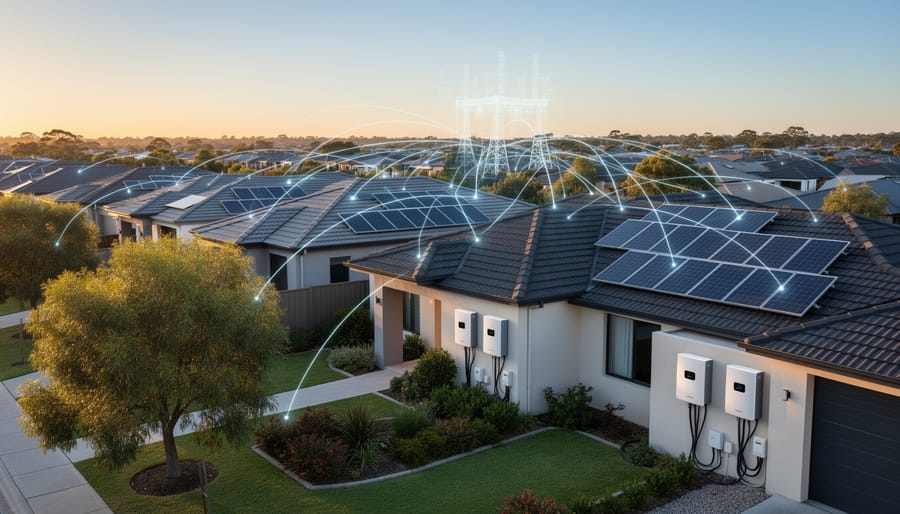
The magic ingredient is smart technology—sophisticated software that connects and coordinates all these distributed batteries. This intelligent system monitors energy supply and demand in real-time, deciding when to store power, when to release it, and where it’s needed most. During peak demand periods, the network can discharge stored energy, easing pressure on the main grid.
Together, these building blocks create a resilient, flexible energy ecosystem. It’s similar to having multiple water tanks across a suburb instead of relying solely on one central reservoir—if one tank runs low, others can help out. This collaborative approach transforms individual solar setups into a powerful collective resource.
Why Location Matters: Distributed vs. Centralized Storage
Think of traditional energy storage like keeping all your groceries in one massive warehouse on the outskirts of town. Every time you need milk, someone has to drive it across the city to your home—wasting fuel, time, and freshness along the way. Centralized energy storage works similarly, with large battery farms located far from where power is actually needed.
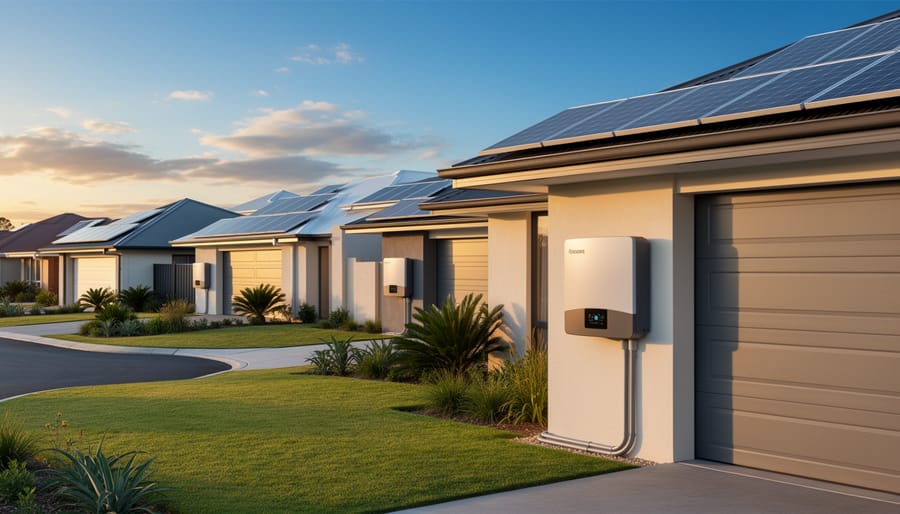
Decentralized storage networks flip this model by positioning batteries closer to homes, businesses, and communities. It’s like having a well-stocked pantry right in your kitchen. This proximity delivers remarkable benefits that matter for everyday Australians.
When energy travels long distances through transmission lines, some of it simply disappears as heat—a phenomenon called line loss. In Australia’s vast landscape, these losses can reach up to 10% of total energy transmitted. By storing energy locally, decentralized networks slash these losses significantly, meaning more of the clean energy generated actually powers your home or business.
Reliability improves too. Remember South Australia’s 2016 statewide blackout? Centralized systems create single points of failure. When one component fails, thousands lose power. Decentralized networks distribute this risk across numerous smaller storage points. If one battery system experiences issues, your neighbours’ systems keep humming along, maintaining grid stability.
Regional communities particularly benefit from this approach. Towns like Yackandandah in Victoria have pioneered community battery projects that reduce dependence on distant infrastructure while supporting local renewable energy generation. During extreme weather events or bushfire seasons, these localized systems provide crucial backup power when centralized grids might fail.
This distributed approach isn’t just technically smarter—it’s building energy resilience from the ground up.
The Australian Success Stories Already Happening
South Australia’s Virtual Power Plant Revolution
South Australia is leading the charge with one of the world’s most ambitious virtual power plant initiatives, transforming how everyday Aussies participate in the energy transition. Launched in partnership with Tesla and the state government, this groundbreaking project connects thousands of home battery systems into a unified network, creating what’s essentially a massive distributed power station without the need for centralized infrastructure.
The concept is brilliantly simple yet powerful. Participating households have solar panels and home batteries installed at little to no upfront cost, with the smart storage technology managed collectively through sophisticated software. During peak demand periods, the network draws on stored energy from these connected batteries, reducing strain on the grid while providing stability when it’s needed most.
Real-world results speak volumes. Participants report electricity bill savings of up to 20 percent annually, while the network has successfully delivered backup power during grid emergencies. One Adelaide family shared how they weathered a summer blackout without disruption, their fridge humming along while neighbors sat in the dark.
Beyond individual benefits, the virtual power plant demonstrates how decentralized systems can democratize energy production. Low-income households, traditionally priced out of solar investments, gain access to renewable technology while contributing to grid resilience. It’s proof that sustainable solutions can be both economically viable and socially inclusive, setting a template for communities nationwide to follow.
Regional Communities Taking Charge
Across regional Australia, communities are proving that going local with energy storage delivers real results. In places like Yackandandah in northeast Victoria, residents have banded together to create their own energy future, combining solar panels with battery storage systems that keep the lights on even when the grid falters. These aren’t just feel-good projects—they’re practical solutions to genuine challenges faced by communities at the end of long transmission lines.
Take the town of Junee in New South Wales, where frequent power interruptions once threatened local businesses and farm operations. By establishing a community-owned microgrid energy storage network, residents now share excess solar power and maintain reliable electricity supply during grid outages. Local farmers particularly benefit, keeping cool rooms running and irrigation systems operating without interruption.
The beauty of these decentralized networks is their adaptability to local needs. In the Coonawarra wine region of South Australia, vineyards and local businesses pool their renewable energy resources, creating a resilient system that protects temperature-sensitive operations during heatwaves. Meanwhile, timber communities in Tasmania are exploring how biomass energy can integrate with battery storage to provide round-the-clock renewable power.
These success stories demonstrate that regional communities needn’t wait for distant infrastructure upgrades. By taking charge of their energy destiny through decentralized storage, they’re building resilience, cutting costs, and showing urban Australia what’s possible when communities work together toward energy independence.
How Decentralized Storage Solves Real Energy Problems
Keeping the Lights On When the Grid Goes Down
When extreme weather strikes or bushfires threaten communities, traditional centralized power grids become vulnerable points of failure. Decentralized storage networks offer a lifeline during these critical moments by keeping essential services running even when the main grid goes down.
During the devastating 2019-20 bushfire season, several Australian communities with distributed battery systems maintained power for emergency services and evacuation centres while surrounding areas went dark. In Yackandandah, Victoria, a microgrid powered by local solar and battery storage kept the town’s essential services operational during grid outages, proving that locally managed energy can be genuinely life-saving.
These networks shine during extreme heat events too. When demand spikes and the grid struggles, decentralized batteries automatically release stored energy to prevent blackouts. In South Australia, residential battery systems connected through virtual power plants have successfully reduced strain during peak demand periods, keeping air conditioners running when vulnerable residents need them most.
The beauty of this approach lies in its distributed nature—if one section fails, others continue functioning independently. It’s energy resilience designed for Australia’s challenging climate, turning individual households and businesses into community safety nets.
Making Renewable Energy Work Around the Clock
One of the greatest challenges facing renewable energy has always been timing. Solar panels produce abundant energy during the day when the sun’s shining, but what happens when you’re cooking dinner at 7pm and the sun’s already set? This is where decentralized storage networks become game-changers for Australia’s energy future.
Think of these networks as a community energy bank. During peak sunshine hours, excess solar energy from thousands of rooftops flows into battery storage systems across neighborhoods. When evening arrives and families switch on lights, heaters, and appliances, that stored energy flows back out exactly when it’s needed most. Rather than curtailing solar production or relying on fossil fuel peakers, communities can use their own clean energy around the clock.
In South Australia, neighborhoods with residential battery networks have successfully shifted up to 60% of their solar generation to evening use, dramatically reducing grid strain during peak demand periods. This isn’t just theory—it’s happening right now across Australian suburbs, proving that renewable energy can indeed provide reliable, consistent power day and night.
Cutting Carbon and Energy Costs Together
Here’s the good news: decentralized storage networks aren’t just brilliant for energy reliability—they’re also champions at slashing both carbon emissions and electricity bills. When a solar-powered home in Adelaide stores excess energy locally instead of sending it back through a traditional grid, it eliminates transmission losses that typically waste around 5-10% of energy. That’s energy saved and emissions avoided straight away.
Consider a community in regional Victoria that implemented a local storage network connecting rooftop solar with battery systems. Households reduced their grid electricity purchases by 60%, translating to savings of roughly $800 annually per home whilst collectively preventing 150 tonnes of CO2 emissions each year—equivalent to taking 30 cars off the road.
For businesses, the economics are even more compelling. A Brisbane brewery using decentralized storage to manage peak demand cut their energy costs by $45,000 yearly while reducing their carbon footprint by 40%. These aren’t just numbers on a spreadsheet—they represent real money staying in Australian pockets and tangible environmental progress.
The beauty of this approach is that environmental responsibility and financial sense walk hand-in-hand, making sustainable energy choices accessible and attractive for everyday Aussies.
The Role of Bioenergy in Decentralized Storage Networks
Biomass Generation Meets Battery Storage
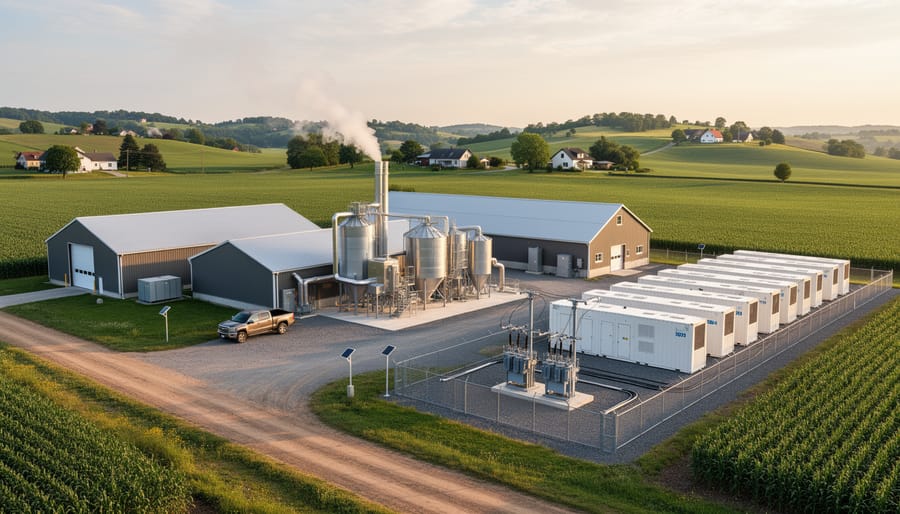
Picture this: a bioenergy facility humming away in regional Australia, converting agricultural waste into clean electricity. Instead of letting that power go to waste during quiet periods when demand drops, it flows into nearby battery storage systems, ready to spring into action when needed most.
This partnership between biomass generation and battery storage creates a remarkably flexible energy solution. During the wee hours of the morning or lazy Sunday afternoons when consumption is low, bioenergy plants charge up storage systems at optimal efficiency. Then, when everyone switches on their air conditioners during a scorching summer afternoon or fires up equipment during peak production hours, those batteries discharge their stored energy instantly.
The real beauty lies in the backup capability. Unlike solar and wind that depend on weather conditions, bioenergy facilities provide reliable baseload power that can ramp up when batteries run low during extended high-demand periods. Think of it as having your cake and eating it too—the consistent generation from organic waste combined with the rapid response of modern batteries.
Several Australian communities are already experiencing this synergy firsthand. A timber mill in northern New South Wales now uses wood waste to power its operations while simultaneously charging a battery array that supplies energy to nearby farms during evening peaks. The result? Lower electricity costs, reduced grid strain, and a practical demonstration that decentralized storage networks aren’t just theoretical concepts—they’re working solutions that make economic and environmental sense right here, right now.
Agricultural Communities Leading the Way
Australia’s agricultural heartland presents an incredible opportunity to merge food production with clean energy generation. Farms across regional areas are already sitting on goldmines of biomass—from crop residues and livestock waste to purpose-grown energy crops—making them natural hubs for decentralized storage networks.
Take a typical grain farm in the Riverina, for instance. After harvest, wheat stubble and other organic materials can be converted into biogas through anaerobic digestion. This biogas not only powers farm operations but feeds excess energy into local storage batteries, creating a mini power station that serves the broader community. When the sun sets and solar panels go quiet, these agricultural nodes keep the lights on.
Sugarcane regions in Queensland are leading the charge, transforming bagasse—the fibrous residue left after crushing—into reliable baseload power. Rather than sending all this energy to distant cities through aging transmission lines, smart farmers are storing it locally and selling it during peak demand periods.
The beauty of this approach is its practicality. Farmers diversify their income streams while strengthening regional energy security. Rural communities become less dependent on coastal power plants, and the nation moves closer to genuine energy independence—all powered by what grows in our own backyard.
What This Means for Australian Homes and Businesses
Getting Involved: Your Options Today
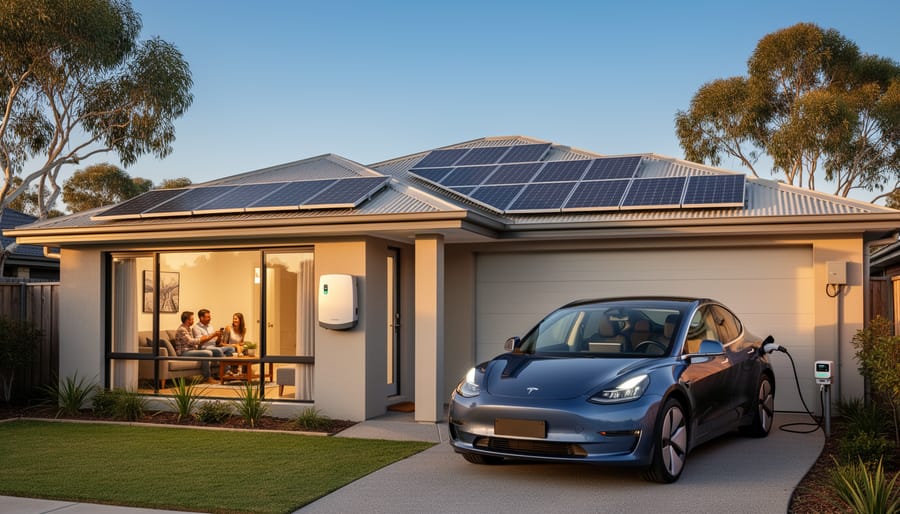
Aussie households and businesses have several straightforward pathways to participate in decentralized energy networks today. Virtual power plants are actively recruiting participants across most states, with companies like Tesla Energy Plan and AGL’s VPP offering programs that connect home battery systems to the grid. You’ll typically receive bill credits or payments when your stored energy helps balance the network during peak demand.
If you’re considering battery storage, start by assessing your current energy usage and solar generation. Many providers offer no-upfront-cost options through financing arrangements, making participation accessible without massive capital investment. Quality solar inverter systems compatible with battery storage are essential for seamless integration.
Small businesses can explore commercial VPP programs designed for larger installations, while community energy groups offer shared ownership models for those unable to install individual systems. The Clean Energy Regulator provides certificates and incentives that reduce setup costs significantly.
Set realistic expectations: financial returns typically materialize over five to ten years, but environmental benefits start immediately. Your participation directly reduces grid strain, lowers emissions, and supports renewable energy growth. Contact local energy retailers about current programs, as offerings expand regularly with government backing and technological advancement making participation increasingly rewarding.
The Economic Case for Early Adopters
For households and businesses considering decentralized storage networks, the numbers tell a compelling story. Early adopters in Australian communities are already seeing tangible returns on their investment, with typical payback periods ranging from five to eight years depending on energy usage patterns and local incentives.
The real beauty lies in the long-term value proposition. Once your storage system pays for itself, you’re essentially banking free energy during off-peak times and using it when prices spike. South Australian households have reported savings of up to 40% on their energy bills after integrating storage solutions with their existing renewable systems.
Government support sweetens the deal considerably. Many available battery grants can offset upfront costs by thousands of dollars, dramatically improving return on investment. Regional communities forming energy cooperatives are pooling resources to negotiate better rates and access bulk purchasing discounts.
Beyond dollars and cents, early adopters gain energy independence and protection against rising grid electricity costs—a buffer that becomes more valuable each year as traditional energy prices climb.
The Road Ahead: Where Decentralized Storage Is Taking Us
The trajectory for decentralized storage networks looks remarkably promising, particularly for a country like Australia with our abundant renewable resources and forward-thinking communities. We’re witnessing the early stages of a transformation that could redefine how we think about energy infrastructure.
The next decade will likely bring significant advancements in battery technology, making storage systems more affordable and efficient. Australian research institutions are already contributing breakthrough innovations in this space, positioning us to become not just adopters but leaders in the global shift toward decentralized energy. Our unique geography—with remote communities, vast distances, and exceptional solar and wind potential—makes us the perfect testing ground for these technologies.
Emerging opportunities are appearing across multiple sectors. Farmers are exploring how decentralized storage can power agricultural operations while feeding excess energy back to the grid during peak demand periods. Regional businesses are discovering that energy independence offers genuine competitive advantages, insulating them from price volatility while demonstrating environmental leadership. Even urban developments are incorporating shared storage systems into their designs, creating micro-grids that serve entire neighborhoods.
The integration of bioenergy with decentralized storage presents particularly exciting possibilities. Imagine rural communities running on locally produced biogas, with storage systems ensuring consistent supply regardless of production fluctuations. This combination addresses both reliability concerns and sustainability goals simultaneously.
Challenges remain, certainly. Regulatory frameworks need updating, initial costs can be substantial, and technical expertise must expand. However, these are hurdles we’re actively overcoming, not insurmountable barriers. With continued support from policymakers, investment in local manufacturing, and growing community engagement, Australia has every opportunity to showcase how decentralized storage networks can deliver reliable, sustainable, and economically viable energy solutions.
Australia stands at the threshold of an energy revolution, and decentralized storage networks represent a powerful tool in our journey toward a sustainable future. These systems aren’t just about technology—they’re about empowerering communities, reducing our carbon footprint, and building resilience into our energy infrastructure. From suburban homes in Melbourne storing solar energy for evening use, to remote Aboriginal communities achieving energy independence, the transformation is already underway.
The beauty of decentralized storage lies in its accessibility. Whether you’re a homeowner considering your first battery system, a business leader exploring ways to cut energy costs and emissions, or a policymaker shaping our energy landscape, there’s a role for everyone in this transition. Every kilowatt-hour stored locally is a step away from fossil fuel dependence and toward cleaner air, lower bills, and greater energy security.
Now is the time to act. Start small by learning about available incentives and storage options in your area. Connect with local installers, join community energy groups, or advocate for supportive policies that accelerate adoption. The success stories from across Australia prove this technology works, and as more people participate, the benefits multiply exponentially.
Our children deserve an energy system that works with nature, not against it. By embracing decentralized storage networks today, we’re not just solving technical challenges—we’re creating a legacy of innovation, sustainability, and community strength that will power Australia for generations to come.