
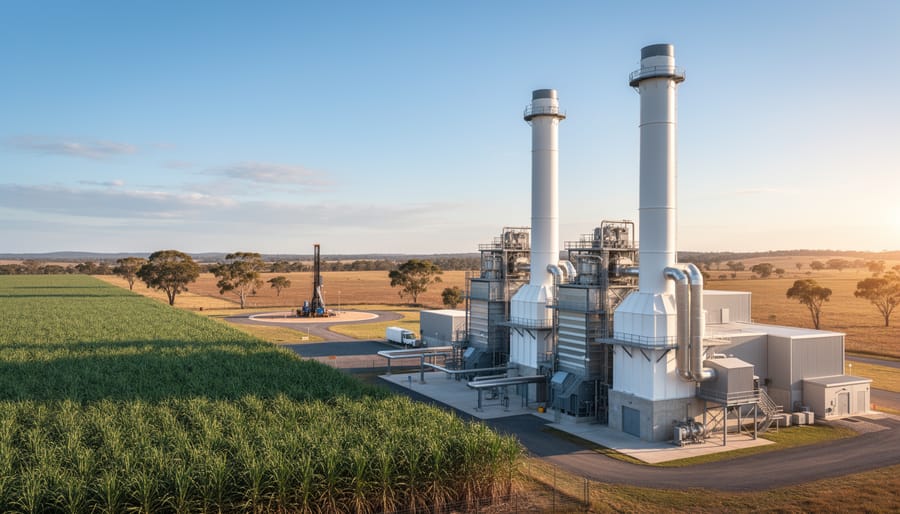
Australia stands at a crossroads in its climate journey, and Bioenergy with Carbon Capture and Storage (BECCS) offers a rare opportunity to simultaneously generate renewable energy while actively removing carbon dioxide from the atmosphere. This technology captures CO2 released when burning sustainably grown biomass—think agricultural waste, forestry residues, or dedicated energy crops—and stores it permanently underground, creating what scientists call “negative emissions.”
The promise is compelling: Australia possesses vast agricultural landscapes producing millions of tonnes of biomass waste annually, extensive geological formations suitable for carbon storage, and growing expertise in carbon capture technologies. Yet BECCS remains largely theoretical on Australian soil, with questions swirling about its genuine environmental credentials, economic viability, and practical scalability.
For policymakers crafting net-zero strategies, industry leaders exploring carbon-negative operations, and environmental professionals assessing climate solutions, understanding BECCS isn’t optional—it’s essential. This technology could transform sugar mills, timber processors, and agricultural regions into carbon removal hubs while creating regional jobs and utilizing existing waste streams.
The critical questions demand honest answers: Can BECCS deliver genuine environmental benefits without compromising land use or biodiversity? What makes it work in Australian conditions? Where are the proven success stories, and what challenges must we overcome to scale this technology responsibly? This article cuts through the complexity to reveal whether BECCS represents a genuine climate solution for Australia’s unique environmental and economic landscape.
What is BECCS and Why Should Australians Care?
Imagine capturing carbon dioxide from the atmosphere while simultaneously generating clean energy—that’s precisely what Bioenergy with Carbon Capture and Storage (BECCS) achieves. Think of it as nature’s recycling system supercharged with modern technology.
Here’s how it works in simple terms: Plants naturally absorb carbon dioxide as they grow. When we harvest these plants—think sugarcane bagasse, wheat stubble, or forestry waste—and convert them into energy through bioenergy technology, we’re releasing that stored carbon back into the atmosphere. But BECCS takes this process one step further. Before those emissions reach the sky, they’re captured, compressed, and permanently stored deep underground in geological formations. It’s like putting the carbon back where it came from millions of years ago.
What makes BECCS different from regular bioenergy is this crucial capture step. Standard bioenergy is considered carbon-neutral—releasing only what the plants absorbed. BECCS, however, is carbon-negative, actually removing CO2 from the atmosphere. It’s one of the few technologies capable of creating “negative emissions,” essentially running the clock backwards on climate change.
For Australians, this technology holds particular promise. Our vast agricultural sector generates enormous quantities of biomass waste annually—from cane farms in Queensland to grain harvests across the wheat belt. Rather than burning this material in open fields or leaving it to decompose, BECCS transforms it into a climate solution.
Australia also possesses extensive geological storage capacity, particularly in sedimentary basins ideal for carbon sequestration. The Gippsland Basin in Victoria and depleted gas fields offshore Western Australia offer proven storage sites. Additionally, our established expertise in underground resource management, developed through decades of mining and gas extraction, positions us perfectly to lead BECCS implementation.
With ambitious net-zero targets ahead, BECCS offers Australian industries a pathway to not just reduce emissions, but actively reverse them while supporting regional economies and agricultural communities.
The Environmental Case for BECCS in Australia
Going Beyond Carbon Neutral: The Carbon-Negative Promise
Unlike traditional carbon-neutral approaches that simply balance emissions, BECCS goes a significant step further by actively pulling carbon dioxide from the atmosphere and locking it away permanently. Think of it this way: planting a tree is carbon-neutral over its lifetime, absorbing CO2 as it grows but releasing it when it decomposes or burns. BECCS transforms this cycle into a carbon sink by capturing that CO2 before it returns to the atmosphere and storing it underground.
Here’s how it works in practice. When biomass like agricultural waste or purpose-grown crops photosynthesizes, it draws down atmospheric carbon. When we burn this biomass for energy and capture the resulting CO2 emissions, we’re essentially removing carbon that was recently in the air and preventing its return. The captured CO2 is then transported and injected into secure geological formations deep underground, where it remains for thousands of years.
For Australia, this distinction matters enormously. Meeting our 2050 net-zero targets isn’t just about cutting emissions from coal and gas. We also need carbon-negative solutions to offset hard-to-abate sectors like aviation, agriculture, and heavy industry. BECCS provides this crucial capability, potentially removing millions of tonnes of CO2 annually while generating renewable electricity.
Several Australian sugar mills are already exploring BECCS integration, demonstrating that this isn’t science fiction but an achievable reality that transforms waste into climate action.
Making Use of Australia’s Agricultural Waste
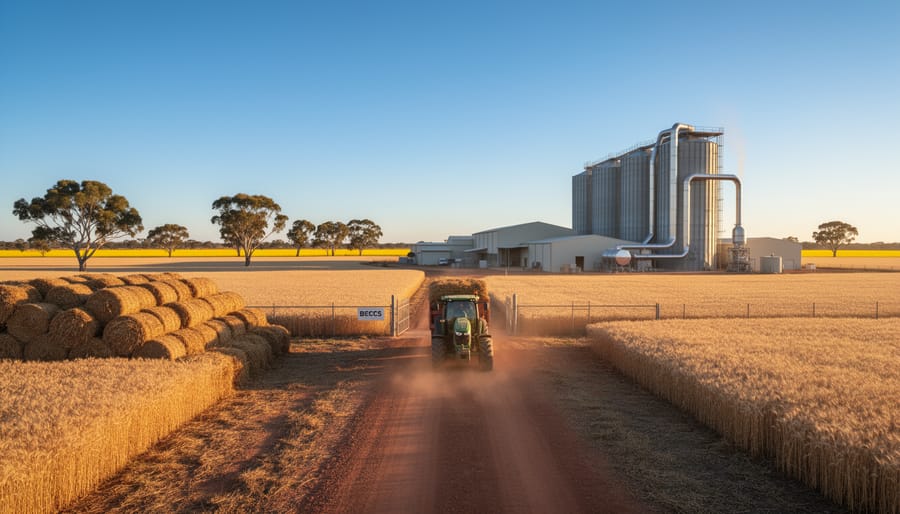
Australia’s agricultural sector generates massive amounts of organic material each year – from sugarcane bagasse in Queensland to wheat stubble across the grain belt and forestry residues in Tasmania. Rather than burning these materials in the paddock or letting them decompose, BECCS transforms what was once considered rubbish into a genuine climate solution.
Take sugarcane farming, for example. After crushing cane for sugar, mills are left with bagasse – the fibrous residue. Forward-thinking operations are now using this agricultural waste to generate electricity through bioenergy, with BECCS technology capturing the carbon dioxide released in the process. This means the same crop that absorbed CO2 while growing continues fighting climate change even after harvest.
Cotton growers in New South Wales face similar opportunities. Cotton gin trash, which contains seeds, stems, and leaves, presents an ideal feedstock for bioenergy facilities. Instead of disposal headaches, farmers gain potential revenue streams while reducing their carbon footprint.
The livestock sector also benefits. Piggeries and feedlots produce significant organic waste that can fuel biogas plants with carbon capture capabilities. These facilities generate renewable energy while managing waste responsibly and capturing emissions that would otherwise escape into the atmosphere.
This circular approach resonates deeply with Australian farming values – nothing wasted, everything valued. BECCS doesn’t just solve disposal problems; it turns agricultural byproducts into environmental assets, creating economic opportunities while helping Australia meet its climate commitments. It’s practical sustainability that makes sense on the ground.
Protecting Our Unique Ecosystems
When implemented thoughtfully, BECCS can become a powerful ally in protecting Australia’s remarkable biodiversity. The secret lies in choosing the right feedstocks and locations. Rather than clearing native bushland, responsible BECCS projects utilize agricultural waste, plantation timber, or degraded land unsuitable for food production. This approach actually creates opportunities to restore ecosystems while capturing carbon.
In Queensland’s sugarcane regions, bagasse-based bioenergy projects demonstrate how industry by-products can fuel clean energy without competing with natural habitats. Similarly, using forestry residues from sustainably managed plantations prevents unnecessary land clearing while supporting fire risk reduction efforts. When BECCS facilities integrate with existing agricultural operations, they can provide additional income streams that help farmers maintain conservation areas on their properties.
The key is strategic planning that aligns with Australia’s National Reserve System and regional biodiversity plans. By avoiding high-conservation-value areas and prioritizing marginal lands, BECCS can complement rather than compete with nature conservation. Done right, it’s not just about removing carbon from the atmosphere—it’s about creating a circular economy that values both our climate and our unique wildlife.
Where BECCS Makes Sense in the Australian Landscape
Agricultural Regions with Abundant Biomass
Australia’s diverse agricultural landscape offers remarkable opportunities for BECCS deployment, with several regions standing out as natural biomass powerhouses. The nation’s sugarcane belt, stretching along Queensland’s coastal plains, produces millions of tonnes of bagasse annually – the fibrous residue left after crushing sugarcane. This agricultural byproduct, traditionally burned for energy, represents a perfect feedstock for BECCS facilities that could generate clean electricity while capturing carbon.
The southeastern wheat belt, spanning parts of New South Wales, Victoria, and South Australia, generates substantial crop residues including wheat straw and stubble. Rather than leaving these materials to decompose and release carbon naturally, forward-thinking farmers are exploring partnerships with bioenergy facilities that can transform agricultural waste into renewable power while permanently storing emissions underground.
Australia’s extensive forestry regions, particularly in Tasmania and parts of Victoria, provide another significant biomass source through sustainable forest management practices. Timber mills and processing facilities generate wood waste that’s ideal for BECCS applications, creating value from materials that might otherwise be discarded.
These agricultural regions offer practical advantages beyond raw biomass availability. They’re often located near existing infrastructure including transport networks and industrial facilities, reducing implementation costs. Many areas also sit above suitable geological formations for carbon storage, meaning captured emissions needn’t travel far for permanent sequestration. This geographical alignment of biomass production, energy demand, and storage capacity makes Australia uniquely positioned to develop commercially viable BECCS projects that benefit regional communities while addressing climate change.
Leveraging Existing Industrial Infrastructure
One of the most compelling advantages of BECCS is its ability to work within Australia’s existing energy landscape. Rather than starting from scratch, we can adapt infrastructure that’s already in place, dramatically reducing both costs and implementation timelines.
Consider Australia’s coal-fired power stations approaching retirement. Many of these facilities possess the essential components for BECCS deployment – boilers, turbines, cooling systems, and crucially, established connections to the electricity grid. Converting these stations to biomass with carbon capture represents a practical pathway forward. The Millmerran Power Station in Queensland has already demonstrated biomass co-firing alongside coal, proving the concept works in Australian conditions.
Industrial facilities like sugar mills and paper manufacturers are particularly well-positioned for BECCS adoption. These operations already process large volumes of biomass and generate substantial heat and power. Adding carbon capture technology transforms them from carbon-neutral to carbon-negative operations. Several Queensland sugar mills are exploring this opportunity, recognising they’re sitting on goldmines of both renewable fuel and climate action potential.
Australia’s geological landscape offers another crucial advantage. The same deep sedimentary basins that once held fossil fuels can now safely store captured CO2. The Gippsland Basin in Victoria and the Surat Basin in Queensland have undergone extensive assessment for carbon storage. These proven formations, coupled with existing pipeline infrastructure from the oil and gas industry, create ready-made storage solutions.
This ability to repurpose existing assets means BECCS isn’t some distant dream – it’s an achievable transformation of what we’ve already built.
The Real Environmental Challenges We Need to Address
Water Use in a Sunburnt Country
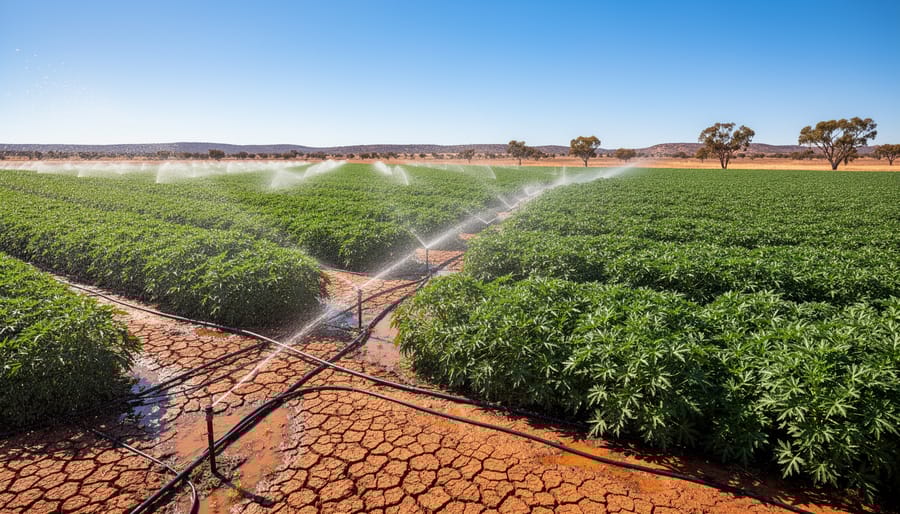
Australia’s relationship with water is written into our national character—we’re experts at doing more with less. When it comes to BECCS, water requirements deserve honest conversation. Biomass cultivation and carbon capture processes do need water, but innovative solutions are transforming what’s possible in our sunburnt landscape.
The good news? Australian researchers and farmers are pioneering drought-tolerant energy crops specifically suited to our conditions. Native grasses, salt-tolerant plants, and advanced irrigation techniques mean BECCS doesn’t have to compete with food production or strain precious water resources. Some projects are even using recycled water or brackish groundwater unsuitable for other purposes.
Smart plantation design makes a real difference. By integrating biomass crops into existing agricultural systems and choosing species adapted to low-rainfall zones, we’re proving that BECCS can work within Australia’s water constraints. Water-efficient approaches like drip irrigation and moisture monitoring systems are cutting water use by up to 40% compared to traditional methods.
The challenge isn’t insurmountable—it’s an opportunity for Australian ingenuity to shine, developing BECCS systems that respect our unique environment while delivering climate benefits.
Ensuring Truly Sustainable Biomass Sourcing
The success of BECCS hinges entirely on where and how we source biomass. Getting this right means avoiding the pitfalls that have plagued some bioenergy projects overseas. The good news? Australia has tremendous opportunities to develop sustainable biomass supply chains that genuinely benefit our climate goals.
The golden rule is straightforward: biomass must come from waste streams or purpose-grown crops on degraded land, never from clearing native vegetation or competing with food production. Agricultural residues like sugar cane bagasse, forestry waste, and municipal organic waste represent ideal feedstocks already available across Australia. These materials would otherwise decompose and release carbon anyway, so capturing and storing their emissions delivers genuine climate benefits.
Several Australian projects are showing how this works in practice. Sugar mills in Queensland are exploring BECCS opportunities using bagasse that’s already processed on-site, creating a closed-loop system without requiring additional land. Similarly, forestry operations are examining how sawmill residues could power regional facilities while permanently storing carbon.
The key is rigorous sustainability certification and transparent supply chain monitoring. By focusing on waste valorisation and avoiding land-use conflicts, Australia can develop BECCS systems that enhance rather than compromise our environmental goals, creating rural jobs while protecting food security and precious ecosystems.
Safe and Permanent Carbon Storage
Australia is remarkably well-positioned for safe carbon storage, with vast geological formations capable of securely holding CO2 for thousands of years. The country’s sedimentary basins, particularly in regions like the Gippsland Basin and Browse Basin, offer storage capacity estimated at hundreds of years’ worth of national emissions.
The technology behind carbon storage has matured significantly over decades of oil and gas industry experience. When CO2 is injected deep underground into porous rock formations, it becomes trapped beneath impermeable cap rock layers, preventing any escape to the atmosphere. Over time, the CO2 mineralizes, turning into solid carbonate rock in a process similar to natural geological formations.
Safety monitoring has become increasingly sophisticated, with real-time sensors tracking pressure, temperature, and any ground movement. The Otway Project in Victoria has successfully demonstrated this technology since 2008, storing over 80,000 tonnes of CO2 while maintaining rigorous safety standards and transparency with local communities.
Addressing community concerns requires open dialogue and genuine engagement. Successful projects worldwide show that when communities understand the science, see the monitoring systems in action, and recognize the climate benefits, acceptance grows. Australia’s regulatory framework ensures comprehensive environmental assessments and ongoing oversight, providing multiple layers of protection for both people and the environment.
Success Stories and Promising Developments
While BECCS technology is still emerging globally, several promising developments demonstrate its practical viability and potential for Australia’s clean energy future.
In Sweden, the Stockholm Exergi combined heat and power plant represents one of the world’s first commercial-scale BECCS facilities. Since beginning operations in 2019, this biomass facility captures approximately 800,000 tonnes of CO2 annually, proving that negative emissions can work at scale. The plant burns sustainably sourced forestry residue and captures the resulting carbon dioxide, which is then transported for permanent geological storage. This real-world success story offers valuable lessons for Australian facilities considering similar approaches.
Closer to home, research initiatives across Australia are building the knowledge base needed for successful BECCS deployment. The University of Melbourne’s Bio21 Institute has conducted groundbreaking research on efficient carbon capture methods specifically suited to biomass facilities. Their work focuses on reducing the energy penalty typically associated with carbon capture, making the technology more economically attractive for Australian conditions.
The Australian Renewable Energy Agency has funded several pilot projects exploring integrated bioenergy and carbon capture systems. One particularly promising initiative in Queensland examines capturing emissions from sugarcane bagasse processing facilities. Given Australia’s substantial sugar industry, this approach could turn existing agricultural waste streams into climate solutions while supporting regional employment.
In Western Australia, researchers have successfully demonstrated small-scale BECCS using forestry residues from plantation thinning operations. This project showed that properly managed biomass collection can actually improve forest health by reducing fire risk, while the captured carbon provides measurable climate benefits. It’s a win-win outcome that resonates with Australian environmental priorities.
The Illinois Industrial Carbon Capture and Storage project in the United States offers another instructive example. This ethanol facility captures and permanently stores over one million tonnes of biogenic CO2 annually, demonstrating that BECCS can integrate seamlessly with existing industrial processes.
These success stories share common threads: careful biomass sourcing, community engagement, and transparent monitoring. They prove that BECCS isn’t just theoretical but a practical climate solution that can deliver results today. For Australia, with abundant sustainable biomass resources and suitable geological storage sites, these international achievements illuminate a clear pathway forward, showing what’s possible when innovation meets commitment.
What This Means for Australia’s Sustainable Future
BECCS represents more than just another climate technology for Australia—it’s a genuine game-changer that could reshape regional economies while delivering substantial environmental benefits. The technology opens remarkable opportunities for agricultural communities, particularly in areas like Queensland’s sugarcane belt, Western Australia’s wheat regions, and Victoria’s forestry districts. These regions already possess the biomass feedstock and could become hubs for clean energy production, creating hundreds of skilled jobs in plant operations, carbon capture engineering, and sustainable agriculture.
Consider the economic multiplier effect: a BECCS facility doesn’t just generate negative emissions—it stimulates local manufacturing, transport, and service industries. Regional towns that have historically depended on traditional agriculture or fossil fuel industries could diversify their economies, attracting investment and retaining young talent who might otherwise migrate to cities. Farmers gain additional income streams by selling agricultural residues, transforming what was once waste into valuable commodities.
Energy security receives a significant boost too. Unlike solar and wind power, which depend on weather conditions, BECCS provides reliable baseload power while actively removing carbon dioxide from the atmosphere. This reliability strengthens Australia’s energy grid during our renewable energy transition, filling critical gaps when other renewables aren’t generating.
The technology aligns perfectly with Australia’s emission reduction commitments, offering a practical pathway for hard-to-decarbonize sectors like aviation, heavy industry, and agriculture to offset their unavoidable emissions. Indigenous communities could also benefit through participation in sustainable biomass cultivation programs, combining traditional land management practices with modern climate solutions.
Success hinges on strategic policy support, targeted investment, and community engagement. Early demonstration projects, like the Bio-CCS project in Millmerran, Queensland, show what’s possible when innovation meets opportunity. As Australia builds its BECCS infrastructure, we’re not just fighting climate change—we’re building prosperous regional futures, strengthening energy independence, and demonstrating global leadership in practical climate action that benefits everyone.
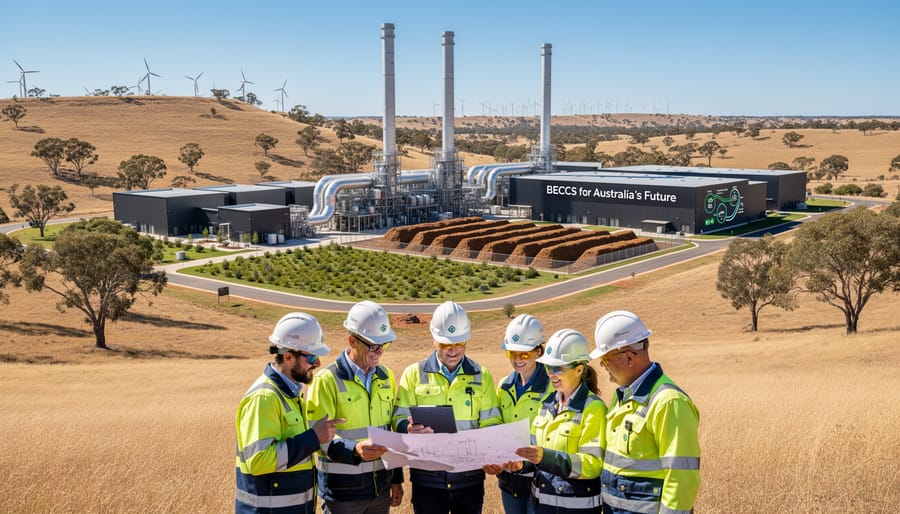
Australia stands at a pivotal moment in its climate journey, and BECCS represents a genuine opportunity to turn agricultural and forestry resources into powerful allies in the fight against climate change. Unlike many carbon reduction strategies that simply slow emissions, BECCS offers something truly transformative: the potential to actually remove carbon dioxide from the atmosphere while generating renewable energy our communities need.
The environmental case is clear. With our vast agricultural landscapes, sustainable forestry potential, and existing expertise in both farming and energy production, Australia is uniquely positioned to make BECCS work. We’ve already seen promising trials demonstrating that when done right, this technology can deliver meaningful carbon drawdown without compromising food security or environmental integrity.
But realizing this potential requires all of us. Industry leaders can invest in pilot projects and scale proven solutions. Policymakers can create supportive frameworks that reward carbon removal and sustainable bioenergy production. Farmers and landholders can explore how BECCS fits within regenerative agricultural practices. And everyday Australians can stay informed and support climate solutions that genuinely deliver results.
The path forward isn’t about choosing one silver bullet—it’s about embracing multiple solutions that work together. BECCS, developed thoughtfully and sustainably, can be a cornerstone of Australia’s carbon-negative future. The technology exists, the resources are here, and the opportunity is now. Let’s ensure we seize it with the same innovative spirit that has always defined this nation’s approach to challenges.