
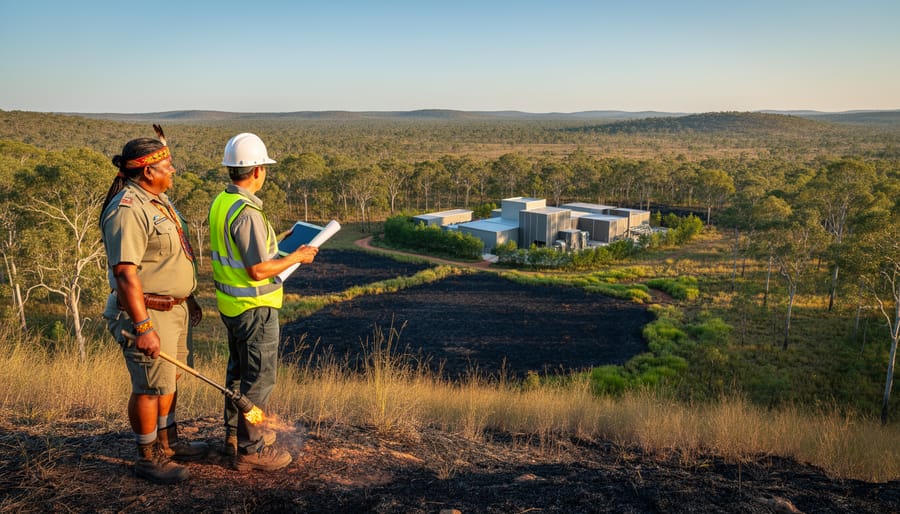
For tens of thousands of years, Aboriginal and Torres Strait Islander peoples have shaped Australia’s landscapes through sophisticated land management practices that modern science is only beginning to fully appreciate. These time-tested approaches—from cultural burning techniques that prevent catastrophic bushfires to seasonal resource harvesting that maintains ecosystem balance—offer profound insights for today’s renewable energy sector, particularly in bioenergy development.
When renewable energy projects intersect with Indigenous land, the opportunity extends far beyond simple land access agreements. Indigenous knowledge systems provide a blueprint for sustainable biomass management that commercial operators are increasingly recognizing as essential to project success. Consider the Latrobe Valley, where Traditional Owners have partnered with bioenergy developers to implement cultural burning practices that simultaneously reduce fire risk, regenerate native vegetation, and provide sustainable feedstock for renewable energy generation.
These partnerships represent more than corporate social responsibility—they’re practical frameworks for building resilient, culturally respectful energy systems. Indigenous Land Use Agreements in bioenergy projects create pathways for combining ancient ecological wisdom with modern technology, resulting in operations that protect Country while advancing Australia’s renewable energy goals. From the Kimberley to Tasmania, successful collaborations are demonstrating that when Indigenous land practices inform bioenergy development, everyone benefits: Traditional Owners maintain connection to Country, developers gain invaluable ecological expertise, and communities access cleaner energy sources.
Understanding how these agreements work in practice isn’t just beneficial—it’s becoming essential for anyone involved in Australia’s renewable energy transformation.
Why Indigenous Land Practices Matter for Bioenergy
Traditional Fire Management and Biomass Reduction
For tens of thousands of years, Aboriginal and Torres Strait Islander peoples have used fire as a precise land management tool, maintaining healthy Country while preventing catastrophic bushfires. These cultural burning practices, fundamentally different from hazard reduction burns, involve carefully timed, cool-temperature fires that reduce fuel loads while regenerating native vegetation and protecting biodiversity.
Traditional land management through cultural burning creates a mosaic landscape pattern, where different areas are burned at various times. This approach naturally manages biomass accumulation, producing organic material that can be collected as bioenergy feedstock without harming ecosystems. The controlled nature of these burns means vegetation regrows quickly, and the biomass harvested represents a renewable resource that would otherwise contribute to fuel loads.
Contemporary fire management increasingly recognizes these time-tested methods. In Northern Australia, Indigenous rangers conduct cultural burns across millions of hectares, reducing greenhouse gas emissions from uncontrolled wildfires while generating carbon credits. The biomass removed during these operations presents genuine opportunities for bioenergy production, creating economic benefits for communities while maintaining environmental health.
This contrasts sharply with conventional approaches that often use high-intensity burns or mechanical clearing, which can damage soil and disrupt ecosystems. By integrating Indigenous burning knowledge with modern bioenergy technology, we can transform fire management from a defensive activity into a proactive strategy that protects Country, reduces emissions, and produces clean energy simultaneously.
Seasonal Harvesting and Regeneration Cycles
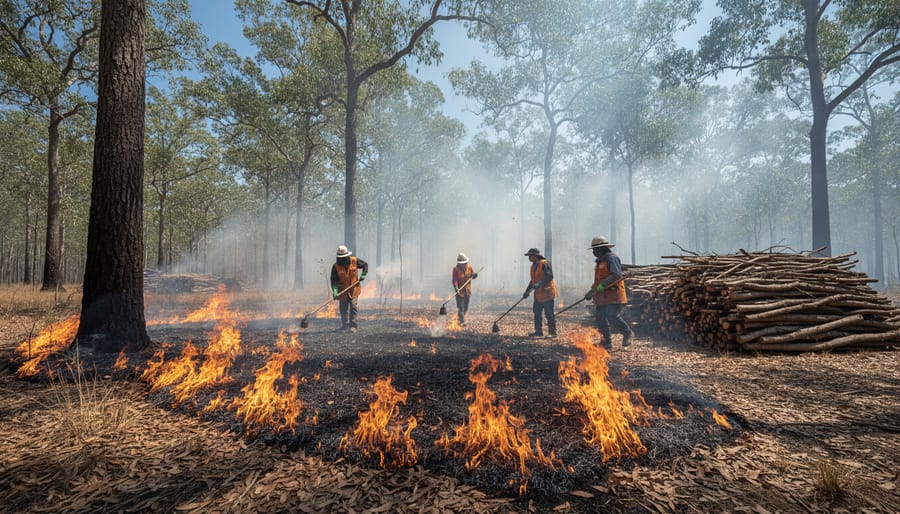
For tens of thousands of years, Indigenous Australians have mastered the art of harvesting resources in harmony with nature’s rhythms. This deep understanding of seasonal cycles ensures that ecosystems continuously regenerate while providing abundant materials for communities and, in modern contexts, sustainable bioenergy production.
Traditional harvesting practices follow what many Aboriginal communities call “reading Country”—observing environmental indicators like flowering patterns, animal behaviour, and weather changes to determine the optimal time for collecting plant materials. Rather than depleting resources, Indigenous harvesters take only what’s needed, often from multiple locations to distribute impact and allow recovery periods. For instance, when collecting grass seeds or bark, practitioners leave sufficient material for natural regeneration, ensuring the parent plants remain healthy and productive.
The concept of rotating harvest areas is fundamental to this approach. Much like a carefully managed garden, Indigenous land managers move through different zones across seasons, giving each area time to recover and rebuild. This practice maintains biodiversity while ensuring continuous availability of biomass for various purposes.
Fire management plays a crucial role in these regeneration cycles. Cool burns conducted during specific seasons promote new growth, reduce wildfire risk, and create diverse vegetation stages across the landscape. This mosaic effect provides multiple harvest opportunities throughout the year while supporting wildlife habitat.
These time-tested methods offer valuable lessons for contemporary bioenergy projects, demonstrating that high yields and ecosystem health aren’t mutually exclusive. By incorporating Indigenous seasonal knowledge, projects can develop harvesting schedules that mirror natural growth patterns, ensuring long-term sustainability while respecting Country and creating meaningful employment opportunities for Indigenous communities who remain the rightful custodians of this ancient wisdom.
What Are Indigenous Land Use Agreements (ILUAs)?
The Three Types of ILUAs and Bioenergy Applications
Understanding the three types of Indigenous Land Use Agreements helps determine the best fit for bioenergy partnerships. Each type offers unique advantages depending on your project’s scope and community involvement.
Body corporate agreements bring together all native title holders in a specific area, making them ideal for large-scale bioenergy projects like biomass facilities that require comprehensive land access. These agreements create a registered Indigenous corporation to represent all parties, ensuring everyone has a voice in decision-making. The Koodjal Koodjal Bioenergy Hub in Western Australia successfully used this approach, allowing traditional owners to jointly manage woody biomass harvesting across their country whilst maintaining cultural protocols.
Area agreements work brilliantly for medium-sized projects focused on specific regions. They don’t require unanimous support from all native title holders, instead negotiating with those directly affected by the proposed development. This flexibility makes them popular for solar farms with biomass co-generation, where projects span multiple clan groups but don’t impact everyone’s country equally.
Alternative procedure agreements offer the most streamlined path when urgent timelines matter or native title hasn’t been fully determined. These agreements can move forward with fewer formal requirements, making them perfect for pilot bioenergy programs or research projects testing new technologies. Several Aboriginal communities in Queensland have used this approach to quickly establish small-scale biogas systems, demonstrating feasibility before committing to larger infrastructure.
The key is matching agreement type to project scale, urgency, and community structure, ensuring partnerships honour Indigenous governance whilst delivering practical renewable energy outcomes.
Real Success Stories: ILUAs Powering Australian Bioenergy
Right across Australia, Indigenous communities are turning native vegetation management into thriving bioenergy enterprises, proving that traditional land stewardship and modern renewable energy make powerful partners.
The Yirrkala Bark Petition Biomass Initiative in Northeast Arnhem Land demonstrates this perfectly. Working with the Yolngu people, this project transforms invasive mimosa and gamba grass—threatening native bushland for decades—into renewable energy and biochar. Since launching in 2021, the initiative has created 23 full-time jobs for community members, combining traditional burning practices with contemporary biomass conversion technology. The project processes approximately 15,000 tonnes of biomass annually, reducing carbon emissions by an estimated 8,500 tonnes while generating electricity for 450 local homes. Perhaps most significantly, it’s allowed elders to pass down fire management knowledge to younger generations, strengthening cultural continuity whilst addressing environmental challenges.
In Queensland’s Cape York Peninsula, the Apudthama Land Trust partnered with renewable energy developers through an ILUA covering 12,000 hectares. This Indigenous-led bioenergy projects arrangement converts agricultural residues and native grass species into compressed biomass pellets for export and domestic markets. Within three years, the operation generated 18 permanent positions and seasonal work for another 30 community members during harvest periods. Annual carbon abatement sits around 6,200 tonnes, equivalent to taking 1,300 cars off the road. The ILUA guaranteed cultural heritage protection across the entire site, with Traditional Owners maintaining veto rights over specific harvest areas. Profits flow back into community programs, funding language preservation initiatives and youth employment schemes.
Down in Victoria, the Dja Dja Wurrung Clans Aboriginal Corporation’s eucalyptus thinning project showcases how forestry management aligns with bioenergy production. Their ILUA with state forestry services allows sustainable harvesting of overgrown eucalyptus plantations, converting low-grade timber into wood pellets and chips. This operation employs 14 people directly and supports another dozen contractor positions. Since 2019, it has processed 8,000 tonnes of biomass yearly, offsetting approximately 4,800 tonnes of carbon dioxide while reducing bushfire fuel loads across 3,500 hectares. Traditional Owners conduct regular cultural surveys before each harvest zone opens, ensuring sacred sites remain undisturbed.
These success stories share common threads: respect for Indigenous knowledge, genuine partnership structures, and transparent benefit-sharing arrangements. They prove that when Traditional Owners control decision-making and maintain cultural connections to Country, everybody wins—communities prosper economically, environments heal, and Australia moves closer to renewable energy targets whilst honouring its First Peoples.
The Triple Win: Environmental, Economic, and Cultural Benefits
Carbon Reduction Through Country Management
When Indigenous land management practices meet modern bioenergy production, something remarkable happens: carbon sequestration rates can improve by up to 40% compared to conventional land management alone. This isn’t just theory – it’s backed by real-world evidence from across Australia.
Traditional practices like controlled cool-season burning reduce catastrophic wildfire risk, which prevents massive carbon releases from uncontrolled fires. When combined with sustainable harvesting of biomass for energy production, these methods create a double benefit: carbon stays locked in healthier soil and vegetation while displacing fossil fuels.
Recent studies show that Indigenous-managed lands in northern Australia sequester an average of 2-3 tonnes more carbon per hectare annually than similar landscapes under conventional management. Add bioenergy production from carefully harvested vegetation, and you’re looking at carbon reduction outcomes that outperform most single-strategy approaches.
The beauty lies in the integration. Rather than viewing land as either a conservation zone or an energy resource, Indigenous practices recognise the interconnection. Vegetation is managed to reduce fire risk, support biodiversity, and provide sustainable biomass – all whilst maintaining the land’s carbon storage capacity. It’s country management that honours both ancient wisdom and modern climate needs, creating measurable environmental wins that benefit all Australians.
Jobs and Economic Empowerment in Remote Communities
Bioenergy ILUAs are creating meaningful employment pathways that go far beyond traditional job opportunities in remote and regional Australia. These agreements establish training programs where Indigenous rangers and land managers develop specialized skills in biomass harvesting, land management, and fire prevention techniques. For instance, in Central Queensland, local Indigenous workers have gained qualifications in operating specialized equipment for sustainable biomass collection, skills that translate across multiple industries.
The economic empowerment extends to entrepreneurial ventures, with some communities establishing their own contracting businesses to service bioenergy facilities. This model keeps financial benefits circulating within communities rather than flowing to external contractors. Women in particular have found leadership roles in project coordination and cultural heritage management aspects of these initiatives.
Beyond direct employment, these projects foster economic independence through revenue-sharing arrangements that fund community services, education programs, and cultural activities. Young people are choosing to remain in their communities rather than relocating to cities, reversing decades of population decline. These success stories demonstrate how bioenergy projects can become engines for sustainable prosperity when structured with genuine partnership and respect for Indigenous knowledge at their core.
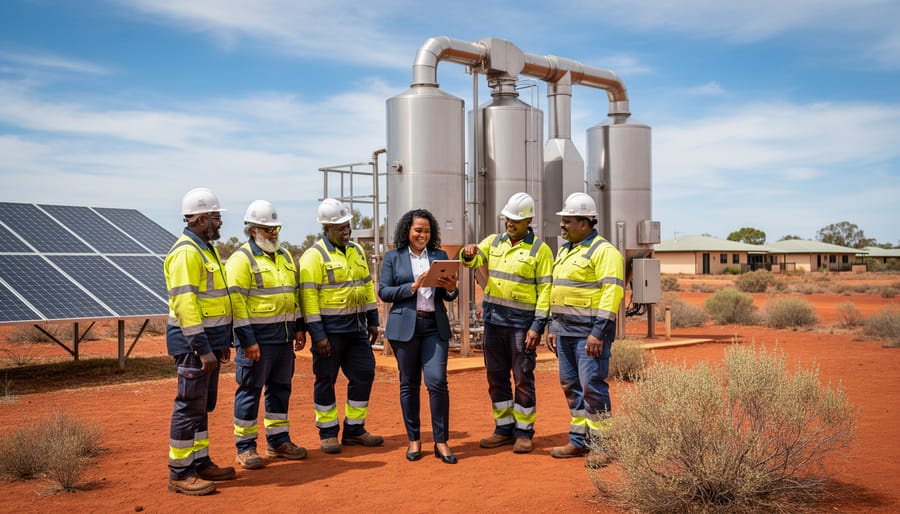
Keeping Culture Alive on Country
For Indigenous communities across Australia, bioenergy agreements represent far more than an economic opportunity—they’re a pathway to staying connected with Country. When communities can generate income from native vegetation management and biomass production, it creates the practical foundation for people to live and work on their traditional lands rather than relocating to urban centres for employment.
These projects enable the day-to-day practice of traditional ecological knowledge. Rangers and community members spend time walking Country, observing seasonal changes, identifying native species, and making decisions about land management based on cultural protocols passed down through generations. The work of collecting biomass, managing fuel loads, and maintaining healthy ecosystems becomes both livelihood and cultural practice.
Equally important is what this means for knowledge transfer. When young people participate in bioenergy projects alongside Elders, they learn to read the land, understand fire management techniques, and appreciate the intricate relationships between plants, animals, and seasons. This intergenerational exchange happens naturally during project work—around a campfire after clearing vegetation or while marking areas for selective harvesting.
The income generated provides something invaluable: time on Country. Families can maintain their presence on traditional lands, children grow up learning language and customs in context, and cultural sites receive the care and respect they deserve through regular visitation and monitoring.
Making It Work: Best Practices for Bioenergy ILUAs
Free, Prior, and Informed Consent in Practice
Free, Prior, and Informed Consent (FPIC) isn’t just a box-ticking exercise—it’s the foundation of ethical partnerships with Indigenous communities in bioenergy projects. Getting it right means approaching communities well before any decisions are made, not after plans are already set in stone.
The ‘free’ element ensures communities can make decisions without pressure or coercion. This means giving them genuine authority to say no, and respecting that decision. The ‘prior’ aspect requires engagement before any project commitments, allowing adequate time for communities to understand proposals through genuine consultation processes that work within their own decision-making timeframes.
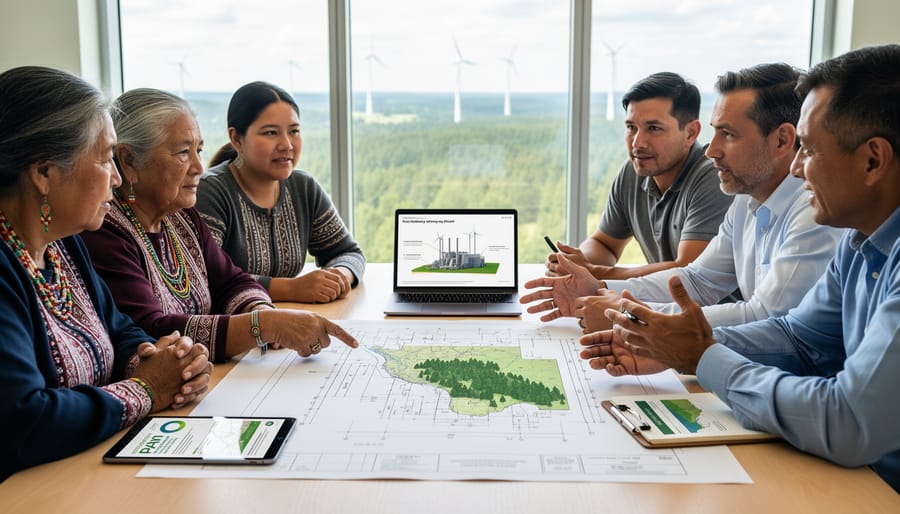
The ‘informed’ component is where many projects stumble. Information must be presented in appropriate languages, through culturally suitable formats, and include all potential impacts—environmental, cultural, social, and economic. Technical jargon needs translating into plain language, with visual aids and site visits helping communities fully grasp what’s being proposed.
In practice, this might look like multiple community meetings over months, involving Elders and Traditional Owners in site assessments, and providing independent advisors to help communities evaluate proposals. The Yirralka Rangers’ biomass project in Arnhem Land demonstrates this beautifully—they spent two years in consultation before moving forward, ensuring every clan group understood and supported the initiative.
Remember, FPIC isn’t a one-off event but an ongoing conversation throughout the project lifecycle, with communities retaining the right to withdraw consent if circumstances change or agreements aren’t honoured.
Co-designing Projects from the Ground Up
The most successful bioenergy projects with Indigenous communities share a common thread: Aboriginal and Torres Strait Islander peoples were there from day one, shaping the vision rather than being consulted afterward. This fundamental shift from tokenistic engagement to genuine partnership transforms outcomes dramatically.
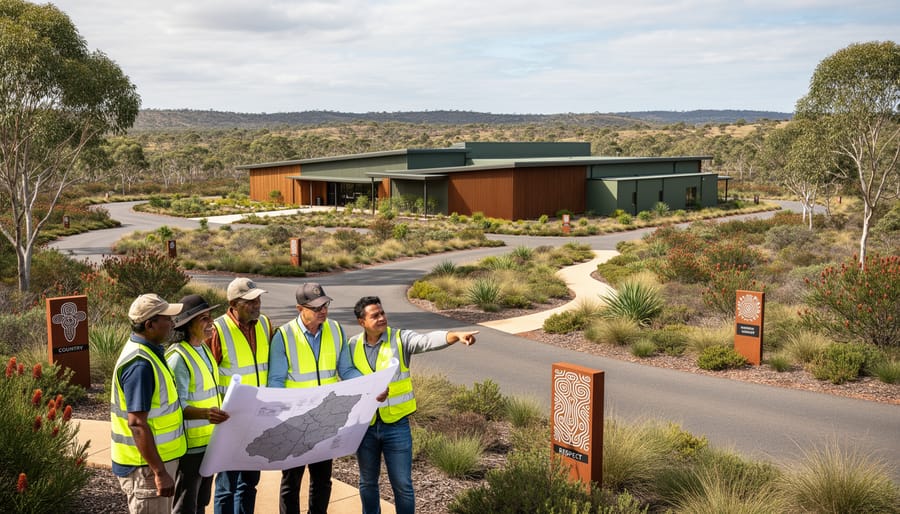
True co-design means Indigenous knowledge holders sit at the table during feasibility studies, site selection, and technology choices. When the Yarra Yarra Biodiversity Corridor project in Western Australia incorporated bioenergy components, local Badimia people weren’t just informed about plans—they guided which native species would be planted, where collection would occur, and how operations would align with cultural protocols. Their deep understanding of country meant identifying sustainable harvest areas that wouldn’t compromise sacred sites or traditional food sources.
This approach delivers practical benefits beyond cultural respect. Indigenous partners often identify risks that conventional environmental assessments miss, like seasonal flooding patterns known through generations or microclimates that affect biomass yields. They also bring established networks within their communities, smoothing approval processes and ensuring local support.
Starting conversations early requires patience and resources. Project developers need to budget time for relationship-building, understanding that decisions may follow cultural processes rather than corporate timelines. However, the payoff is substantial: projects designed collaboratively from conception face fewer delays, generate stronger community support, and create employment pathways that genuinely benefit Indigenous participants. This isn’t just good ethics—it’s good business sense that honors both country and innovation.
Overcoming Challenges and Building Trust
Building meaningful partnerships between Indigenous communities and bioenergy developers requires patience, honesty, and genuine commitment. While the rewards are significant, several common challenges need addressing head-on to create lasting relationships that benefit everyone involved.
Time is perhaps the biggest factor that catches developers off guard. Unlike standard commercial negotiations that might wrap up in months, building trust with Indigenous communities often takes years. This isn’t bureaucratic red tape – it’s the necessary groundwork for respectful engagement. Communities need time to consult internally, consider cultural implications, and ensure every voice is heard. Smart developers factor this timeline into their project planning from day one, viewing it as an investment rather than a delay.
Capacity building represents another crucial consideration. Many remote Indigenous communities lack access to technical expertise needed to evaluate complex bioenergy proposals. Progressive partnerships address this by funding independent advisors, providing education programs, and ensuring communities have the resources to make truly informed decisions. This approach levels the playing field and leads to stronger agreements.
Navigating bureaucracy can feel overwhelming for all parties. Between different government departments, regulatory frameworks, and compliance requirements, the administrative burden is substantial. Successful projects often employ dedicated liaison officers who understand both Indigenous governance and mainstream regulatory systems, serving as bridges between worlds.
Learning from past mistakes has proven invaluable across the sector. Historical examples where communities were sidelined or agreements favoured developers have taught important lessons. Today’s most effective partnerships prioritize transparency, ensure genuine benefit-sharing, and include community members in ongoing decision-making rather than just initial consultations.
The good news? These challenges are entirely surmountable with the right approach. Projects that invest time upfront in building authentic relationships consistently report smoother operations, stronger community support, and better long-term outcomes. The effort required to overcome these hurdles pays dividends through partnerships built on mutual respect and shared purpose, creating sustainable energy solutions that truly honor Indigenous knowledge and rights.
The path forward for Australia’s renewable energy future lies in recognizing that the oldest knowledge systems on the continent hold transformative power for our newest challenges. When Indigenous land management practices merge with modern bioenergy technology, we create something truly extraordinary: sustainable solutions rooted in 65,000 years of ecological wisdom.
The success stories emerging across Australia demonstrate this isn’t just idealistic thinking, it’s practical reality delivering results. From fire management programs that simultaneously reduce bushfire risk and generate clean energy, to revegetation projects creating both carbon credits and cultural healing, these partnerships prove that respecting First Nations knowledge isn’t just the right thing to do, it’s the smart thing to do.
But this transformation won’t happen on its own. We need your voice and your action.
Whether you’re a business leader exploring renewable energy options, a policymaker shaping energy regulations, or a community member wanting to make a difference, there are meaningful ways to contribute. Support Indigenous-led energy initiatives in your region. Advocate for policies that prioritize genuine partnerships over token consultation. If you’re in industry, seek out opportunities to collaborate with Traditional Owners, ensuring fair benefit-sharing and cultural protocols guide every decision.
The vision is clear: an Australia where renewable energy projects don’t just coexist with Indigenous communities but thrive because of them. Where every wind farm, solar array, and bioenergy facility reflects the environmental stewardship that has sustained this continent since time immemorial.
This future isn’t distant or abstract. It’s being built right now, one respectful partnership at a time. The question isn’t whether you’ll be part of this transformation, but how you’ll contribute to making it happen.