
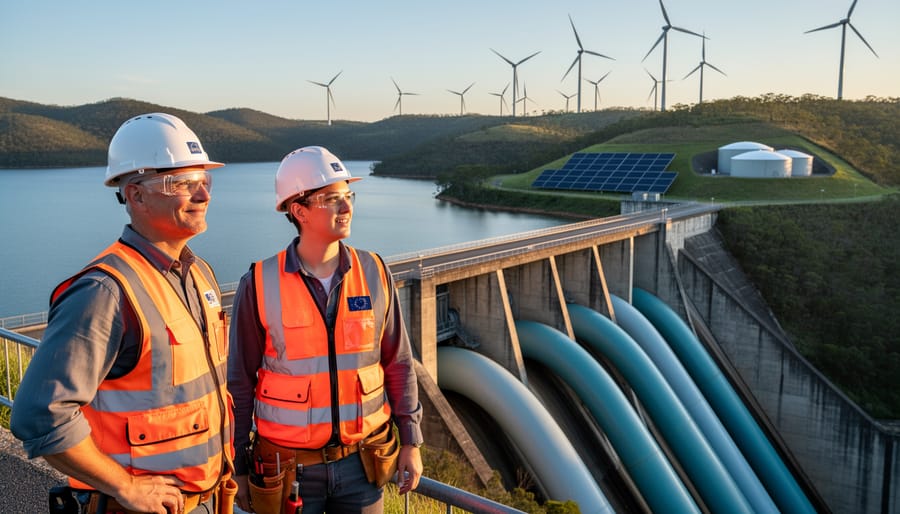
Australia’s renewable energy future depends on workers who can navigate multiple clean energy sectors with confidence and expertise. As hydropower installations modernize to meet sustainability standards, they’re increasingly seeking professionals who understand complementary renewable technologies—creating unprecedented opportunities for skilled workers to transition between bioenergy, solar, wind, and hydropower projects.
Consider the Snowy Hydro expansion, where engineers trained in biomass systems have successfully applied their understanding of energy storage and grid stability to pumped hydro operations. This cross-pollination of skills isn’t accidental; it reflects a fundamental shift in how Australia’s energy sector values adaptable, multi-skilled professionals who grasp the interconnected nature of renewable systems.
Hydropower sustainability extends beyond environmental impact assessments and fish passage designs. It encompasses workforce resilience, regional economic development, and the practical challenge of maintaining aging infrastructure while integrating new technologies. Modern hydropower facilities increasingly operate as part of hybrid renewable systems, where operators need familiarity with variable energy sources and smart grid management—skills directly transferable from bioenergy operations.
The pathway forward is clear: professionals who invest in understanding multiple renewable technologies position themselves at the forefront of Australia’s energy transition. Whether you’re a tradesperson, engineer, or project manager, recognizing how hydropower sustainability connects with broader renewable workforce development opens doors to meaningful career progression while contributing to genuinely sustainable energy solutions that benefit communities across the country.
The Unexpected Connection Between Hydropower and Bioenergy Careers
Why Renewable Energy Skills Are Interchangeable
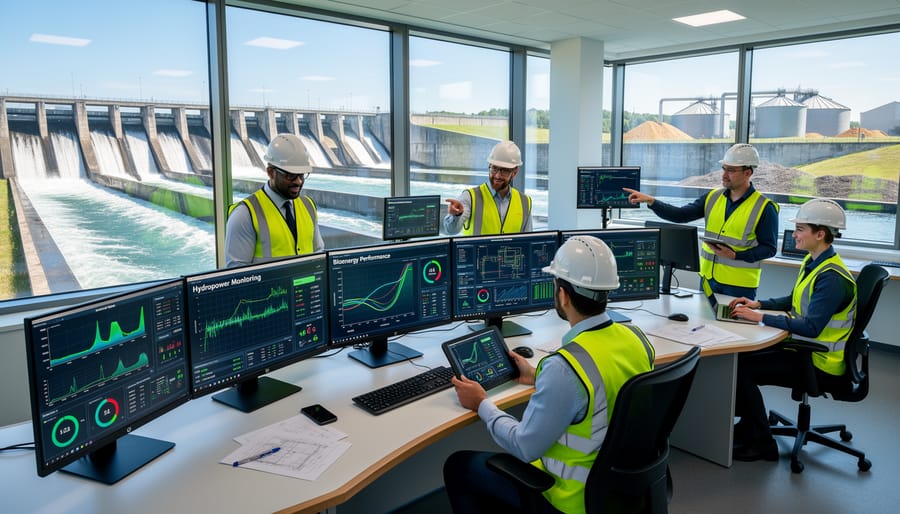
The renewable energy sector thrives on a foundation of shared expertise, and professionals transitioning between hydropower and bioenergy quickly discover their skills are remarkably transferable. Both industries rely on sophisticated monitoring systems that track performance metrics, environmental impacts, and operational efficiency in real-time. A hydropower technician familiar with remote sensing technology and data analysis can seamlessly apply these capabilities to biomass facility management, where similar systems monitor feedstock quality and emissions control.
Environmental management practices form another critical bridge between these sectors. Professionals trained in conducting environmental impact assessments for hydropower projects possess precisely the analytical framework needed for bioenergy sustainability evaluations. They understand how to measure ecosystem impacts, manage water resources responsibly, and implement biodiversity protection measures—skills equally vital whether you’re overseeing a dam operation or a biomass conversion facility.
Take the example of Sarah Chen, who transitioned from managing compliance systems at a Queensland hydropower station to leading environmental protocols at a sugarcane bagasse plant. Her experience with regulatory frameworks and stakeholder engagement proved invaluable, demonstrating how bioenergy workforce training builds upon existing renewable energy knowledge.
Project management capabilities, safety protocols, and maintenance scheduling are additional competencies that translate beautifully across both sectors. The technical rigor required for maintaining turbine operations parallels the precision needed in biomass processing systems, making career mobility between hydropower and bioenergy not just possible, but genuinely practical for Australia’s growing renewable workforce.
Australia’s Renewable Energy Landscape Demands Cross-Training
Australia’s vast and varied landscape presents a unique opportunity for renewable energy innovation. From Tasmania’s hydropower stations nestled in alpine valleys to Queensland’s sugarcane regions producing biomass, our nation’s geographical diversity means energy solutions vary dramatically from one region to the next. This reality makes workforce mobility programs essential for building a resilient renewable sector.
Take the Murray-Darling Basin, where irrigation infrastructure supports both hydroelectric generation and agricultural bioenergy production. Workers here benefit from understanding how water management impacts multiple renewable streams. Similarly, in northern NSW, forestry operations near hydropower facilities create natural synergies between timber residue processing for bioenergy and water-based power generation.
The Snowy Mountains region showcases this beautifully, where Snowy Hydro’s operations coexist with local biomass facilities processing organic waste from nearby communities. Technicians who comprehend both systems can troubleshoot more effectively and identify efficiency improvements that single-discipline workers might miss.
Cross-trained professionals become invaluable problem-solvers, capable of adapting to seasonal variations in different renewable sources. When drought reduces hydropower capacity, these workers seamlessly transition to supporting bioenergy operations, ensuring Australia’s clean energy supply remains steady regardless of environmental fluctuations.
What Makes Hydropower Truly Sustainable in Workforce Programs
Environmental Balance: Lessons From Modern Hydropower
Modern hydropower projects across Australia are showing us how to generate clean energy while genuinely caring for the environment. Take the Snowy Hydro expansion, for instance, where engineers worked alongside environmental scientists to protect native fish populations through specially designed fish passages and carefully timed water releases. These projects prove that renewable energy doesn’t have to come at nature’s expense.
The secret lies in adaptive management approaches. Contemporary hydropower operators monitor river health in real-time, adjusting water flows to support aquatic ecosystems during critical breeding seasons. They’ve also created buffer zones that protect riparian vegetation, which filters runoff and provides habitat for local wildlife. This forward-thinking approach has become a blueprint for other renewable sectors.
Bioenergy operations are learning from these hydropower lessons, implementing similar environmental safeguards. Australian bioenergy facilities now conduct comprehensive biodiversity assessments before construction, ensuring native species habitats remain intact. They’re establishing wildlife corridors, managing water resources responsibly, and engaging with local communities throughout the process.
What makes this environmental balance achievable is the workforce bringing these principles to life. Professionals trained in hydropower’s environmental protocols are transitioning into bioenergy roles, carrying valuable knowledge about ecosystem monitoring, compliance frameworks, and community consultation. This cross-pollination of expertise strengthens both industries, creating a renewable energy sector that’s as sustainable in practice as it is in principle. The result is energy generation that works with nature, not against it.
Social Sustainability and Community Engagement
Hydropower projects have long recognised that sustainable energy isn’t just about environmental outcomes—it’s fundamentally about people. The community consultation frameworks developed by Australia’s hydropower sector have become a gold standard, particularly in working respectfully with Indigenous communities whose connection to waterways spans thousands of generations. These proven engagement models are now shaping how bioenergy projects approach workforce development and community involvement.
At the heart of this approach is genuine partnership. Hydropower operators like Snowy Hydro have demonstrated that early, ongoing consultation with Traditional Owners and local communities creates better outcomes for everyone. These lessons are flowing directly into bioenergy workforce training programs, where Indigenous knowledge about land management and sustainable forestry practices is valued alongside technical skills. The result? Training programs that respect cultural heritage while building career pathways in renewable energy.
Tasmania’s Hydro Tasmania has pioneered apprenticeship models that prioritise local employment, creating opportunities in regional communities that might otherwise face limited job prospects. Bioenergy operators are adopting similar frameworks, establishing training centres in agricultural regions where biomass feedstock is produced. This approach keeps skilled workers in their communities rather than forcing them to relocate to cities.
The success of renewable energy partnerships demonstrates that when communities are engaged as genuine stakeholders, projects thrive. Workers transition between sectors, bringing valuable expertise while staying connected to their roots—proving that social sustainability and technical excellence go hand-in-hand in Australia’s renewable energy future.
Real Stories: Workers Who Made the Leap
From Tasmania’s Hydro Schemes to Queensland’s Bioenergy Plants
Sarah Mitchell’s journey from the cool valleys of Tasmania to Queensland’s sunny cane fields exemplifies the natural synergy between hydropower and bioenergy sectors. After spending eight years as a systems operator at Hydro Tasmania, monitoring water flows and optimising turbine performance, Sarah faced a crossroads when her family decided to relocate north for warmer weather.
Rather than leaving the renewable energy sector entirely, Sarah discovered the National Renewable Energy Mobility Program—a Commonwealth-supported initiative designed to help skilled workers transition between different clean energy industries. The program recognised that her expertise in managing complex systems, understanding energy grids, and maintaining sustainable operations transferred seamlessly to bioenergy.
“I was surprised to learn how similar the skill sets are,” Sarah explains. “Whether you’re managing water through turbines or biomass through a processing plant, you’re ultimately optimising resource flow to generate reliable, clean electricity.”
Through the mobility program, Sarah completed a targeted six-week transition course covering bioenergy fundamentals, sugarcane residue processing, and Queensland’s specific regulatory environment. The program also provided relocation support and guaranteed job placement assistance with partner companies.
Today, Sarah works as a senior plant operator at a cutting-edge bioenergy facility in Mackay, where agricultural waste transforms into electricity for thousands of homes. Her hydropower background proved invaluable—particularly her experience with seasonal resource management and grid stability.
“The best part? I’m still contributing to Australia’s renewable energy future,” she says. “Just with different feedstock and better weather year-round.”
Building Regional Energy Resilience Through Skilled Workers
In rural Tasmania’s Central Highlands, a groundbreaking workforce mobility program is proving that small communities can maintain sophisticated renewable energy infrastructure without needing to recruit separate teams for each facility. The initiative brings together workers skilled in both hydropower maintenance and bioenergy operations, creating a flexible workforce that serves multiple renewable installations across the region.
Take the story of Marcus Chen, a technician who splits his time between the historic Waddamana Power Station museum site and a nearby wood-waste bioenergy plant. “I never imagined I’d be working with century-old hydro turbines one week and modern biomass gasification systems the next,” Marcus explains. “But the skills overlap more than you’d think—it’s all about energy conversion, managing thermal systems, and preventative maintenance.”
This cross-training approach emerged from practical necessity. Regional communities couldn’t justify full-time specialists for each renewable facility, yet both hydropower and bioenergy installations required consistent, skilled attention. The solution? Develop multi-skilled workers who could move between sites as needed, ensuring every facility receives expert care while providing workers with diverse, engaging careers.
The program has delivered remarkable outcomes. Maintenance costs have dropped by nearly thirty percent while equipment reliability has improved. Workers report higher job satisfaction thanks to varied responsibilities and reduced isolation—a significant benefit in remote areas where specialist roles can feel lonely.
Communities across regional Victoria and Queensland are now adopting similar models, recognising that workforce mobility isn’t just economically sensible—it’s essential for building resilient renewable energy networks that can sustain both technology and the people who operate them.
The Practical Benefits for Industry and Workers
Career Advancement and Earning Potential
Cross-training in both hydropower and bioenergy sectors opens remarkable doors for Australian workers, with industry data showing tangible benefits. Professionals who develop skills across multiple renewable energy platforms typically command salaries 15-25% higher than single-sector specialists, according to recent Australian renewable energy workforce surveys.
Take James Robertson from Tasmania, who transitioned from hydropower operations at the Gordon Dam to cross-sector project management. After completing bioenergy training modules, his salary increased by $18,000 annually, and he now oversees integrated renewable projects across the state. His story isn’t unique—dozens of workers are discovering similar opportunities.
The renewable energy sector in Australia faces a critical skills shortage, with over 40,000 new positions projected by 2030. Workers with hydropower experience possess transferable skills in turbine maintenance, control systems, and environmental compliance that translate beautifully to bioenergy operations. This versatility makes them highly sought-after.
Regional opportunities are particularly strong. Rural communities transitioning to bioenergy production actively recruit hydropower technicians who understand large-scale energy systems. In Queensland’s Darling Downs, companies offer relocation packages and skill development programs specifically targeting cross-trained professionals.
The message is clear: investing in cross-sector knowledge doesn’t just future-proof your career—it accelerates advancement and unlocks premium compensation in Australia’s booming renewable landscape.
Energy Security Through Workforce Flexibility
Cross-training workers across multiple renewable energy sectors creates a robust safety net for Australia’s clean energy transition. When hydropower technicians gain skills in bioenergy systems, or solar specialists understand pumped hydro operations, the entire energy grid becomes more resilient and adaptable to changing conditions.
This workforce flexibility proves particularly valuable during seasonal variations in energy production. During extended dry periods when hydropower output decreases, workers can seamlessly shift to bioenergy facilities, maintaining employment stability while keeping renewable energy flowing. Similarly, when hydropower installations require maintenance shutdowns, skilled workers can support other renewable sectors without disrupting their careers.
The approach also accelerates project delivery across the renewable landscape. Energy companies can deploy versatile teams wherever demand peaks, whether that’s commissioning a new bioenergy plant in regional Queensland or upgrading hydropower infrastructure in Tasmania. This mobility reduces project delays and optimises workforce utilisation.
For Australia’s growing renewable energy sector, multi-skilled workers represent a strategic advantage. They bring fresh perspectives from different technologies, fostering innovation and knowledge sharing between sectors. This cross-pollination of ideas strengthens problem-solving capabilities and drives continuous improvement across all renewable technologies, ultimately accelerating our journey toward a sustainable energy future.
Getting Involved: Pathways Into Sustainable Energy Mobility Programs
Breaking into sustainable energy mobility programs is more accessible than many Australians realise, with numerous pathways available for both individuals and organisations ready to make the transition.
For individuals seeking entry into hydropower and renewable energy careers, registered training organisations across Australia offer Certificate III and IV qualifications in Renewable Energy, providing foundational knowledge in both hydropower operations and complementary sectors like bioenergy. TAFE institutions in Queensland, New South Wales, and Tasmania have developed specialized courses that combine theoretical understanding with hands-on experience at working hydropower facilities. Many programs include cross-training opportunities, allowing participants to gain exposure to multiple renewable technologies simultaneously.
The Australian Renewable Energy Agency regularly publishes opportunities through their online portal, connecting job seekers with industry employers actively recruiting for sustainable energy projects. These listings often highlight positions that benefit from cross-sector experience, particularly those linking hydropower with emerging bioenergy innovation programs.
Organizations looking to participate can engage through industry partnerships with Hydro Tasmania’s training division or the Clean Energy Council’s workforce development initiatives. These bodies facilitate corporate training programs, enabling companies to upskill existing staff rather than recruiting externally. Many mining companies transitioning toward renewable operations have successfully utilized these pathways to retrain their workforce.
Entry requirements typically include basic technical aptitude, though specific prerequisites vary by program. Most introductory courses welcome candidates without prior renewable energy experience, making career transitions achievable for people from diverse backgrounds including construction, electrical trades, and resource industries.
Apprenticeship and traineeship opportunities remain available through government-supported schemes, with some positions offering paid training while working alongside experienced professionals. Regional areas near existing hydropower infrastructure, particularly in Tasmania and the Snowy Mountains region, present the strongest immediate opportunities.
The key is taking that first step—whether enrolling in a short course, attending industry information sessions, or simply reaching out to program coordinators who genuinely want to see Australia’s renewable workforce grow.
The future of cross-sector renewable energy careers in Australia has never looked brighter. As we’ve explored throughout this discussion, the bridges between hydropower sustainability and bioenergy are creating unprecedented opportunities for skilled professionals ready to make a meaningful difference. The success stories we’ve shared—from technicians transitioning between sectors to entire communities benefiting from integrated renewable projects—demonstrate that these pathways are not distant possibilities but immediate realities.
Right now, organisations across Australia are actively seeking individuals with transferable skills who understand the interconnected nature of our renewable energy transition. Whether you’re an engineer looking to broaden your expertise, a recent graduate exploring career options, or a business leader considering workforce development strategies, the doors are wide open.
The time to act is today. Explore training programs, reach out to industry networks, and investigate how your existing skills align with these growing sectors. For organisations, investing in cross-sector workforce mobility isn’t just good for business—it’s essential for Australia’s sustainable energy future. Every professional who embraces these opportunities contributes to building a cleaner, more resilient energy system that benefits all Australians. Your journey toward a rewarding career in renewable energy starts with that first step forward.