
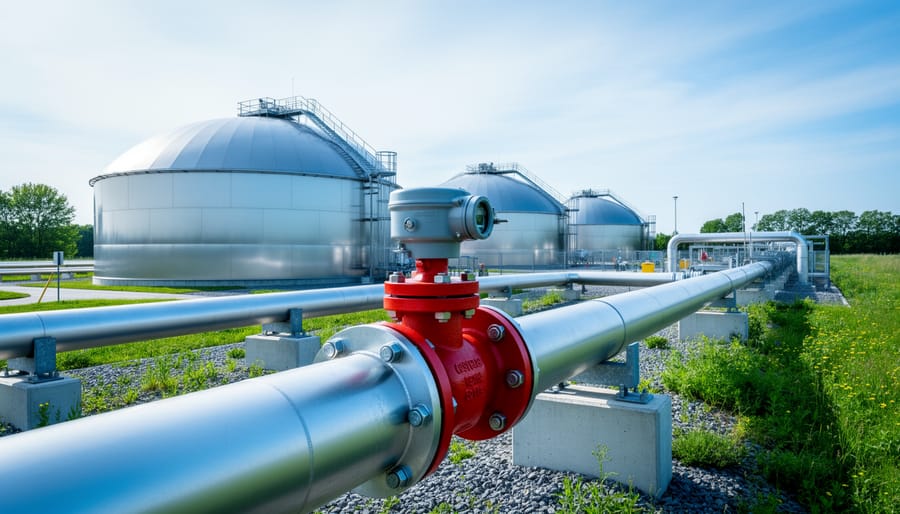
Imagine buying a bottle of organic honey, only to discover it’s actually just regular sugar syrup with a fancy label. Frustrating, right? The same risk exists in Australia’s growing renewable gas market, where businesses and households want genuine green energy, not just greenwashing promises. This is precisely why Guarantees of Origin have become the renewable gas sector’s authenticity stamp, providing transparent proof that the biomethane flowing through your pipes actually comes from farm waste, food scraps, or organic materials rather than fossil fuels.
A Guarantee of Origin certificate functions like a birth certificate for renewable gas, tracking its journey from production facility to end user. When a biogas plant in regional Victoria converts dairy farm waste into grid-quality biomethane, each megawatt-hour produced receives a unique GO certificate. This digital credential travels with the gas molecules through the national network, creating an unbreakable chain of custody that prevents double-counting and ensures buyers receive exactly what they paid for.
For Australia’s renewable energy transition, these certificates solve a fundamental problem: how do you prove renewable gas credentials when all gas molecules look identical once they enter shared pipelines? The answer lies in robust certification systems that separate the physical product from its environmental attributes, allowing organizations to make credible carbon reduction claims while supporting genuine biogas producers. Understanding GO certificates empowers conscious consumers and businesses to drive real environmental impact, transforming Australia’s gas network from fossil-dependent to renewably powered, one verified certificate at a time.
What Exactly Is a Guarantee of Origin?
The Simple Mechanics Behind the Certificate
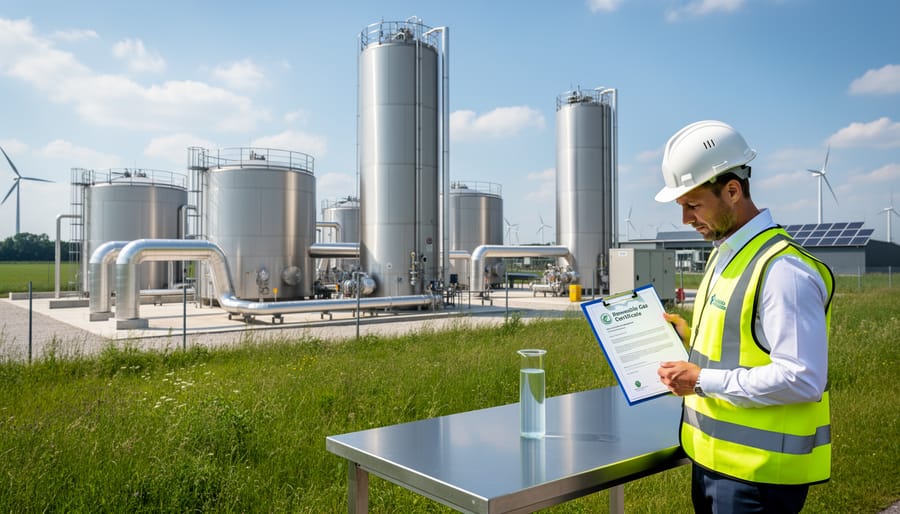
Think of a Guarantee of Origin certificate as a digital birth certificate for renewable energy. Just as your birth certificate proves where and when you were born, a GO certificate tracks renewable gas from the moment it’s produced right through to when it’s used. It’s essentially a sophisticated tracking system that prevents the same renewable energy from being counted twice.
Here’s how it works in practice: When an Australian biogas projects produces renewable gas, each unit gets a unique certificate attached to it. This certificate contains crucial information like where the gas was made, what organic materials were used, and when production occurred.
Imagine a dairy farm in regional Victoria converting cow manure into renewable gas. As that gas enters the grid, it receives its GO certificate. When a business in Melbourne wants to purchase renewable gas, they’re actually buying both the gas and its certificate. Once used, the certificate is retired, ensuring no one else can claim that same renewable energy.
The beauty of this system lies in its transparency. Independent registries maintain these certificates, creating an auditable trail that builds trust throughout the supply chain. For Australian producers, this means their environmental efforts are properly recognized and valued. For consumers, it provides genuine confidence that their renewable gas purchase is making a real difference to reducing emissions, not just greenwashing.
Why Renewable Gas Needs Its Own Tracking System
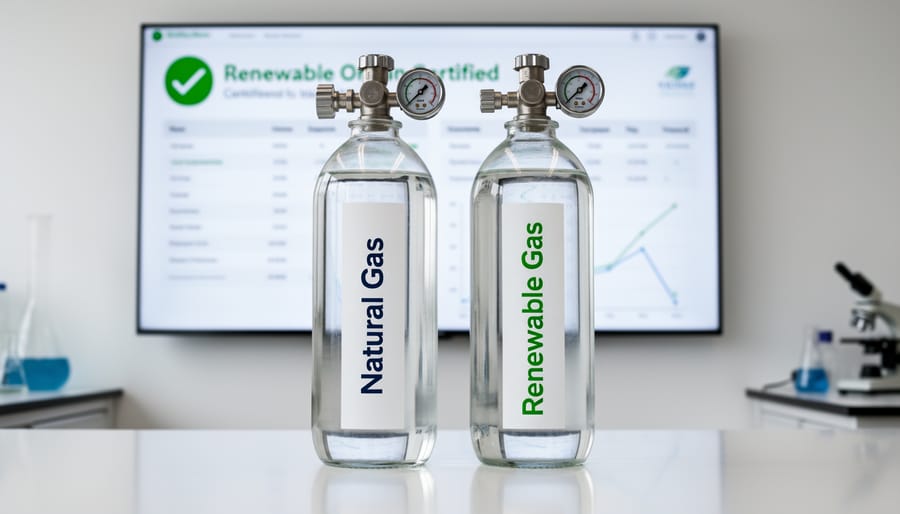
Here’s the challenge: when renewable gas flows into existing natural gas pipelines, it becomes completely invisible. Unlike solar panels or wind turbines where you can see exactly where clean energy comes from, biomethane from food waste or hydrogen from renewable sources mixes seamlessly with conventional gas. There’s simply no way to physically track which molecules end up in your hot water system or business premises.
This is where Guarantee of Origin certificates step in as a clever accounting solution. Think of it like a digital twin that travels alongside the physical gas. When a Queensland farm injects biomethane from cattle manure into the grid, a GO certificate is created representing that exact amount of renewable energy. When your organization purchases that certificate, you’re claiming the environmental benefits of that specific renewable gas production, even though the actual molecules might be hundreds of kilometers away.
This differs significantly from renewable electricity certificates because gas networks face unique complications. Gas can be stored for extended periods, transported across state borders, and used for heating, manufacturing, or transport. The tracking system needs to prevent double-counting while accommodating these complex journeys through infrastructure originally built for fossil fuels.
Australian success stories already demonstrate this working brilliantly. Sydney’s wastewater treatment plants generate biomethane that’s certified through GO systems, allowing businesses across the city to genuinely claim renewable gas use. It’s transforming an invisible challenge into transparent, verified climate action that organizations can confidently report to stakeholders and customers.
Australia’s Renewable Gas Certification Landscape Today
Who’s Already Making It Work
Across Australia, forward-thinking operations are already demonstrating how guarantee of origin certificates can transform renewable gas from a local initiative into a nationally recognised clean energy asset.
Take the Sydney Water wastewater treatment facilities, for instance. They’ve been capturing methane from sewage treatment since 2009, and now they’re exploring certification pathways to verify their biomethane production. This isn’t just about ticking boxes – it’s about proving to corporate partners and government bodies that their renewable gas genuinely displaces fossil fuels. The certification process has helped them identify opportunities to increase production efficiency and strengthen their sustainability credentials.
In Victoria, dairy farmers are leading the charge with on-farm biogas systems that convert cow manure into renewable energy. Several operations have begun working with certification bodies to document their methane capture and conversion processes. For these farmers, the certificates open doors to premium green gas markets and corporate partnerships they couldn’t access before. One dairy producer near Warrnambool reported that certification helped them secure a long-term contract with a major food manufacturer committed to carbon neutrality.
The Urban Utilities facility in Queensland has also embraced verification systems for their biomethane production from wastewater treatment. They’ve found that the certification process, while requiring upfront investment in monitoring and documentation, has paid dividends through increased market confidence and better pricing for their renewable gas output.
These early adopters share a common experience: certification initially seems daunting, but the transparency it brings creates unexpected opportunities. They’ve discovered that buyers increasingly demand proof, not just promises, and guarantee of origin certificates provide exactly that verification. Their success is paving the way for smaller producers to follow, demonstrating that certified renewable gas isn’t just feasible in Australia – it’s commercially viable.
How Guarantee of Origin Opens Doors for Renewable Gas

Premium Pricing and Market Access
Guarantee of Origin certificates transform renewable gas from a promising alternative into a premium product that commands significant market advantages. Certified renewable gas typically attracts price premiums of 10-30% compared to conventional natural gas, reflecting growing corporate demand for verified sustainable energy sources.
Australian businesses are increasingly seeking GO-certified renewable gas to meet sustainability commitments and satisfy stakeholder expectations. Major retailers, food manufacturers, and transport companies are particularly keen to demonstrate genuine environmental credentials. For example, several Victorian food processors have locked in long-term contracts for certified biogas at premium rates, viewing it as essential for their carbon neutrality pledges rather than simply an operational expense.
The certification opens doors to export markets too. European buyers, operating under strict renewable energy directives, require GO certificates as proof of legitimacy. Queensland biogas producers have successfully exported certified renewable natural gas attributes to Europe, tapping into markets where premium pricing reflects sophisticated carbon accounting systems.
Corporate procurement teams now specifically request GO certification in tender documents. Without these certificates, renewable gas producers struggle to access corporate customers willing to pay premium prices for documented environmental benefits. The certification essentially creates a two-tier market where verified renewable gas attracts committed buyers while uncertified alternatives compete primarily on price with fossil fuels.
This premium pricing model helps Australian renewable gas projects achieve faster payback periods and attract investment, creating a virtuous cycle that accelerates industry growth while maintaining environmental integrity.
Meeting Corporate Climate Targets
Australian businesses are discovering that Guarantee of Origin certificates offer a powerful tool for meeting ambitious carbon reduction goals while demonstrating genuine environmental commitment to stakeholders. These certificates provide verifiable proof that purchased renewable gas genuinely displaces fossil fuels, creating a clear audit trail for sustainability reporting.
Take Barossa Valley winery McGuigan Wines, which uses GO-certified biomethane from local agricultural waste to power their production facilities. By switching to certified renewable gas, they’ve slashed their Scope 1 emissions by 60 percent and can confidently report these reductions in their annual sustainability statements. The certificates provide the transparency investors and customers increasingly demand.
Similarly, Sydney-based packaging manufacturer Visy Industries has incorporated GO-certified renewable gas into their manufacturing processes. This strategic move helps them meet contractual obligations with major retail partners who’ve set strict supplier emission standards. The certificates essentially serve as renewable gas receipts, proving every megawatt-hour of energy claimed actually came from genuine renewable sources.
What makes GO certificates particularly valuable is their ability to prevent double-counting. When a business purchases certified renewable gas, that specific environmental benefit cannot be claimed by anyone else. This integrity makes the certificates credible for carbon accounting frameworks like the Climate Active certification program.
For Australian companies facing pressure to decarbonise operations, GO certificates transform renewable gas purchases from vague environmental claims into measurable, verifiable climate action that stakeholders can trust.
Getting Your Renewable Gas Certified: The Practical Steps
What You’ll Need to Prove
Getting your renewable gas certified with a Guarantee of Origin might sound complex, but it’s quite straightforward when you know what’s required. Think of it as gathering evidence to tell your gas’s clean energy story.
First up, you’ll need solid documentation about your production facility. This includes details about your bioenergy plant, the technology you’re using, and your production capacity. Whether you’re running a farm-based anaerobic digester in regional Victoria or a waste-to-energy facility in South Australia, you’ll need to prove where your renewable gas comes from.
Next comes the measurement bit. You’ll require accurate metering systems that track exactly how much renewable gas you’re producing. These measurements must be verified by accredited bodies, similar to how a tradesperson needs proper certification. The data needs to be reliable and auditable, showing monthly or even daily production figures.
Your feedstock matters too. You’ll need to document what you’re putting into your system, whether that’s agricultural waste, food scraps, or sewage. This proves your gas is genuinely renewable and helps calculate its carbon intensity.
The verification process involves an independent auditor reviewing your documentation and visiting your site. They’ll check that your measurements are accurate, your processes are sound, and everything matches up. Once approved, you’ll receive certificates representing the environmental attributes of your renewable gas.
Many Australian renewable gas producers find the process becomes routine after the first certification cycle. It’s about building good record-keeping habits and maintaining transparency throughout your operations.

Navigating the Certification Bodies
In Australia, renewable gas certification primarily flows through GreenPower and similar accreditation schemes, though the landscape is evolving as the industry matures. The Clean Energy Regulator oversees much of the framework, ensuring renewable gas projects meet strict environmental standards before certificates are issued.
Certifying bodies examine several key factors: your production process, feedstock sources, methane capture efficiency, and environmental impact. They’re particularly interested in your carbon accounting methodology and whether your gas genuinely displaces fossil fuels. Think of it as proving your green credentials beyond doubt.
Real-world experiences from Australian producers suggest the certification journey typically takes three to six months from initial application to approval. A biogas producer in regional Victoria shared that thorough documentation upfront significantly streamlined their process. Costs vary depending on project scale, but expect initial certification fees ranging from several thousand dollars for smaller operations to substantially more for large commercial facilities. Annual audits and ongoing compliance add recurring expenses, though many producers find these worthwhile investments.
The good news? Certification bodies are increasingly supportive of innovative approaches, recognising that renewable gas plays a vital role in Australia’s clean energy transition. They’re partners in your success story, not obstacles. Starting early conversations and maintaining transparent documentation makes the process considerably smoother.
Obstacles Still in the Way (And How They’re Being Tackled)
What Needs to Happen Next
Australia’s renewable gas sector stands at a pivotal moment, and strengthening our Guarantee of Origin framework requires coordinated action across multiple fronts. Several policy improvements being advocated include establishing a national registry system that tracks renewable gas certificates from production through to consumption, harmonising state-based schemes to reduce administrative burden, and ensuring robust verification processes that prevent greenwashing.
Industry professionals can actively contribute by participating in consultation processes when regulatory frameworks are being developed. Sharing practical insights from on-the-ground experiences helps policymakers understand what works and what doesn’t. Joining industry associations focused on bioenergy creates collective advocacy power that individual voices can’t achieve alone.
For producers currently generating renewable gas, early adoption of tracking and certification practices demonstrates market leadership and builds credibility. Even before mandatory frameworks arrive, voluntary participation in emerging certificate schemes shows commitment to transparency and helps refine the systems we’ll all eventually use.
Advocates and environmentally conscious organisations can support this transition by championing procurement policies that prioritise certified renewable gas. When businesses, councils, and institutions demand verification, they create market incentives that accelerate framework development. Education also matters – sharing knowledge about Guarantee of Origin certificates within your networks builds awareness and normalises expectations for proof of renewable credentials. Together, these actions create the momentum needed to establish robust, trustworthy systems that give Australian renewable gas the recognition it deserves.
Guarantee of Origin certification stands as the cornerstone for building trust and transparency in Australia’s renewable gas sector. As we’ve explored throughout this article, GO certificates provide the verifiable proof that transforms ambitious renewable energy claims into credible, trackable commitments. For Australia to truly scale its renewable gas industry and meet our climate targets, this certification framework isn’t just helpful—it’s essential.
The good news is that Australia is perfectly positioned to embrace this opportunity. With abundant organic waste streams, innovative agricultural practices, and growing demand from environmentally conscious businesses, the pieces are falling into place. Projects like Urban Utilities in Queensland and renewable hydrogen initiatives across regional Australia demonstrate that we’re not just talking about possibilities—we’re already turning them into reality.
For businesses looking to reduce their carbon footprint, GO certificates offer a straightforward pathway to demonstrate genuine environmental leadership. Rather than simply purchasing offsets, companies can now prove they’re using renewable gas with the same confidence they show when switching to renewable electricity.
The time to engage is now. Whether you’re a farmer with waste streams, a business seeking sustainable energy solutions, or a policymaker shaping our energy future, renewable gas with proper GO certification offers tangible benefits today while building tomorrow’s clean energy infrastructure. Australia has always been a nation of innovators and early adopters. Let’s bring that same spirit to renewable gas and create a cleaner, more sustainable energy system that future generations will thank us for building.