
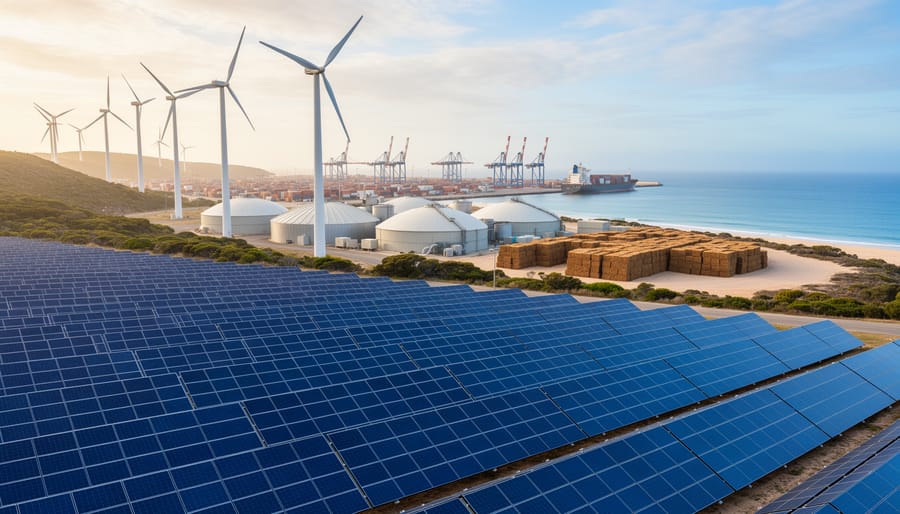
The global shift toward clean energy has transformed how nations develop, trade, and implement renewable technologies, creating unprecedented opportunities for countries like Australia to lead in sustainable innovation. As the world races to meet climate targets, three renewable energy resources stand at the forefront of this transformation: solar power, wind energy, and bioenergy. Each offers unique advantages in the context of international trade and policy frameworks that determine their success.
Understanding how these technologies intersect with trade dynamics is essential for policymakers crafting effective legislation, industry professionals navigating market opportunities, and environmentally conscious citizens advocating for change. Australia’s renewable energy revolution demonstrates how strategic policy decisions can accelerate adoption while creating economic value through exports and technology transfer.
Solar installations across Queensland and New South Wales showcase how supportive policies drive deployment. Wind farms dotting Tasmania’s highlands prove that geographical advantages combined with smart regulations deliver results. Meanwhile, bioenergy projects converting agricultural waste into power throughout regional Australia highlight the potential for locally-sourced renewable solutions that strengthen energy security while supporting farming communities.
Trade policies determine whether renewable technologies flow freely across borders or face barriers that slow progress. Tariffs, subsidies, and international agreements shape which countries become manufacturing hubs and which become technology importers. For Australia, navigating these dynamics means leveraging our natural advantages while building domestic capacity in key renewable sectors that promise both environmental benefits and economic prosperity for generations ahead.
Solar Energy: From Desert Sun to Global Markets
Australia’s Solar Advantage in the Global Arena
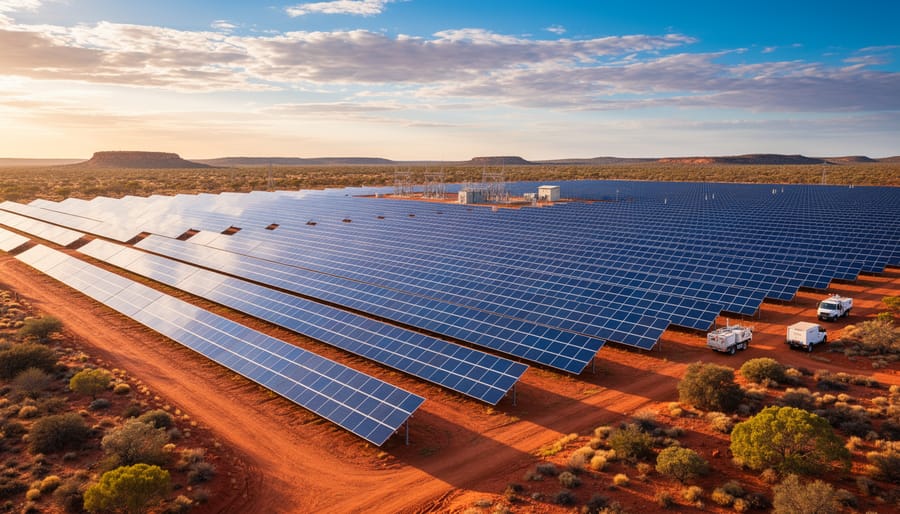
Australia’s solar resources are nothing short of extraordinary. With some of the highest solar radiation levels on the planet, the nation receives more than twice the solar energy per square metre compared to most European countries. This natural advantage isn’t just about powering homes and businesses domestically—it’s opening remarkable doors in the international arena.
The numbers tell an impressive story. Australia’s solar resource potential could theoretically meet global energy demand many times over, positioning the country as a future renewable energy superpower. This reality hasn’t gone unnoticed by international partners. Countries across Asia, particularly Japan, South Korea, and Singapore, are keenly interested in importing Australian solar-generated energy through innovative projects like the Australia-Asia PowerLink, which aims to supply Singapore with electricity via undersea cables.
Beyond raw energy exports, Australia’s solar advantage is sparking growth in technology manufacturing and innovation partnerships. Local companies are developing world-leading solar panel efficiency improvements and energy storage solutions, attracting substantial foreign investment. The research collaboration between Australian universities and international partners is producing breakthrough technologies that are being commercialised globally.
Regional communities are experiencing transformation too. Towns like Broken Hill and Port Augusta, once reliant on traditional industries, are reinventing themselves as renewable energy hubs. These success stories demonstrate how solar resources create tangible economic opportunities—from construction jobs to ongoing maintenance roles and research positions.
The export opportunities extend to knowledge sharing as well. Australian engineers and project managers are increasingly sought after worldwide for their expertise in managing large-scale solar installations in harsh conditions. This brain gain strengthens Australia’s position as not just an energy exporter, but as a leader in renewable technology innovation, proving that natural advantages combined with smart policy and investment create powerful international opportunities.
Policy Frameworks Enabling Solar Trade
Australia’s solar revolution hasn’t happened by accident. Strategic policy frameworks have created the foundation for remarkable growth, transforming the nation into a global solar powerhouse while opening doors for international collaboration and investment.
The Australian Renewable Energy Target (RET) has been instrumental in driving solar adoption, requiring 33,000 gigawatt-hours of renewable electricity generation by 2020. This ambitious target sparked unprecedented investment in solar infrastructure, with solar policy changes creating cascading benefits across the sector. The Small-scale Renewable Energy Scheme continues supporting households and businesses through certificate trading, making solar panels financially accessible to everyday Australians.
International trade agreements have supercharged this domestic momentum. The Regional Comprehensive Economic Partnership (RCEP) has slashed tariffs on solar equipment, reducing costs by up to 15 percent for Australian importers. This means better prices for consumers and faster deployment of cutting-edge technology from manufacturing hubs across Asia.
The Australian-Singapore Green Economy Agreement stands out as a shining example of how trade policy can accelerate renewable transitions. This groundbreaking partnership facilitates technology sharing, joint research projects, and investment flows between nations committed to clean energy. Singapore’s expertise in energy storage systems complements Australia’s solar generation capacity, creating win-win outcomes.
Success stories abound. The Sun Cable project, which aims to export solar-generated electricity to Singapore via subsea cable, demonstrates how policy frameworks enable visionary initiatives. Meanwhile, Queensland’s renewable energy zones have attracted billions in foreign investment, with international companies like Neoen establishing major solar farms that generate both clean energy and local employment.
These policy frameworks prove that smart regulation doesn’t stifle growth—it catalyses transformation. By creating stable investment conditions and facilitating international cooperation, Australia demonstrates how nations can harness policy and trade to build sustainable energy futures that benefit everyone.
Wind Power: Catching the Trade Winds of Change
Wind Energy’s Growing Economic Footprint
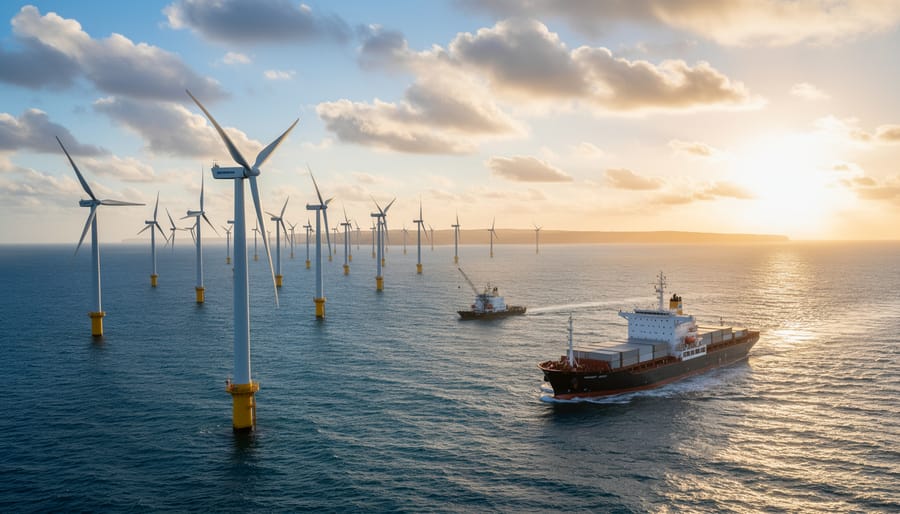
Australia’s wind energy sector is experiencing remarkable growth, transforming from a niche player into a powerhouse that’s reshaping regional economies and challenging traditional energy paradigms. With installed capacity surpassing 11,000 megawatts and continuing to climb, wind farms are now scattered across the country—from Tasmania’s rugged coastlines to South Australia’s breezy plains—generating clean electricity while breathing new life into rural communities.
The economic ripple effects extend far beyond the turbines themselves. Take the Cattle Hill Wind Farm in Tasmania, which created hundreds of construction jobs in a region that desperately needed economic diversification. Once operational, these facilities require ongoing maintenance, monitoring, and support services, providing steady employment opportunities that keep families in regional areas rather than forcing them toward capital cities. Across Australia, the wind sector now employs over 6,000 people directly, with thousands more in supporting industries like manufacturing, logistics, and engineering.
What makes wind energy particularly compelling is its practical versatility. Large-scale wind farms supply major industries and metropolitan grids, helping manufacturers reduce their carbon footprint while maintaining competitive operations. In South Australia, wind now regularly provides over 60 percent of the state’s electricity needs, demonstrating that renewable energy can reliably power modern economies. Mining operations in remote locations are increasingly turning to wind-diesel hybrid systems, cutting fuel costs and emissions simultaneously.
For policymakers navigating international trade agreements, Australia’s wind sector presents opportunities for technology exports and knowledge sharing with Asia-Pacific neighbours. The combination of proven reliability, cost competitiveness, and local manufacturing capacity positions Australian wind expertise as a valuable commodity in regional renewable energy markets, creating pathways for economic growth while advancing climate commitments.
International Partnerships Driving Wind Development
Australia’s wind sector has become a magnet for international collaboration, with global energy giants recognizing the country’s exceptional wind resources and stable regulatory environment. These cross-border partnerships are transforming the landscape of renewable energy development and accelerating the transition to clean power.
Major European and Asian investors have committed billions to Australian wind projects over recent years. Spanish renewable energy company Acciona has established a strong footprint across the country, while Danish wind turbine manufacturer Vestas has partnered with local developers to deliver cutting-edge technology tailored to Australian conditions. These collaborations bring not just capital, but valuable expertise from markets with decades of wind energy experience.
The success story of the Stockyard Hill Wind Farm in Victoria exemplifies this trend perfectly. This project attracted significant foreign investment and now generates enough clean electricity to power approximately 200,000 homes. The development created hundreds of jobs during construction and continues supporting regional communities through ongoing operations and maintenance.
Trade policies have played a crucial role in attracting these international players. Australia’s commitment to renewable energy targets, combined with streamlined approval processes in several states, has created an investment-friendly environment. Free trade agreements with key manufacturing nations have also reduced equipment costs, making projects more financially viable.
What makes these partnerships particularly effective is the knowledge exchange they facilitate. Australian engineers work alongside international specialists, learning best practices in turbine placement, grid integration, and community engagement. Meanwhile, global companies gain insights into operating in Australia’s unique climate conditions, from tropical cyclones in the north to the steady southern ocean winds.
This collaborative approach has positioned Australia as a serious contender in the global wind energy market, with several projects now serving as models for other nations pursuing similar renewable energy ambitions.
Bioenergy: Australia’s Homegrown Trade Opportunity
Turning Waste Into Wealth: Bioenergy’s Practical Applications
Across Australia, innovative farmers, manufacturers, and communities are discovering that yesterday’s waste is today’s energy goldmine. Bioenergy—power generated from organic materials—is transforming how we think about everything from agricultural byproducts to food waste, creating genuine circular economy opportunities while slashing carbon emissions.
Take the Goulburn Valley in Victoria, where dairy farmers have turned a waste headache into an energy asset. The Murray Dairy region now operates biogas facilities that convert manure and organic waste into electricity and vehicle fuel. These operations aren’t just reducing methane emissions that would otherwise escape into the atmosphere—they’re powering local communities and providing farmers with additional revenue streams. One facility alone prevents approximately 12,000 tonnes of carbon dioxide equivalent from entering the atmosphere annually.
In Queensland, sugar mills are leading the charge in industrial bioenergy adoption. Wilmar Sugar’s facilities now generate substantial electricity from bagasse, the fibrous residue left after crushing sugarcane. This process means mills achieve energy self-sufficiency during crushing season and export surplus renewable electricity to the grid, powering thousands of homes. The beauty of this system is its efficiency—waste that once required disposal now fuels operations and contributes clean energy to the broader community.
Urban bioenergy projects are equally impressive. Sydney’s Rosehill Recycling facility transforms commercial food waste into biomethane, which powers waste collection vehicles and feeds into gas networks. This closed-loop system demonstrates how cities can tackle waste management and energy needs simultaneously.
These success stories share common threads: practical thinking, existing infrastructure adaptation, and tangible environmental benefits. Australian bioenergy projects typically reduce greenhouse gas emissions by 60-90 percent compared to fossil fuel alternatives, while creating local jobs and strengthening regional economies. The message is clear—waste isn’t something to discard; it’s an untapped energy resource waiting to power Australia’s renewable future.
Bioenergy in the International Trade Ecosystem
Australia is quietly making waves in the global bioenergy trade, transforming agricultural waste and sustainable biomass into export opportunities that benefit both the economy and the environment. While solar panels and wind turbines often steal the spotlight, bioenergy technology and products are carving out a significant niche in international markets, positioning Australia as a genuine regional leader in this space.
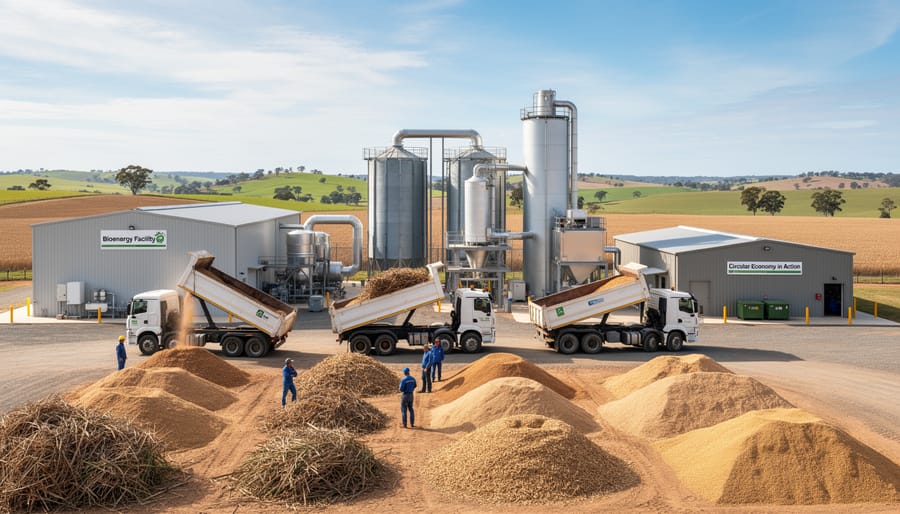
The biomass pellet trade exemplifies this success story beautifully. Australian producers are converting forestry residues, agricultural waste, and purpose-grown energy crops into high-quality wood pellets that meet strict international standards. These pellets are increasingly shipped to Japan, South Korea, and European markets seeking reliable, sustainable alternatives to coal. What makes this particularly exciting is that it creates value from materials that would otherwise go to waste, turning a disposal challenge into an economic opportunity.
Biogas innovations represent another frontier where Australian ingenuity is gaining international recognition. Local companies have developed advanced anaerobic digestion systems that convert organic waste from farms, food processing facilities, and urban areas into renewable natural gas and valuable fertilizer. Several of these systems have been exported throughout Southeast Asia, demonstrating their adaptability to diverse climates and waste streams. These technologies don’t just generate clean energy; they solve waste management problems while creating revenue streams for farmers and communities.
The Australian government has recognized this potential, implementing policy incentives that turbocharge bioenergy exports. The Export Market Development Grant scheme supports businesses entering new markets, while the Clean Energy Finance Corporation provides funding for innovative projects with export potential. State governments have also stepped up, with targeted support for bioenergy precincts and technology demonstration facilities that showcase Australian capabilities to international buyers.
Perhaps most encouraging is the ripple effect this creates. As Australian bioenergy technology gains traction overseas, it attracts investment, creates skilled jobs, and establishes our reputation as a hub for practical, proven renewable solutions. This isn’t just about selling products; it’s about sharing knowledge and building partnerships that accelerate the global transition to clean energy while strengthening our trading relationships across the Asia-Pacific region.
The Trade-Policy Connection: Making Renewables Work for Australia
Breaking Down Trade Barriers
Australia’s renewable energy sector is experiencing a genuine breakthrough as governments work to dismantle trade barriers that once hampered international collaboration. Recent policy reforms are creating a more welcoming environment for overseas investment, particularly in solar, wind, and bioenergy projects across the continent.
The Australian Government’s streamlined approval processes now make it considerably easier for international companies to partner with local renewable developers. This shift mirrors successful global subsidy frameworks that have accelerated clean energy transitions elsewhere. For instance, the removal of complicated tariff structures on renewable equipment imports has slashed project costs by up to 15 percent in some regions.
Take the success story of a Queensland bioenergy facility that recently secured Japanese investment after new bilateral agreements eliminated previous regulatory roadblocks. This partnership brought cutting-edge technology and expanded the plant’s capacity to convert agricultural waste into reliable power, creating 80 local jobs in the process.
Foreign direct investment in Australian renewables has jumped significantly, with international players recognizing our abundant natural resources and stable investment climate. Export opportunities for renewable energy technology and expertise are also flourishing, positioning Australia as both an importer and exporter in the global green economy.
These policy changes demonstrate that when governments remove unnecessary obstacles, renewable energy projects attract the capital and innovation needed to thrive. The result is a win-win situation where international expertise combines with Australian resources to deliver sustainable solutions that benefit communities, investors, and the environment alike.
Australia’s Competitive Edge in the Clean Energy Race
Australia stands at the threshold of an extraordinary opportunity in the global renewable energy transition, blessed with natural advantages that few nations can match. Our vast landmass receives some of the world’s most intense solar radiation, while our extensive coastlines catch powerful and consistent winds. These aren’t just abstract resources—they’re the building blocks of economic prosperity and Australia’s energy security for generations to come.
What truly sets Australia apart is the combination of abundant renewable resources with political stability and established trade relationships across the Asia-Pacific region. Countries like Japan, South Korea, and Singapore are actively seeking clean energy partners, and Australia’s reputation as a reliable supplier positions us perfectly to meet this demand. Our agricultural sector also generates substantial organic waste that can be converted into bioenergy, creating a circular economy that benefits regional communities.
The success of projects like South Australia’s renewable energy hub demonstrates what’s possible when vision meets opportunity. Communities across Queensland are already exporting renewable hydrogen, showing how quickly we can move from potential to practice. Our existing infrastructure for energy export, combined with growing international demand for clean energy, creates a pathway for Australian innovation to reach global markets.
This competitive edge isn’t just about geography—it’s about choice. By embracing our renewable advantages now, we’re positioning Australia as the clean energy powerhouse of the southern hemisphere.
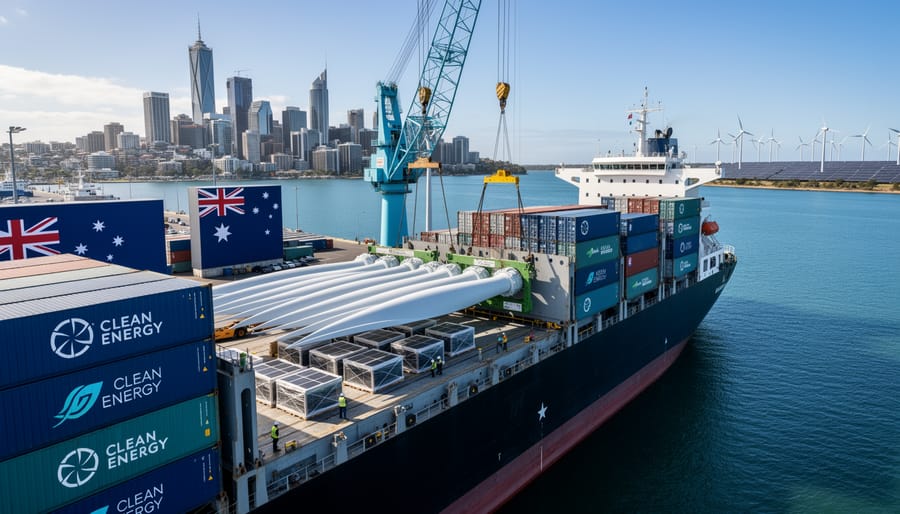
Australia stands at an exciting crossroads in its energy journey, where solar, wind, and bioenergy are no longer alternatives but essential pillars of our economic and environmental future. The renewable energy transition isn’t just about reducing emissions—it’s about creating jobs, strengthening regional communities, and positioning ourselves as leaders in the global clean energy marketplace. From Tasmania’s pioneering wind farms to Queensland’s solar success stories and Victoria’s innovative bioenergy projects, we’re proving that smart policy and open trade create powerful opportunities for growth.
The interconnected nature of domestic policy and international trade means every decision we make today shapes tomorrow’s energy landscape. When governments support renewable infrastructure through streamlined approvals and fair pricing mechanisms, and when international partnerships bring investment and technology transfer, everyone wins.
This is your invitation to be part of something transformative. Whether you’re a business exploring renewable options, a community member advocating for local clean energy projects, or simply someone making sustainable choices at home, your participation matters. Support businesses investing in renewables, engage with policymakers on energy reform, and consider how your choices contribute to Australia’s clean energy economy. Together, we’re not just witnessing the renewable revolution—we’re powering it.