
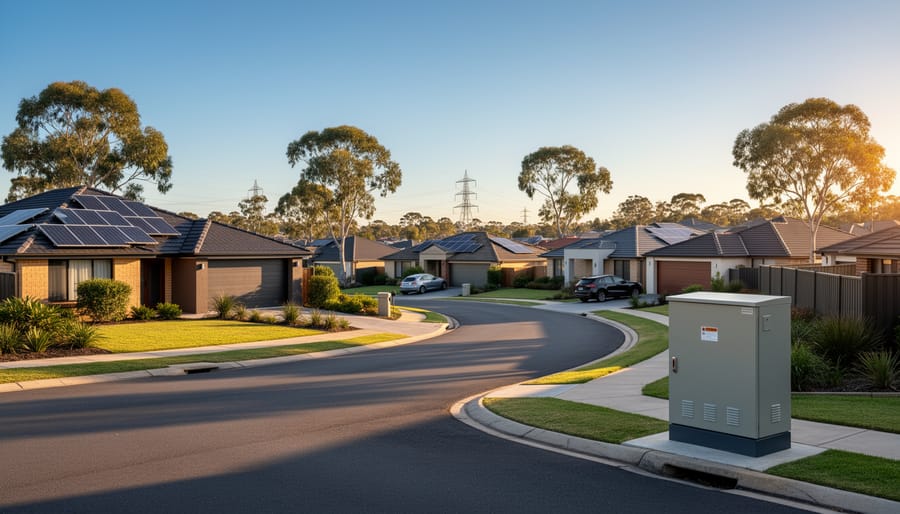
When bushfires knocked out power across regional Victoria in 2020, a handful of communities kept their lights on through an innovation most Australians had never heard of: blockchain energy trading. While traditional grids buckled under extreme weather, these pioneering neighbourhoods were buying and selling solar power directly between homes, no central authority required.
Blockchain energy trading transforms how we generate, distribute, and consume electricity during our most vulnerable moments. Instead of relying solely on centralised infrastructure that can fail catastrophically, this technology creates peer-to-peer energy networks where households with solar panels or batteries become mini power stations, automatically trading surplus energy with neighbours through secure, transparent blockchain ledgers.
The resilience implications are profound for a nation confronting escalating climate risks. When cyclones devastate Queensland’s coast or heatwaves strain metropolitan grids, blockchain-enabled microgrids can island themselves from failing networks, maintaining power for essential services. Communities become energy self-sufficient, dramatically reducing dependence on vulnerable transmission lines stretching across bushfire-prone landscapes.
Australia already leads global innovation in this space. Perth’s PowerLedger platform facilitates renewable energy trading across multiple continents, while Melbourne’s LO3 Energy demonstrates how apartment buildings can share rooftop solar seamlessly. These aren’t distant concepts but functioning systems proving that decentralised energy trading strengthens our collective ability to weather disruption.
The question isn’t whether blockchain will reshape Australia’s energy landscape, but how quickly communities will embrace this technology to build genuine energy security from the ground up.
What Blockchain Energy Trading Actually Means (No Tech Degree Required)
The Traditional Energy System’s Weak Spots
Australia’s traditional energy system, while generally reliable, carries inherent vulnerabilities that become starkly apparent during extreme weather events. Our centralized grid depends on large power stations often located hundreds of kilometres from the communities they serve, creating significant transmission losses—sometimes up to 10% of generated electricity simply disappears as heat along those lengthy power lines. When bushfires, cyclones, or floods strike, these single points of failure can leave entire regions in darkness for days or even weeks, as we witnessed during the 2019-20 Black Summer bushfires.
The conventional setup also struggles with flexibility. When demand spikes during heatwaves or supply suddenly drops due to infrastructure damage, the system can become overwhelmed. This centralized model made sense decades ago, but it’s increasingly mismatched with Australia’s renewable energy potential and our need for resilience. That’s where decentralized power grids powered by blockchain technology enter the picture, offering communities greater control and reliability when they need it most.
Enter Blockchain: Your Digital Energy Ledger
Think of blockchain as a digital ledger that automatically records every kilowatt-hour of energy produced and consumed in your community. Instead of relying on traditional energy retailers to track your solar exports and calculate credits, blockchain creates a permanent, tamper-proof record that everyone can trust.
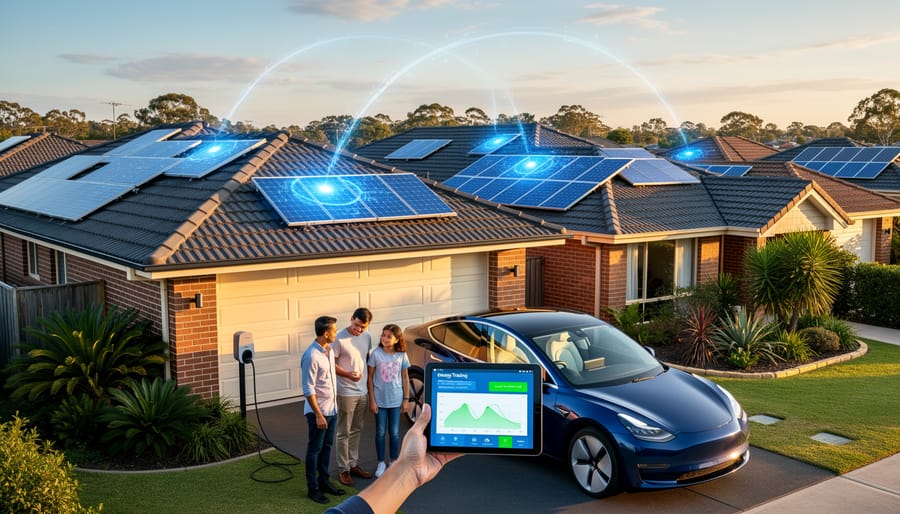
Here’s how it works in practice: When your rooftop solar panels generate excess energy on a sunny Brisbane afternoon, blockchain technology instantly records this transaction. If your neighbour purchases that energy, the system automatically verifies the trade, transfers the credits, and updates both accounts without any intermediary taking a cut or introducing delays.
This transparent approach means Australians with solar panels can see exactly where their energy goes and receive fair compensation immediately. During the 2022 energy crisis, several pilot projects demonstrated how blockchain could track renewable energy certificates more accurately than traditional systems, preventing fraud and ensuring legitimate green energy claims.
The beauty of blockchain lies in its security and simplicity. Every transaction is verified by multiple computers across the network, making it virtually impossible to falsify records. For Australian households and businesses investing in renewable energy, this means confidence that every solar credit is properly tracked and valued, creating a fairer, more resilient energy marketplace.
Building Energy Resilience: How Blockchain Keeps Power Flowing When the Grid Doesn’t
Microgrids That Think for Themselves
Imagine a neighbourhood where homes and businesses become their own power station, trading excess solar energy with each other through smart, automated systems. This isn’t science fiction – it’s happening right now through blockchain-enabled microgrids that are transforming how Australian communities manage their energy needs.
These intelligent microgrids use blockchain technology to create local energy markets where participants can automatically buy and sell electricity based on real-time supply and demand. When your rooftop solar panels generate more power than you need, the system instantly offers that surplus to your neighbours who might be running short. The blockchain records every transaction transparently and securely, ensuring fair pricing and reliable payment without requiring a middleman.
What makes these systems truly brilliant is their ability to operate independently from the main grid. During bushfires, storms, or other emergencies that knock out traditional power infrastructure, blockchain microgrids keep humming along. They’re particularly effective when integrated with battery storage systems that capture excess renewable energy during the day and release it at night or during peak demand periods.
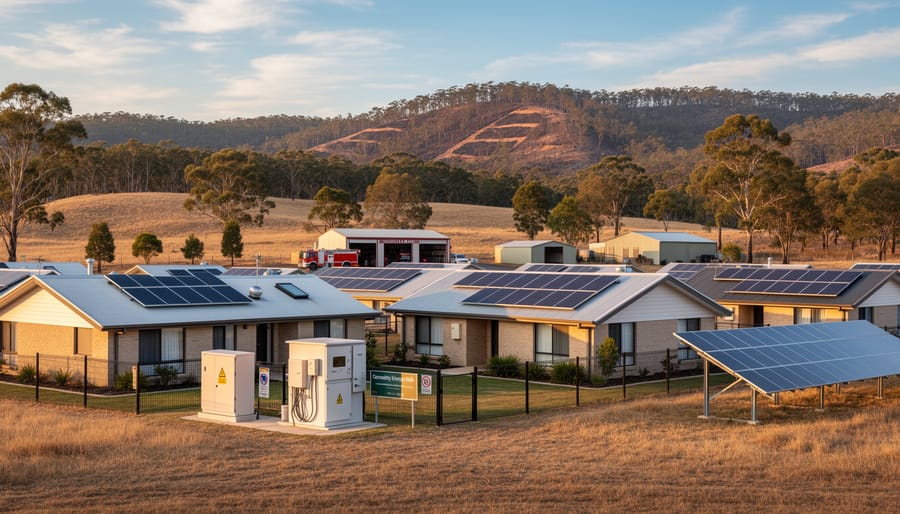
Several regional Australian communities are already experiencing the benefits, much like community resilience hubs that provide reliable power during crises. These smart microgrids balance loads automatically, directing power where it’s needed most and ensuring critical services like medical centres and emergency facilities stay operational even when the broader grid fails. The result is genuine energy democracy – communities controlling their own power destiny while building resilience against whatever challenges nature throws their way.
Real-Time Trading When Every Watt Counts
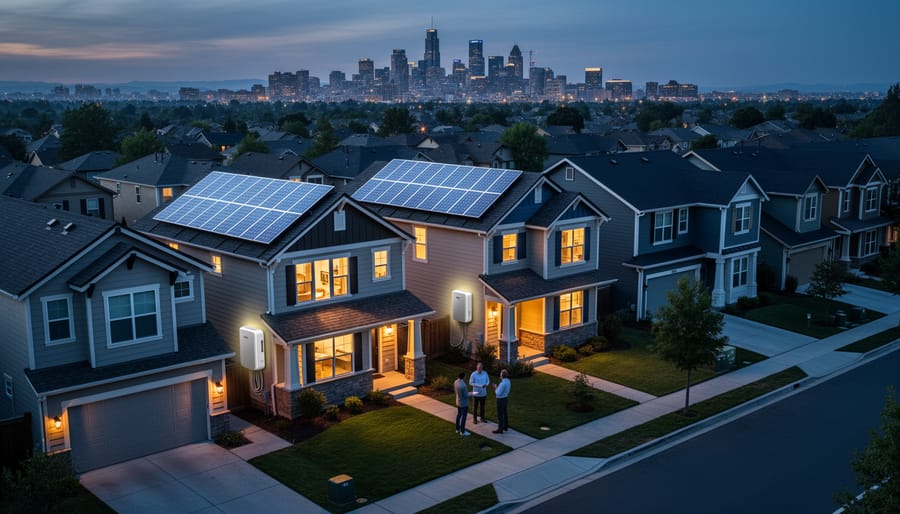
When a heatwave hits and air conditioners are running flat out across the neighbourhood, or when storm clouds threaten the grid, blockchain energy trading becomes a genuine lifeline. This technology enables households and businesses to trade electricity in real-time, responding instantly to changing conditions without waiting for manual approvals or complex paperwork.
Picture this: It’s 3pm on a scorching January afternoon in suburban Adelaide. Your solar panels are producing more electricity than your family needs, while your neighbour’s ageing system struggles to keep up with demand. Through blockchain-enabled trading, your excess power automatically flows to their home within seconds, with the transaction recorded, verified, and paid for without human intervention. This isn’t science fiction—it’s happening right now in Australian pilot programs.
These adaptive energy systems shine brightest during emergencies. When bushfires threatened power supplies in regional Victoria last summer, blockchain-connected battery systems automatically shared stored energy with critical facilities like medical centres and emergency services. The technology identified where power was needed most and redistributed it within minutes, all while maintaining secure records of every kilowatt-hour traded.
The beauty lies in the automation. Homeowners set their preferences once—perhaps always selling excess solar at peak prices, or prioritising supply to vulnerable neighbours during blackouts—and the system handles the rest. Smart contracts execute trades instantaneously based on real-time supply, demand, and pricing signals.
For Australian communities increasingly vulnerable to extreme weather events, this rapid-response capability transforms how we think about energy security. Rather than relying solely on distant power stations, neighbourhoods become self-supporting microgrids, sharing resources automatically when every watt truly counts.
Success Stories: Aussie Communities Already Testing This Technology
Western Australia’s Peer-to-Peer Solar Experiment
In Perth’s sunny suburbs, something remarkable happened in 2016 that would catch the attention of energy innovators worldwide. Power Ledger, a homegrown Australian company, launched one of the world’s first peer-to-peer solar trading trials, transforming how neighbours share clean energy.
The trial involved dozens of households in the suburb of Busselton, where residents with rooftop solar panels could sell their excess electricity directly to neighbours without solar systems. Using blockchain technology, the platform automatically matched sellers with buyers, processed transactions in real-time, and ensured fair pricing – all without requiring a traditional energy retailer as middleman.
Participant Sarah Mitchell found the experience eye-opening. “I’d been watching my solar panels generate more power than we could use, knowing it was feeding back into the grid for minimal return,” she explained. “Through the platform, I could see exactly who was buying my excess energy and earn a much better price for it. It felt brilliant to help my neighbours while making my solar investment work harder.”
The results proved compelling. Households without solar accessed renewable energy at competitive rates, while solar owners earned up to three times more for their excess generation compared to standard feed-in tariffs. Beyond the financial benefits, participants reported feeling more connected to their local community and empowered in their energy choices.
This successful trial paved the way for expanded blockchain energy projects across Australia, demonstrating that decentralised energy trading isn’t just theoretically possible – it’s practical, profitable, and ready for widespread adoption.
Brooklyn’s Microgrid: Lessons from Overseas
When Superstorm Sandy battered New York in 2012, leaving millions without power for days, it planted the seeds for something remarkable. The Brooklyn Microgrid emerged as one of the world’s pioneering blockchain energy projects, and when subsequent storms tested the region, participating homes with solar panels kept their lights on while traditional grid customers sat in darkness.
The Brooklyn project demonstrated something crucial for Australian communities: blockchain-based energy trading isn’t just about saving money or going green, it’s about survival during crises. Residents with rooftop solar could automatically sell excess power to nearby neighbours through blockchain smart contracts, creating a resilient local energy network that operated independently when the main grid failed.
For bushfire-prone Australian regions, these lessons are gold. Imagine a rural Victorian community where isolated farmhouses with solar and battery systems can trade power with each other during fire emergencies when transmission lines are cut. The blockchain platform handles everything automatically, no internet connection needed once the local network is established, just direct peer-to-peer energy sharing within the microgrid.
What made Brooklyn’s approach work was its simplicity. Households didn’t need to understand blockchain technology any more than they need to understand how a phone network operates. They simply installed smart metres, set their preferences, and let the system manage the rest. This plug-and-play model proves that Australian communities, particularly those facing regular bushfire threats, can implement similar solutions without requiring residents to become tech experts.
Why This Matters for Australia’s Energy Future
Surviving Bushfire Season with Decentralized Power
When transmission lines come down during bushfire season, entire communities can lose power for days or even weeks. But blockchain-enabled energy trading offers a promising solution that’s already gaining traction in fire-prone regions across Australia.
Imagine a small rural town where homes with solar panels and battery storage can automatically share power with neighbours when the main grid fails. Through blockchain technology, these transactions happen seamlessly, with fair pricing and instant verification—no middleman required. The system operates independently of the centralised grid, creating a resilient local network that keeps essential services running even when disaster strikes.
Several regional communities are now piloting these microgrids, learning valuable lessons about grid resilience during disasters. In one Victorian township, residents maintained power to their medical centre and communication systems throughout last summer’s fires, while surrounding areas sat in darkness.
The beauty of this approach lies in its flexibility. During normal conditions, households can trade excess solar energy for income. But when emergencies hit, the same infrastructure automatically prioritises critical needs, ensuring hospitals, emergency services, and vulnerable residents stay connected. It’s energy independence that could save lives when Australians need it most.
Making Bioenergy Part of the Trading Mix
Blockchain technology isn’t just for solar panels on rooftops – it’s opening doors for Australia’s often-overlooked bioenergy resources to join the trading mix. Agricultural waste, forestry residues, and purpose-grown energy crops can now become tradeable energy assets alongside wind and solar, creating truly diverse local energy portfolios.
The beauty of blockchain is its flexibility. A Queensland sugarcane farm generating power from bagasse (the leftover cane fibre) can sell excess electricity directly to neighbouring properties through peer-to-peer platforms, with smart contracts automatically handling the transactions. Meanwhile, a timber mill in Tasmania might trade its biomass-generated energy during evening hours when solar drops off, filling critical gaps in the renewable supply.
This diversity matters enormously for resilience. When bushfire smoke reduces solar output or still days limit wind generation, bioenergy provides reliable backup that keeps communities powered. Blockchain platforms track these multiple energy sources in real-time, matching supply with demand and ensuring fair pricing for all participants.
Several regional communities are already testing these mixed-energy trading systems, discovering that combining bioenergy with other renewables creates a more stable, dependable grid. It’s like having multiple ingredients in your pantry – you’re never caught short when one runs out.
The Practical Benefits for Your Household and Community
For everyday Australians, blockchain energy trading transforms abstract technology into real household benefits that matter when you open your electricity bill or weather the next heatwave.
The most immediate advantage is potential cost savings. By trading excess solar power directly with neighbours or local businesses through blockchain platforms, households can earn better rates than traditional feed-in tariffs. Sarah Mitchell from Fremantle discovered this firsthand when her rooftop solar system began generating income through peer-to-peer trading, reducing her quarterly energy costs by nearly 40 percent whilst helping her elderly neighbour afford air conditioning during summer.
Energy security becomes tangible when your community isn’t entirely dependent on centralised grid infrastructure. During bushfire season or extreme weather events, blockchain networks enable microgrids to operate independently, keeping lights on and refrigerators running even when main transmission lines fail. This proved invaluable during the 2022 Queensland floods, where blockchain-connected communities maintained power whilst neighbouring areas experienced extended blackouts.
Supporting local renewable producers strengthens community resilience whilst reducing your carbon footprint. Rather than purchasing electricity generated hundreds of kilometres away from fossil fuel sources, blockchain technology allows you to verify and choose energy from local solar farms or community wind projects. The transparent tracking system provides proof of your renewable energy consumption, which is particularly valuable for environmentally conscious households wanting genuine impact rather than vague renewable certificates.
The carbon reduction benefits extend beyond individual choice. Blockchain’s transparent ledger automatically tracks and records the environmental impact of every kilowatt-hour traded, creating verifiable data about your household’s actual emissions reductions. Combined with smart energy management systems, this technology empowers Australian families to make informed decisions about when to use appliances, store energy, or sell excess generation back to the community, turning energy consciousness from abstract intention into measurable environmental action that strengthens both household budgets and community resilience.
What Needs to Happen Next
The journey toward widespread blockchain energy trading in Australia requires coordinated action across several fronts, and the good news is that momentum is building. Right now, the most pressing need is updating our regulatory frameworks to accommodate peer-to-peer energy trading. State and federal governments are actively exploring how to create rules that protect consumers while fostering innovation. Trials like those in Western Australia’s renewable energy precincts are providing valuable data to inform these decisions, showing policymakers what works in real-world conditions.
Infrastructure investment represents another crucial piece of the puzzle. Smart meters need to become standard in Australian homes and businesses, and our grid infrastructure requires upgrades to handle bidirectional energy flows. Energy companies and technology providers are already partnering to roll out these improvements, with several utilities announcing significant investment commitments over the next five years.
For everyday Australians, awareness and participation matter enormously. Community energy groups are leading the charge by hosting workshops and information sessions that demystify blockchain trading. These grassroots efforts prove that when people understand the benefits—lower bills, greater energy independence, support for renewables—adoption follows naturally.
Industry professionals have opportunities to pioneer new business models around energy trading platforms and blockchain integration services. Meanwhile, local councils can accelerate progress by supporting community microgrid projects and streamlining approval processes for distributed energy resources.
The success stories emerging from projects in Fremantle, Sydney, and Melbourne demonstrate that blockchain energy trading isn’t some distant fantasy—it’s happening now. What we need is sustained commitment from all stakeholders to scale these initiatives nationwide. Australia’s abundant sunshine, innovative spirit, and demonstrated resilience position us perfectly to lead the global transition toward decentralized, blockchain-enabled energy systems that serve everyone.
The future of Australia’s energy landscape is brighter than ever, and blockchain energy trading stands at the heart of this transformation. We’ve seen how this technology creates resilient, community-powered networks that keep the lights on when traditional systems falter. From suburban solar sharing to remote microgrid communities, Australians are already pioneering solutions that combine cutting-edge innovation with good old-fashioned neighbourly cooperation.
Now’s the time to get involved. Stay informed about blockchain energy initiatives popping up in your local area—these projects often welcome early participants who want to shape the future of clean energy. Consider investing in renewable energy systems for your home or business, knowing that blockchain trading platforms will soon make that investment work harder for you and your community. Support policies that enable decentralized energy trading and remove barriers to peer-to-peer transactions.
Together, we’re not just adopting new technology—we’re building a fairer, cleaner, and more resilient energy system. As Australians, we’ve always been innovators and early adopters when it matters most. Let’s lead the world in proving that community-powered, blockchain-enabled energy networks aren’t just possible—they’re the future we’re creating today.