
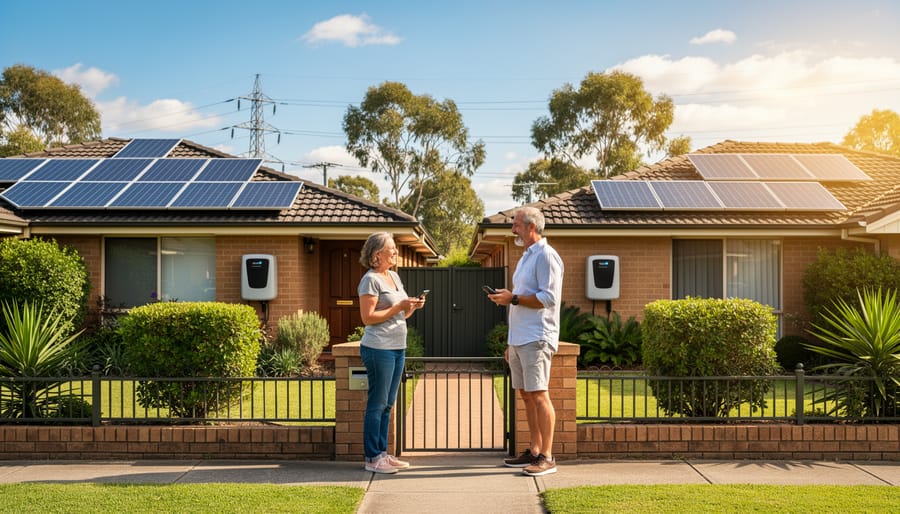
Imagine selling excess solar power from your rooftop directly to your neighbour down the street, cutting out the middleman and earning fair compensation while they access clean, locally-generated electricity. Energy trading platforms are revolutionising Australia’s power landscape by enabling precisely this scenario—transforming everyday households and businesses into active participants in a decentralised, peer-to-peer energy marketplace.
These digital platforms connect energy producers with consumers in real-time, allowing anyone with solar panels, battery storage, or other renewable generation to trade electricity directly with others in their community or network. Rather than feeding surplus energy back to the grid for minimal feed-in tariffs, you can negotiate better rates, support your community’s renewable transition, and contribute to grid stability—all through an intuitive app or web interface.
The concept addresses a critical challenge in Australia’s energy transformation: how to maximise the value of our world-leading rooftop solar installations while building a more resilient, distributed power system. From suburban homes in Melbourne to remote communities in regional Queensland, these platforms demonstrate that the future of energy isn’t just renewable—it’s collaborative, transparent, and democratised.
Whether you’re a solar owner looking to optimise returns, a business seeking cost-effective green energy, or simply curious about participating in Australia’s clean energy revolution, understanding how these platforms operate opens doors to both financial benefits and meaningful environmental impact. The energy market is no longer reserved for large utilities—it’s being redesigned by and for everyday Australians.
What Is Peer-to-Peer Energy Trading?
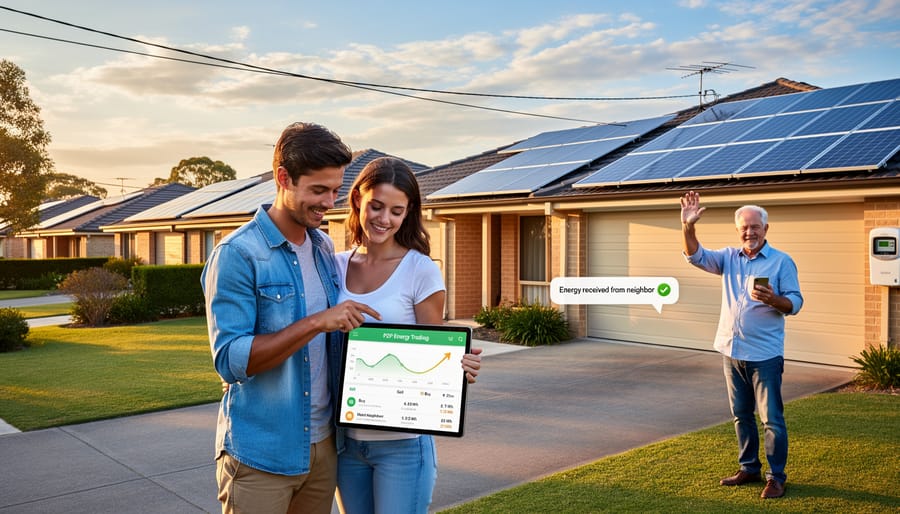
The Traditional Energy Model vs. The P2P Revolution
Picture the traditional electricity grid as a one-way highway: power flows from massive coal or gas plants through transmission lines directly to your home. You’re purely a consumer, with no say in where your energy comes from or how it’s distributed. The system is entirely centralized, controlled by large utilities that generate, transmit, and bill you for every kilowatt-hour used.
Now imagine a completely different landscape. Peer-to-peer energy trading transforms this highway into a vibrant community marketplace. Your neighbour’s solar panels generate excess energy at midday, which flows directly to your home while you’re running the air conditioner. Down the street, another household with battery storage shares their reserves during evening peak times. You’re no longer just a consumer—you’re an active participant in a living, breathing energy community.
This shift from centralized to decentralized energy systems represents a fundamental reimagining of how electricity moves through our communities. Instead of energy traveling hundreds of kilometres from distant power stations, it flows between neighbours, reducing transmission losses and maximizing renewable generation efficiency.
The P2P revolution puts control back in your hands. You decide who to buy from, who to sell to, and how to contribute to a cleaner grid. In Australian suburbs from Brisbane to Perth, early adopters are already experiencing this transformation, proving that community-powered energy isn’t just possible—it’s the future we’re building together.
Why P2P Energy Trading Matters for Australia
Reducing Energy Waste and Carbon Emissions
One of the most compelling benefits of peer-to-peer energy trading platforms is their ability to capture renewable energy that might otherwise go to waste. When solar panels generate more electricity than a household can use during peak sunlight hours, traditional systems often struggle to store or distribute this surplus efficiently. P2P platforms solve this challenge by connecting producers with nearby consumers in real-time, ensuring clean energy flows directly to where it’s needed most.
Consider a typical Australian suburb on a sunny Saturday afternoon. The Smith family’s rooftop solar system is producing 8 kilowatts, but they’re only using 2 kilowatts. Rather than exporting excess energy back to the grid at minimal feed-in rates, their P2P platform instantly matches them with the Jones family next door, who are running their air conditioning. This direct energy flow means renewable electricity powers the neighbour’s home instead of requiring coal-fired power from distant generators.
This optimization happens automatically, creating micro-grids within communities that maximize renewable energy usage. A Melbourne trial demonstrated how 500 households reduced their combined carbon emissions by 42 tonnes annually through coordinated P2P trading. Each transaction represents avoided fossil fuel generation, transforming individual solar installations into a collective climate solution. It’s neighbourhood cooperation making a real difference, one kilowatt-hour at a time.
Putting Money Back in Your Pocket
Energy trading platforms deliver tangible financial wins for everyday Australians on both sides of the transaction. For households with solar panels, the benefits are immediately apparent. Rather than receiving the standard 5-8 cents per kilowatt-hour feed-in tariff from traditional retailers, solar owners can earn 12-20 cents through peer-to-peer trading—often doubling or tripling their returns.
Consider the Johnson family from Newcastle, who installed a 6.5kW solar system. Previously earning around $180 annually from their retailer, they now make approximately $420 through direct trading with local buyers. That extra $240 helps offset their initial investment much faster than traditional arrangements.
Buyers benefit too. Take Sarah, a Melbourne renter who can’t install panels herself but wants clean energy. Through the platform, she purchases renewable energy from nearby homes at rates 10-15% below standard retail prices, saving roughly $150-200 yearly on her electricity bills.
These platforms also open doors to funding solar projects collaboratively, creating even more opportunities for community-driven savings. The beauty lies in the simplicity: sellers earn more, buyers pay less, and everyone contributes to Australia’s renewable energy future while keeping money circulating within local communities rather than flowing to large corporations.

Real Success Stories: P2P Energy Trading in Action
Western Australia’s Community Energy Projects
Western Australia is leading the charge in demonstrating how community energy projects can transform neighborhoods through peer-to-peer energy trading platforms. These initiatives are putting power—quite literally—back into the hands of everyday Australians.
In Perth’s northern suburbs, the Alkimos Beach project has connected over 100 households through a microgrid that allows residents to trade excess solar energy with their neighbors. Participants report savings of up to 20% on their electricity bills while enjoying the satisfaction of knowing their energy stays local. Margaret Chen, a retiree involved in the project, shares: “It’s brilliant knowing that when I’m generating more power than I need during the day, it’s helping the young family next door rather than just going back to the grid.”
The Fremantle Energy Project has taken things further by incorporating battery storage, enabling participants to trade stored solar energy during peak evening hours when prices are highest. This has created a resilient energy system that benefits the entire community, particularly during summer heatwaves when demand spikes.
These WA initiatives demonstrate that energy trading platforms aren’t just theoretical concepts—they’re delivering real financial savings, strengthening community bonds, and accelerating the transition to renewable energy. The success stories emerging from Western Australia prove that when communities work together, everyone wins.
What We Can Learn from Brooklyn’s Microgrid
The Brooklyn Microgrid project in New York has become a beacon for what’s possible when communities embrace peer-to-peer energy trading. Launched in 2016, this groundbreaking initiative connected neighbours with rooftop solar panels to those wanting cleaner energy, all facilitated through blockchain technology that tracked every transaction.
What makes Brooklyn’s story so compelling is its human element. Residents weren’t just buying electricity; they were supporting their neighbours’ renewable investments and building community resilience. When Hurricane Sandy devastated the area in 2012, it sparked a realisation that local energy generation could mean the difference between lights on or off during emergencies.
For Australia, the lessons are crystal clear. First, the technology works. Brooklyn proved that residential solar owners can reliably trade excess energy while maintaining grid stability. Second, people genuinely want to participate when given the opportunity. The project saw strong uptake because it offered tangible benefits including lower costs and energy independence.
Most importantly, Brooklyn demonstrated that regulatory frameworks can evolve. New York regulators worked with the project to create guidelines that protected consumers while enabling innovation, something Australian policymakers are now exploring.
The Brooklyn Microgrid shows us that the future of energy isn’t some distant dream. It’s happening now, in suburbs not unlike our own, proving that when communities take ownership of their energy future, everyone wins. Australia’s abundant sunshine and innovative spirit position us perfectly to create our own success stories.
How P2P Platforms Support Bioenergy and Local Renewable Sources
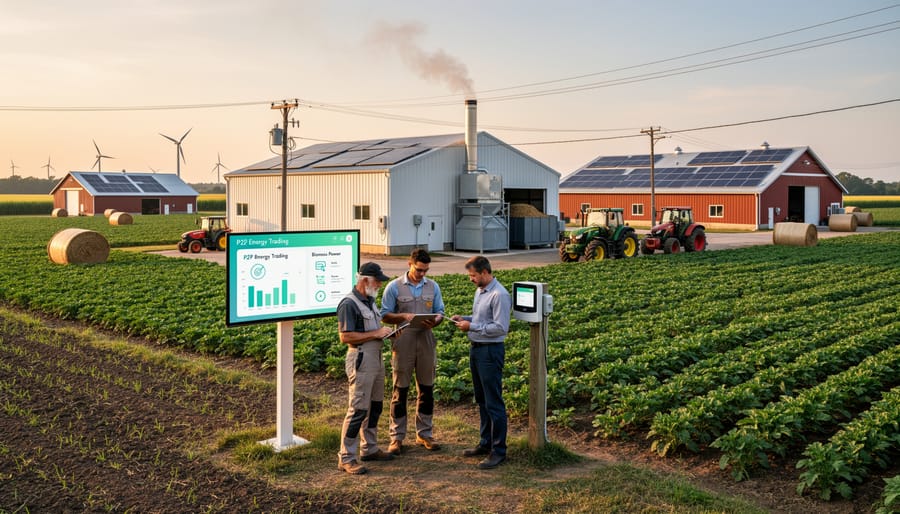
While solar panels often steal the spotlight in renewable energy conversations, P2P energy trading platforms are opening exciting doors for bioenergy and other locally-generated renewable sources across Australia. These platforms create a fair dinkum opportunity for regional communities to transform agricultural waste and biomass into tradeable electricity, putting power generation directly into the hands of farmers and rural businesses.
Bioenergy systems convert organic materials like crop residues, animal waste, and forestry byproducts into electricity through processes such as anaerobic digestion or combustion. P2P platforms allow producers of this biomass-generated electricity to sell their excess energy directly to nearby consumers, creating new revenue streams for agricultural enterprises while reducing waste. A dairy farm in Gippsland, for example, could install an anaerobic digester to convert manure into biogas, generate electricity, and sell surplus power to neighbouring properties through a P2P platform.
These platforms particularly benefit regional areas where transmission infrastructure might be limited but agricultural resources are abundant. Rather than losing energy through long-distance transmission lines, communities can trade locally-generated bioenergy within their region, strengthening energy security and keeping economic benefits close to home.
Beyond bioenergy, P2P platforms support trading of electricity from small-scale hydro systems, geothermal installations, and community wind projects. This diversity creates a more resilient and distributed energy network, reducing reliance on centralised fossil fuel generation.
The beauty of P2P platforms lies in their flexibility. They don’t discriminate between energy sources, provided they’re renewable. This opens participation to farming communities, timber mills, food processors, and other businesses with organic waste streams. By turning waste into watts and connecting producers directly with consumers, these platforms are helping regional Australia lead the charge toward a truly decentralised, sustainable energy future.
Getting Started: What You Need to Join the P2P Energy Revolution
Ready to join the P2P energy revolution? The good news is that getting started is more straightforward than you might think, and many Aussie households are already making the leap into renewable energy participation.
First, you’ll need a renewable energy source. For most Australians, this means solar panels installed on your roof. If you’re renting or live in an apartment, don’t worry – community solar projects are emerging as viable alternatives, allowing multiple households to share the benefits of a single renewable installation.
Next comes the smart meter, which acts as the brain of your energy trading setup. These clever devices track your energy generation and consumption in real-time, automatically recording when you’re producing excess power and when you’re drawing from the grid. Most new installations include smart meters, but if you have an older system, your energy retailer can arrange an upgrade.
Platform registration is your third step. Research available P2P trading platforms operating in your state, as regulations vary across Australia. Popular platforms like Power Ledger and Enosi have streamlined sign-up processes. You’ll need to provide your National Meter Identifier, energy account details, and banking information for payments.
The typical timeline from decision to trading is around four to eight weeks, depending on installation requirements. Melbourne resident Sarah Mitchell shared her experience: “I was nervous about the technical side, but the platform walked me through everything. Within six weeks, I was selling excess solar to my neighbours and earning credits on my energy bill.”
Many platforms offer trial periods, letting you test the waters before fully committing. Start small, learn the system, and watch as you transform from energy consumer to energy entrepreneur.
Overcoming Challenges and Looking Ahead
The Role of Policy and Community Support
Australia’s renewable energy revolution isn’t happening in isolation – it’s being powered by forward-thinking policies and enthusiastic community backing. Governments across the country are recognising that peer-to-peer energy trading represents a fair dinkum opportunity to democratise our energy system while accelerating the shift to renewables.
Several Australian states have introduced regulatory sandboxes, allowing energy trading platforms to trial innovative models without being bogged down by outdated regulations. This pragmatic approach has enabled real-world testing that benefits both participants and policymakers. The Australian Energy Market Commission has been actively consulting stakeholders to create frameworks that protect consumers while encouraging innovation.
Community energy groups are driving impressive momentum too. In Western Australia, neighbourhood solar networks have demonstrated how local trading can strengthen community bonds while reducing electricity costs. These grassroots initiatives prove that everyday Australians are ready to embrace new energy models when given the opportunity.
The success stories emerging from trial programs are encouraging more communities to get involved. Residents participating in peer-to-peer schemes report not just financial savings, but genuine satisfaction from contributing to their community’s energy independence. This combination of supportive policy, technological readiness, and community enthusiasm creates the perfect conditions for peer-to-peer energy trading to flourish across Australia, transforming how we generate, share, and value clean energy.
The future of Australia’s energy landscape is being rewritten right now, and the pen is in your hands. Peer-to-peer energy trading platforms represent far more than a technological innovation—they’re a democratic revolution in how we think about power generation, consumption, and community resilience. Every solar panel installed, every kilowatt-hour shared with a neighbor, and every household that joins this movement brings us one step closer to a cleaner, more sustainable Australia.
What makes this transformation truly special is that it doesn’t require waiting for government mandates or corporate initiatives. Ordinary Australians are already proving that we can tackle climate change from the ground up, one energy trade at a time. Whether you’re a retiree in Perth maximizing returns from your rooftop solar, a young family in Melbourne reducing electricity bills, or a regional community building energy independence, P2P platforms offer tangible benefits today while building tomorrow’s sustainable infrastructure.
The opportunity before us is remarkable. By participating in peer-to-peer energy trading, you’re not just cutting costs or earning extra income—you’re actively reducing emissions, supporting renewable energy adoption, and demonstrating that environmental responsibility and financial benefit go hand in hand. You’re showing that sustainable living isn’t about sacrifice; it’s about smart choices that benefit your household and your community.
Now is the time to explore P2P energy opportunities in your area. Connect with local energy cooperatives, investigate platform options suitable for your circumstances, and join the growing network of Australians building a decentralized, resilient energy future. Your contribution matters, and together, we’re creating the sustainable Australia we want to leave for future generations.