
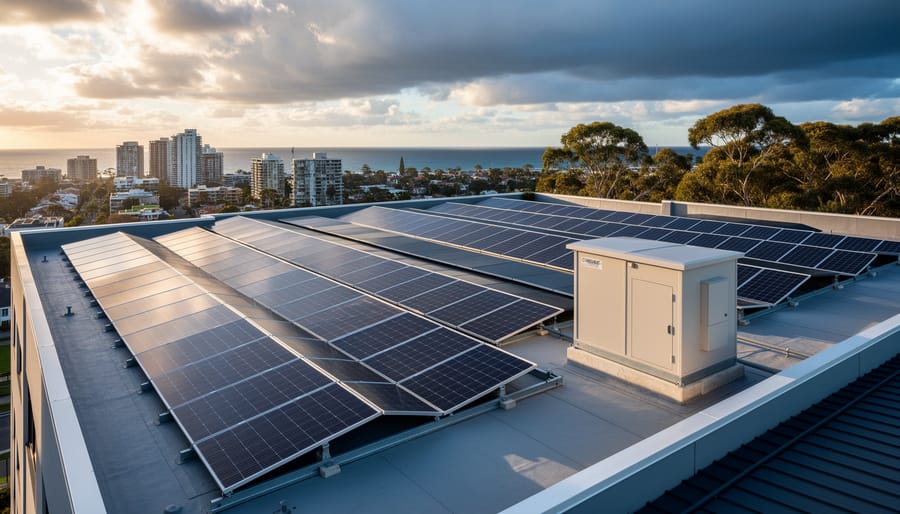
Australia’s apartment buildings are sitting on an untapped goldmine of energy savings and climate resilience—yet most strata committees and property managers don’t realize how accessible green retrofits have become. Right now, multifamily housing accounts for nearly 40% of residential energy consumption in major Australian cities, with ageing buildings leaking energy through inefficient systems while residents face soaring electricity bills and increasing blackout risks during extreme weather events.
The transformation happening across Sydney, Melbourne, and Brisbane tells a different story. Forward-thinking apartment complexes are installing solar arrays, battery storage, and smart energy management systems that slash common area electricity costs by 60-80% while creating resilient microgrids that keep essential services running during grid failures. These aren’t luxury developments—they’re everyday strata buildings that discovered the right financing mechanisms to make comprehensive retrofits financially viable without burdening individual owners with massive upfront costs.
The business case has fundamentally shifted. Between federal and state rebates, innovative financing models like green loans and on-bill repayment schemes, and the dramatic drop in renewable technology costs, green retrofits now deliver positive cash flow from year one in most scenarios. A 50-unit building in Melbourne recently completed a comprehensive retrofit for $180,000—financed entirely through a sustainability loan—and now saves $35,000 annually while increasing property values by an average of 8%.
This isn’t about feel-good environmentalism. It’s about protecting property investments, reducing operational costs, and future-proofing buildings against climate impacts and energy price volatility. The pathway from outdated energy systems to resilient, cost-effective operations exists today—and the financial tools to get there are more accessible than most building managers realize.
What Green and Resilient Retrofits Actually Mean for Apartment Buildings
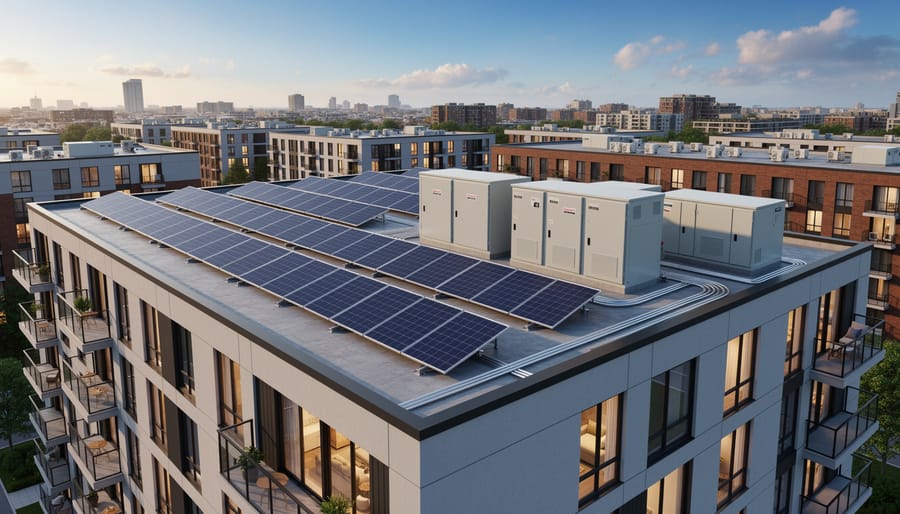
The Three Pillars: Efficiency, Renewables, and Resilience
A successful green and resilient retrofit program rests on three interconnected pillars that work together to transform multifamily buildings into sustainable, future-ready homes. Think of it like a three-legged stool—each component strengthens the others, creating something far more valuable than any single upgrade could achieve alone.
The first pillar, energy efficiency, tackles the foundation. This means upgrading insulation in walls and roofs, replacing old windows with double-glazed alternatives, and installing energy-efficient appliances and LED lighting throughout common areas and individual units. In one Melbourne apartment complex, these straightforward improvements slashed energy consumption by 40 percent before any renewable systems were even added. It’s about plugging the leaks before filling the bucket.
The second pillar introduces renewable energy systems, typically solar panels on rooftops and available surfaces. For larger complexes with suitable land, biomass systems using sustainably sourced organic waste can provide heating and hot water. These systems generate clean power right where it’s needed, dramatically reducing reliance on the grid and opening opportunities for peer-to-peer energy trading between residents.
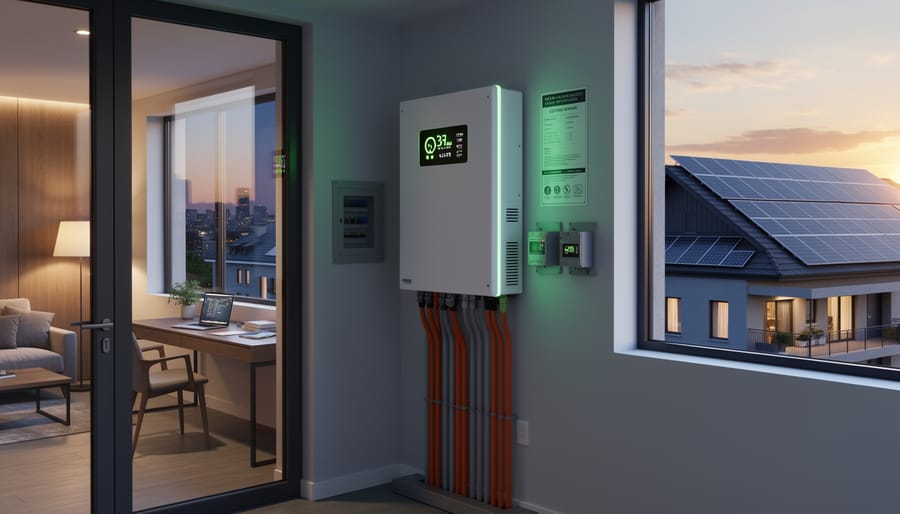
The third pillar, resilience features, ensures reliability when the grid falters. Battery storage systems capture excess solar generation for evening use or emergency backup, while microgrid connectivity allows buildings to operate independently during outages. A Brisbane apartment building demonstrated this brilliantly during recent storms, maintaining power while surrounding properties went dark.
Together, these pillars create a multiplier effect. Efficiency improvements reduce the size and cost of renewable systems needed, while batteries maximize the value of every kilowatt generated. The result is lower bills, enhanced comfort, reduced emissions, and genuine energy security for residents.
Why Multifamily Housing Needs This More Than Ever
The Rising Cost of Being Unprepared
The reality hits hardest when the lights go out. During the summer of 2024, extreme heatwaves across Sydney and Melbourne pushed electricity prices to eye-watering levels, leaving thousands of apartment residents facing an impossible choice: stay cool or save money. For multifamily housing residents, particularly those in older buildings without proper insulation or renewable energy systems, this wasn’t just inconvenient—it was genuinely dangerous.
Australia’s aging grid infrastructure is struggling to keep pace with demand. The Australian Energy Market Operator warns that without significant investment in distributed energy resources, more blackouts are inevitable as climate events intensify. Apartment buildings remain particularly vulnerable, with residents having fewer options to install individual solar systems compared to detached homes.
Take the story of Parramatta’s Riverside Gardens complex, where residents saw their collective quarterly energy bills jump by 47 percent between 2022 and 2024. Elderly residents on fixed incomes rationed air conditioning during 40-degree days, while young families debated whether to use heating during winter cold snaps. These aren’t just numbers on a spreadsheet—they represent real people making impossible decisions about comfort and safety.
The financial burden extends beyond individual households. When buildings lack resilient energy systems, property values stagnate while operational costs soar. Body corporate fees increase to cover rising electricity expenses, making affordable housing less affordable. Without intervention, this cycle deepens, leaving entire communities behind in Australia’s renewable energy transition.
The Hidden Advantage Apartments Have
Here’s the good news that might surprise you: apartment buildings and multifamily complexes are actually brilliantly positioned for green energy retrofits. While standalone homes face the full burden of installation costs alone, apartments benefit from what experts call “shared infrastructure advantages.”
Consider a typical 50-unit apartment block in Melbourne’s inner suburbs. When this building installs solar panels and battery storage, the cost per household drops dramatically compared to individual home installations. The rooftop space, while limited per resident, serves everyone collectively. The inverters, battery systems, and smart energy management technology get distributed across dozens of households rather than weighing on one family’s budget.
This economy of scale extends beyond installation. Maintenance costs, monitoring systems, and even professional energy management services become affordable when split among multiple residents. One strata manager in Sydney’s Pyrmont discovered their 80-unit complex saved 40% on retrofit costs compared to equivalent individual installations.
There’s another powerful advantage: collective bargaining power. When apartment buildings approach suppliers and installers representing 30, 50, or 100 households, they negotiate from strength. Bulk purchasing discounts become available that single homeowners simply cannot access.
Community-based energy management also creates resilience benefits that isolated homes miss entirely. During grid outages, apartment microgrids can prioritise essential services like lifts, security systems, and communal lighting while maintaining partial supply to individual units. This shared approach to energy independence transforms what seems like a limitation into a genuine competitive advantage for multifamily housing.
Smart Ways to Finance Your Building’s Energy Transformation
Government Programs and Grants That Actually Work
Australian property managers and strata committees now have more support than ever to transform their buildings into green, resilient homes. The federal government’s Social Housing Accelerator offers grants up to $750,000 for community housing providers undertaking energy efficiency upgrades, including solar installations and battery storage systems. While primarily targeting social housing, the program sets a benchmark that’s influencing state-level initiatives.
In New South Wales, the Sustainability Advantage Program provides free expert advice and networking opportunities for larger apartment complexes, helping navigate the retrofit journey. Victoria’s Solar Homes Program extends rebates of up to $1,400 for solar panel installations on multi-tenanted properties, plus interest-free loans covering battery storage systems. Queensland’s Business Energy Savings and Transformation program offers grants reaching $25,000 for energy audits and feasibility studies, perfect for complexes exploring microgrid options.
The key to success lies in thorough preparation. Start by commissioning a detailed energy audit documenting current consumption and potential savings. This data strengthens your application considerably. Melbourne’s Green Square Apartments secured $180,000 in combined state funding after presenting a comprehensive retrofit plan showing 65% emissions reduction potential. Their secret? Engaging residents early and demonstrating community support through signed petitions and surveys.
Similarly, Brisbane’s Riverside Towers obtained grants covering 40% of their solar-plus-storage installation by partnering with a local university to measure environmental impacts, adding research value to their application.
Application tips that work: apply early in the financial year when budgets refresh, clearly articulate environmental and social benefits beyond just energy savings, include quotes from multiple contractors to demonstrate value for money, and highlight how your project can serve as a demonstration site for others. Many successful applicants emphasize job creation and skills development in their applications, tapping into broader government priorities around green employment.
Shared Savings and On-Bill Financing Models
One of the biggest barriers to green retrofits isn’t lack of interest—it’s the upfront cost. That’s where shared savings and on-bill financing become game-changers for multifamily housing, removing financial roadblocks while delivering immediate benefits.
These innovative arrangements work brilliantly simple: specialized providers install energy-efficient upgrades at no upfront cost to the strata corporation or body corporate. Instead, residents repay the investment through their reduced energy bills over time. Because energy savings typically exceed the repayment amount from day one, occupants actually pay less than before while enjoying improved comfort and lower emissions.
Melbourne’s Nightingale Village offers a ripper example. The development partnered with a clean energy provider to install solar panels, efficient heat pumps, and LED lighting across multiple buildings. Residents saw immediate bill reductions of 30-40%, with a portion allocated to repaying the installation. The strata corporation avoided depleting reserve funds, and owners increased their property values without lifting a finger.
Similar Energy-as-a-Service models are gaining traction in Sydney and Brisbane, where performance-based financing ensures providers guarantee the savings promised. If energy reductions fall short, the provider covers the difference—eliminating risk for building managers.
For strata committees exploring these options, start by requesting energy audits from qualified providers. Look for companies offering performance guarantees and transparent repayment terms tied directly to verified savings. This approach transforms sustainability from an expensive obligation into a financially positive decision that benefits everyone from day one.
Community Investment and Cooperative Ownership
Community-owned energy initiatives are revolutionising how Australian apartment dwellers approach sustainability while building stronger neighbourhoods in the process. Rather than leaving retrofit decisions solely to developers or strata managers, residents are increasingly pooling resources to collectively invest in microgrid infrastructure, creating shared ownership that delivers both environmental and financial dividends.
The beauty of cooperative ownership lies in democratising access to renewable energy technology. When residents band together, substantial upfront costs become manageable through shared investment, making solar panels, battery storage, and energy management systems accessible to more Australians. Participants typically receive returns through reduced energy bills and, in some cases, dividends from excess energy sold back to the grid.
Brunswick’s Apartment Building Collective in Melbourne provides an inspiring example of this model in action. Twenty-eight households jointly invested in rooftop solar and shared battery storage, reducing individual electricity costs by approximately 40% within the first year. Each resident contributed according to their financial capacity, with ownership shares reflecting investment levels. The project fostered genuine community connection as neighbours collaborated on energy decisions and monitored their collective environmental impact.
Similar success stories are emerging through community energy projects across Sydney, Brisbane, and Adelaide, where multifamily buildings are embracing cooperative models. These initiatives often draw inspiration from successful crowdfunding solar initiatives that have proven community investment works.
Establishing cooperative ownership requires clear governance structures, transparent financial arrangements, and legal frameworks that protect all participants. Many successful projects engage community energy cooperatives or specialised consultants to navigate regulatory requirements and establish fair ownership models that ensure long-term sustainability and satisfaction for all involved residents.
Real Australian Apartments Already Making It Happen
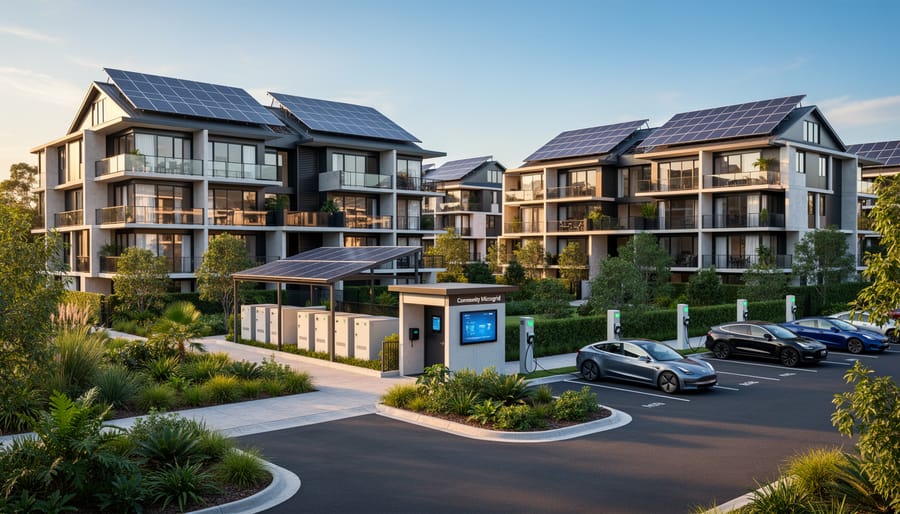
Across Australia, forward-thinking apartment communities are already reaping the rewards of green and resilient retrofits, proving that sustainable multifamily housing isn’t just a future vision—it’s happening right now.
The Commons in Brunswick, Melbourne, stands as a pioneering example of what’s possible. This 24-apartment development integrated solar panels, battery storage, and energy-efficient systems from the ground up, creating a functional microgrid that has slashed residents’ electricity bills by up to 80 percent compared to conventional apartments. During the 2019 heatwave that strained Victoria’s grid, residents maintained comfortable temperatures and reliable power while neighbouring buildings struggled. The building’s success has inspired dozens of similar projects across Victoria, demonstrating that resilient design works brilliantly in real-world conditions.
In Sydney’s inner west, the Kensington Street Precinct transformed older apartment blocks through a comprehensive retrofit including rooftop solar arrays, smart battery systems, and efficient heating and cooling. Property manager Sarah Chen reports that residents have saved an average of 1,200 dollars annually on energy costs since the upgrades were completed in 2021. Beyond the hip pocket benefits, the building maintained essential services during the February 2022 floods when surrounding areas experienced power outages. “Our residents felt safe and looked after when it mattered most,” Chen explains. “That peace of mind is priceless.”
Queensland’s Nightingale Village in Brisbane showcases how green retrofits boost liveability alongside sustainability. The development’s microgrid, featuring solar panels and shared battery storage, powers common areas and provides backup electricity to individual units. Resident feedback has been overwhelmingly positive, with 94 percent reporting increased satisfaction with their living environment. The building’s carbon emissions dropped by 65 percent in the first year, equivalent to taking 28 cars off the road permanently.
These success stories share common threads: careful planning, community engagement, and smart use of available incentives and financing. They prove that Australian apartments can achieve remarkable resilience and sustainability outcomes while delivering tangible benefits that residents notice every day. The technology works, the economics stack up, and communities thrive when buildings prioritize both people and planet.
Your Building’s Roadmap: Where to Start Tomorrow
Getting Your Community on Board
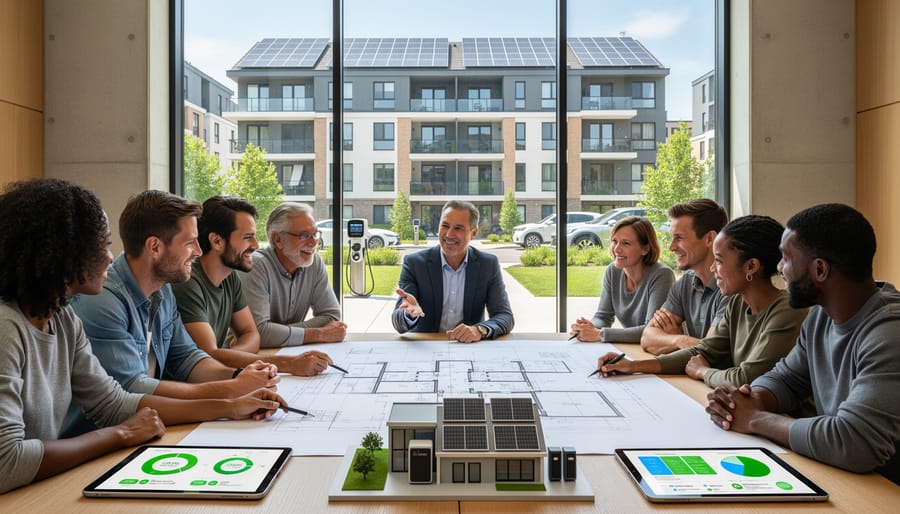
Securing buy-in from your building community transforms a good idea into reality. Start by sharing the story in terms residents understand: lower energy bills, improved comfort, and increased property values. One Sydney apartment block saw 30% energy savings within the first year, which translated to real dollars back in residents’ pockets.
Present the benefits through multiple channels. Host an informal barbecue where residents can ask questions in a relaxed setting, follow up with detailed information sheets, and create visual displays in common areas showing projected savings. Some Melbourne communities have found success using “lunch and learn” sessions where residents share a meal while discussing the retrofit plan.
Address concerns head-on. Residents often worry about upfront costs, construction disruption, and whether the promised benefits will materialise. Share verified case studies from similar Australian buildings and offer to arrange site visits so skeptics can see successful retrofits firsthand. Be transparent about timelines and temporary inconveniences.
Identify and nurture champions within your community. These might be environmentally passionate residents, early adopters of solar technology, or simply well-respected neighbours. Equip them with facts and success stories they can share organically. When Mrs. Thompson from Unit 12 becomes enthusiastic about the project, her influence often carries more weight than official communications.
Create a steering committee that represents diverse perspectives within the building. Include both supporters and constructive critics. This inclusive approach builds trust and ensures concerns are heard and addressed throughout the journey.
Finding the Right Partners and Resources
Assembling the right team can make or break your multifamily retrofit project. The good news is that Australia has a growing network of specialists who understand both sustainable building upgrades and microgrid systems.
Start by connecting with organizations like the Green Building Council of Australia and the Australian Sustainable Built Environment Council, which maintain directories of accredited professionals experienced in large-scale retrofits. The Clean Energy Finance Corporation also provides lists of approved contractors and energy assessors who’ve successfully delivered similar projects across the country.
When interviewing potential consultants and contractors, ask about their specific experience with multifamily buildings. A project manager from a successful Sydney retrofit shared that their biggest lesson was choosing partners who’d navigated strata approval processes before, saving months of delays. Request case studies demonstrating measurable energy savings and ask for references from previous multifamily clients you can actually speak with.
For energy assessors, ensure they hold current accreditation through programs like NABERS or have certification in commercial building performance. They should offer comprehensive modeling that shows projected savings before, during, and after implementation.
When evaluating proposals, look beyond the bottom line. The cheapest quote often overlooks crucial details like resident communication plans or staged implementation that minimizes disruption. Quality proposals should include detailed timelines, clear milestones, warranty information, and realistic payback calculations.
Many successful projects have benefited from engaging specialized microgrid consultants early in the planning phase. These experts can identify whether your building’s configuration suits solar-plus-storage systems and help navigate grid connection requirements with your local distributor.
Don’t forget community engagement specialists who can help bring residents along on the journey, turning potential skeptics into enthusiastic supporters who champion the project’s benefits throughout the building.
The path to green and resilient multifamily housing isn’t just achievable—it’s essential for Australia’s sustainable future. While financing might seem like a formidable hurdle, communities across the country are proving that with the right strategies, collective vision, and determination, these barriers become stepping stones rather than roadblocks.
From Melbourne’s pioneering strata schemes to Brisbane’s community-driven solar initiatives, we’ve seen firsthand how Australian multifamily properties can transform into sustainable powerhouses. These success stories share a common thread: residents and property managers who refused to accept the status quo and instead chose to lead the charge toward energy independence and climate resilience.
The financing mechanisms exist—whether through government grants, green loans, strata levies, or innovative community financing models. The technology is proven. The environmental and economic benefits are undeniable. What’s needed now is your commitment to take that crucial first step.
You’re not just upgrading a building; you’re investing in your community’s future, reducing carbon emissions, protecting residents from extreme weather events, and creating lasting value. Every retrofit begins with someone willing to champion change.
The question isn’t whether green and resilient retrofits are possible for your property—it’s when you’ll start the journey. Your community has the power to become a beacon of sustainability, demonstrating that multifamily housing can lead Australia’s transition to a cleaner, more resilient future. The time to act is now.