
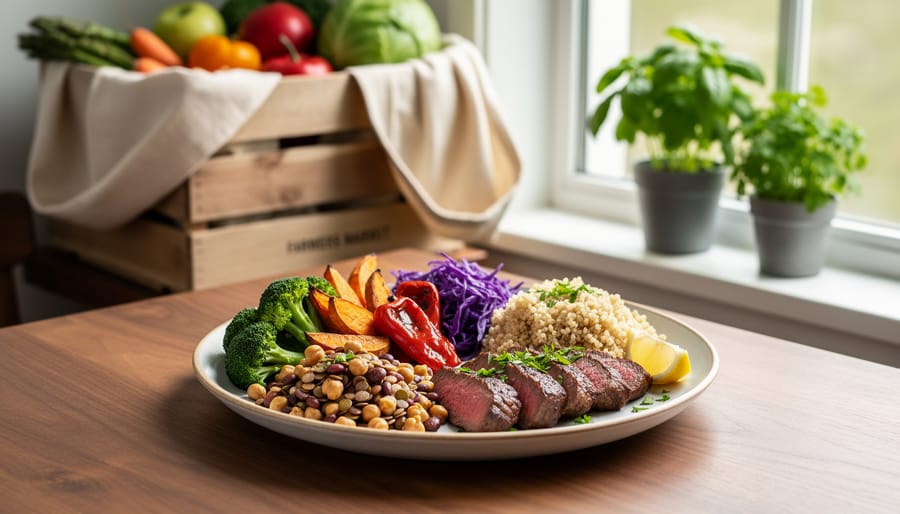
Every meal you eat carries an invisible carbon footprint, and sustainable eating means choosing foods that nourish both your body and the planet. At its core, sustainable eating involves selecting foods produced with minimal environmental impact—less greenhouse gas emissions, reduced water consumption, and protection of natural ecosystems. For Australians, this means understanding that our dinner plates are responsible for roughly one-quarter of household carbon emissions, making food choices one of the most powerful tools we have in the fight against climate change.
Sustainable eating isn’t about perfection or deprivation. It’s about making conscious decisions that add up to meaningful change. This includes choosing more plant-based proteins over carbon-intensive meats, supporting local farmers who use regenerative practices, reducing food waste that ends up in landfills producing methane, and selecting seasonal produce that doesn’t require energy-intensive transport or storage.
The good news? Sustainable eating aligns perfectly with Australia’s broader shift toward renewable solutions. Just as bioenergy transforms organic waste into valuable resources, sustainable food systems can turn agricultural by-products into soil enrichment while delivering nutritious meals. Communities across Australia are already proving this works—from urban gardens in Melbourne to regenerative cattle stations in Queensland.
Understanding what sustainable eating truly means empowers you to make choices that benefit your health, your wallet, and the environment. The principles are straightforward, the benefits are measurable, and the time to start is now.
What Sustainable Eating Really Means (Beyond the Buzzwords)

The Carbon Connection: Why Your Plate Matters
Every time we sit down for a meal, we’re making choices that ripple far beyond our dinner plates. The journey from paddock to plate accounts for roughly one-quarter of global greenhouse gas emissions, making our food system a major player in climate change.
Here’s where it gets interesting: not all foods are created equal when it comes to their carbon footprint. Think of beef production as driving a four-wheel drive across the Nullarbor – it requires extensive land, water, and feed, producing significant methane emissions along the way. A kilogram of beef can generate around 27 kilograms of carbon dioxide equivalent. Compare that to legumes like lentils or chickpeas, which are more like riding a pushbike – they actually enrich soil, require minimal water, and produce less than one kilogram of emissions per kilogram of food.
The difference is staggering, but here’s the good news: small swaps make a real difference. An Australian family switching just one beef meal per week to a plant-based alternative can save the equivalent emissions of driving 300 kilometres in an average car. Even choosing chicken over beef cuts emissions by two-thirds.
Success stories are already emerging across Australia, with cafes and households embracing ‘Meatless Mondays’ and discovering that sustainable choices don’t mean sacrificing flavour. By understanding these connections, we’re empowered to make informed decisions that benefit both our health and our planet’s future.
The Four Foundations of Low-Carbon Eating
Plant-Forward Doesn’t Mean Plant-Only
Here’s the good news: sustainable eating isn’t about going completely meat-free or giving up your favourite foods. It’s about shifting the balance on your plate towards more plant-based options while still enjoying animal products in moderation.
Think of it as the ‘flexitarian’ approach that’s gaining real traction across Australia. Rather than adhering to strict dietary rules, you’re simply making plants the stars of your meals, with meat playing more of a supporting role. This might mean enjoying a hearty vegetable curry with a smaller portion of chicken, or making Monday nights meat-free.
The results speak for themselves. Australian households participating in community-supported agriculture programs have reported reducing their meat consumption by 30-40% without feeling deprived. Meanwhile, restaurants across Melbourne and Sydney are showcasing how delicious plant-forward menus can be, with dishes that celebrate seasonal vegetables alongside sustainably sourced proteins.
This flexible approach makes sustainable eating achievable for everyone. You don’t need to overhaul your entire lifestyle overnight. Small shifts, like swapping one or two meat-heavy meals each week for plant-based alternatives, can significantly reduce your carbon footprint while improving your health. It’s about progress, not perfection, and finding what works for your family and lifestyle.
Local and Seasonal: The Transport Factor
Choosing locally-grown, seasonal produce stands as one of the most effective ways to slash your food’s carbon footprint. When we buy ingredients that have travelled thousands of kilometres to reach our plates, we’re essentially eating fossil fuels. The transport factor matters enormously – a tomato trucked from interstate or flown from overseas carries a significantly higher carbon cost than one grown down the road.
Australia’s diverse climate zones offer brilliant opportunities for seasonal eating year-round. In tropical Queensland, mangoes and pineapples shine during summer, while southern Tasmania celebrates autumn’s apples and pears. Melbourne’s temperate climate brings asparagus in spring and pumpkins in autumn, whilst Perth enjoys citrus through winter months.
Supporting local farmers creates a ripple effect of positive change. Take the Barossa Valley in South Australia, where community-supported agriculture programs connect consumers directly with growers, reducing food miles to near zero. Similarly, the urban agriculture movement in cities like Brisbane and Sydney is transforming rooftops and vacant lots into productive gardens, bringing fresh produce even closer to our tables.
By aligning our eating habits with the seasons and choosing regional suppliers, we’re not just reducing emissions – we’re investing in resilient local food systems and enjoying produce at its freshest and most flavourful.
Waste Nothing: The Hidden Carbon Cost
Here’s a sobering fact: Australians bin over 7.6 million tonnes of food each year, and when that food breaks down in landfill, it releases methane—a greenhouse gas 25 times more potent than carbon dioxide. That leftover roast chicken or wilted lettuce you toss out carries a hidden carbon burden from its entire journey: the energy used to grow, transport, and refrigerate it all goes to waste.
The good news? Every household can become part of the solution. Start by planning your weekly meals before shopping—it’s the simplest way to avoid overbuying. Store food properly to extend its life: keep herbs in water like fresh flowers, and freeze bread you won’t eat within days. Get creative with leftovers—yesterday’s roasted vegetables become today’s frittata filling.
Composting is your secret weapon for unavoidable scraps. Whether you’ve got a backyard bin or a compact worm farm on your balcony, you’re turning waste into nutrient-rich soil while keeping organic matter out of landfill. By reducing household waste, you’re not just saving money—you’re directly cutting your carbon footprint and contributing to a healthier planet.
Regenerative and Organic: Farming That Heals
Australia’s farming landscape is undergoing an exciting transformation, with regenerative and organic agriculture leading the charge against climate change. Unlike conventional farming that depletes soil, regenerative practices actively heal the land by sequestering carbon, improving water retention, and boosting biodiversity.
Regenerative agriculture works with nature rather than against it. Farmers use techniques like cover cropping, rotational grazing, and minimal tillage to build rich, living soil that acts as a carbon sink. Each hectare of restored soil can draw down significant amounts of atmospheric carbon dioxide, turning farms into climate solutions.
Take Gundooee Organics in New South Wales, where fourth-generation farmer Stuart Andrews has transformed degraded land into thriving organic pastures. His holistic management approach has increased soil carbon levels by 40 percent while producing nutrient-dense beef and lamb. Similarly, Wilmot Cattle Company in Queensland demonstrates how regenerative grazing can restore grasslands while maintaining profitable operations.
These practices don’t just benefit the environment. Regeneratively grown food often contains higher nutrient levels, and organic certification ensures produce is free from synthetic pesticides. By choosing products from regenerative farms, Australian consumers directly support farming methods that genuinely restore ecosystems while feeding communities. The movement proves that agriculture can be part of the climate solution, not the problem.
How Sustainable Eating Powers Australia’s Bioenergy Future
From Farm Scraps to Clean Power
When you choose sustainably produced food, you’re not just making a healthier choice for yourself and the planet – you’re also contributing to a cleaner energy future. The organic waste generated from sustainable farms, including crop residues, food scraps, and agricultural byproducts, doesn’t end up in landfill. Instead, it becomes valuable biomass feedstock for renewable energy production.
Right here in Australia, innovative farms are leading the charge. Take the success story of a Victorian vegetable farm that converts its unsold produce and crop waste into biogas through anaerobic digestion. This process not only powers their entire operation but also feeds excess electricity back into the grid, supplying clean energy to local communities.
Similarly, Queensland sugarcane growers are transforming bagasse – the fibrous residue left after crushing sugarcane – into bioenergy that powers sugar mills and nearby towns. These real-world examples showcase the circular economy benefits of sustainable eating. Every time you support farms practicing sustainable agriculture, you’re backing a system where nothing goes to waste. Food scraps become energy, carbon emissions decrease, and our rural communities gain energy independence while reducing their environmental footprint.

Making It Real: Sustainable Eating in Everyday Australian Life
Start Small, Think Big
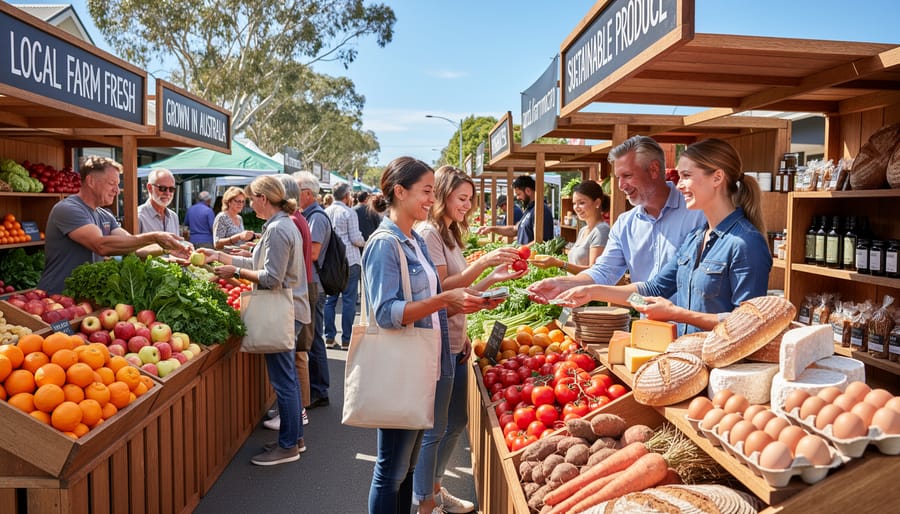
Transitioning to sustainable eating doesn’t require a complete kitchen overhaul overnight. Start with simple, manageable changes that fit naturally into your lifestyle. Try dedicating one day a week to plant-based meals—Meatless Mondays have become a popular movement across Australian households, reducing weekly carbon emissions without feeling restrictive. Visit your local farmers market on weekends to connect with growers and discover seasonal produce that hasn’t travelled thousands of kilometres to reach your plate.
Another approachable step is swapping just one ingredient in your regular shopping routine. Choose Australian-grown lentils instead of imported rice, or select loose vegetables over plastic-wrapped options. Consider growing your own food, even if it’s just herbs on a sunny windowsill—every tomato you harvest is one less requiring transport and packaging.
Remember, sustainable eating is about progress, not perfection. Some weeks you’ll make brilliant choices; others might be more challenging. That’s completely normal. What matters is the cumulative impact of small, consistent actions. Each mindful decision contributes to a larger positive change for our planet.
Your Sustainable Shopping Checklist
Making sustainable choices becomes second nature once you know what to look for. Start with the “Five Ls” framework that Aussie shoppers have found remarkably effective: Look Local, Look Low-waste, Look Labels, Look Seasonal, and Look Simple.
When browsing your local supermarket or farmers market, prioritise Australian-grown produce to reduce transport emissions. Check for certifications like the Australian Certified Organic bud, MSC blue fish tick for sustainable seafood, and Free Range Egg labels with meaningful standards. Don’t be shy about asking vendors questions: “Where was this grown?” and “What’s in season right now?” are perfect conversation starters.
Choose products with minimal packaging, and bring your own bags and containers where possible. The Brisbane Markets’ zero-waste initiative has shown that reducing packaging can cut a household’s carbon footprint by up to 15 percent annually.
Keep a simple list on your phone noting what’s seasonal each quarter. Right now, that might mean grabbing Aussie mangoes in summer or apples in autumn. Remember, every small choice adds up. By making these switches gradually, you’re not just reducing emissions—you’re supporting local growers and creating a more resilient food system for all Australians.
The Ripple Effect: Why Your Food Choices Matter More Than You Think
Every meal you eat sends ripples far beyond your plate. When you choose sustainable foods, you’re not just making a personal health decision—you’re casting a vote for the kind of Australia you want to see flourish.
Consider what happened in Melbourne’s inner suburbs when local cafes committed to sustainable menus. Within two years, demand sparked a 40% increase in organic farms across regional Victoria, creating jobs and revitalizing rural communities. Each latte made with locally-sourced milk and each sandwich built with seasonal vegetables became part of a transformation that touched farmers, transport workers, and food processors alike.
The economic impact is equally remarkable. Australian farmers transitioning to regenerative agriculture are discovering that sustainable practices often boost their bottom line. Healthier soils require fewer expensive inputs, while premium pricing for sustainably-grown produce opens new markets. Meanwhile, food waste reduction initiatives across Sydney and Brisbane are diverting thousands of tonnes from landfill, with some programs converting organic waste into bioenergy that powers local facilities.
Your choices matter because businesses respond to consumer demand. When Australians consistently choose seasonal produce, supermarkets stock more local options. When we reduce meat consumption, innovative plant-based producers gain investment and expand operations. It’s democracy in action, three times a day.
Think of it like drops creating waves. One person choosing sustainable eating might seem insignificant, but when thousands make similar choices, those ripples become powerful currents of change. You’re part of a growing movement reshaping how Australia produces, distributes, and values food—building resilience against climate change while nurturing the land that sustains us all.
The journey toward sustainable eating isn’t just about individual plates—it’s about reshaping Australia’s entire food landscape for a healthier planet. Every meal choice that reduces carbon emissions contributes to a larger movement that’s already gaining momentum across the nation. From the innovative bioenergy plants transforming food waste into renewable power to the growing network of farmers embracing regenerative practices, we’re witnessing the foundations of a remarkable transformation.
The beauty of sustainable eating lies in its accessibility. You don’t need to overhaul your life overnight. Start with one or two changes—perhaps choosing locally grown vegetables on your next shopping trip or reducing red meat consumption by just one meal per week. These small actions, multiplied across communities, create waves of positive change that ripple through our food systems.
Picture Australia’s food future: thriving local farms supplying regional communities, food waste feeding bioenergy facilities that power our homes, and sustainable choices becoming second nature rather than conscious effort. This vision isn’t far-fetched—it’s already taking shape. By embracing sustainable eating today, you’re not just reducing your carbon footprint; you’re actively building the resilient, renewable food future that Australia deserves. The choice is on your plate.