
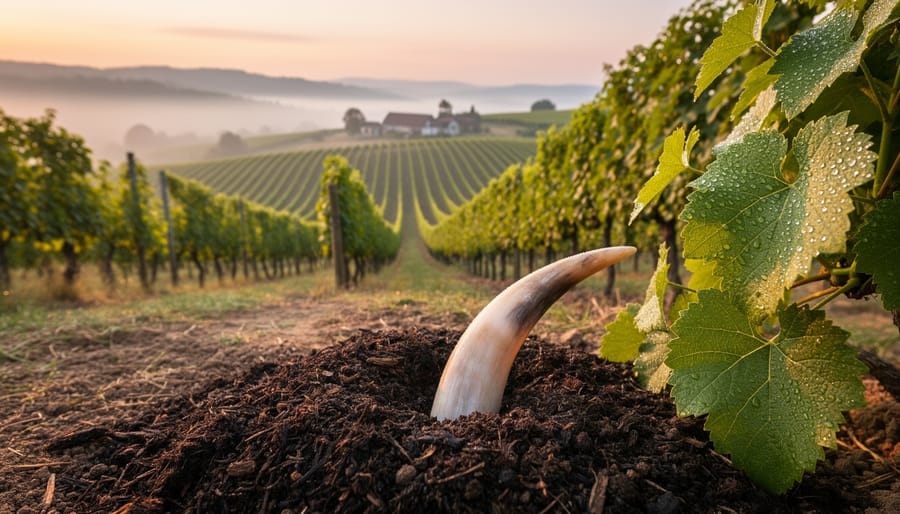
Picture a vineyard where farming decisions are guided by lunar cycles, where cattle horns filled with manure are buried in the soil, and where the entire property functions as a living, breathing organism. This is biodynamic viticulture, and it’s transforming how Australian winemakers approach sustainability.
Biodynamic farming takes organic viticulture several steps further. While organic certification prohibits synthetic pesticides and fertilisers, biodynamic practices view the vineyard as a self-sustaining ecosystem where every element, from soil microbes to cosmic rhythms, plays a role in grape quality. Founded on principles developed by Austrian philosopher Rudolf Steiner in 1924, this approach has moved from fringe experimentation to mainstream respect among some of Australia’s most acclaimed wine producers.
The distinction matters because biodynamic vineyards demonstrate measurable environmental benefits. These properties typically achieve complete nutrient cycling, meaning waste from one process becomes input for another, much like closed-loop systems in renewable energy. Composting, cover cropping, and animal integration build soil carbon levels that can exceed conventional vineyards by 30 to 40 percent. This carbon sequestration positions biodynamic wine production as part of Australia’s broader climate strategy, complementing efforts in renewable energy and regenerative agriculture.
For wine drinkers in 2026, choosing biodynamic bottles supports producers who’ve committed to Demeter certification, the international standard requiring three years of transition and ongoing compliance. You’re selecting wines from vineyards that function as carbon sinks, biodiversity havens, and models for agricultural resilience. The taste difference sparks debate, but the environmental credentials are unquestionable.
What Makes Biodynamic Farming Different in the Vineyard
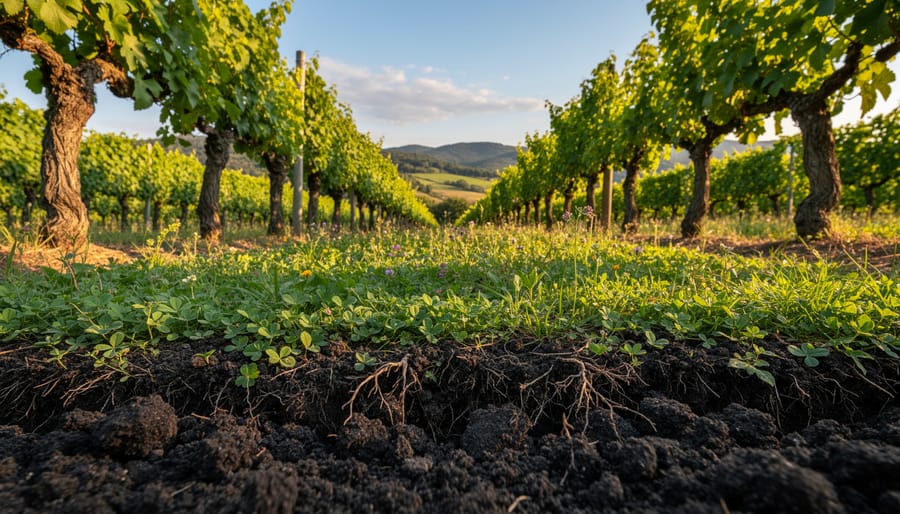
Biodynamic farming approaches a vineyard as a self-sustaining organism, not a production line. Rather than inputs and outputs, growers cultivate a closed ecosystem where vines, soil microbes, cover crops, insects, animals, and compost all interact in a living system designed to build fertility from within.
This philosophy originates from Rudolf Steiner’s 1924 agricultural lectures, but modern biodynamic viticulture has evolved into a rigorous, practical method. At its heart are distinctive preparations, fermented plant and mineral compounds applied in minute doses to awaken biological activity. Preparation 500, for instance, involves cow manure composted in a horn buried over winter, then diluted and stirred in water before being sprayed on soil to stimulate root growth and microbial life. These preparations might sound esoteric, yet experienced biodynamic winegrowers report observable changes: healthier vines, richer soil structure, and fruit with clearer expression of place.
- Preparations
- Fermented herbal and mineral compounds (numbered 500-508) applied to soil and plants to enhance biological activity, nutrient availability, and plant vitality.
- Lunar Calendar
- A planting and cultivation schedule aligned with lunar and planetary cycles, based on the principle that cosmic rhythms influence plant growth and sap flow.
- Closed-Loop System
- A self-sufficient vineyard ecosystem producing its own compost, animal feed, and fertility inputs on-site, eliminating reliance on external synthetic chemicals.
- Compost Preparations
- Specific herbal formulas (yarrow, chamomile, nettle, oak bark, dandelion, valerian) added to compost piles to guide decomposition and concentrate nutrients.
The vineyard also follows a planting calendar attuned to lunar and planetary cycles, pruning on descending moon days, bottling when the moon’s influence favours stability. Critics question the mechanism, but practitioners note consistent results across diverse climates.
What separates biodynamic from organic farming? Organic certification prohibits synthetic pesticides and fertilisers; biodynamic certification requires that plus the holistic system. You can’t simply substitute chemical inputs with organic ones and call it biodynamic. The vineyard must function as a complete organism: producing its own compost, integrating animals (sheep for mowing, chickens for pest control), cultivating biodiversity through cover crops and native plantings, and using the preparations. It’s regenerative by design, actively improving soil health each season rather than merely sustaining it.
The Environmental Wins: Carbon, Biodiversity, and Soil Health
Biodynamic vineyards deliver environmental benefits that extend far beyond the wine in your glass. The regenerative practices at the heart of this approach transform the land itself, building rather than depleting natural resources with each growing season.
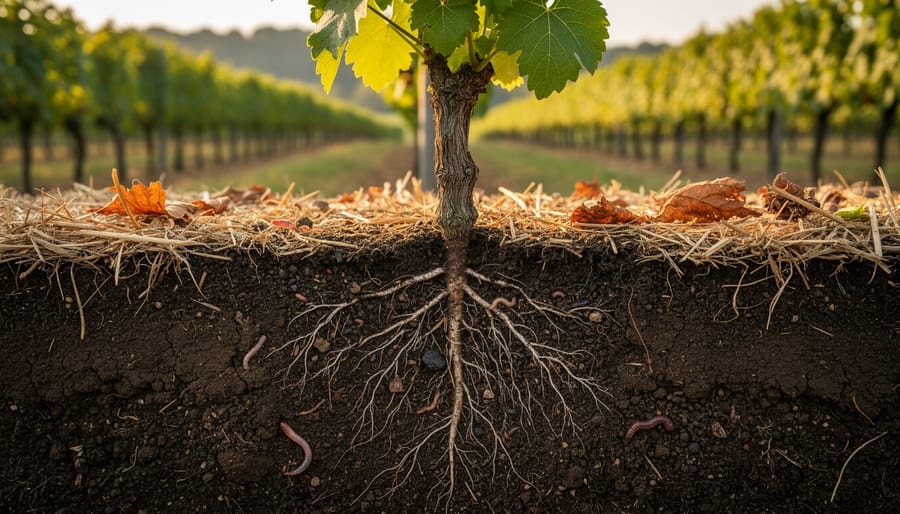
Start with the soil. Conventional agriculture strips carbon and organic matter from the ground; biodynamic viticulture does the opposite. Healthy, living soils rich in compost and microbial life actively sequester atmospheric carbon, locking it underground where it builds fertility instead of warming the atmosphere. Australian vineyards that adopt these methods can effectively turn soil into carbon banks converting agricultural land into a climate solution while growing premium grapes. Research consistently shows that organic matter levels rise year after year in biodynamic systems, creating a carbon sink beneath the vines.
Biodiversity thrives in these vineyards. Without synthetic pesticides or herbicides, beneficial insects return: ladybugs control aphids, lacewings manage mites, and soil-dwelling microorganisms break down organic matter into plant-available nutrients. Cover crops between vine rows provide habitat for pollinators, fix nitrogen naturally, and prevent erosion. This living ecosystem delivers soil ecosystem services that chemical farming destroys, from pest control to nutrient cycling, all without purchased inputs.
Water management improves dramatically. Soil rich in organic matter acts like a sponge, holding moisture during dry spells and absorbing it during heavy rains. For Australia’s drought-prone wine regions, this resilience matters. Biodynamic vineyards reduce irrigation demand and prevent water stress that compromises grape quality, all while eliminating the chemical runoff that contaminates waterways downstream from conventional farms.
The contrast is stark: where industrial viticulture depletes and pollutes, biodynamic farming rebuilds. These vineyards demonstrate that agriculture can regenerate landscapes rather than exhaust them. In a country grappling with soil degradation and climate variability, this model offers a blueprint for sustainable land use that aligns with renewable energy goals and long-term food security. The environmental wins are measurable, immediate, and cumulative, making every bottle a small investment in healthier ecosystems.
Success Stories: Wineries Leading the Biodynamic Movement
Southbrook Vineyards in Ontario’s Niagara region proved that biodynamic certification wasn’t just a European luxury when it became Canada’s first Demeter-certified winery. The farm converted its entire 55-hectare property in the early 2000s, transforming depleted soils into a thriving ecosystem complete with livestock, cover crops, and the signature biodynamic preparations. Owner Bill Redelmeier talks about the initial skepticism from neighbours who watched him bury cow horns filled with manure and spray field preparations according to lunar calendars. The proof arrived in the wines: their Triomphe Cabernet Franc and Chardonnay consistently win recognition not despite the biodynamic methods, but because of them. The vines developed deeper root systems, grapes showed more concentrated flavours, and vintage-to-vintage consistency improved as soil health stabilised.
Across the Atlantic, Tillingham in East Sussex achieved official biodynamic certification in October 2025 after years of preparation. Owner Ben Walgate converted the 11-acre vineyard into a working farm model that includes vegetable gardens, a bakery, and grazing animals, all integrated into the wine-growing cycle. The English climate presented unique challenges: wetter conditions meant more disease pressure, testing whether biodynamic sprays could truly replace fungicides. Tillingham responded by increasing diversity, planting hedgerows to attract predatory insects, and adjusting preparation timing to match local conditions rather than following formulaic calendars. The resulting wines, fermented with native yeasts, express a distinct sense of place that wine writers describe as electric and alive.
Both wineries faced similar hurdles: higher labour costs, certification bureaucracy, and the need to educate consumers about why biodynamic wine costs more. They’ve succeeded by refusing to position biodynamics as mystical or elitist, instead showcasing the tangible results in soil tests, biodiversity counts, and customer loyalty. Southbrook now hosts workshops teaching other Ontario growers their techniques. Tillingham’s restaurant seats fill months in advance with visitors seeking not just wine, but proof that agriculture can regenerate land while producing something exceptional. These aren’t boutique vanity projects. They’re working models demonstrating that biodynamic viticulture scales, survives economic pressure, and delivers wines that justify the effort.
Experiencing Biodynamic Wine: Events and the Growing Market
The best way to experience biodynamic wine is to taste it, and 2026 offers some exciting opportunities. The Vancouver International Wine Festival, running March 7-14, brings together 112 wineries from 14 countries for a full week of tastings, seminars, dinners, and trade programming. While not exclusively biodynamic, the festival includes producers who’ve embraced these methods, giving attendees a chance to compare approaches and explore how farming philosophy shapes flavour. It’s the kind of immersive experience that transforms abstract principles into sensory understanding.
Beyond festivals, the biodynamic wine market is expanding rapidly in Australia and worldwide. Independent wine shops increasingly feature dedicated biodynamic sections, and consumers are actively seeking the Demeter symbol as assurance of environmental stewardship. You’ll find these wines at various price points, from accessible everyday bottles to premium vintages, debunking the myth that sustainability commands a luxury surcharge.
Online retailers now filter by biodynamic certification, making discovery easier than ever. Many wineries offer cellar door tastings where you can walk the biodynamic vineyards yourself, seeing cover crops, compost preparations, and biodiversity initiatives firsthand. These visits connect you directly to the farmers rebuilding soil while crafting exceptional wine. The growing market reflects a shift in values: drinkers want quality that doesn’t compromise the land, and biodynamic viticulture delivers both in the glass and in the ground.
What Biodynamic Viticulture Means for Australia’s Sustainable Future
Australia’s wine regions sit at a crossroads where agriculture meets the nation’s ambitious renewable energy and climate targets. Biodynamic viticulture offers a tangible pathway forward, transforming vineyards from monoculture landscapes into regenerative systems that sequester carbon, rebuild soil structure, and create closed-loop resource cycles. As the country pushes toward net-zero commitments, wineries adopting these methods demonstrate how primary industries can shift from being emissions sources to climate solutions.
The synergy between biodynamic farming and bioenergy farming creates particularly compelling opportunities. Vineyard prunings, grape pomace, and cover crop residues become feedstock for biomass energy production rather than waste streams. Several Australian wineries already use grape marc in composting systems, but scaling this approach could supply regional bioenergy facilities while completing the nutrient cycle back to the soil. This integration turns viticulture into a contributor to both food production and renewable energy infrastructure.
Job creation follows naturally. Transitioning even a portion of Australia’s 146,000 hectares of vineyards to biodynamic management requires skilled practitioners in preparation-making, compost management, ecological monitoring, and certification coordination. These aren’t roles that automation can replace, they’re knowledge-intensive positions that strengthen regional employment in wine districts from the Barossa to Margaret River.
Consumer choices accelerate this transition. When Australians seek out Demeter-certified wines or ask retailers about biodynamic options, they signal market demand that makes the three-year conversion period financially viable for growers. This purchasing power connects directly to the country’s sustainability agenda, proving that everyday decisions around what we drink can support regenerative biofuel development, soil health, and climate resilience at scale.
Biodynamic wine shows us that agriculture can be a tool for restoration, not extraction. Every bottle from a certified producer represents a vineyard working as a living ecosystem, soil that stores carbon rather than releasing it, and biodiversity that thrives instead of being displaced. This isn’t abstract idealism; it’s practical regeneration happening right now in vineyards around the world and gaining ground here in Australia.
Supporting these producers matters. When you choose biodynamic wines, you’re backing farmers who’ve committed to the long, often challenging work of healing their land. You’re participating in a market shift that rewards sustainability over shortcuts. And you’re discovering wines shaped by healthy soils and balanced ecosystems, where quality emerges from vitality rather than chemistry.
Australia’s sustainable future depends on exactly this kind of thinking, agriculture that builds soil, businesses that create meaningful jobs, and consumers who recognize that what we eat and drink connects directly to the energy and environmental challenges we face. Biodynamic viticulture fits squarely into the renewable, regenerative economy we need. The transformation has started. Explore these wines, seek out local producers adopting these practices, and be part of the solution growing from the ground up.